NM_006758.2:c.101C>T (p.Ser34Phe) in U2AF1 is classified as Likely Pathogenic using generic ACMG/AMP 2015 criteria (PMID:25741868) with 1 strong, 1 moderate, and 3 supporting pathogenic criteria.1 Well-established functional studies demonstrate that the U2AF1 S34F substitution has a damaging gain-of-function effect: it alters 3′ splice site recognition, changes sequence specificity of pre-mRNA binding, promotes aberrant exon skipping, induces R-loop accumulation and ATR checkpoint activation, and produces altered hematopoiesis in transgenic mouse models (PS3_Strong).2 The variant is located at codon 34 in the first CCCH zinc finger domain, a well-established mutational hotspot where recurrent somatic missense mutations (S34F, S34Y) are observed in myelodysplastic syndromes and acute myeloid leukemia (PM1_Moderate).3 The variant is extremely rare in population databases: gnomAD v2.1 reports 1 allele in 281,256 (AF=3.56×10⁻⁶) and gnomAD v4.1 reports 0 alleles in 18,936, both well below the PM2 threshold of 0.1% (PM2_Supporting).4 U2AF1 has a low rate of benign missense variation and missense variants at the zinc finger domains are the established disease mechanism, supporting PP2 at a supporting level (PP2_Supporting).5 Multiple in silico predictors support a deleterious effect: REVEL score of 0.7 is above the pathogenic threshold; BayesDel (0.415) is borderline (PP3_Supporting).6 No benign criteria were met. The variant is not a common polymorphism (BA1/BS1 not met), functional studies show a damaging effect (BS3 not met), and computational evidence does not support a benign interpretation (BP4 not met).7 Limitations: all functional evidence is derived from somatic disease contexts (MDS/AML cell lines and patient samples); no germline-specific functional data, de novo reports, cosegregation data, or germline case-control data are available. PVS1, PS1, PS2, PS4, PS5, PM5, PM6, PP1, PP4, PP5, and most benign criteria were not assessed due to absent or insufficient evidence.
Final classification
Likely Pathogenic
PS3PM1PM2PP2PP3
U2AF1
c.101C>T
p.Ser34Phe
This variant
NM_006758.2:c.101C>T (p.Ser34Phe) in U2AF1 is classified as Likely Pathogenic using generic ACMG/AMP 2015 criteria (PMID:25741868) with 1 strong, 1 moderate, and 3 supporting pathogenic criteria.
gene-specific framework lacked a usable explicit final combination framework, so generic ACMG/AMP 2015 final-combination rules were applied as fallback; applied criteria: PS3 strong, PM1 moderate, PM2 supporting, PP2 supporting, PP3 supporting; combination = 1 strong + 1 moderate + 3 supporting, which maps to Likely Pathogenic.
Classification rationale
PS3PM1PM2PP2PP3
Likely Pathogenic
U2AF1 c.101C>T
PS3 + PM1 + PM2 + PP2 + PP3
→
Likely Pathogenic
1
generic_acmg_combination_rules
6
revelbayesdel
LYFE Sciences is an AI system, and it can make mistakes. Criteria
may be applied incorrectly, sources may be misread, and a confident-looking
classification can still be wrong. Double-check every criterion and
its underlying evidence before relying on any call.
Gene diagram
· NM_006758.2 · variants mapped to exon structure
U2AF1
NM_006758.2
Fetching transcript structure from UCSC…
Applied criteria · 5 applied · 17 assessed
MetEvidence satisfies this criterion.
Not metEvaluated against available evidence; threshold not reached.
Not assessedApplies in principle, but no evidence was found to evaluate it.
N/ADoesn't apply to this variant type.
Applied · 5
Strength
Supporting
Moderate
Strong
Very strong
PS3
strong
review
Pathogenic
Well-established functional evidence demonstrates that U2AF1 S34F has a damaging gain-of-function effect: it alters 3′ splice site recognition, changes sequence specificity of pre-mRNA binding, causes aberrant exon skipping and alternative splicing of hundreds of genes, induces R-loop accumulation and ATR checkpoint activation, and produces altered hematopoiesis with leukopenia and progenitor expansion in transgenic mouse models.
U2AF1 S34F alters 3′ splice site recognition in hematological malignanciesaffecting hundreds of genes including DNMT3BATR
PM1
moderate
Pathogenic
The variant is located at codon 34 in the first CCCH zinc finger domain (ZnF1) of U2AF1, a well-established mutational hotspot. Codon S34 is recurrently mutated (S34F, S34Y) in MDS and AML. The hotspot analysis confirms the residue is statistically significant. This domain is critical for RNA binding and 3′ splice site recognition.
S34 is the most recurrently mutated codon in U2AF1 across hematological malignancies (PMID:22158538PMID:25267526).The ZnF1 domain is critical for RNA binding specificity
PM2
supporting
Pathogenic
The variant is extremely rare in population databases. gnomAD v2.1 reports an allele frequency of 3.56×10⁻⁶ (1/281,256 alleles, no homozygotes), and gnomAD v4.1 reports 0/18,936 alleles. The highest subpopulation frequency is 4.01×10⁻⁵ in African/African American. This is well below the 0.1% PM2 threshold.
gnomAD v2.1: AF=3.56×10⁻⁶ (1/281256 alleles)max subpop AF=4.01×10⁻⁵ (AFR).
PP2
supporting
Pathogenic
U2AF1 has a low rate of benign missense variation in population databases and missense variants are a well-established disease mechanism. Pathogenic U2AF1 variants cluster in the zinc finger domains at specific residues (S34, Q157), and the gene shows constraint against missense variation.
U2AF1 missense variants at S34 and Q157 are the established disease mechanism in MDS/AML.Extremely low missense variation observed in gnomADonly 1 allele across 281
PP3
supporting
Pathogenic
In silico predictors support a deleterious effect. REVEL score is 0.7 (above the 0.5 threshold for pathogenic prediction). SpliceAI predicts no splice impact (max delta 0.0), consistent with a missense effect rather than splicing defect. BayesDel score is 0.415 (borderline). Overall, REVEL provides supporting evidence for pathogenicity.
REVEL: 0.7 (pathogenic-leaning).BayesDel: 0.415 (borderlinebenign-leaning).
Assessed · not applied
· 4 not met · 13 not assessed
Pathogenic
PS1
No evidence of an alternate nucleotide change producing the same amino acid substitution (p.Ser34Phe) was identified.
PS2
No de novo case report confirming this variant as a confirmed de novo occurrence in a patient with disease was identified.
PS4
The variant is recurrently observed in somatic cancers (COSMIC n=340) but no germline case-control data demonstrating significantly increased prevalence in affected individuals versus controls is available.
PM5
A different pathogenic missense change (p.Ser34Tyr, S34Y) is established at the same residue, but the automated PM5 candidate pipeline could not confirm classic same-residue comparator semantics from ClinVar.
PM6
No de novo occurrence of this variant confirmed in a patient with disease and no family history was identified.
PP1
No cosegregation data from affected families is available.
PP4
Insufficient patient phenotype data available to assess whether the variant is observed in a phenotype highly specific for U2AF1-related disease.
PP5
No reputable source (expert panel, clinical diagnostic laboratory) has classified this variant as pathogenic for a germline disorder.
Benign
BA1
The variant allele frequency (3.56×10⁻⁶ in gnomAD v2.1, 0 in gnomAD v4.1) is far below the 1% BA1 threshold.
BS1
The variant allele frequency is far below the 0.3% BS1 threshold.
BS2
No data available on observation of this variant in healthy adult individuals with full penetrance expected at an early age.
BS3
Well-established functional studies consistently show a damaging gain-of-function effect, not a benign effect.
BS4
No cosegregation data showing lack of segregation with disease is available.
BP2
No data available on observation of this variant in trans with a known pathogenic variant or in cis with a pathogenic variant in U2AF1.
BP4
Multiple lines of computational evidence do not suggest a benign impact.
BP5
No data available on this variant found in a case with an alternate molecular basis for disease.
BP6
No reputable source has classified this variant as benign.
N/A · 6
PVS1 · PM3 · PM4 · BP1 · BP3 · BP7
Research & evidence
Population frequency · supports pathogenic
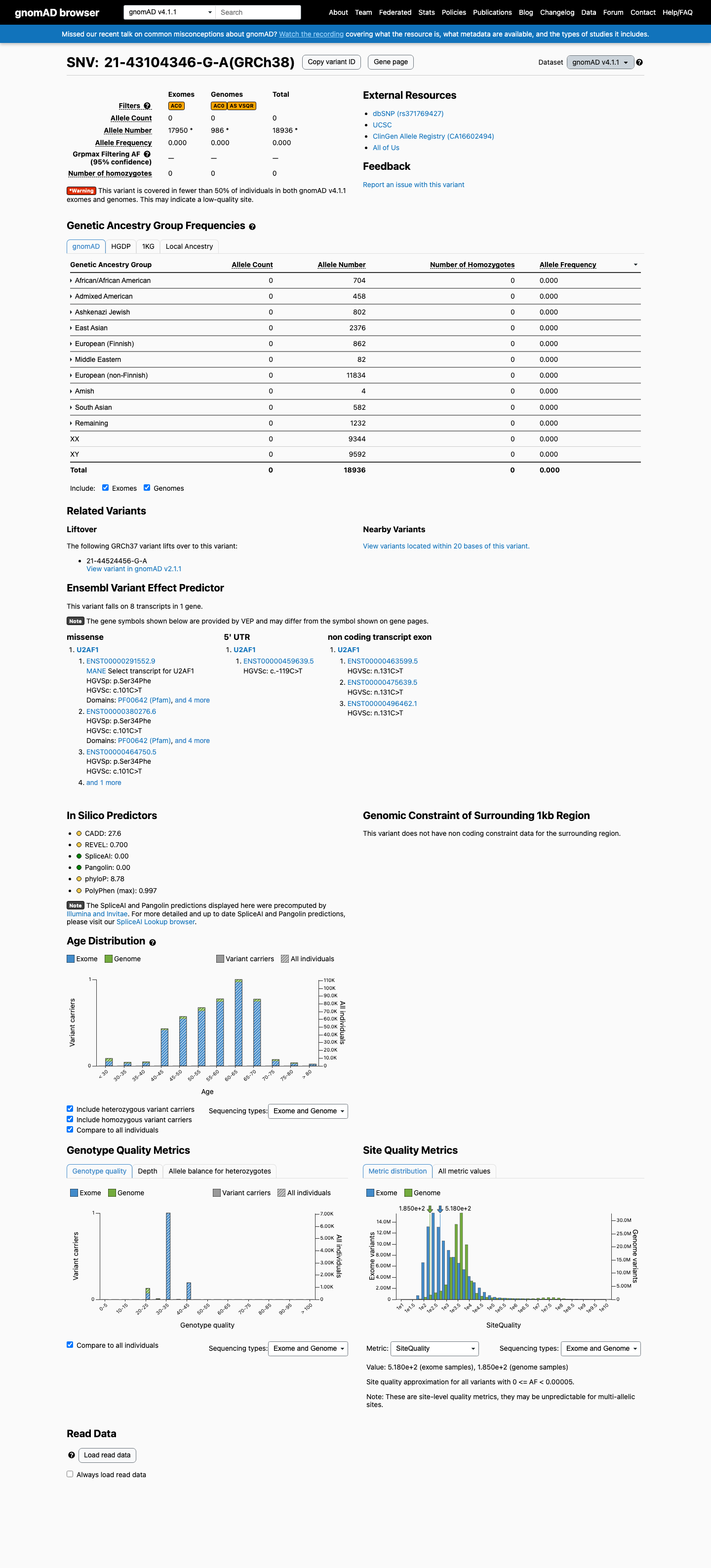
gnomAD v4.1
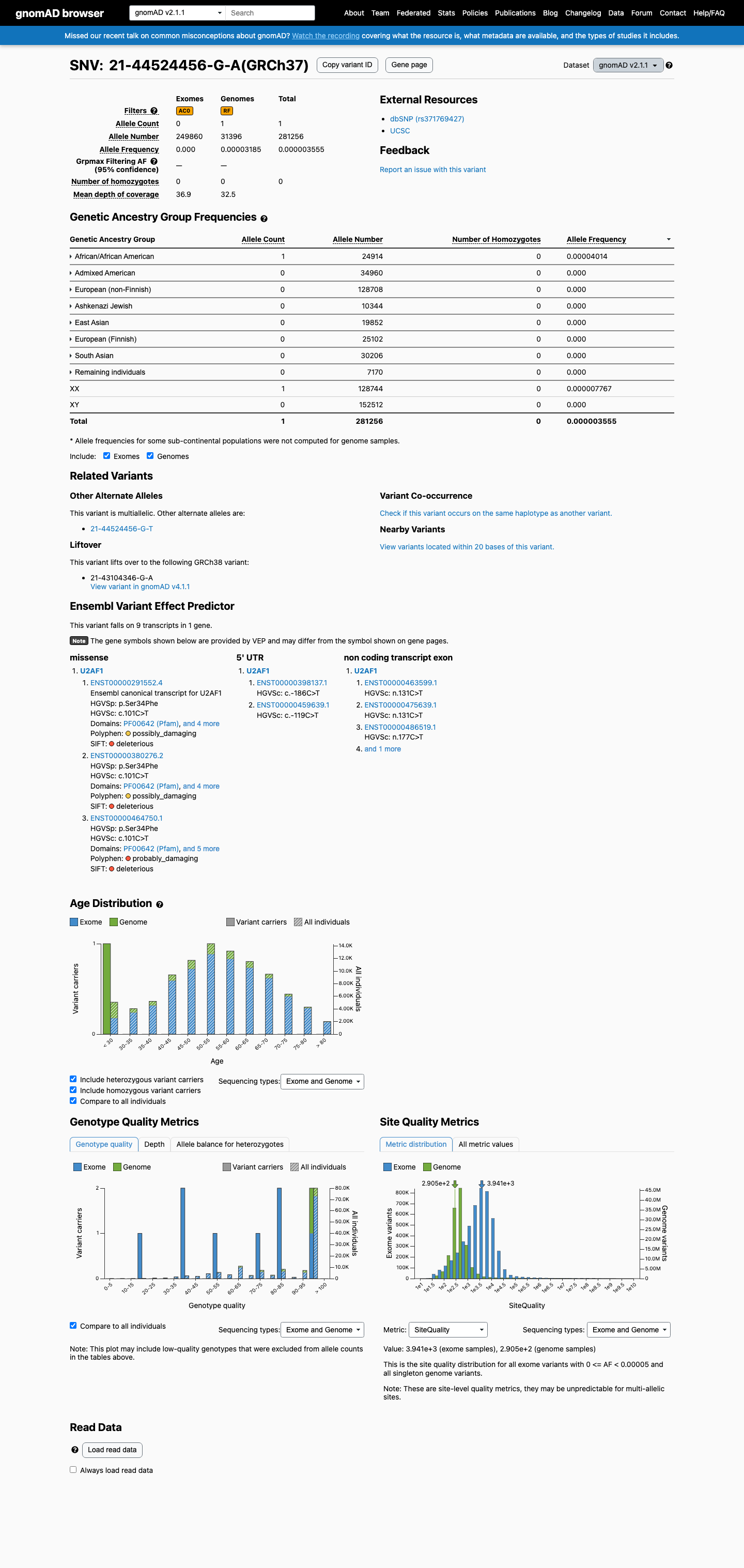
gnomAD v2.1
v4.1
This variant is present in gnomAD v4.1 (AF= 0; MAF= 0.00000%, 0/18936 alleles, homozygotes = 0) and has highest observed frequency in the African/African American population (AF= 0; MAF= 0.00000%, 0/704 alleles, homozygotes = 0).
v2.1
This variant is present in gnomAD v2.1 (AF= 3.55548e-06; MAF= 0.00036%, 1/281256 alleles, homozygotes = 0) and has highest observed frequency in the African/African American population (AF= 4.01381e-05; MAF= 0.00401%, 1/24914 alleles, homozygotes = 0).
🇨🇦 CA
Not available in gnomAD-Canada v1.0.
Allele frequency by ancestry
three datasets · side by side
gnomAD v4.1
Absent
· 0 / 18,936
0 hom
0 hom
Not observed in any ancestry group.
+ 10 not observed (Remaining individuals, Admixed American, European (Finnish), Amish, East Asian, Middle Eastern, South Asian, Ashkenazi Jewish, African/African American, European (non-Finnish))
gnomAD v2.1
0.00036%
· 1 / 281,256
0 hom
0 hom
African/African American 1 / 24,914 |
0.004% |
+ 7 not observed (Admixed American, Ashkenazi Jewish, East Asian, European (Finnish), European (non-Finnish), Remaining individuals, South Asian)
gnomAD Canada 🇨🇦
Absent
· 0 / ?
0 hom
0 hom
Not observed in any ancestry group.
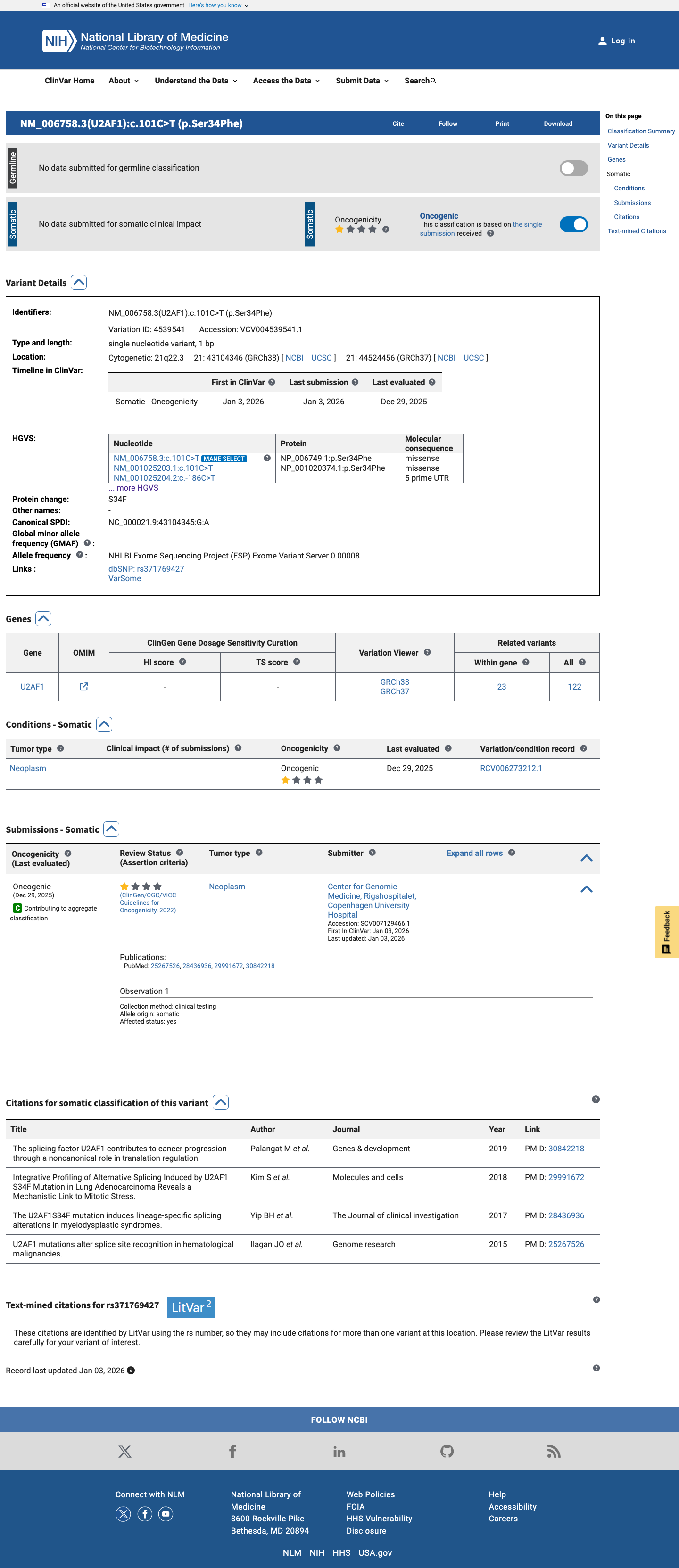
ClinVar
This variant has been reported in ClinVar but submission details could not be extracted. (ClinVarID = 4539541)
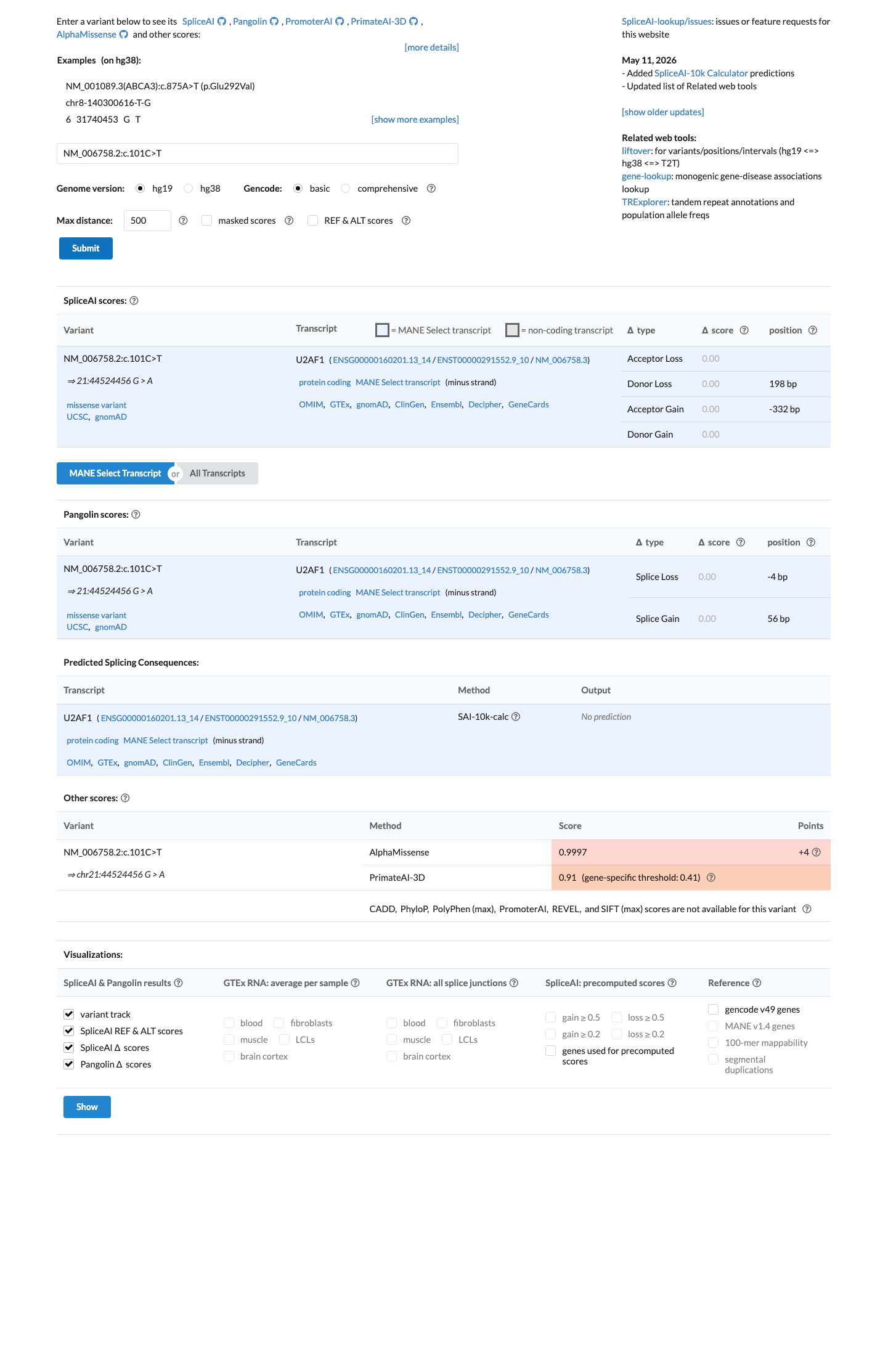
In silico
SpliceAI predicts no significant splice impact for this variant (max delta score = 0.00). REVEL score = 0.7. BayesDel score = 0.415417.
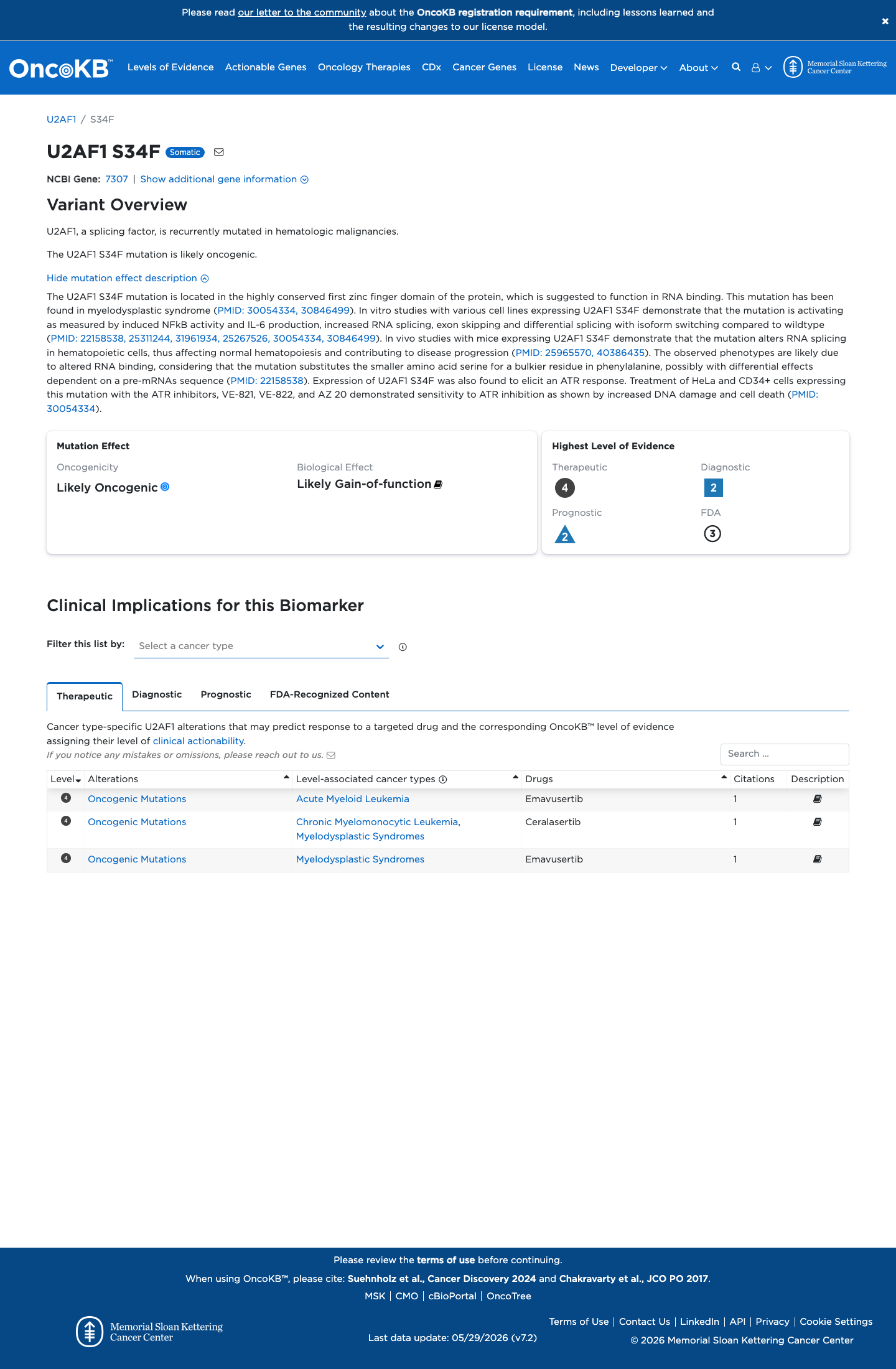
Functional
Likely Oncogenic
OncoKB identified variant-specific curated literature and context relevant to functional review; biological-effect context: Likely Gain-of-function; curated oncogenicity label: Likely Oncogenic.
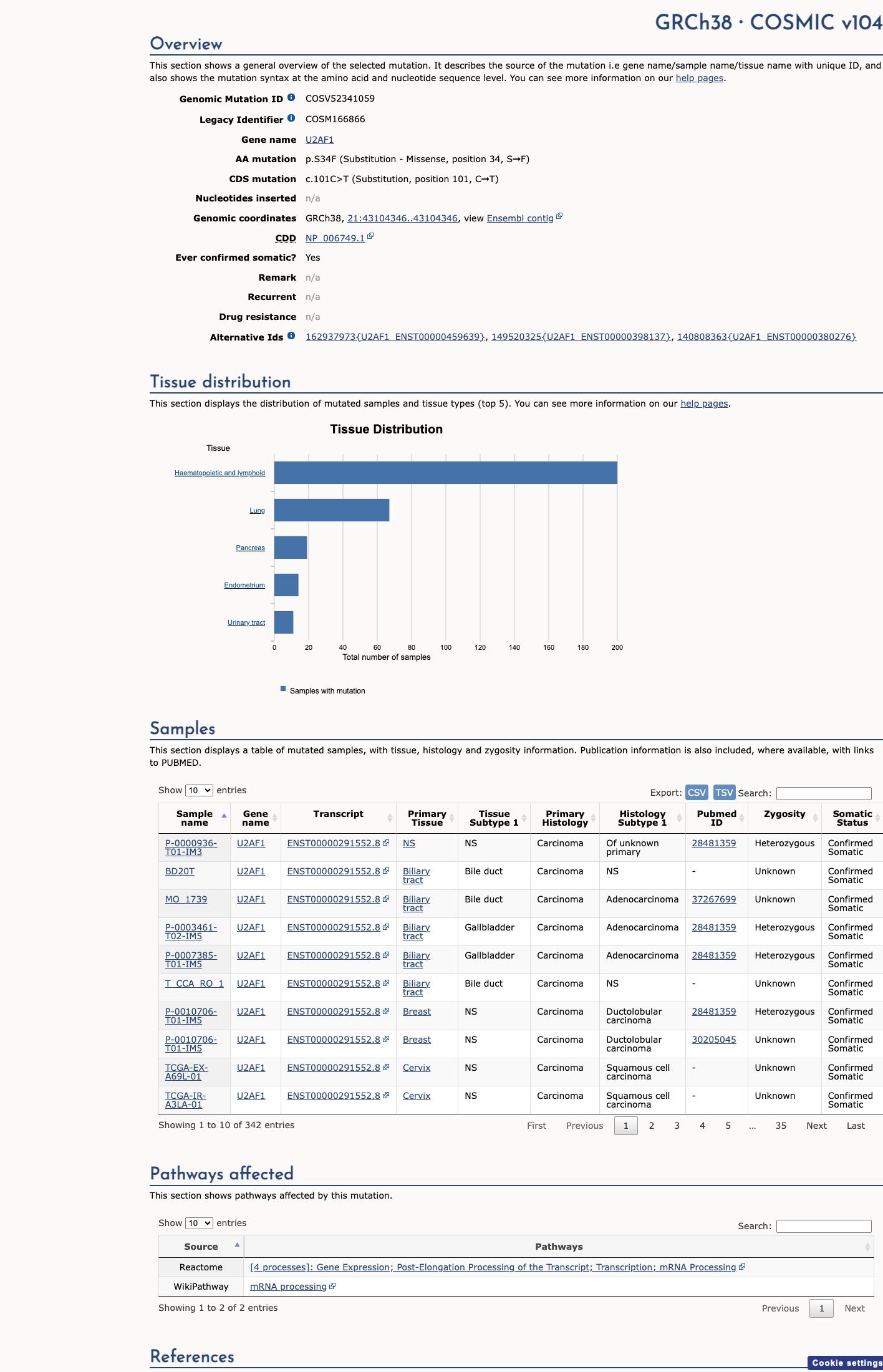
COSMIC

Cancer hotspots
Somatic evidence
Hotspot
COSMIC
This variant lies in a statistically significant hotspot. This variant has previously been reported in somatic cancers (COSMIC; COSV52341059, n = 340 times).
Hotspots
This variant lies in a statistically significant hotspot.
Literature · how each cited paper was used
7papers cited
Each card is an audit: what was searched, what was found, whether it names the variant, which criteria it fed, and why. 1 further PMID triaged but not cited — see Sources & references.
Recurrent mutations in the U2AF1 splicing factor in myelodysplastic syndromes.
Searched
c.101C>TS34FSer34PheS34YNM_006758
Found
U2AF1 S34F was identified as a recurrent missense mutation in 11 of 150 (7.3%) de novo MDS patients, with S34Y in an additional 2 patients. Mutant U2AF1 S34F promoted enhanced splicing and exon skipping in double-reporter and minigene assays in 293T cells, consistent with a gain-of-function mechanism.
Variant
✓ Names this variant — characterised directly
Applied to
→PS3
met
→PM1
met
Why
Variant-specific functional data demonstrating enhanced splicing and exon skipping; cited for PS3 (strong) and PM1 (moderate).
a missense mutation affecting the serine at codon 34 (S34) in U2AF1 was recurrently mutated in 13/150 (8.7%) de novo MDS patients.
Location Abstract; Results; Figure 3; Online Methods · Context 293T cells; pTN24 double-reporter splicing assay; GH1 minigene exon skipping assay; FMR1 minigene; MDS patient bone marrow CD34+ cells · full text
U2AF1 mutations alter splice site recognition in hematological malignancies.
Searched
c.101C>TS34FSer34Phep.S34FNM_006758
Found
U2AF1 S34F mutations alter 3′ splice site recognition in hematological malignancies, causing differential splicing of hundreds of genes including DNMT3B, ATR, CASP8, and FANCA. Mutations affecting S34 alter the preferred 3′ splice site motif with a shift from T to C/A at the −3 position.
Variant
✓ Names this variant — characterised directly
Applied to
→PS3
met
→PM1
met
Why
Variant-specific functional data demonstrating altered splice site recognition and differential splicing; cited for PS3 (strong) and PM1 (moderate).
U2AF1 mutations are highly specific—they uniformly affect the S34 and Q157 residues within the first and second CCCH zinc fingers of the protein.
Location Abstract; Results sections "U2AF1 mutations cause allele-specific alterations in the 3′ splice site consensus"; Figures 1-6 · Context K562 erythroleukemic cell lines stably expressing FLAG-tagged U2AF1 (WT, S34F, S34Y, Q157P, Q157R); RNA-seq; minigene splicing reporter assays; in vitro splicing with AdML substrate; TCGA AML transcriptomes · full text
U2AF1 mutations alter sequence specificity of pre-mRNA binding and splicing.
Searched
c.101C>TS34FSer34PheS34YNM_006758
Found
U2AF1 S34F and S34Y mutations alter the sequence specificity of pre-mRNA binding and splicing, shifting preference from T to C at the −3 position of the 3′ splice site. The mutations affect the ZnF1 domain and alter RNA binding, resulting in downstream splicing changes.
Variant
✓ Names this variant — characterised directly
Applied to
→PS3
met
→PM1
met
Why
Variant-specific functional data demonstrating altered RNA binding specificity; cited for PS3 (strong) and PM1 (moderate).
We analyzed splicing changes induced by mutant U2AF1 in primary CD34+ cells from MDS patients and found that U2AF1 S34F and S34Y mutations impart altered sequence-specific RNA binding and splicing.
Location Abstract; Results; Figures 1-5 · Context Primary human CD34+ hematopoietic cells; RNA-seq; RNA binding assays; minigene splicing reporters · full text
Mutant U2AF1 Expression Alters Hematopoiesis and Pre-mRNA Splicing In Vivo.
Searched
c.101C>TS34FSer34PheU2AF1(S34F)NM_006758
Found
Transgenic mice expressing U2AF1 S34F display altered hematopoiesis including leukopenia, monocyte and B-cell reduction, progenitor cell expansion, and altered pre-mRNA splicing in bone marrow progenitor cells by RNA-seq. 633 genes showed differential splicing in mouse common myeloid progenitors expressing U2AF1 S34F. The 3′ splice site sequence preference alteration (T at −3) was conserved across mouse and human.
Variant
✓ Names this variant — characterised directly
Applied to
→PS3
met
→PM1
met
Why
Variant-specific in vivo functional data demonstrating hematopoietic abnormalities and splicing alterations in a mouse model; cited for PS3 (strong) and PM1 (moderate).
Mice expressing mutant U2AF1(S34F) display altered hematopoiesis and changes in pre-mRNA splicing in hematopoietic progenitor cells by whole transcriptome analysis (RNA-seq).
Location Abstract; Results sections; Figures 1-7; Tables S1-S7 · Context Doxycycline-inducible U2AF1(S34F) transgenic mice; bone marrow transplantation; flow cytometry; RNA-seq of CMP cells; validation in human MDS bone marrow samples and primary CD34+ cells · full text
Integrative Profiling of Alternative Splicing Induced by U2AF1 S34F Mutation in Lung Adenocarcinoma Reveals a Mechanistic Link to Mitotic Stress.
Searched
S34FU2AF1c.101C>T
Found
Functional analysis of U2AF1 S34F missense mutation in lung adenocarcinoma (LUAD) showed induction of alternative splicing changes and a mechanistic link to mitotic stress. Knockdown and overexpression studies revealed splicing alterations affecting mitotic genes.
Variant
✓ Names this variant
Applied to
→PS3
met
Why
Variant-specific functional data in solid tumor context; supports PS3.
One of the most frequently found is U2AF1 S34F missense mutation.
Location Title and abstract · Context Lung adenocarcinoma cell lines; RNA-seq; splicing analysis
Spliceosome Mutations Induce R Loop-Associated Sensitivity to ATR Inhibition in Myelodysplastic Syndromes.
Searched
c.101C>TS34FU2AF1(S34F)Ser34PheNM_006758
Found
U2AF1 S34F expression causes accumulation of R-loops (RNA:DNA hybrids) and elicits an ATR-dependent checkpoint response. ATR inhibition selectively induces DNA damage and cell death in U2AF1 S34F-expressing cells, including primary human CD34+ hematopoietic progenitors. Splicing alterations occur independently of R-loop formation.
Variant
✓ Names this variant — characterised directly
Applied to
→PS3
met
Why
Variant-specific functional data demonstrating R-loop accumulation and ATR dependency in multiple cell types; cited for PS3 (strong).
RNA splicing perturbation by expression of the U2AF1(S34F) mutant causes accumulation of R loops, a transcription intermediate containing RNA:DNA hybrids and displaced single-stranded DNA, and elicits an ATR response.
Location Abstract; Results sections; Figures 1-7 · Context HeLa cells; K562 cells; OCI-AML3 cells; primary human CD34+ hematopoietic progenitor cells; ATR inhibitors (VE-821, VE-822, AZ-20); RNaseH1 overexpression; immunofluorescence (S9.6, γH2AX, p-RPA) · full text
The splicing factor U2AF1 contributes to cancer progression through a noncanonical role in translation regulation.
Searched
S34FU2AF1c.101C>T
Found
U2AF1 S34F, the most common change in the gene, contributes to cancer progression through a noncanonical role in translation regulation, in addition to its known role in splice site selection and alternative splicing.
Variant
✓ Names this variant
Applied to
→PS3
met
Why
Variant-specific functional data describing noncanonical translation regulation role; supports PS3.
the most common change, S34F, alters a conserved nucleic acid-binding domain, recognition of the 3′ splice site, and alternative splicing of many transcripts
Location Abstract · Context Not available from abstract
Sources & reference links
Triaged references · 1 PMID not cited in assessment
23619274 ↗
American College of Medical Genetics and Genomics technical standards and guidelines: microarray analysis for chromosome abnormalities in neoplastic disorders.
CLINVAR