NOTCH2 encodes a transmembrane receptor in the Notch signaling pathway, an evolutionarily conserved cell-to-cell communication system that controls cell fate decisions during development. When engaged by ligands on adjacent cells, NOTCH2 is cleaved and its intracellular domain moves to the nucleus to regulate genes involved in cell differentiation, growth, proliferation, and survival. Mutations in NOTCH2 cause Hajdu-Cheney syndrome, and altered NOTCH2 signaling is also associated with cancer, where it can act as either an oncogene or a tumor suppressor depending on the cellular context.
This variant
This Likely Pathogenic frameshift is predicted to eliminate NOTCH2 function through nonsense-mediated decay, the loss-of-function mechanism underlying NOTCH2-related Alagille syndrome and consistent with Hajdu-Cheney syndrome. Because NOTCH2 signaling can act as either an oncogene or a tumor suppressor depending on cellular context, the cancer relevance of this null allele would depend on the tissue in which it arises.
Transcript
NM_024408.3
HGVS · transcript:coding
NM_024408.3:c.5625del
GRCh38
chr1:119919467 TC>T
GRCh37
chr1:120462090 TC>T
BasisNo ClinGen NOTCH2 framework was available, so generic ACMG/AMP 2015 rules apply: PVS1 (Very Strong) plus PM2 (Moderate) yields Likely Pathogenic.▾
No ClinGen NOTCH2 framework was available, so generic ACMG/AMP 2015 rules apply: PVS1 (Very Strong) plus PM2 (Moderate) yields Likely Pathogenic.
Classification rationale
PVS1PM2Likely Pathogenic
NOTCH2 c.5625delframeshift · exon 31
PVS1 (Very Strong): frameshift p.(Thr1876LeufsTer54) predicted to trigger nonsense-mediated decay in NOTCH2, which has an established loss-of-function disease mechanism. PM2 (Moderate): variant absent from gnomAD v2.1, gnomAD v4.1, and gnomAD-Canada v1.0. Combined under ACMG/AMP 2015 rules, PVS1 (Very Strong) plus PM2 (Moderate) supports a final classification of Likely Pathogenic.
PVS1 + PM2→Likely Pathogenic
Gene diagram
· NM_024408.3 · variants mapped to exon structure
NOTCH2NM_024408.3
Fetching transcript structure from UCSC…
Exons
—
Transcript span
—
Strand
—
Variants mapped
—
Source
UCSC ncbiRefSeqCurated
All variants in NOTCH2—click a row to locate it on the plot · use the link column to open its page
Variant ↕
Protein
Location
Classification
Link
Applied criteria · 2 applied · 17 assessed
MetEvidence satisfies this criterion.
Not metEvaluated against available evidence; threshold not reached.
Not assessedApplies in principle, but no evidence was found to evaluate it.
N/ADoesn't apply to this variant type.
Applied · 2
Strength Supporting Moderate Strong Very strong
✓
PVS1very strongPathogenic
Met (Very Strong): frameshift p.(Thr1876LeufsTer54) predicted to trigger nonsense-mediated decay in NOTCH2, which has an established loss-of-function disease mechanism.
pvs1_variant_assessment.json classifies c.5625del as consequence_class=frameshift, variant_bucket=frameshift, and recommends applying the generic PVS1 framework at suggested_default_strength=PVS1, citing PMC6185798 (ClinGen SVI PVS1 recommendations) as the governing framework since no NOTCH2 CSPEC/VCEP PVS1 rule exists for this case.pvs1_gene_context.json confirms NOTCH2 germline loss-of-function is an established disease mechanism (pvs1_gene_gate=eligible, lof_mechanism_supported=true), based on targeted literature review of NOTCH2-related Alagille syndrome and related disorders.VariantValidator/Mutalyzer exon mapping (prefetch.json) places c.5625 within exon 31 of NOTCH2 (c.5480-5781), with the terminal coding exon being exon 34 (c.6028-*3753); the premature termination codon falls multiple exon-exon junctions upstream of the last junction, consistent with NMD-predicted decay per the >50-55nt rule in the generic PVS1 decision tree.
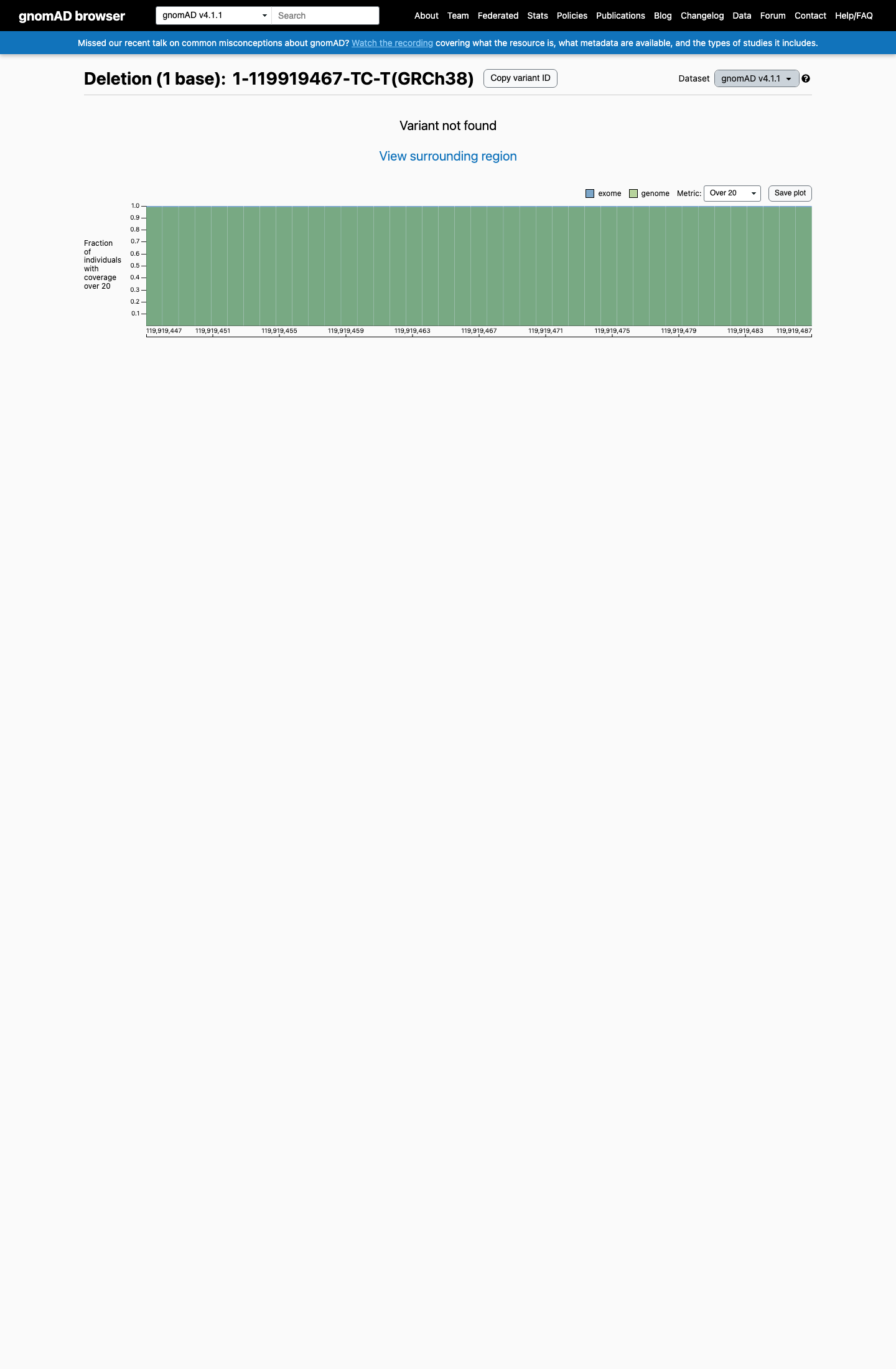
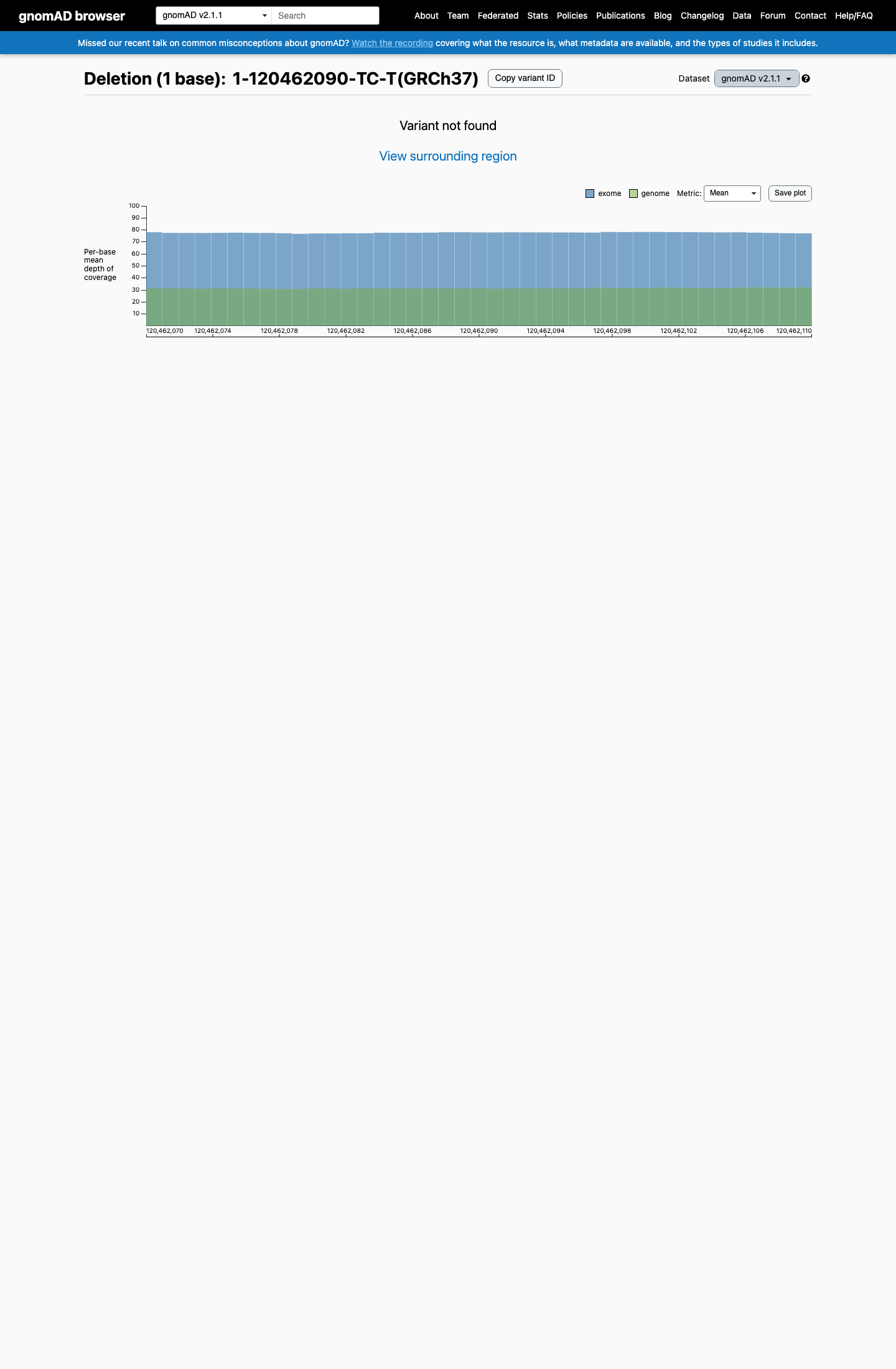
Met (Moderate): absent from gnomAD v2.1, gnomAD v4.1, and gnomAD-Canada v1.0 population databases.
NM_024408.3:c.5625del was queried as GRCh37 1-120462090-TC-T and GRCh38 1-119919467-TC-T and was reported absent from gnomAD v2.1, gnomAD v4.1, and gnomAD-Canada v1.0.No NOTCH2-specific VCEP/ClinGen specification was retrieved; generic ACMG/AMP 2015 PM2 applies.
Each card is an audit: what was searched, what was found, whether it names the variant, which criteria it fed, and why. 2 further PMIDs triaged but not cited — see Sources & references.
Rule & framework references · cited for criterion definitions, not variant evidence
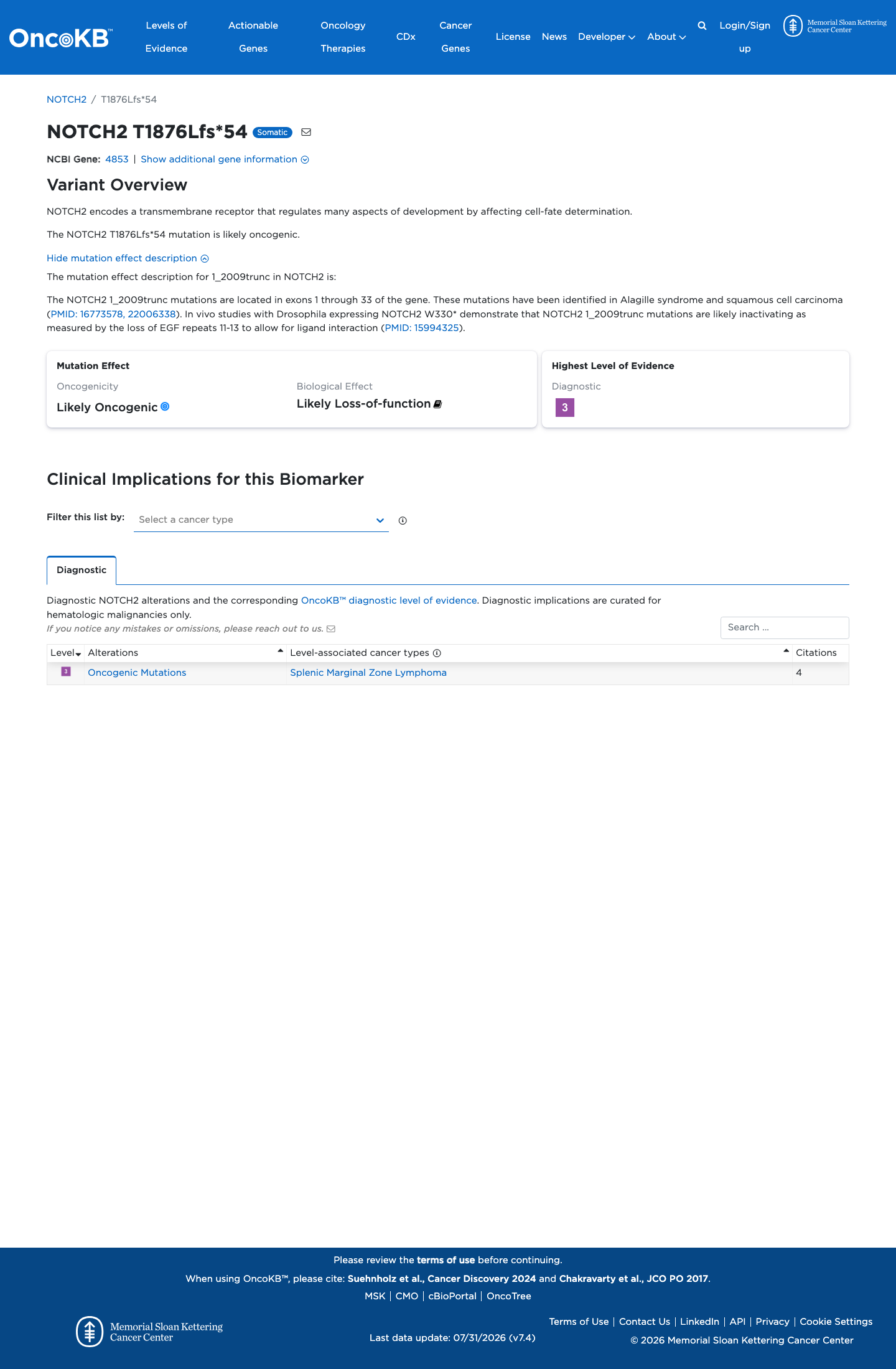
16773578 ↗NOTCH2 mutations cause Alagille syndrome, a heterogeneous disorder of the notch signaling pathway.
Sources & reference links
8Sources
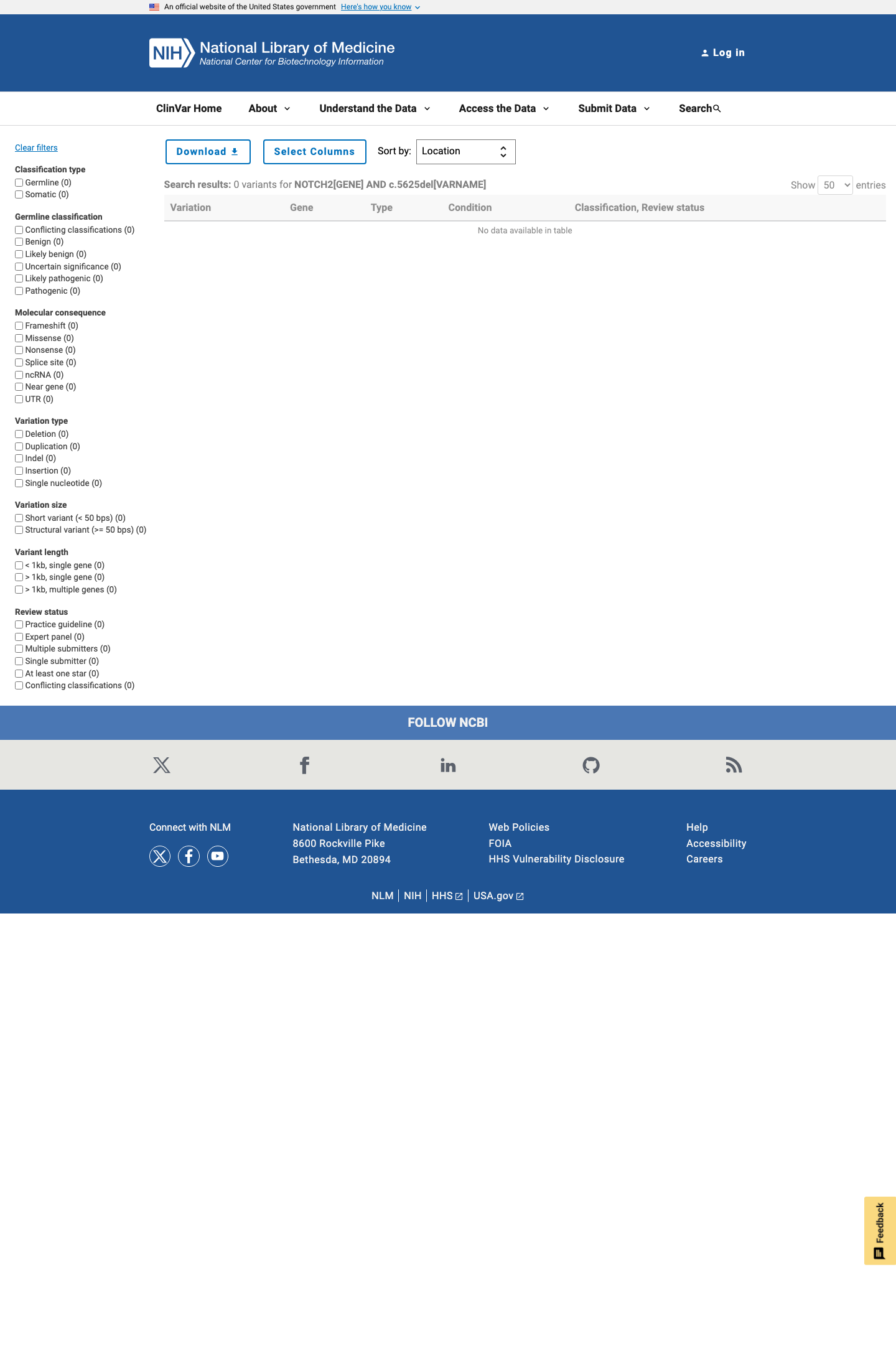
ClinVar
gnomAD v2.1
gnomAD v4.1
gnomAD-Canada
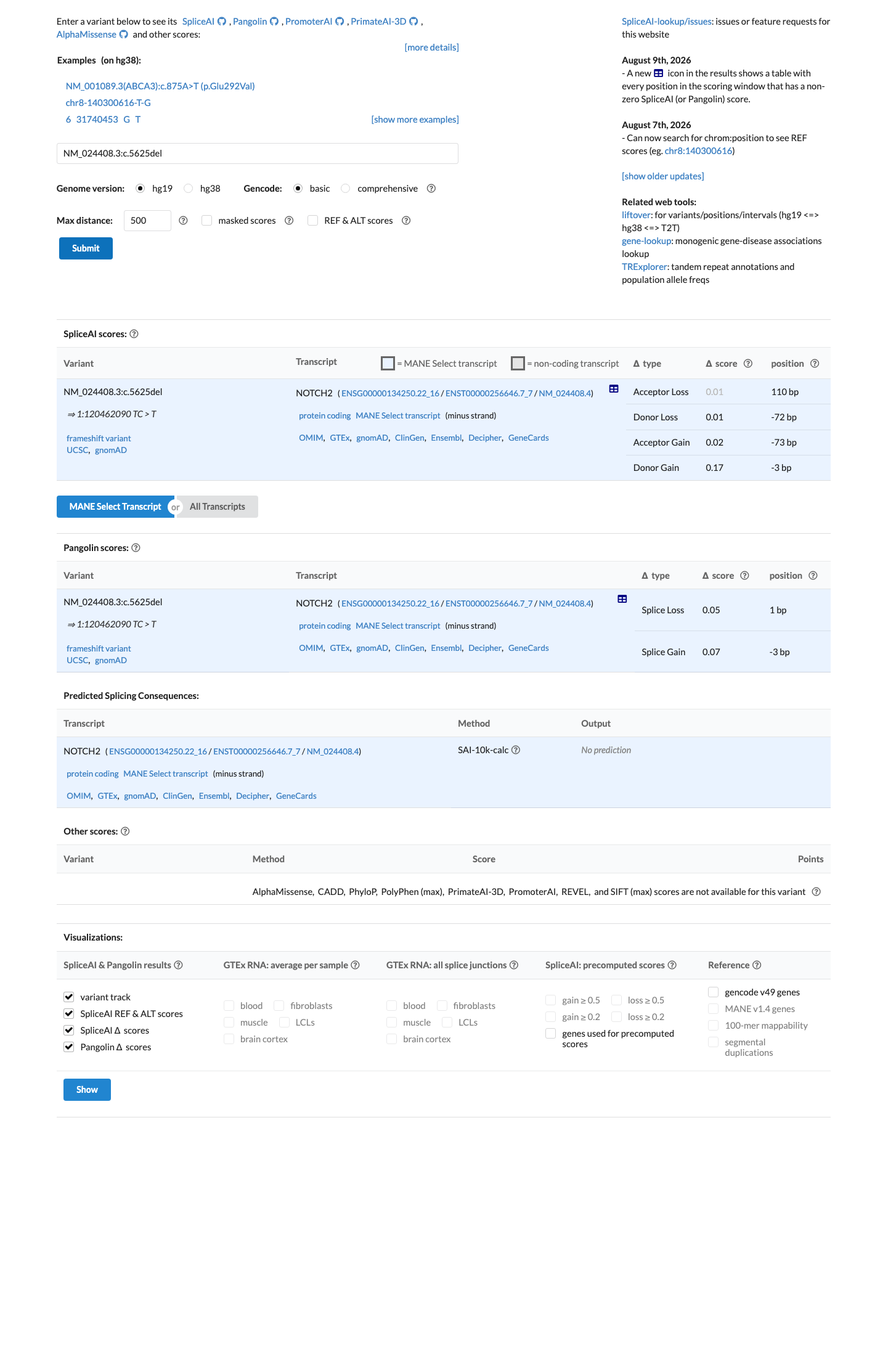
SpliceAI
OncoKB
COSMIC
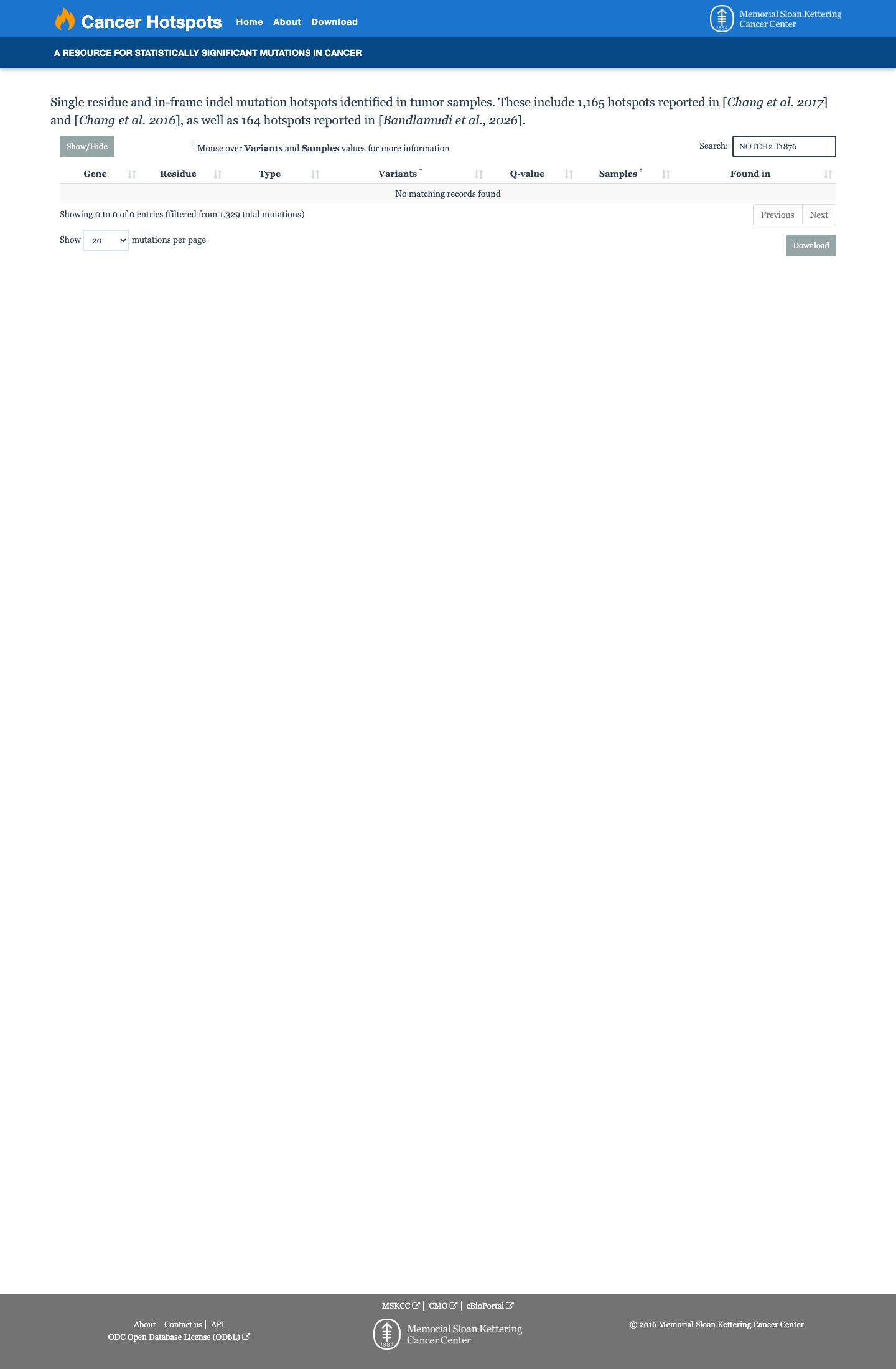
Cancer hotspots
Triaged references · 2 PMIDs not cited in assessment
15994325 ↗Regions of Drosophila Notch that contribute to ligand binding and the modulatory influence of Fringe.ONCOKB
22006338 ↗Loss-of-function mutations in Notch receptors in cutaneous and lung squamous cell carcinoma.ONCOKB