NM_033360.3:c.179G>T (p.Gly60Val) is a missense variant in KRAS identified in a single de novo proband with Noonan syndrome and lethal hypertrophic cardiomyopathy (Nosan et al. 2013).1 The variant affects Gly60, which resides in the Switch II domain (AA 57–64), a critical functional domain per RASopathy VCEP specifications (PM1_Moderate).2 At least two different pathogenic missense changes (p.Gly60Ser, p.Gly60Arg) have been reported at the same codon in RASopathy patients, satisfying PM5 at Moderate strength.3 Parental genotyping confirmed the variant occurred de novo, meeting PS2 at Moderate strength (1 de novo point per VCEP rules).4 The variant is observed in a single RASopathy proband, meeting PS4 at Supporting strength (≥1 point per VCEP rules).5 REVEL in silico score of 0.879 exceeds the VCEP threshold of ≥0.7, meeting PP3 at Supporting strength.6 The variant is present at extremely low frequency in gnomAD (v2.1: 1/251,328; v4.1: 3/1,614,068), which is below benign population thresholds but above the PM2 absence requirement.7 Applying the RASopathy VCEP classification rules: three Moderate criteria (PS2_Moderate, PM1, PM5) plus two Supporting criteria (PS4_Supporting, PP3) are met. Per VCEP Rule13, ≥3 Moderate criteria yields a classification of Likely Pathogenic.8
Final classification
Likely Pathogenic
PS2PS4PM1PM5PP3
KRAS
c.179G>T
p.Gly60Val
This variant
NM_033360.3:c.179G>T (p.Gly60Val) is a missense variant in KRAS identified in a single de novo proband with Noonan syndrome and lethal hypertrophic cardiomyopathy (Nosan et al. 2013).
ClinGen RASopathy Expert Panel Specifications to the ACMG/AMP Variant Interpretation Guidelines for KRAS Version 2.3.0 v2.3.0 criteria-combination framework: matched Rule13 (Pathogenic.Moderate >=3) with applied criteria: PS2 moderate, PS4 supporting, PM1 moderate, PM5 moderate, PP3 supporting; maps to Likely Pathogenic.
Classification rationale
PS2PS4PM1PM5PP3
Likely Pathogenic
KRAS c.179G>T
PS2 + PS4 + PM1 + PM5 + PP3
→
Likely Pathogenic
LYFE Sciences is an AI system, and it can make mistakes. Criteria
may be applied incorrectly, sources may be misread, and a confident-looking
classification can still be wrong. Double-check every criterion and
its underlying evidence before relying on any call.
Gene diagram
· NM_033360.3 · variants mapped to exon structure
KRAS
NM_033360.3
Fetching transcript structure from UCSC…
Applied criteria · 5 applied · 12 assessed
MetEvidence satisfies this criterion.
Not metEvaluated against available evidence; threshold not reached.
Not assessedApplies in principle, but no evidence was found to evaluate it.
N/ADoesn't apply to this variant type.
Applied · 5
Strength
Supporting
Moderate
Strong
Very strong
PS2
moderate
Pathogenic
One de novo observation confirmed by parental genotyping in an infant with Noonan syndrome and lethal hypertrophic cardiomyopathy (Nosan et al. 2013). Per RASopathy VCEP PS2 rules, 1 de novo point confers Moderate strength.
De novo heterozygous c.179G>T (p.Gly60Val) confirmed by parental DNA testing in a Noonan syndrome proband with rapidly progressive HCM leading to death at 4 months
PS4
supporting
Pathogenic
One well-documented RASopathy proband identified — an infant with Noonan syndrome, dysmorphic features, and lethal HCM harboring a de novo G60V variant (Nosan et al. 2013). Per VCEP PS4 point-based rules, ≥1 point confers Supporting strength. The variant is also reported in ClinVar as Pathogenic/Likely Pathogenic by 7 clinical laboratories.
1 RASopathy proband with de novo G60V and classic NS phenotypeClinVar classification Pathogenic (4 labs)Likely Pathogenic (3 labs)
PM1
moderate
Pathogenic
p.Gly60 is located within the Switch II (SW2) domain (amino acids 57–64), a critical and well-established functional domain per RASopathy VCEP specifications. SW2 is one of four domains (P-loop, SW1, SW2, SAK) approved for PM1 application at Moderate strength.
Gly60 falls within SW2 domain (AA 57-64)a VCEP-defined critical functional domain for RASopathies
PM5
moderate
Pathogenic
At least two different pathogenic missense changes have been reported at codon 60 — p.Gly60Ser and p.Gly60Arg — in individuals with Noonan syndrome and cardio-facio-cutaneous syndrome (cited in Nosan et al. 2013, referencing Kratz et al. 2009 and Niihori et al. 2006). Per VCEP PM5 rules, ≥1 pathogenic residue change at the same codon confers Moderate strength.
p.Gly60Ser and p.Gly60Arg reported as pathogenic KRAS missense variants in RASopathy patientssame codon as p.Gly60Val
PP3
supporting
Pathogenic
REVEL score of 0.879 exceeds the VCEP threshold of ≥0.7 for PP3 at Supporting strength. SpliceAI max delta score is 0.25, indicating minimal predicted splicing impact, which does not alter the REVEL-based assessment.
REVEL score 0.879 (≥0.7 threshold)SpliceAI max delta 0.25
Assessed · not applied
· 10 not met · 2 not assessed
Pathogenic
PS1
PS1 requires the same amino acid change as a previously established pathogenic variant.
PS3
No variant-specific functional assay data for KRAS G60V were identified in the available literature.
PM2
The RASopathy VCEP PM2 rule requires the variant to be absent from gnomAD controls.
PM6
The single de novo event reported in Nosan et al.
PP1
No segregation data are available.
Benign
BA1
GnomAD filtering allele frequency (v2.1: 3.98×10⁻⁶; v4.1: 1.86×10⁻⁶) is far below the VCEP BA1 threshold of ≥0.05%.
BS1
GnomAD filtering allele frequency (v2.1: 3.98×10⁻⁶; v4.1: 1.86×10⁻⁶) is far below the VCEP BS1 threshold of ≥0.025%.
BS2
No evidence of the variant observed in a healthy adult individual in a recessive or X-linked disorder, nor observed in trans with a pathogenic variant for a fully penetrant dominant disorder.
BS4
No evidence of non-segregation with disease in affected family members.
BP2
No evidence of the variant observed in trans with a pathogenic variant for a fully penetrant dominant disorder, or in cis with a pathogenic variant.
BP4
REVEL score of 0.879 exceeds the VCEP BP4 threshold of ≤0.3.
BP5
No evidence of an alternative molecular cause for the observed RASopathy phenotype.
N/A · 11
PVS1 · PM3 · PM4 · PP2 · PP4 · PP5 · BS3 · BP1 · BP3 · BP6 · BP7
Research & evidence
Population frequency · supports pathogenic
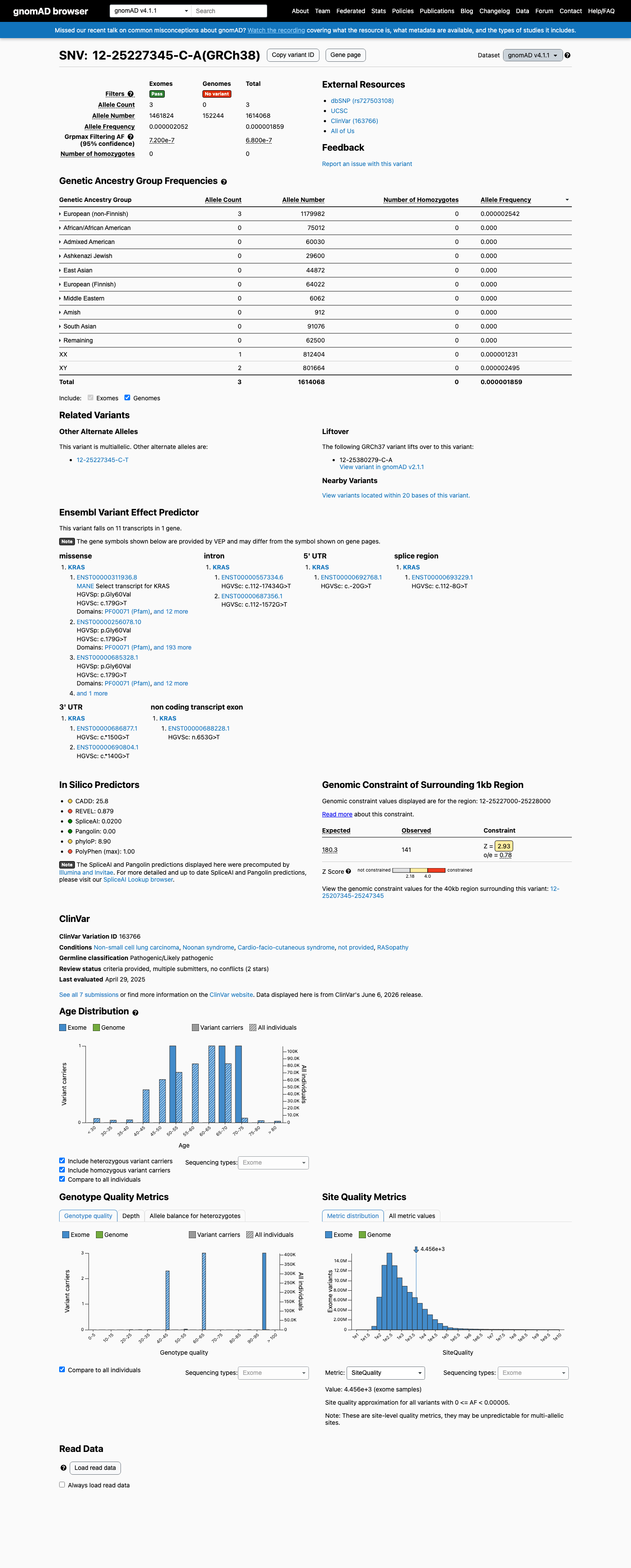
gnomAD v4.1
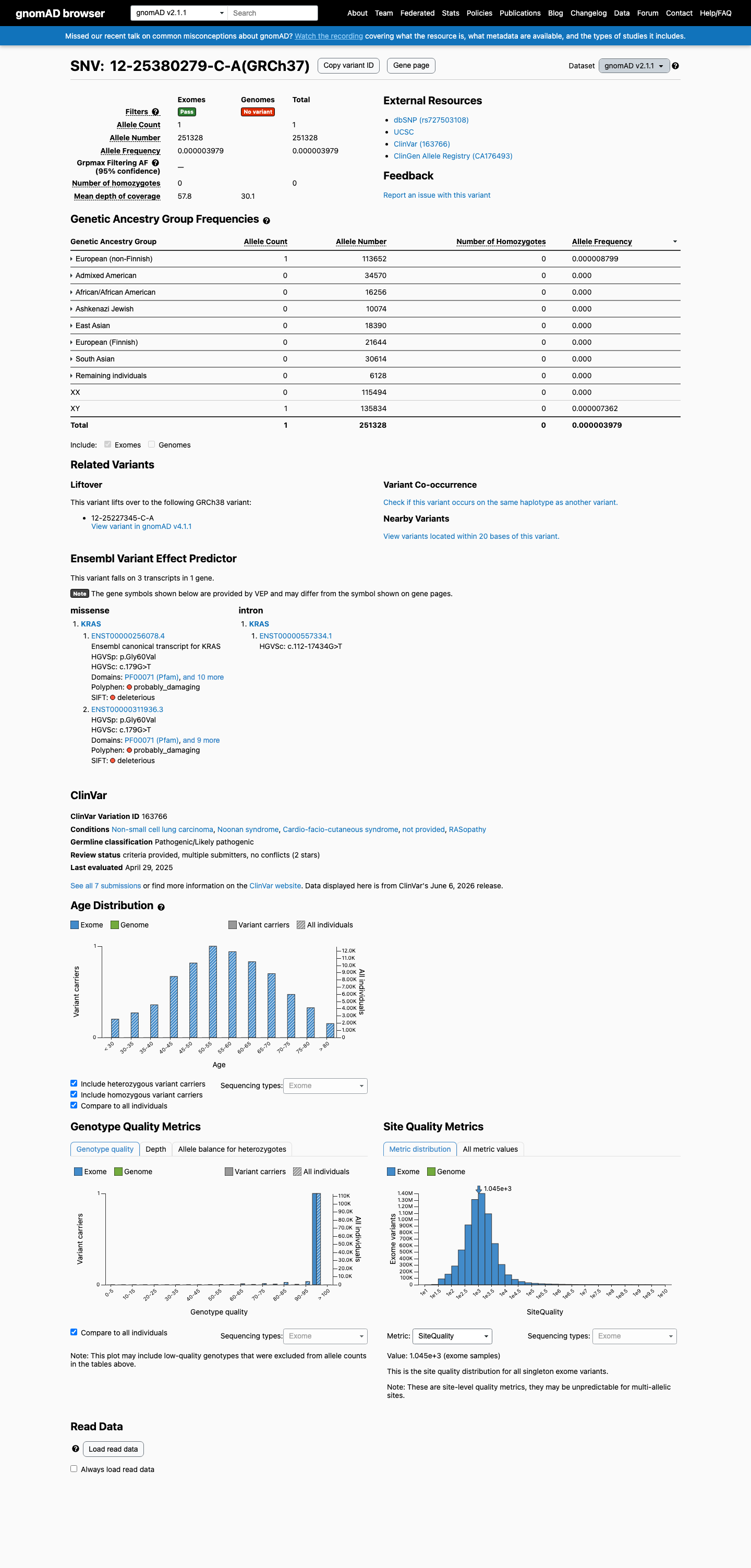
gnomAD v2.1
v4.1
This variant is present in gnomAD v4.1 (AF= 1.85866e-06; MAF= 0.00019%, 3/1614068 alleles, homozygotes = 0) and has highest observed frequency in the European (non-Finnish) population (AF= 2.54241e-06; MAF= 0.00025%, 3/1179982 alleles, homozygotes = 0); grpmax FAF= 6.8e-07.
v2.1
This variant is present in gnomAD v2.1 (AF= 3.97886e-06; MAF= 0.00040%, 1/251328 alleles, homozygotes = 0) and has highest observed frequency in the European (non-Finnish) population (AF= 8.79879e-06; MAF= 0.00088%, 1/113652 alleles, homozygotes = 0).
🇨🇦 CA
Absent from gnomAD-Canada v1.0.
Allele frequency by ancestry
three datasets · side by side
gnomAD v4.1
0.00019%
· 3 / 1,614,068
0 hom · FAF 6.8e-05%
0 hom · FAF 6.8e-05%
European (non-Finnish) 3 / 1,179,982 |
0.00025% |
+ 9 not observed (Remaining individuals, Admixed American, European (Finnish), Amish, East Asian, Middle Eastern, South Asian, Ashkenazi Jewish, African/African American)
gnomAD v2.1
0.0004%
· 1 / 251,328
0 hom
0 hom
European (non-Finnish) 1 / 113,652 |
0.00088% |
+ 7 not observed (African/African American, Admixed American, Ashkenazi Jewish, East Asian, European (Finnish), Remaining individuals, South Asian)
gnomAD Canada 🇨🇦
Absent
· 0 / ?
0 hom
0 hom
Not observed in any ancestry group.
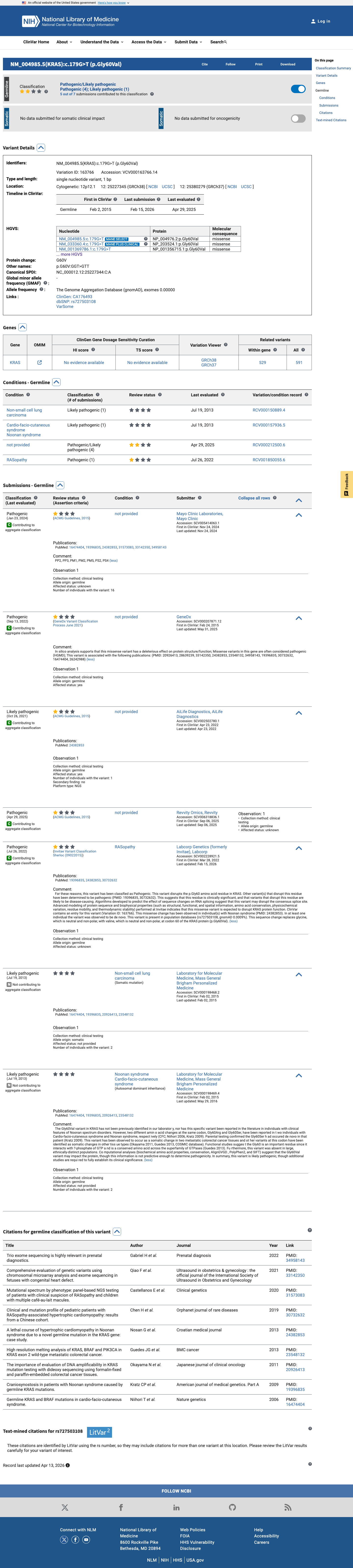
ClinVar
This variant has been reported in ClinVar as Pathogenic (4 clinical laboratories) and as Likely pathogenic (3 clinical laboratories). (ClinVarID = 163766)
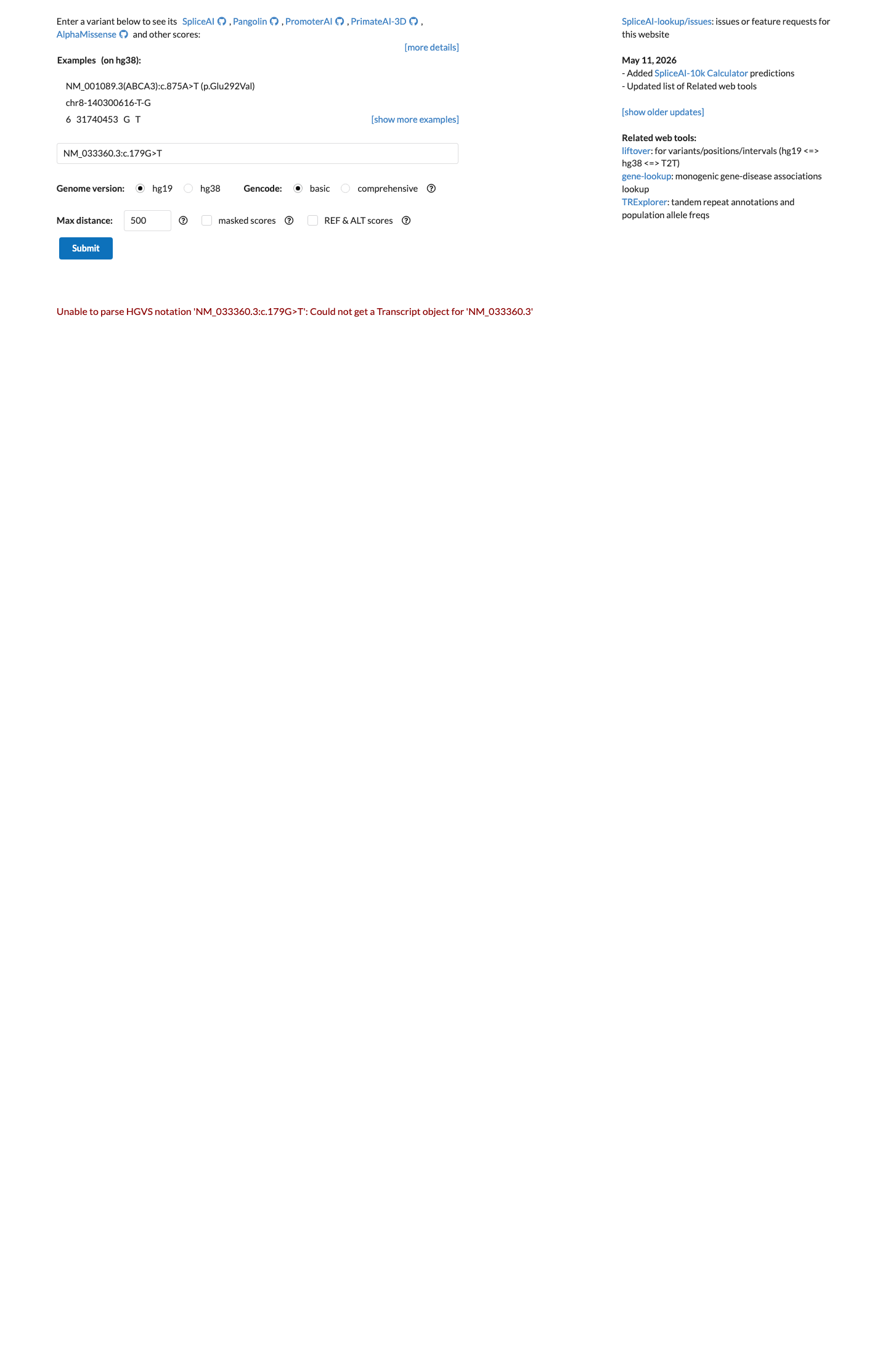
In silico
SpliceAI predicts possible splice impact for this variant (max delta score = 0.25). REVEL score = 0.879. BayesDel score = 0.303486.
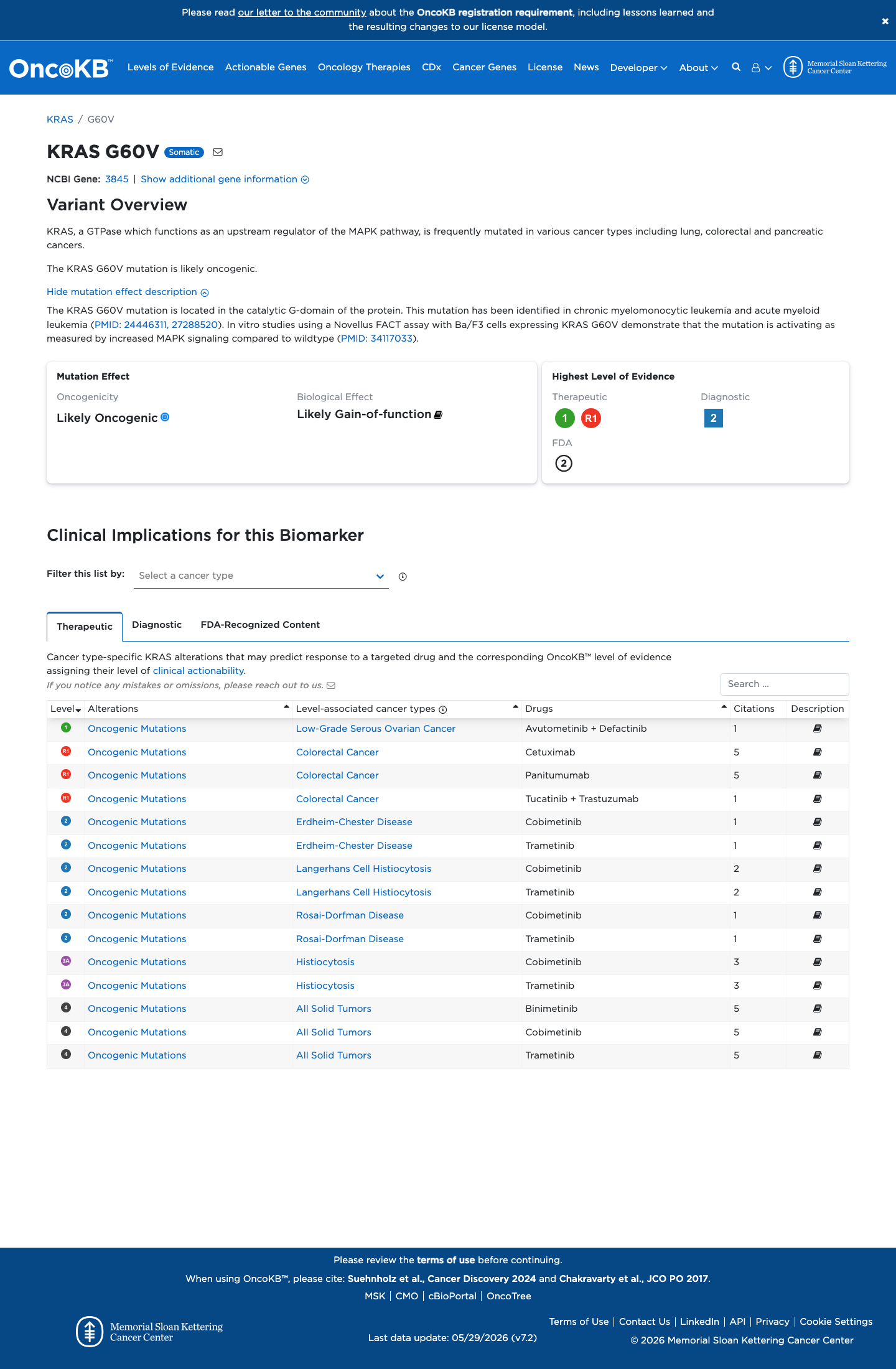
Functional
Likely Oncogenic
OncoKB identified variant-specific curated literature and context relevant to functional review; biological-effect context: Likely Gain-of-function; curated oncogenicity label: Likely Oncogenic.
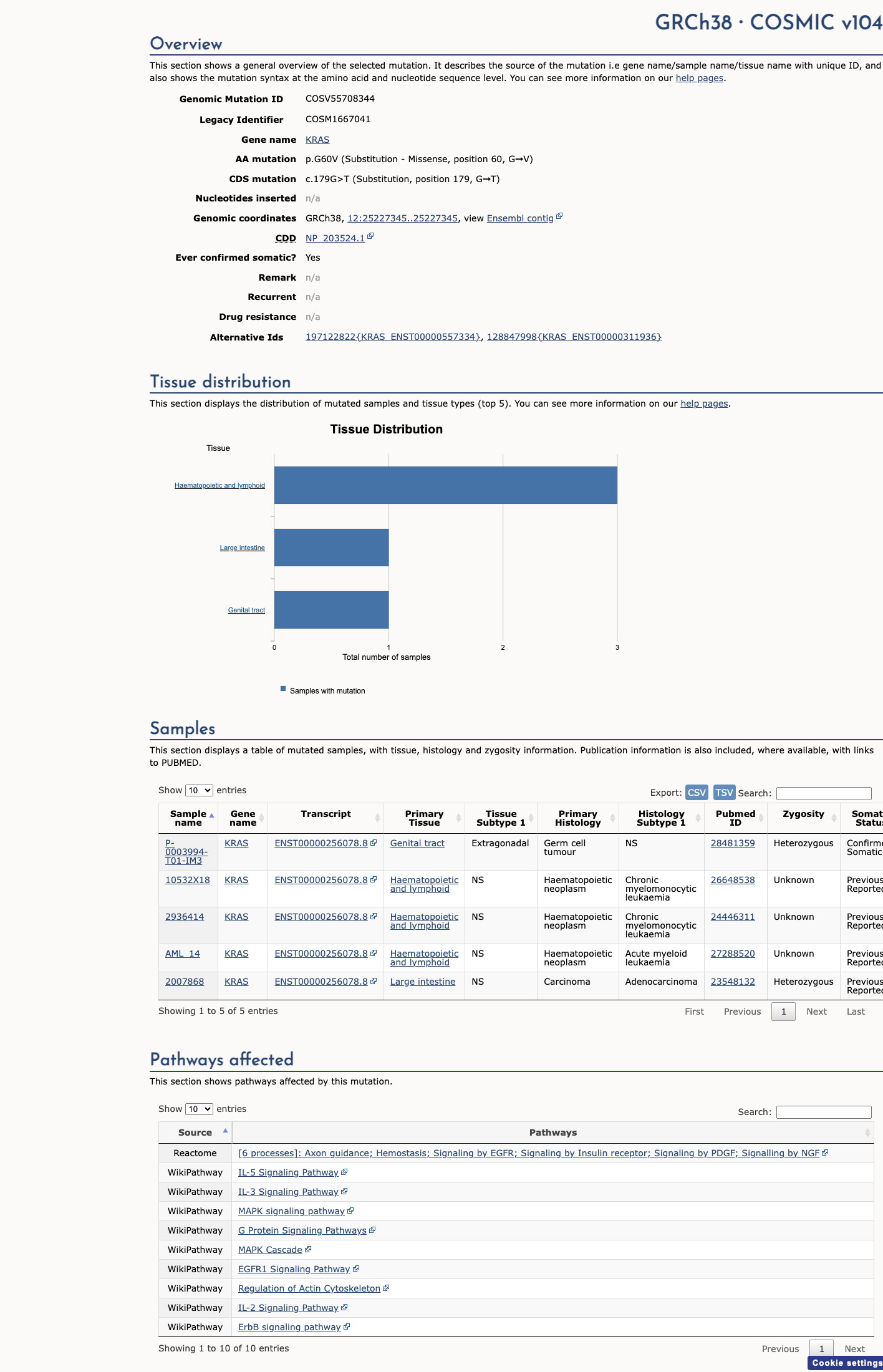
COSMIC
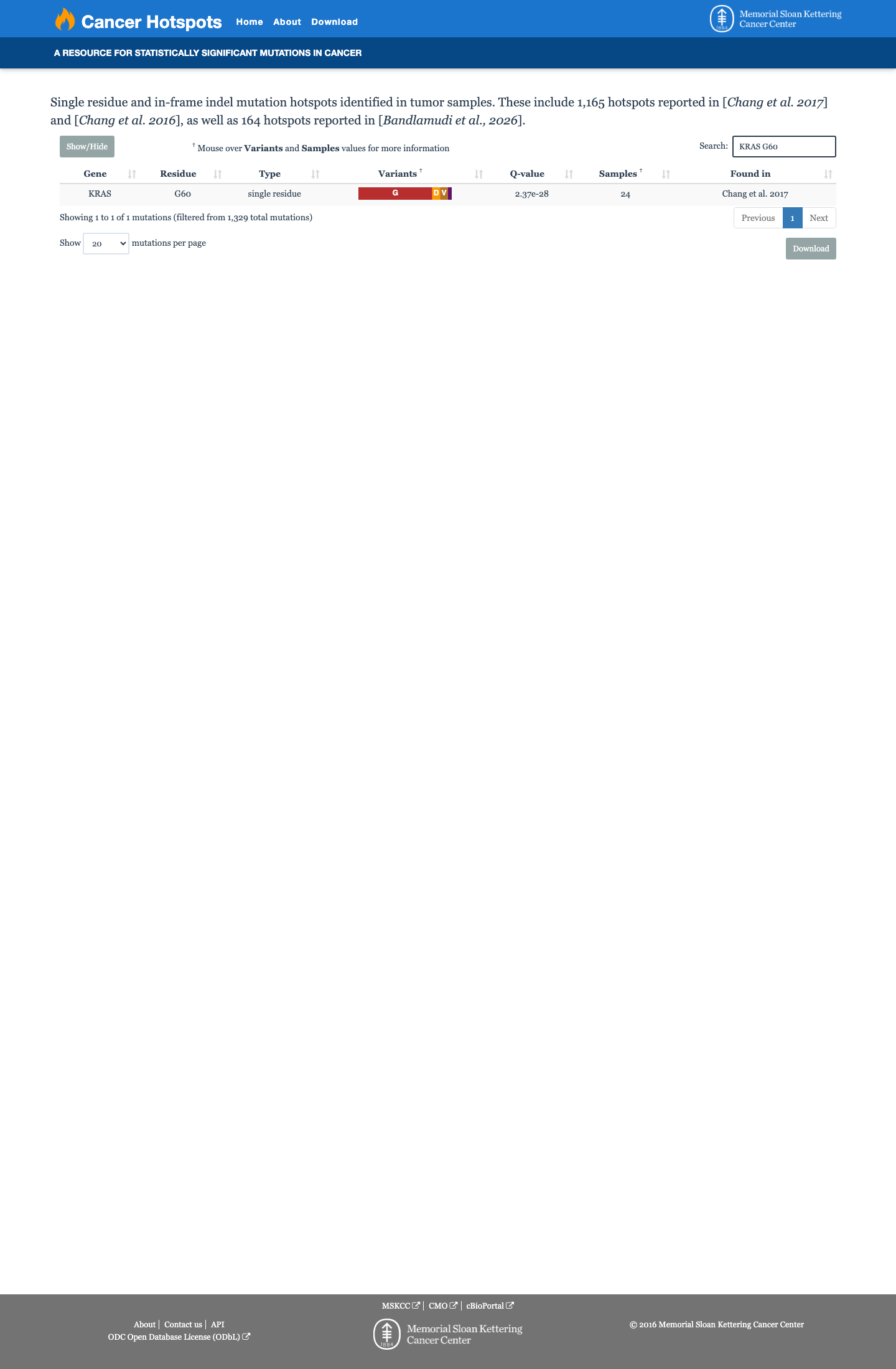
Cancer hotspots
Somatic evidence
Hotspot
COSMIC
This variant lies in a statistically significant hotspot. This variant has previously been reported in somatic cancers (COSMIC; COSV55708344, n = 5 times).
Hotspots
This variant lies in a statistically significant hotspot.
Literature · how each cited paper was used
1papers cited
Each card is an audit: what was searched, what was found, whether it names the variant, which criteria it fed, and why. 7 further PMIDs triaged but not cited — see Sources & references.
A lethal course of hypertrophic cardiomyopathy in Noonan syndrome due to a novel germline mutation in the KRAS gene: case study.
Searched
c.179G>Tp.Gly60ValG60VGly60Val179G>T
Found
A heterozygous missense variant c.179G>T (p.Gly60Val) in KRAS exon 3 was identified as a de novo germline mutation in a preterm infant with Noonan syndrome, dysmorphic features, and rapidly progressive hypertrophic cardiomyopathy leading to death at 4 months of age. The authors note that other mutations at the same residue (p.Gly60Ser, p.Gly60Arg) are known pathogenic NS variants.
Variant
✓ Names this variant — characterised directly
Applied to
→PS2
met
→PS4
met
→PM5
met
Why
Variant-specific germline case with confirmed de novo status; referenced for PS2_Moderate, PS4_Supporting, and PM5_Moderate adjudications.
This heterozygous unclassified missense variant in exon 3: c.179G>T (p.Gly60Val) might be associated with a lethal form of Noonan syndrome.
Location Abstract; Case Report, paragraph 2; Discussion, paragraphs 1-2; Figure 2 · Context Clinical case report; Sanger sequencing of KRAS coding exons; parental DNA genotyping confirmed de novo status · full text
Sources & reference links
9Sources
Triaged references · 7 PMIDs not cited in assessment
24446311 ↗
BRAF kinase domain mutations are present in a subset of chronic myelomonocytic leukemia with wild-type RAS.
ONCOKB
27288520 ↗
Spectrum and prognostic relevance of driver gene mutations in acute myeloid leukemia.
ONCOKB
34117033 ↗
Clinical and Functional Characterization of Atypical KRAS/NRAS Mutations in Metastatic Colorectal Cancer.
ONCOKB
19396835 ↗
Craniosynostosis in patients with Noonan syndrome caused by germline KRAS mutations.
CLINVAR
30813707 ↗
Provisional Guideline Recommendation for EGFR Gene Mutation Testing in Liquid Samples of Lung Cancer Patients: A Proposal by the Korean Cardiopulmonary Pathology Study Group.
CLINVAR