KRAS encodes a small GTPase in the RAS family that cycles between active and inactive states to regulate cell growth and signaling through pathways such as MAPK/ERK and PI3K/AKT/mTOR. Activating changes in KRAS are common drivers of many cancers, including pancreatic, colorectal, and lung cancers, where they promote uncontrolled cell proliferation. Germline alterations in KRAS also cause developmental disorders such as Noonan syndrome and cardio-facio-cutaneous syndrome, which carry an increased predisposition to cancer.
This variant
KRAS activating missense changes drive many cancers and cause RASopathies such as Noonan syndrome, but this nonsense variant truncates the protein instead of activating it. It is absent from population databases, yet no clinical or functional evidence links it to disease. The variant is therefore classified as a variant of uncertain significance (VUS).
Transcript
NM_033360.4
HGVS · transcript:coding
NM_033360.4:c.292G>T
GRCh38
chr12:25225772 C>A
GRCh37
chr12:25378706 C>A
BasisVUS: only PM2 (Supporting, absent from gnomAD) and BP1 (Supporting, truncating variant in a gain-of-function gene) were met; no pathogenic or benign rule is satisfied.▾
VUS: only PM2 (Supporting, absent from gnomAD) and BP1 (Supporting, truncating variant in a gain-of-function gene) were met; no pathogenic or benign rule is satisfied.
Classification rationale
PM2BP1VUS
KRAS c.292G>Tnonsense · exon 4
PM2 (Supporting): the variant is absent from gnomAD v2.1, v4.1, and gnomAD-Canada v1.0. BP1 (Supporting): p.(Glu98Ter) is a truncating variant in KRAS, whose RASopathy mechanism is gain-of-function with no established loss-of-function disease correlation. PM2 and BP1 at supporting strength satisfy no pathogenic or benign combination rule, so the variant is classified as VUS.
PM2 + BP1→VUS
Gene diagram
· NM_033360.4 · variants mapped to exon structure
KRASNM_033360.4
Fetching transcript structure from UCSC…
Exons
—
Transcript span
—
Strand
—
Variants mapped
—
Source
UCSC ncbiRefSeqCurated
All variants in KRAS—click a row to locate it on the plot · use the link column to open its page
Variant ↕
Protein
Location
Classification
Link
Applied criteria · 2 applied · 12 assessed
MetEvidence satisfies this criterion.
Not metEvaluated against available evidence; threshold not reached.
Not assessedApplies in principle, but no evidence was found to evaluate it.
N/ADoesn't apply to this variant type.
Applied · 2
Strength Supporting Moderate Strong Very strong
✓
PM2supportingPathogenic
Met (Supporting): the variant is absent from gnomAD v2.1, v4.1, and gnomAD-Canada v1.0.
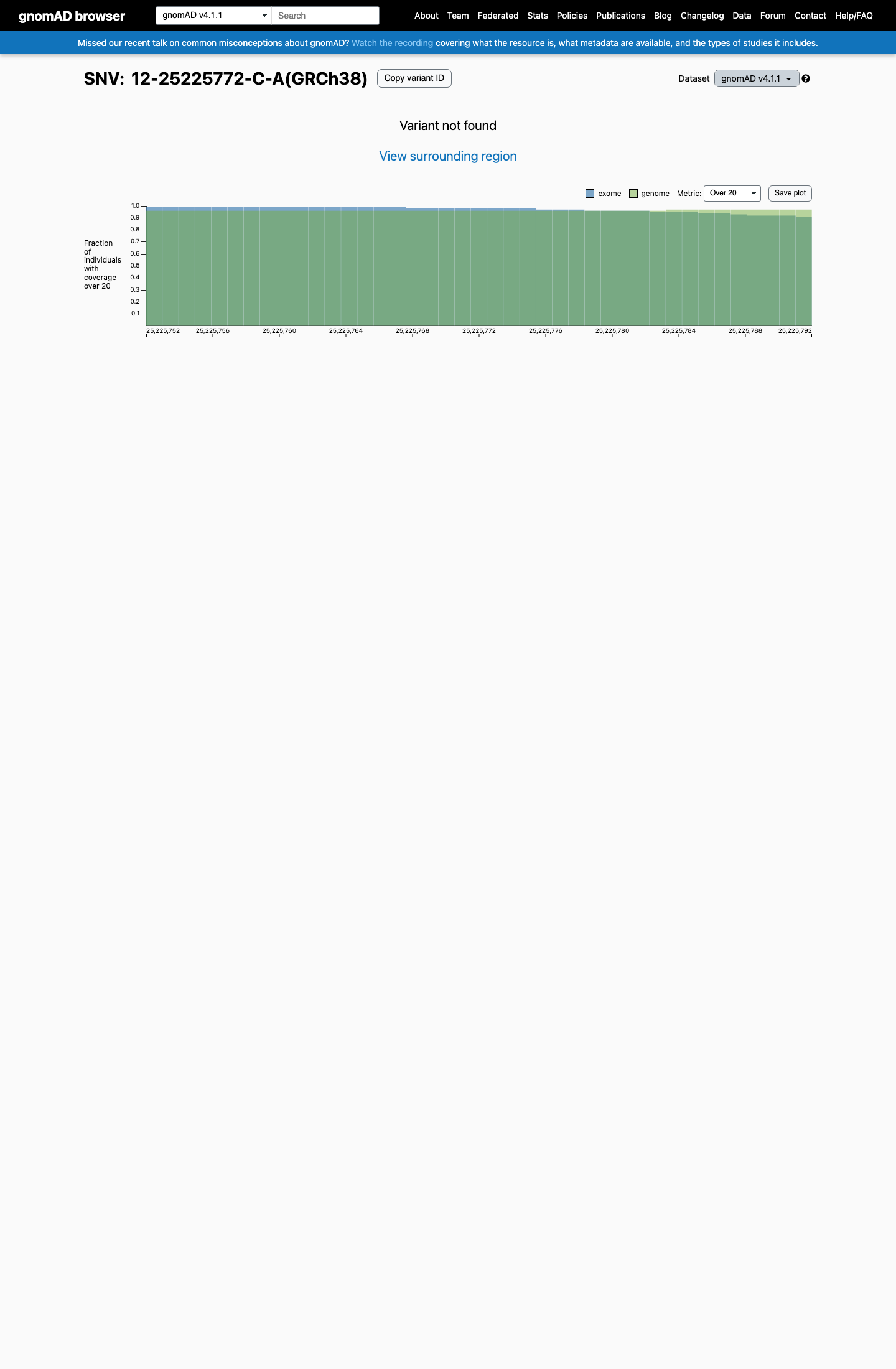
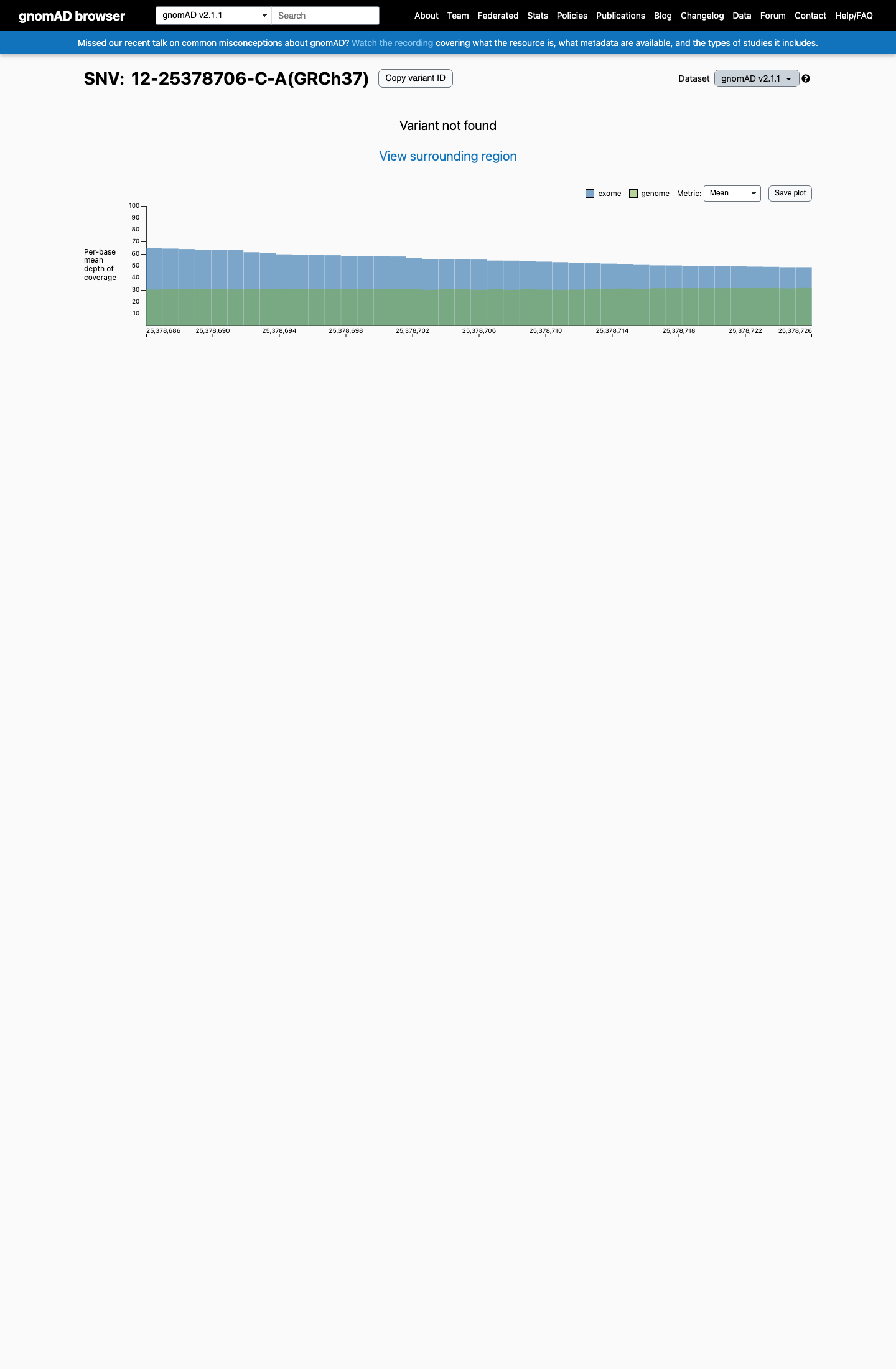
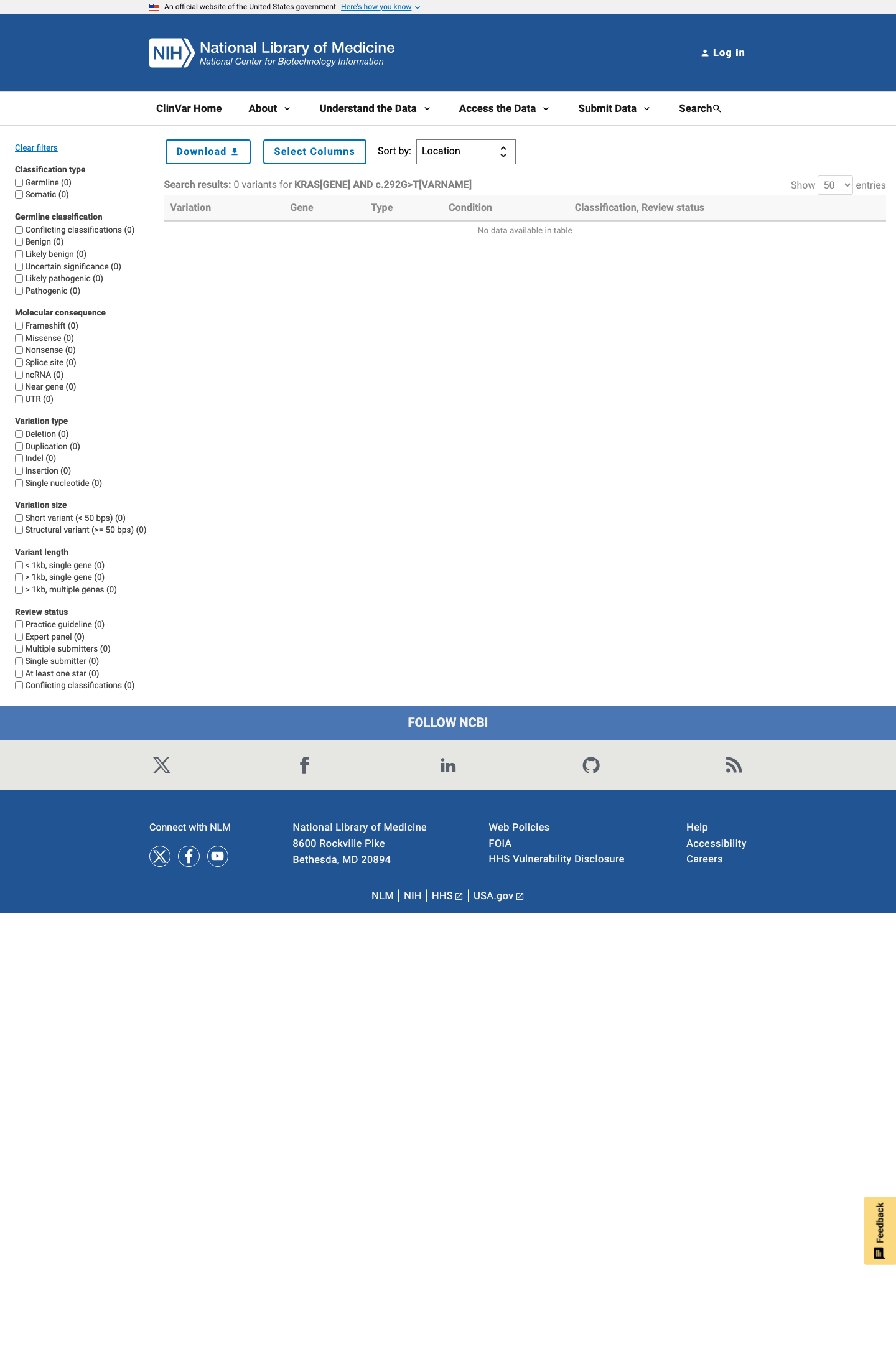
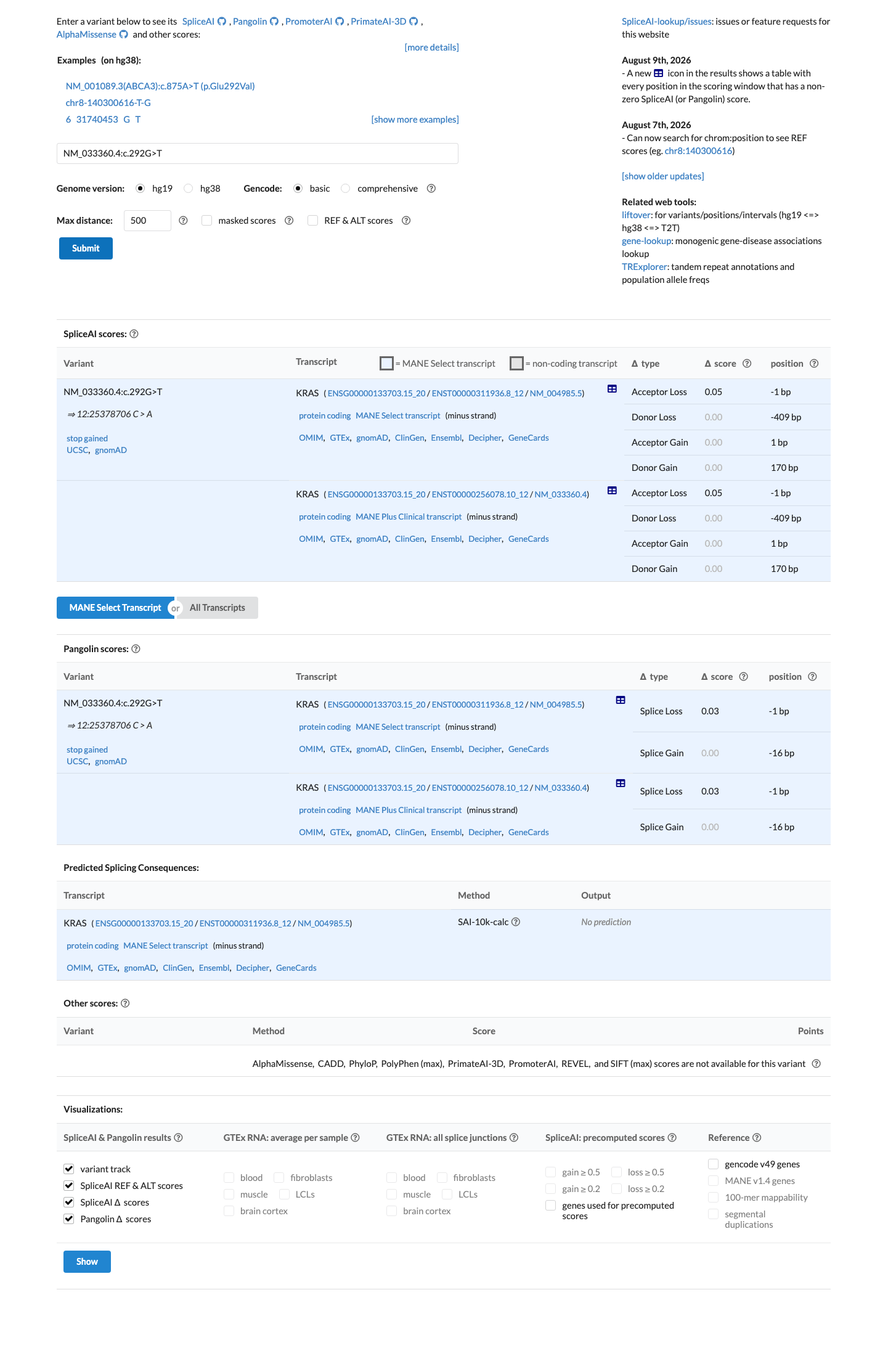
The KRAS RASopathy VCEP v2.3 PM2 rule assigns Supporting strength when the variant is absent from controls (gnomAD).Direct variant queries reported NM_033360.4:c.292G>T / GRCh37 12-25378706-C-A absent from gnomAD v2.1 and GRCh38 chr12-25225772-C-A absent from gnomAD v4.1; gnomAD-Canada v1.0 also reported absence.
Met (Supporting): p.(Glu98Ter) truncates the protein in KRAS, a gain-of-function disease gene without established loss-of-function correlation.
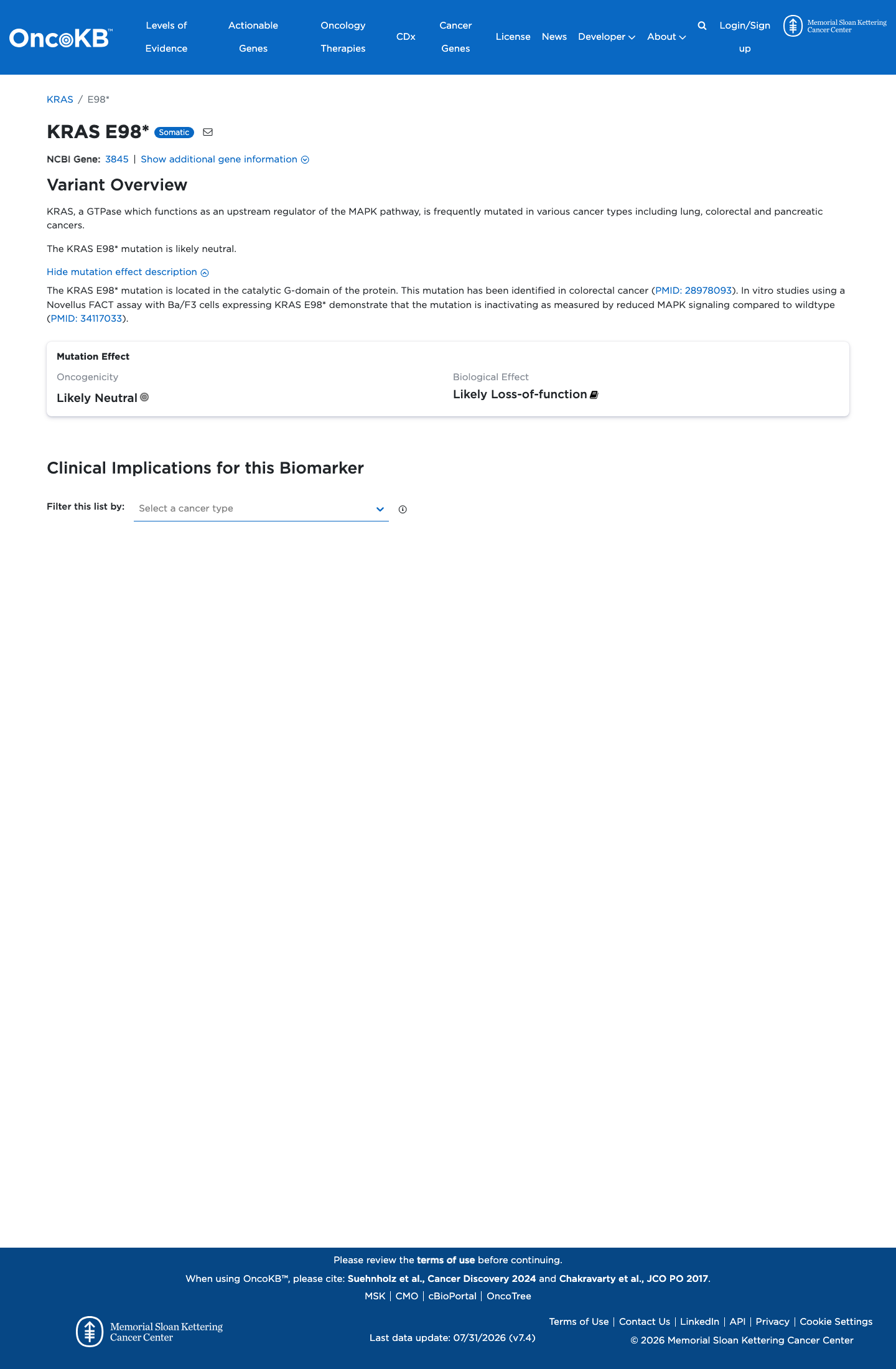
cSpec (KRAS RASopathy VCEP v2.3) BP1 rule: 'Given the disease mechanism is gain-of-function for RASopathies, BP1 should be used for any truncating variant ... in genes without established LOF correlation to disease.'cSpec (KRAS RASopathy VCEP v2.3) marks PVS1 'Not Applicable' for KRAS, consistent with a GOF-only disease mechanism and absence of an established LOF-disease correlation for this gene within the spec.OncoKB variant page for KRAS E98* records biological-effect context as 'Likely Loss-of-function', consistent with this nonsense variant acting through loss rather than gain of function.
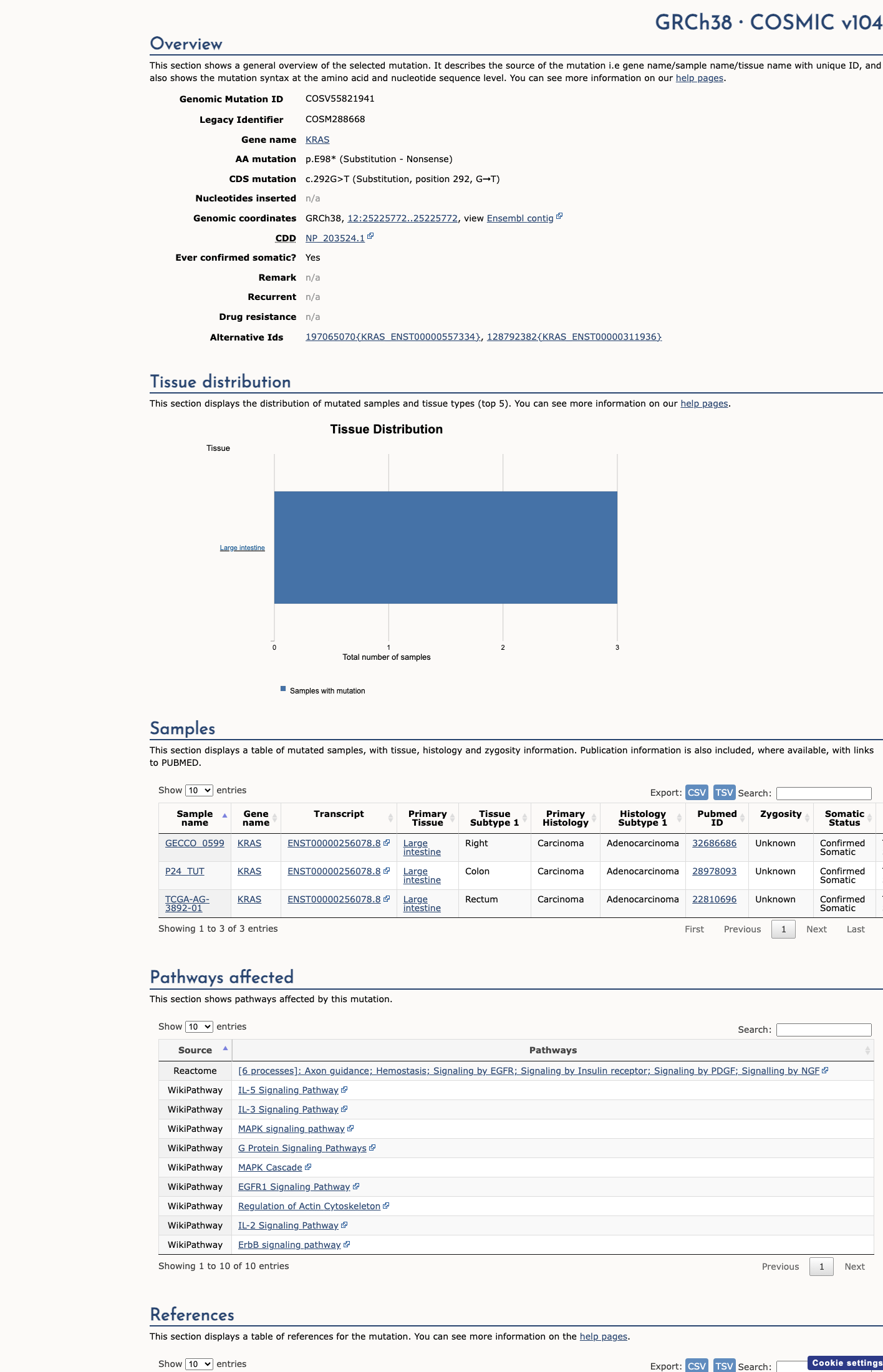
This variant does not lie in a statistically significant hotspot. This variant has previously been reported in somatic cancers (COSMIC; COSV55821941, n = 3 times).
Hotspots
This variant does not lie in a statistically significant hotspot.