Analysis in progress
Initialising…
0%
complete
This report is still being assembled — sections appear as each stage finishes. It isn't final yet.
FBXW7
Final classification
Likely Pathogenic
PS3PM1PM2PP2
FBXW7
c.1436G>A
p.Arg479Gln
missense · exon 10

FBXW7 encodes a component of the SCF ubiquitin ligase complex that tags specific proteins for degradation, including the growth-regulating proteins c-MYC, NOTCH1, cyclin E, JUN, and mTOR. By keeping these proteins in check, FBXW7 helps control cell division, differentiation, and growth. It acts as a tumor suppressor: when it is inactivated by mutation or copy number loss, oncoproteins accumulate and can drive malignant transformation, with altered FBXW7 function implicated in human cancers including ovarian and breast cancer.

This variant

FBXW7 is a tumor suppressor whose inactivation lets oncoproteins such as c-MYC, NOTCH1, and cyclin E accumulate and drive malignant transformation. Classifying p.Arg479Gln as Likely Pathogenic indicates this variant impairs FBXW7's substrate-degradation function through the dominant-negative missense mechanism most commonly seen in FBXW7-driven cancers, consistent with functional evidence from a colorectal cancer line carrying this exact variant.

Transcript
NM_033632.3
HGVS · transcript:coding
NM_033632.3:c.1436G>A
GRCh38
chr4:152326214 C>T
GRCh37
chr4:153247366 C>T
Basis No FBXW7-specific VCEP framework exists, so generic ACMG/AMP 2015 combination rules were applied: PS3 and PM1 (Moderate) plus PM2 and PP2 (Supporting) yield Likely Pathogenic.
No FBXW7-specific VCEP framework exists, so generic ACMG/AMP 2015 combination rules were applied: PS3 and PM1 (Moderate) plus PM2 and PP2 (Supporting) yield Likely Pathogenic.
Classification rationale
PS3PM1PM2PP2 Likely Pathogenic
FBXW7 c.1436G>A missense · exon 10

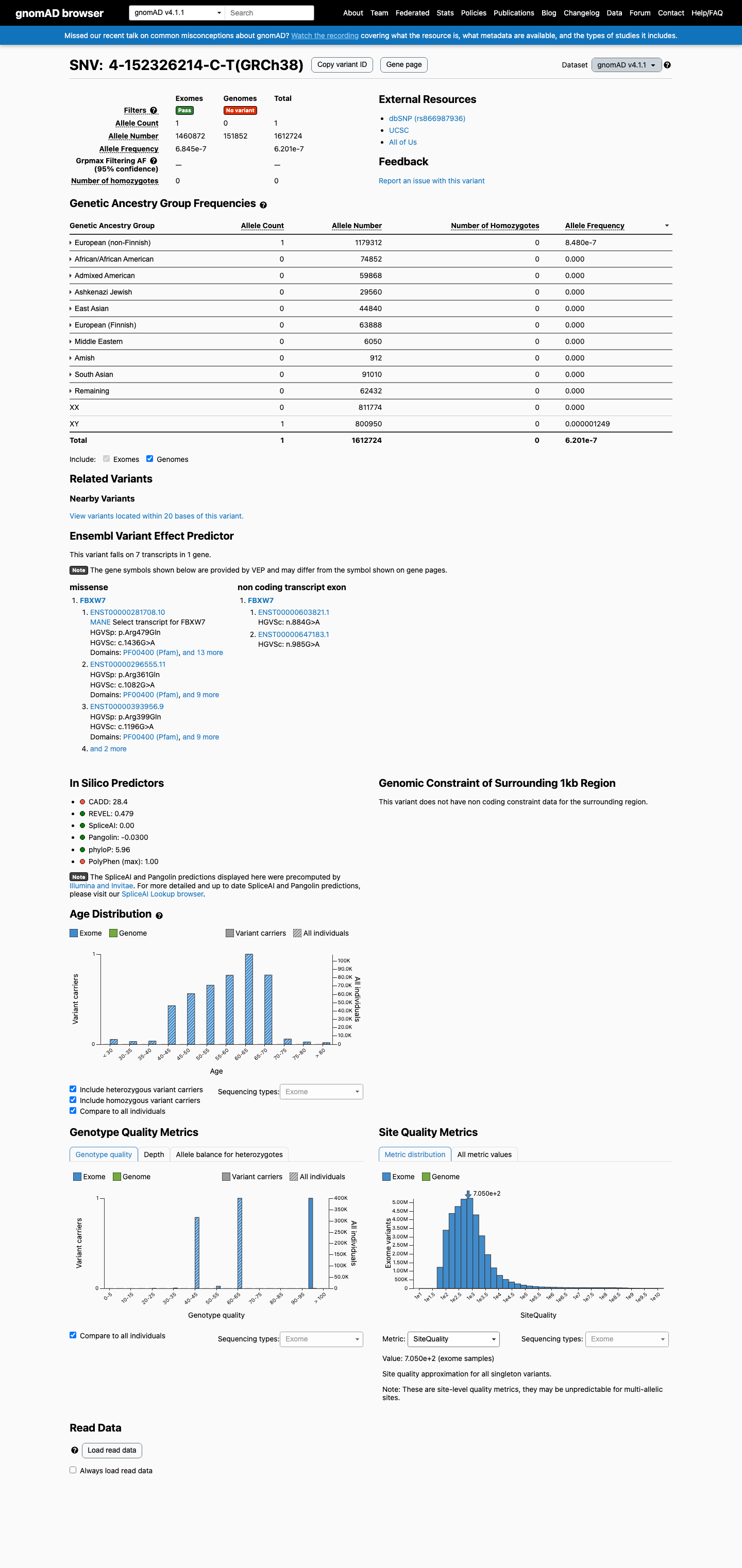
PS3 (Moderate): a functional rescue assay showed the R479Q allele impairs FBXW7 substrate degradation (p=0.035). PM1 (Moderate): p.Arg479Gln lies in the FBXW7 WD40 substrate-recognition domain at a statistically significant recurrent mutation hotspot. PM2 (Supporting): the variant is essentially absent from population databases, with one gnomAD v4.1 allele and no homozygotes. PP2 (Supporting): missense substitution, not truncation, is the established dominant-negative FBXW7 oncogenic mechanism. Overall: 2 Moderate + 2 Supporting under generic ACMG/AMP 2015 rules -> Likely Pathogenic.

PS3 + PM1 + PM2 + PP2 Likely Pathogenic
Gene diagram · NM_033632.3 · variants mapped to exon structure
FBXW7 NM_033632.3
Fetching transcript structure from UCSC…
Applied criteria · 4 applied · 20 assessed
MetEvidence satisfies this criterion.
Not metEvaluated against available evidence; threshold not reached.
Not assessedApplies in principle, but no evidence was found to evaluate it.
N/ADoesn't apply to this variant type.
Applied · 4
Strength Supporting Moderate Strong Very strong
PS3 moderate review Pathogenic
Met (Moderate): rescue with wild-type FBXW7 significantly lowered TGIF1 substrate levels in the R479Q cell line (p=0.035), demonstrating impaired degradation function. Strength is capped at Moderate because the evidence comes from a single, non-replicated study.
PMID:23676439 (Davis et al., Gut 2013): SW1463 colorectal cancer cell line, heterozygous for R479Q, showed significant TGIF1 reduction upon wild-type FBXW7 re-expression (p=0.035, t test), while a truncating-variant control line (R278X) showed no significant TGIF1 change, indicating a variant-specific loss of substrate-degradation function rescued by WT protein.PMID:23676439: shRNA knockdown of FBXW7 in R479Q/R505C-mutant lines produced no further increase in TGIF1 (p=0.477), consistent with the mutant allele already conferring a strong loss-of-function/dominant-negative effect on substrate turnover.PMID:23676439: orthologous Fbxw7 R482Q knock-in mouse (equivalent to human R479Q) demonstrates dominant-negative co-immunoprecipitation with wild-type Fbxw7 protein, dosage-dependent elevation of substrates Klf5/Tgif1/cyclin E, and significantly accelerated Apc-mutant-driven intestinal tumorigenesis relative to a null Fbxw7 heterozygote, providing in vivo biological support for a damaging effect of the R479Q substitution on FBXW7 tumor-suppressor function via impaired substrate ubiquitination/degradation.
PM1 moderate Pathogenic
Met (Moderate): p.Arg479Gln lies in the FBXW7 WD40 substrate-recognition domain at a statistically significant recurrent mutation hotspot.
cancerhotspots.org record 'FBXW7 R479': search_status=result_found, found=true, evidence_sentence='This variant lies in a statistically significant hotspot' (screenshot verification flagged as partial regex extraction, but hotspot designation itself is explicit).PMID:23676439 (full text): 'most mutations are monoallelic missense changes involving specific arginine residues at beta-sheet propellor tips that allow the FBXW7 protein to recognise its substrates' and 'colorectal cancer cell lines that carry propellor tip mutations (LOVO, heterozygous R505C and SW1463, heterozygous R479Q)' -- confirms R479 is one of the recurrently mutated propeller-tip substrate-recognition residues, the same functional subdomain/hotspot as this variant.OncoKB (evidence.json): biological_effect='Loss-of-function', classification='Oncogenic', is_variant_specific=true -- corroborates the propeller-tip region's functional criticality but was used only as supporting context, not as the primary PM1 basis.
PM2 supporting Pathogenic
Met (Supporting): essentially absent from population databases, with a single gnomAD v4.1 allele (AF 6.2e-07) and no homozygotes.
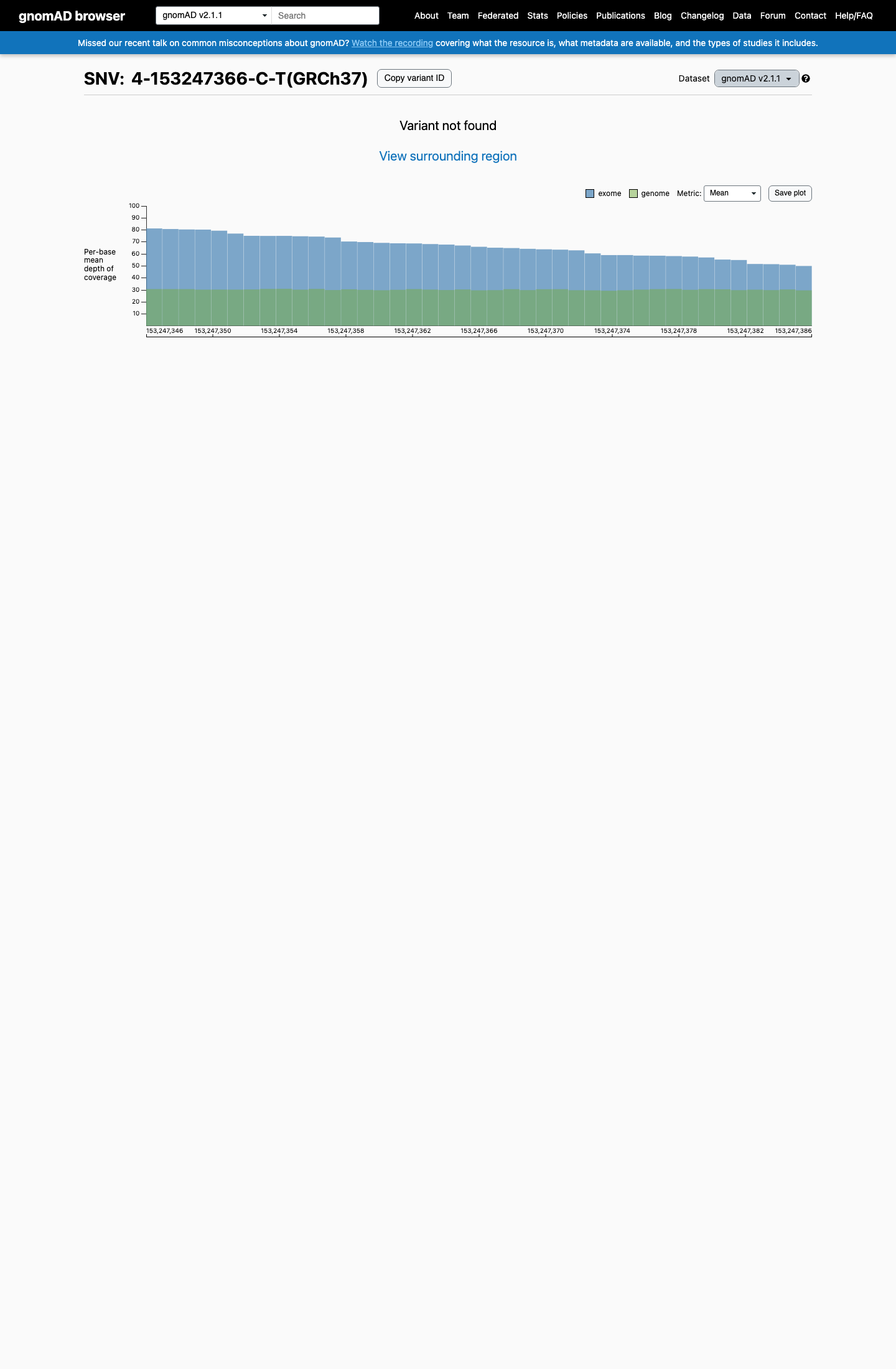
gnomAD v2.1 reports the variant as absent.gnomAD-Canada v1.0 reports the variant as absent.gnomAD v4.1 reports total AC 1/AN 1,612,724 (AF 6.200689e-07), highest population AF 8.479520e-07 in non-Finnish Europeans, and zero homozygotes.
PP2 supporting Pathogenic
Met (Supporting): missense substitution, not truncation, is the documented predominant FBXW7 oncogenic mechanism, acting dominant-negatively at propeller-tip arginines.
PMID:23676439: 'FBXW7 is classed as a tumour suppressor, but has an unusual mutation spectrum whereby biallelic, simple loss-of-function mutations are rare; instead, most mutations are monoallelic missense changes involving specific arginine residues at beta-sheet propellor tips that allow the FBXW7 protein to recognise its substrates... Propellor tip mutations most likely act as dominant negative, loss-of-function alleles that provide sufficient derangement for tumorigenesis' -- establishes missense change as the principal, well-established mechanism of FBXW7 pathogenicity rather than an incidental variant class.
Assessed · not applied · 9 not met · 11 not assessed
Pathogenic
PS1 Not assessed: no alternate nucleotide change producing the same p.Arg479Gln substitution with established pathogenicity was identified.
PS2 Not assessed: no proband or parental genotype data were available to establish a confirmed de novo occurrence.
PS4 Not assessed: no affected-versus-control counts or statistical enrichment analysis was available for this variant.
PM3 Not assessed: no second pathogenic allele or trans-phase genotype was available to evaluate recessive inheritance.
PM5 Not assessed: no different missense change at residue 479 with an independent pathogenic classification was identified.
PM6 Not assessed: no documented de novo occurrence or parental testing result was available.
PP1 Not assessed: no pedigree or relative genotype data were available to evaluate segregation with disease.
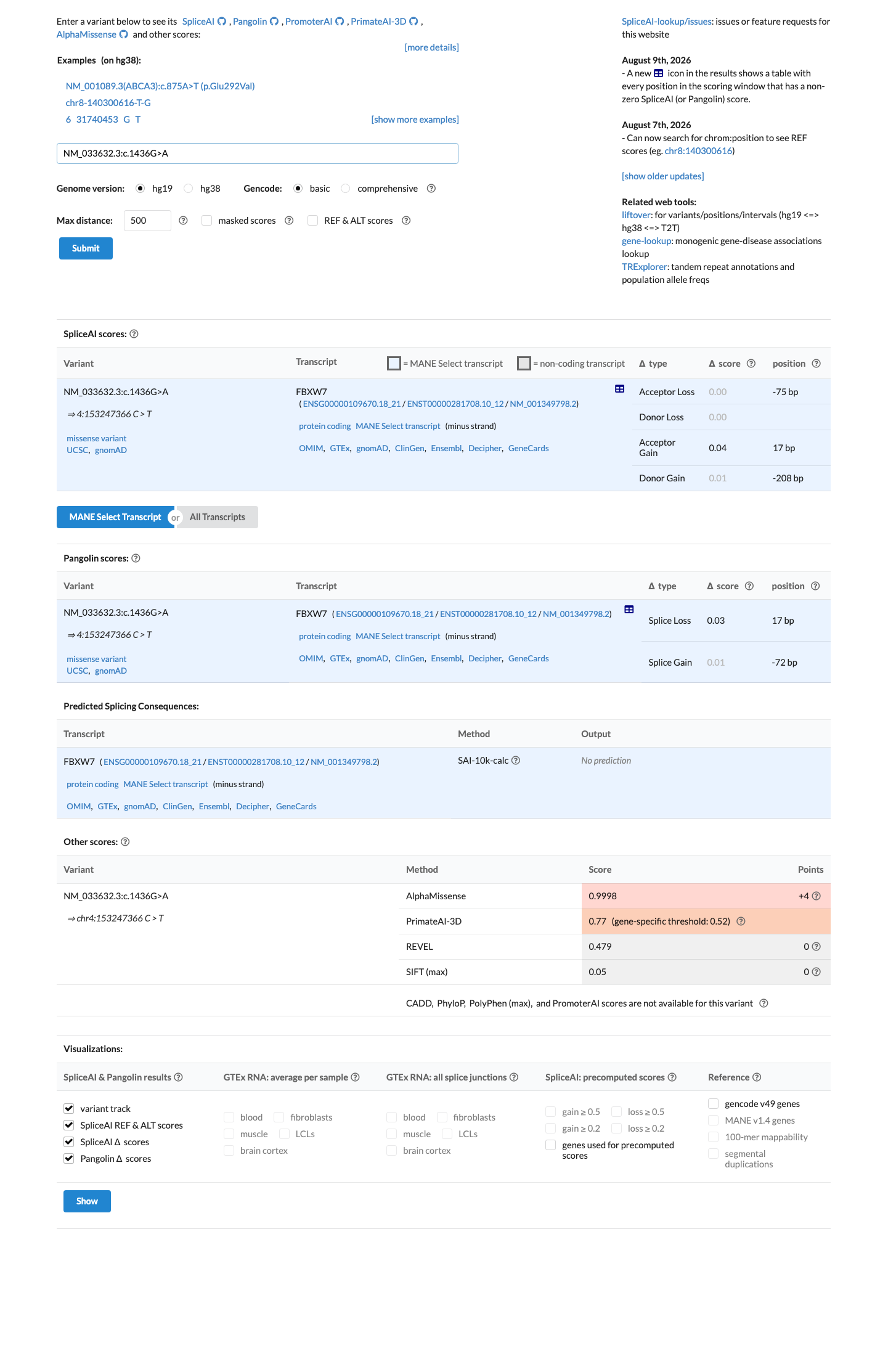
PP3 Not met: REVEL 0.479 is below the >=0.7 PP3 threshold, and SpliceAI max delta 0.044 indicates no splice impact.
PP4 Not assessed: no patient phenotype or clinical findings were available for phenotype-to-gene comparison.
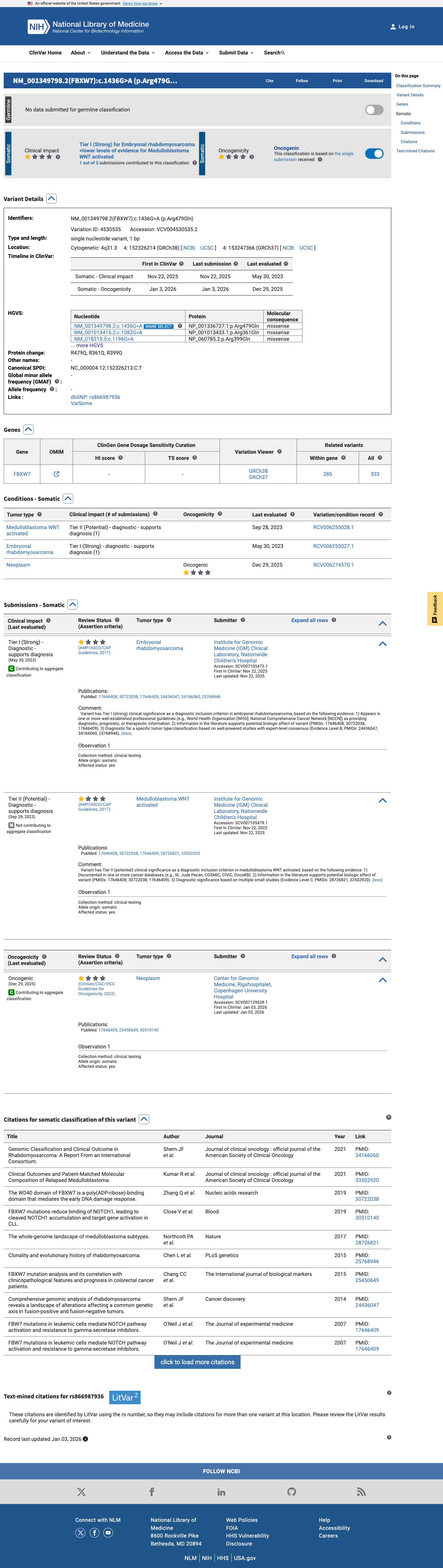
PP5 Not met: ClinVar entry 4530535 has no expert-panel pathogenic classification, only single-submitter somatic assertions.
Benign
BA1 Not met: the gnomAD allele frequency (6.2e-07) is far below the stand-alone benign frequency range for BA1.
BS1 Not met: the single observed allele is far too rare to exceed the frequency expected for an FBXW7-associated disorder.
BS2 Not met: no gnomAD homozygotes are reported, and the variant was not observed in a documented healthy adult.
BS3 Not met: no study reports normal FBXW7 function for R479Q; all available functional data show loss of substrate-degradation activity.
BS4 Not assessed: no informative non-segregation observation, such as an affected relative lacking the variant, was available.
BP1 Not met: missense, not truncation, is the established FBXW7 disease mechanism, so the truncation-biased premise does not hold.
BP2 Not assessed: no genotype showing this variant in cis or trans with a pathogenic FBXW7 variant was available.
BP4 Not met: REVEL 0.479 is above the <0.29 benign cutoff, and SpliceAI max delta 0.044 alone cannot support a benign impact.
BP5 Not assessed: no alternative molecular diagnosis or phenotype attributable to another cause was documented.
BP6 Not met: ClinVar entry 4530535 has no expert-panel Benign or Likely benign classification.
N/A · 4 PVS1 · PM4 · BP3 · BP7
Research & evidence
Population frequency · supports pathogenic
gnomAD v4.1 screenshot
gnomAD v4.1
gnomAD v2.1 screenshot
gnomAD v2.1
v4.1
This variant is present in gnomAD v4.1 (AF= 6.20069e-07; MAF= 0.00006%, 1/1612724 alleles, homozygotes = 0) and has highest observed frequency in the European (non-Finnish) population (AF= 8.47952e-07; MAF= 0.00008%, 1/1179312 alleles, homozygotes = 0).
v2.1
Absent from gnomAD v2.1.
🇨🇦 CA
Absent from gnomAD-Canada v1.0.
Allele frequency by ancestry
three datasets · side by side
gnomAD v4.1
6.2e-05% · 1 / 1,612,724
0 hom
European (non-Finnish)
1 / 1,179,312
8.5e-05%
+ 9 not observed (Remaining individuals, Admixed American, European (Finnish), Amish, East Asian, Middle Eastern, South Asian, Ashkenazi Jewish, African/African American)
gnomAD v2.1
Absent · 0 / ?
0 hom
Not observed in any ancestry group.
gnomAD Canada 🇨🇦
Absent · 0 / ?
0 hom
Not observed in any ancestry group.
ClinVar screenshot
ClinVar
This variant has been reported in ClinVar but submission details could not be extracted. (ClinVarID = 4530535)
SpliceAI screenshot
In silico
SpliceAI predicts no significant splice impact for this variant (max delta score = 0.04). REVEL score = 0.479. BayesDel score = 0.0626477.
Functional / OncoKB screenshot
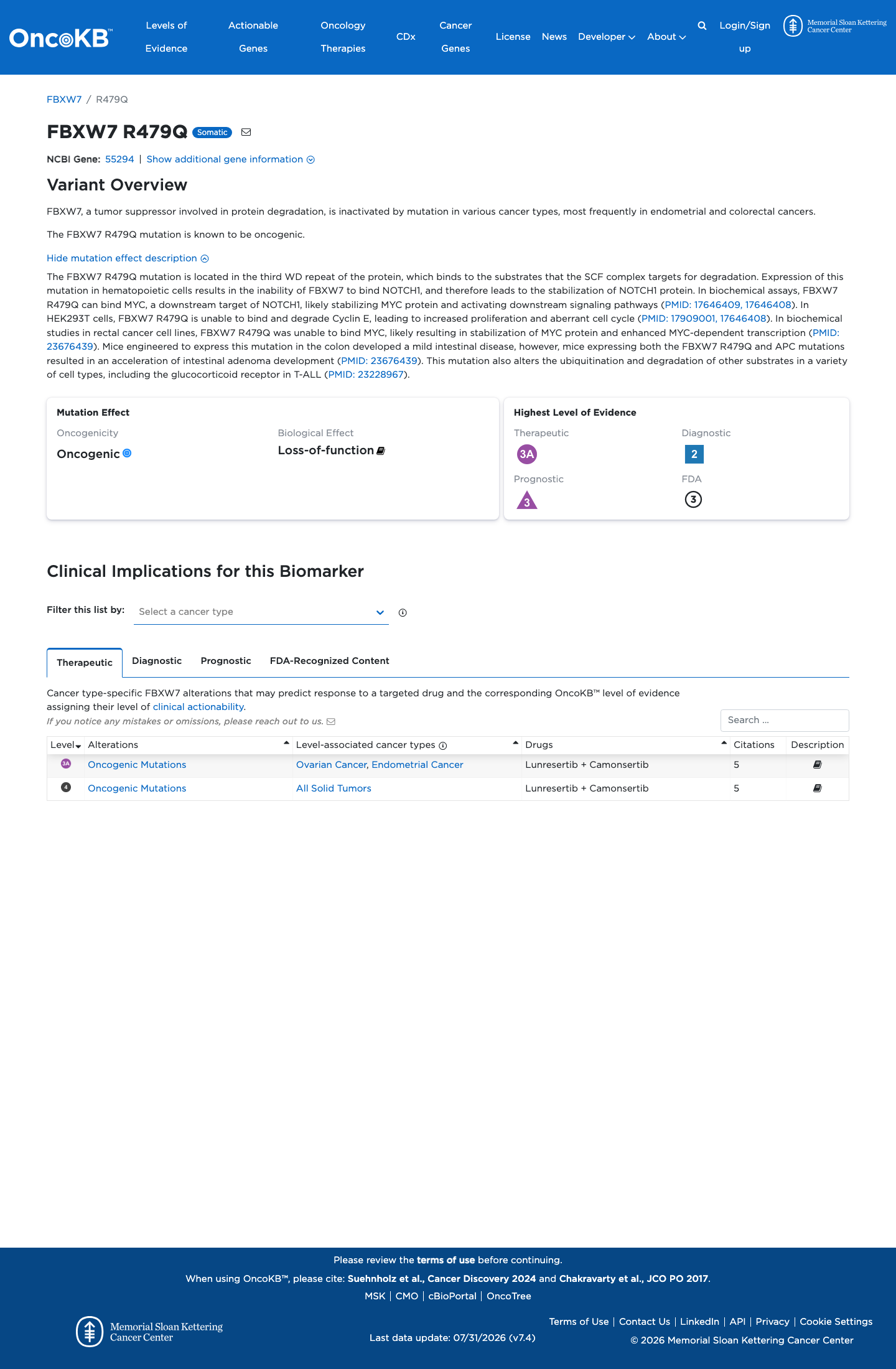
Functional Oncogenic
OncoKB identified variant-specific curated literature and context relevant to functional review; biological-effect context: Loss-of-function; curated oncogenicity label: Oncogenic.
OncoKB ↗
COSMIC screenshot
COSMIC
Cancer hotspots screenshot
Cancer hotspots
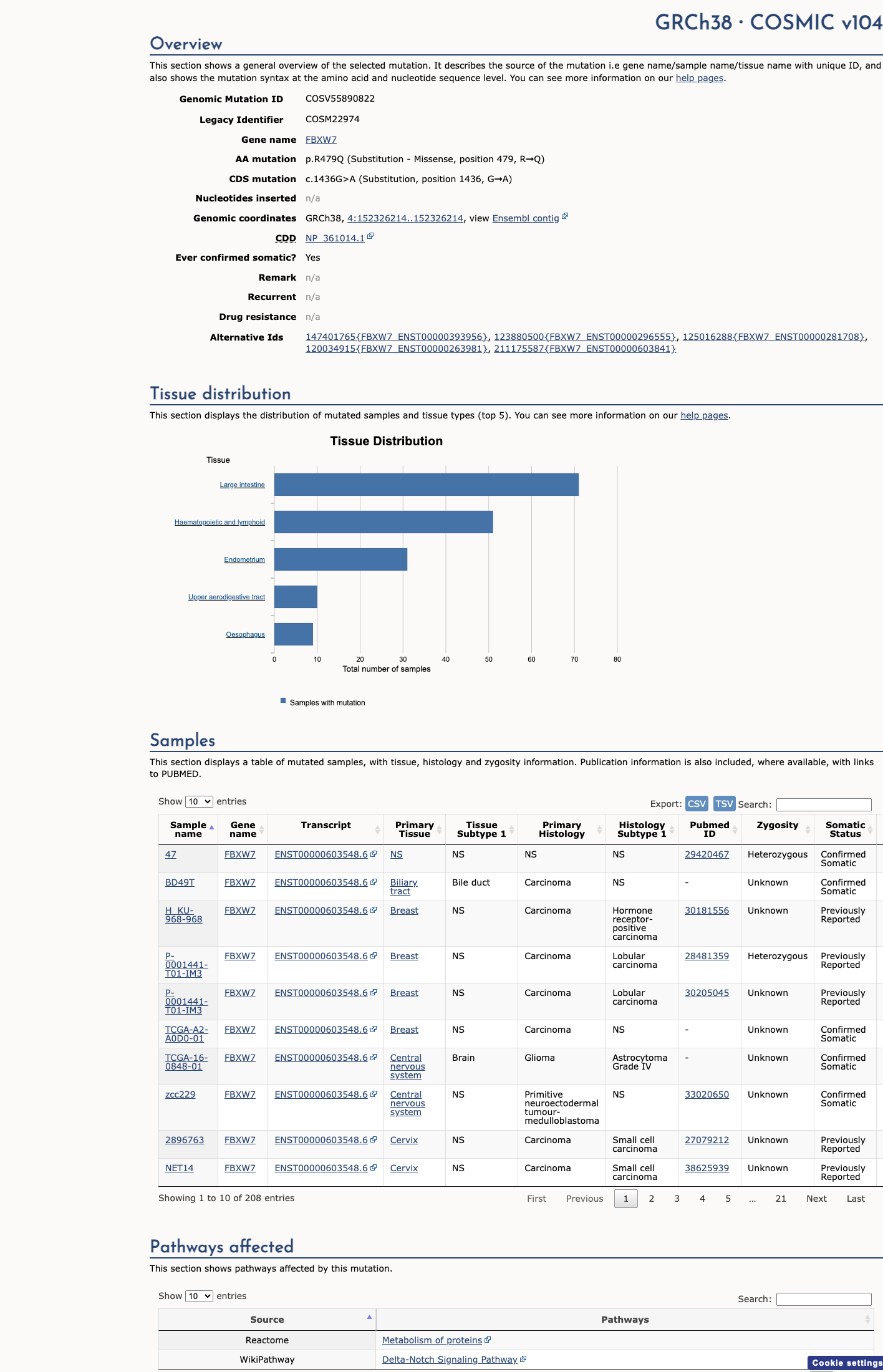
Somatic evidence Hotspot
COSMIC
This variant lies in a statistically significant hotspot. This variant has previously been reported in somatic cancers (COSMIC; COSV55890822, n = 206 times).
Hotspots
This variant lies in a statistically significant hotspot.
Literature · how each cited paper was used
3papers cited
Each card is an audit: what was searched, what was found, whether it names the variant, which criteria it fed, and why. 4 further PMIDs triaged but not cited — see Sources & references.
FBW7 mutations in leukemic cells mediate NOTCH pathway activation and resistance to gamma-secretase inhibitors.
Searched
R479Q479 RArg479Gln
Found
Characterizes a FBW7 phosphodegron (CPD) in NOTCH1 and shows that tumor-derived FBW7 WD40 arginine mutations (including R465H) disrupt FBW7-NOTCH1 binding and ubiquitination in biochemical assays. R479Q is reported only as an observed variant in primary T-ALL patient samples (Table II) alongside other WD40 arginine mutations, without direct experimental functional testing of the R479Q allele itself in this paper's own assays.
Variant
✓ Names this variant — characterised directly
Applied to
PS3 moderate
Human tumors harbor nonsense mutations that truncate FBW7 as well as missense mutations that target key arginine residues in the WD40 repeats. These mutations disable FBW7-substrate interactions and impair substrate degradation by FBW7.
Location Results, 'FBW7 is mutated in T-ALL cell lines and primary samples'; Table II (patient samples 2773, 2748: heterozygous mutation 479 R→Q)  ·  Context Sequencing of FBW7 substrate-binding domain exons in 81 primary T-ALL patient samples; separate biochemical co-IP/ubiquitination assays performed only on NOTCH1 T2512A and the FBW7 R465C mutant, not on R479Q directly.  ·  full text
Investigation of the atypical FBXW7 mutation spectrum in human tumours by conditional expression of a heterozygous propellor tip missense allele in the mouse intestines.
Searched
c.1436G>Ap.Arg479GlnR479QFBXW7 propeller tip
Found
This functional/mouse-model study demonstrates that FBXW7 tumour-suppressor mutations in human cancers are predominantly monoallelic missense changes at specific beta-sheet propeller-tip arginine residues (rather than biallelic truncating/LOF changes), and that these propeller-tip mutations act as dominant-negative, loss-of-function alleles sufficient to drive tumorigenesis. The exact variant p.(Arg479Gln) is used as a study comparator: the colorectal cancer cell line SW1463 carries heterozygous R479Q, alongside LOVO (heterozygous R505C), both cited as canonical examples of propeller-tip mutations, with reduced TGIF1 degradation activity shown for cells carrying these mutations relative to a truncating control (R278X).
Variant
✓ Names this variant — characterised directly
Applied to
PS3 moderate
Direct variant-specific (SW1463, native R479Q heterozygote) rescue-assay evidence of loss of substrate-degradation function, corroborated by orthologous in vivo knock-in mouse model showing dominant-negative effect and accelerated tumorigenesis.
PM1 moderate
Confirms R479 lies within the recurrently mutated, functionally critical WD40 propeller-tip substrate-recognition subdomain, supporting PM1 hotspot/domain criterion.
PP2 supporting
Establishes that missense substitution at propeller-tip residues (not truncation) is the predominant, well-documented mechanism of FBXW7 oncogenicity, supporting PP2.
FBXW7 is classed as a tumour suppressor, but has an unusual mutation spectrum whereby biallelic, simple loss-of-function mutations are rare; instead, most mutations are monoallelic missense changes involving specific arginine residues at beta-sheet propellor tips that allow the FBXW7 protein to recognise its substrates... Re-expression of wild-type FBXW7 causes TGIF1 levels to reduce significantly in colorectal cancer cell lines that carry propellor tip mutations (LOVO, heterozygous R505C and SW1463, heterozygous R479Q)
Location Abstract/Significance-of-this-study summary; Results section describing TGIF1 degradation assay (cell lines LOVO, SW1463, C32)  ·  Context Mouse intestinal conditional knock-in model of the propeller-tip mutation (Fbxw7 R482Q, human-equivalent R479Q) plus functional TGIF1/KLF5 degradation assays in human colorectal cancer cell lines carrying naturally occurring propeller-tip mutations, including the identical R479Q substitution (cell line SW1463) and R505C (cell line LOVO), benchmarked against a truncating control (R278X, cell line C32).  ·  full text
FBXW7 mutations reduce binding of NOTCH1, leading to cleaved NOTCH1 accumulation and target gene activation in CLL.
Searched
R479QR479Arg479Gln
Found
Structural/biophysical modeling of the FBXW7 WD40 propellor domain predicts that hotspot residues R465, R479, and R505 (including R479Q) alter hydrophobic and electrostatic surface interactions relevant to substrate binding. CRISPR-induced FBXW7 truncation (not the R479Q missense allele itself) was used in the HG-3 CLL cell line to functionally validate that NOTCH1, c-MYC, and HIF1-alpha are FBXW7 substrates in CLL; no direct mutagenesis/rescue assay was performed on the R479Q variant itself.
Variant
✓ Names this variant — characterised directly
Applied to
PS3 moderate
Mutations leading to amino acid changes G423V, W425C, R465C, R479Q and R505C are predicted to result in a change of hydrophobic...as well as electrostatic...interactions of FBXW7 and are therefore likely to change the substrate binding.
Location Results, 'Common FBXW7 mutations in CLL cause a change in hydrophobicity and electrostatic interactions'  ·  Context Structural modeling of the FBXW7 WD40 domain (residues 263-707) based on hotspot mutation frequencies in a CLL patient cohort; separate CRISPR/Cas9 truncation (not R479Q missense) functional experiments performed in the HG-3 CLL cell line.  ·  full text
Sources & reference links
8Sources
ClinVar
gnomAD v2.1
gnomAD v4.1
gnomAD-Canada
SpliceAI
OncoKB
COSMIC
Cancer hotspots
Triaged references · 4 PMIDs not cited in assessment
17646408 ↗ The SCFFBW7 ubiquitin ligase complex as a tumor suppressor in T cell leukemia. ONCOKB
17909001 ↗ FBXW7/hCDC4 is a general tumor suppressor in human cancer. ONCOKB
23228967 ↗ FBXW7 regulates glucocorticoid response in T-cell acute lymphoblastic leukaemia by targeting the glucocorticoid receptor for degradation. ONCOKB
25768946 ↗ Clonality and evolutionary history of rhabdomyosarcoma. CLINVAR