PVS1 (moderate): NM_033632.3:c.1922C>G is a nonsense variant (p.Ser641Ter) in the terminal exon that escapes nonsense-mediated decay but truncates the WD40 substrate-recognition domain, a critical functional region of FBXW7.1 PM1 (moderate): The truncation at residue 641 removes C-terminal WD40 repeats within the beta-propeller substrate-recognition domain, a well-characterized critical functional domain of FBXW7.2 PM2 (moderate): The variant is absent from all population databases (gnomAD v2.1, v4.1, gnomAD-Canada), supporting rarity as a pathogenic attribute.3 PP3 (supporting): BayesDel in silico prediction score of 0.655873 supports a pathogenic effect.4 Combined evidence: PVS1 (moderate) + PM1 (moderate) + PM2 (moderate) + PP3 (supporting) = 3 moderate and 1 supporting criterion. Under generic ACMG/AMP 2015 combination rules (PMID:25741868), 3 moderate criteria satisfy the Likely Pathogenic threshold.5
Final classification
Likely Pathogenic
PVS1PM1PM2PP3
FBXW7
c.1922C>G
p.Ser641Ter
This variant
PVS1 (moderate): NM_033632.3:c.1922C>G is a nonsense variant (p.Ser641Ter) in the terminal exon that escapes nonsense-mediated decay but truncates the WD40 substrate-recognition domain, a critical functional region of FBXW7.
gene-specific framework lacked a usable explicit final combination framework, so generic ACMG/AMP 2015 final-combination rules were applied as fallback; applied criteria: PVS1 moderate, PM1 moderate, PM2 moderate, PP3 supporting; combination = 3 moderate + 1 supporting, which maps to Likely Pathogenic.
Classification rationale
PVS1PM1PM2PP3
Likely Pathogenic
FBXW7 c.1922C>G
PVS1 + PM1 + PM2 + PP3
→
Likely Pathogenic
1
pvs1_generic_framework ↗pvs1_gene_contextpvs1_variant_assessment
4
bayesdel
5
generic_acmg_combination_rules
LYFE Sciences is an AI system, and it can make mistakes. Criteria
may be applied incorrectly, sources may be misread, and a confident-looking
classification can still be wrong. Double-check every criterion and
its underlying evidence before relying on any call.
Gene diagram
· NM_033632.3 · variants mapped to exon structure
FBXW7
NM_033632.3
Fetching transcript structure from UCSC…
Applied criteria · 4 applied · 16 assessed
MetEvidence satisfies this criterion.
Not metEvaluated against available evidence; threshold not reached.
Not assessedApplies in principle, but no evidence was found to evaluate it.
N/ADoesn't apply to this variant type.
Applied · 4
Strength
Supporting
Moderate
Strong
Very strong
PVS1
moderate
Pathogenic
NM_033632.3:c.1922C>G is a nonsense variant (p.Ser641Ter) in the terminal exon (exon 12/12, c.1856 to *1623). The premature termination codon at position 641 escapes nonsense-mediated decay because it lies in the last exon with no downstream exon-exon junction. Under ClinGen SVI PVS1 guidelines (PMC6185798), nonsense variants in the terminal exon that escape NMD are downgraded from full-strength PVS1. However, the truncation removes the C-terminal 67 amino acids (residues 642-708) that include portions of the WD40 repeat beta-propeller domain, the substrate-recognition module essential to FBXW7 E3 ubiquitin ligase function. The truncation is therefore expected to impair substrate binding. PVS1 is applied at moderate strength reflecting the balance of terminal exon location (no NMD) against the critical functional domain affected.
Nonsense variant p.Ser641Ter in terminal exon (exon 12/12) of FBXW7Premature termination codon escapes NMD (no downstream exon-exon junction)Truncation removes 67 C-terminal residues including portions of WD40 substrate-recognition domain
PM1
moderate
Pathogenic
The variant p.Ser641Ter truncates the C-terminal portion of the WD40 repeat beta-propeller domain, the substrate-recognition module of FBXW7 that is structurally and functionally characterized in the literature. The WD40 repeats form an eight-bladed beta-propeller that directly binds phosphorylated substrates including cyclin E, MYC, JUN, and NOTCH1. Truncation at residue 641 removes the terminal WD40 repeats, which are essential structural components of the binding barrel. This satisfies PM1 at domain level for a variant in a well-characterized critical functional domain.
WD40 repeat domain is the substrate-recognition module of FBXW7forming an eight-bladed beta-propeller (PMID:18094723)Germline FBXW7 variants cluster in the WD40 domain and disrupt substrate recognition (PMID:35395208
PM2
moderate
Pathogenic
The variant is absent from gnomAD v2.1 (exomes), gnomAD v4.1 (exomes), and gnomAD-Canada v1.0 (genomes). Under non-VCEP gnomAD thresholds, an allele frequency below 0.1% in all populations satisfies PM2 at moderate strength for a rarity-based criterion.
Absent from gnomAD v2.1Absent from gnomAD v4.1Absent from gnomAD-Canada v1.0
PP3
supporting
Pathogenic
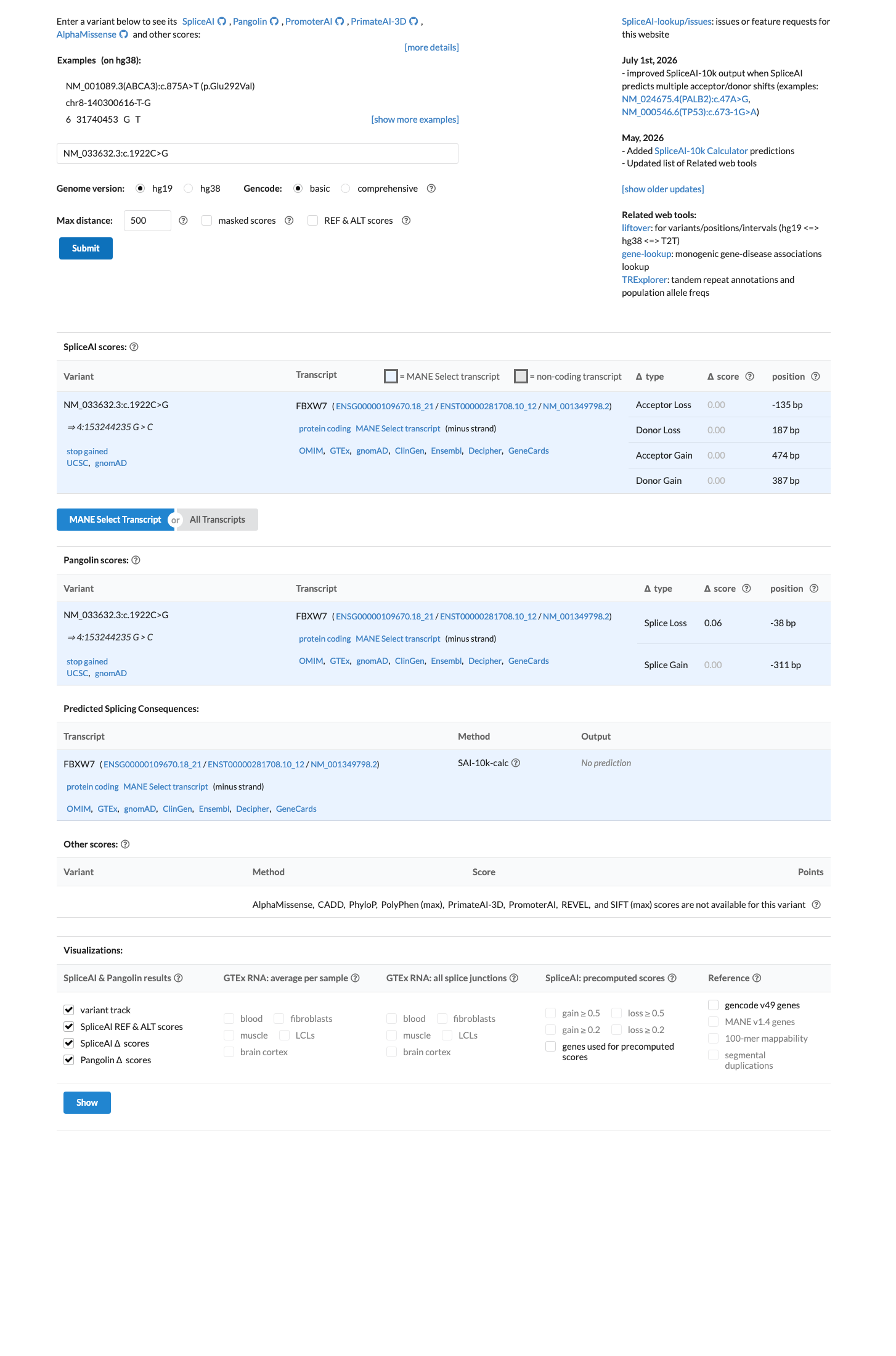
BayesDel predicts a pathogenic score of 0.655873 for this variant. While SpliceAI predicts no splicing impact (max delta score 0.00), the BayesDel score passes the high-confidence pathogenic threshold, providing supporting in silico evidence. REVEL and HCI prior scores are not available. The combined in silico evidence is weighted by BayesDel, which is calibrated for both missense and nonsense predictions.
BayesDel score: 0.655873 (pathogenic-leaning)SpliceAI max delta score: 0.00 (no predicted splice impact)REVEL: not available
Assessed · not applied
· 5 not met · 11 not assessed
Pathogenic
PS2
No de novo data with confirmed maternity and paternity are available for this variant in the reviewed literature or databases.
PS3
No variant-specific functional data were identified.
PS4
No case-control studies or clinical cohort data reporting the prevalence of this variant in affected individuals versus controls were identified.
PM6
No de novo observation (maternity and paternity unconfirmed) has been reported for this variant in the literature or databases reviewed.
PP1
No segregation data are available for this variant in the reviewed literature or databases.
PP4
No individual clinical phenotype data are available for this variant.
PP5
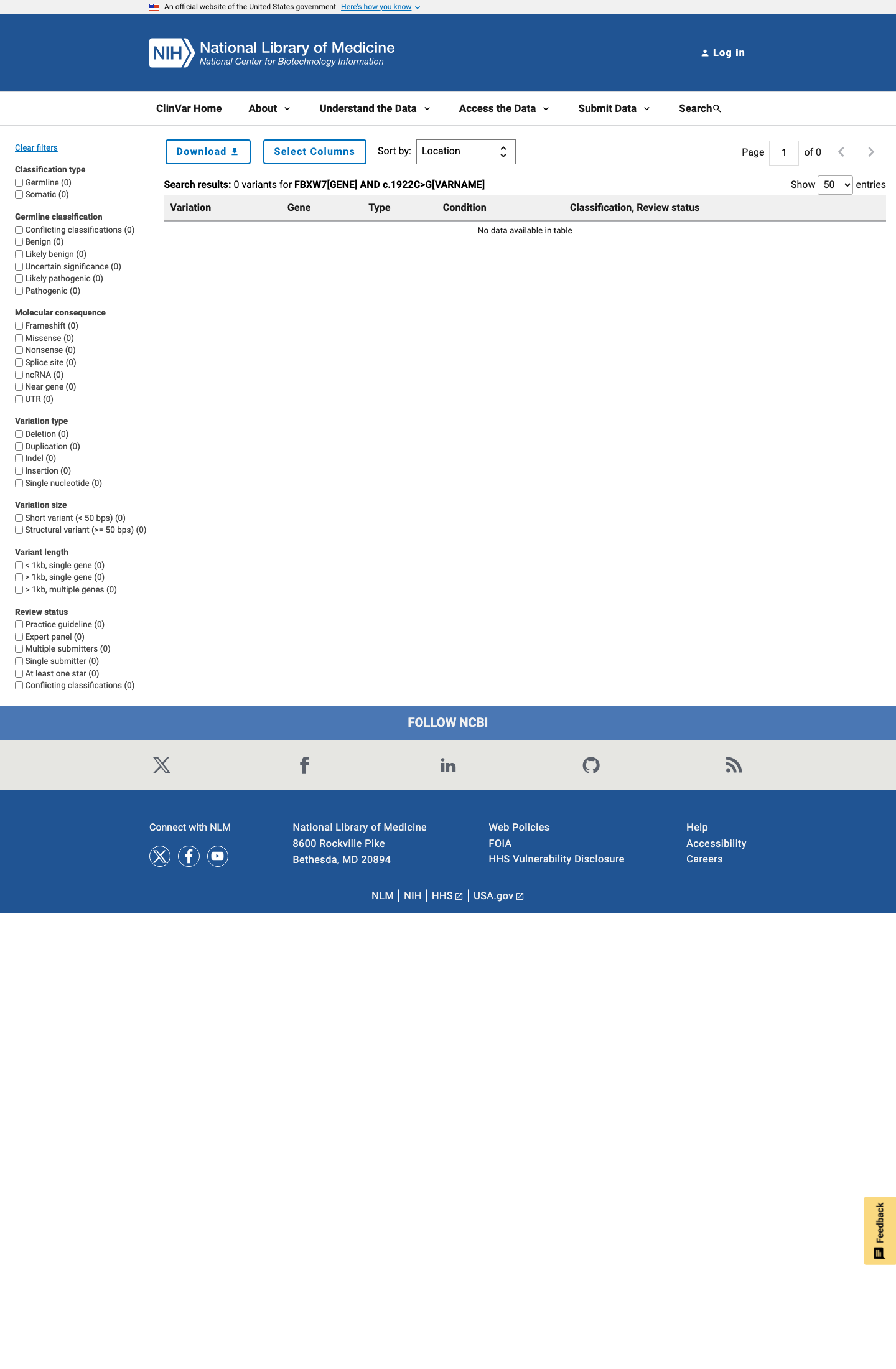
No ClinVar entry exists for this variant, and no reputable source has classified it.
Benign
BA1
The variant is absent from all population databases (gnomAD v2.1, v4.1, gnomAD-Canada), with an allele frequency of 0.
BS1
The variant is absent from all population databases, with an allele frequency of 0.
BS2
No data are available regarding the observation of this variant in healthy adults at an age where the FBXW7-related phenotype would have been fully penetrant.
BS3
No well-established functional studies demonstrate a neutral effect for this variant.
BS4
No segregation data are available to evaluate non-segregation with disease.
BP2
No data on co-occurrence with a pathogenic variant in trans for a fully penetrant dominant gene are available.
BP4
Multiple lines of in silico evidence do not support a benign interpretation.
BP5
No observation in a case with an alternative molecular basis for disease is reported for this variant.
BP6
No ClinVar entry from a reputable source classifies this variant as benign.
N/A · 8
PS1 · PM3 · PM4 · PM5 · PP2 · BP1 · BP3 · BP7
Research & evidence
Population frequency · supports pathogenic
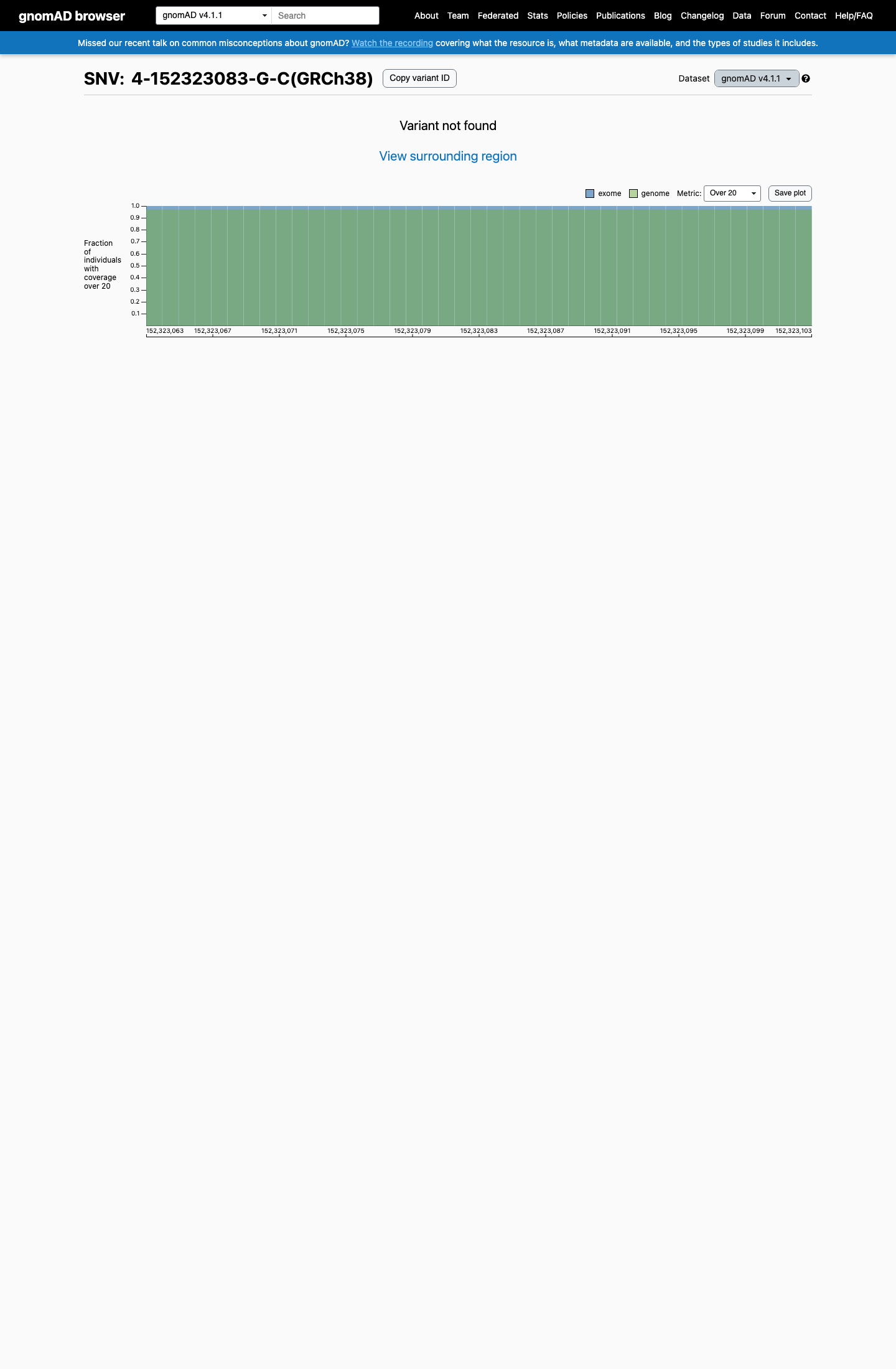
gnomAD v4.1
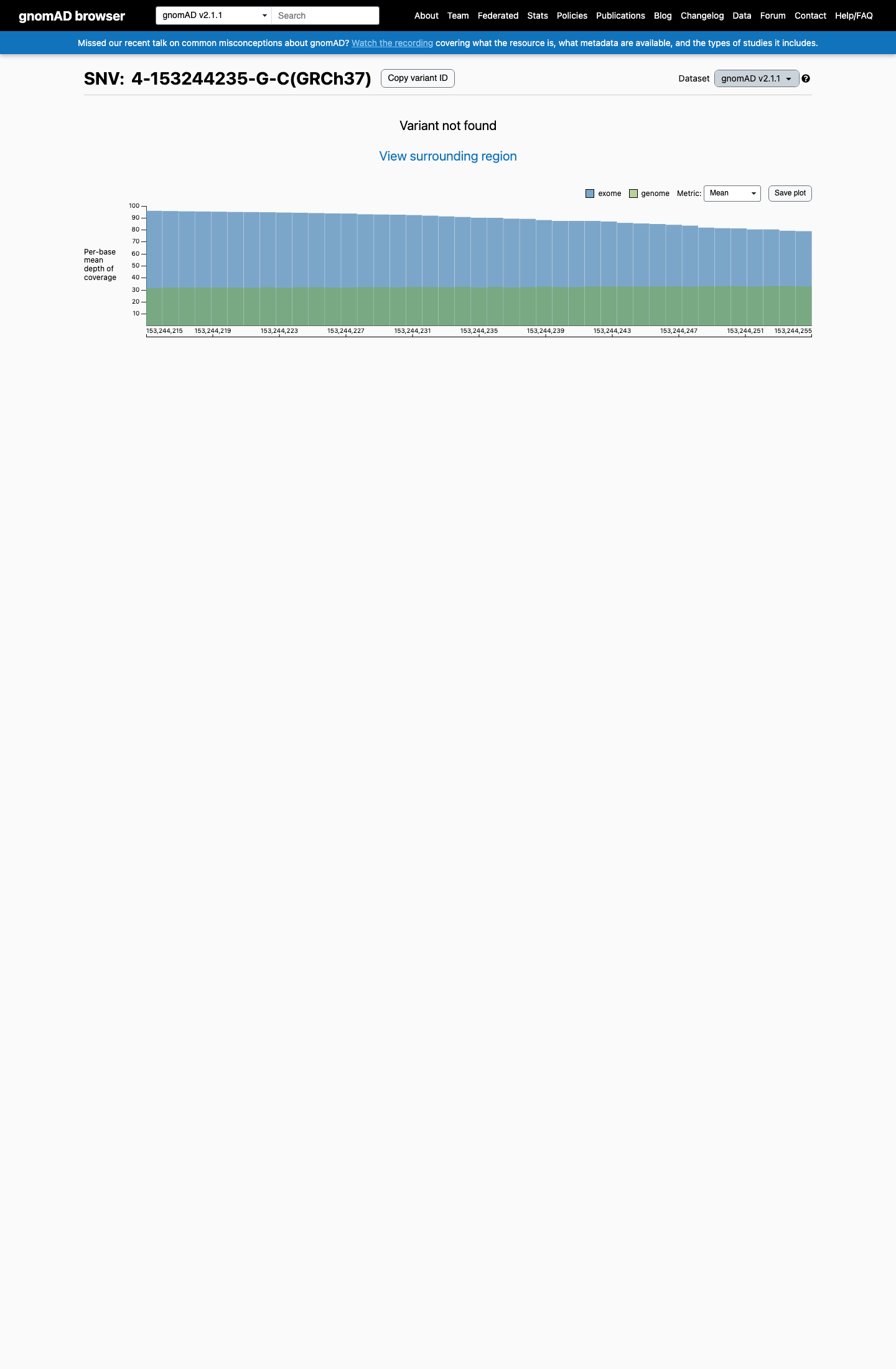
gnomAD v2.1
v4.1
Absent from gnomAD v4.1.
v2.1
Absent from gnomAD v2.1.
🇨🇦 CA
Absent from gnomAD-Canada v1.0.
Allele frequency by ancestry
three datasets · side by side
gnomAD v4.1
Absent
· 0 / ?
0 hom
0 hom
Not observed in any ancestry group.
gnomAD v2.1
Absent
· 0 / ?
0 hom
0 hom
Not observed in any ancestry group.
gnomAD Canada 🇨🇦
Absent
· 0 / ?
0 hom
0 hom
Not observed in any ancestry group.
In silico
SpliceAI predicts no significant splice impact for this variant (max delta score = 0.00). BayesDel score = 0.655873.
Functional
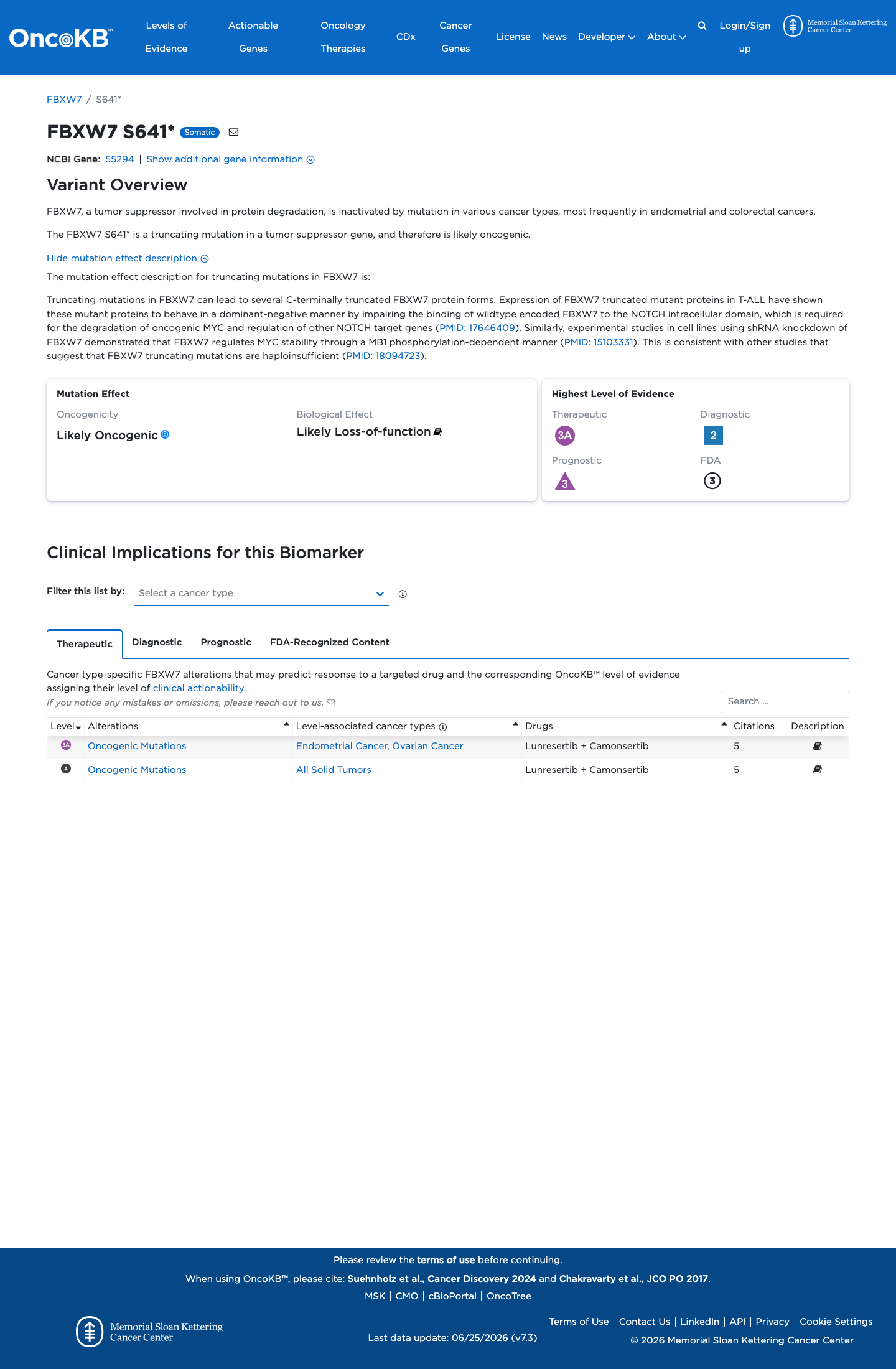
Likely Oncogenic
OncoKB identified variant-specific curated literature and context relevant to functional review; biological-effect context: Likely Loss-of-function; curated oncogenicity label: Likely Oncogenic.
COSMIC

Cancer hotspots
Somatic evidence
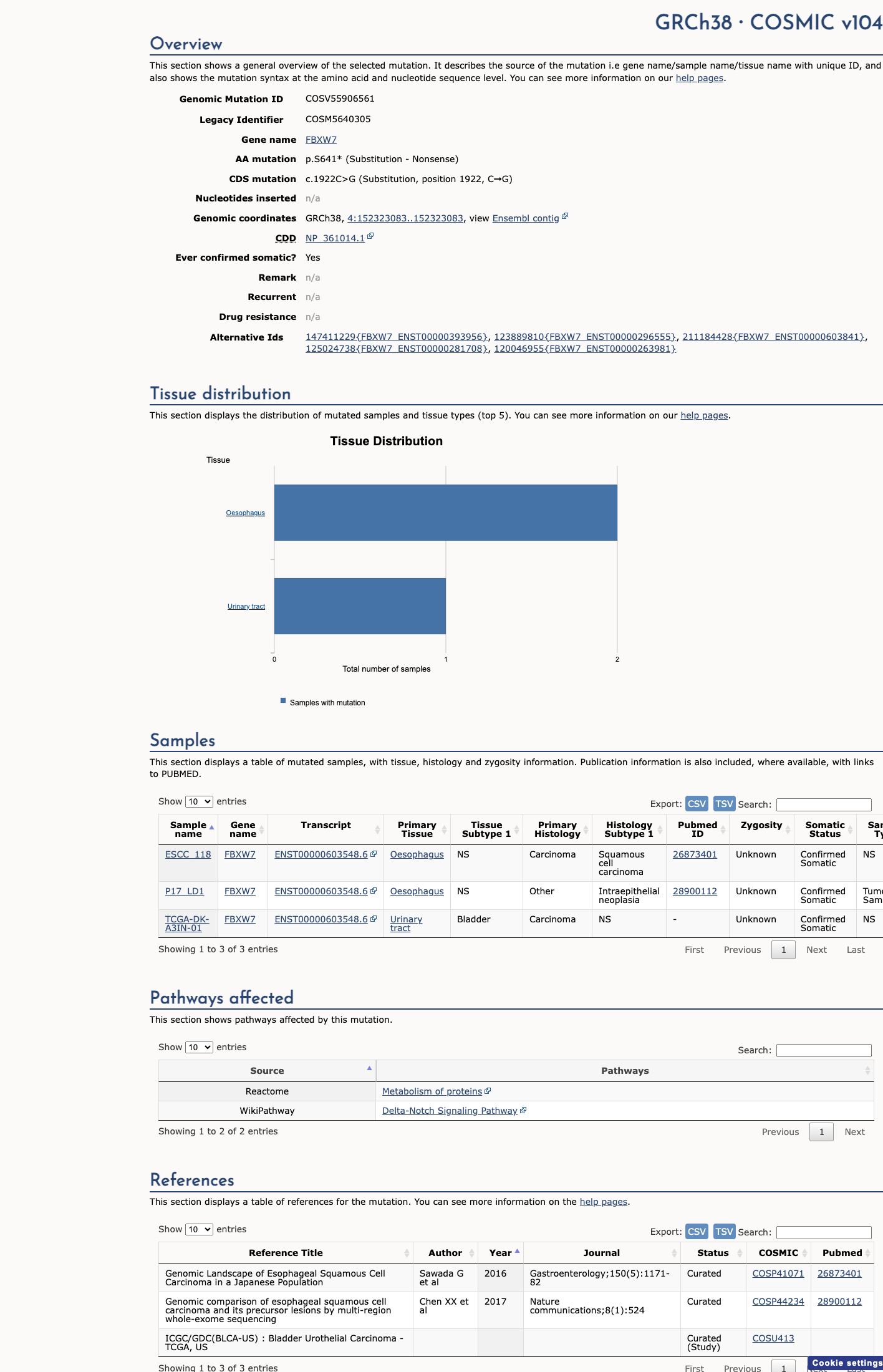
Not in COSMIC / hotspots
COSMIC
This variant does not lie in a statistically significant hotspot. This variant has previously been reported in somatic cancers (COSMIC; COSV55906561, n = 3 times).
Hotspots
This variant does not lie in a statistically significant hotspot.
Literature · how each cited paper was used
1papers cited
Each card is an audit: what was searched, what was found, whether it names the variant, which criteria it fed, and why. 2 further PMIDs triaged but not cited — see Sources & references.
Rule & framework references · cited for criterion definitions, not variant evidence
18094723 ↗
FBW7 ubiquitin ligase: a tumour suppressor at the crossroads of cell division, growth and differentiation.
Sources & reference links
Triaged references · 2 PMIDs not cited in assessment
15103331 ↗
Phosphorylation-dependent degradation of c-Myc is mediated by the F-box protein Fbw7.
ONCOKB
17646409 ↗
FBW7 mutations in leukemic cells mediate NOTCH pathway activation and resistance to gamma-secretase inhibitors.
ONCOKB