Analysis in progress
Initialising…
0%
complete
This report is still being assembled — sections appear as each stage finishes. It isn't final yet.
GNA11
Final classification
Likely Pathogenic
GNA11 c.735+1_736-1del · p.?
GNA11

NM_002067.5:c.735+1_736-1del is a canonical splice site deletion removing the donor (+1) and acceptor (-1) sites of intron 5 of GNA11, qualifying for PVS1 at very strong strength under ClinGen SVI PVS1 recommendations (PMC6185798), with GNA11 loss of function established as a germline disease mechanism.

Gene
GNA11
Transcript
NM_002067.5
HGVS · transcript:coding
NM_002067.5:c.735+1_736-1del
Consequence
N/A
GRCh38
chr19:3119051 GAGGTGGGCCCTGCCCTGAGCAGGGGCAGCGTTGGGGGCCGGGCCTTCCCCACCTGCCAAGCCTGGGTCCCCTCACCTGGGTCCCCCCAGCTGCCCCTTGGGCTGTGTGCAGTGGGGAGGGCCCCTCTGATTCCCTCTGCCTTCGCTCCCGCC>G
GRCh37
chr19:3119049 GAGGTGGGCCCTGCCCTGAGCAGGGGCAGCGTTGGGGGCCGGGCCTTCCCCACCTGCCAAGCCTGGGTCCCCTCACCTGGGTCCCCCCAGCTGCCCCTTGGGCTGTGTGCAGTGGGGAGGGCCCCTCTGATTCCCTCTGCCTTCGCTCCCGCC>G
Basis gene-specific framework lacked a usable explicit final combination framework, so generic ACMG/AMP 2015 final-combination rules were applied as fallback; applied criteria: PVS1 very strong, PM2 moderate; combination = 1 very strong + 1 moderate, which maps to Likely Pathogenic.
gene-specific framework lacked a usable explicit final combination framework, so generic ACMG/AMP 2015 final-combination rules were applied as fallback; applied criteria: PVS1 very strong, PM2 moderate; combination = 1 very strong + 1 moderate, which maps to Likely Pathogenic.
Classification rationale
PVS1PM2 Likely Pathogenic
GNA11 c.735+1_736-1del

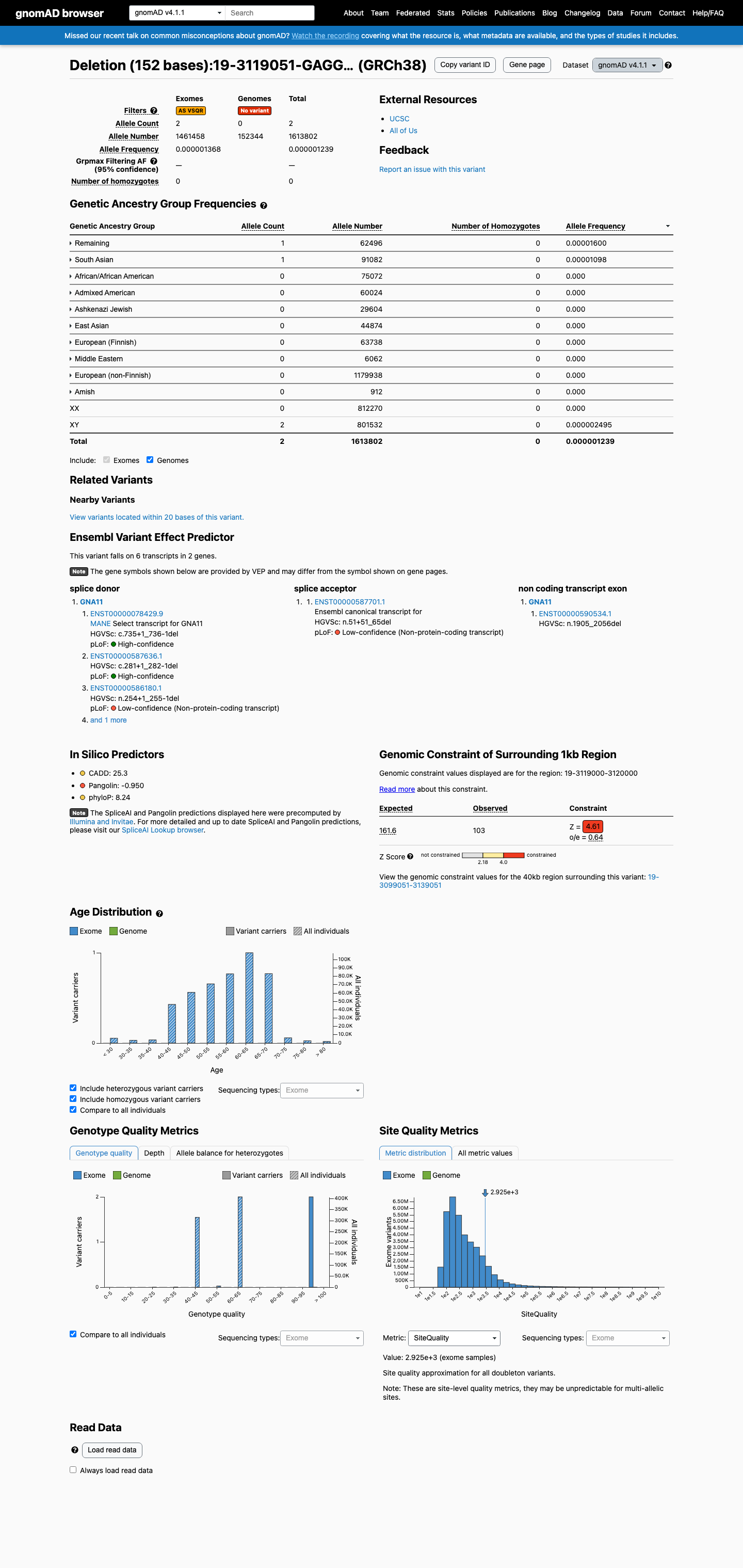
NM_002067.5:c.735+1_736-1del is a canonical splice site deletion removing the donor (+1) and acceptor (-1) sites of intron 5 of GNA11, qualifying for PVS1 at very strong strength under ClinGen SVI PVS1 recommendations (PMC6185798), with GNA11 loss of function established as a germline disease mechanism.1 The variant is absent from gnomAD v2.1 and is observed at an extremely low frequency in gnomAD v4.1 (AF = 1.24e-06, 2/1,613,802 alleles, 0 homozygotes), meeting PM2 at moderate strength.2 Per generic ACMG/AMP 2015 combination rules (Richards et al., PMID:25741868), one Very Strong criterion (PVS1) plus one Moderate criterion (PM2) yields a classification of Likely Pathogenic.3

PVS1 + PM2 Likely Pathogenic
Gene diagram · NM_002067.5 · variants mapped to exon structure
GNA11 NM_002067.5
Fetching transcript structure from UCSC…
Applied criteria · 2 met · select any tile
Met
Not met
Not assessed
N/A
Strength very strong supporting
Pathogenic evidence
PVS
PS
PM
PP
Benign evidence
BA
BS
BP
Rationale
Select a criterion.
Sources
Evidence used
    Gaps remaining
      Rule
      Research & evidence
      Population frequency · supports pathogenic
      gnomAD v4.1 screenshot
      gnomAD v4.1
      gnomAD v2.1 screenshot
      gnomAD v2.1
      v4.1
      This variant is present in gnomAD v4.1 (AF= 1.23931e-06; MAF= 0.00012%, 2/1613802 alleles, homozygotes = 0) and has highest observed frequency in the Remaining individuals population (AF= 1.6001e-05; MAF= 0.00160%, 1/62496 alleles, homozygotes = 0).
      v2.1
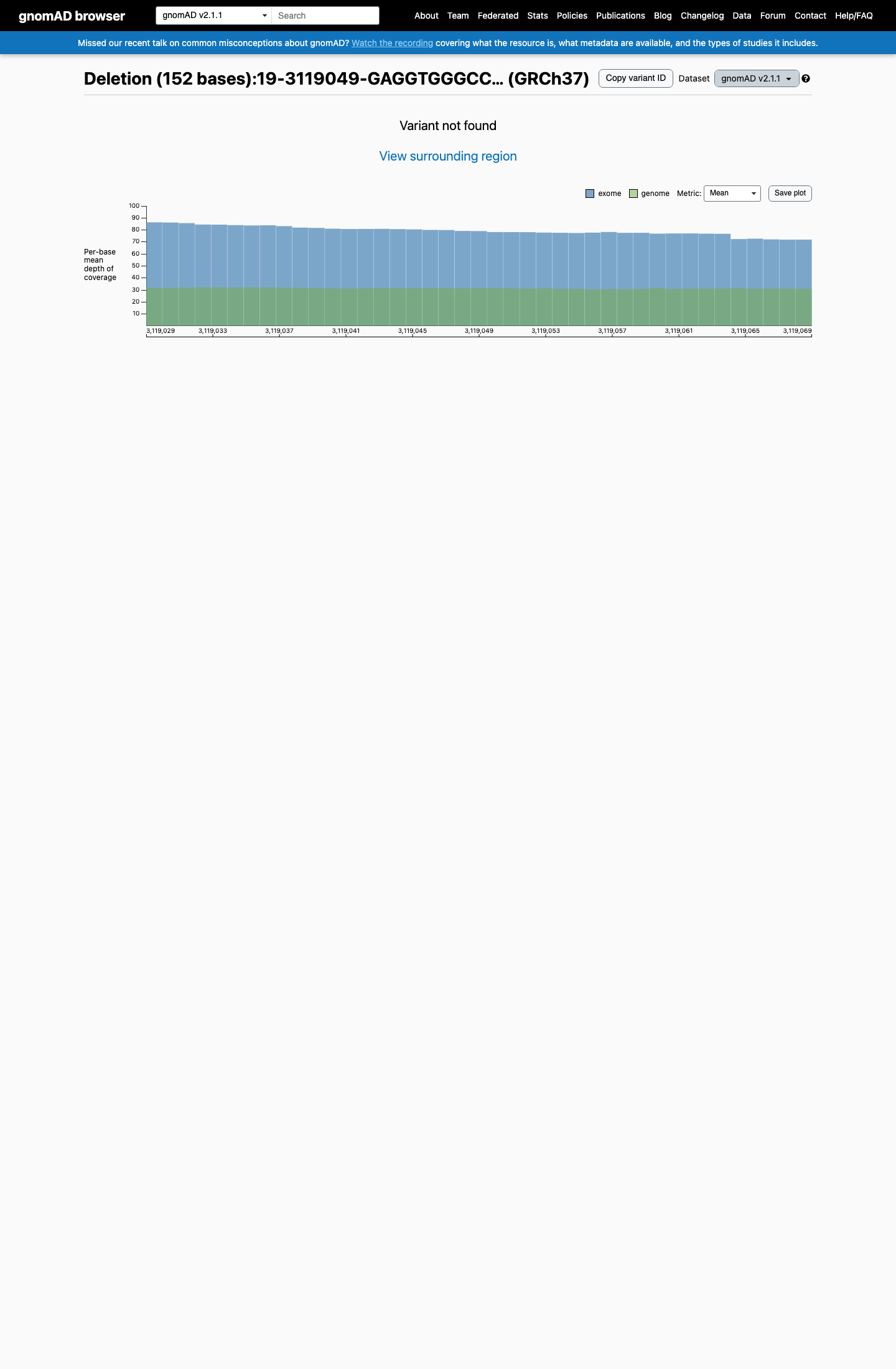
      Absent from gnomAD v2.1.
      🇨🇦 CA
      Absent from gnomAD-Canada v1.0.
      Allele frequency by ancestry
      three datasets · side by side
      gnomAD v4.1
      0.00012% · 2 / 1,613,802
      0 hom
      Remaining individuals
      1 / 62,496
      0.0016%
      South Asian
      1 / 91,082
      0.0011%
      + 8 not observed (Admixed American, European (Finnish), Amish, East Asian, Middle Eastern, Ashkenazi Jewish, African/African American, European (non-Finnish))
      gnomAD v2.1
      Absent · 0 / ?
      0 hom
      Not observed in any ancestry group.
      gnomAD Canada 🇨🇦
      Absent · 0 / ?
      0 hom
      Not observed in any ancestry group.
      ClinVar screenshot
      ClinVar
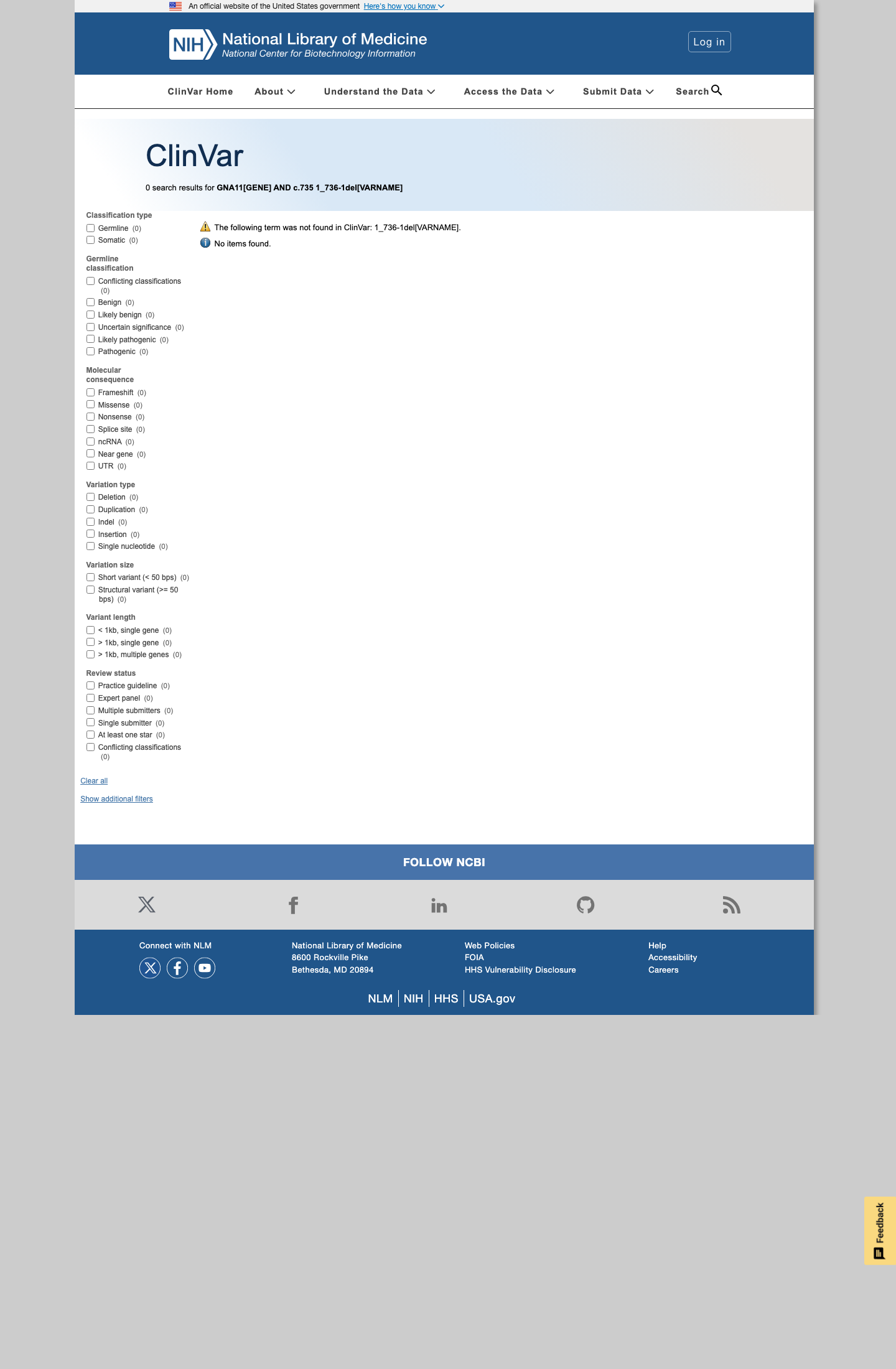
      This variant is absent from ClinVar.
      SpliceAI screenshot
      In silico
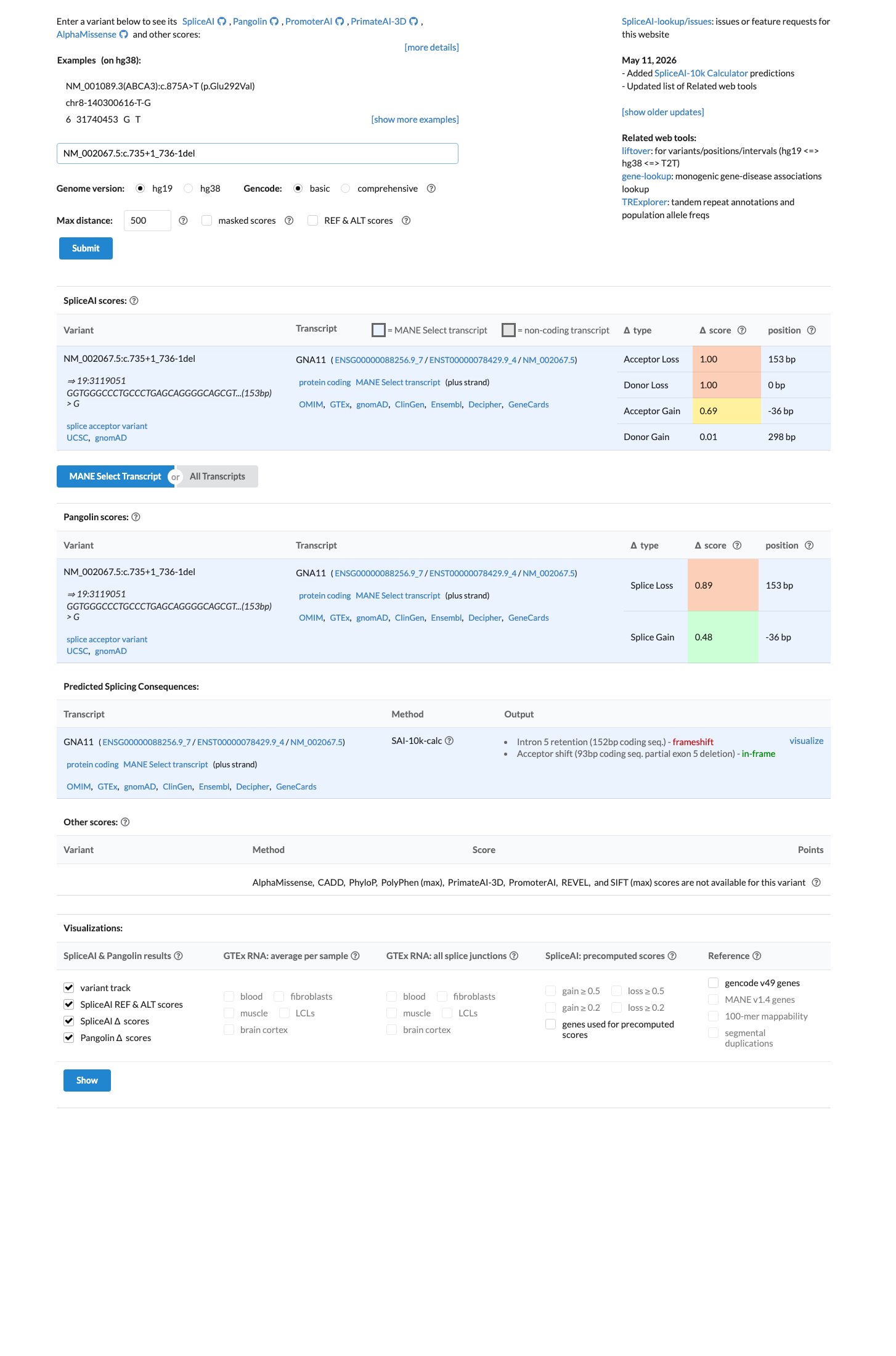
      SpliceAI predicts possible splice impact for this variant (max delta score = 1.00).
      Functional No data
      No calibrated functional assay or RNA evidence was identified for this variant.
      OncoKB ↗
      COSMIC screenshot
      COSMIC
      Somatic evidence
      COSMIC
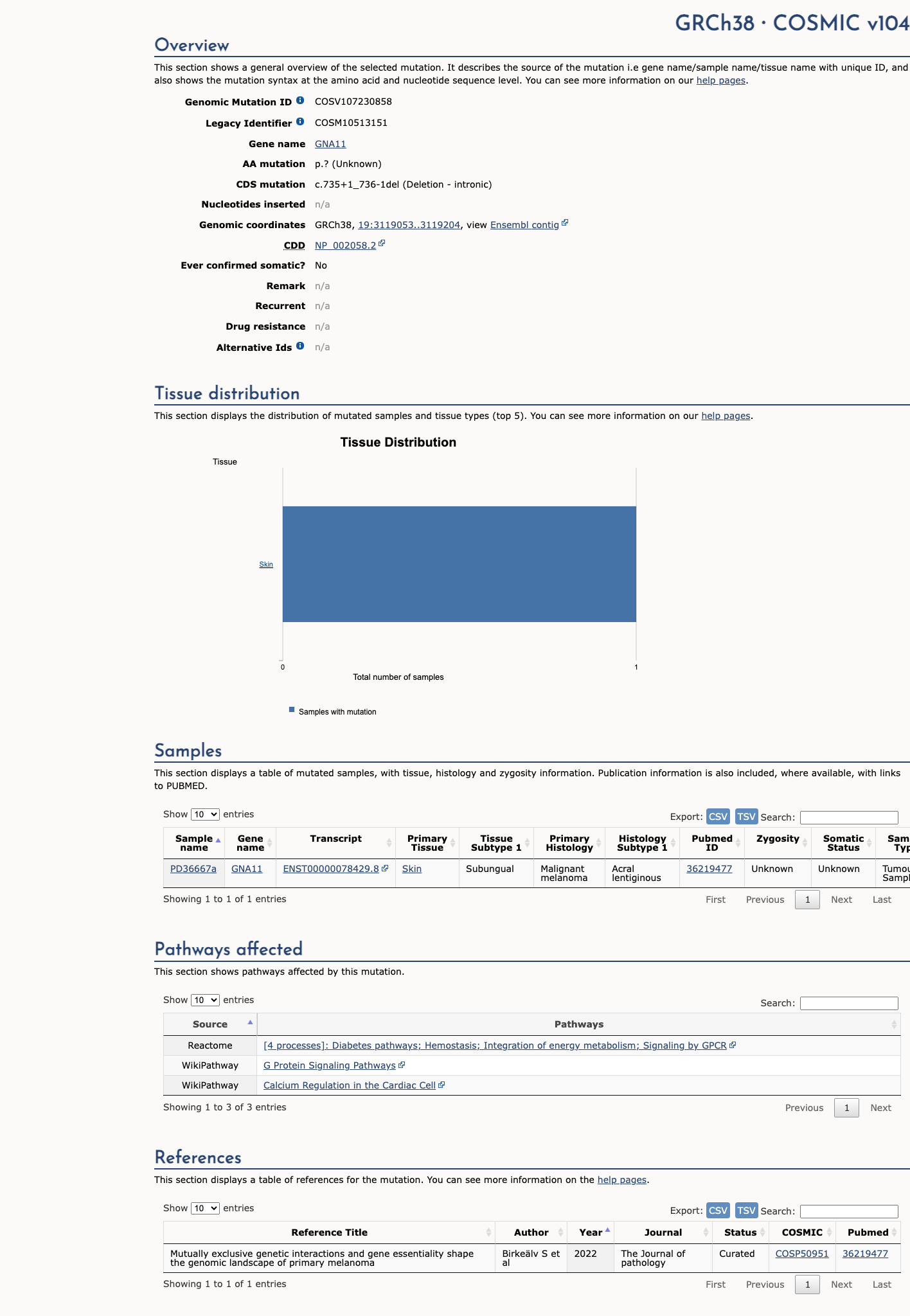
      This variant has previously been reported in somatic cancers (COSMIC; COSV107230858, n = 1 times).
      Hotspots
      This variant does not lie in a statistically significant cancer hotspot.
      COSMIC ↗
      Sources & reference links
      7Sources
      ClinVar
      gnomAD v2.1
      gnomAD v4.1
      gnomAD-Canada
      SpliceAI
      OncoKB
      COSMIC