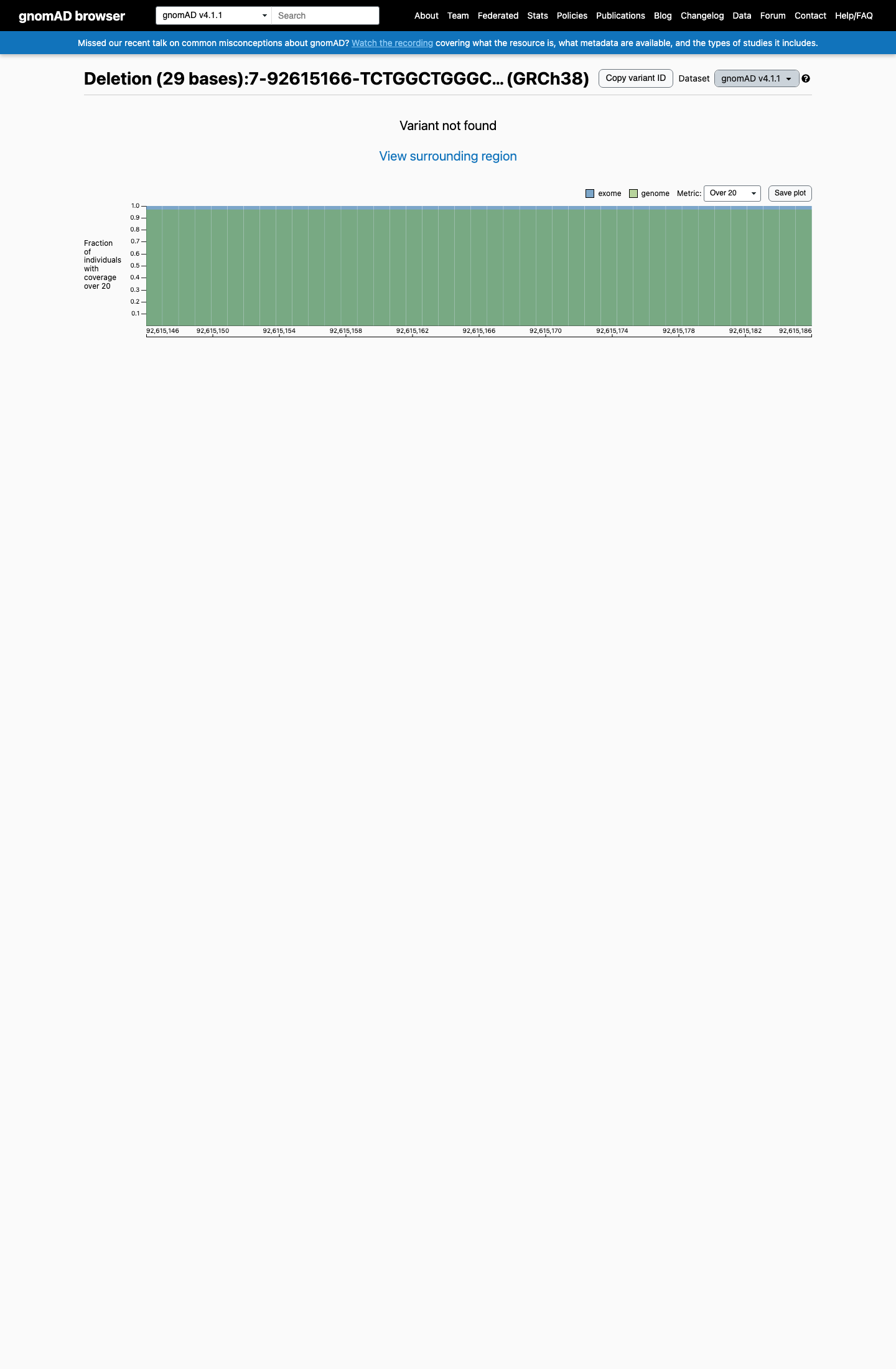
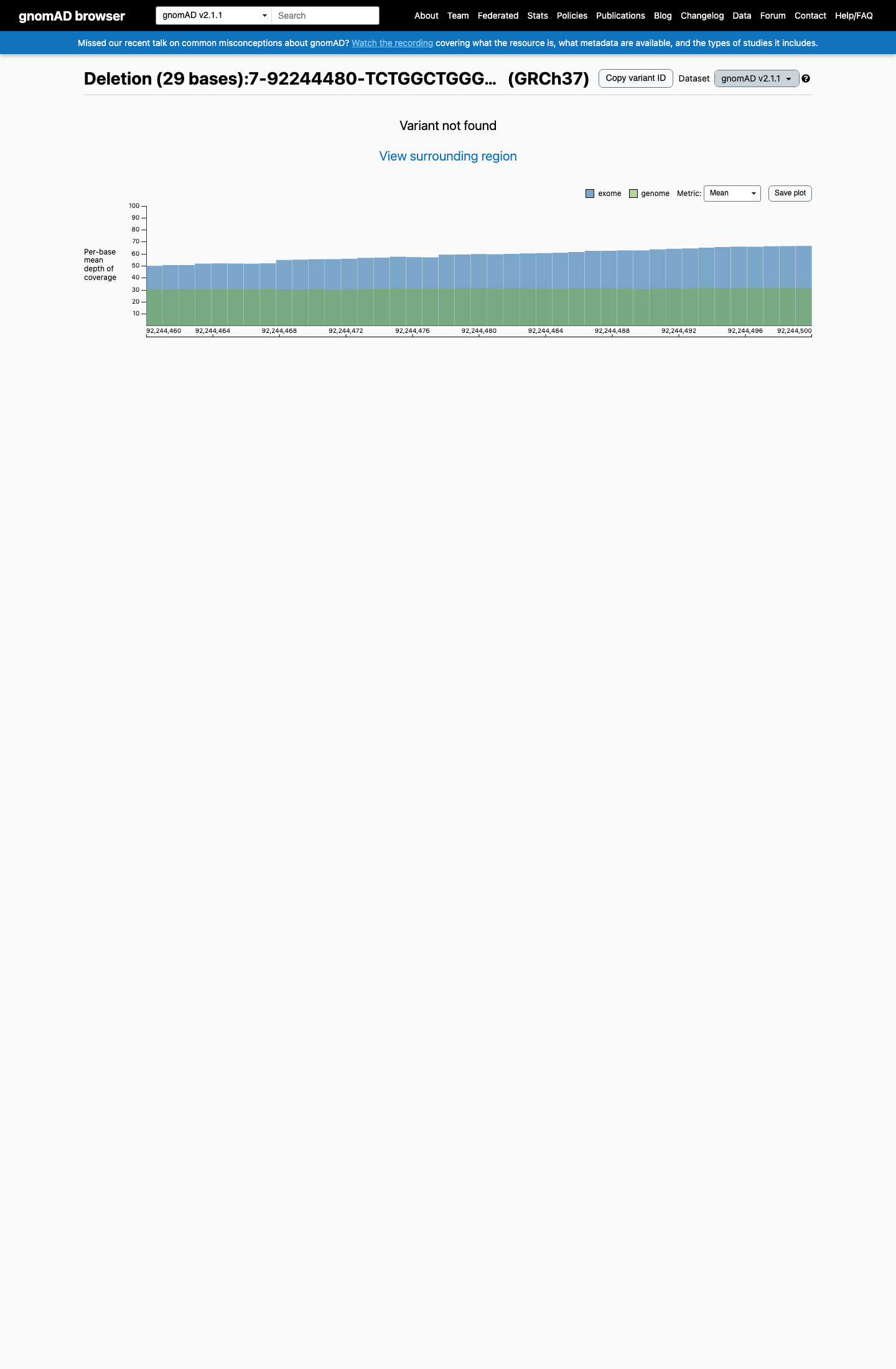
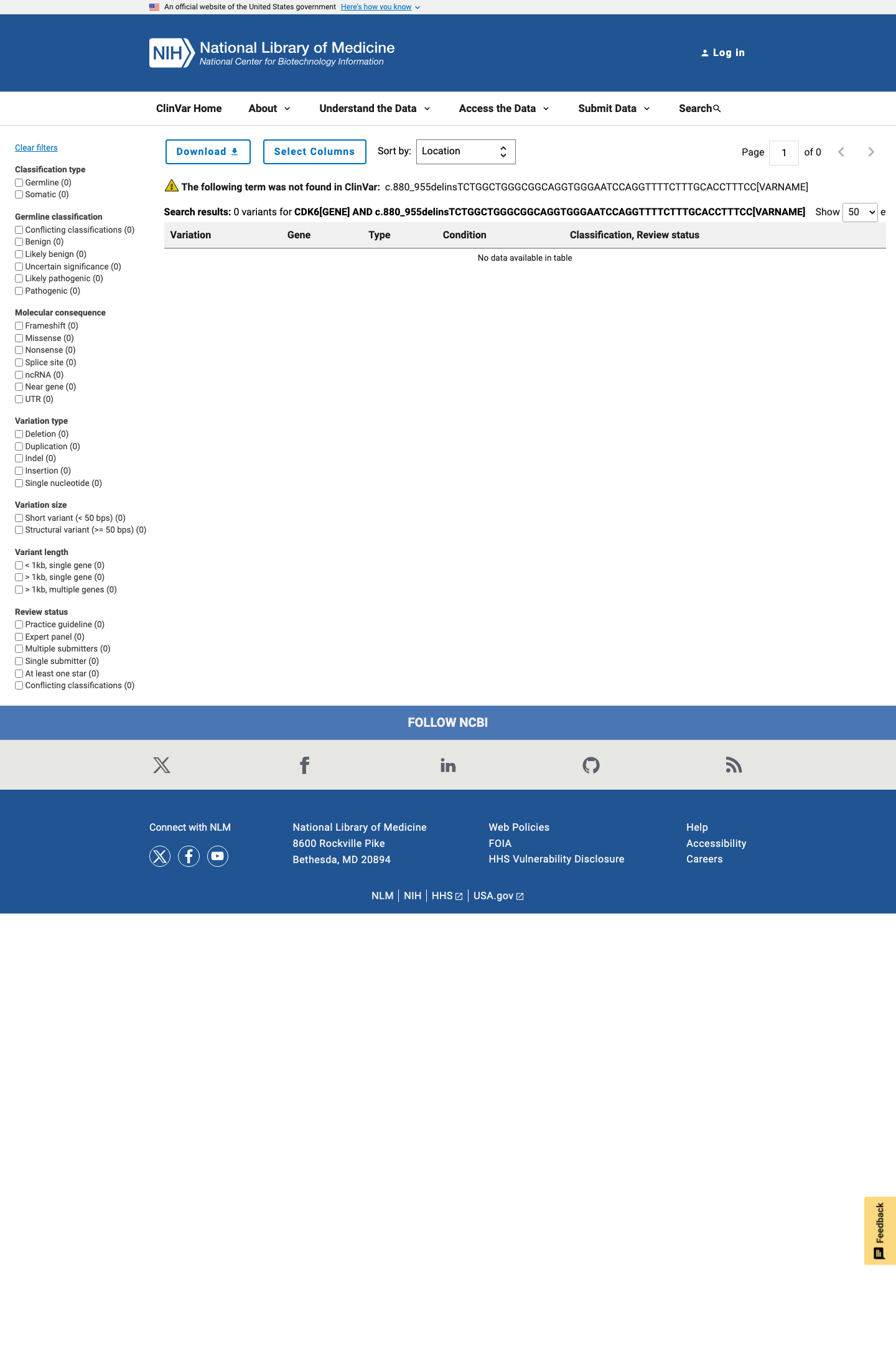
PVS1 at moderate strength: NM_001259.8:c.880_955delins is a frameshift variant predicted to result in p.(Ala294SerfsTer31), truncating the C-terminal kinase domain of CDK6. CDK6 loss of function is an established germline disease mechanism. Nonsense-mediated decay is not predicted because the variant is in the last exon (8/8) and the premature termination codon (codon 325) lies within 50 nucleotides of the final exon-exon junction. Under PMC6185798 guidance for truncating variants escaping NMD that affect a critical functional domain, PVS1 is downgraded to moderate.1 PM2 at moderate strength: The variant is absent from gnomAD v2.1 (141,456 individuals), gnomAD v4.1 (807,162 individuals), and gnomAD-Canada v1.0 (HostSeq genomes). No population frequency data supports benign standing variation.2 The variant is absent from ClinVar and COSMIC. No publications, functional data, or family segregation data were identified for this specific variant. Per the generic ACMG/AMP 2015 classification framework (PMID:25741868), PVS1 at moderate plus PM2 at moderate yields two moderate pathogenic criteria, which does not reach the threshold for Likely Pathogenic (requires ≥3 moderate or 1 strong + 1-2 moderate). This variant is classified as a Variant of Uncertain Significance (VUS).3
Final classification
VUS
PVS1PM2
CDK6
c.880_955delinsTCTGGCTGGGCGGCAGGTGGGAATCCAGGTTTTCTTTGCACCTTTCC
p.Ala294SerfsTer31
This variant
PVS1 at moderate strength: NM_001259.8:c.880_955delins is a frameshift variant predicted to result in p.(Ala294SerfsTer31), truncating the C-terminal kinase domain of CDK6. CDK6 loss of function is an established germline disease mechanism. Nonsense-mediated decay is not predicted because the variant is in the last exon (8/8) and the premature termination codon (codon 325) lies within 50 nucleotides of the final exon-exon junction. Under PMC6185798 guidance for truncating variants escaping NMD that affect a critical functional domain, PVS1 is downgraded to moderate.
gene-specific framework lacked a usable explicit final combination framework, so generic ACMG/AMP 2015 final-combination rules were applied as fallback; applied criteria: PVS1 moderate, PM2 moderate; combination = 2 moderate, which maps to VUS.
Classification rationale
PVS1PM2
VUS
CDK6 c.880_955delinsTCTGGCTGGGCGGCAGGTGGGAATCCAGGTTTTCTTTGCACCTTTCC
PVS1 + PM2
→
VUS
1
pvs1_generic_framework ↗pvs1_gene_contextpvs1_variant_assessment
3
clinvar ↗generic_acmg_combination_rules
LYFE Sciences is an AI system, and it can make mistakes. Criteria
may be applied incorrectly, sources may be misread, and a confident-looking
classification can still be wrong. Double-check every criterion and
its underlying evidence before relying on any call.
Gene diagram
· NM_001259.8 · variants mapped to exon structure
CDK6
NM_001259.8
Fetching transcript structure from UCSC…
Applied criteria · 2 applied · 16 assessed
MetEvidence satisfies this criterion.
Not metEvaluated against available evidence; threshold not reached.
Not assessedApplies in principle, but no evidence was found to evaluate it.
N/ADoesn't apply to this variant type.
Applied · 2
Strength
Supporting
Moderate
Strong
Very strong
PVS1
moderate
review
Pathogenic
Frameshift variant NM_001259.8:c.880_955delins predicted to result in p.(Ala294SerfsTer31). CDK6 loss of function is an established germline disease mechanism. Under PMC6185798, the variant is in the last exon (8/8) and the premature termination codon at codon 325 is within 50 nucleotides of the final exon-exon junction, so nonsense-mediated decay is not predicted. The truncation removes the C-terminal portion of the kinase domain (residues 294-326) and replaces it with 31 novel amino acids, partially disrupting a well-characterized functional domain. Downgraded from very strong to moderate per PMC6185798 guidance for truncating variants in the last exon that affect a critical functional region but are not expected to undergo NMD.
CDK6 loss of function is supported as a germline disease mechanism by targeted literature review (PMID:41514647PMID:25873077PMID:29149451
PM2
moderate
Pathogenic
This variant is absent from gnomAD v2.1 (exomes), gnomAD v4.1 (exomes/genomes), and gnomAD-Canada v1.0 (HostSeq genomes). Under generic ACMG/AMP criteria, absence from large population databases supports PM2 at moderate strength (allele frequency below 0.1% threshold).
Absent from gnomAD v2.1 (141456 individuals).Absent from gnomAD v4.1 (807
Assessed · not applied
· 5 not met · 11 not assessed
Pathogenic
PS2
No de novo data available; parental testing was not reported in case materials.
PS3
No functional studies identified for this specific variant or for a systematically characterized range that includes codon 294 in CDK6.
PS4
No case-control or case-series data available for this variant.
PM1
The variant does not lie within a statistically significant mutational hotspot (cancerhotspots.org negative).
PM6
No de novo data available; no parental testing results were provided in case materials.
PP1
No segregation data available for this variant.
PP4
No clinical phenotype or family history data were provided in the case materials to assess specificity for a CDK6-related disorder.
PP5
This variant is absent from ClinVar.
Benign
BA1
This variant is absent from gnomAD v2.1, v4.1, and gnomAD-Canada.
BS1
This variant is absent from population databases.
BS2
No data available on observation of this variant in healthy adult individuals for a fully penetrant disorder.
BS3
No functional studies identified for this variant demonstrating no damaging effect on protein function.
BS4
No segregation data available to evaluate lack of segregation in affected family members.
BP2
No data available on observation of this variant in trans with a pathogenic variant for a fully penetrant dominant disorder.
BP5
No data available on whether the proband carries an alternative molecular basis for disease.
BP6
This variant is absent from ClinVar.
N/A · 9
PS1 · PM4 · PM5 · PP2 · PP3 · BP1 · BP3 · BP4 · BP7
Research & evidence
Population frequency
gnomAD v4.1
gnomAD v2.1
v4.1
Absent from gnomAD v4.1.
v2.1
Absent from gnomAD v2.1.
🇨🇦 CA
Absent from gnomAD-Canada v1.0.
Allele frequency by ancestry
three datasets · side by side
gnomAD v4.1
Absent
· 0 / ?
0 hom
0 hom
Not observed in any ancestry group.
gnomAD v2.1
Absent
· 0 / ?
0 hom
0 hom
Not observed in any ancestry group.
gnomAD Canada 🇨🇦
Absent
· 0 / ?
0 hom
0 hom
Not observed in any ancestry group.

Functional
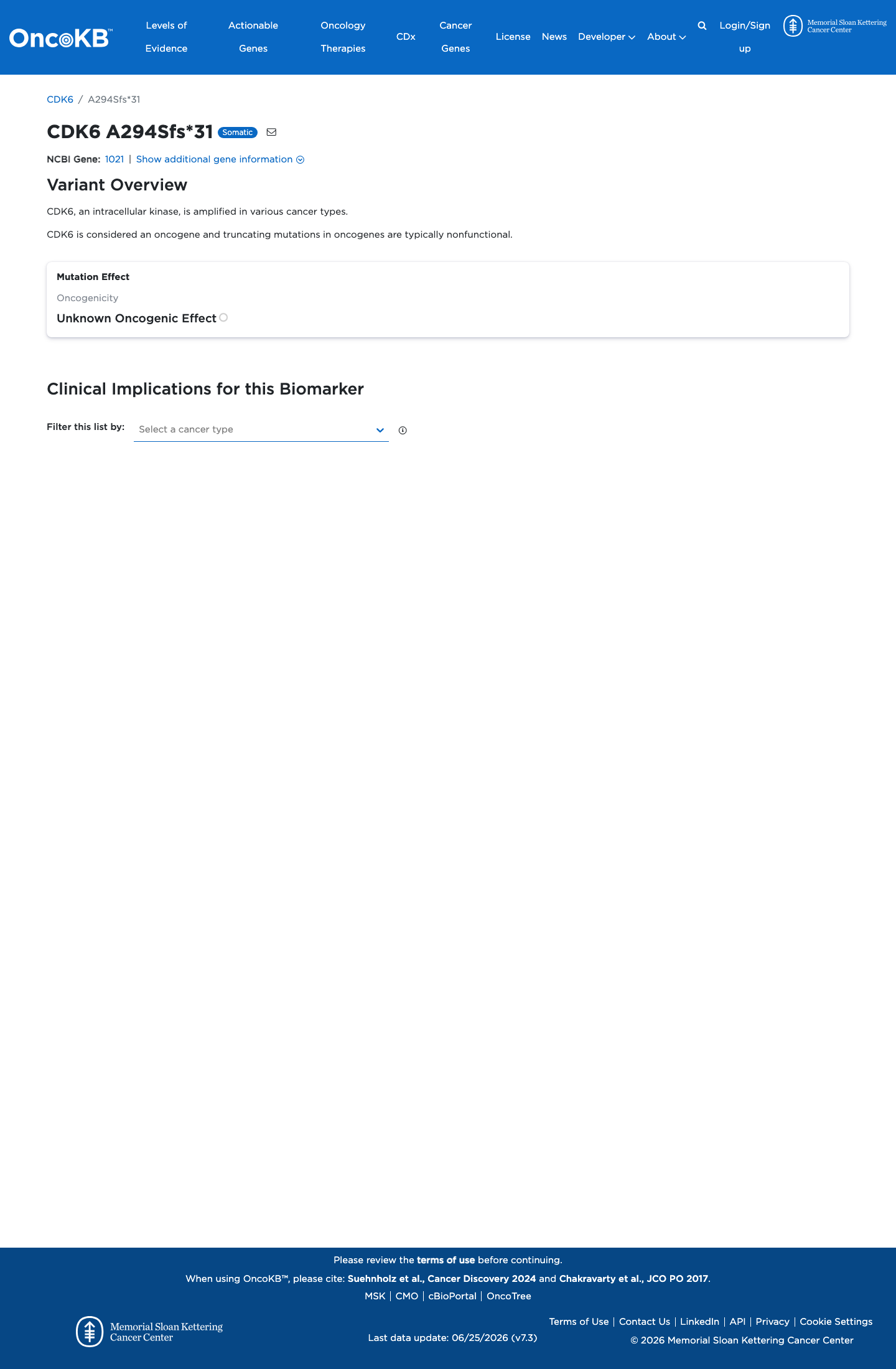
Unknown Oncogenic Effect
OncoKB identified curated literature and non-variant-specific oncogenicity context for review; listed oncogenicity label: Unknown Oncogenic Effect.

COSMIC

Cancer hotspots
Somatic evidence
Not in COSMIC / hotspots
COSMIC
This variant does not lie in a statistically significant hotspot. This variant has not previously been reported in somatic cancers (COSMIC).
Hotspots
This variant does not lie in a statistically significant hotspot.
Sources & reference links