PS1
Not assessed: no established pathogenic variant producing the same amino-acid change (p.Gly114Arg) was available to compare against.
PS2
Not assessed: no proband genotype, parental-testing results, or family-history data were available to evaluate a confirmed de novo occurrence.
PS3
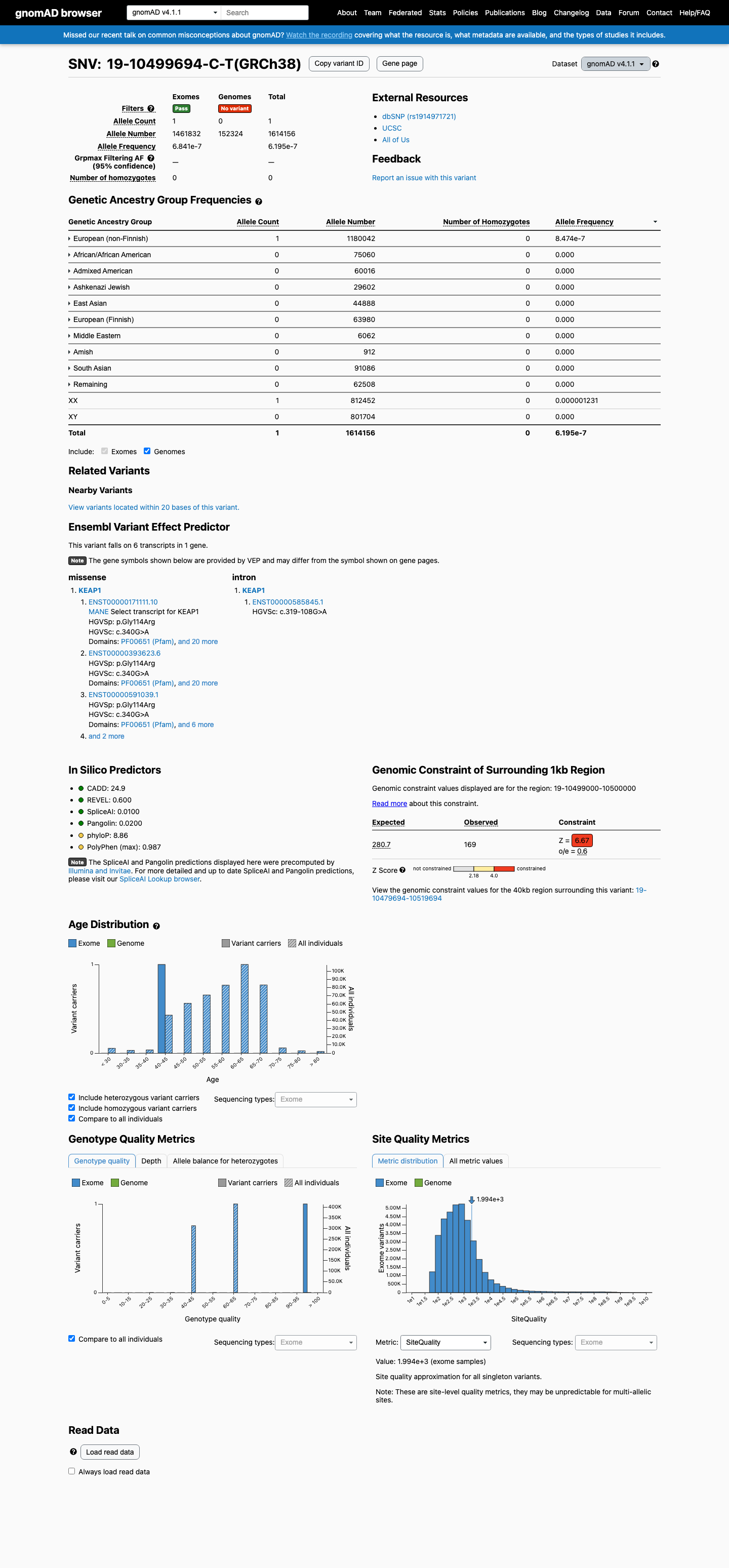
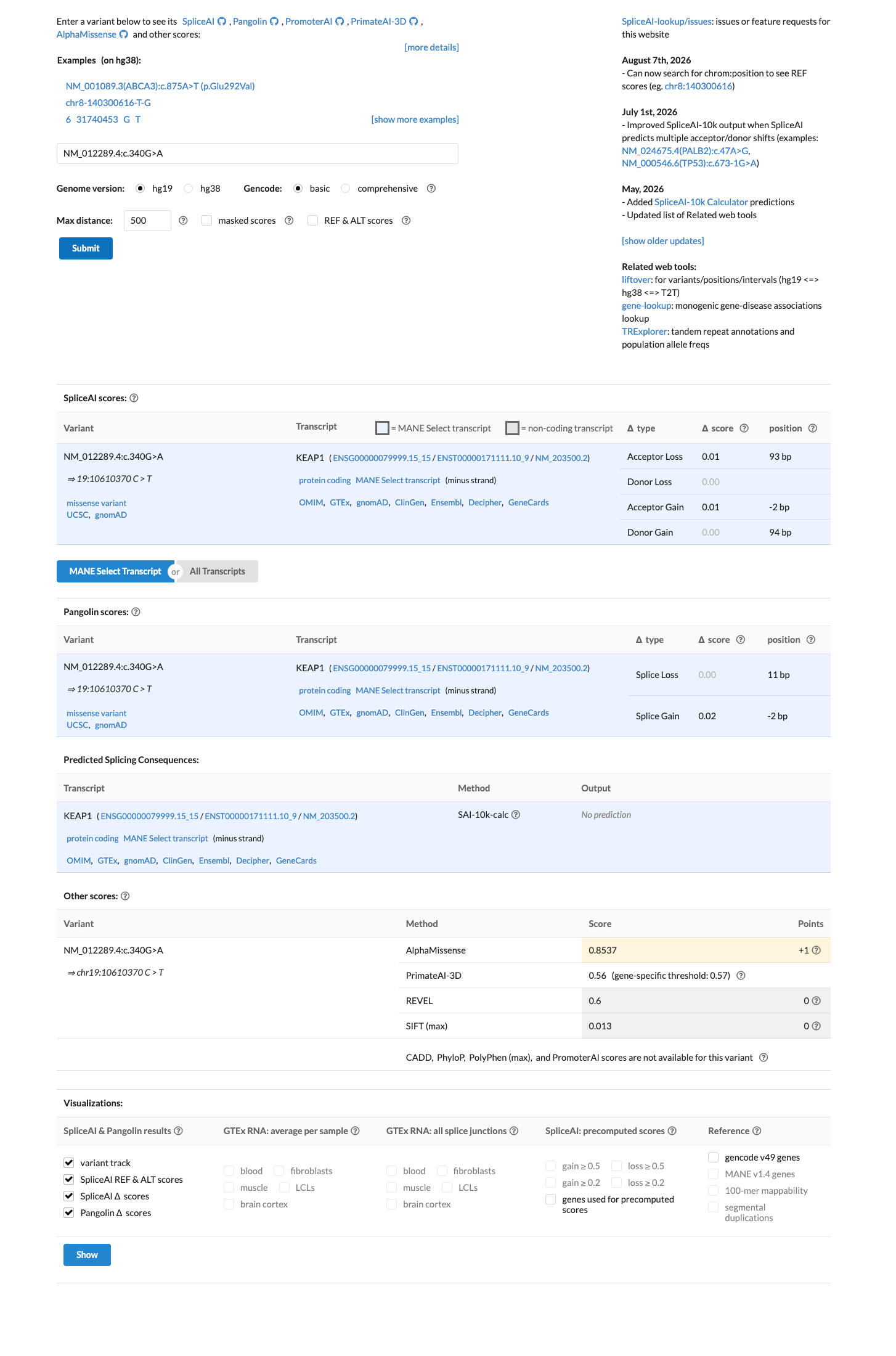
Not assessed: no functional studies of this variant were available; in-silico scores (REVEL 0.6, BayesDel 0.171) are not functional evidence.
PS4
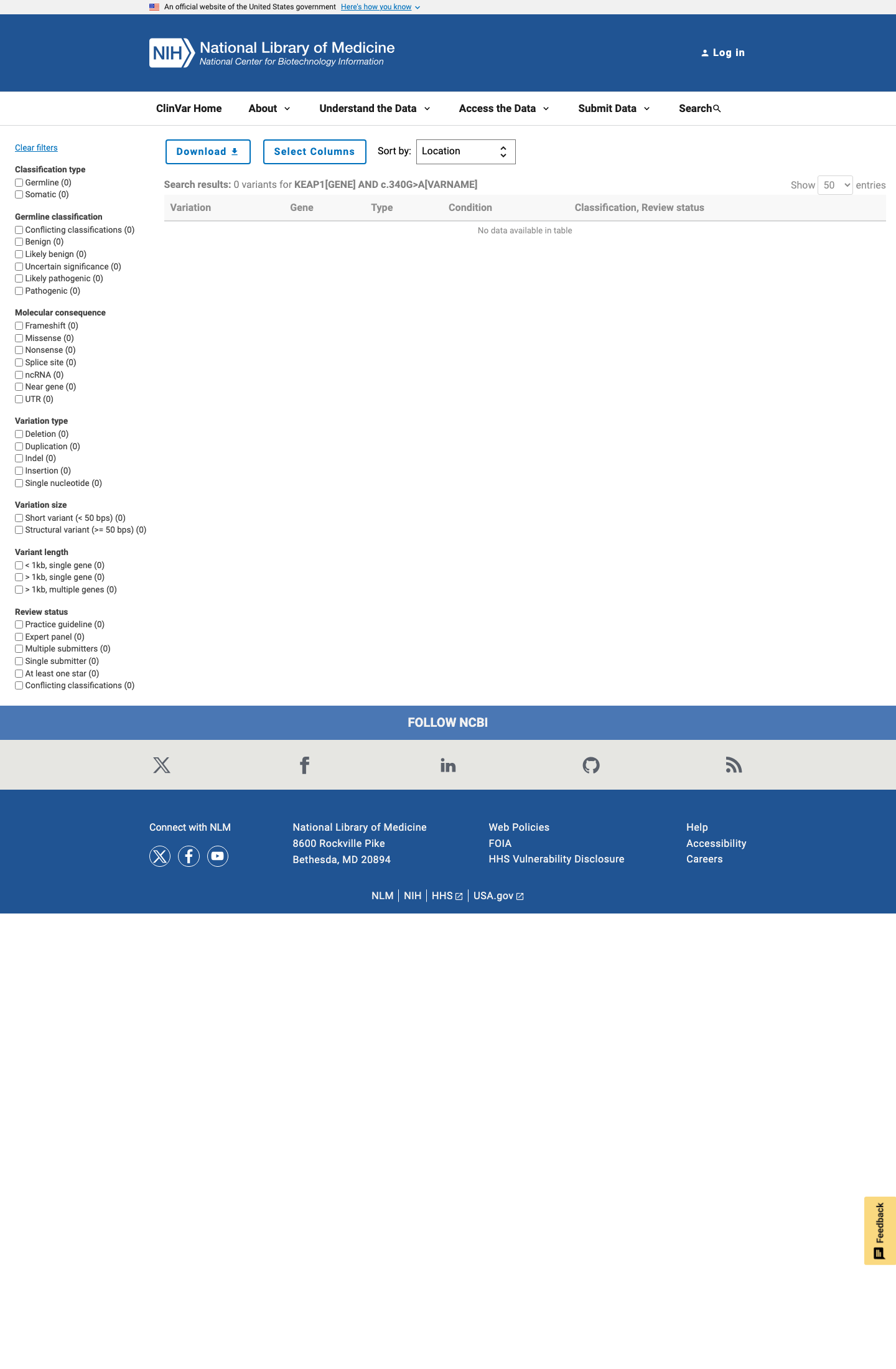
Not assessed: no case-control or cohort enrichment data exist for this variant, which is unreported in ClinVar and COSMIC.
PM1
Not met: the variant is not in a statistically significant hotspot (Cancer Hotspots no-result), and no critical-domain rule applies to Gly114.
PM5
Not assessed: no alternate pathogenic missense at residue Gly114 was available to establish that a different change at this residue is pathogenic.
PM6
Not assessed: no proband or parental trio data were available, so an assumed de novo occurrence cannot be evaluated.
PP1
Not assessed: no pedigree, family-member genotypes, or segregation analysis were available for this variant.
PP2
Not assessed: gene-level missense constraint metrics (e.g., gnomAD missense Z-score) were unavailable, even though missense is a known KEAP1 disease mechanism.
PP3
Not met: REVEL 0.600 is below the 0.644 supporting threshold, and SpliceAI 0.01 predicts no splice impact, so multiple deleterious lines are lacking.
PP4
Not assessed: no proband phenotype or family history was available, and no publication reports this exact variant.
PP5
Not met: ClinVar has no record of this variant, so no 3-star expert-panel pathogenic classification exists to apply.