This variant was interpreted by pipeline
7.1.0.
The current version is
8.0.0.
Re-running queues a fresh interpretation; the result replaces this page when complete.
Re-runs are not free. Blank = draws on today's public interpretation allowance.
With a code = uses 1 of that code's uses.
TSC1 encodes hamartin, a tumor suppressor protein that partners with tuberin (TSC2) to form a complex that restrains mTORC1 signaling, a key pathway driving cell growth and protein production. Germline mutations in TSC1 cause tuberous sclerosis, a condition marked by benign growths that occasionally turn malignant, and are also linked to lymphangioleiomyomatosis. In cancer, inactivating mutations in TSC1 are found in several tumor types, including hepatocellular carcinoma, where they overactivate mTORC1 signaling.
This variant
TSC1's hamartin restrains mTORC1-driven cell growth, and inactivating germline mutations cause tuberous sclerosis. This synonymous change (p.Thr955=) is classified Benign: it does not alter the protein or impair tumor-suppressor function, and its common population frequency is incompatible with a disease-causing TSC1 allele.
Transcript
NM_000368.5
HGVS · transcript:coding
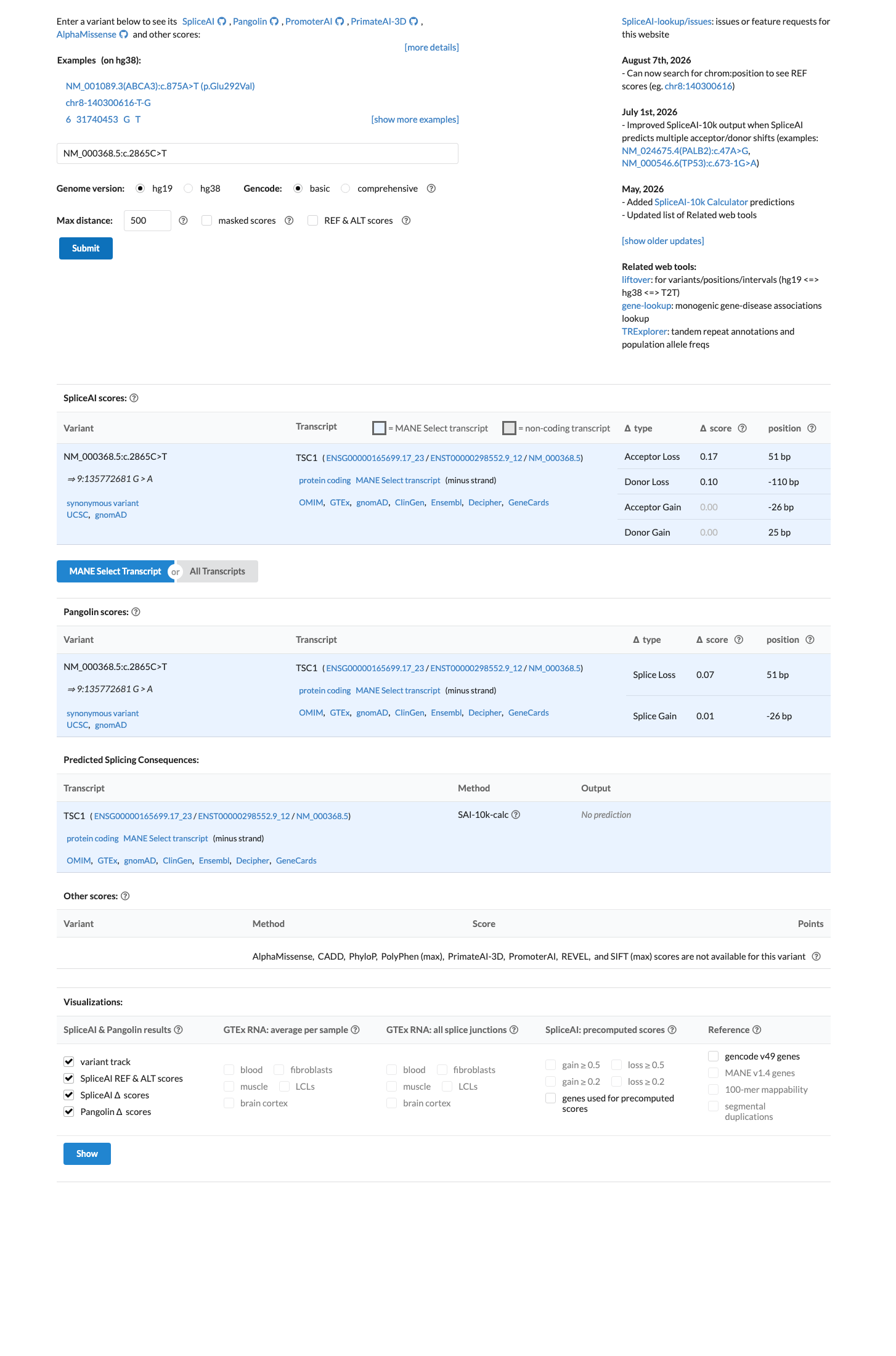
NM_000368.5:c.2865C>T
GRCh38
chr9:132897294 G>A
GRCh37
chr9:135772681 G>A
No ClinGen CSPEC or gene-specific framework exists for TSC1, so generic ACMG/AMP 2015 rules were applied: two strong benign criteria (BS1, allele frequency ~0.3% vs ~0.006% maximum credible; BS2, 10 homozygotes) map to Benign.
Classification rationale
BS1BS2Benign
TSC1 c.2865C>Tmissense
BS1 (Strong): allele frequency ~0.3% in gnomAD exceeds the ~0.006% maximum credible TSC1 disease-allele frequency by ~40-50x. BS2 (Strong): 10 homozygotes in gnomAD v4.1 for a fully penetrant, early-onset autosomal dominant disorder. Benign: two strong benign criteria (BS1 + BS2) under the generic ACMG/AMP 2015 combination rule.
BS1 + BS2→Benign
LYFE Sciences is an AI system, and it can make mistakes. Criteria
may be applied incorrectly, sources may be misread, and a confident-looking
classification can still be wrong. Double-check every criterion and
its underlying evidence before relying on any call.
Gene diagram
· NM_000368.5 · variants mapped to exon structure
TSC1NM_000368.5
Fetching transcript structure from UCSC…
Exons
—
Transcript span
—
Strand
—
Variants mapped
—
Source
UCSC ncbiRefSeqCurated
All variants in TSC1—click a row to locate it on the plot · use the link column to open its page
Protein
Location
Classification
Link
Applied criteria · 2 applied · 17 assessed
MetEvidence satisfies this criterion.
Not metEvaluated against available evidence; threshold not reached.
Not assessedApplies in principle, but no evidence was found to evaluate it.
N/ADoesn't apply to this variant type.
Applied · 2
Strength Supporting Moderate Strong Very strong
✓
BS1strongBenign
Met (Strong): allele frequency ~0.3% exceeds the maximum credible TSC1 disease-allele frequency (~0.006%) by ~40-50x.
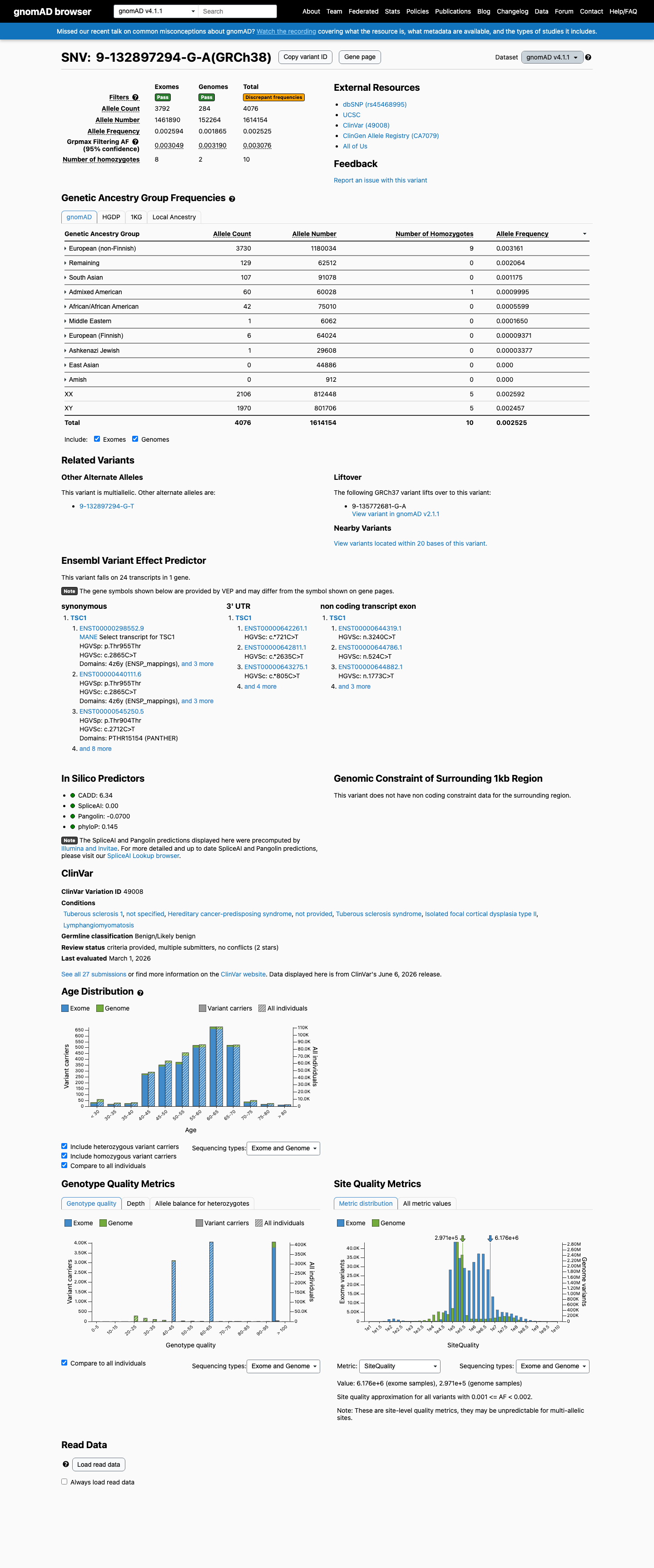
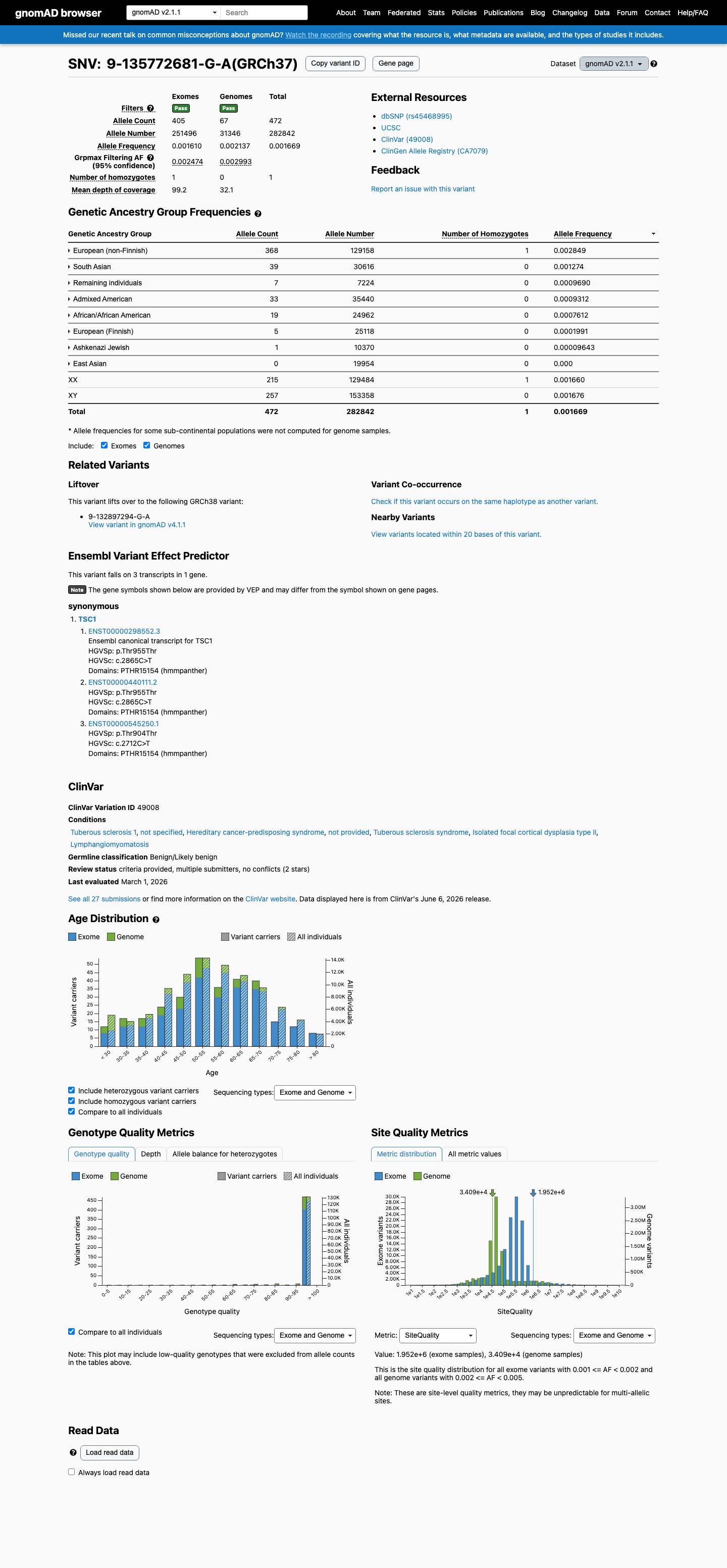
gnomAD v4.1 (source: gnomad_v4): NFE AF 0.003161 (3730/1180034 alleles), grpmax FAF 0.003076 - exceeds maximum credible disease-allele AF for TSC1 (~0.00006, i.e. ~0.006%) by ~50xgnomAD v2.1 (source: gnomad_v2): NFE AF 0.002849 (368/129158), grpmax FAF 0.002993 - exceeds maximum credible TSC1 disease-allele AF by ~45xMaximum credible allele frequency approach (Whiffin et al. 2017, Genet Med 19(10):1151-1158, PMID:28518168): AF_max for a single TSC1 pathogenic allele estimated from TSC prevalence ~1/6,000-1/10,000 (autosomal dominant, near-full penetrance) and TSC1 causal fraction ~1/3, giving AF_max ~0.006% or less
Met (Strong): 10 homozygotes in gnomAD v4.1 are incompatible with a fully penetrant, early-onset dominant disorder.
gnomAD v4.1 (source: gnomad_v4): total homozygotes = 10 (9 NFE, 1 AMR; exome 8, genome 2) among 1,614,154 alleles - homozygous observation in a general population cohort for a fully penetrant dominant disordergnomAD v2.1 (source: gnomad_v2): total homozygotes = 1 (NFE exome) among 282,842 allelesgnomAD-Canada v1.0 (source: gnomad_canada): 0 homozygotes (24/18420 alleles) - no contradiction
This variant is present in gnomAD v4.1 (AF= 0.00252516; MAF= 0.25252%, 4076/1614154 alleles, homozygotes = 10) and has highest observed frequency in the European (non-Finnish) population (AF= 0.00316093; MAF= 0.31609%, 3730/1180034 alleles, homozygotes = 9); grpmax FAF= 0.00307583.
v2.1
This variant is present in gnomAD v2.1 (AF= 0.00166878; MAF= 0.16688%, 472/282842 alleles, homozygotes = 1) and has highest observed frequency in the European (non-Finnish) population (AF= 0.00284922; MAF= 0.28492%, 368/129158 alleles, homozygotes = 1); grpmax FAF= 0.00299349.
🇨🇦 CA
This variant is present in gnomAD-Canada v1.0 (AF= 0.0013029315960912053, 24/18420 alleles, homozygotes = 0).
Allele frequency by ancestry
three datasets · side by side
gnomAD v4.1
0.25%
· 4076 / 1,614,154
10 hom · FAF 0.31%
European (non-Finnish)
3730 / 1,180,034
0.32%
9 hom
Remaining individuals
129 / 62,512
0.21%
South Asian
107 / 91,078
0.12%
Admixed American
60 / 60,028
0.1%
1 hom
African/African American
42 / 75,010
0.056%
Middle Eastern
1 / 6,062
0.016%
European (Finnish)
6 / 64,024
0.0094%
Ashkenazi Jewish
1 / 29,608
0.0034%
+ 2 not observed (Amish, East Asian)
gnomAD v2.1
0.17%
· 472 / 282,842
1 hom · FAF 0.3%
European (non-Finnish)
368 / 129,158
0.28%
1 hom
South Asian
39 / 30,616
0.13%
Remaining individuals
7 / 7,224
0.097%
Admixed American
33 / 35,440
0.093%
African/African American
19 / 24,962
0.076%
European (Finnish)
5 / 25,118
0.02%
Ashkenazi Jewish
1 / 10,370
0.0096%
+ 1 not observed (East Asian)
gnomAD Canada 🇨🇦
0.13%
· 24 / 18,420
0 hom · FAF 0.13%
European (non-Finnish)
22 / 11,740
0.19%
Remaining individuals
1 / 1,138
0.088%
South Asian
1 / 1,362
0.073%
+ 6 not observed (African/African American, Latino/Admixed American, Ashkenazi Jewish, East Asian, European (Finnish), Middle Eastern)
This variant has been reported in ClinVar as Benign (17 clinical laboratories) and as Likely benign (6 clinical laboratories) and as Likely Benign (1 clinical laboratory) and as benign (1 clinical laboratory). (ClinVarID = 49008)
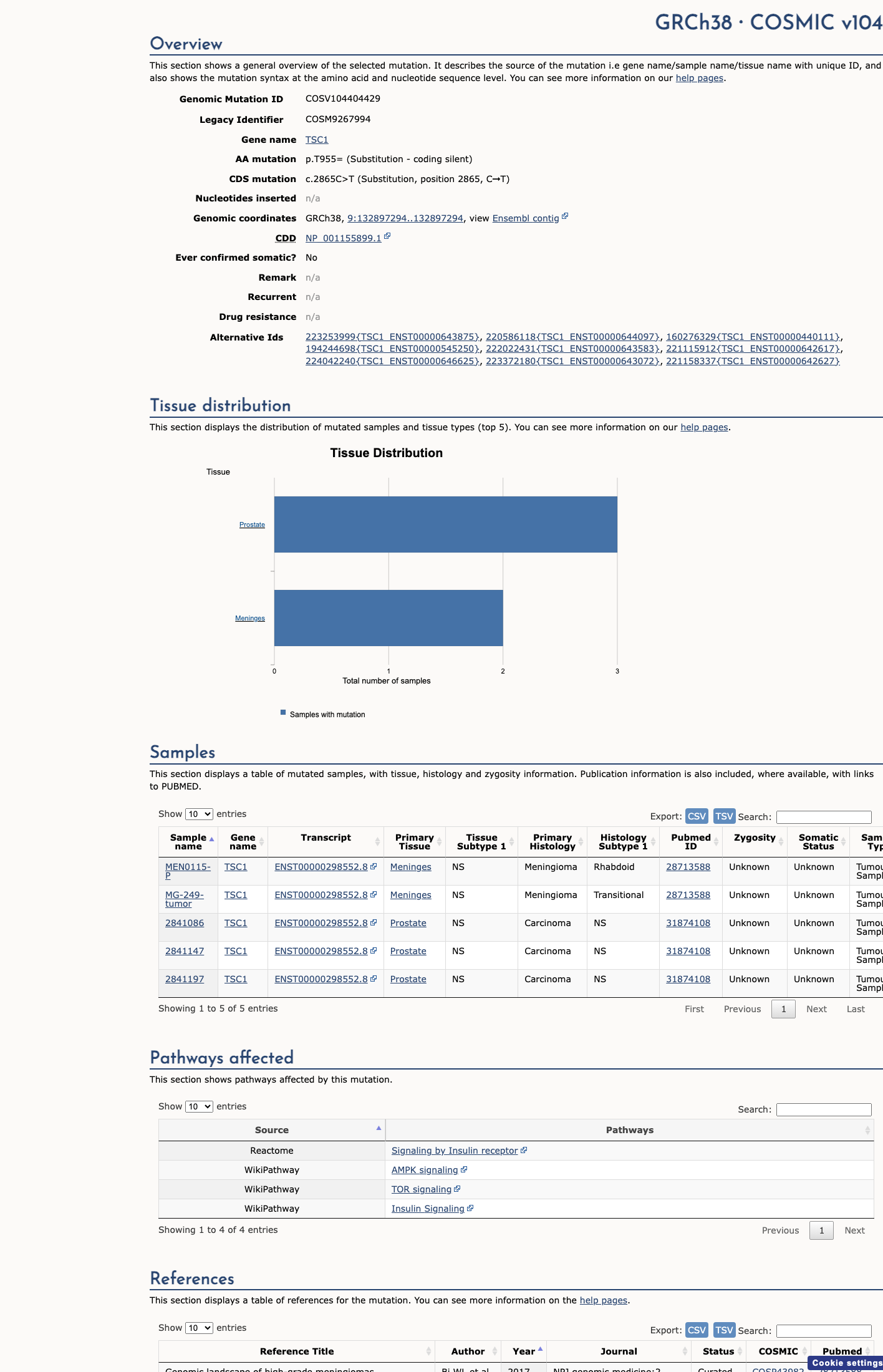
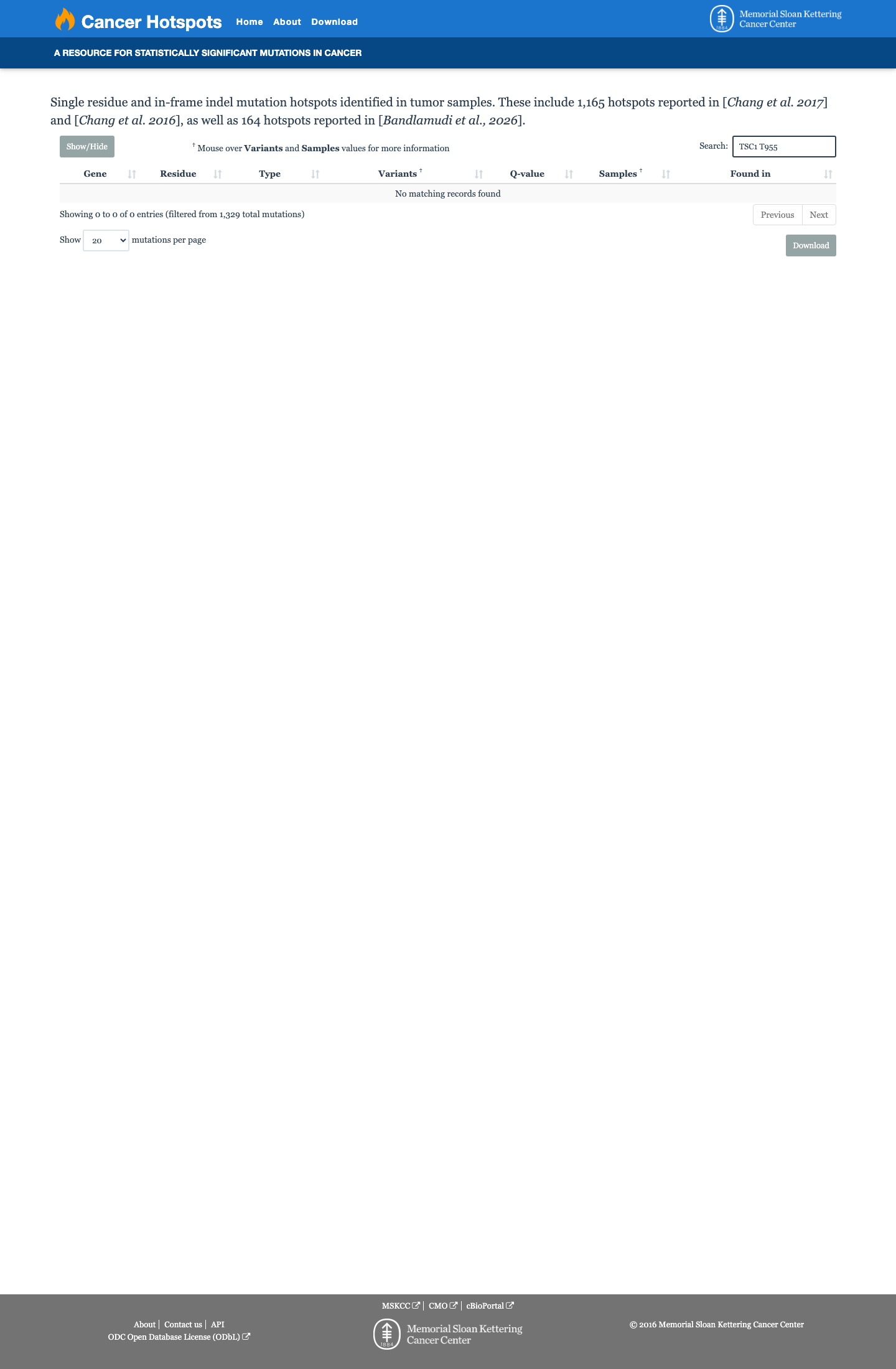
This variant does not lie in a statistically significant hotspot. This variant has previously been reported in somatic cancers (COSMIC; COSV104404429, n = 5 times).
Hotspots
This variant does not lie in a statistically significant hotspot.
Each card is an audit: what was searched, what was found, whether it names the variant, which criteria it fed, and why. 8 further PMIDs triaged but not cited — see Sources & references.
Rule & framework references · cited for criterion definitions, not variant evidence
25741868 ↗Standards and guidelines for the interpretation of sequence variants: a joint consensus recommendation of the American College of Medical Genetics and Genomics and the Association for Molecular Pathology.
Sources & reference links
8Sources
ClinVar
gnomAD v2.1
gnomAD v4.1
gnomAD-Canada
SpliceAI
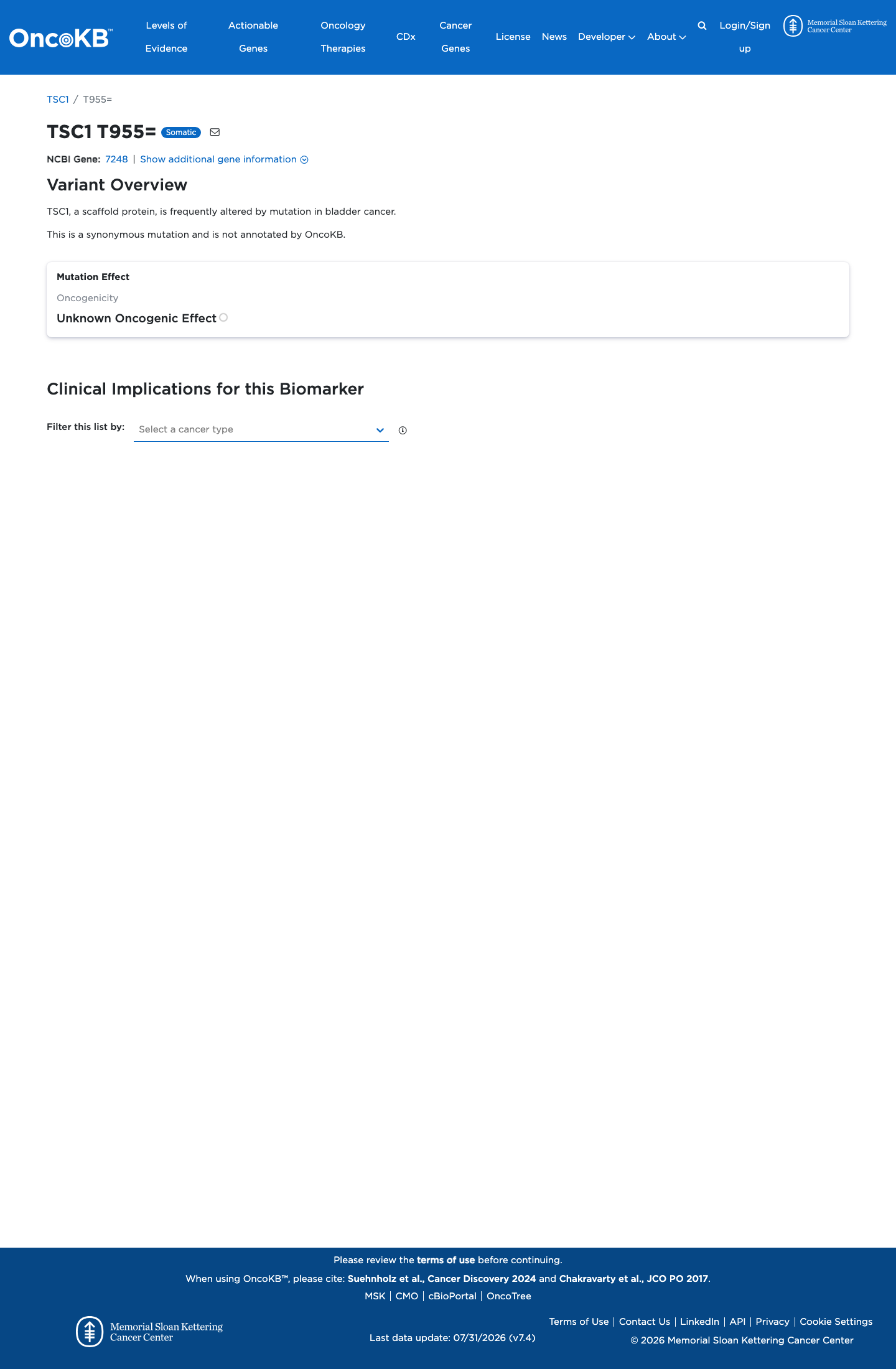
OncoKB
COSMIC
Cancer hotspots
Triaged references · 8 PMIDs not cited in assessment
15798777 ↗Mutational analysis of the TSC1 and TSC2 genes in a diagnostic setting: genotype--phenotype correlations and comparison of diagnostic DNA techniques in Tuberous Sclerosis Complex.CLINVAR
24033266 ↗A systematic approach to assessing the clinical significance of genetic variants.CLINVAR
26467025 ↗A Standardized DNA Variant Scoring System for Pathogenicity Assessments in Mendelian Disorders.CLINVAR
10533067 ↗Analysis of both TSC1 and TSC2 for germline mutations in 126 unrelated patients with tuberous sclerosis.CLINVAR
23788249 ↗ACMG recommendations for reporting of incidental findings in clinical exome and genome sequencing.CLINVAR
25394175 ↗A practice guideline from the American College of Medical Genetics and Genomics and the National Society of Genetic Counselors: referral indications for cancer predisposition assessment.CLINVAR
28492532 ↗Sherloc: a comprehensive refinement of the ACMG-AMP variant classification criteria.CLINVAR