Analysis in progress
Initialising…
0%
complete
This report is still being assembled — sections appear as each stage finishes. It isn't final yet.
PTCH1
Final classification
VUS
PM2BP4
PTCH1
c.2215_2216delinsTT
p.His739Phe
missense · exon 14

PTCH1 encodes a transmembrane receptor for hedgehog signaling proteins such as sonic hedgehog, a pathway that guides embryonic development. The protein normally keeps hedgehog signaling in check by inhibiting the Smoothened protein, so when PTCH1 is inactivated the pathway becomes overactive. Inherited changes in PTCH1 cause Gorlin syndrome (nevoid basal cell carcinoma syndrome), which predisposes to basal cell carcinoma and medulloblastoma, and can also contribute to holoprosencephaly. As a tumor suppressor, its loss drives basal cell carcinoma and medulloblastoma.

This variant

PTCH1 is a tumor suppressor whose inactivation overactivates hedgehog signaling and predisposes to Gorlin syndrome, basal cell carcinoma, and medulloblastoma. This missense variant (p.His739Phe) is classified as a VUS: with no population frequency, functional assay, or disease-segregation evidence, its impact on PTCH1 tumor-suppressor function cannot yet be determined.

Transcript
NM_000264.5
HGVS · transcript:coding
NM_000264.5:c.2215_2216delinsTT
GRCh38
chr9:95468785 TG>AA
GRCh37
chr9:98231067 TG>AA
Basis No ClinGen VCEP/CSPEC exists for PTCH1, so generic ACMG/AMP 2015 was applied; only PM2 (supporting) and BP4 (supporting) are met, which does not reach any classification threshold.
No ClinGen VCEP/CSPEC exists for PTCH1, so generic ACMG/AMP 2015 was applied; only PM2 (supporting) and BP4 (supporting) are met, which does not reach any classification threshold.
Classification rationale
PM2 BP4 VUS
PTCH1 c.2215_2216delinsTT missense · exon 14

PM2 (Supporting): exact variant absent from gnomAD v2.1, v4.1, and gnomAD-Canada v1.0, with no population frequency observed. BP4 (Supporting): SpliceAI max delta 0.002, well below the 0.1 benign-supporting cutoff, indicating essentially no splicing impact. Synthesis: one supporting pathogenic (PM2) plus one supporting benign (BP4) criterion does not meet any ACMG/AMP combination threshold, yielding a final classification of VUS.

PM2 + BP4 VUS
Gene diagram · NM_000264.5 · variants mapped to exon structure
PTCH1 NM_000264.5
Fetching transcript structure from UCSC…
Applied criteria · 2 applied · 22 assessed
MetEvidence satisfies this criterion.
Not metEvaluated against available evidence; threshold not reached.
Not assessedApplies in principle, but no evidence was found to evaluate it.
N/ADoesn't apply to this variant type.
Applied · 2
Strength Supporting Moderate Strong Very strong
PM2 supporting Pathogenic
Met (supporting): the exact variant is absent from gnomAD v2.1, v4.1, and gnomAD-Canada v1.0, with no population frequency observed.
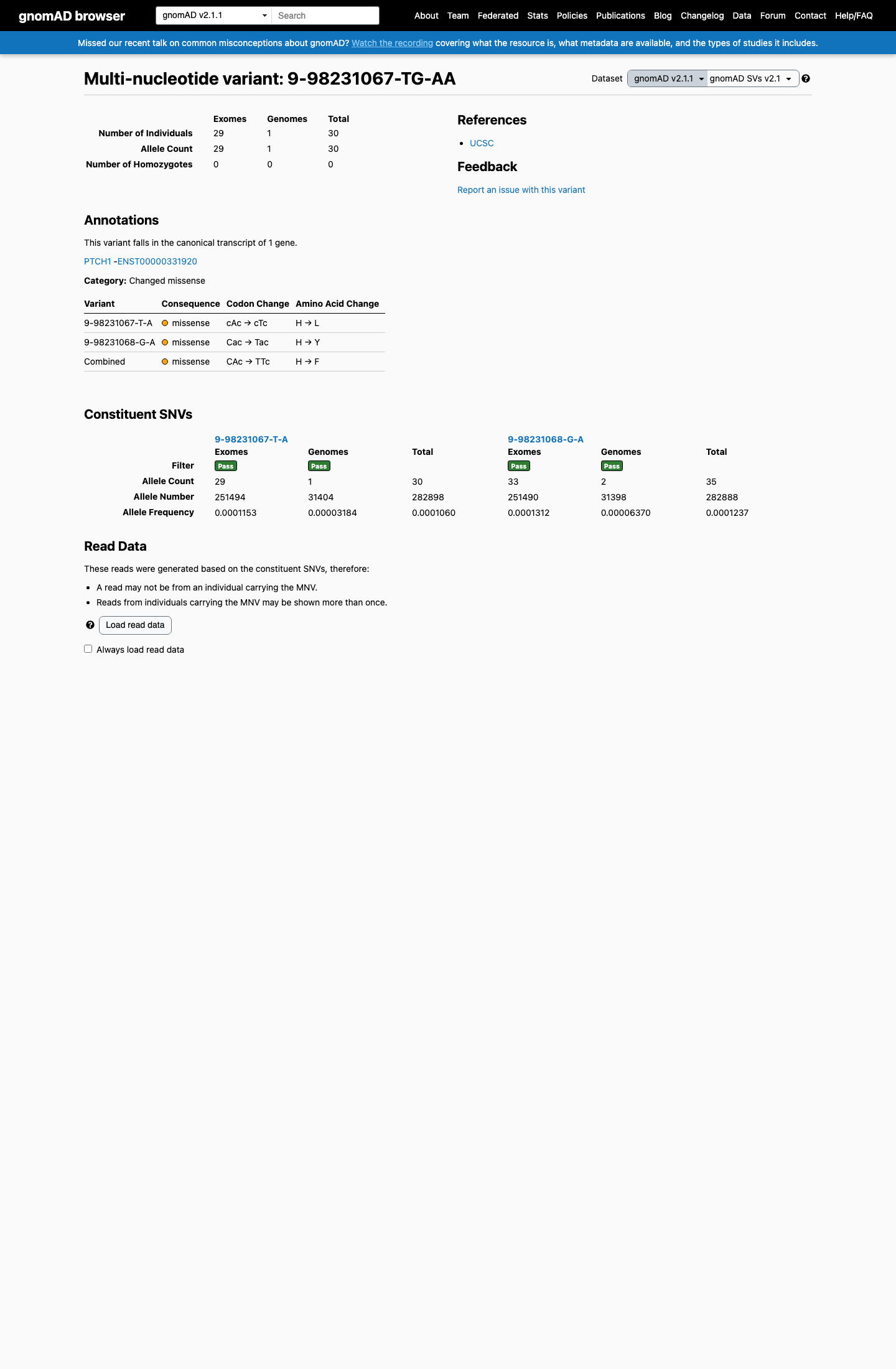
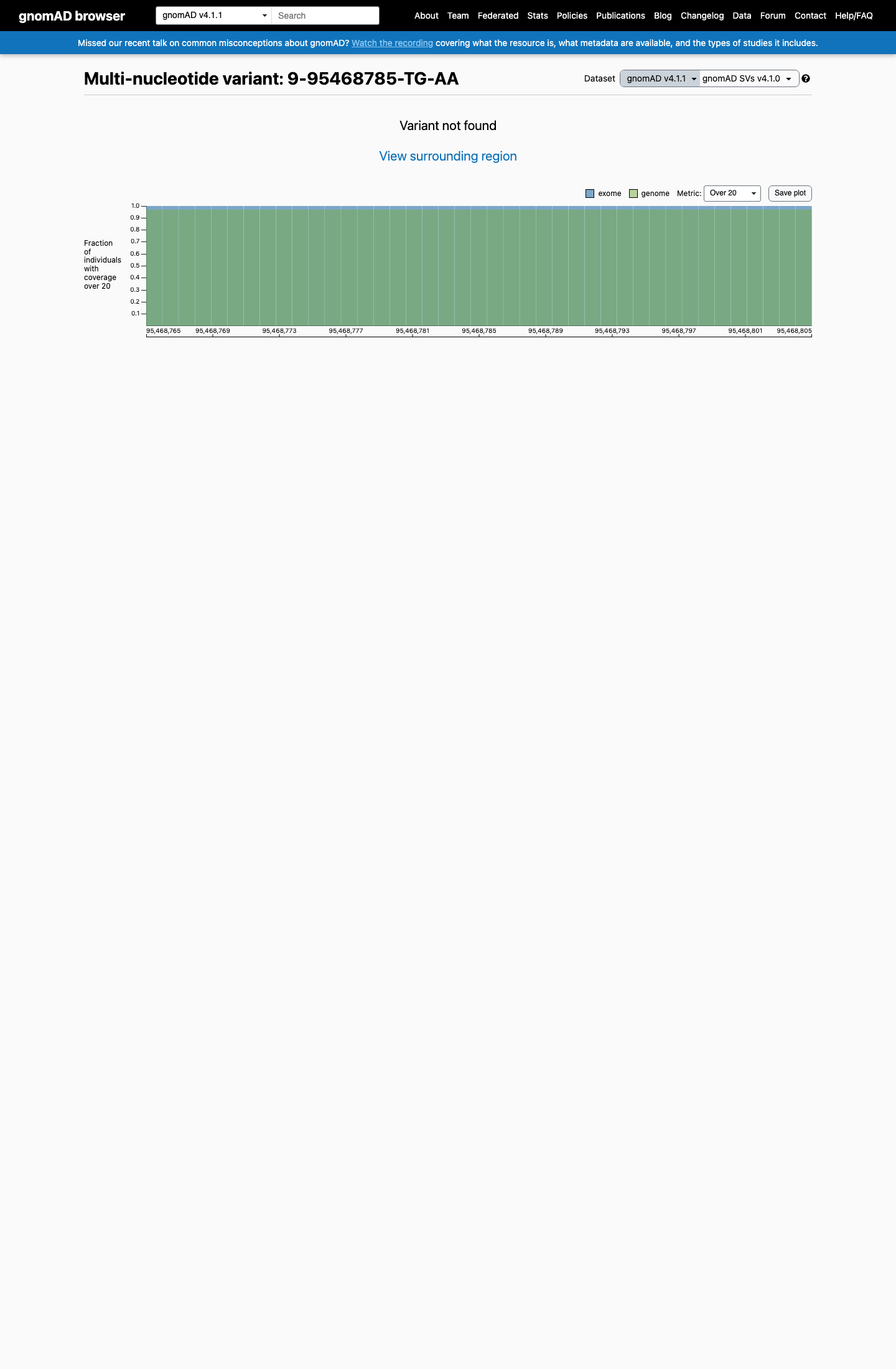
The exact normalized variant NM_000264.5:c.2215_2216delinsTT (PTCH1 p.His739Phe) was reported as absent from gnomAD v2.1.The exact normalized variant was reported as absent from gnomAD v4.1.The exact normalized variant was reported as absent from gnomAD-Canada v1.0.
BP4 supporting Benign
Met (supporting): SpliceAI max delta 0.002 is well below the 0.1 benign-supporting cutoff, indicating essentially no splicing impact.
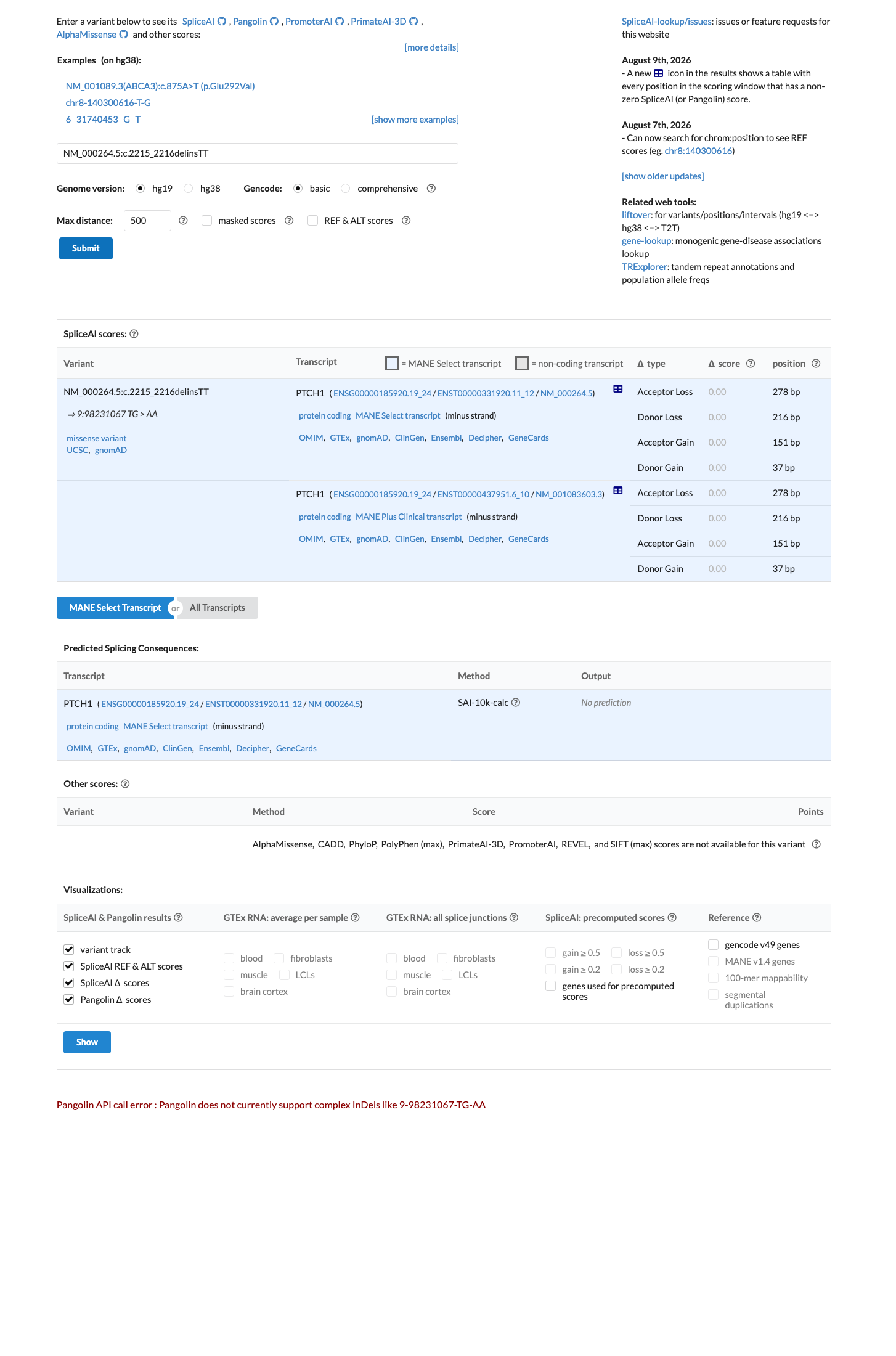
SpliceAI lookup for NM_000264.5:c.2215_2216delinsTT returned max delta score = 0.002 (DS_AG=0.00, DS_AL=0.00, DS_DG=0.002, DS_DL=0.00), well below the 0.1 threshold below which SpliceAI's original calibration study (Jaganathan et al., Cell 2019, PMID 30661751) indicates minimal likelihood of a splicing effect.REVEL and BayesDel were not computed for this variant (skipped as not-SNV), so no missense predictor evidence contributes to this BP4 call; the call rests solely on the SpliceAI splice-impact path.
Assessed · not applied · 5 not met · 17 not assessed
Pathogenic
PS1 Not assessed: no pathogenic variant producing the identical amino acid change (p.His739Phe) via a different nucleotide was available for comparison.
PS2 Not assessed: no parental genotype or maternity/paternity data were available to establish a de novo occurrence.
PS3 Not assessed: no functional assay evidence (e.g., minigene, reporter) for this specific variant was identified in the literature.
PS4 Not assessed: no case series or case-control enrichment data showed an excess of this exact variant in affected individuals.
PM1 Not assessed: no PTCH1 domain or hotspot annotation for residue 739 was available; the somatic cancer hotspot query returned no hit.
PM3 Not assessed: no biallelic evidence or second pathogenic allele was documented to support recessive inheritance.
PM5 Not assessed: no different pathogenic missense variant at the same residue (position 739) was identified for comparison.
PM6 Not assessed: no suspected de novo occurrence or parental testing data were available.
PP1 Not assessed: no segregation data from affected or unaffected relatives were documented.
PP2 Not assessed: no missense constraint metrics were available to determine whether missense is a common disease mechanism in PTCH1.
PP3 Not met: SpliceAI max delta 0.002 is far below the 0.2 high-recall threshold, and no calibrated missense predictor output was available.
PP4 Not assessed: no patient phenotype or clinical diagnostic criteria were available to link the variant to the phenotype.
PP5 Not met: the ClinVar record has zero expert-panel submissions, so no expert-panel classification supports pathogenicity.
Benign
BA1 Not met: the variant is absent from gnomAD v2.1, v4.1, and gnomAD-Canada v1.0, so no allele frequency exceeds the 1% benign threshold.
BS1 Not met: no population allele frequency was observed, so the frequency does not exceed the expected disease prevalence threshold.
BS2 Not assessed: no healthy adult homozygotes, hemizygotes, or unaffected carriers of the variant were documented.
BS3 Not assessed: no functional assay evidence showing normal activity for this variant was identified.
BS4 Not assessed: no unaffected tested relatives were described, so non-segregation could not be evaluated.
BP1 Not assessed: no missense constraint data were available to show missense variants are not a common disease mechanism in PTCH1.
BP2 Not assessed: no observation of the variant in trans or in cis with a pathogenic variant was documented.
BP5 Not assessed: no evidence showed the phenotype is explained by a pathogenic variant in another gene or alternative molecular cause.
BP6 Not met: the ClinVar record has zero expert-panel submissions, so no expert-panel assertion supports a benign classification.
N/A · 4 PVS1 · PM4 · BP3 · BP7
Research & evidence
Population frequency
gnomAD v4.1 screenshot
gnomAD v4.1
gnomAD v2.1 screenshot
gnomAD v2.1
v4.1
Absent from gnomAD v4.1.
v2.1
Absent from gnomAD v2.1.
🇨🇦 CA
Absent from gnomAD-Canada v1.0.
Allele frequency by ancestry
three datasets · side by side
gnomAD v4.1
Absent · 0 / ?
0 hom
Not observed in any ancestry group.
gnomAD v2.1
Absent · 0 / ?
0 hom
Not observed in any ancestry group.
gnomAD Canada 🇨🇦
Absent · 0 / ?
0 hom
Not observed in any ancestry group.
ClinVar screenshot
ClinVar
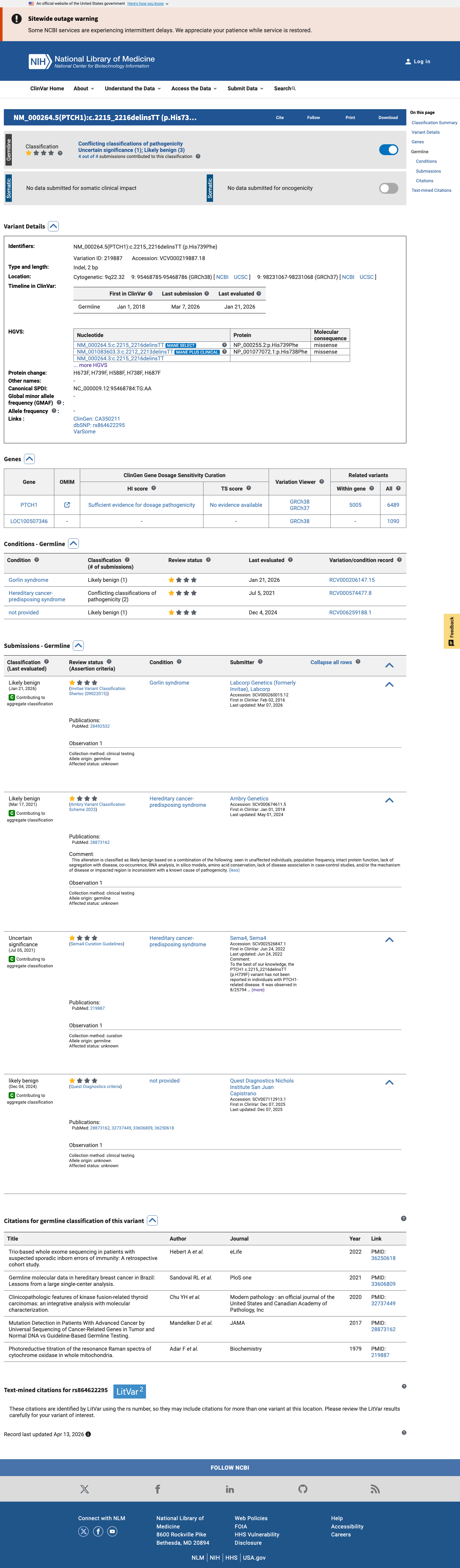
This variant has been reported in ClinVar as Likely benign (2 clinical laboratories) and as likely benign (1 clinical laboratory). (ClinVarID = 219887)
SpliceAI screenshot
In silico
SpliceAI predicts no significant splice impact for this variant (max delta score = 0.00).
Functional / OncoKB screenshot
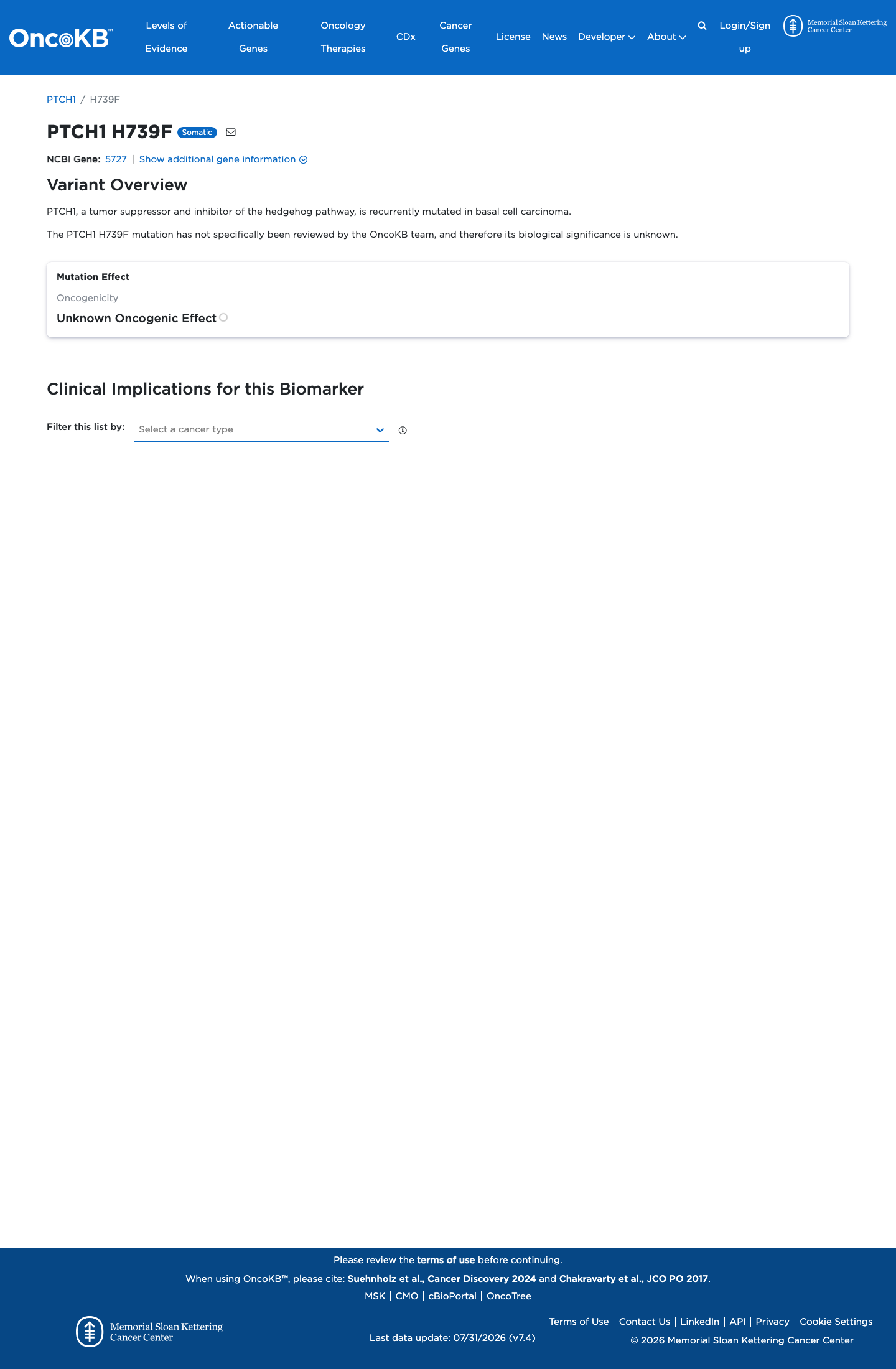
Functional Unknown Oncogenic Effect
OncoKB did not identify variant-specific reviewed functional evidence for this variant; gene-level curated context is available for reviewer follow-up. PTCH1, a tumor suppressor and inhibitor of the hedgehog pathway, is recurrently mutated in basal cell carcinoma.
OncoKB ↗
COSMIC screenshot
COSMIC
Cancer hotspots screenshot
Cancer hotspots
Somatic evidence Not in COSMIC / hotspots
COSMIC
This variant does not lie in a statistically significant hotspot. This variant has not previously been reported in somatic cancers (COSMIC).
Hotspots
This variant does not lie in a statistically significant hotspot.
Sources & reference links
8Sources
ClinVar
gnomAD v2.1
gnomAD v4.1
gnomAD-Canada
SpliceAI
OncoKB
COSMIC
Cancer hotspots
Triaged references · 8 PMIDs not cited in assessment
15604628 ↗ Genetic cancer risk assessment and counseling: recommendations of the national society of genetic counselors. CLINVAR
25394175 ↗ A practice guideline from the American College of Medical Genetics and Genomics and the National Society of Genetic Counselors: referral indications for cancer predisposition assessment. CLINVAR
26389210 ↗ Genetics of Breast and Gynecologic Cancers (PDQ®): Health Professional Version. CLINVAR
26389258 ↗ Cancer Genetics Risk Assessment and Counseling (PDQ®): Health Professional Versi CLINVAR
26389333 ↗ Genetics of Skin Cancer (PDQ®): Health Professional Version. CLINVAR
26467025 ↗ A Standardized DNA Variant Scoring System for Pathogenicity Assessments in Mende CLINVAR
28492532 ↗ Sherloc: a comprehensive refinement of the ACMG-AMP variant classification crite CLINVAR
28873162 ↗ Mutation Detection in Patients With Advanced Cancer by Universal Sequencing of Cancer-Related Genes in Tumor and Normal DNA vs Guideline-Based Germline Testing. CLINVAR