Analysis in progress
Initialising…
0%
complete
This report is still being assembled — sections appear as each stage finishes. It isn't final yet.
ATM
Final classification
Pathogenic
PVS1PM2PM5
ATM
c.1348G>T
p.Glu450Ter
nonsense · exon 10

ATM encodes a kinase that acts as a master controller of the cellular DNA damage response: it detects double-strand breaks and coordinates DNA repair, cell cycle arrest, or apoptosis through downstream targets including p53, BRCA1, and CHK2. Loss-of-function mutations in both copies of ATM cause ataxia telangiectasia, an autosomal recessive disorder characterized by neurological problems, immune deficiency, and cancer predisposition. ATM functions as a tumor suppressor: individuals with ataxia telangiectasia are prone to childhood lymphomas, leukemias, and breast cancer, while carriers of a single altered copy have increased risk of breast, pancreatic, prostate, and other cancers. Somatic ATM mutations also occur in lymphoid malignancies and solid tumors, and ATM-deficient cancers are often especially sensitive to DNA-damaging treatments.

This variant

ATM is a tumor suppressor whose loss-of-function causes ataxia-telangiectasia and predisposes carriers to breast, pancreatic, and other cancers. This nonsense change is predicted to eliminate ATM function from the affected allele, placing it squarely in the gene's established loss-of-function disease mechanism and supporting a pathogenic classification.

Transcript
NM_000051.3
HGVS · transcript:coding
NM_000051.3:c.1348G>T
GRCh38
chr11:108250813 G>T
GRCh37
chr11:108121540 G>T
Basis Pathogenic under the ClinGen HBOP ATM VCEP v1.5 Rule4: one Very Strong (PVS1) plus two Supporting criteria (PM2, PM5).
Pathogenic under the ClinGen HBOP ATM VCEP v1.5 Rule4: one Very Strong (PVS1) plus two Supporting criteria (PM2, PM5).
Classification rationale
PVS1PM2PM5 Pathogenic
ATM c.1348G>T nonsense · exon 10

PVS1 (Very Strong): nonsense change p.(Glu450Ter) predicted to trigger nonsense-mediated decay, upstream of critical ATM domains. PM2 (Supporting): absent from gnomAD v4.1 and v2.1, meeting the 0.001% allele-frequency threshold. PM5 (Supporting): premature termination codon at residue 450, upstream of the VCEP p.Arg3047 truncation threshold. Pathogenic: matches ATM VCEP v1.5 Rule4 (one Very Strong plus two Supporting criteria).

PVS1 + PM2 + PM5 Pathogenic
Gene diagram · NM_000051.3 · variants mapped to exon structure
ATM NM_000051.3
Fetching transcript structure from UCSC…
Applied criteria · 3 applied · 8 assessed
MetEvidence satisfies this criterion.
Not metEvaluated against available evidence; threshold not reached.
Not assessedApplies in principle, but no evidence was found to evaluate it.
N/ADoesn't apply to this variant type.
Applied · 3
Strength Supporting Moderate Strong Very strong
PVS1 very strong Pathogenic
Met (Very Strong): nonsense change p.(Glu450Ter) at ~15% of the protein is predicted to trigger nonsense-mediated decay, upstream of critical ATM domains.
Case summary normalization: NM_000051.3:c.1348G>T predicts NP_000042.3:p.(Glu450Ter) / p.(E450*), a nonsense variant.pvs1_gene_context.json: ATM has an official CSPEC/VCEP PVS1 decision tree and germline loss-of-function is an established disease mechanism for ATM (lof_mechanism_supported=true, pvs1_gene_gate=eligible).pvs1_variant_assessment.json: consequence_class classified as 'nonsense'; suggested_default_strength 'PVS1' (i.e. full/Very Strong) under the generic PVS1 framework, with the downgrade considerations (NMD escape, non-critical distal region, extreme 3' position) explicitly not triggered here given the early truncation position.
PM2 supporting Pathogenic
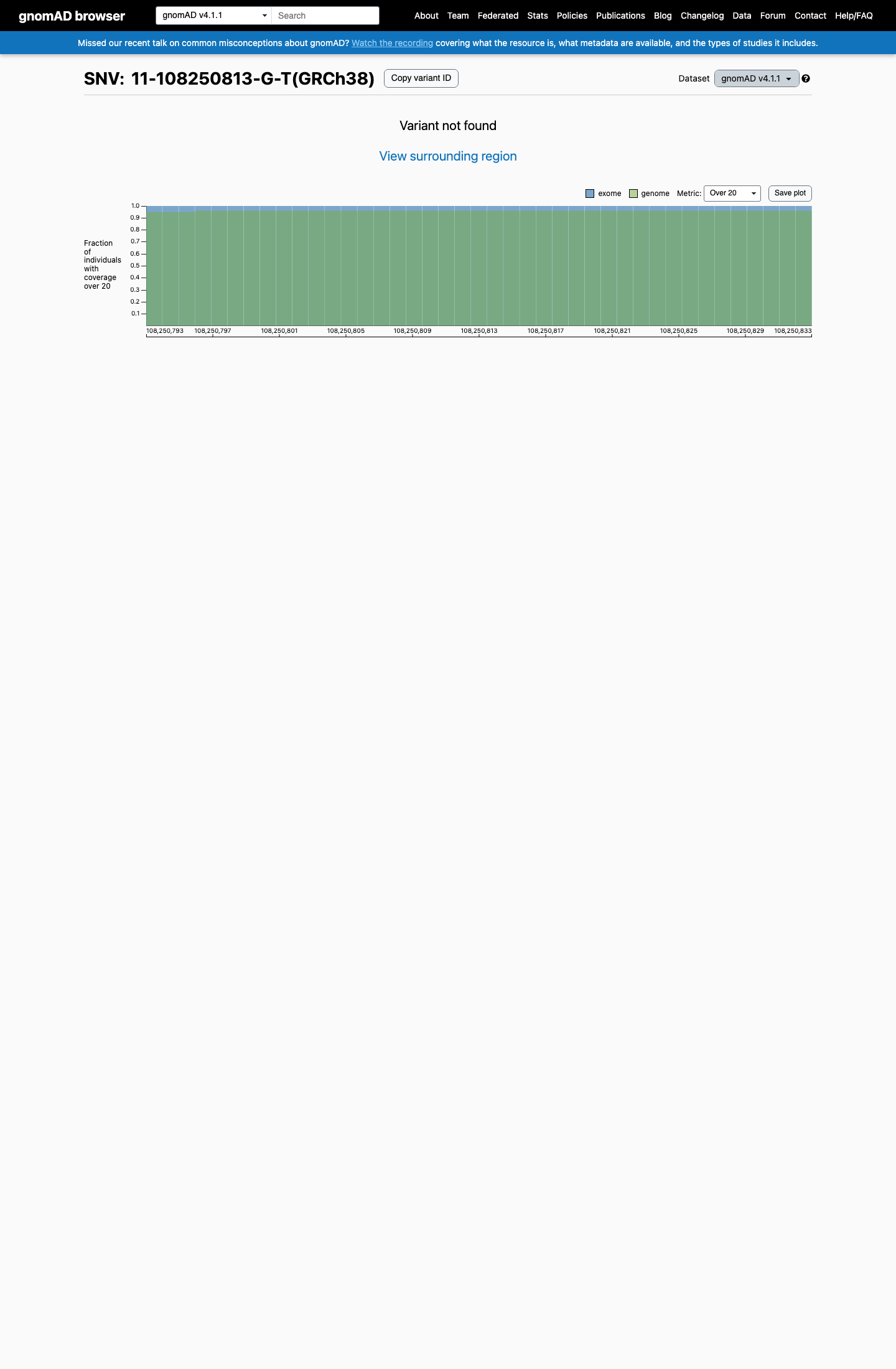
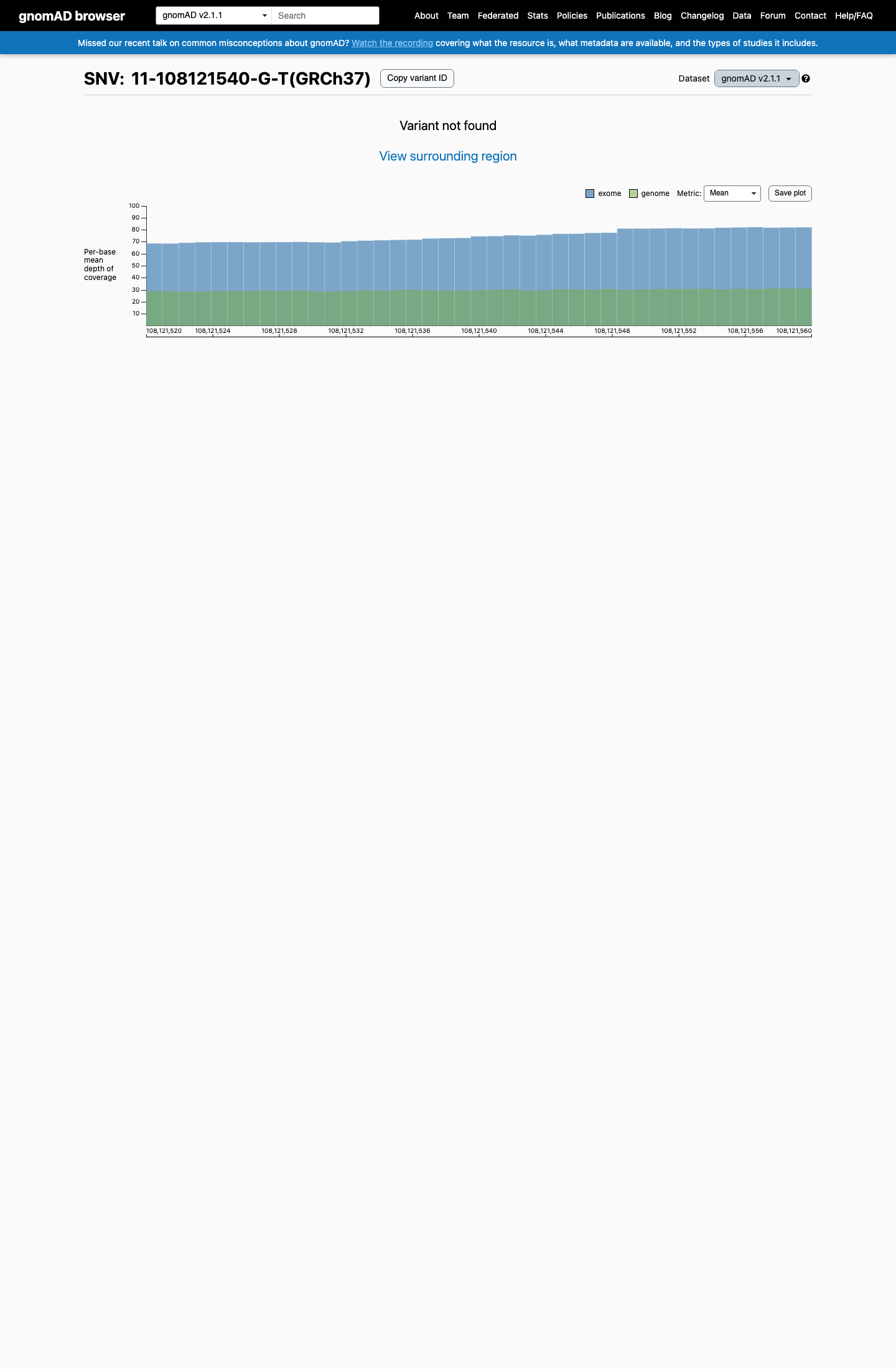
Met (Supporting): absent from gnomAD v4.1 and v2.1, meeting the VCEP's 0.001% allele-frequency threshold.
The ATM VCEP v1.5 specifies PM2 Supporting for frequency <=0.001% in gnomAD v4; the VCEP notes that n=1 in a single subpopulation is sufficiently rare.gnomAD v4.1 reports the variant as absent, which is below the VCEP frequency threshold.The variant is also reported as absent from gnomAD v2.1 and gnomAD-Canada v1.0, providing concordant population-data support.
PM5 supporting Pathogenic
Met (Supporting): premature termination codon at residue 450 lies upstream of the VCEP's p.Arg3047 truncating-variant threshold.
ATM VCEP v1.5 (cspec) PM5 rule: 'Apply to frameshifting or truncating variants with premature termination codons upstream of p.Arg3047' at Supporting strength.Variant NP_000042.3:p.(Glu450Ter) creates a premature termination codon at residue 450, upstream of the p.Arg3047 cutoff specified by the VCEP.
Assessed · not applied · 2 not met · 6 not assessed
Pathogenic
PS3 Not assessed: insufficient evidence - this variant was not confirmed to have been tested in any VCEP-approved functional assay (Mitui 2009, Barone 2009, Scott 2002).
PS4 Not assessed: no case-control enrichment data (odds ratio, confidence interval, or p-value) for this variant was available.
PM3 Not assessed: no affected-proband or in-trans evidence with a pathogenic ATM variant was available.
PP1 Not assessed: no affected relatives or segregation data were available to support co-segregation.
Benign
BA1 Not met: absent from gnomAD v4.1, below the >0.5% BA1 allele-frequency threshold.
BS1 Not met: absent from gnomAD v4.1, below the >0.05% BS1 allele-frequency threshold.
BS3 Not assessed: insufficient evidence - this variant was not confirmed to have been tested in any VCEP-approved functional assay.
BP2 Not assessed: no unaffected-carrier, trans-phase, or co-occurrence observations were available.
N/A · 17 PS1 · PS2 · PM1 · PM4 · PM6 · PP2 · PP3 · PP4 · PP5 · BS2 · BS4 · BP1 · BP3 · BP4 · BP5 · BP6 · BP7
Research & evidence
Population frequency · supports pathogenic
gnomAD v4.1 screenshot
gnomAD v4.1
gnomAD v2.1 screenshot
gnomAD v2.1
v4.1
Absent from gnomAD v4.1.
v2.1
Absent from gnomAD v2.1.
🇨🇦 CA
Absent from gnomAD-Canada v1.0.
Allele frequency by ancestry
three datasets · side by side
gnomAD v4.1
Absent · 0 / ?
0 hom
Not observed in any ancestry group.
gnomAD v2.1
Absent · 0 / ?
0 hom
Not observed in any ancestry group.
gnomAD Canada 🇨🇦
Absent · 0 / ?
0 hom
Not observed in any ancestry group.
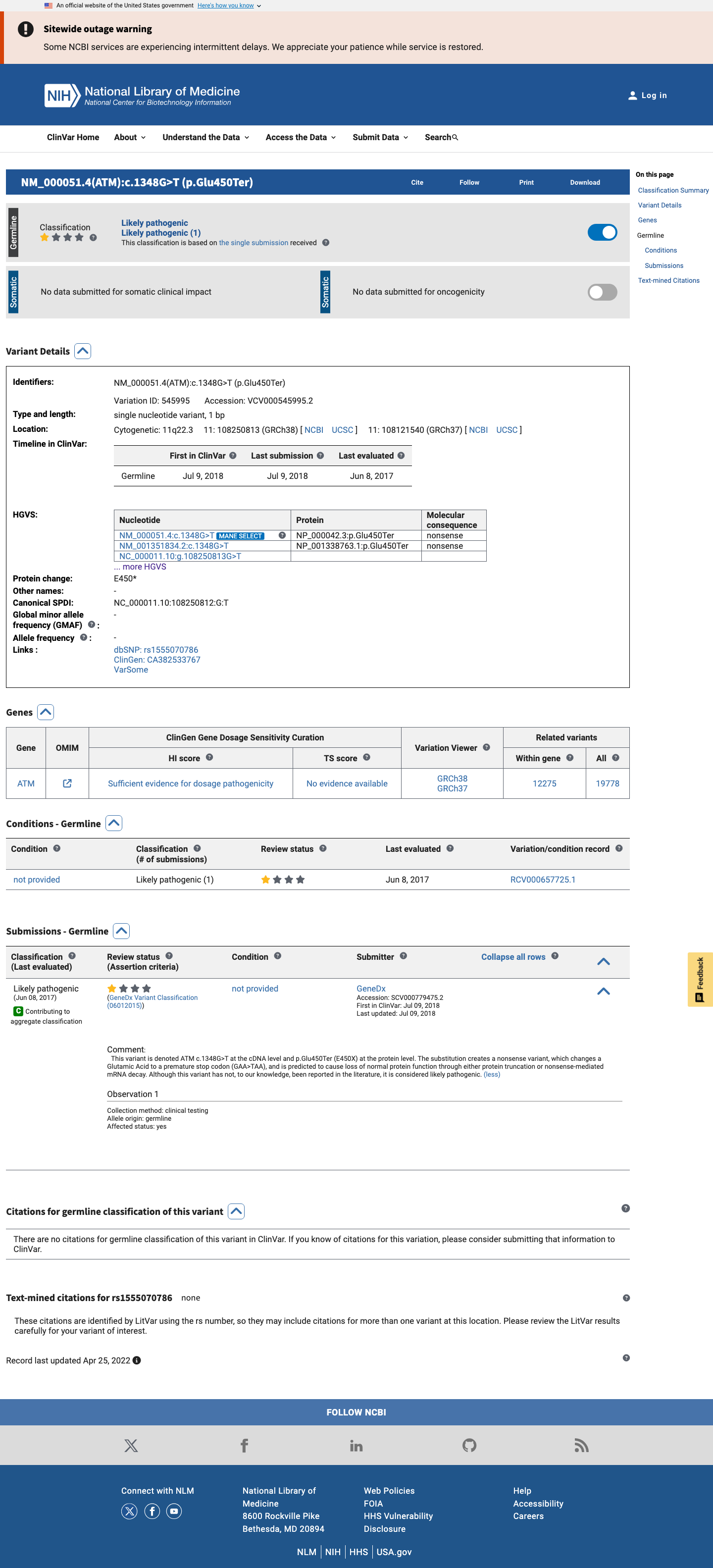
ClinVar screenshot
ClinVar
This variant has been reported in ClinVar as Likely pathogenic (1 clinical laboratory). (ClinVarID = 545995)
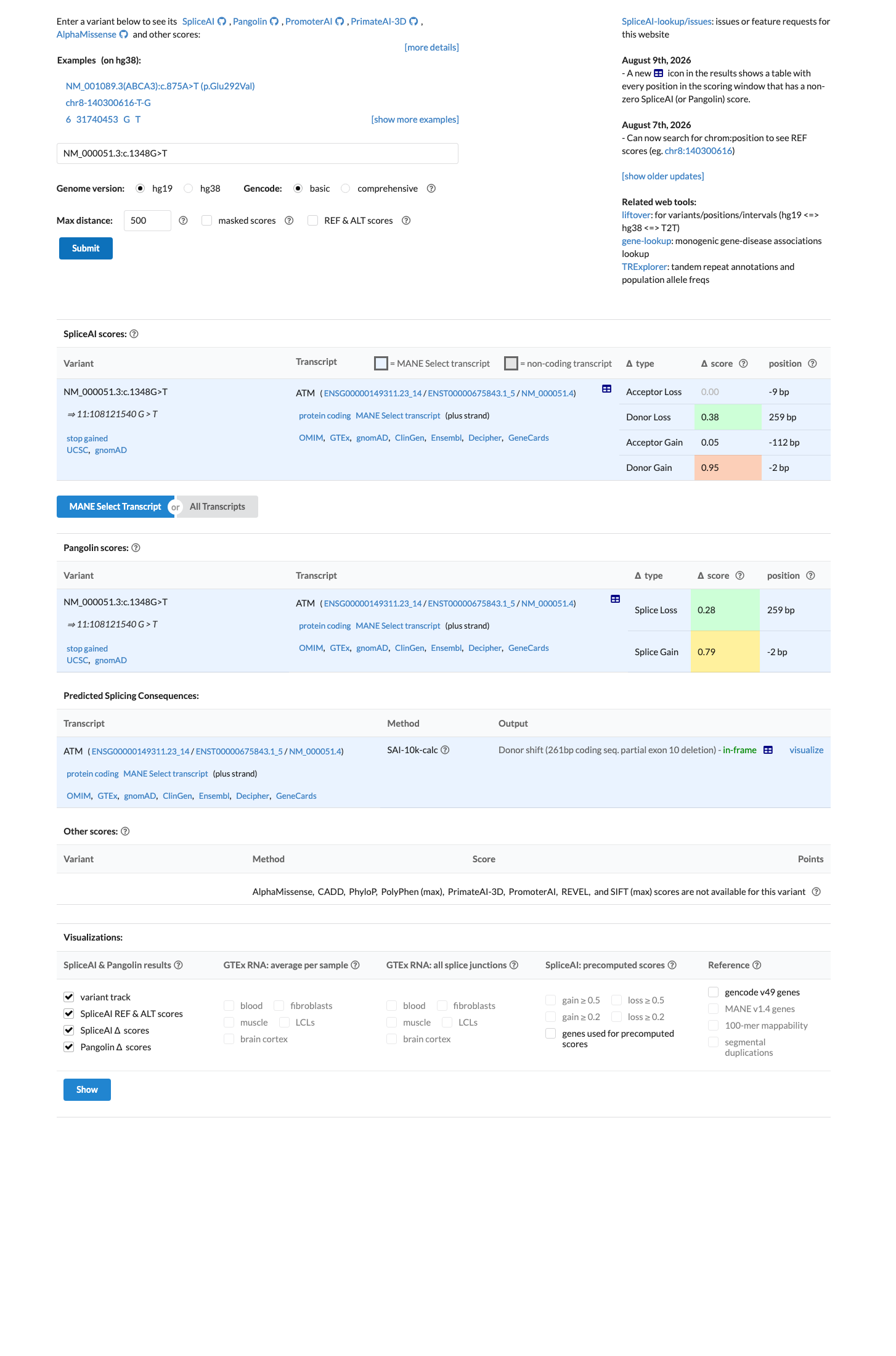
SpliceAI screenshot
In silico
SpliceAI predicts possible splice impact for this variant (max delta score = 0.95). BayesDel score = 0.652534.
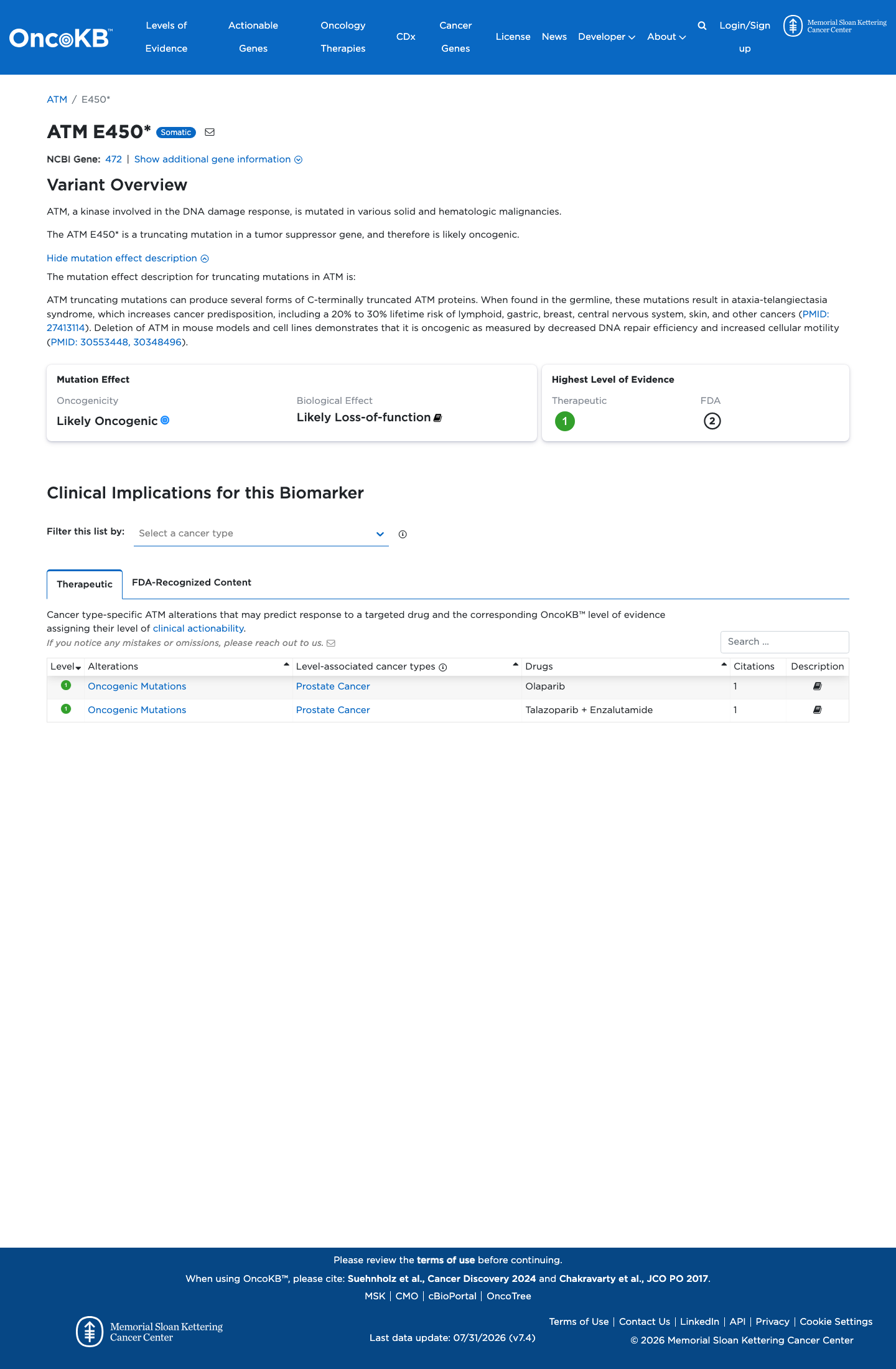
Functional / OncoKB screenshot
Functional Likely Oncogenic
OncoKB identified variant-specific curated literature and context relevant to functional review; biological-effect context: Likely Loss-of-function; curated oncogenicity label: Likely Oncogenic.
OncoKB ↗
COSMIC screenshot
COSMIC
Cancer hotspots screenshot
Cancer hotspots
Somatic evidence Not in COSMIC / hotspots
COSMIC
This variant does not lie in a statistically significant hotspot. This variant has not previously been reported in somatic cancers (COSMIC).
Hotspots
This variant does not lie in a statistically significant hotspot.
Sources & reference links
9Sources
CSpec VCEP
ClinVar
gnomAD v2.1
gnomAD v4.1
gnomAD-Canada
SpliceAI
OncoKB
COSMIC
Cancer hotspots
Triaged references · 3 PMIDs not cited in assessment
27413114 ↗ ATM Mutations in Cancer: Therapeutic Implications. ONCOKB
30348496 ↗ Inactive Atm abrogates DSB repair in mouse cerebellum more than does Atm loss, without causing a neurological phenotype. ONCOKB
30553448 ↗ Loss of ATM positively regulates Rac1 activity and cellular migration through oxidative stress. ONCOKB