Analysis in progress
Initialising…
0%
complete
This report is still being assembled — sections appear as each stage finishes. It isn't final yet.
POLE
Final classification
Likely Pathogenic
PVS1PM2
POLE
c.941C>A
p.Ser314Ter
nonsense · exon 10

POLE encodes the catalytic subunit of DNA polymerase epsilon, the enzyme that replicates the leading strand of DNA during cell division and participates in DNA repair. It contains a proofreading domain that corrects replication errors, keeping the accumulation of mutations in check. Germline mutations in POLE cause polyposis and predispose to colorectal cancer, and are also linked to a rare syndrome of facial dysmorphism, immunodeficiency, livedo, and short stature. Somatic mutations, particularly in the proofreading domain, occur in colorectal and endometrial cancers, where they drive an ultra-mutated tumor phenotype and are associated with better responses to immune checkpoint inhibitors.

This variant

c.941C>A (p.Ser314Ter) destroys most of the proofreading domain of DNA polymerase epsilon, the enzyme that corrects replication errors during cell division, and is predicted to trigger nonsense-mediated decay. A Likely Pathogenic designation for this truncating variant aligns with POLE's established role in colorectal cancer predisposition and with the loss of proofreading capacity expected to compromise genomic stability.

Transcript
NM_006231.4
HGVS · transcript:coding
NM_006231.4:c.941C>A
GRCh38
chr12:132676173 G>T
GRCh37
chr12:133252759 G>T
Basis No ClinGen POLE CSPEC exists, so the local Leon-Castillo 2020 framework governs: PVS1 (Very Strong) plus PM2 (Moderate) combine to Likely Pathogenic.
No ClinGen POLE CSPEC exists, so the local Leon-Castillo 2020 framework governs: PVS1 (Very Strong) plus PM2 (Moderate) combine to Likely Pathogenic.
Classification rationale
PVS1PM2 Likely Pathogenic
POLE c.941C>A nonsense · exon 10

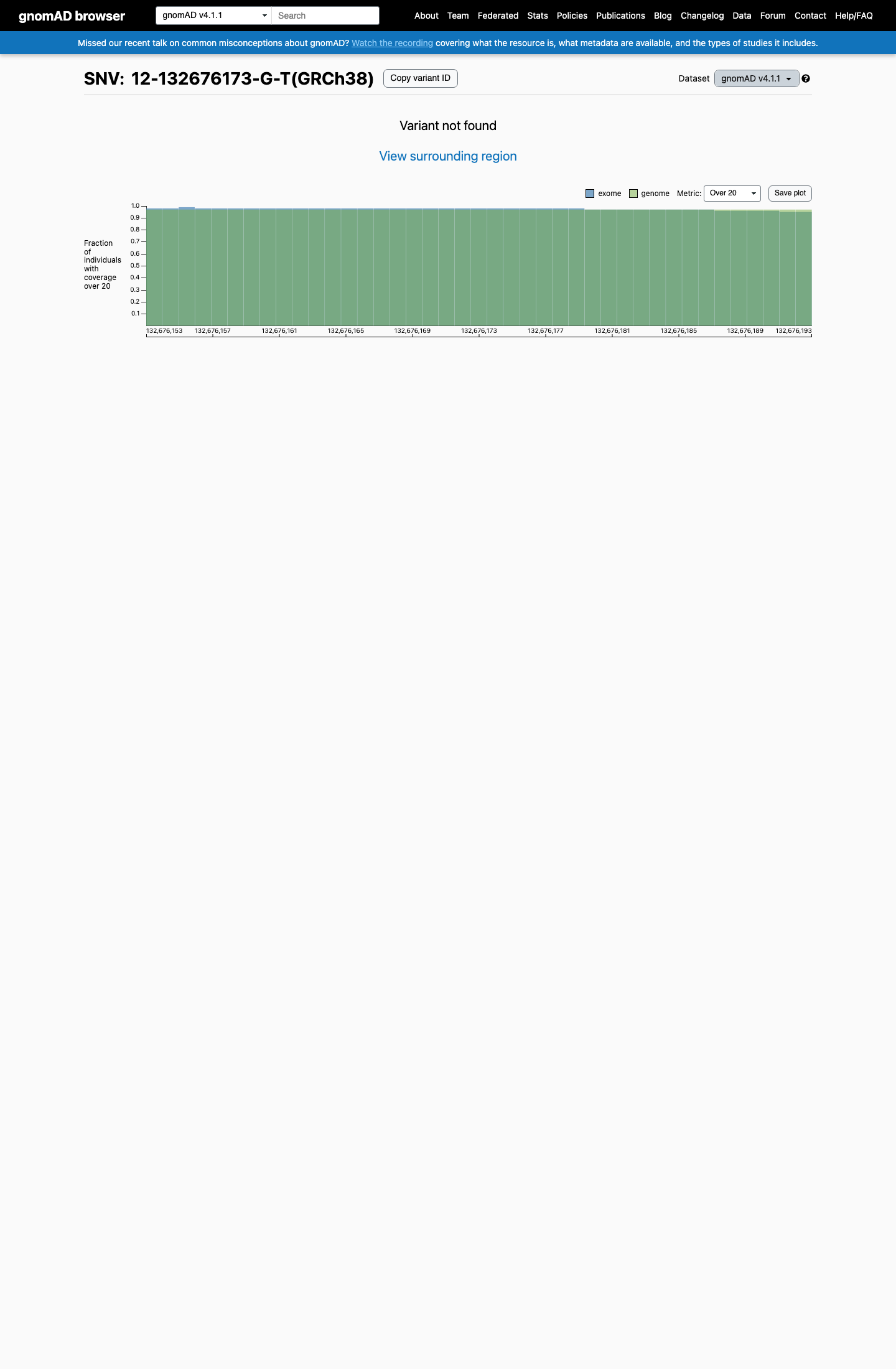
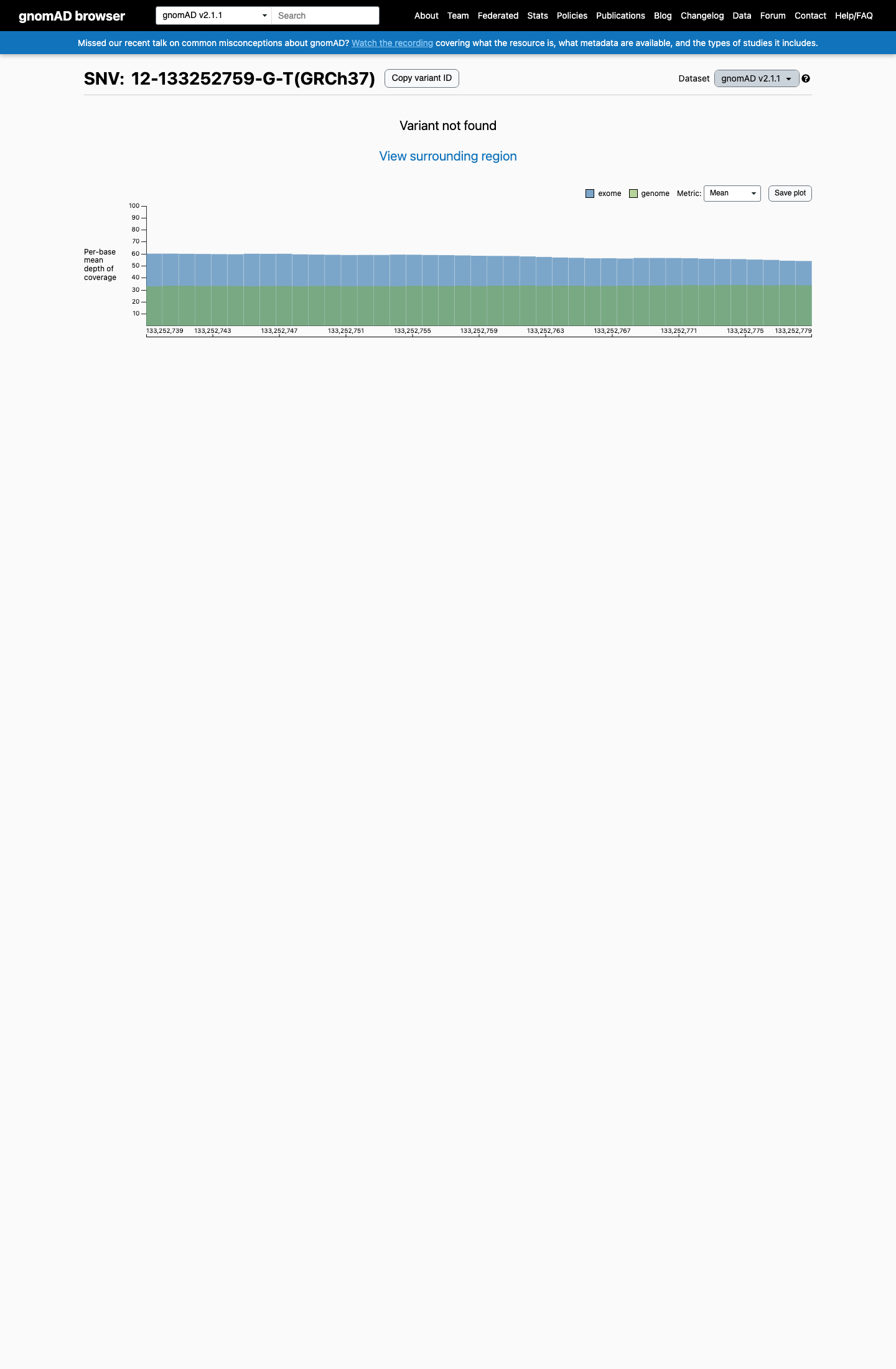
PVS1 (Very Strong): nonsense variant p.(Ser314Ter) predicted to trigger nonsense-mediated decay, truncating >85% of the protein including the proofreading domain. PM2 (Moderate): variant absent from gnomAD v2.1, gnomAD v4.1, and gnomAD-Canada v1.0 population datasets. Combined, PVS1 (Very Strong) + PM2 (Moderate) yields Likely Pathogenic.

PVS1 + PM2 Likely Pathogenic
Gene diagram · NM_006231.4 · variants mapped to exon structure
POLE NM_006231.4
Fetching transcript structure from UCSC…
Applied criteria · 2 applied · 17 assessed
MetEvidence satisfies this criterion.
Not metEvaluated against available evidence; threshold not reached.
Not assessedApplies in principle, but no evidence was found to evaluate it.
N/ADoesn't apply to this variant type.
Applied · 2
Strength Supporting Moderate Strong Very strong
PVS1 very strong review Pathogenic
Met (Very Strong): c.941C>A creates stop codon p.(Ser314Ter), predicted to trigger nonsense-mediated decay and remove >85% of POLE's 2286-aa protein. Flagged for human review: gene-disease mechanism and zygosity for this truncating allele are unconfirmed.
prefetch.json normalize step: NM_006231.4:c.941C>A predicted protein NP_006222.2:p.(Ser314Ter); position_first=313, position_last_predicted=314 confirms an early premature stop.variant_validator variant_exonic_positions places the variant in exon 10 (start_exon=end_exon='10') of the transcript.prefetch.json selector_short.exon.c lists 49 total coding exons for NM_006231.4, confirming the premature stop at codon 314 is 39 exons upstream of the terminal exon, well beyond the 50-bp NMD-escape boundary.
PM2 moderate Pathogenic
Met (Moderate): absent from the gnomAD v2.1, gnomAD v4.1, and gnomAD-Canada v1.0 population datasets.
gnomAD v2.1 reported GRCh37 12-133252759-G-T absent.gnomAD v4.1 reported GRCh38 chr12-132676173-G-T absent.gnomAD-Canada v1.0 reported GRCh38 12-132676173-G-T absent.
Assessed · not applied · 7 not met · 10 not assessed
Pathogenic
PS2 Not assessed: no proband phenotype, parental genotypes, or de novo testing results were available.
PS3 Not assessed: no functional assay data (e.g., proofreading activity or splicing assays) for this variant were available.
PM3 Not assessed: no proband with a pathogenic POLE variant in trans with this variant was reported.
PM6 Not assessed: no parental testing or reported de novo occurrence was available.
PP1 Not assessed: no family segregation data, such as relatives' genotypes or informative meioses, were reported.
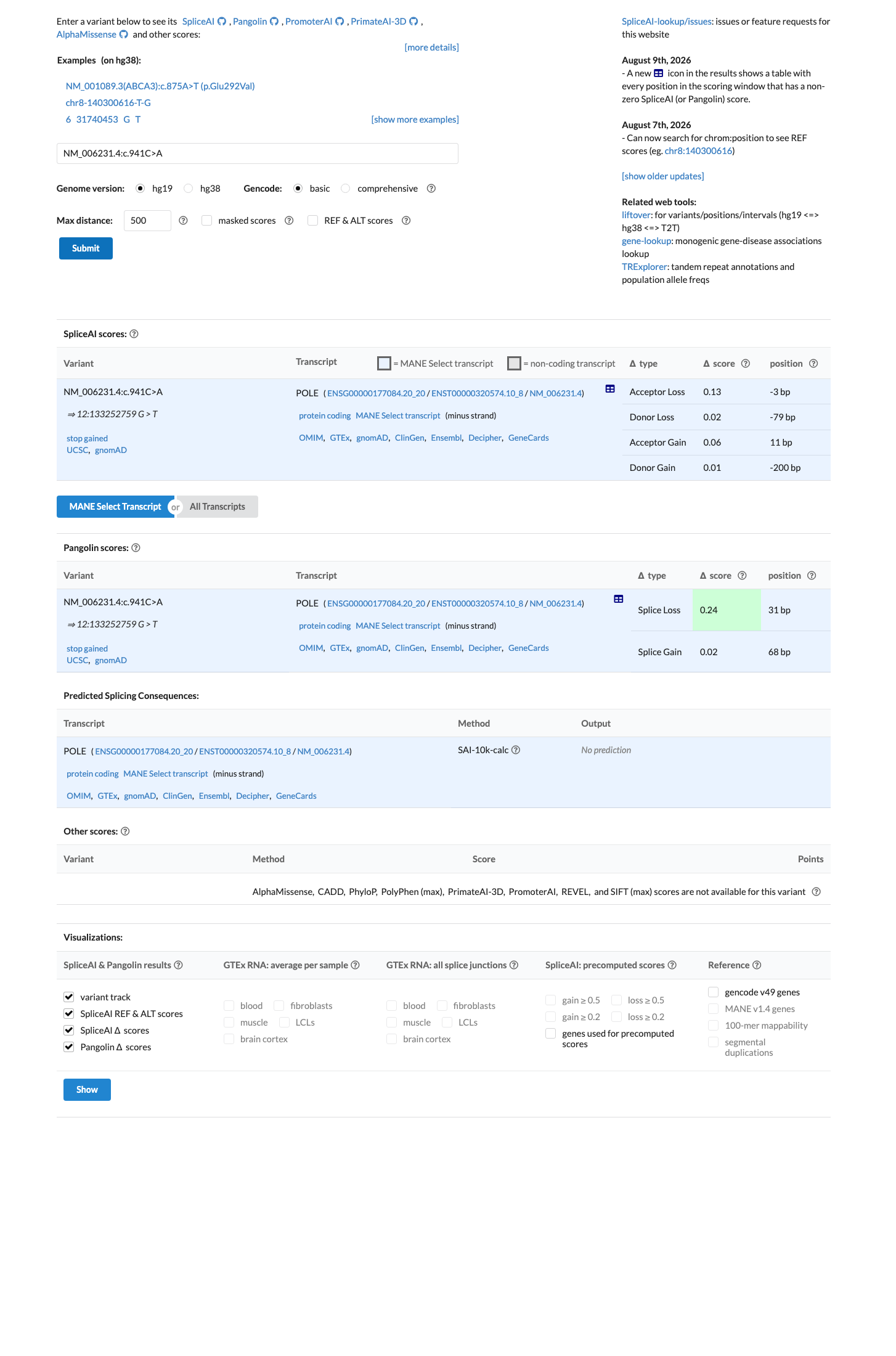
PP3 Not met: SpliceAI max delta 0.132 falls in the gray zone (0.1-0.2), below the >0.2 PP3 threshold.
PP4 Not assessed: no proband phenotype specific to a POLE-associated condition was documented.
PP5 Not met: no ClinVar record for this exact variant exists, so no expert-panel pathogenic assertion supports PP5.
Benign
BA1 Not met: variant absent from the queried gnomAD datasets, so no allele frequency exists to meet a benign threshold.
BS1 Not met: variant absent from the queried gnomAD datasets, so no frequency exceeds that expected for POLE-associated disease.
BS2 Not met: no observation of this variant in well-phenotyped unaffected adults was provided.
BS3 Not assessed: no functional assay evidence showing a benign effect for this variant was available.
BS4 Not assessed: no affected relatives lacking this variant or other non-segregation observations were reported.
BP2 Not assessed: no co-occurrence data place this variant in cis or in trans with a pathogenic variant.
BP4 Not met: SpliceAI max delta 0.132 is above the <0.1 BP4 threshold.
BP5 Not assessed: no alternate molecular diagnosis fully explaining a documented phenotype was provided.
BP6 Not met: no ClinVar record for this exact variant exists, so no expert-panel benign assertion supports BP6.
N/A · 9 PS1 · PS4 · PM1 · PM4 · PM5 · PP2 · BP1 · BP3 · BP7
Research & evidence
Population frequency · supports pathogenic
gnomAD v4.1 screenshot
gnomAD v4.1
gnomAD v2.1 screenshot
gnomAD v2.1
v4.1
Absent from gnomAD v4.1.
v2.1
Absent from gnomAD v2.1.
🇨🇦 CA
Absent from gnomAD-Canada v1.0.
Allele frequency by ancestry
three datasets · side by side
gnomAD v4.1
Absent · 0 / ?
0 hom
Not observed in any ancestry group.
gnomAD v2.1
Absent · 0 / ?
0 hom
Not observed in any ancestry group.
gnomAD Canada 🇨🇦
Absent · 0 / ?
0 hom
Not observed in any ancestry group.
ClinVar screenshot
ClinVar
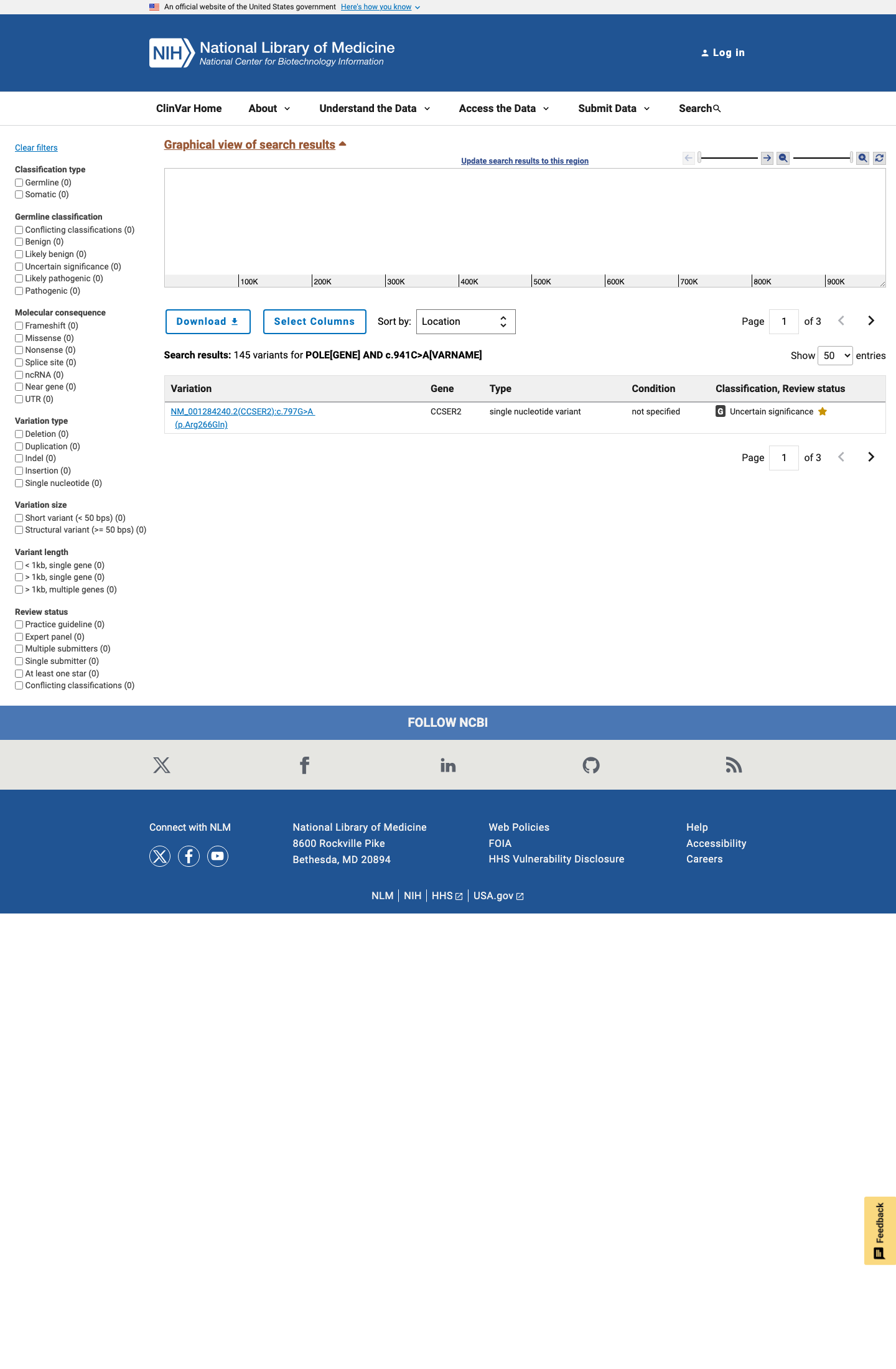
This variant is absent from ClinVar.
SpliceAI screenshot
In silico
SpliceAI predicts no significant splice impact for this variant (max delta score = 0.13). BayesDel score = 0.655873.
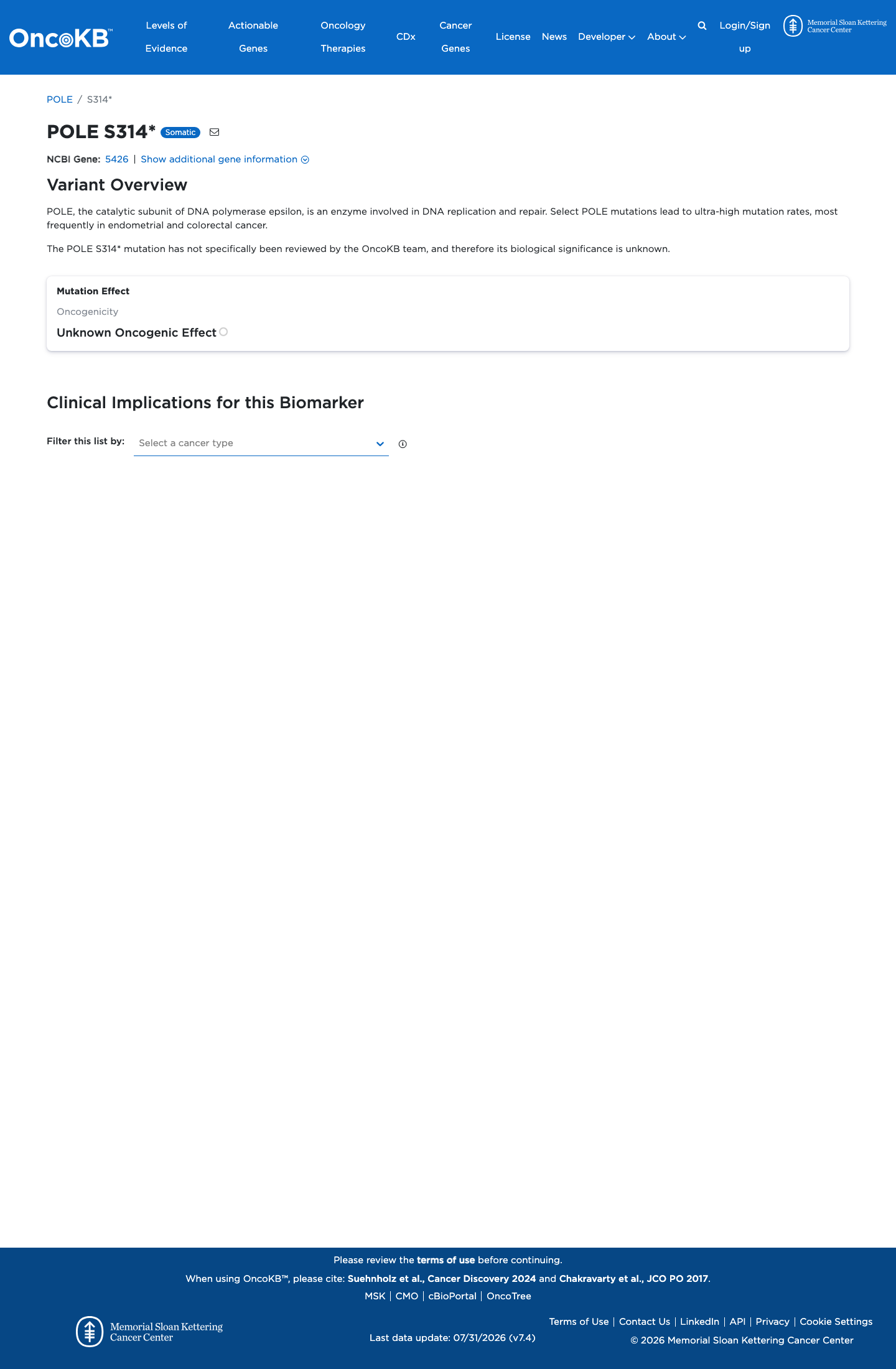
Functional / OncoKB screenshot
Functional Unknown Oncogenic Effect
OncoKB did not identify variant-specific reviewed functional evidence for this variant; gene-level curated context is available for reviewer follow-up. POLE, the catalytic subunit of DNA polymerase epsilon, is an enzyme involved in DNA replication and repair. Select POLE mutations lead to ultra-high m
OncoKB ↗
COSMIC screenshot
COSMIC
Cancer hotspots screenshot
Cancer hotspots
Somatic evidence Not in COSMIC / hotspots
COSMIC
This variant does not lie in a statistically significant hotspot. This variant has not previously been reported in somatic cancers (COSMIC).
Hotspots
This variant does not lie in a statistically significant hotspot.
Sources & reference links
8Sources
ClinVar
gnomAD v2.1
gnomAD v4.1
gnomAD-Canada
SpliceAI
OncoKB
COSMIC
Cancer hotspots