NM_000314.8:c.63C>T is a synonymous substitution (NP_000305.3:p.Phe21=) in PTEN exon 1 that does not alter the encoded amino acid sequence.1 SpliceAI predicts no significant splicing impact (max delta score 0.116), supporting BP7 at supporting strength for a synonymous variant located outside the splice consensus region.2 The variant is essentially absent from population databases (gnomAD v4.1 allele frequency 6.2e-7, 1/1,614,140 alleles, 0 homozygotes), meeting PM2 at supporting strength.3 ClinVar reports the variant as Likely benign (3 submitters) and Benign (1 submitter) under a single-submitter, non-expert-panel review status; PP5 and BP6 are not applicable under the PTEN VCEP.4 With only PM2_Supporting and BP7 met and no strong or moderate criteria satisfied, the variant is classified as a Variant of Uncertain Significance.5
Final classification
VUS
PM2BP7
PTEN
c.63C>T
p.Phe21=
missense
This variant
NM_000314.8:c.63C>T is a synonymous substitution (NP_000305.3:p.Phe21=) in PTEN exon 1 that does not alter the encoded amino acid sequence.
ClinGen PTEN Expert Panel Specifications to the ACMG/AMP Variant Interpretation Guidelines for PTEN Version 3.2 v3.2 criteria-combination framework was evaluated deterministically with applied criteria: PM2 supporting, BP7 supporting benign; no rule matched the adjudicated criteria.
Classification rationale
PM2
BP7
VUS
PTEN c.63C>T
missense
PM2 + BP7
→
VUS
LYFE Sciences is an AI system, and it can make mistakes. Criteria
may be applied incorrectly, sources may be misread, and a confident-looking
classification can still be wrong. Double-check every criterion and
its underlying evidence before relying on any call.
Gene diagram
· NM_000314.8 · variants mapped to exon structure
PTEN
NM_000314.8
Fetching transcript structure from UCSC…
Applied criteria · 2 applied · 15 assessed
MetEvidence satisfies this criterion.
Not metEvaluated against available evidence; threshold not reached.
Not assessedApplies in principle, but no evidence was found to evaluate it.
N/ADoesn't apply to this variant type.
Applied · 2
Strength
Supporting
Moderate
Strong
Very strong
PM2
supporting
Pathogenic
The variant is essentially absent from population databases (gnomAD v4.1 allele frequency 6.2e-7; 1/1,614,140 alleles, 0 homozygotes), below the PTEN VCEP PM2_Supporting threshold of 0.001%.
gnomAD v4.1 AF 6.2e-7 (1/1614140 alleles)
BP7
supporting
Benign
Synonymous variant located outside the splice consensus region (c.63 in exon 1, 16 bp upstream of the exon 1 donor) with SpliceAI predicting no impact on splicing (max delta 0.116), meeting BP7 at supporting level.
SpliceAI max delta 0.116 (no predicted splice impact)synonymous variant outside +7/-21 splice region
Assessed · not applied
· 15 not met · 0 not assessed
Pathogenic
PS2
No de novo (maternity and paternity confirmed) observation of this variant has been reported.
PS3
No RNA, mini-gene, or other splicing assay demonstrates a damaging effect, and the variant is synonymous and absent from the Mighell et al.
PS4
No proband specificity score, case-control prevalence data, or variant-specific proband observations are available.
PM1
Residue 21 lies outside the PTEN catalytic motifs (WPD loop 90-94, P-loop 123-130, TI-loop 166-168), and the synonymous change does not alter these domains.
PM6
No assumed de novo observation of this variant has been reported.
PP1
No co-segregation data in affected family members are available.
PP3
SpliceAI (max delta 0.116) predicts no splicing impact, and REVEL/BayesDel are not applicable to a synonymous variant; no concordant computational evidence of a deleterious effect is present.
Benign
BA1
gnomAD filtering allele frequency (6.2e-7) is far below the BA1 stand-alone threshold (>0.056%).
BS1
gnomAD allele frequency (6.2e-7) is below the BS1_Supporting threshold (>=0.00043%).
BS2
No homozygous observation in healthy or PHTS-unaffected individuals (gnomAD homozygote count = 0).
BS3
No RNA, mini-gene, or other splicing assay demonstrates absence of splicing impact; computational prediction alone does not satisfy BS3.
BS4
No family data demonstrate lack of segregation with disease.
BP2
No observation in trans with a pathogenic/likely pathogenic PTEN variant, nor three observations in cis or phase-unknown with different pathogenic/likely pathogenic PTEN variants.
BP4
SpliceAI (max delta 0.116) is within the benign range (0-0.2), but the PTEN VCEP BP4 rule requires concordance of SpliceAI AND VarSeak; VarSeak data are unavailable.
BP5
No case with an alternate molecular basis for disease has been reported.
N/A · 11
PVS1 · PS1 · PM3 · PM4 · PM5 · PP2 · PP4 · PP5 · BP1 · BP3 · BP6
Research & evidence
Population frequency
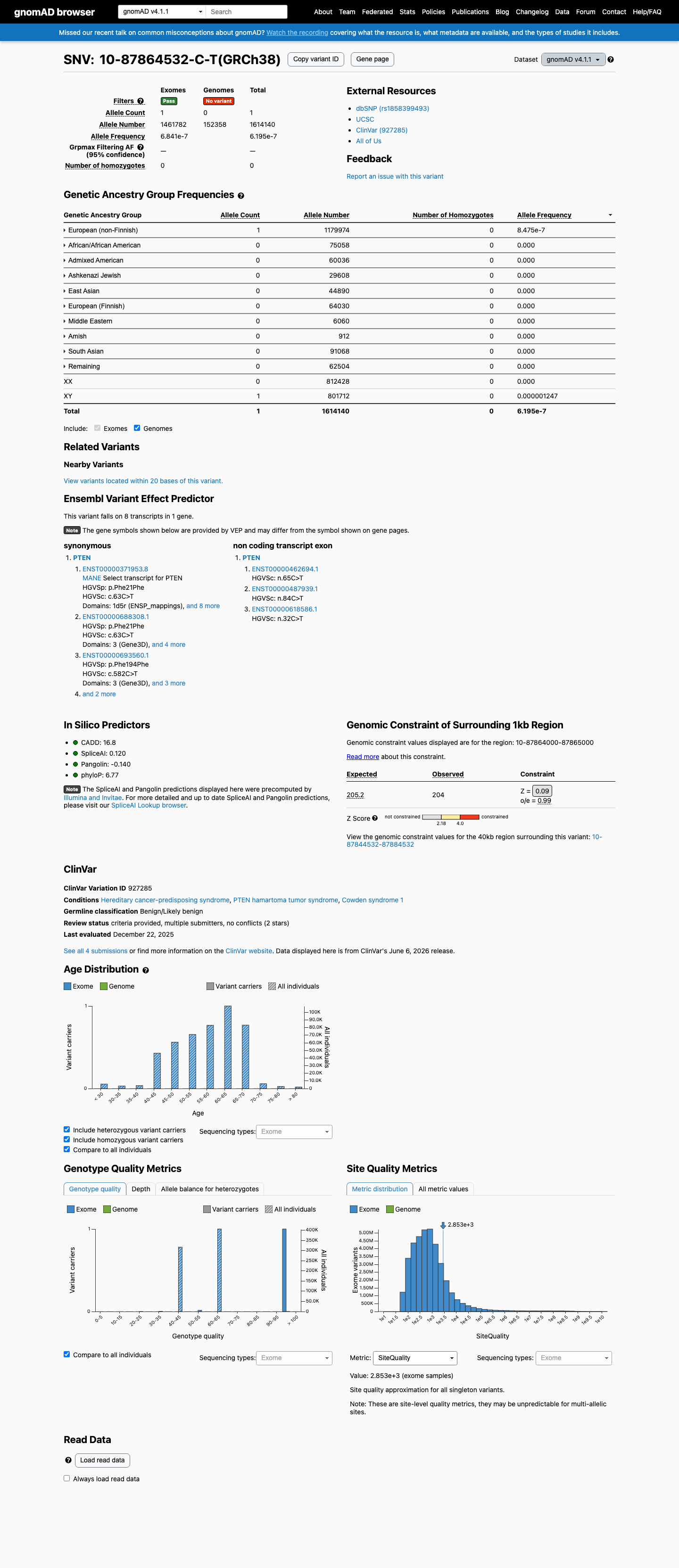
gnomAD v4.1
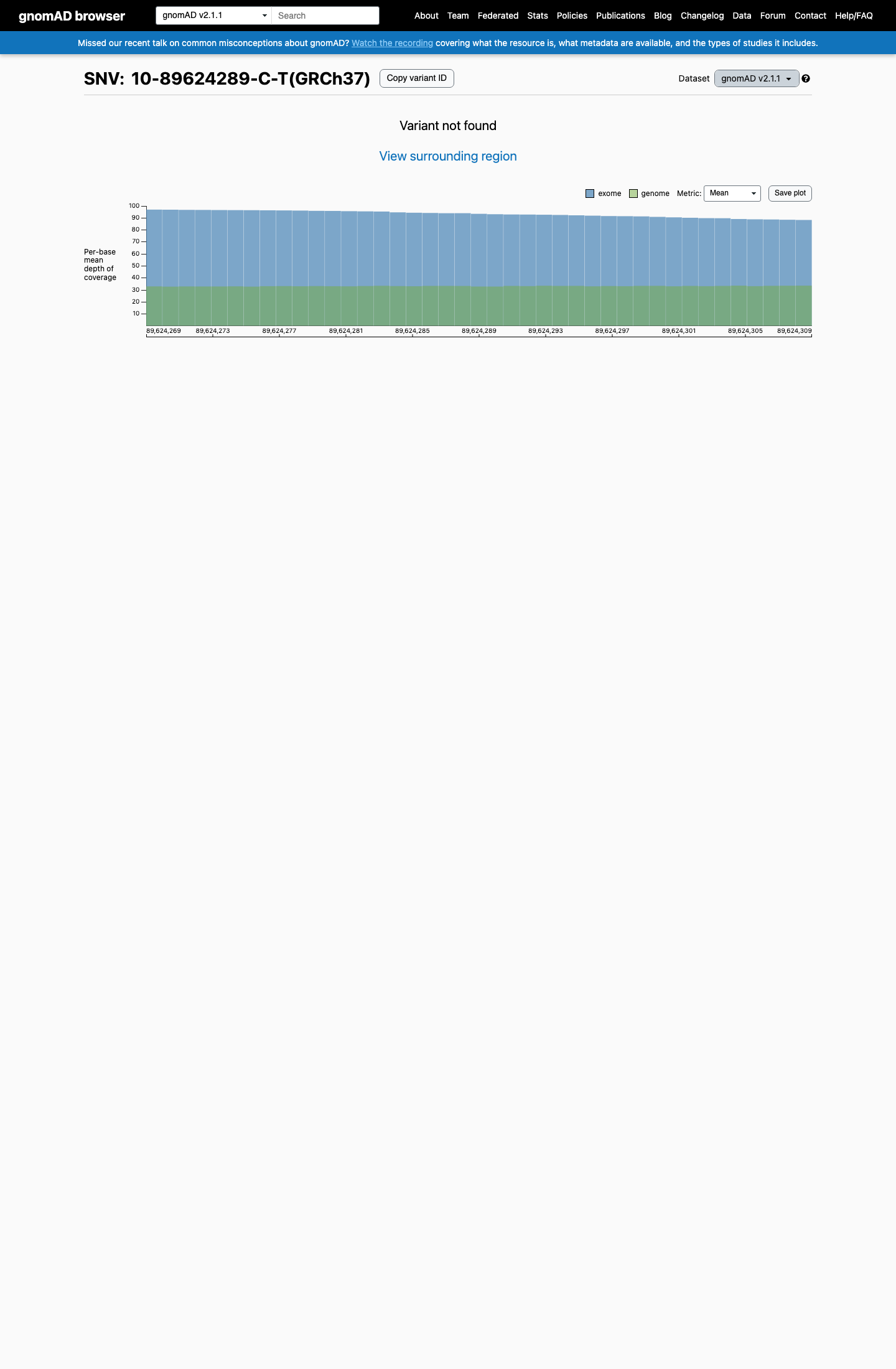
gnomAD v2.1
v4.1
This variant is present in gnomAD v4.1 (AF= 6.19525e-07; MAF= 0.00006%, 1/1614140 alleles, homozygotes = 0) and has highest observed frequency in the European (non-Finnish) population (AF= 8.47476e-07; MAF= 0.00008%, 1/1179974 alleles, homozygotes = 0).
v2.1
Absent from gnomAD v2.1.
🇨🇦 CA
Absent from gnomAD-Canada v1.0.
Allele frequency by ancestry
three datasets · side by side
gnomAD v4.1
6.2e-05%
· 1 / 1,614,140
0 hom
0 hom
European (non-Finnish) 1 / 1,179,974 |
8.5e-05% |
+ 9 not observed (Remaining individuals, Admixed American, European (Finnish), Amish, East Asian, Middle Eastern, South Asian, Ashkenazi Jewish, African/African American)
gnomAD v2.1
Absent
· 0 / ?
0 hom
0 hom
Not observed in any ancestry group.
gnomAD Canada 🇨🇦
Absent
· 0 / ?
0 hom
0 hom
Not observed in any ancestry group.
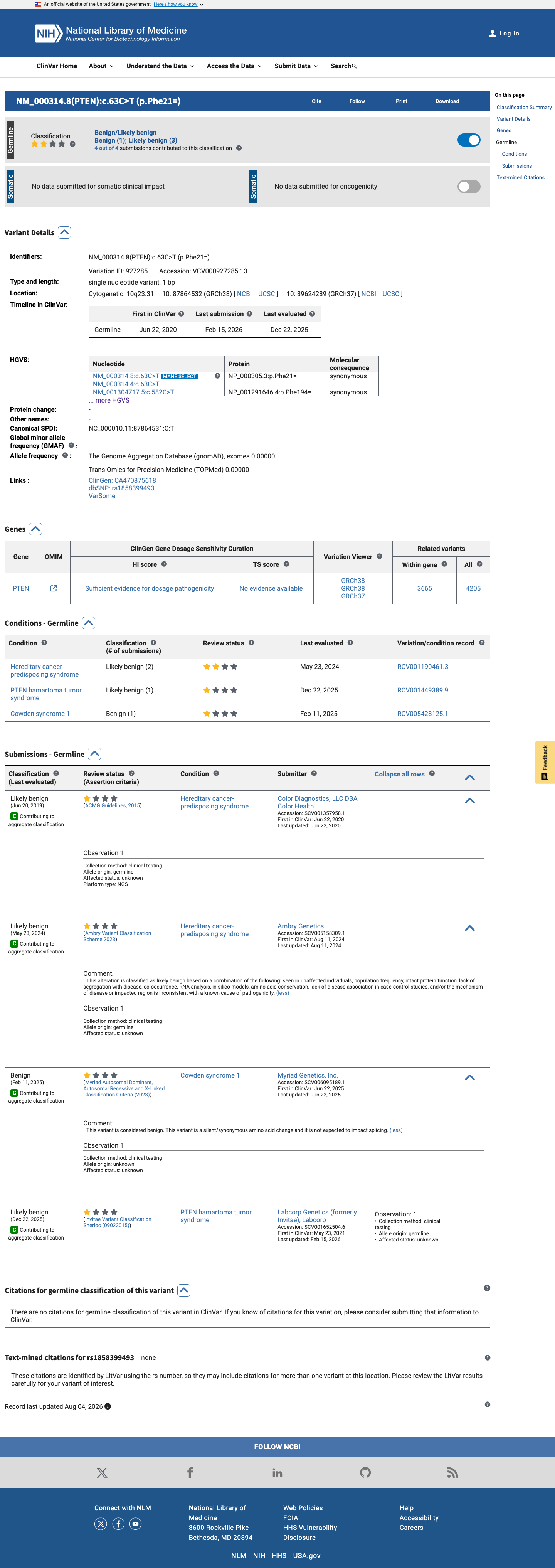
ClinVar
This variant has been reported in ClinVar as Likely benign (3 clinical laboratories) and as Benign (1 clinical laboratory). (ClinVarID = 927285)
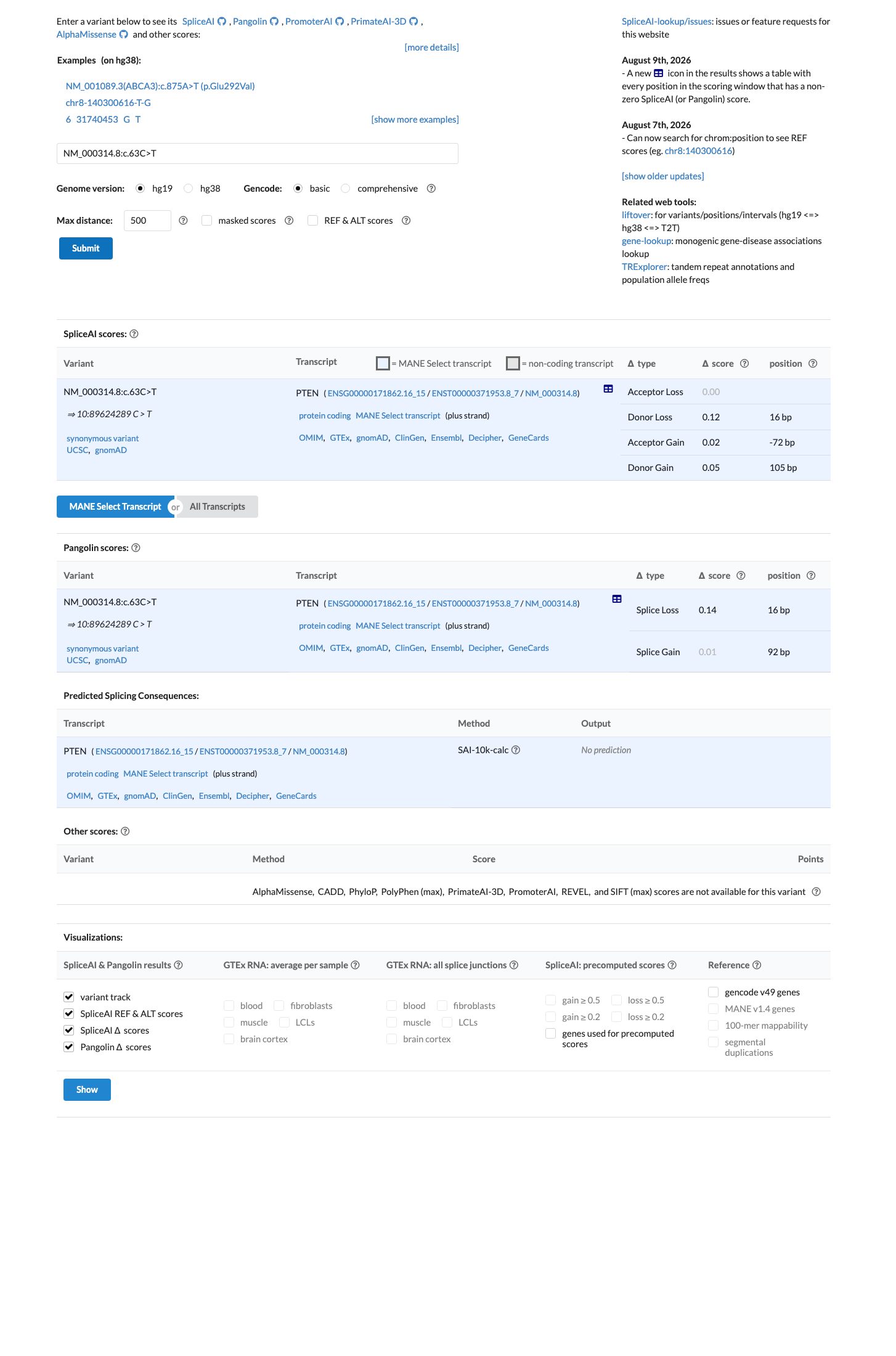
In silico
SpliceAI predicts no significant splice impact for this variant (max delta score = 0.12).
Functional
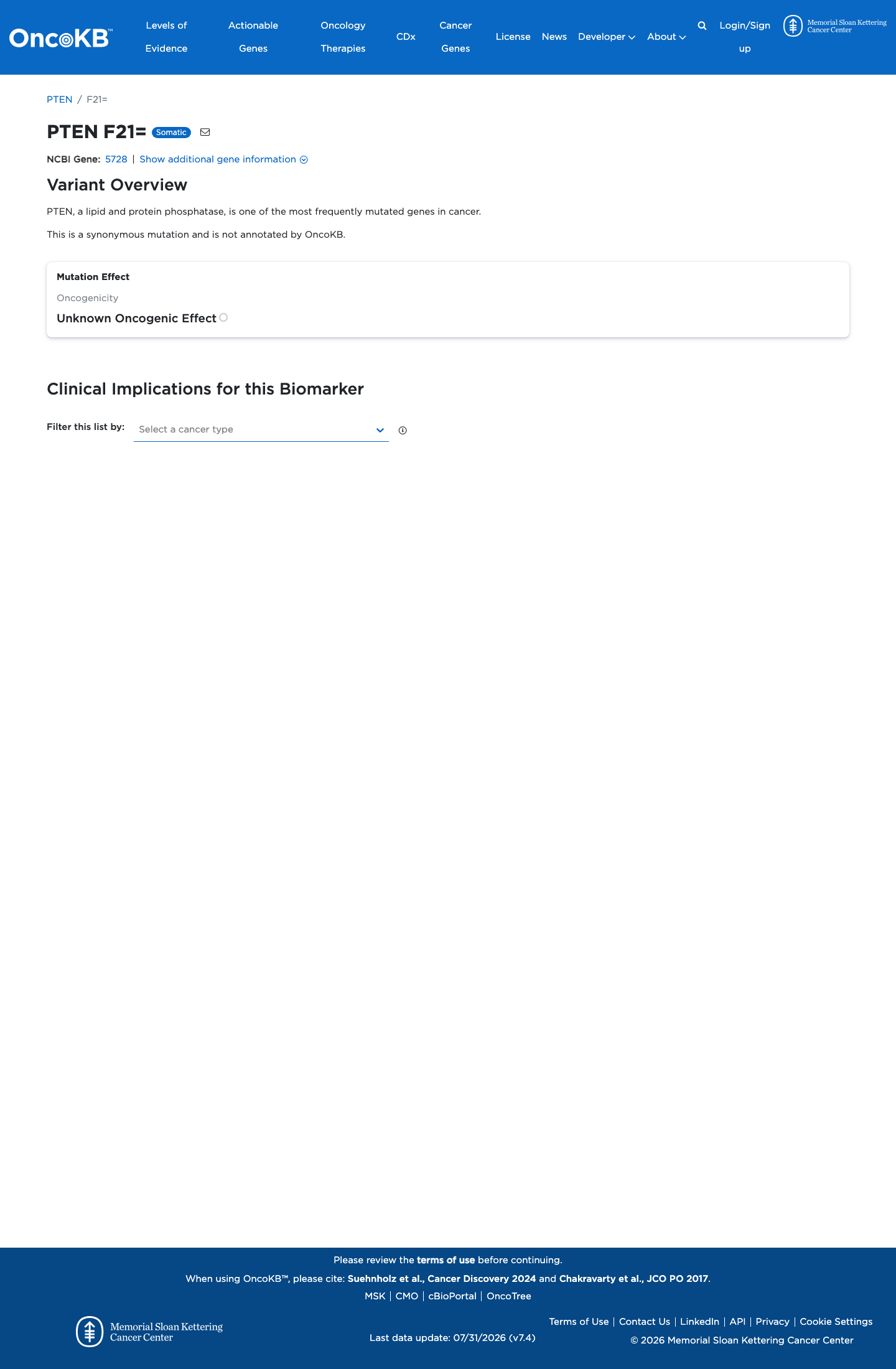
Unknown Oncogenic Effect
OncoKB identified curated literature and non-variant-specific oncogenicity context for review; listed oncogenicity label: Unknown Oncogenic Effect.

COSMIC

Cancer hotspots
Somatic evidence
Not in COSMIC / hotspots
COSMIC
This variant does not lie in a statistically significant hotspot. This variant has not previously been reported in somatic cancers (COSMIC).
Hotspots
This variant does not lie in a statistically significant hotspot.
Sources & reference links
9Sources
Triaged references · 7 PMIDs not cited in assessment
25645574 ↗
ACG clinical guideline: Genetic testing and management of hereditary gastrointestinal cancer syndromes.
CLINVAR
25741868 ↗
Standards and guidelines for the interpretation of sequence variants: a joint consensus recommendation of the American College of Medical Genetics and Genomics and the Association for Molecular Pathology.
CLINVAR
17392385 ↗
American Cancer Society guidelines for breast screening with MRI as an adjunct to mammography.
CLINVAR
24493721 ↗
American Society of Clinical Oncology Expert Statement: collection and use of a cancer family history for oncology providers.
CLINVAR
25356965 ↗
ACMG policy statement: updated recommendations regarding analysis and reporting of secondary findings in clinical genome-scale sequencing.
CLINVAR
28492532 ↗
Sherloc: a comprehensive refinement of the ACMG-AMP variant classification criteria.
CLINVAR