RB1 encodes a protein that acts as a key brake on cell division: in its active form it blocks cells from moving from the G1 into the S phase of the cell cycle, and it also helps maintain the structure of packaged DNA in the nucleus. It was the first tumor suppressor gene identified. Loss of RB1 function removes this brake, leading to uncontrolled cell growth and contributing to many cancers, including retinoblastoma (a childhood eye cancer), bladder cancer, osteogenic sarcoma, and cancers of the lung, breast, and prostate. Inherited changes in RB1 predispose children to retinoblastoma and adults to sarcomas and other tumors.
This variant
RB1 is a tumor suppressor whose loss drives retinoblastoma and other cancers, so any change in this gene warrants scrutiny. This 3' UTR variant is extremely rare but shows no predicted effect on splicing and lacks functional data, leaving its impact on RB1 function unknown. A VUS result means it cannot currently be used to confirm or exclude a diagnosis.
Transcript
NM_000321.3
HGVS · transcript:coding
NM_000321.3:c.*1G>C
GRCh38
chr13:48480072 G>C
GRCh37
chr13:49054208 G>C
BasisWith no gene-specific combination framework available, generic ACMG/AMP 2015 rules were applied: PM2 (supporting) plus BP4 (supporting) combines to 1 supporting pathogenic and 1 supporting benign, yielding VUS.▾
With no gene-specific combination framework available, generic ACMG/AMP 2015 rules were applied: PM2 (supporting) plus BP4 (supporting) combines to 1 supporting pathogenic and 1 supporting benign, yielding VUS.
Classification rationale
PM2BP4VUS
RB1 c.*1G>Cunknown · exon 27
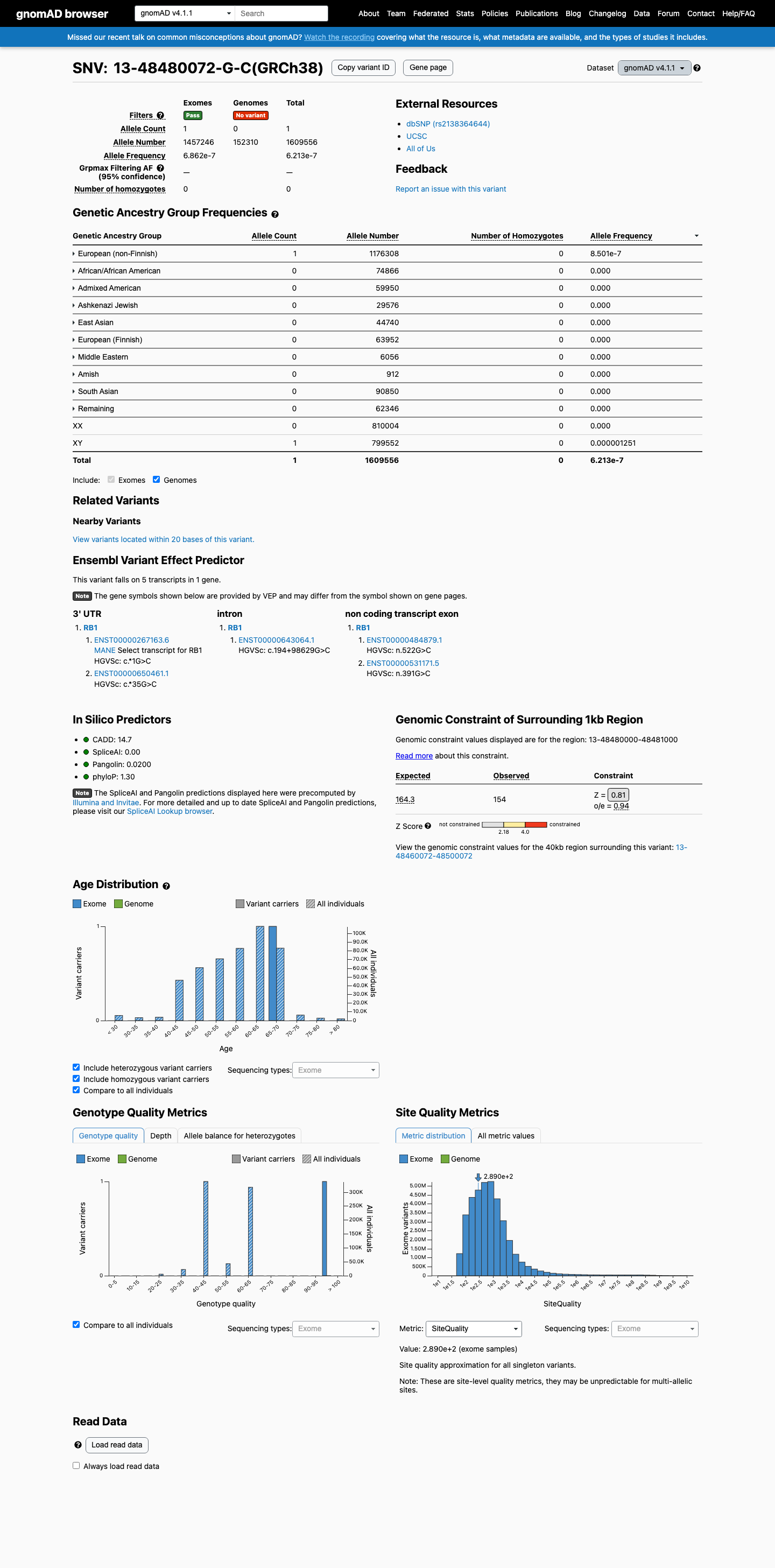
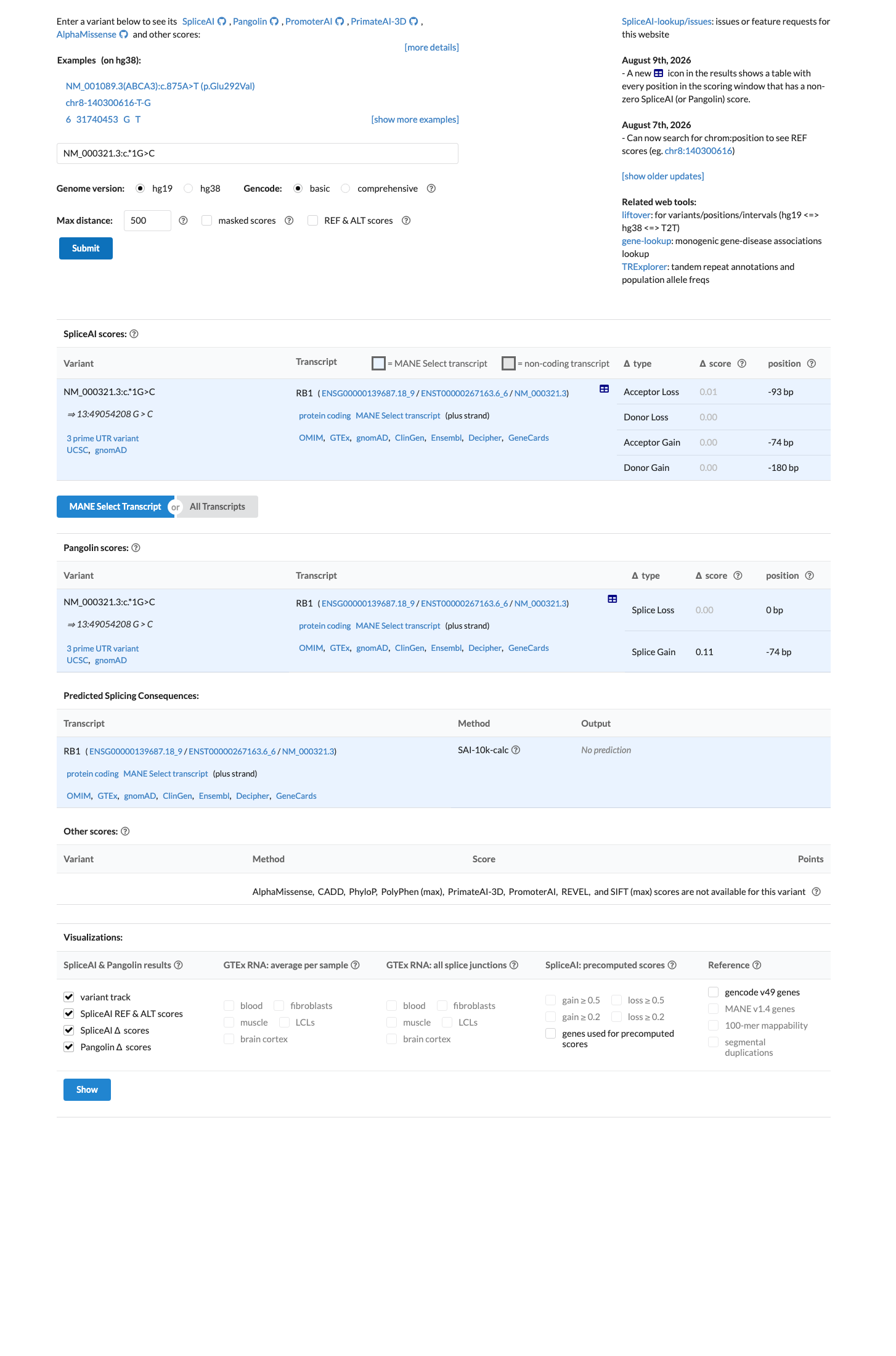
PM2 (Supporting): variant seen once in 1,609,556 gnomAD v4.1 alleles (AF 6.2e-07), far below the 0.1% rarity threshold. BP4 (Supporting): SpliceAI max delta 0.007, well below the <0.1 threshold, indicating no predicted splicing impact. Combination of one supporting pathogenic (PM2) and one supporting benign (BP4) criterion maps to VUS under generic ACMG/AMP 2015 rules.
PM2 + BP4→VUS
Gene diagram
· NM_000321.3 · variants mapped to exon structure
RB1NM_000321.3
Fetching transcript structure from UCSC…
Exons
—
Transcript span
—
Strand
—
Variants mapped
—
Source
UCSC ncbiRefSeqCurated
All variants in RB1—click a row to locate it on the plot · use the link column to open its page
Variant ↕
Protein
Location
Classification
Link
Applied criteria · 2 applied · 17 assessed
MetEvidence satisfies this criterion.
Not metEvaluated against available evidence; threshold not reached.
Not assessedApplies in principle, but no evidence was found to evaluate it.
N/ADoesn't apply to this variant type.
Applied · 2
Strength Supporting Moderate Strong Very strong
✓
PM2supportingreviewPathogenic
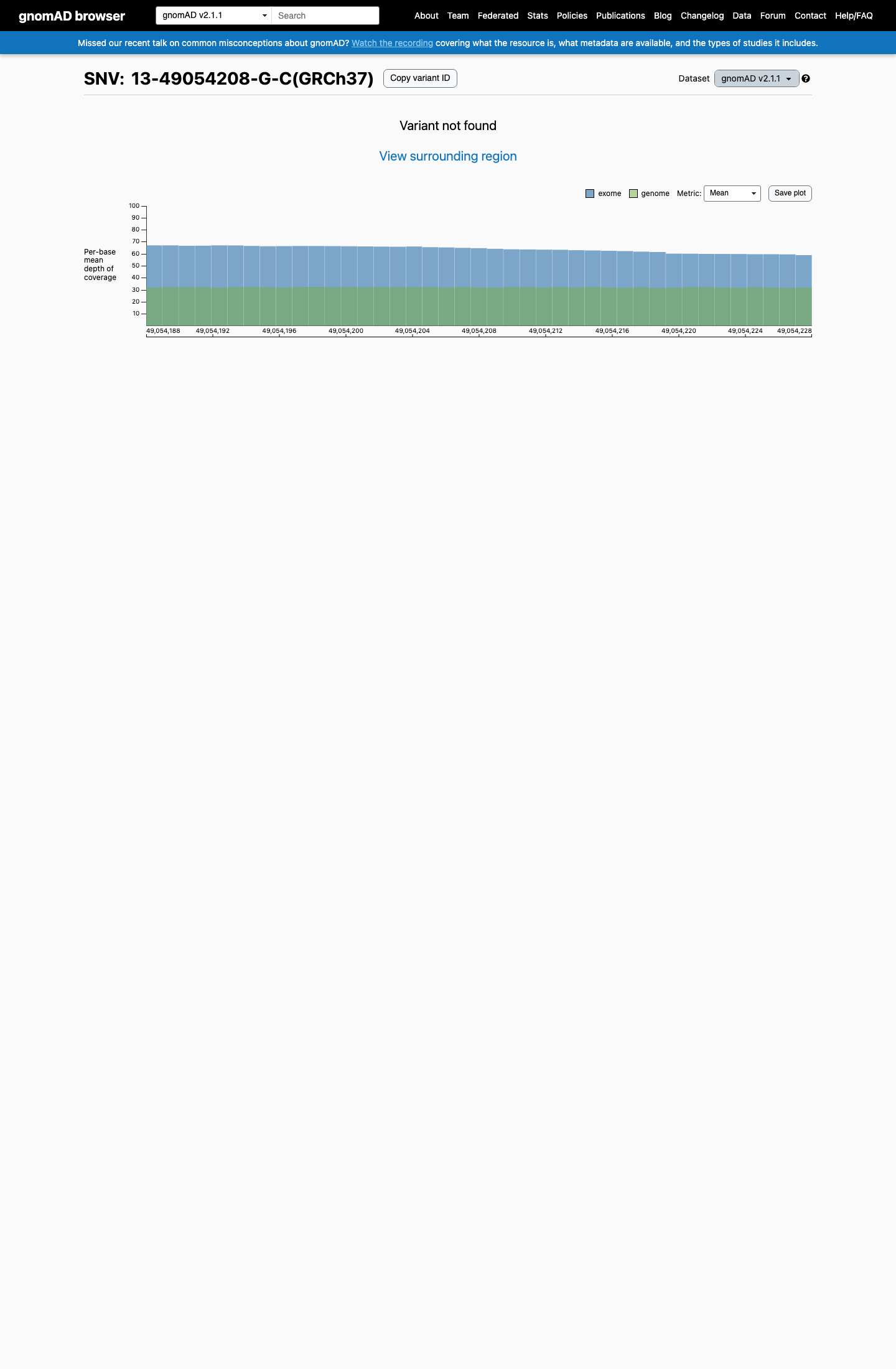
Met (supporting): absent from gnomAD v2.1 and seen once in 1,609,556 gnomAD v4.1 alleles (AF ~6.2e-07), far below the 0.1% rarity threshold.
Generic non-VCEP PM2 operating threshold: AF <0.1% supports PM2; the gnomAD v4.1 AF of 6.212893493609418e-07 is below this threshold.The variant is absent from gnomAD v2.1 and gnomAD-Canada v1.0, and the gnomAD v4.1 record shows zero homozygotes.Because this is a 3' UTR variant with no established clinical or functional disease mechanism in the case bundle, rarity is treated as population evidence only and not as evidence of pathogenicity by itself.
Met (supporting): SpliceAI max delta 0.007, well below the <0.1 threshold, indicating no predicted splicing impact.
SpliceAI Lookup (source_registry key 'spliceai') scores: DS_AG=0.003, DS_AL=0.007, DS_DG=0.0, DS_DL=0.0, max_delta_score=0.007; evidence_sentence 'SpliceAI predicts no significant splice impact for this variant (max delta score = 0.01)'.Generic fallback rule (generic_acmg_classification_rules.md, PMID:25741868 base framework, SVI-recommended SpliceAI thresholds also reflected in VCEP CSPECs such as ATM's per Walker et al. 2023): SpliceAI max delta < 0.1 -> BP4 supporting for non-missense variants; observed max delta (~0.007-0.01) clearly falls under this threshold.No RB1-specific VCEP PP3/BP4 lookup spreadsheet was available to pre-assign a code (vcep_materials.json: no cspec url available), so the generic calibration governs.
This variant is present in gnomAD v4.1 (AF= 6.21289e-07; MAF= 0.00006%, 1/1609556 alleles, homozygotes = 0) and has highest observed frequency in the European (non-Finnish) population (AF= 8.50117e-07; MAF= 0.00009%, 1/1176308 alleles, homozygotes = 0).
v2.1
Absent from gnomAD v2.1.
🇨🇦 CA
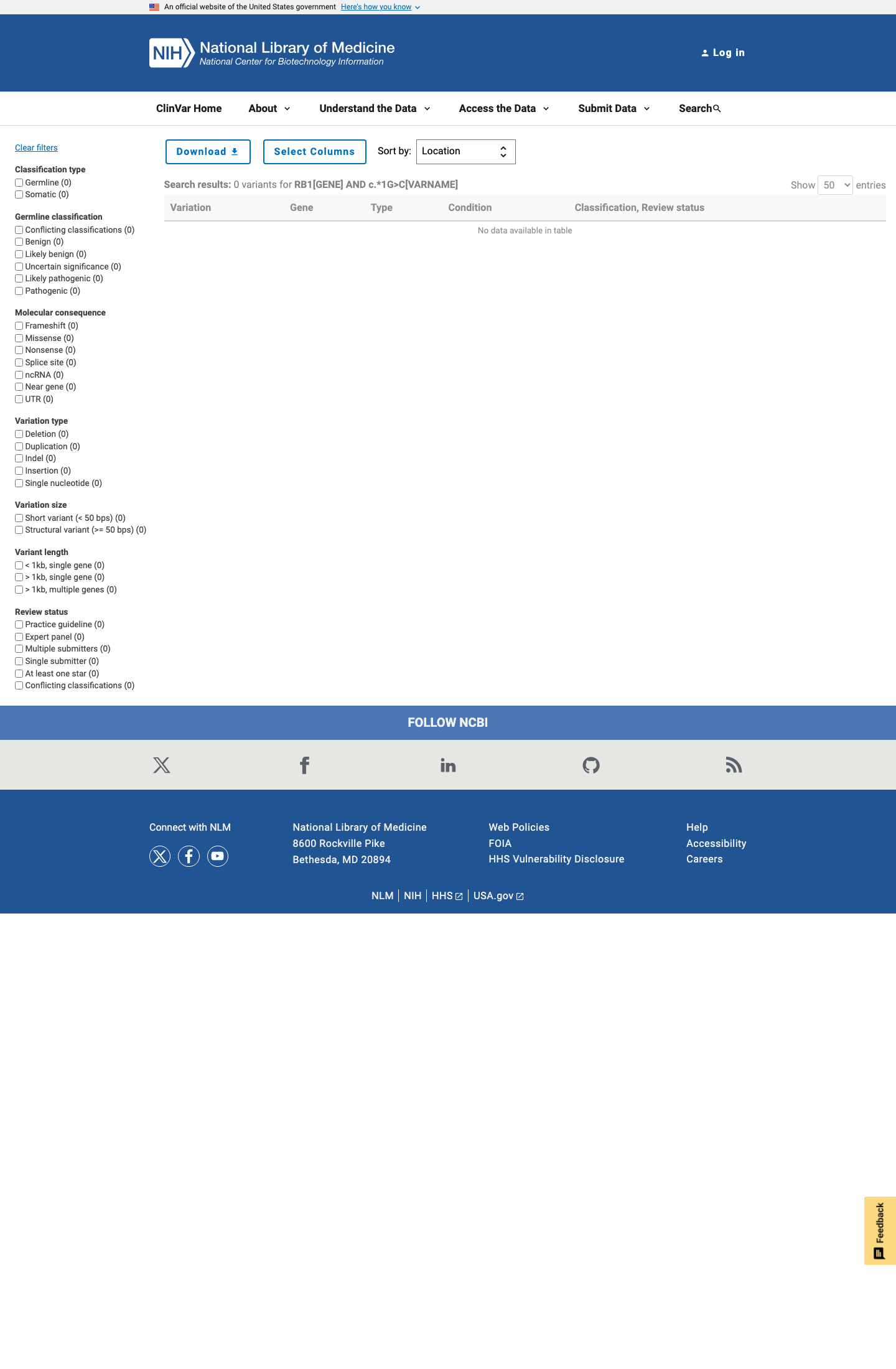
Absent from gnomAD-Canada v1.0.
Allele frequency by ancestry
three datasets · side by side
gnomAD v4.1
6.2e-05%
· 1 / 1,609,556
0 hom
European (non-Finnish)
1 / 1,176,308
8.5e-05%
+ 9 not observed (Remaining individuals, Admixed American, European (Finnish), Amish, East Asian, Middle Eastern, South Asian, Ashkenazi Jewish, African/African American)