PVS1
Not met: c.590G>T is a missense substitution (p.Arg197Met), not a null variant such as nonsense, frameshift, or canonical splice.
PS1
Not assessed: no confirmed pathogenic variant producing the same p.Arg197Met change was available for comparison.
PS2
Not assessed: no de novo occurrence with confirmed parental testing was documented.
PS3
Not assessed: no validated disease-relevant functional assay data for p.Arg197Met were available.
PS4
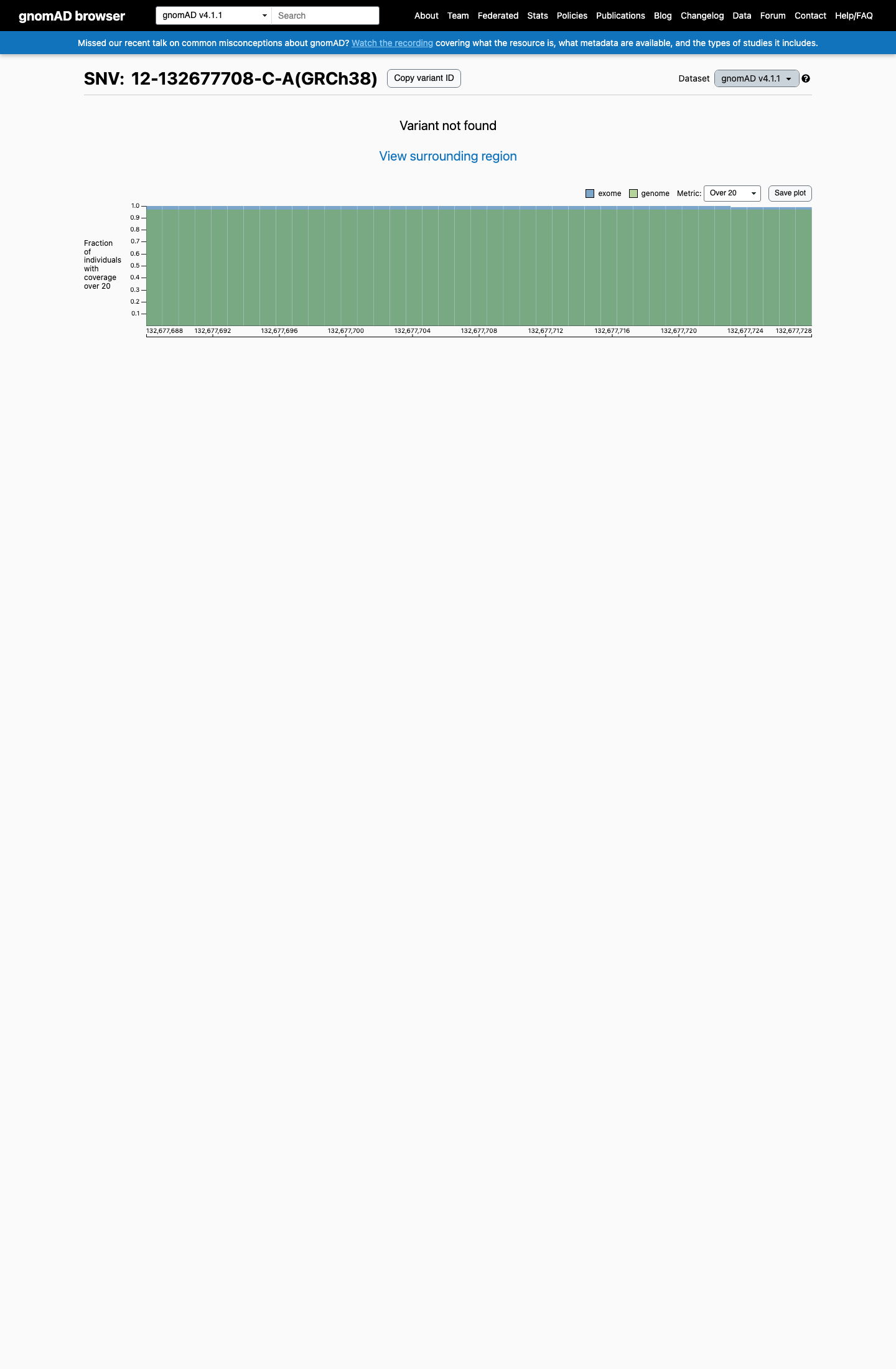
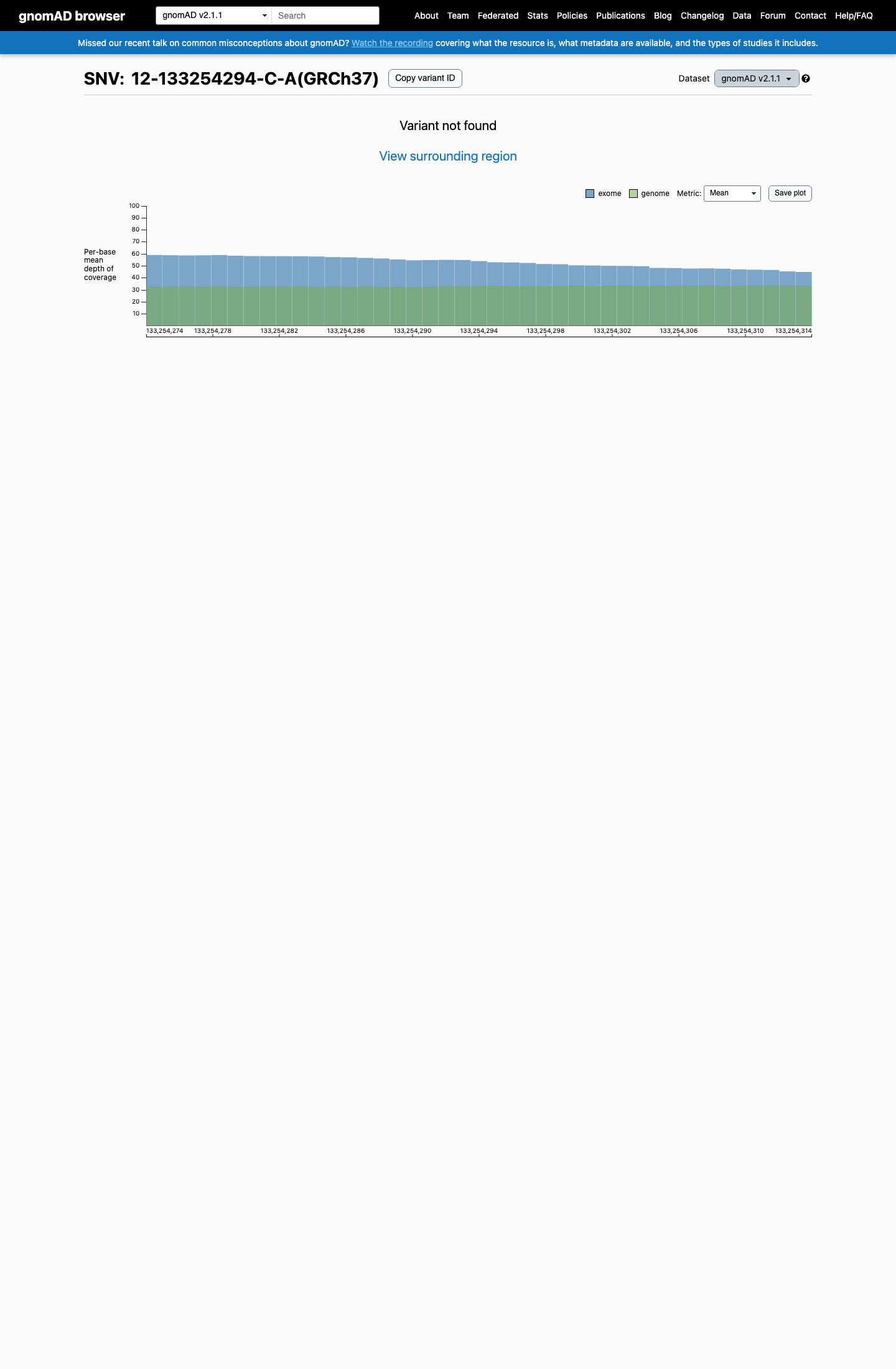
Not met: p.Arg197Met is not recurrent in COSMIC or TCGA endometrial cohorts, and no case-control enrichment data were available.
PM1
Not met: p.Arg197Met is not one of the established exonuclease-domain hotspot or recurrent variants under the local POLE framework.
PM3
Not assessed: no observation of the variant in trans with a pathogenic allele in an affected individual was documented.
PM4
Not met: single-nucleotide missense with no protein-length change; not an in-frame insertion/deletion or stop-loss variant.
PM5
Not assessed: no independently established pathogenic missense variant at residue Arg197 was identified.
PM6
Not assessed: no unconfirmed de novo occurrence was documented.
PP1
Not assessed: no pedigree or variant-status data from affected relatives were available for segregation analysis.
PP2
Not assessed: no gene-level evidence that pathogenic POLE missense variation is common while benign missense variation is uncommon.
PP3
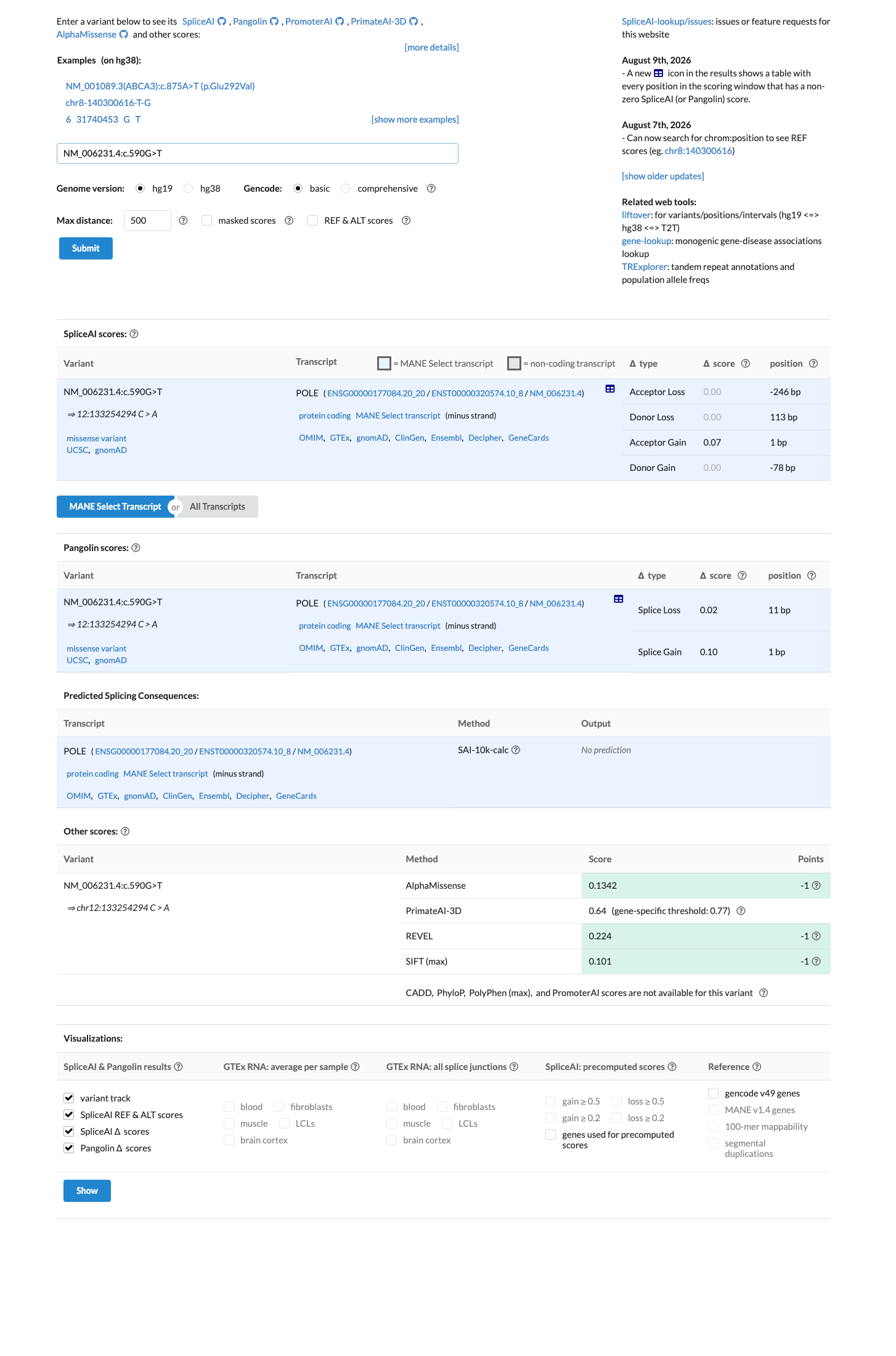
Not met: REVEL score 0.224 is below the pathogenic supporting calibration threshold.
PP4
Not assessed: no proband phenotype or family history was provided to assess phenotype specificity.
PP5
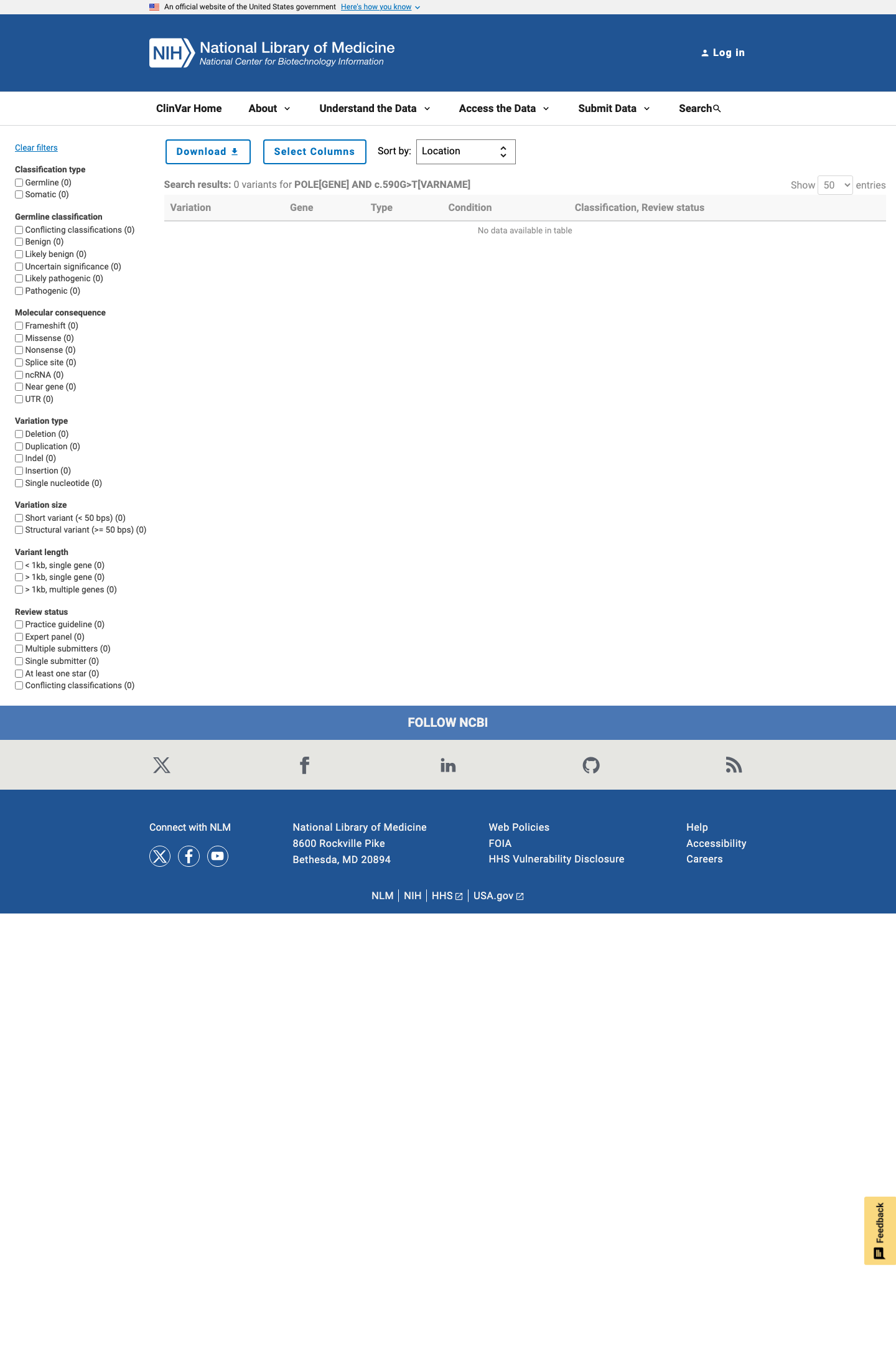
Not met: the exact variant is absent from ClinVar, so no expert-panel pathogenic classification exists to support it.