PTEN is a tumor suppressor gene that encodes a phosphatase converting the lipid messenger PIP3 back to PIP2 at the cell membrane, thereby restraining the AKT/mTOR signaling pathway that drives cell growth, proliferation, and survival. It is one of the most frequently mutated genes across many types of human cancer, and its loss promotes unchecked cell growth, survival, and genomic instability, partly through impaired DNA repair. Germline loss-of-function variants in PTEN cause Cowden syndrome, an inherited cancer predisposition disorder associated with elevated risk of breast and thyroid cancer.
This variant
This in-frame deletion of one amino acid (p.(Ser10del)) is classified as a variant of uncertain significance, meaning it is not yet known whether it impairs PTEN's tumor-suppressor function. Given that germline loss-of-function variants in PTEN cause Cowden syndrome with elevated breast and thyroid cancer risk, the variant's contribution to cancer predisposition remains unresolved until additional clinical or functional evidence emerges.
Transcript
NM_000314.8
HGVS · transcript:coding
NM_000314.8:c.30_32del
GRCh38
chr10:87864496 TAGC>T
GRCh37
chr10:89624253 TAGC>T
BasisPM6 (Moderate) and PM2 (Supporting) are the only criteria met; this combination matches no Pathogenic, Likely Pathogenic, Benign, or Likely Benign rule, so the variant is classified as VUS.▾
PM6 (Moderate) and PM2 (Supporting) are the only criteria met; this combination matches no Pathogenic, Likely Pathogenic, Benign, or Likely Benign rule, so the variant is classified as VUS.
Classification rationale
PM2PM6VUS
PTEN c.30_32delin_frame_indel_unknown · exon 1
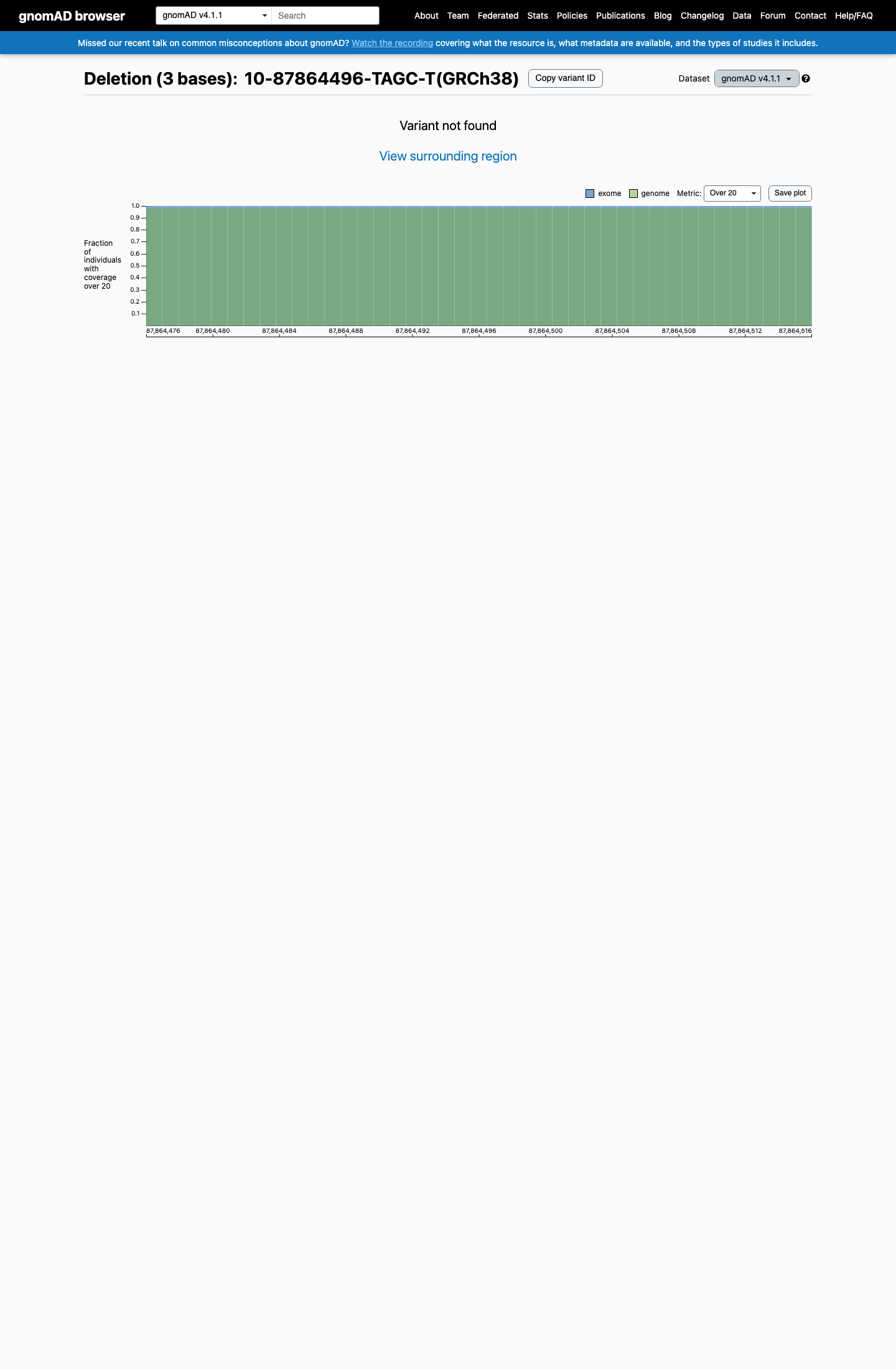
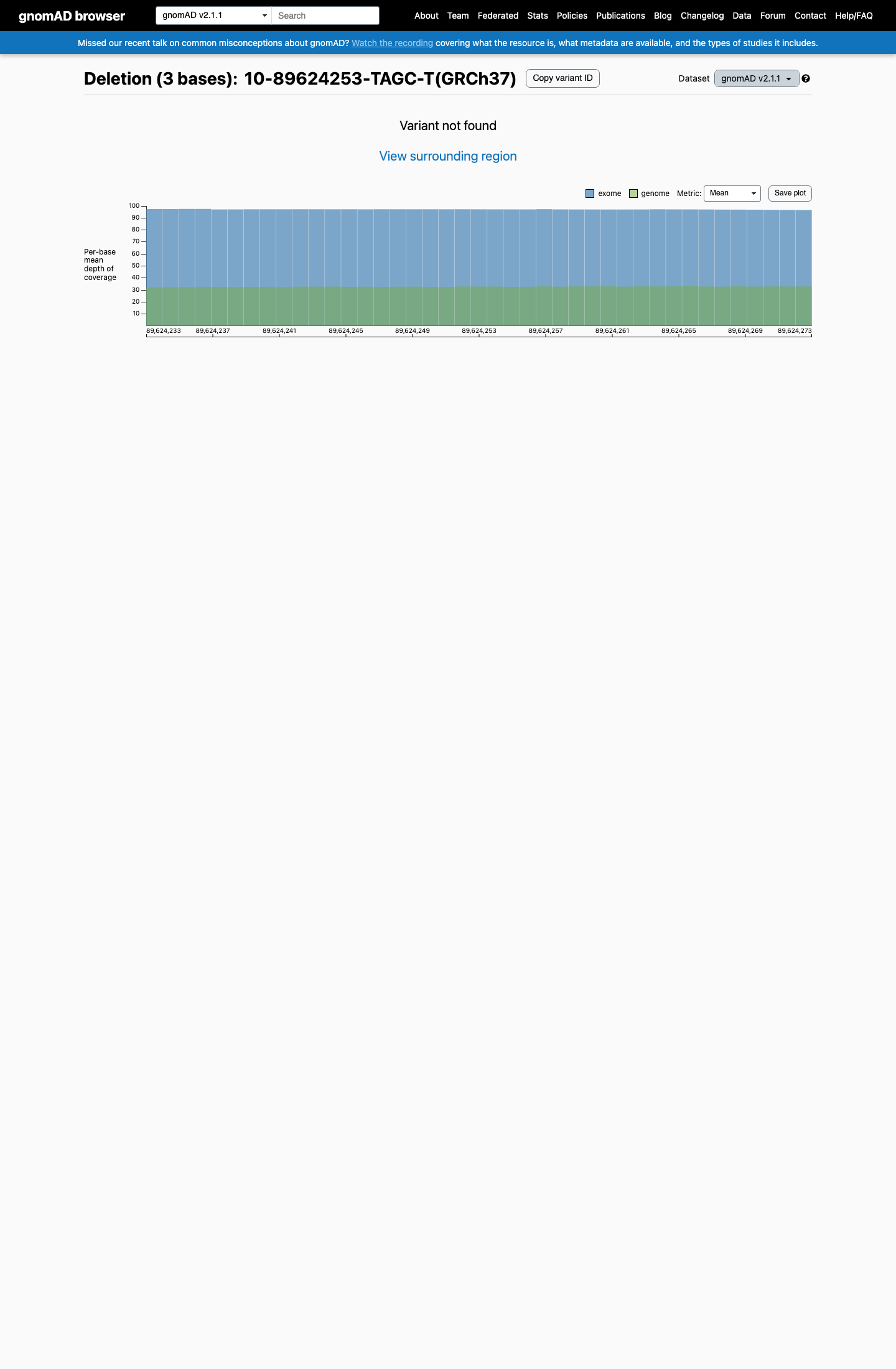
PM2 (Supporting): absent from gnomAD v2.1, v4.1, and gnomAD-Canada v1.0, below the 0.001% population frequency threshold. PM6 (Moderate): one ClinVar clinical-laboratory record reports presumed de novo occurrence with a PTEN-consistent phenotype; maternity and paternity are unconfirmed, and possible germline mosaicism is flagged for human review. VUS: PM6 (Moderate) plus PM2 (Supporting) matches no established Pathogenic, Likely Pathogenic, Benign, or Likely Benign combination rule.
PM2 + PM6→VUS
Gene diagram
· NM_000314.8 · variants mapped to exon structure
PTENNM_000314.8
Fetching transcript structure from UCSC…
Exons
—
Transcript span
—
Strand
—
Variants mapped
—
Source
UCSC ncbiRefSeqCurated
All variants in PTEN—click a row to locate it on the plot · use the link column to open its page
Variant ↕
Protein
Location
Classification
Link
Applied criteria · 2 applied · 16 assessed
MetEvidence satisfies this criterion.
Not metEvaluated against available evidence; threshold not reached.
Not assessedApplies in principle, but no evidence was found to evaluate it.
N/ADoesn't apply to this variant type.
Applied · 2
Strength Supporting Moderate Strong Very strong
✓
PM2supportingPathogenic
Met (Supporting): absent from gnomAD v2.1, v4.1, and gnomAD-Canada v1.0, below the 0.001% population frequency threshold.
ClinGen PTEN Expert Panel specifications version 3.2 define PM2 at Supporting strength for absence or allele frequency <0.00001 (0.001%) in gnomAD or another large sequenced population; if multiple alleles occur within a subpopulation, that subpopulation frequency must be <0.00002 (0.002%).The exact variant is reported as absent from gnomAD v2.1, gnomAD v4.1, and gnomAD-Canada v1.0.Absence in all three reported population resources is below the specified PM2 frequency thresholds.
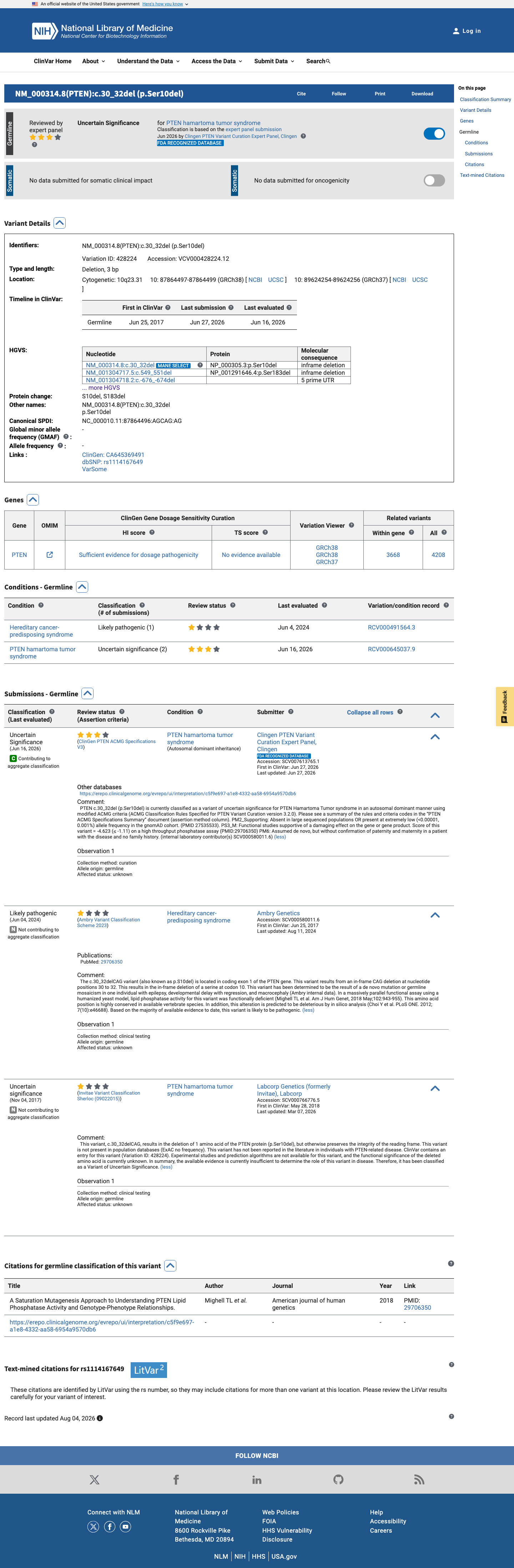
Met (Moderate): one ClinVar clinical-laboratory record reports presumed de novo occurrence with a PTEN-consistent phenotype, though maternity and paternity are unconfirmed. Flagged for human review: the record is a secondary submission that mentions possible germline mosaicism.
The PTEN Expert Panel specification defines PM6 Moderate as assumed de novo without confirmation of paternity and maternity in a proband with the disease and no family history.The exact-match ClinVar submission reports the variant as de novo or due to germline mosaicism in one individual with epilepsy, developmental delay with regression, and macrocephaly; the available record does not provide confirmed parental testing.Only one presumed de novo observation is available, so the PTEN-specific thresholds for PM6 Strong or PM6 Very Strong are not met.
This variant has been reported in ClinVar as Likely pathogenic (1 clinical laboratory) and as Uncertain significance (1 clinical laboratory) and as Uncertain Significance by Clingen PTEN Variant Curation Expert Panel, Clingen (expert panel). (ClinVarID = 428224)
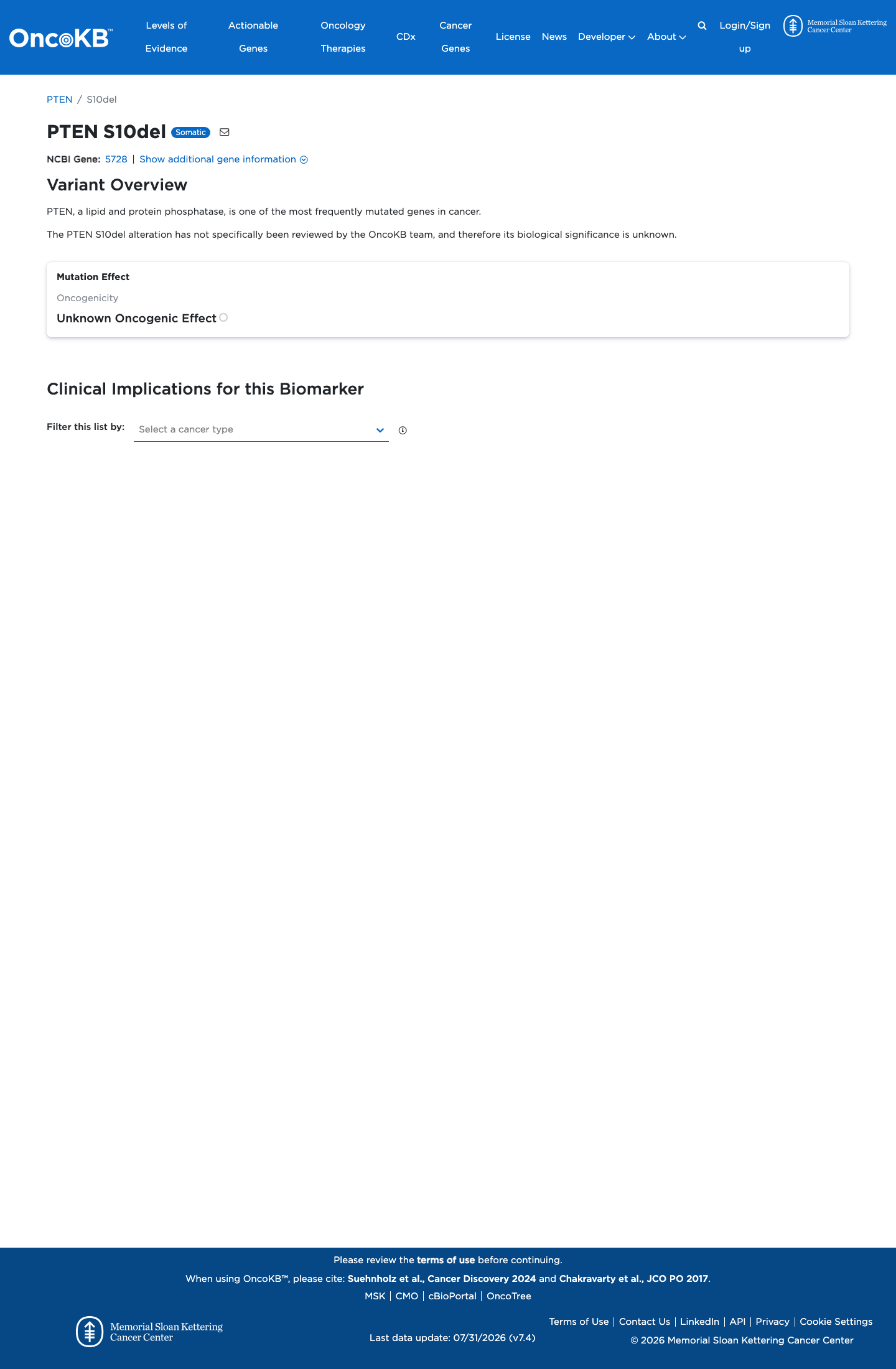
OncoKB did not identify variant-specific reviewed functional evidence for this variant; gene-level curated context is available for reviewer follow-up. PTEN, a lipid and protein phosphatase, is one of the most frequently mutated genes in cancer.
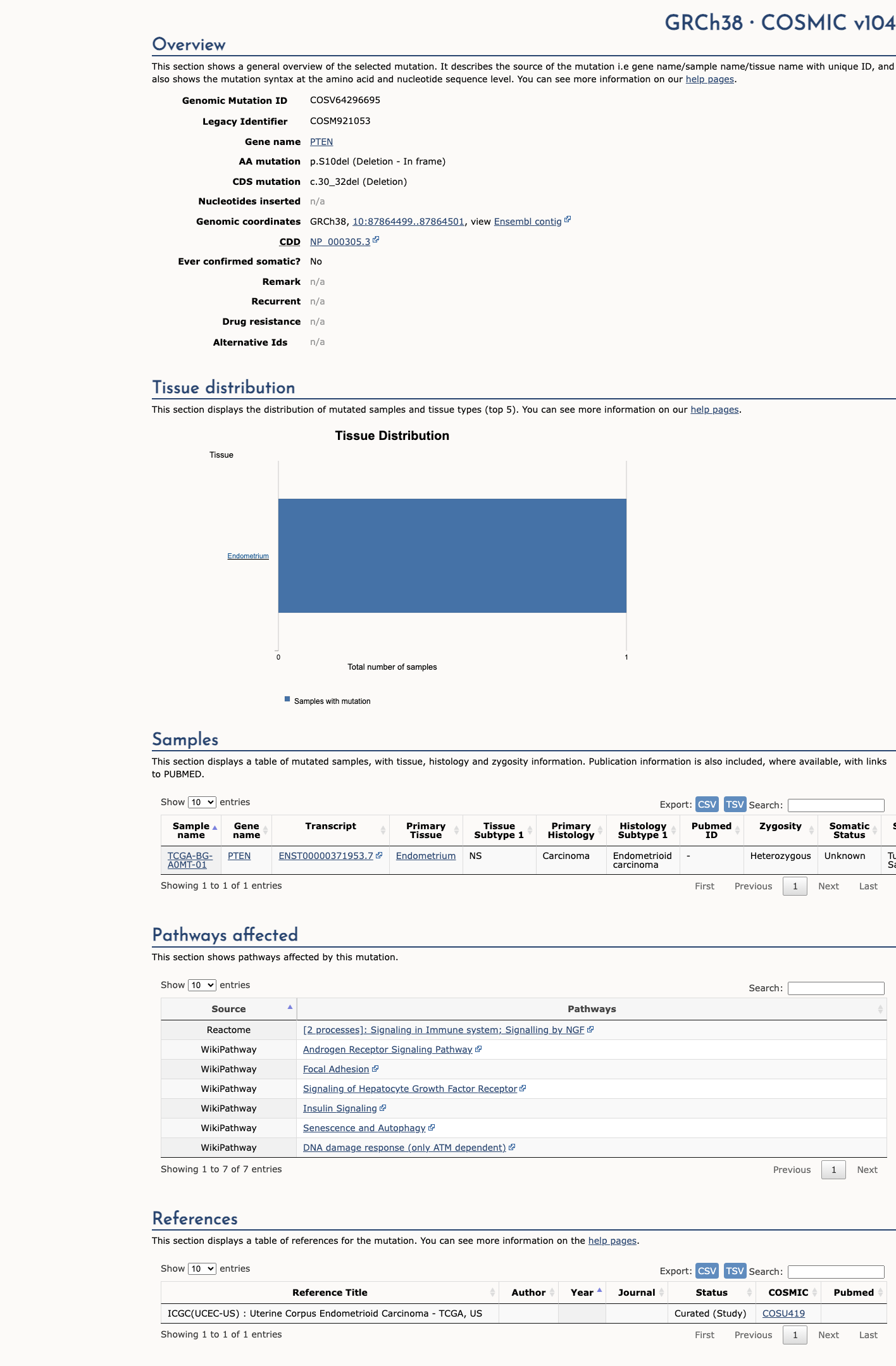
This variant does not lie in a statistically significant hotspot. This variant has previously been reported in somatic cancers (COSMIC; COSV64296695, n = 1 times).
Hotspots
This variant does not lie in a statistically significant hotspot.
Each card is an audit: what was searched, what was found, whether it names the variant, which criteria it fed, and why. 5 further PMIDs triaged but not cited — see Sources & references.
Rule & framework references · cited for criterion definitions, not variant evidence
29706350 ↗A Saturation Mutagenesis Approach to Understanding PTEN Lipid Phosphatase Activity and Genotype-Phenotype Relationships.
Sources & reference links
9Sources
CSpec VCEP
ClinVar
gnomAD v2.1
gnomAD v4.1
gnomAD-Canada
SpliceAI
OncoKB
COSMIC
Cancer hotspots
Triaged references · 5 PMIDs not cited in assessment
25645574 ↗ACG clinical guideline: Genetic testing and management of hereditary gastrointestinal cancer syndromes.CLINVAR
25190698 ↗Genetic/familial high-risk assessment: breast and ovarian, version 1.2014.CLINVAR
25356965 ↗ACMG policy statement: updated recommendations regarding analysis and reporting of secondary findings in clinical genome-scale sequencing.CLINVAR
27854360 ↗Recommendations for reporting of secondary findings in clinical exome and genome sequencing, 2016 update (ACMG SF v2.0): a policy statement of the American College of Medical Genetics and Genomics.CLINVAR