PIK3CA encodes the p110α catalytic subunit of phosphoinositide 3-kinase (PI3K), an enzyme that converts the membrane lipid PIP2 into PIP3, thereby activating signaling cascades such as the AKT-mTOR pathway that promote cell survival, proliferation, growth, and motility. It is among the most commonly mutated genes in cancer, and aberrant activation of PI3K signaling is a driving event in tumor development, with the gene implicated in cancers including cervical cancer. Because this pathway is central to tumor growth, it is a major target of cancer therapies, although drug-induced pathway activation can also contribute to treatment resistance.
This variant
PIK3CA encodes the p110α catalytic subunit of PI3K, and activating mutations in this gene drive tumor growth through the AKT-mTOR pathway. This missense change (p.Arg93Leu) falls within the adaptor-binding domain and is absent from population databases, yet no functional or clinical evidence establishes its effect on PI3K signaling. The VUS classification reflects that this variant is neither established as pathogenic nor benign.
Transcript
NM_006218.4
HGVS · transcript:coding
NM_006218.4:c.278G>T
GRCh38
chr3:179199103 G>T
GRCh37
chr3:178916891 G>T
BasisPM1 and PM2 are met at Supporting strength, but two supporting criteria do not reach a pathogenic combination threshold and no benign criteria are met, so the variant is classified VUS.▾
PM1 and PM2 are met at Supporting strength, but two supporting criteria do not reach a pathogenic combination threshold and no benign criteria are met, so the variant is classified VUS.
Classification rationale
PM1PM2VUS
PIK3CA c.278G>Tmissense · exon 2
PM1 (Supporting): p.Arg93Leu lies within the approved PI3K adaptor-binding domain (residues 31-108). PM2 (Supporting): the variant is absent from gnomAD v2.1, gnomAD-Canada v1.0, and gnomAD v4.1 (0 of 1,611,098 alleles). Synthesis: PM1 and PM2 at Supporting strength do not meet a pathogenic combination threshold under the generic ACMG/AMP 2015 rules, and no benign criteria apply, yielding a classification of VUS.
PM1 + PM2→VUS
Gene diagram
· NM_006218.4 · variants mapped to exon structure
PIK3CANM_006218.4
Fetching transcript structure from UCSC…
Exons
—
Transcript span
—
Strand
—
Variants mapped
—
Source
UCSC ncbiRefSeqCurated
All variants in PIK3CA—click a row to locate it on the plot · use the link column to open its page
Variant ↕
Protein
Location
Classification
Link
Applied criteria · 2 applied · 12 assessed
MetEvidence satisfies this criterion.
Not metEvaluated against available evidence; threshold not reached.
Not assessedApplies in principle, but no evidence was found to evaluate it.
N/ADoesn't apply to this variant type.
Applied · 2
Strength Supporting Moderate Strong Very strong
✓
PM1supportingPathogenic
Met (Supporting): residue 93 lies within the approved PI3K adaptor-binding domain (residues 31-108).
The governing Brain Malformations VCEP specifies PM1 at Supporting strength for residues affecting critical functional domains in Table 4.The authoritative PIK3CA domain table lists the adaptor binding domain (PI3K ABD) at amino acids 31-108, which contains residue Arg93; the other listed PIK3CA intervals, 173-292, 322-483, and 797-1068, were also checked and do not contain residue 93.The VCEP local guidance states that PM1 is domain-based and does not require hotspot recurrence when the variant falls inside an approved domain.
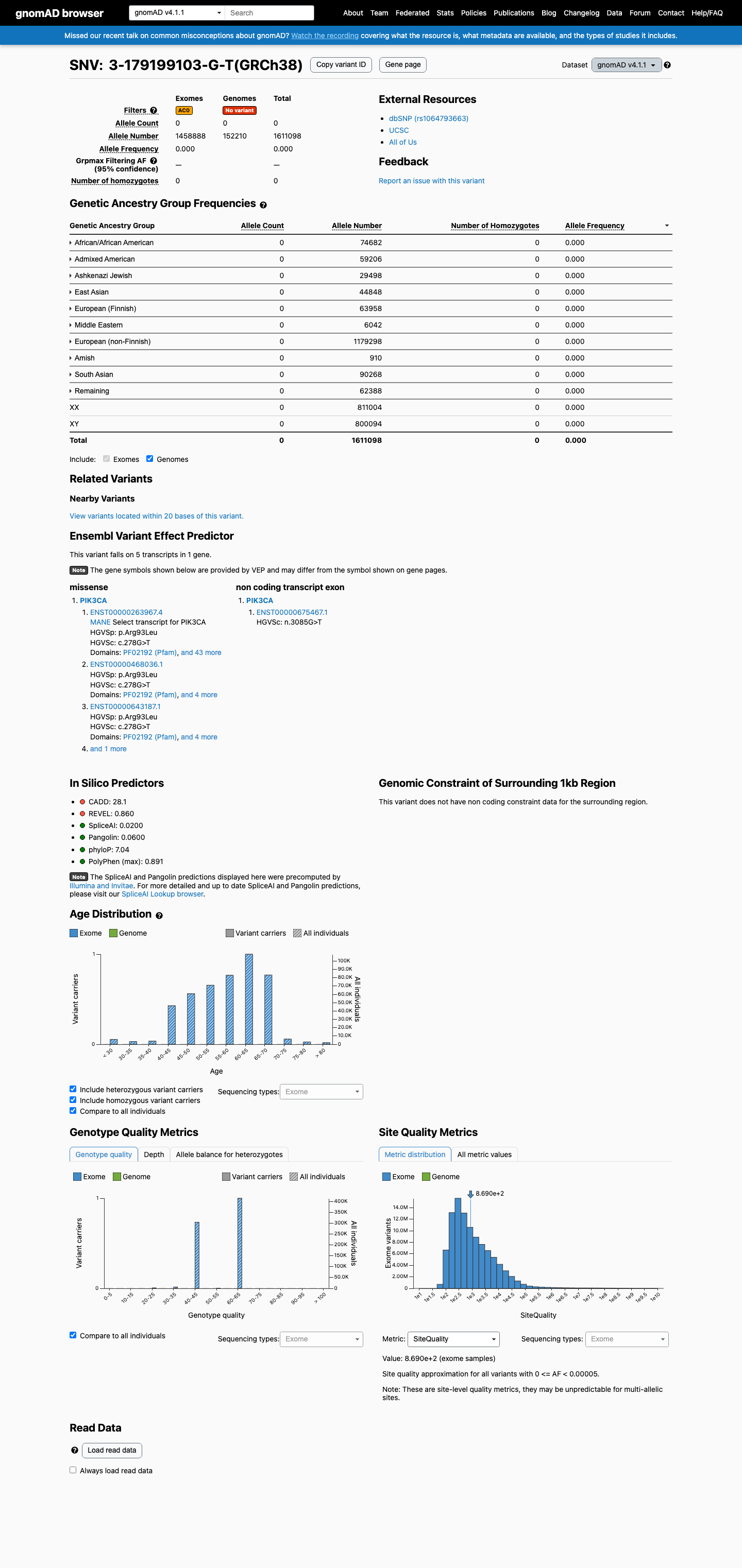
Met (Supporting): absent from gnomAD v2.1, gnomAD-Canada v1.0, and gnomAD v4.1 (0 of 1,611,098 alleles).
The governing ClinGen Brain Malformations VCEP specifies PM2 at Supporting strength for a variant absent or rare in an ethnically matched control cohort population sample, with at least one qualifying sample.gnomAD v2.1 reports the variant absent.gnomAD v4.1 reports 0 alternate alleles among 1,611,098 total alleles, total AF 0.0, and 0 homozygotes; the African/African American subgroup, reported as the highest observed-frequency subgroup, also has 0 alternate alleles among 74,682 alleles and AF 0.0.
This variant is present in gnomAD v4.1 (AF= 0; MAF= 0.00000%, 0/1611098 alleles, homozygotes = 0) and has highest observed frequency in the African/African American population (AF= 0; MAF= 0.00000%, 0/74682 alleles, homozygotes = 0).
v2.1
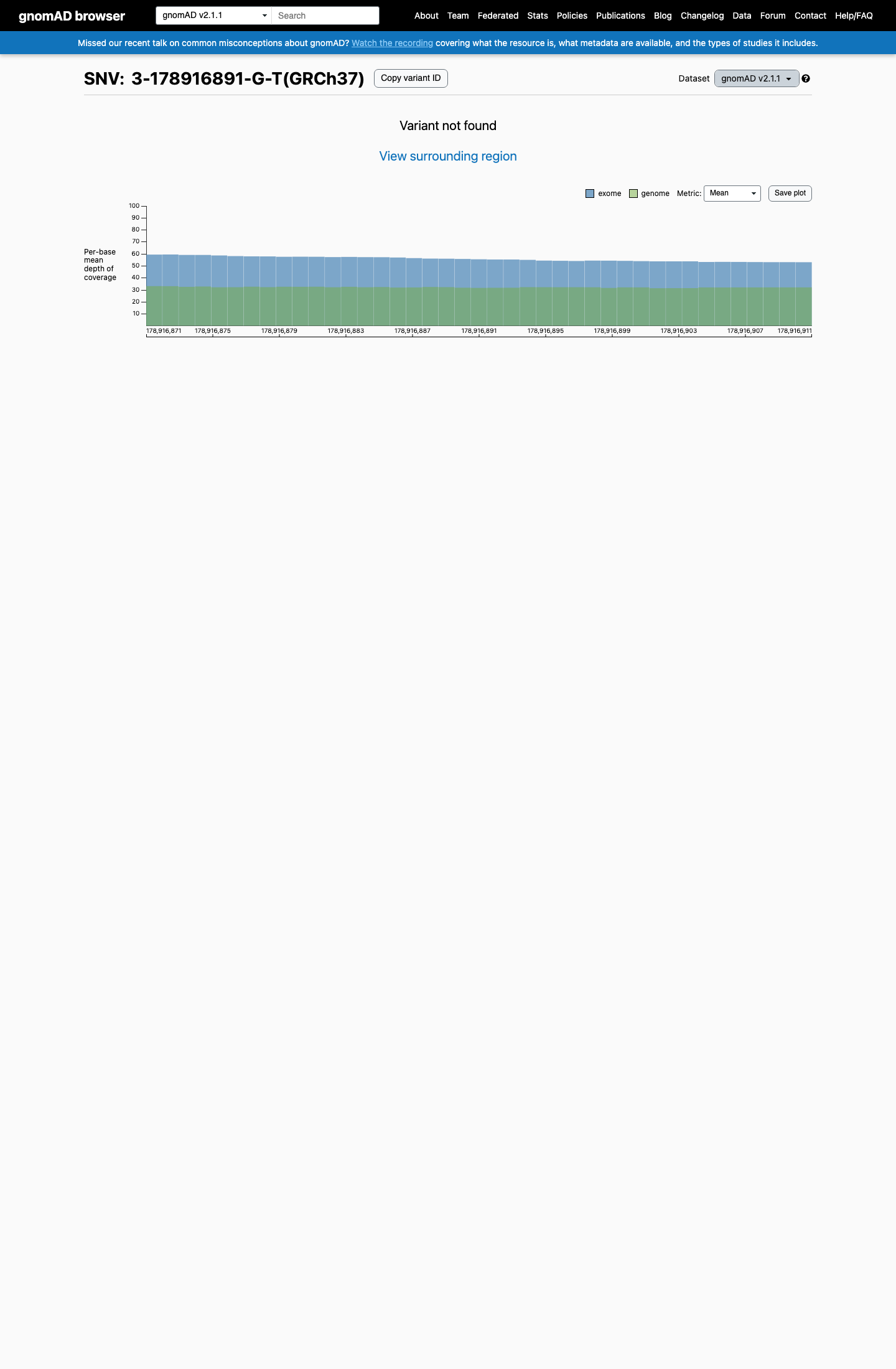
Absent from gnomAD v2.1.
🇨🇦 CA
Absent from gnomAD-Canada v1.0.
Allele frequency by ancestry
three datasets · side by side
gnomAD v4.1
Absent
· 0 / 1,611,098
0 hom
Not observed in any ancestry group.
+ 10 not observed (Remaining individuals, Admixed American, European (Finnish), Amish, East Asian, Middle Eastern, South Asian, Ashkenazi Jewish, African/African American, European (non-Finnish))
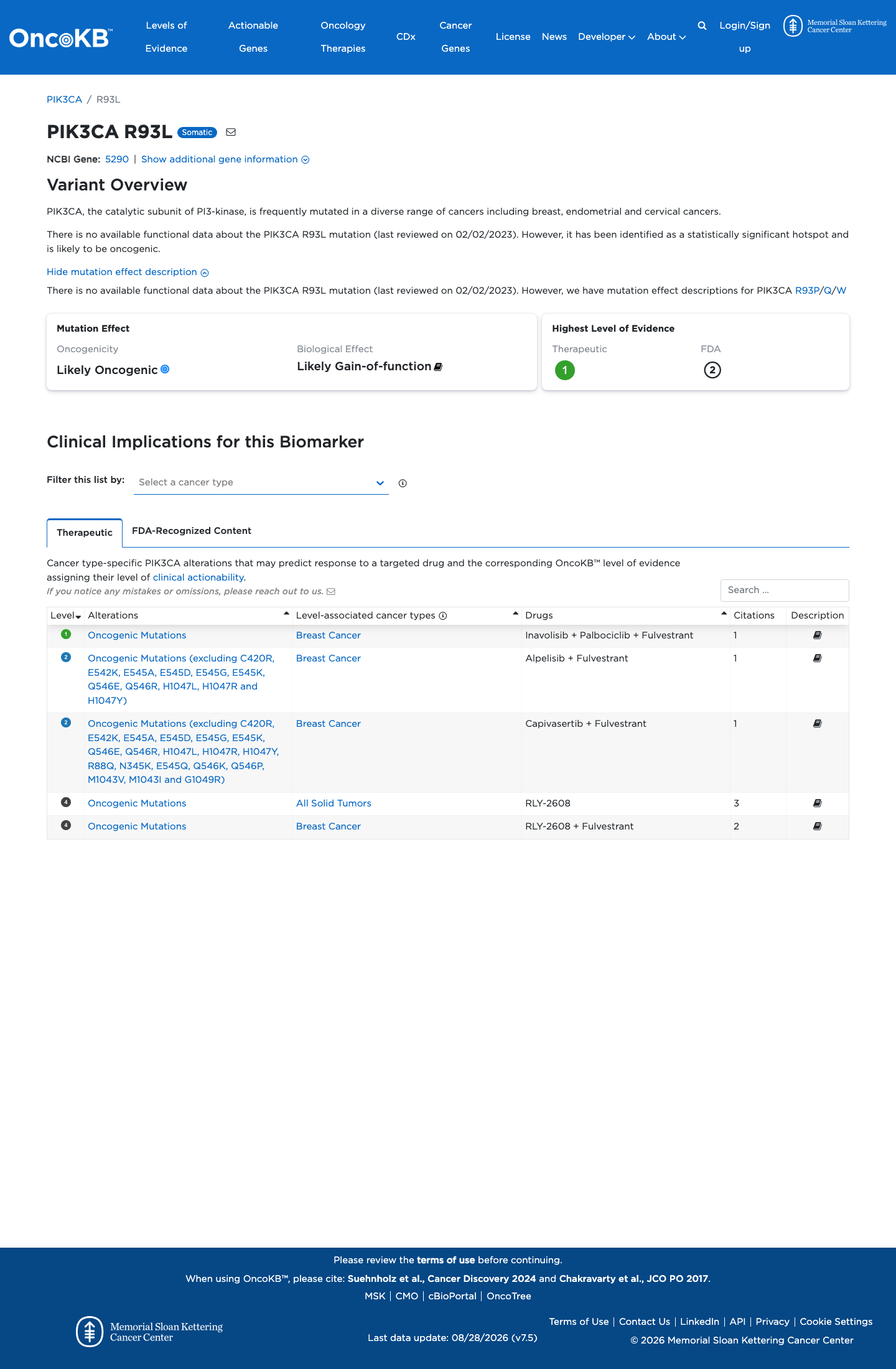
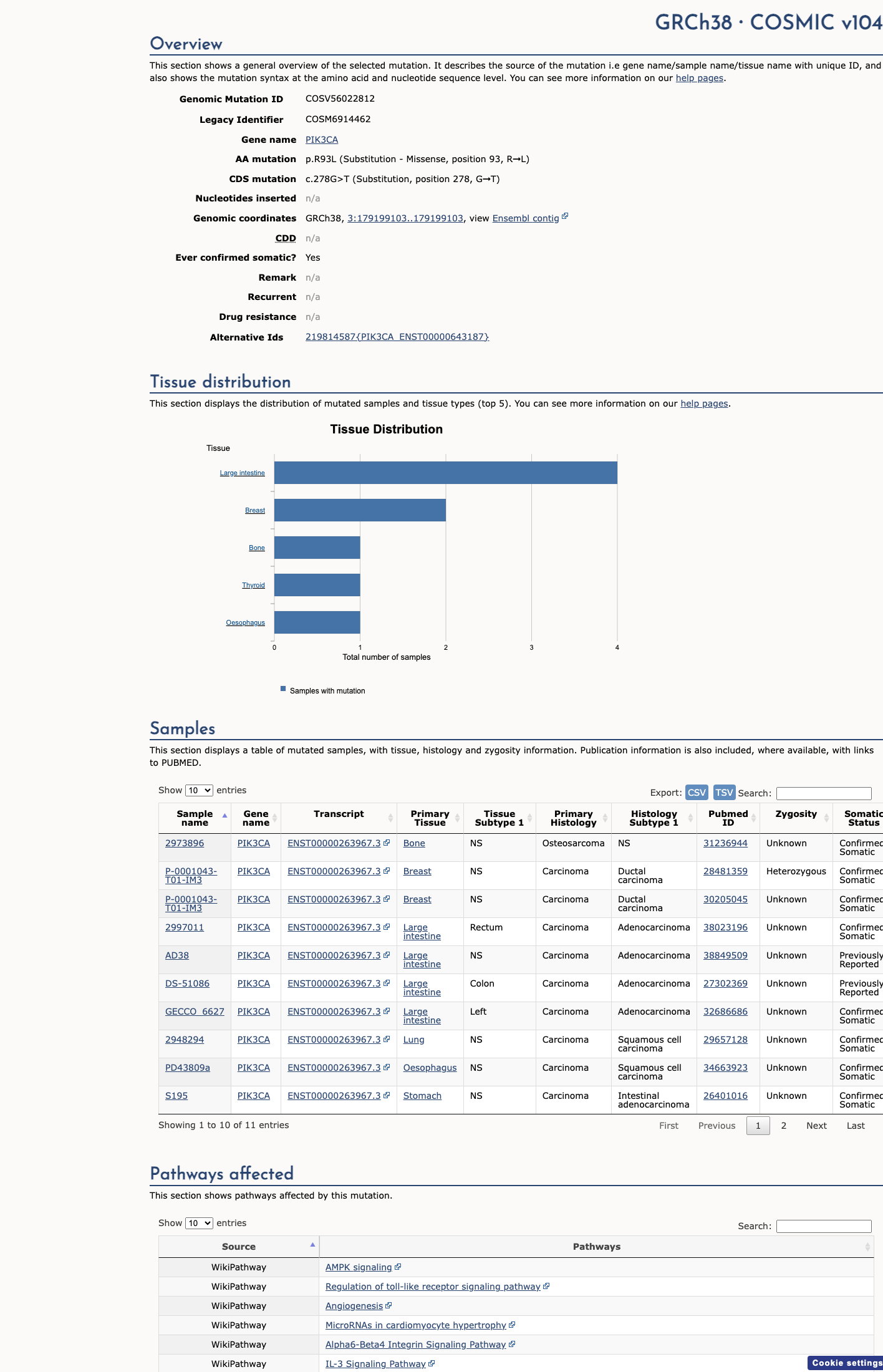
This variant lies in a statistically significant hotspot. This variant has previously been reported in somatic cancers (COSMIC; COSV56022812, n = 10 times).
Hotspots
This variant lies in a statistically significant hotspot.