BRCA2 encodes a DNA repair protein that maintains genome stability by repairing double-strand breaks through homologous recombination and by protecting DNA replication forks. It acts as a tumor suppressor, and inherited loss-of-function changes cause hereditary breast and ovarian cancer syndrome, with elevated lifetime risks of breast, ovarian, prostate, and pancreatic cancers; biallelic changes cause Fanconi anemia complementation group D1. Reduced or altered BRCA2 activity is implicated in multiple tumor types, and PARP inhibitors are an approved treatment for BRCA2-associated ovarian and breast cancers.
This variant
BRCA2 maintains genome stability by repairing double-strand breaks, and inherited loss of function causes hereditary breast and ovarian cancer syndrome. A Pathogenic classification here means this frameshift is expected to destroy that tumor-suppressor function, placing carriers of this variant in the elevated cancer-risk group associated with BRCA2 loss.
Transcript
NM_000059.4
HGVS · transcript:coding
NM_000059.4:c.8275del
GRCh38
chr13:32363475 TG>T
GRCh37
chr13:32937612 TG>T
Pathogenic: PVS1 (Very Strong) for this exon 18 frameshift premature truncation plus PM5 (Strong) meets the ENIGMA BRCA2 v1.2 Pathogenic combination (Table 3).
Classification rationale
PVS1PM5Pathogenic
BRCA2 c.8275delframeshift · exon 18
PVS1 (Very Strong): exon 18 frameshift creates premature stop p.(Val2759TrpfsTer18), a truncating change in a gene where loss of function causes disease. PM5 (Strong): other expert-panel-reviewed pathogenic premature-stop variants are documented in the same exon, adding strong weight under the ENIGMA PM5_PTC rule. Overall: Pathogenic, from PVS1 (Very Strong) plus PM5 (Strong) meeting the ENIGMA BRCA2 v1.2 combination rule.
PVS1 + PM5→Pathogenic
LYFE Sciences is an AI system, and it can make mistakes. Criteria
may be applied incorrectly, sources may be misread, and a confident-looking
classification can still be wrong. Double-check every criterion and
its underlying evidence before relying on any call.
Gene diagram
· NM_000059.4 · variants mapped to exon structure
BRCA2NM_000059.4
Fetching transcript structure from UCSC…
Exons
—
Transcript span
—
Strand
—
Variants mapped
—
Source
UCSC ncbiRefSeqCurated
All variants in BRCA2—click a row to locate it on the plot · use the link column to open its page
Protein
Location
Classification
Link
Applied criteria · 2 applied · 13 assessed
MetEvidence satisfies this criterion.
Not metEvaluated against available evidence; threshold not reached.
Not assessedApplies in principle, but no evidence was found to evaluate it.
N/ADoesn't apply to this variant type.
Applied · 2
Strength Supporting Moderate Strong Very strong
✓
PVS1very strongPathogenic
Met at Very Strong: this exon 18 frameshift creates premature stop p.(Val2759TrpfsTer18), and the ENIGMA v1.2 exon-level table assigns PVS1 to such exon 18 truncations.
The preferred ENIGMA transcript is NM_000059.4. Case normalization identifies c.8275del as p.(Val2759TrpfsTer18), and the VCEP PVS1 assessment places the variant in exon 18 with a frameshift consequence.ENIGMA BRCA2 v1.2 specifies PVS1 for null variants in a gene where loss of function is an established mechanism and directs exon-specific weighting through Specifications Table 4. The exon 18 table row assigns PVS1 to PTC variants.The PTC is generated in exon 18 rather than the terminal exon, supporting a loss-of-function consequence rather than a benign terminal protein-length polymorphism.
Met at Strong: the ENIGMA table assigns PM5_Strong to exon 18 premature-stop variants, with other pathogenic truncations such as p.Lys2715Ter documented in the same exon.
ENIGMA BRCA2 v1.2 specifies PM5 for a PTC variant in an exon where a different proven pathogenic PTC variant has previously been seen, and directs use of Table 4 for exon-specific PM5_PTC strength.Table 4 identifies exon E18 as PM5_PTC applicable and assigns PM5_Strong (PTC).The case PM5 candidate assessment found three expert-panel-reviewed pathogenic PTC comparators in exon E18; the highest-tier examples include c.8143A>T (p.Lys2715Ter), c.8327T>G (p.Leu2776Ter), and c.8067T>A (p.Cys2689Ter).
Assessed · not applied
· 4 not met · 9 not assessed
Pathogenic
PS3Not assessed: no validated functional assay evidence specific to this variant was available; existing functional studies concern other BRCA2 variants.
PS4Not assessed: no matched case-control data for this variant were available, and ENIGMA requires a case-control p-value of 0.05 or less with an odds ratio of 4 or more.
PM3Not assessed: no Fanconi anemia phenotype, second BRCA2 variant, or phase information was available to support PM3.
PP1Not assessed: no pedigree or quantitative co-segregation data for this variant were available, so no PP1 strength could be assigned.
PP4Not assessed: no combined multifactorial clinical likelihood ratio for this variant was supplied, which ENIGMA requires for PP4 in BRCA2.
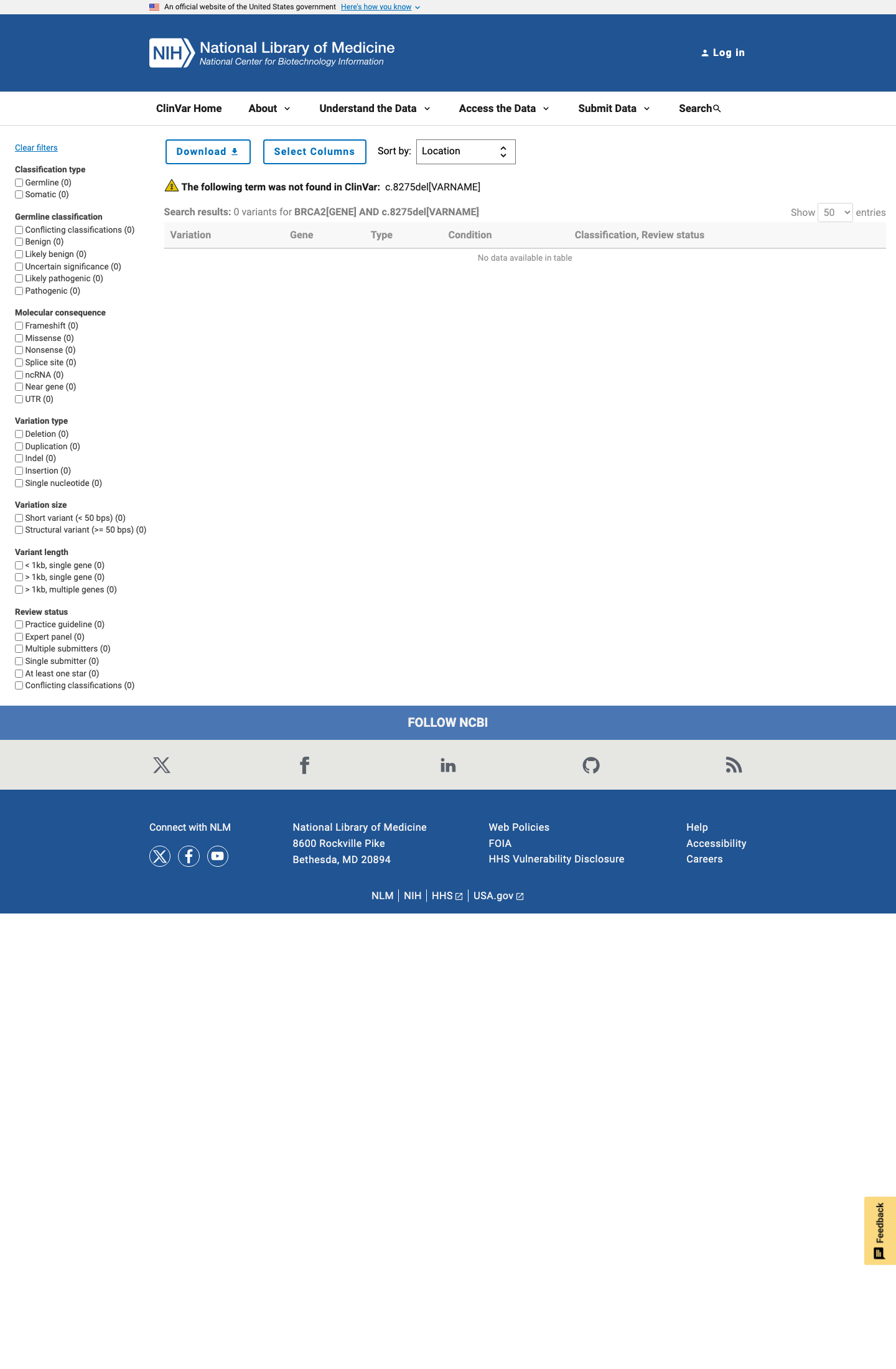
PP5Not met: no ClinVar record for this exact variant was found, so no expert-panel pathogenic assertion could be cited.
Benign
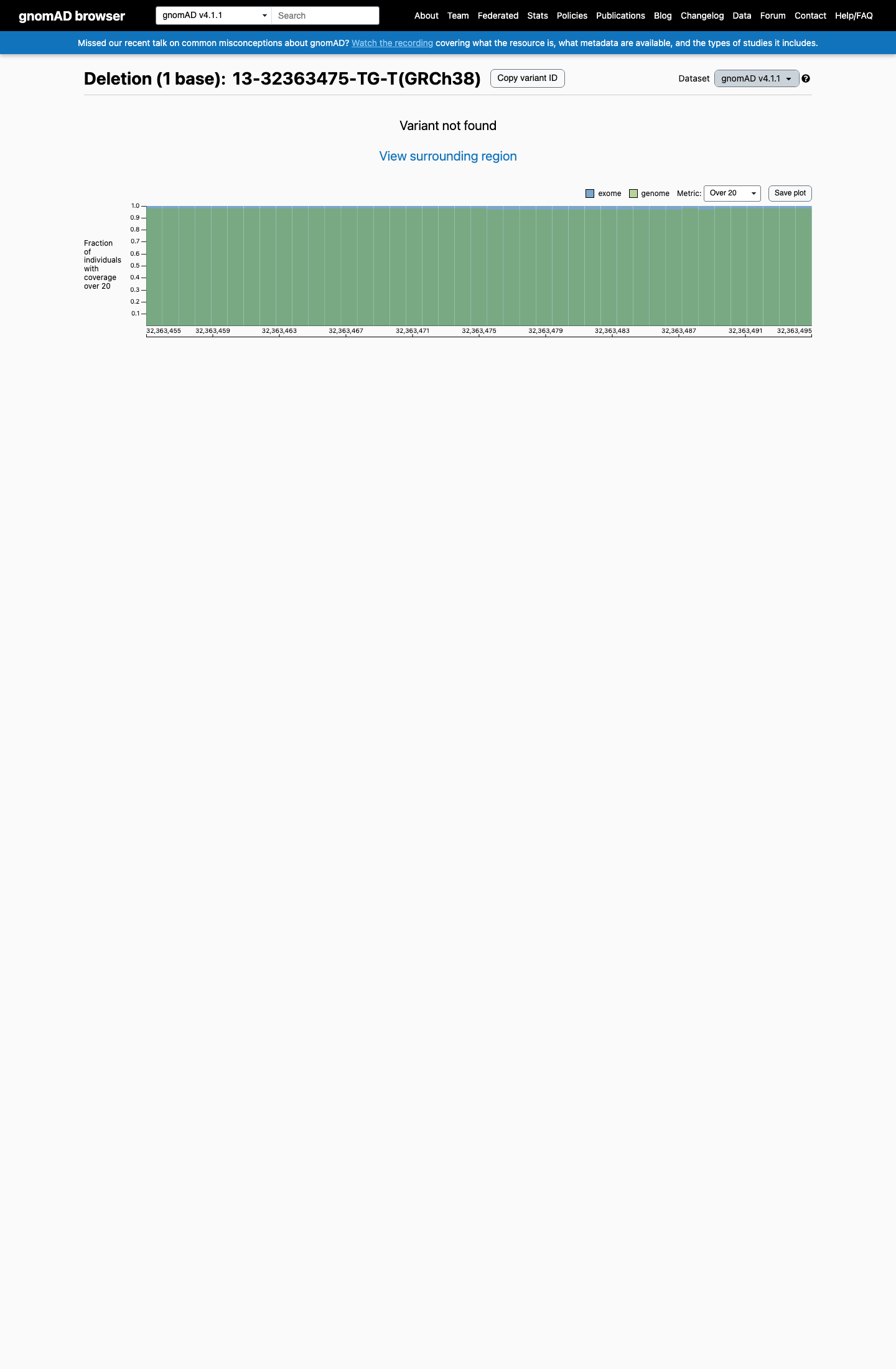
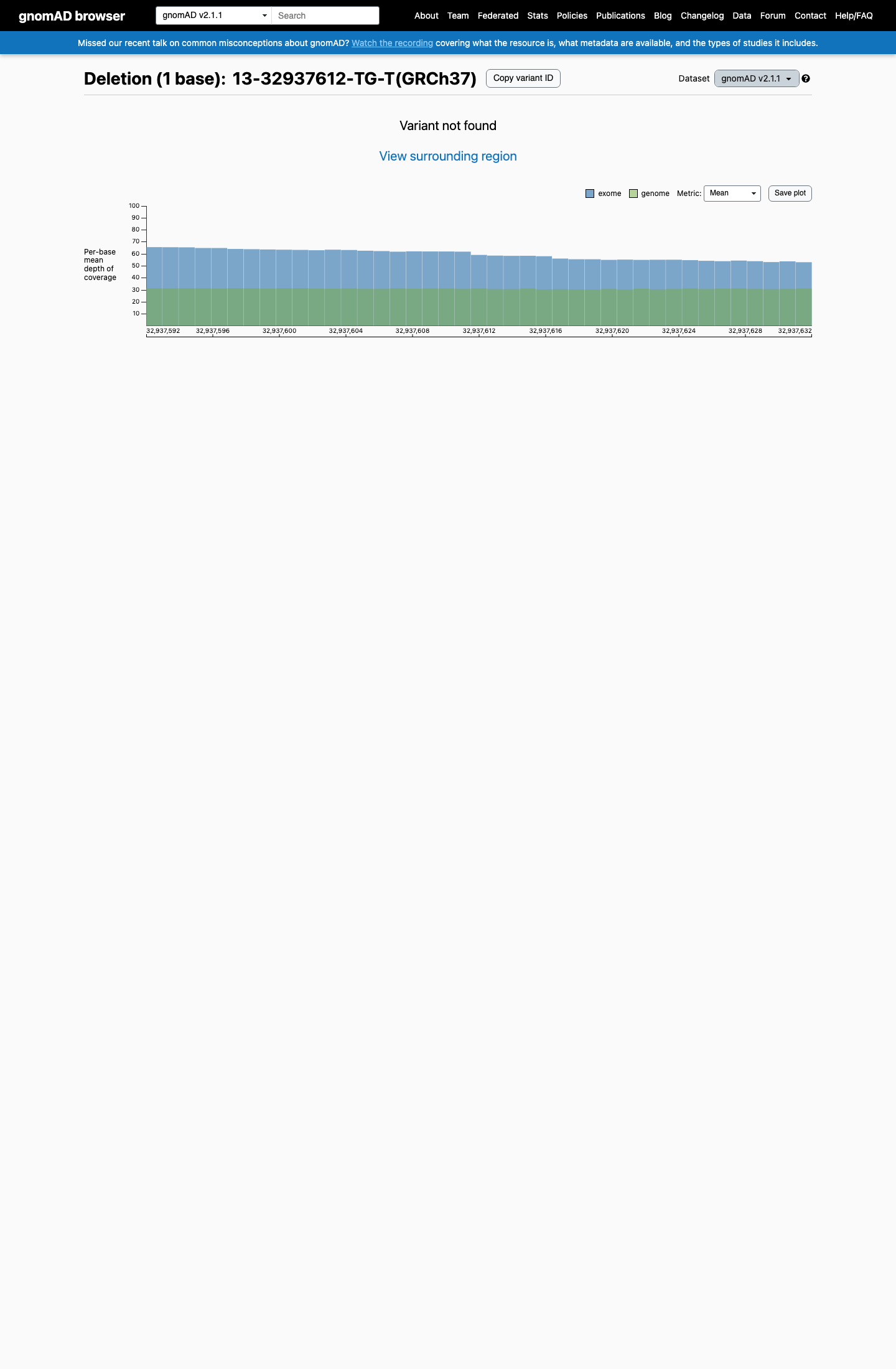
BA1Not met: the variant is absent from gnomAD v2.1 and v4.1, so no allele frequency above the 0.1% BA1 threshold is demonstrated.
BS1Not met: the variant is absent from gnomAD v2.1 and v4.1, so no frequency above the BS1 thresholds (0.01% strong, 0.002% supporting) is demonstrated.
BS2Not assessed: no healthy adult carriers or genotype-phenotype observations for this variant were available to score BS2.
BS3Not assessed: no functional assay demonstrating a benign (no damaging effect) outcome for this specific variant was identified.
BS4Not assessed: no pedigree or segregation data were available to demonstrate lack of segregation with disease.
BP5Not assessed: no combined clinical likelihood ratio against pathogenicity was supplied, which ENIGMA requires for BP5 in BRCA2.
BP6Not met: no ClinVar record for this exact variant was found, so no expert-panel benign assertion could be cited.
Each card is an audit: what was searched, what was found, whether it names the variant, which criteria it fed, and why. 4 further PMIDs triaged but not cited — see Sources & references.
Rule & framework references · cited for criterion definitions, not variant evidence
10570174 ↗Truncated BRCA2 is cytoplasmic: implications for cancer-linked mutations.
Sources & reference links
9Sources
CSpec VCEP
ClinVar
gnomAD v2.1
gnomAD v4.1
gnomAD-Canada
SpliceAI
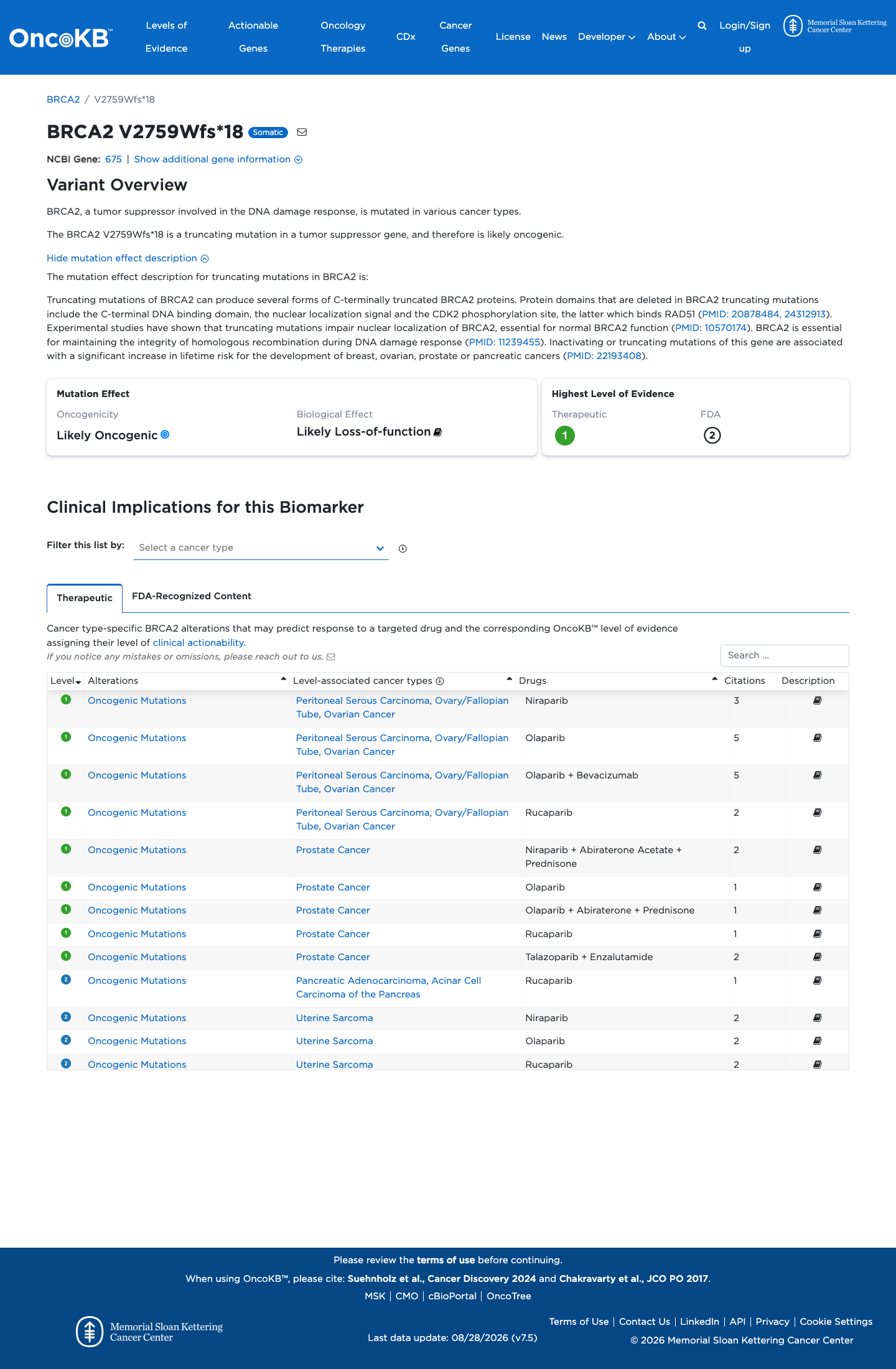
OncoKB
COSMIC
Cancer hotspots
Triaged references · 4 PMIDs not cited in assessment
11239455 ↗BRCA2 is required for homology-directed repair of chromosomal breaks.ONCOKB
20878484 ↗A new mutation of BRCA2 gene in an Italian healthy woman with familial breast cancer history.ONCOKB
22193408 ↗BRCA1 and BRCA2: different roles in a common pathway of genome protection.ONCOKB
24312913 ↗A comprehensive focus on global spectrum of BRCA1 and BRCA2 mutations in breast cancer.ONCOKB