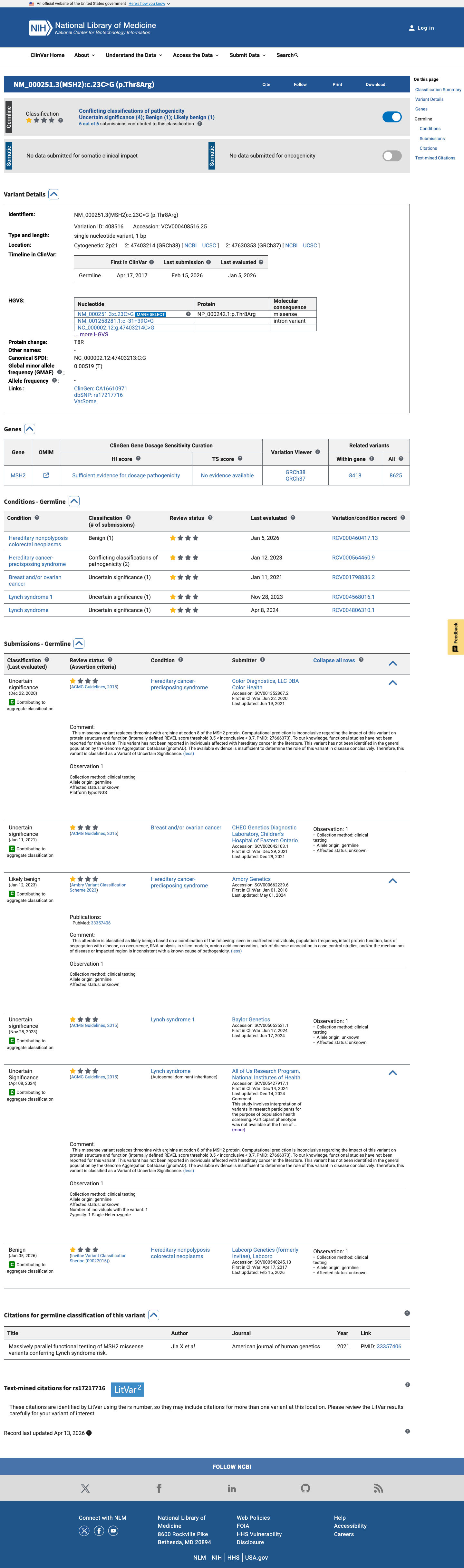
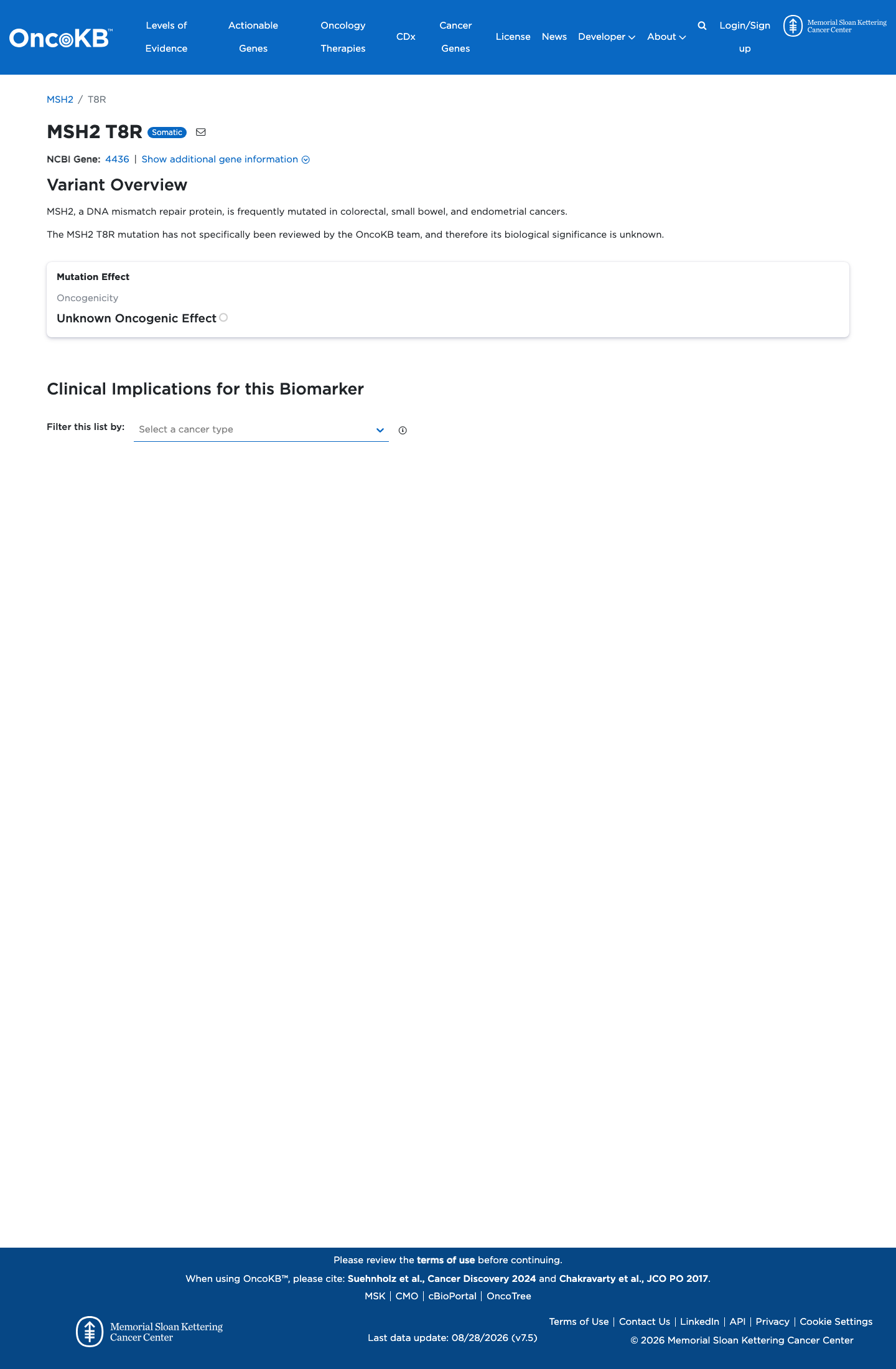
All three requested criteria are governed by the MSH2 InSiGHT VCEP framework; the variant is missense p.(Thr8Arg), PVS1 is outside the applicable loss-of-function classes, and PM4 and BP3 are explicitly Not Applicable. The exact variant notations c.23C>G, p.Thr8Arg, and p.T8R were searched in both named governing full-text files; no exact entry was found. For this criterion group, PS4, PP5, and BP6 are not applicable under the governing MSH2 InSiGHT VCEP rules. PP4 and BP5 are applicable in principle but remain not assessed because the case lacks patient-specific tumor phenotype and alternate-molecular-basis data. The exact variant was searched in both declared VCEP full-text files using c.23C>G, p.Thr8Arg, and p.T8R; no exact entry was found. Only PM3 and BP2 were adjudicated. The MSH2-specific VCEP specification governs both criteria. PM3 cannot be assigned without documented affected-proband co-occurrence, a second pathogenic/likely pathogenic MSH2 variant, and phase or CMMRD clinical evidence; BP2 is explicitly not applicable. Population evidence supports PM2 at Supporting strength under the governing MSH2 VCEP; BA1 and BS1 are not met because the gnomAD v4.1 Grpmax FAF is below both benign-frequency thresholds. BS2 remains not assessed because the VCEP requires patient-level confirmed in-trans co-occurrence and clinical context not supplied by the population dataset.
MSH2 is a tumor suppressor gene that encodes a key protein in the DNA mismatch repair system, which finds and fixes errors made during DNA replication. The MSH2 protein pairs with MSH6 or MSH3 to form complexes that recognize mismatched base pairs and trigger their repair. Inherited mutations in MSH2 cause Lynch syndrome (hereditary nonpolyposis colorectal cancer), predisposing to colorectal, endometrial, ovarian, and other cancers, and biallelic mutations cause constitutional mismatch repair deficiency. Loss of MSH2 function increases the mutation rate and drives tumor development, particularly in colorectal and endometrial cancers, and mismatch-repair-deficient tumors respond particularly well to immune checkpoint inhibitor therapies.
All three requested criteria are governed by the MSH2 InSiGHT VCEP framework; the variant is missense p.(Thr8Arg), PVS1 is outside the applicable loss-of-function classes, and PM4 and BP3 are explicitly Not Applicable.
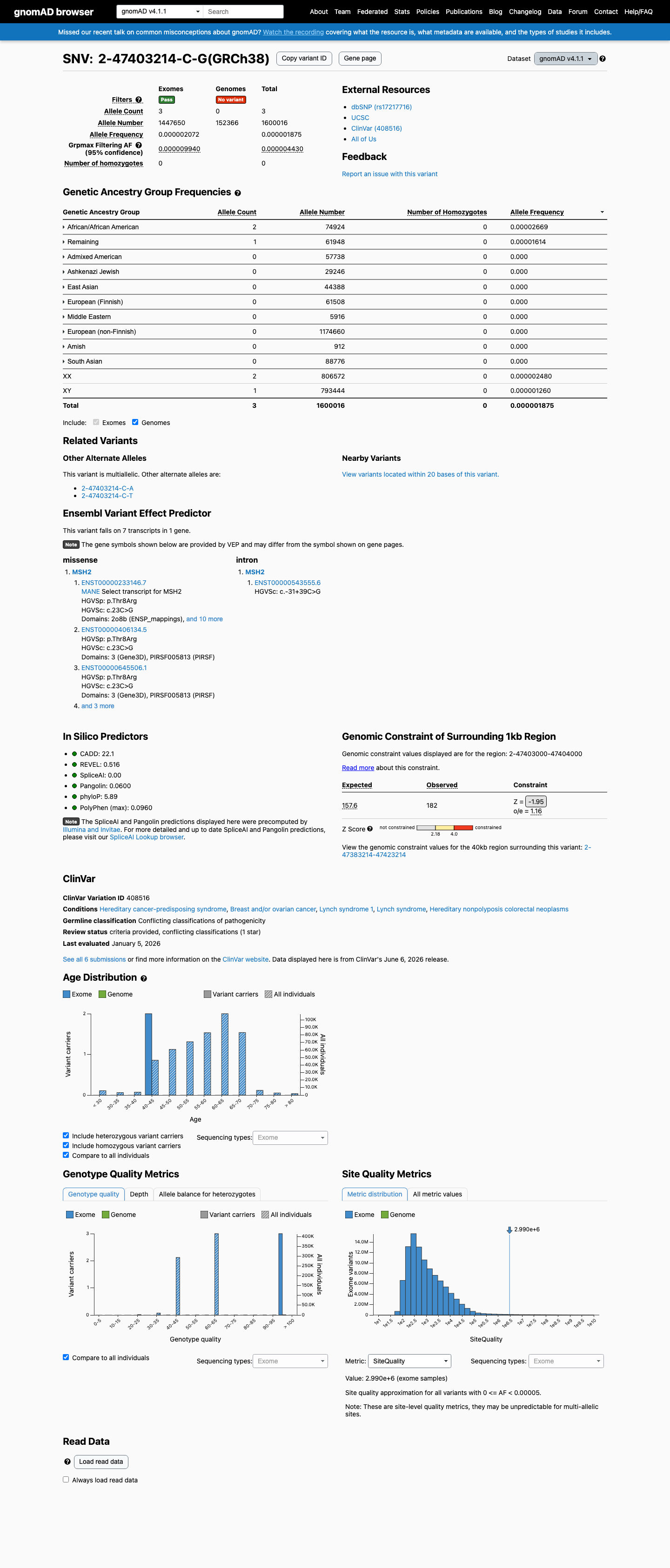
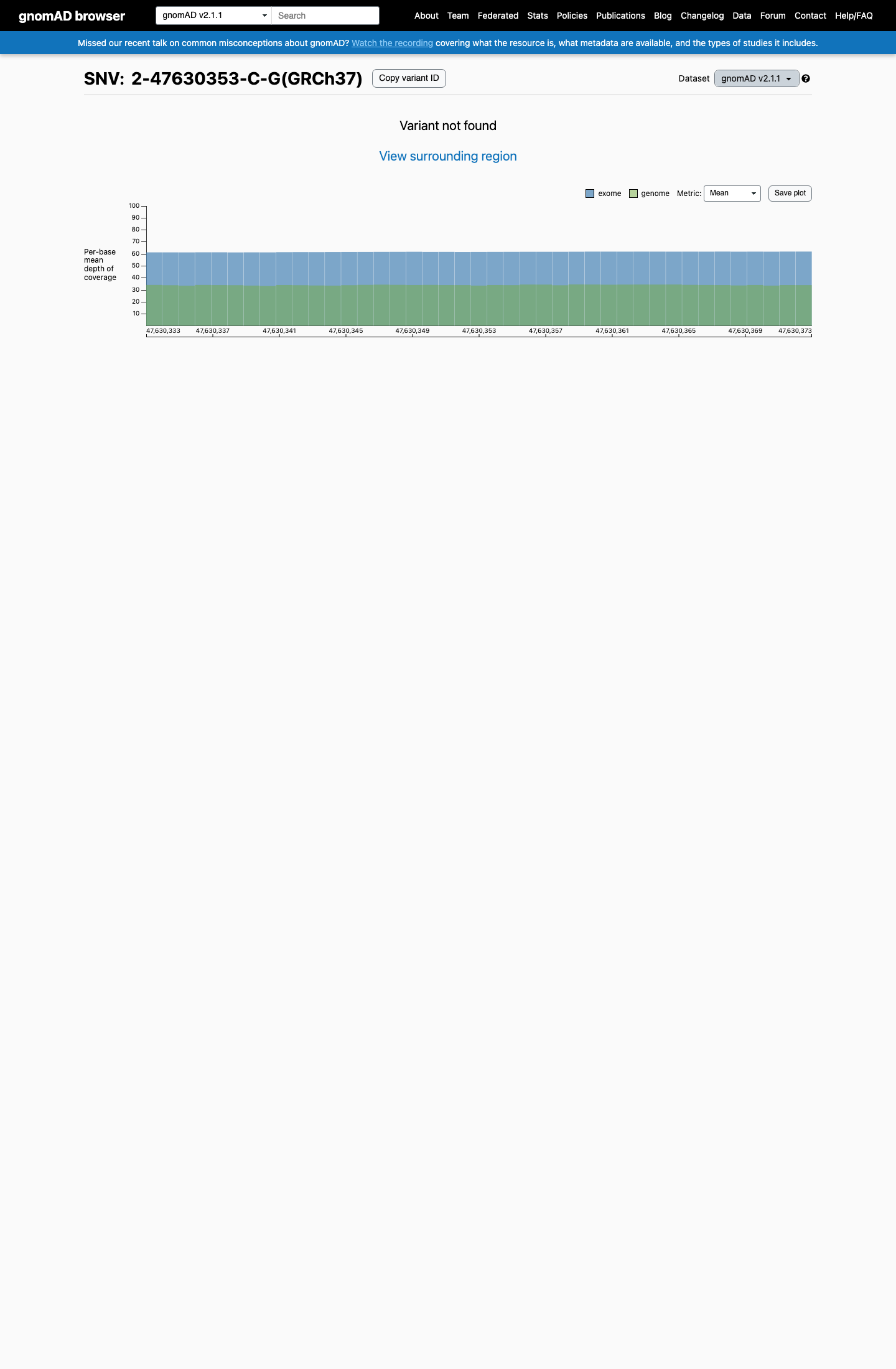
0 hom · FAF 0.00044%
African/African American 2 / 74,924 |
0.0027% |
Remaining individuals 1 / 61,948 |
0.0016% |
0 hom
0 hom