APC is a tumor suppressor gene whose protein acts as a key brake on the Wnt signaling pathway by helping mark the growth-promoting protein beta-catenin for destruction; it also participates in cell migration, adhesion, and apoptosis. Inherited mutations in APC cause familial adenomatous polyposis (FAP), an autosomal dominant condition characterized by numerous colorectal polyps and a very high risk of colorectal cancer, with related forms including attenuated FAP and gastric adenocarcinoma and proximal polyposis of the stomach (GAPPS). Somatic APC mutations are found in roughly 50-80% of sporadic colorectal cancers, where they act as early tumor-initiating events, and are also observed in some breast, stomach, and prostate cancers. Loss of APC function leaves Wnt signaling abnormally active, driving uncontrolled cell growth, which makes APC a central tumor suppressor in colorectal cancer.
This variant
As a rare 5′-UTR change in APC, a tumor-suppressor gene whose loss activates Wnt signaling and causes autosomal-dominant familial adenomatous polyposis, this variant's clinical relevance depends on whether it alters APC expression or function.
Transcript
NM_001127510.3
HGVS · transcript:coding
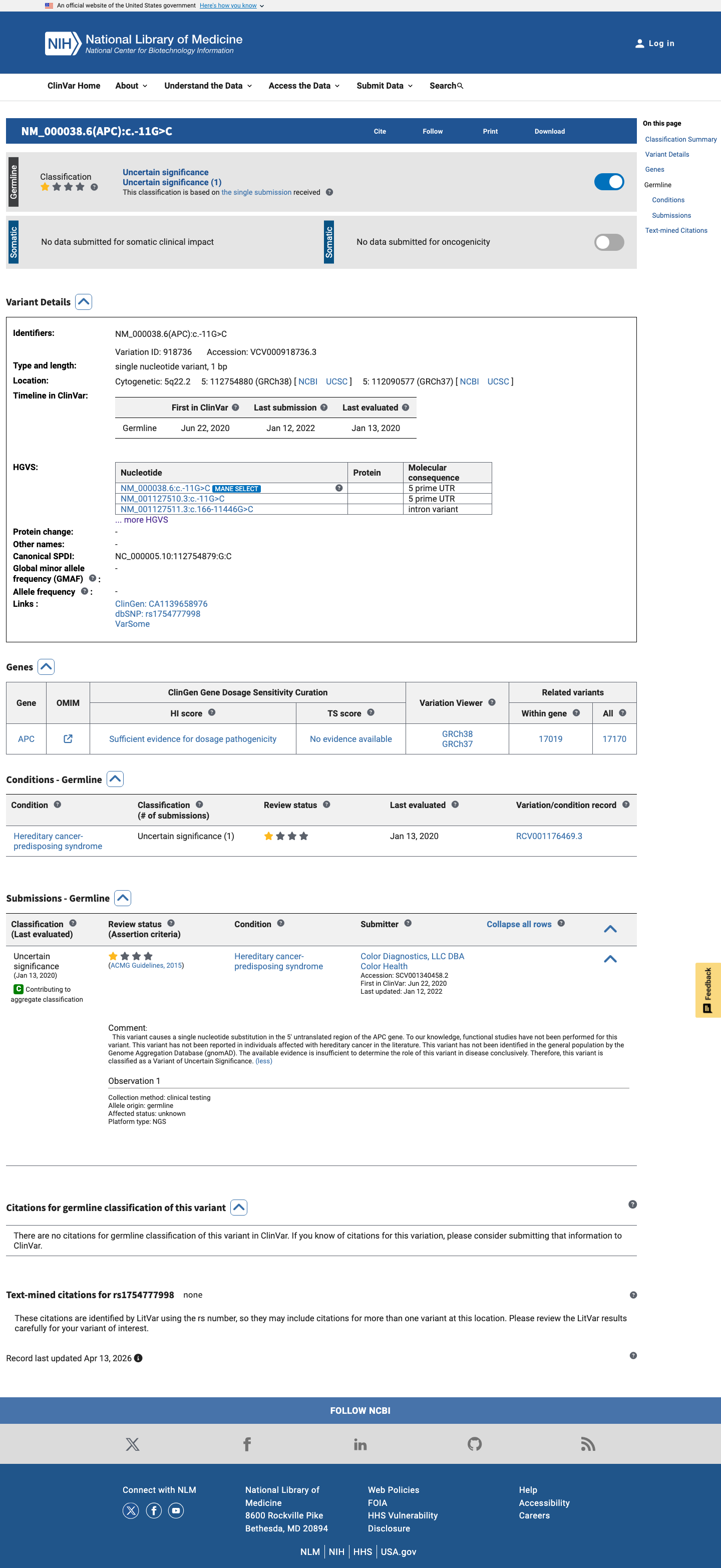
NM_001127510.3:c.-11G>C
GRCh38
chr5:112754880 G>C
GRCh37
chr5:112090577 G>C
VUS: PM2 (supporting) and BP7 (supporting) are met, but the APC InSiGHT VCEP's criteria-combination rules do not yield a definitive classification.
Classification rationale
PM2BP7VUS
APC c.-11G>Csynonymous · exon 3
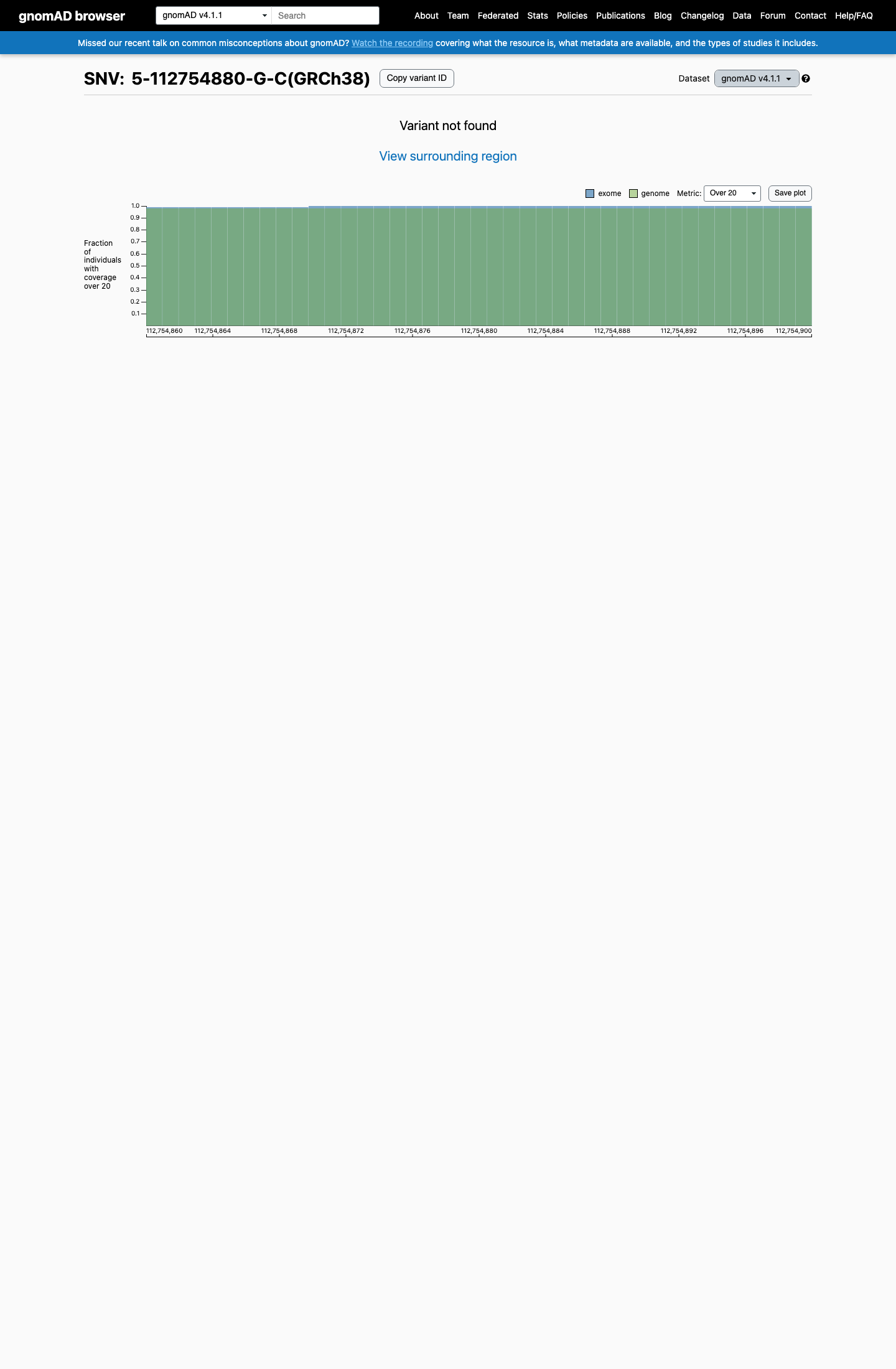
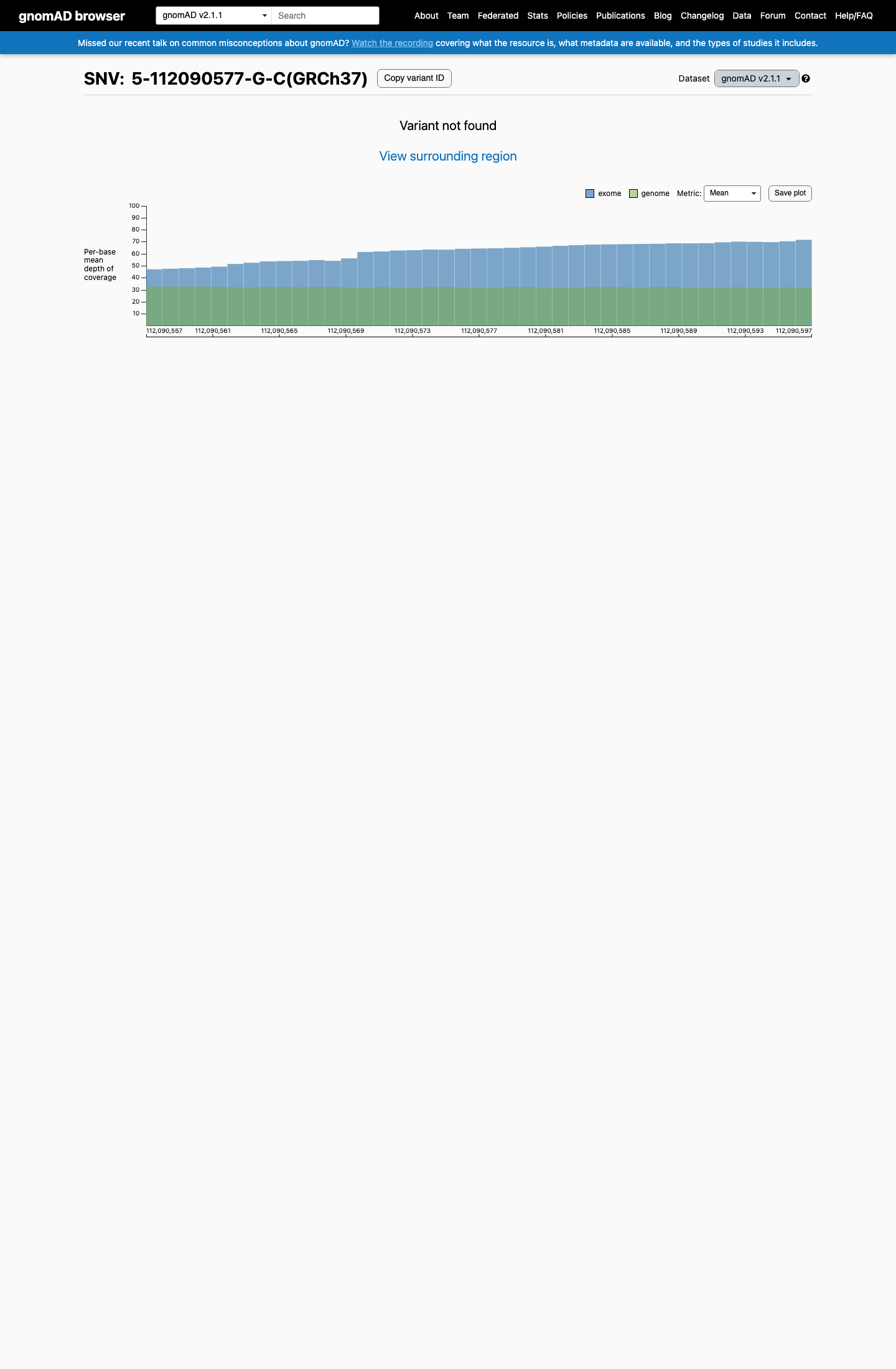
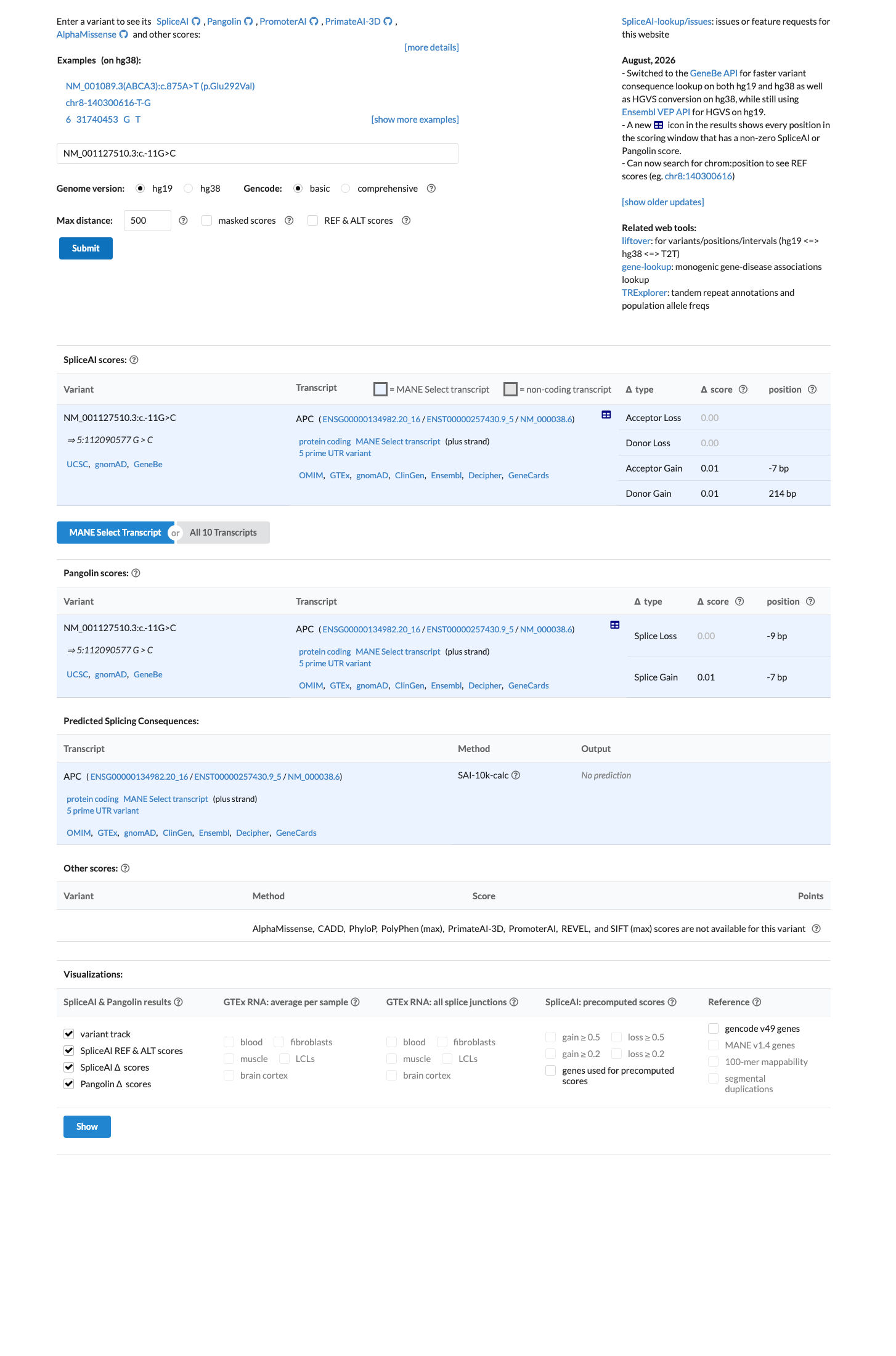
VUS: PM2 (supporting) is met because the variant is absent from gnomAD v2.1.1 non-cancer. VUS: BP7 (supporting) is met because SpliceAI and Pangolin predict no meaningful splice impact.
PM2 + BP7→VUS
LYFE Sciences is an AI system, and it can make mistakes. Criteria
may be applied incorrectly, sources may be misread, and a confident-looking
classification can still be wrong. Double-check every criterion and
its underlying evidence before relying on any call.
Gene diagram
· NM_001127510.3 · variants mapped to exon structure
APCNM_001127510.3
Fetching transcript structure from UCSC…
Exons
—
Transcript span
—
Strand
—
Variants mapped
—
Source
UCSC ncbiRefSeqCurated
All variants in APC—click a row to locate it on the plot · use the link column to open its page
Protein
Location
Classification
Link
Applied criteria · 2 applied · 12 assessed
MetEvidence satisfies this criterion.
Not metEvaluated against available evidence; threshold not reached.
Not assessedApplies in principle, but no evidence was found to evaluate it.
N/ADoesn't apply to this variant type.
Applied · 2
Strength Supporting Moderate Strong Very strong
✓
PM2supportingPathogenic
Met at supporting strength: the variant is absent from gnomAD v2.1.1 non-cancer, giving AF 0 versus the APC PM2 threshold of <0.001% (0.00001) when AC <=1.
The APC InSiGHT VCEP specifies PM2 Supporting for AF <= 0.0003% (0.000003) if AC > 1 or AF < 0.001% (0.00001) if AC <= 1, using the gnomAD v2.1.1 non-cancer dataset.The variant is reported absent from gnomAD v2.1.1 non-cancer; absence corresponds to no observed alternate allele and AF 0 in the queried dataset, satisfying the AC <= 1 branch.
Met, Supporting: synonymous variant with SpliceAI maximum delta 0.013 and Pangolin scores 0.012/-0.002 supports no splice impact.
The variant is annotated as synonymous with protein consequence NP_001120982.1:p.(=).The APC Version 2.1 VCEP BP7 rule requires a synonymous or qualifying intronic variant with multiple splicing predictors indicating no splice impact.SpliceAI reports max delta 0.013: DS_AG 0.009, DS_AL 0.000, DS_DG 0.013, and DS_DL 0.000.
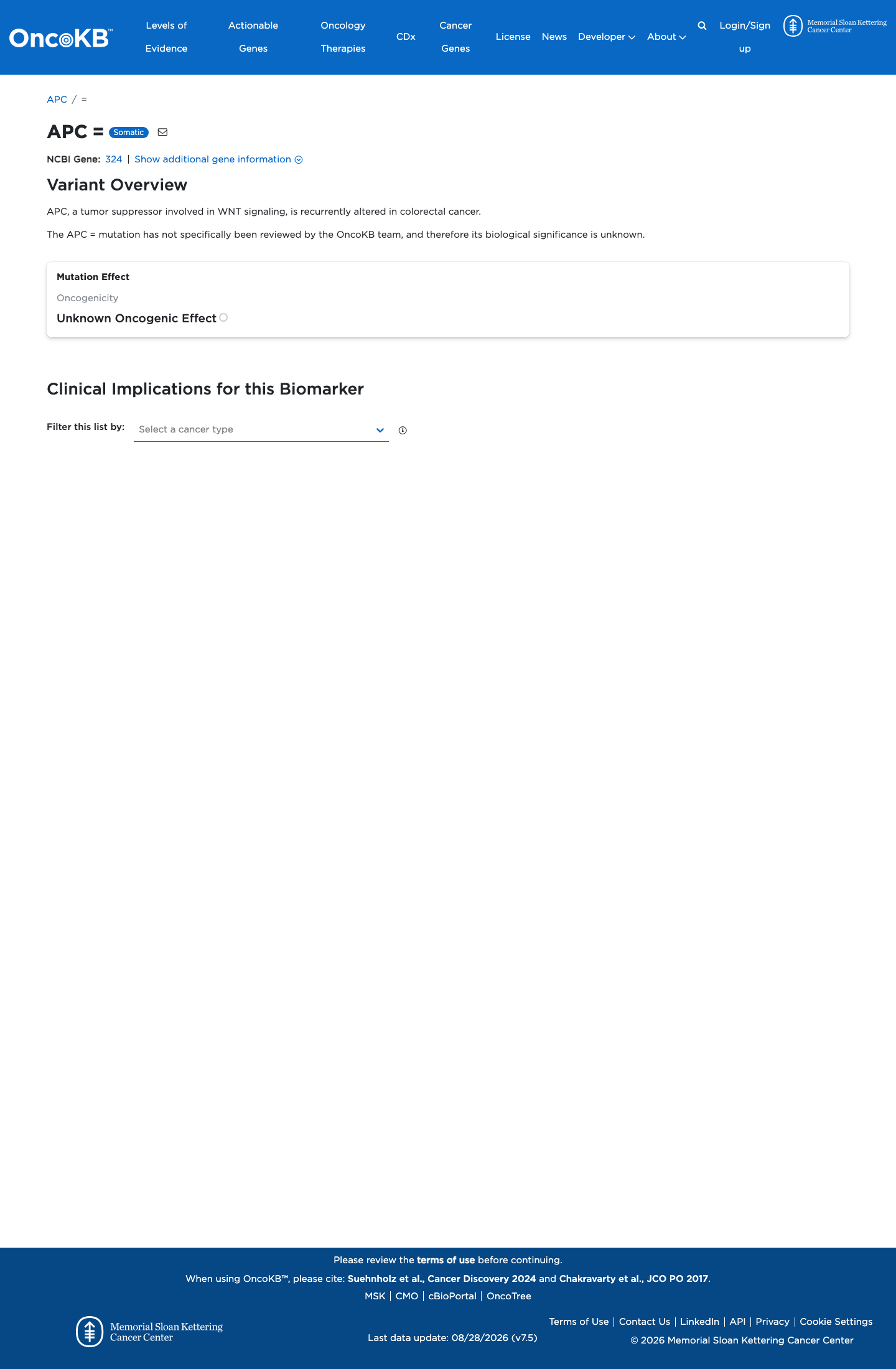
OncoKB did not identify variant-specific reviewed functional evidence for this variant; gene-level curated context is available for reviewer follow-up. APC, a tumor suppressor involved in WNT signaling, is recurrently altered in colorectal cancer.
Triaged references · 2 PMIDs not cited in assessment
25741868 ↗Standards and guidelines for the interpretation of sequence variants: a joint consensus recommendation of the American College of Medical Genetics and Genomics and the Association for Molecular Pathology.CLINVAR
25394175 ↗A practice guideline from the American College of Medical Genetics and Genomics and the National Society of Genetic Counselors: referral indications for cancer predisposition assessment.CLINVAR