PS1
Not met: the exact p.Gly41Ser change is reported as benign or probably benign, with no established pathogenic same-amino-acid comparator.
PS2
Not assessed: no parental testing or confirmed de novo status is documented for NM_004656.4:c.121G>A.
PS3
Not assessed: no validated functional assay with controls or quantitative activity result was reported for BAP1 p.Gly41Ser.
PS4
Not met: the exact variant was reported in one RCC-family individual, but cosegregation did not support causality and no case-control enrichment statistic is available.
PM1
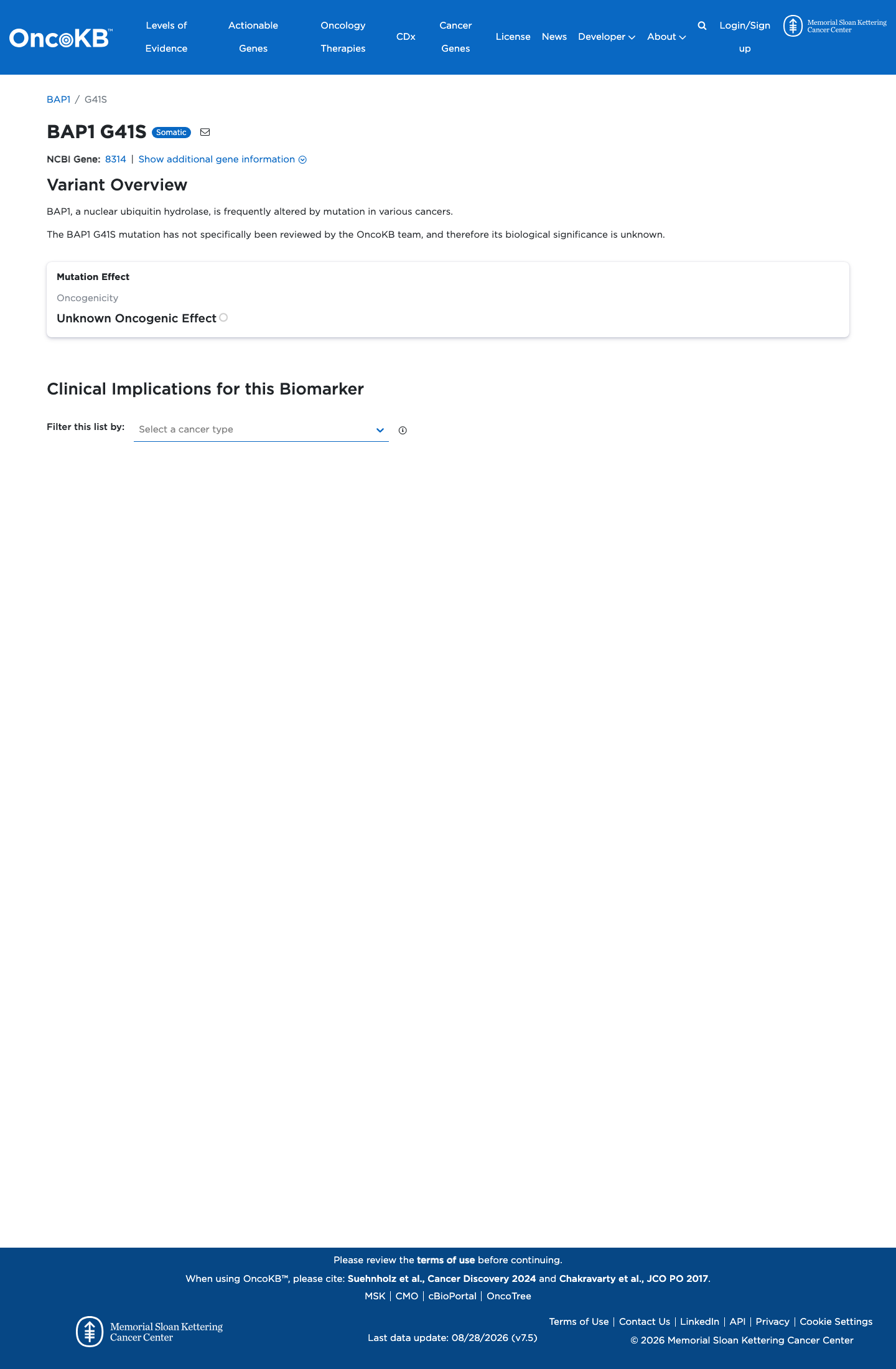
Not assessed: the available review places BAP1 catalytic activity near the N-terminus but gives no precise validated boundary confirming residue 41 as a critical domain site.
PM2
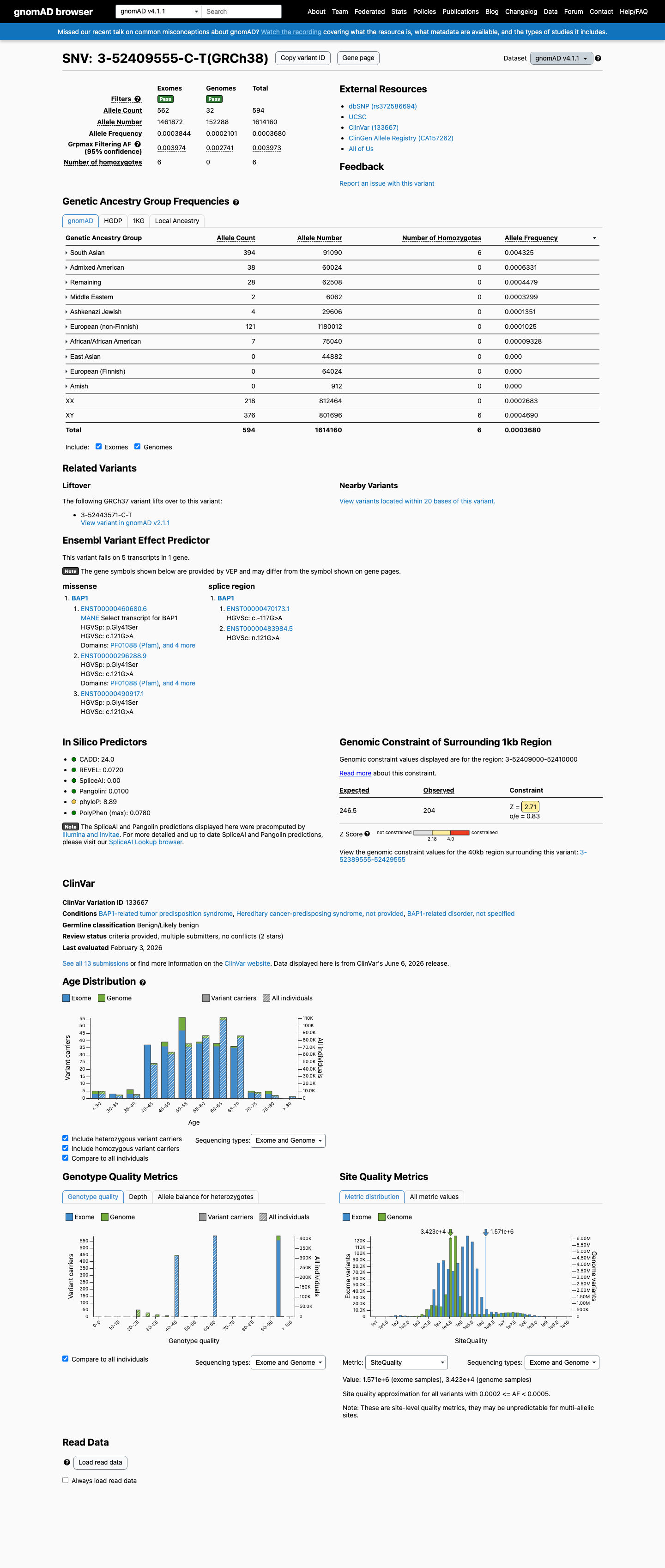
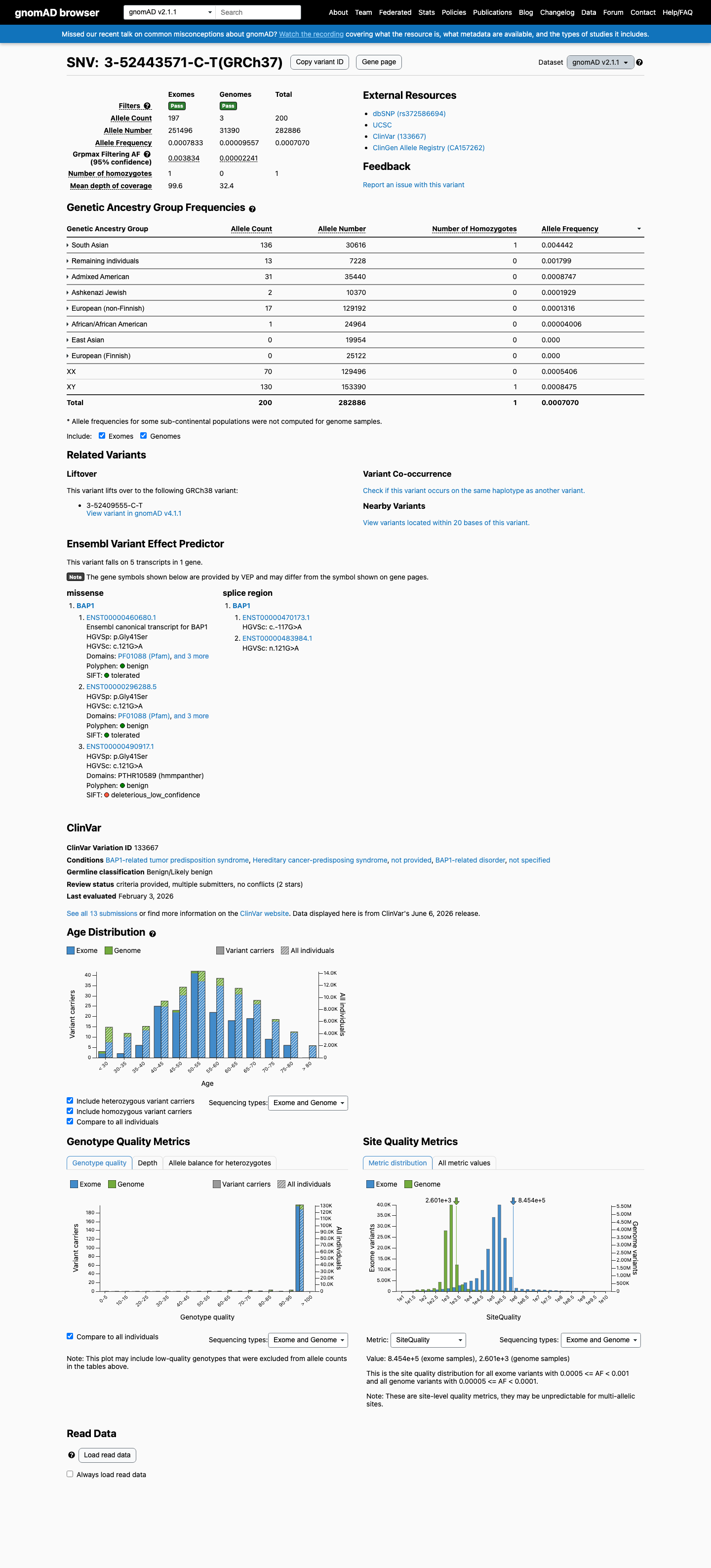
Not met: gnomAD v4.1 all-comers AF 0.0003679932596520791 exceeds the generic PM2 threshold of 0.0001.
PM5
Not met: no established pathogenic alternate missense change at residue 41 was identified, and the cited Leu14His comparator is at residue 14.
PM6
Not assessed: the exact variant is reported without parental testing or a stated presumed de novo event.
PP1
Not met: cosegregation studies suggested c.121G>A (p.Gly41Ser) was not responsible for the family's cancer predisposition.
PP2
Not assessed: BAP1 missense biology is documented, but no validated gene-level benign-missense depletion metric or threshold is available for PP2.
PP3
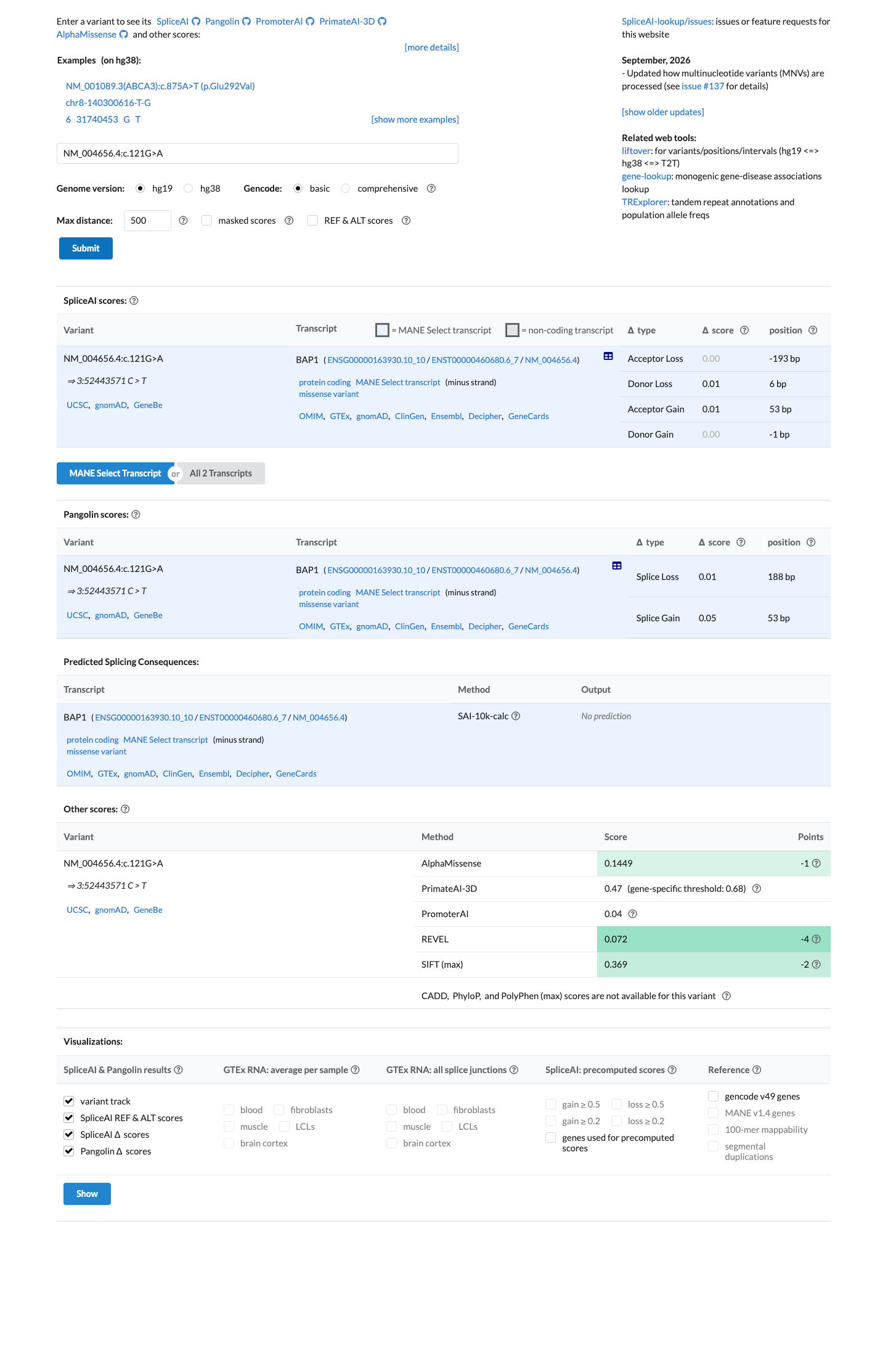
Not met: REVEL 0.072 and SpliceAI max delta 0.009 are below PP3 supporting thresholds of 0.644 and 0.2, respectively.
PP4
Not assessed: a renal cell carcinoma family history is reported, but the patient's phenotype is not sufficiently documented to establish disease specificity.
PP5
Not met: ClinVar has no exact-variant expert-panel Pathogenic or Likely pathogenic classification; available submissions are laboratory Benign or Likely benign.