Back
NM_004655.4:c.1530G>A
p.Thr510= · AXIN2
ACMG/AMP
0%
complete
Final classification
Likely Benign
BS3BP7
AXIN2
c.1530G>A
p.Thr510=
synonymous · exon 6

AXIN2 is a scaffolding protein that helps regulate the Wnt signaling pathway, a key developmental pathway controlling cell growth and fate. It is part of the beta-catenin destruction complex, where it helps mark beta-catenin for degradation when Wnt signaling is off, and it also assists in relaying Wnt signals to the nucleus when the pathway is active. AXIN2 acts as a tumor suppressor, and mutations in the gene have been linked to colorectal cancer as well as familial tooth agenesis with predisposition to colorectal cancer. Its expression has also been associated with prostate cancer recurrence.

This variant

AXIN2 encodes a Wnt-pathway scaffold and tumour suppressor whose loss-of-function variants cause dominantly inherited oligodontia with colorectal cancer predisposition, so a synonymous change that leaves the Thr510 residue and the transcript's splicing pattern intact is not expected to carry that gene-level disease risk.

Transcript
NM_004655.4
HGVS · transcript:coding
NM_004655.4:c.1530G>A
GRCh38
chr17:65537506 C>T
GRCh37
chr17:63533624 C>T
Likely Benign: BS3 (supporting; negative RNA splice assay) plus BP7 (supporting; SpliceAI delta 0.001) satisfy the generic ACMG/AMP 2015 two-supporting-benign-criteria rule.
Classification rationale
BS3BP7 Likely Benign
AXIN2 c.1530G>A synonymous · exon 6

Likely Benign: BS3 (supporting) - patient RNA RT-PCR showed c.1530G>A present at the same proportion as genomic DNA, indicating no splicing alteration. Likely Benign: BP7 (supporting) - synonymous p.(Thr510=) with SpliceAI max delta 0.001, far below the 0.2 significant-impact cutoff. No pathogenic criterion met - PS3 negative functional assay, PS4 no case enrichment, PM2 frequency 30-45x its cutoff, and no de novo, segregation or expert-panel evidence exists. Benign not reached - maximum population frequency 0.553% stays below both the 1% BS1 and 5% BA1 thresholds.

BS3 + BP7 Likely Benign
LYFE Sciences is an AI system, and it can make mistakes. Criteria may be applied incorrectly, sources may be misread, and a confident-looking classification can still be wrong. Double-check every criterion and its underlying evidence before relying on any call.
Gene diagram · NM_004655.4 · variants mapped to exon structure
AXIN2 NM_004655.4
Fetching transcript structure from UCSC…
Applied criteria · 2 applied · 16 assessed
MetEvidence satisfies this criterion.
Not metEvaluated against available evidence; threshold not reached.
Not assessedApplies in principle, but no evidence was found to evaluate it.
N/ADoesn't apply to this variant type.
Applied · 2
Strength Supporting Moderate Strong Very strong
BS3 supporting review Benign
Met at supporting strength: RT-PCR of the carrier's RNA showed c.1530G>A present in the same proportion as genomic DNA, indicating no splicing alteration.
PMID:16941501 performed RT-PCR on the carrier's blood-derived RNA (primers within exons 3 and 7) and sequenced the product: c.1530G>A was present at a similar proportion to genomic DNA, which the authors interpreted as 'indicating no splicing alteration' — a direct functional test of the only mechanism by which this synonymous change could act.The variant does not alter the amino-acid sequence (p.Thr510=), so no protein-level defect is expected; the combination of an unchanged protein and normally processed transcript on the carrier's own RNA is evidence of no damaging effect.PMID:25741868 (ACMG/AMP 2015) allows the strength of a criterion to be modified according to the quality of the evidence; because the splicing assay is a secondary case-series observation with no stated controls, replicates or quantitative readout performed in a single carrier, BS3 was applied at supporting rather than strong strength.
BP7 supporting Benign
Met, supporting: synonymous p.(Thr510=) with SpliceAI max delta 0.001, far below the 0.2 significant-impact cutoff.
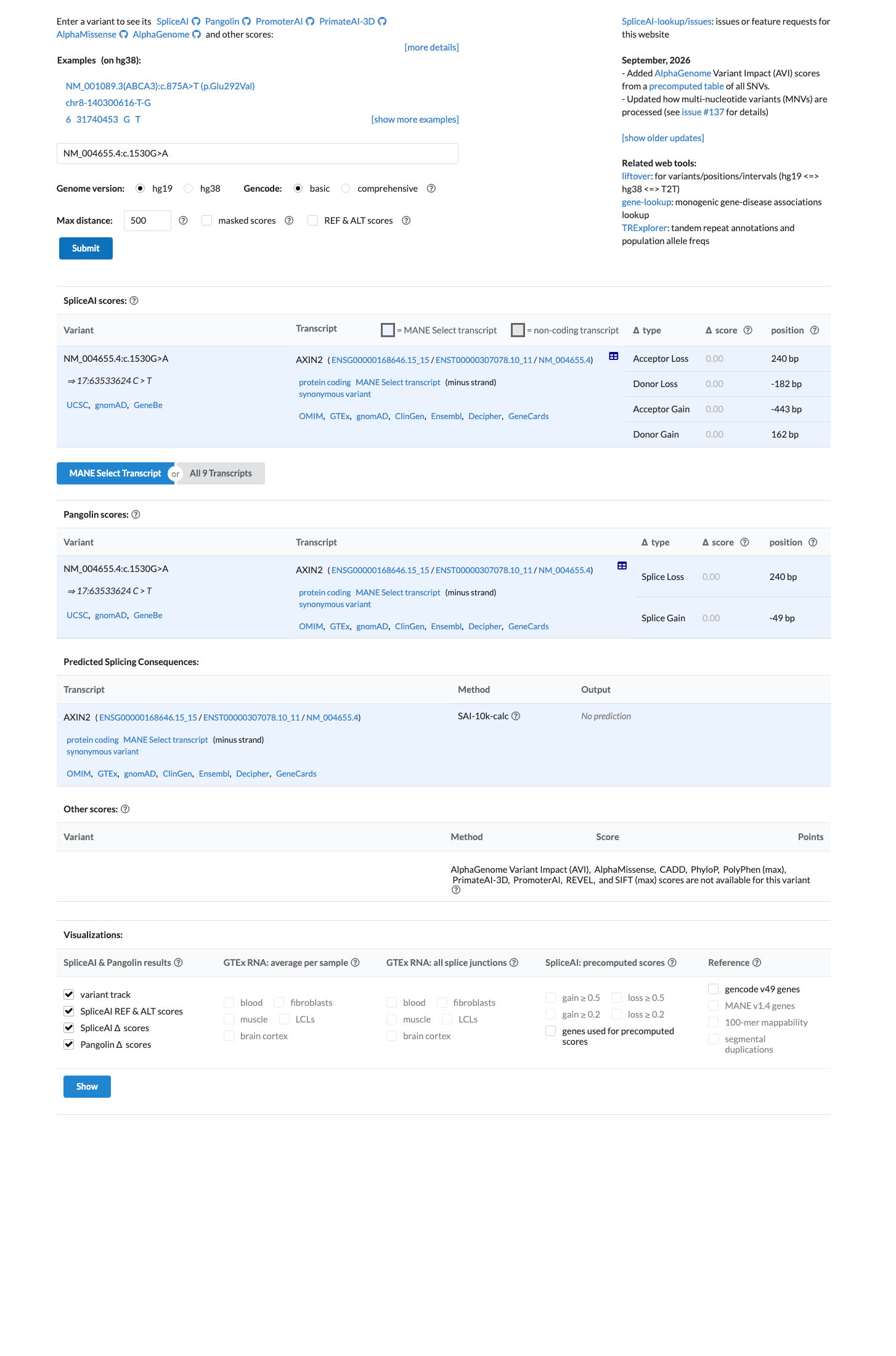
The variant is synonymous: NM_004655.4:c.1530G>A, NP_004646.3:p.(Thr510=), exon 6 of AXIN2.SpliceAI scores for NM_004655.4:c.1530G>A are DS_AG 0.001, DS_AL 0.001, DS_DG 0.00, DS_DL 0.00; maximum delta score is 0.001, i.e. no predicted splice-acceptor or splice-donor gain or loss.Pangolin scores for the same variant are splice-gain 0.002 and splice-loss -0.001, concordant with no predicted splice impact.
Assessed · not applied · 15 not met · 1 not assessed
Pathogenic
PS2 Not met: no de novo occurrence of c.1530G>A is reported, and the carrier study states parental DNA samples were unavailable, so parentage was never tested.
PS3 Not met: patient RNA RT-PCR across exons 3-7 showed c.1530G>A at the same proportion as genomic DNA, i.e.
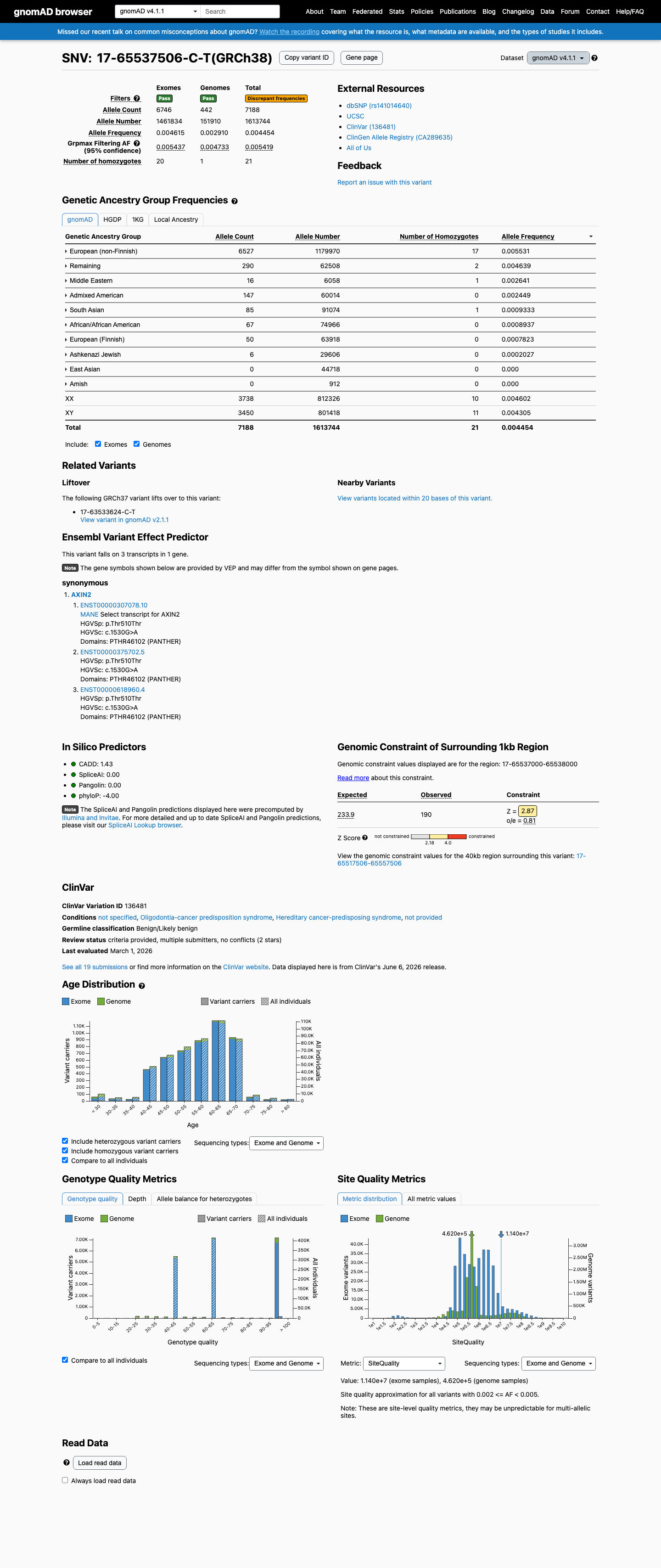
PS4 Not met: three case series each report this variant in one affected individual with no odds ratio or significant case-control enrichment, while gnomAD v4.1 shows AF 0.445% with 21 homozygotes.
PM2 Not met: allele frequency 0.285%-0.445% in gnomAD is roughly 30-45x the 0.0001 supporting PM2 threshold.
PM3 Not met: no affected proband carries c.1530G>A in trans with a pathogenic AXIN2 variant; the only phase-resolved observation is in cis (PMID:16941501).
PM6 Not met: no report describes c.1530G>A as arising de novo, and without parental DNA even an assumed de novo event cannot be claimed.
PP1 Not met: zero informative meioses - no genotyped pedigree for c.1530G>A is reported, so co-segregation with disease is unestablished.
PP4 Not assessed: the case contains no proband phenotype, HPO terms or family history, so PP4's requirement for a phenotype highly specific to a single-gene disease cannot be evaluated.
PP5 Not met: the exact-variant ClinVar record (ClinVarID 136481, 19 laboratory submissions) has zero expert-panel submissions, so no Pathogenic expert-panel source exists.
Benign
BA1 Not met: highest population frequency is 0.553% in gnomAD v4.1 European (non-Finnish), far below the 5% BA1 stand-alone threshold.
BS1 Not met: maximum population frequency is 0.553% (gnomAD v4.1 non-Finnish European) versus the 1% BS1 threshold.
BS2 Not met: gnomAD homozygotes exist (21 in v4.1) but lack the documented healthy-adult status and early-age full penetrance that BS2 requires.
BS4 Not met: no genotyped pedigree for c.1530G>A is reported, so non-segregation with disease in affected relatives has not been demonstrated.
BP2 Not met: no pathogenic AXIN2 variant occurs in cis or trans; the only phased observation places c.1530G>A in cis with the non-pathogenic p.Asn412Ser (PMID:16941501).
BP5 Not met: no alternate molecular basis is documented for the proband, and the variant's reported carrier was APC-, MMR- and MUTYH-negative.
BP6 Not met: ClinVar's Benign/Likely benign label for this variant comes from 19 clinical laboratories with no expert-panel submission, which cannot trigger BP6.
N/A · 10 PVS1 · PS1 · PM1 · PM4 · PM5 · PP2 · PP3 · BP1 · BP3 · BP4
Research & evidence
Population frequency · supports benign
gnomAD v4.1 screenshot
gnomAD v4.1
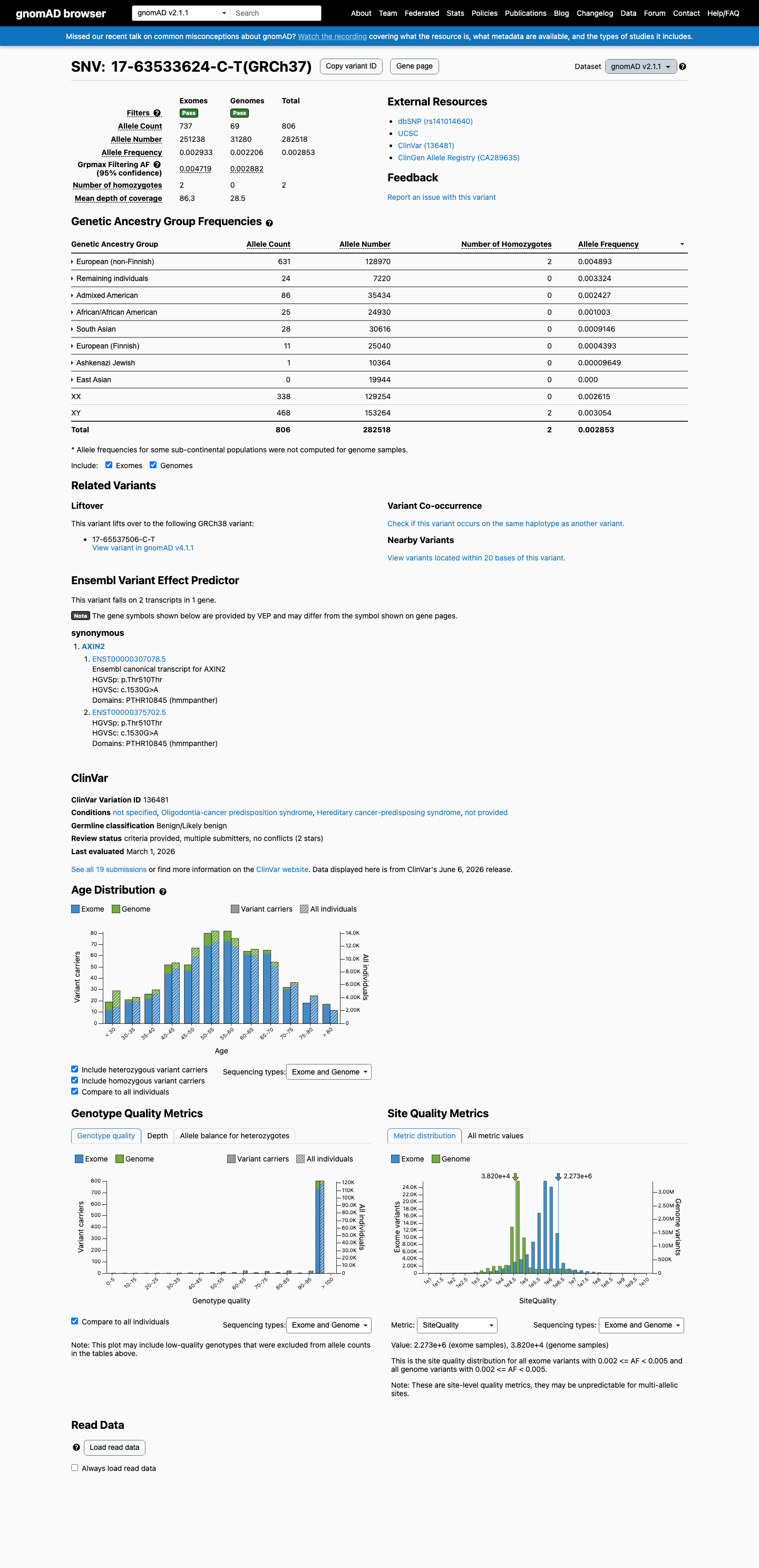
gnomAD v2.1 screenshot
gnomAD v2.1
v4.1
This variant is present in gnomAD v4.1 (AF= 0.00445424; MAF= 0.44542%, 7188/1613744 alleles, homozygotes = 21) and has highest observed frequency in the European (non-Finnish) population (AF= 0.0055315; MAF= 0.55315%, 6527/1179970 alleles, homozygotes = 17); grpmax FAF= 0.00541925.
v2.1
This variant is present in gnomAD v2.1 (AF= 0.00285292; MAF= 0.28529%, 806/282518 alleles, homozygotes = 2) and has highest observed frequency in the European (non-Finnish) population (AF= 0.00489261; MAF= 0.48926%, 631/128970 alleles, homozygotes = 2); grpmax FAF= 0.0047191.
🇨🇦 CA
This variant is present in gnomAD-Canada v1.0 (AF= 0.0033739660426643447, 62/18376 alleles, homozygotes = 0).
Allele frequency by ancestry
three datasets · side by side
gnomAD v4.1
0.45% · 7188 / 1,613,744
21 hom · FAF 0.54%
European (non-Finnish)
6527 / 1,179,970
0.55%
17 hom
Remaining individuals
290 / 62,508
0.46%
2 hom
Middle Eastern
16 / 6,058
0.26%
1 hom
Admixed American
147 / 60,014
0.24%
South Asian
85 / 91,074
0.093%
1 hom
African/African American
67 / 74,966
0.089%
European (Finnish)
50 / 63,918
0.078%
Ashkenazi Jewish
6 / 29,606
0.02%
+ 2 not observed (Amish, East Asian)
gnomAD v2.1
0.29% · 806 / 282,518
2 hom · FAF 0.47%
European (non-Finnish)
631 / 128,970
0.49%
2 hom
Remaining individuals
24 / 7,220
0.33%
Admixed American
86 / 35,434
0.24%
African/African American
25 / 24,930
0.1%
South Asian
28 / 30,616
0.091%
European (Finnish)
11 / 25,040
0.044%
Ashkenazi Jewish
1 / 10,364
0.0096%
+ 1 not observed (East Asian)
gnomAD Canada 🇨🇦
0.34% · 62 / 18,376
0 hom · FAF 0.35%
indel · split
Middle Eastern
2 / 140
1.4%
European (non-Finnish)
52 / 11,712
0.44%
Remaining individuals
4 / 1,136
0.35%
Latino/Admixed American
2 / 836
0.24%
South Asian
2 / 1,360
0.15%
+ 4 not observed (African/African American, Ashkenazi Jewish, East Asian, European (Finnish))
ClinVar screenshot
ClinVar
This variant has been reported in ClinVar as Benign (8 clinical laboratories) and as Likely benign (8 clinical laboratories) and as benign (1 clinical laboratory). (ClinVarID = 136481)
SpliceAI screenshot
In silico
SpliceAI predicts no significant splice impact for this variant (max delta score = 0.00).
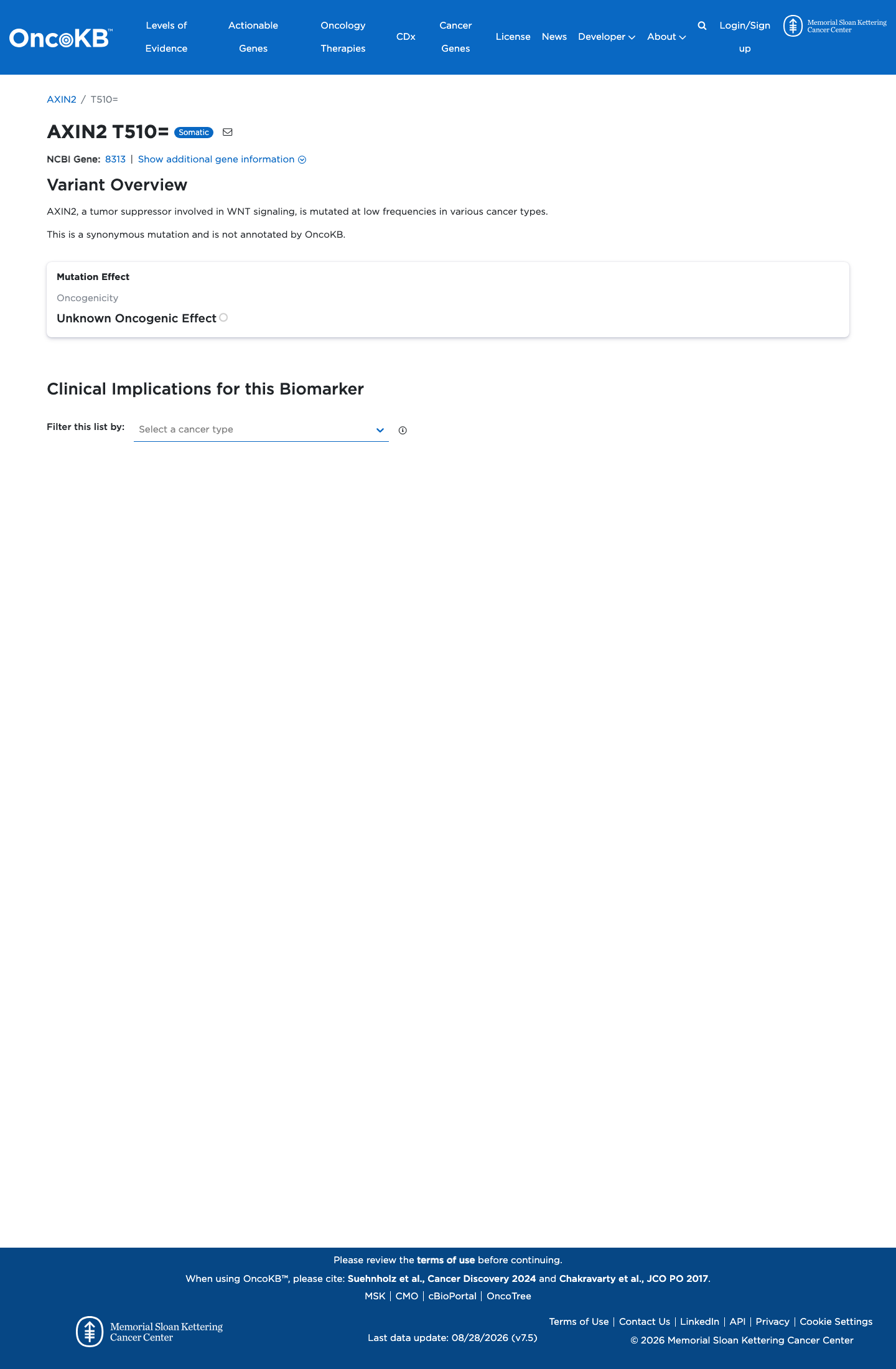
Functional / OncoKB screenshot
Functional Unknown Oncogenic Effect
OncoKB identified curated literature and non-variant-specific oncogenicity context for review; listed oncogenicity label: Unknown Oncogenic Effect.
OncoKB ↗
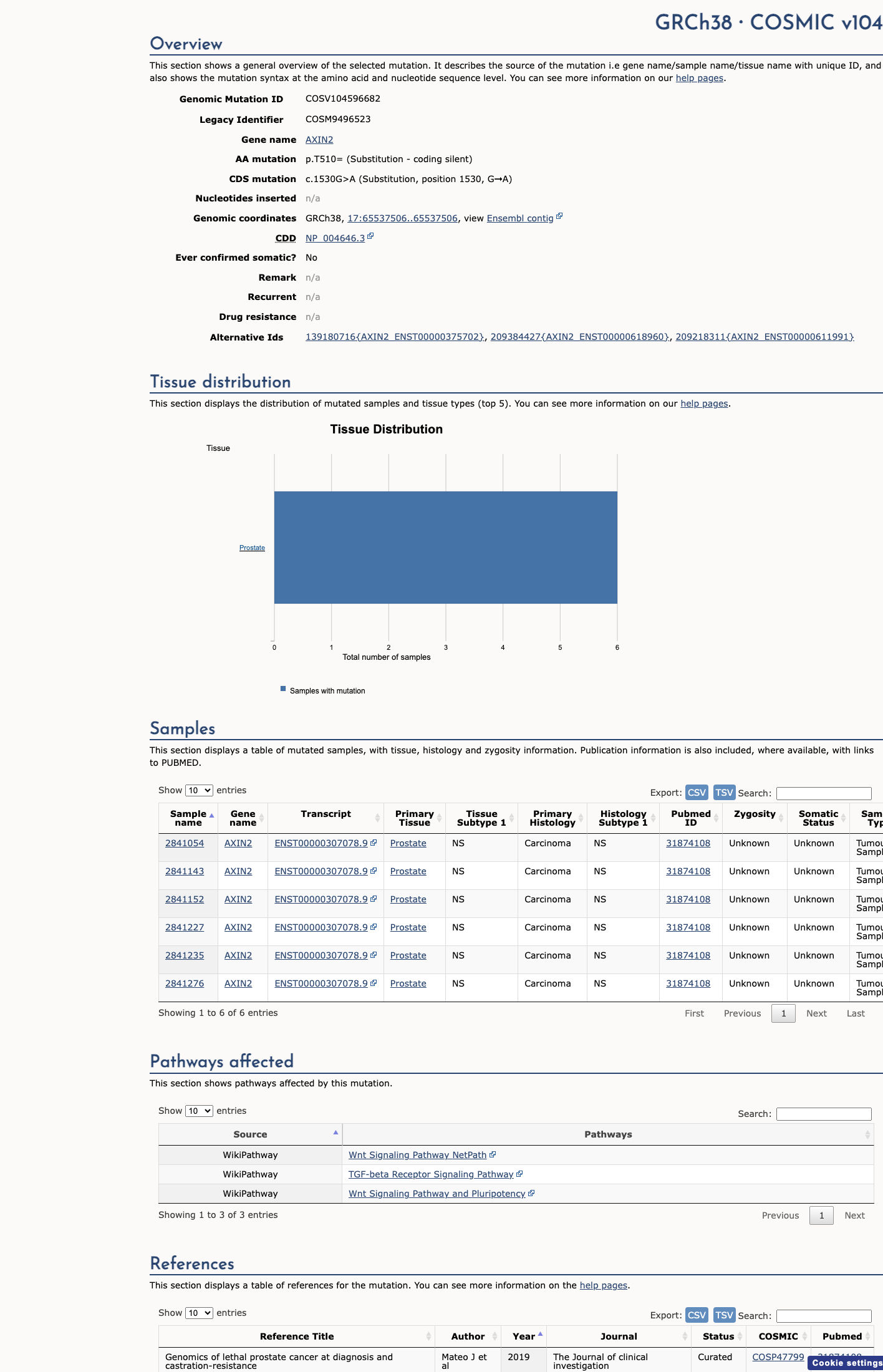
COSMIC screenshot
COSMIC
Cancer hotspots screenshot
Cancer hotspots
Somatic evidence Not in COSMIC / hotspots
COSMIC
This variant does not lie in a statistically significant hotspot. This variant has previously been reported in somatic cancers (COSMIC; COSV104596682, n = 6 times).
Hotspots
This variant does not lie in a statistically significant hotspot.
Literature · how each cited paper was used
6papers cited
Each card is an audit: what was searched, what was found, whether it names the variant, which criteria it fed, and why. 1 further PMID triaged but not cited — see Sources & references.
Low frequency of AXIN2 mutations and high frequency of MUTYH mutations in patients with multiple polyposis.
Searched
c.1530G>Ap.Thr510ThrNP_004646.3:p.(T510=)rs141014640parents
Found
Lejeune et al. screened AXIN2 by PCR/direct sequencing in 31 unrelated patients with multiple adenomatous polyps or colorectal cancer without APC mutation or MMR defect. The exact variant c.1530G>A (p.Thr510Thr) was found in one patient (Li-10 in the Results; listed under Li-9 in Table 2) aged 18 with 30 adenomatous polyps and no family history, in cis with the missense change c.1235A>G (p.Asn412Ser). This is the only source that both detected the variant in a patient and examined that patient's family context, and its methods state that parental DNA samples were not available; no parental genotyping, de novo claim, pedigree, meiosis count or LOD score is reported for this variant. The authors interpreted both changes as likely polymorphisms.
Variant
✓ Names this variant — characterised directly
Applied to
BS3 supporting
Patient-derived RT-PCR across exons 3-7 showed c.1530G>A present in transcript at the same proportion as genomic DNA, i.e. no splicing alteration — direct evidence of no damaging effect, applied at supporting strength.
BP7 supporting
Patient transcript RT-PCR for this exact variant showed the variant present at the same proportion as in genomic DNA, indicating no splicing alteration, directly supporting BP7's no-splice-impact requirement.
Confirmation of biallelic mutations. In absence of parents DNA samples, allele-specific PCR (AS-PCR) was performed in cases where two mutations were found in order to assess if the variations were present on the same allele or on different alleles.
Location Materials and Methods, 'Confirmation of biallelic mutations'; carrier and variant described in Results, 'AXIN2 Gene Analysis' paragraph 1 and Table 2  ·  Context Germline screening of AXIN2 (NM_004655.2, exons 1-10 plus exon-intron boundaries) by PCR and direct sequencing in 31 unrelated polyposis/CRC patients without APC mutation or MMR defect; RT-PCR across exons 3-7 to test splicing in the carrier; 50 healthy controls screened for the variant.  ·  full text
Genetic study of non-syndromic tooth agenesis through the screening of paired box 9, msh homeobox 1, axin 2, and Wnt family member 10A genes: a case-series.
Searched
c.1530G>Ap.Thr510Thrp.(T510=)rs141014640
Found
Haddaji Mastouri et al. sequenced AXIN2, PAX9, MSX1 and WNT10A in 37 Tunisian patients with non-syndromic tooth agenesis (28 sporadic, 9 familial) plus 88 healthy dentate controls. The synonymous AXIN2 change p.Thr510Thr (rs141014640) was found in 1 of 37 patients (2.7%), with very low population frequencies (0.001 in the African population, 0 in the European population). The authors did not attribute a pathogenic role to it, noted only that a splice-site effect should be considered because of its rarity, and did not include it among the variants highlighted as probably disease-causing or in their case-control association analysis. No parental testing, co-segregation analysis or meiosis data for this variant were reported, despite the cohort containing 9 familial cases.
Variant
✓ Names this variant — characterised directly
Applied to
BS3 supporting
BP7 supporting
Reports this synonymous variant in a clinical cohort and raises the possibility of a splice-site effect, which was checked against the SpliceAI/Pangolin predictions and the independent RT-PCR result; no data in this paper demonstrate any splice effect.
According to the allele frequencies (Table 1) only one silent variant (p.Thr510Thr, rs141014640) was less frequent in the African population as well as in the European population (0.001(A), 0 (A)). A splice-site change should be considered.
Location Results, AXIN2 section (allele-frequency paragraph); variant listed in Table 1  ·  Context Case-series cohort of 37 non-syndromic tooth-agenesis patients (28 sporadic, 9 familial) and 88 healthy dentate controls; Sanger sequencing of coding exons and exon-intron boundaries of AXIN2, PAX9, MSX1 and WNT10A; allele frequencies compared with ExAC/Ensembl and case-control analysis by chi-square.  ·  full text
WNT10A variants in relation to nonsyndromic hypodontia in eastern Slovak population.
Searched
c.1530G>Ap.Thr510ThrThr510Thrc.1531G>Ars63533624
Found
Grejtakova et al. Sanger-sequenced WNT10A, PAX9 and AXIN2 in 60 unrelated eastern Slovak patients with non-syndromic hypodontia and 48 controls. A codon-510 synonymous AXIN2 change (Thr510Thr, rs63533624) was detected in a single patient and counted among six synonymous AXIN2 variants; the AXIN2 findings were classified as common variants and excluded from further association analysis. No parental testing, segregation analysis or family genotyping was performed for this change. Note the numbering discrepancy: the paper writes c.1531G>A for the same protein change (p.Thr510Thr) annotated as c.1530G>A in the queried transcript, i.e. the same codon-510 synonymous change.
Variant
✓ Names this variant — characterised directly
Applied to
BS3 supporting
BP7 supporting
Independent report of the same codon-510 synonymous change as a benign/common variant with no reported functional or splice effect, corroborating that no splice-altering consequence has been observed for it.
AXIN2 Exon 6 g.1844 G>A (c.1531 G>A) Thr510Thr rs63533624 1
Location Results (Sequence analysis), AXIN2 paragraph; Table 3, AXIN2 row (Exon 6, g.1844 G>A / c.1531 G>A / Thr510Thr / rs63533624 / n=1)  ·  Context Sanger sequencing of all exons, exon/intron junctions and UTRs of WNT10A, PAX9 and AXIN2 in 60 unrelated Caucasian patients of eastern Slovak origin with non-syndromic hypodontia (37 maxillary lateral incisor agenesis cases) plus 48 healthy controls; reference sequence NC_000017.10.  ·  full text
Rule & framework references · cited for criterion definitions, not variant evidence
25394175 ↗ A practice guideline from the American College of Medical Genetics and Genomics and the National Society of Genetic Counselors: referral indications for cancer predisposition assessment.
25741868 ↗ Standards and guidelines for the interpretation of sequence variants: a joint consensus recommendation of the American College of Medical Genetics and Genomics and the Association for Molecular Pathology.
26467025 ↗ A Standardized DNA Variant Scoring System for Pathogenicity Assessments in Mendelian Disorders.
Sources & reference links
8Sources
ClinVar
gnomAD v2.1
gnomAD v4.1
gnomAD-Canada
SpliceAI
OncoKB
COSMIC
Cancer hotspots
Triaged references · 1 PMID not cited in assessment
28492532 ↗ Sherloc: a comprehensive refinement of the ACMG-AMP variant classification criteria. CLINVAR