PVS1
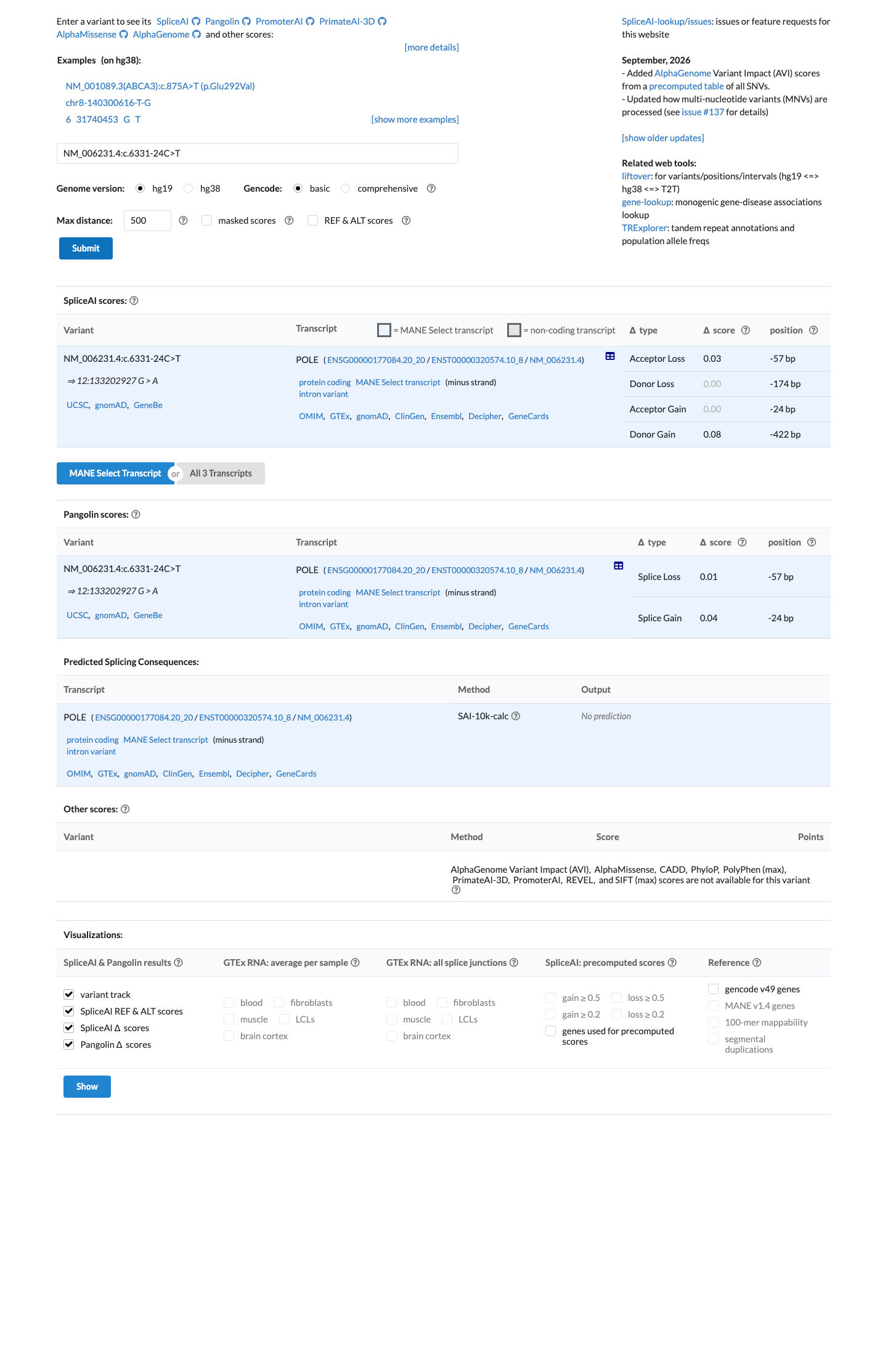
Not met: the intronic c.6331-24C>T (24 bp from the exon 46 acceptor) has SpliceAI max delta 0.076, below the 0.2 supporting cutoff, so no null effect is predicted.
PS2
Not assessed: no proband or parental genotypes are available to establish a confirmed de novo occurrence.
PS3
Not assessed: no functional or RNA assay of POLE c.6331-24C>T exists; SpliceAI 0.076 and the absent REVEL score are in-silico only.
PS4
Not met: intronic c.6331-24C>T is absent from the POLE recurrent-variant table (Supplementary Table S1) and no case-control enrichment statistic exists.
PM1
Not met: c.6331-24C>T is intronic (intron 45, p.?) and outside every POLE exonuclease-domain hotspot (P286R, V411L, S297F, A456P, S459F).
PM2
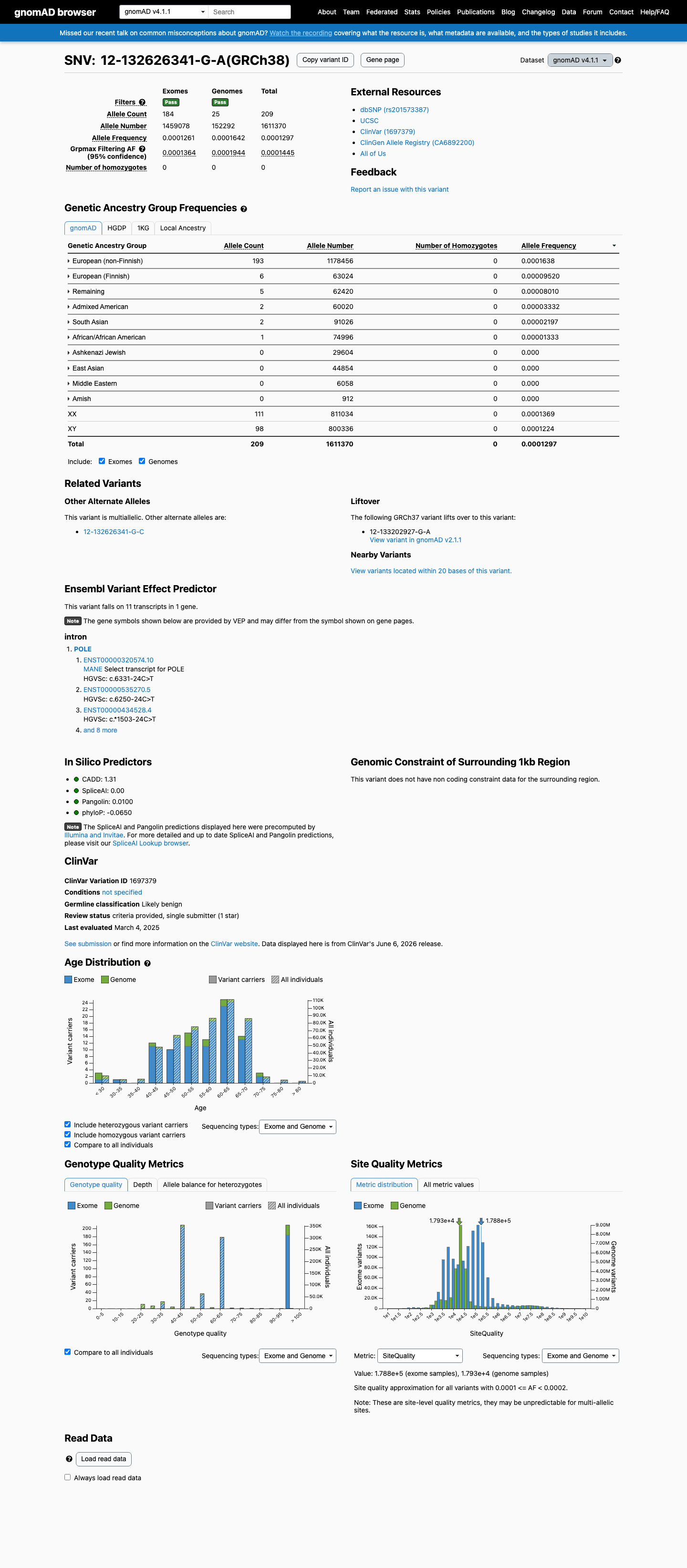
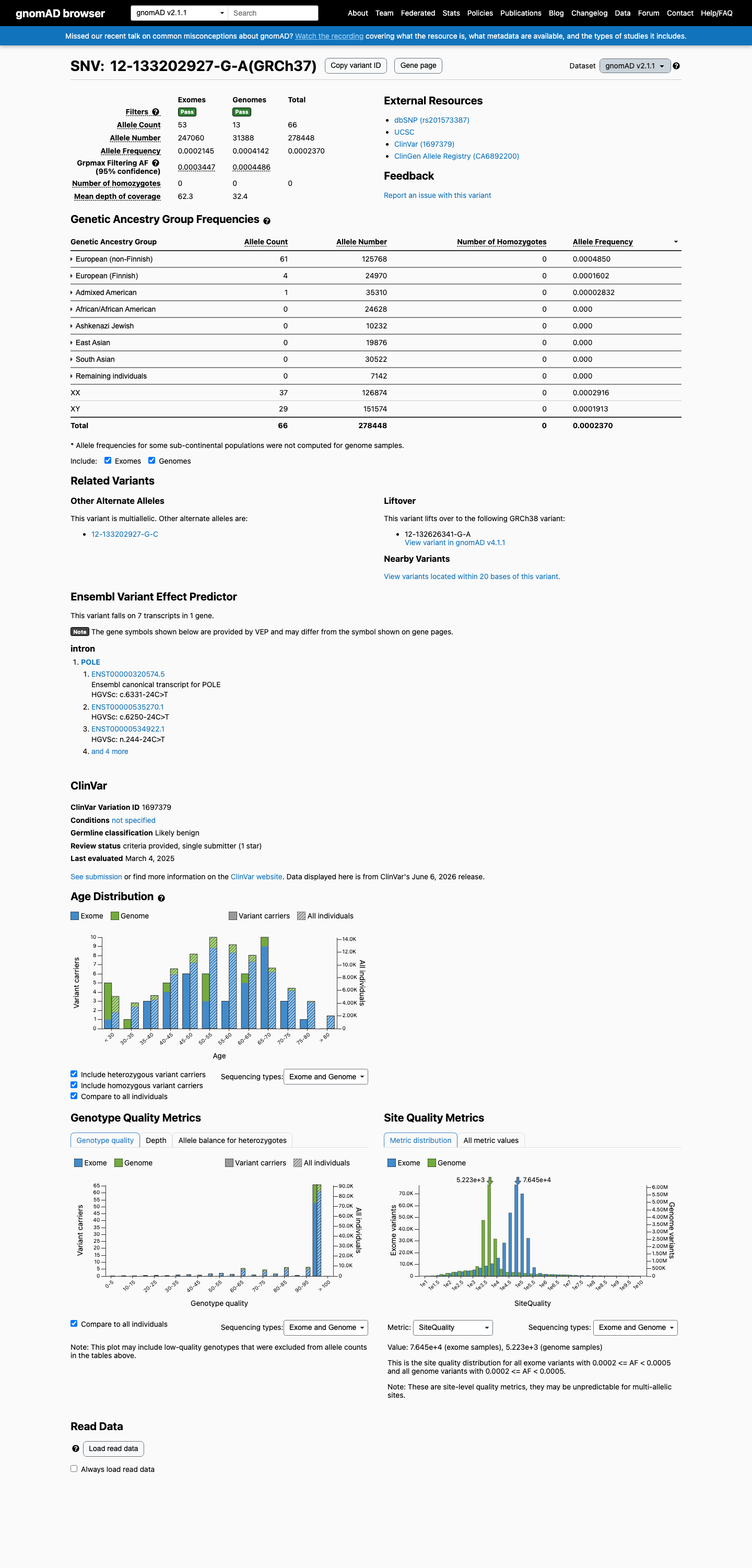
Not met: total allele frequency 0.000237 (gnomAD v2.1, 66/278,448 alleles) exceeds the 0.0001 PM2 rarity threshold in all four datasets.
PM3
Not assessed: no second POLE variant, zygosity or phase is documented and gnomAD reports zero homozygotes in v2.1 (66/278,448) and v4.1 (209/1,611,370) alleles, leaving an in-trans configuration untested.
PM6
Not assessed: no proband carrying the variant is documented, so no assumed de novo occurrence can be recorded.
PP1
Not assessed: no pedigree or affected-relative genotypes provide any co-segregation data for this variant.
PP3
Not met: SpliceAI max delta 0.076 vs the >=0.2 supporting threshold for PP3.
PP4
Not assessed: no phenotype or family-history data for the proband were available, so disease specificity could not be evaluated.
PP5
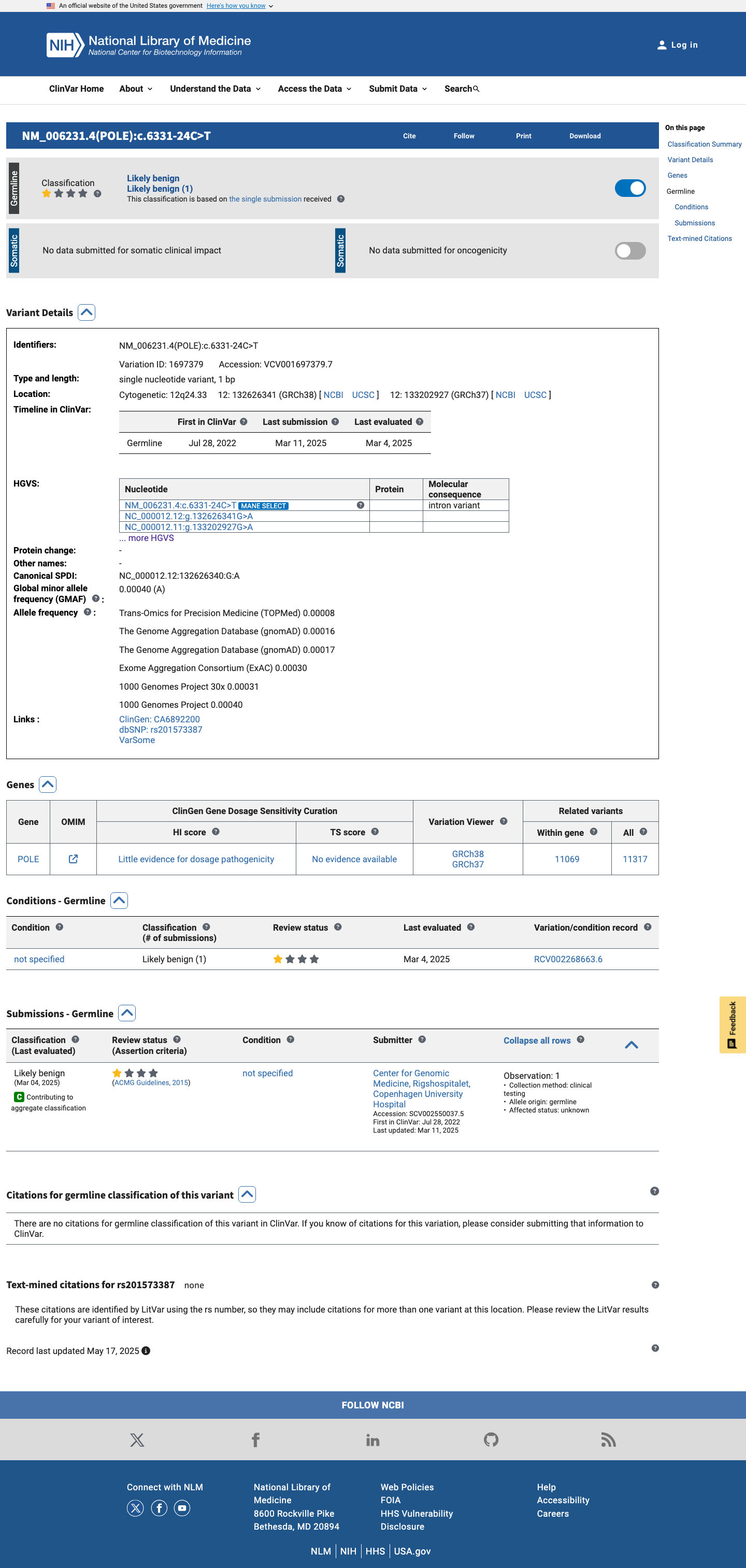
Not met: the only ClinVar record for this exact variant is a single-submitter, 1-star laboratory assertion, not an expert-panel pathogenic classification.