PS1
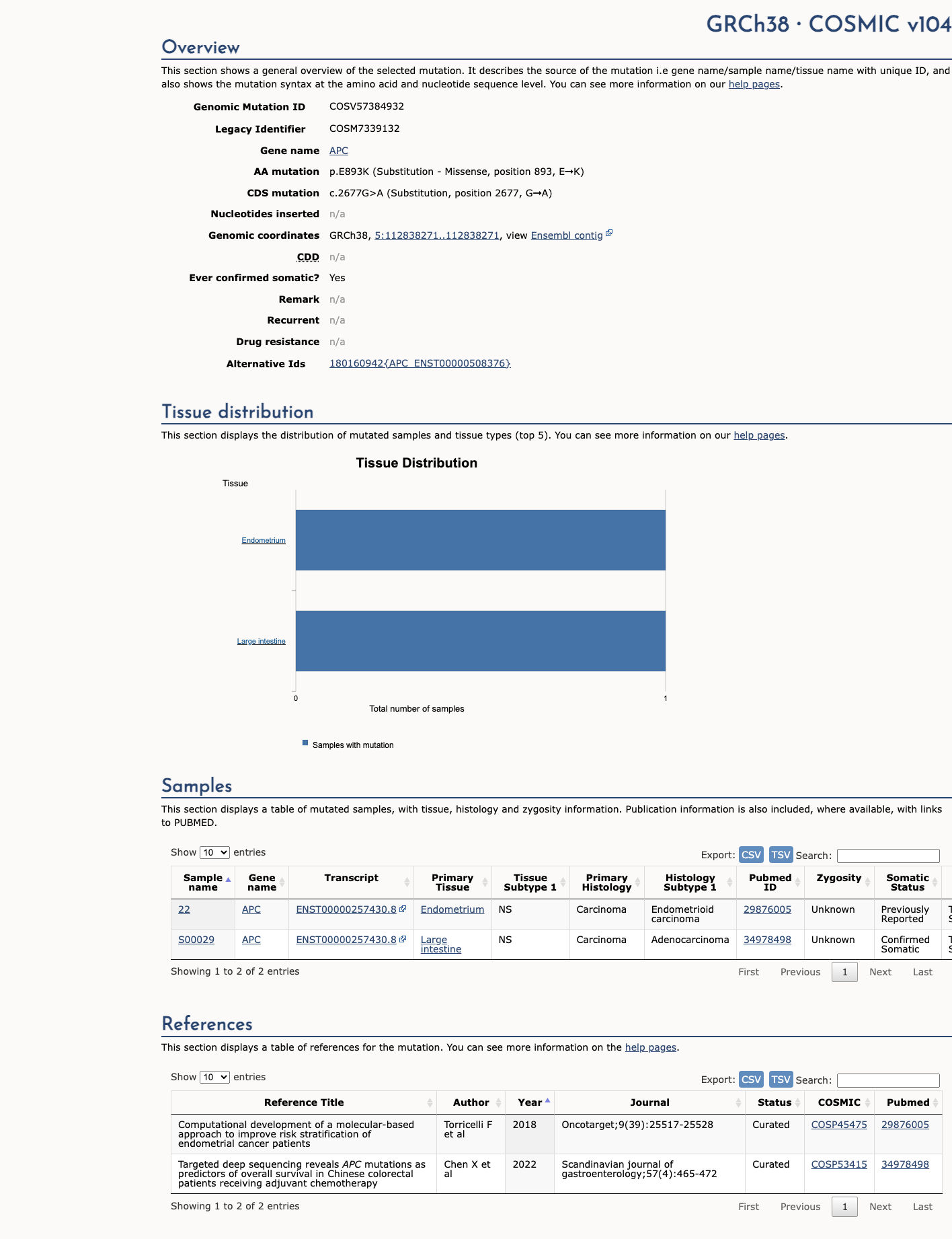
Not met: the APC specification identifies only p.Asn1026Ser and p.Ser1028Arg as likely pathogenic missense comparators, not p.Glu893Lys.
PS2
Not assessed: no documented parental genotypes, confirmed maternity and paternity, affected phenotype, or APC VCEP de novo score is available.
PS3
Not assessed: no variant-specific RNA or validated damaging protein assay was identified for p.(Glu893Lys), which lies outside the APC beta-catenin-binding domain at codons 959-2129.
PS4
Not assessed: no exact-variant case-control enrichment or patient phenotype-point data are available to compare with the APC VCEP PS4 thresholds.
PM2
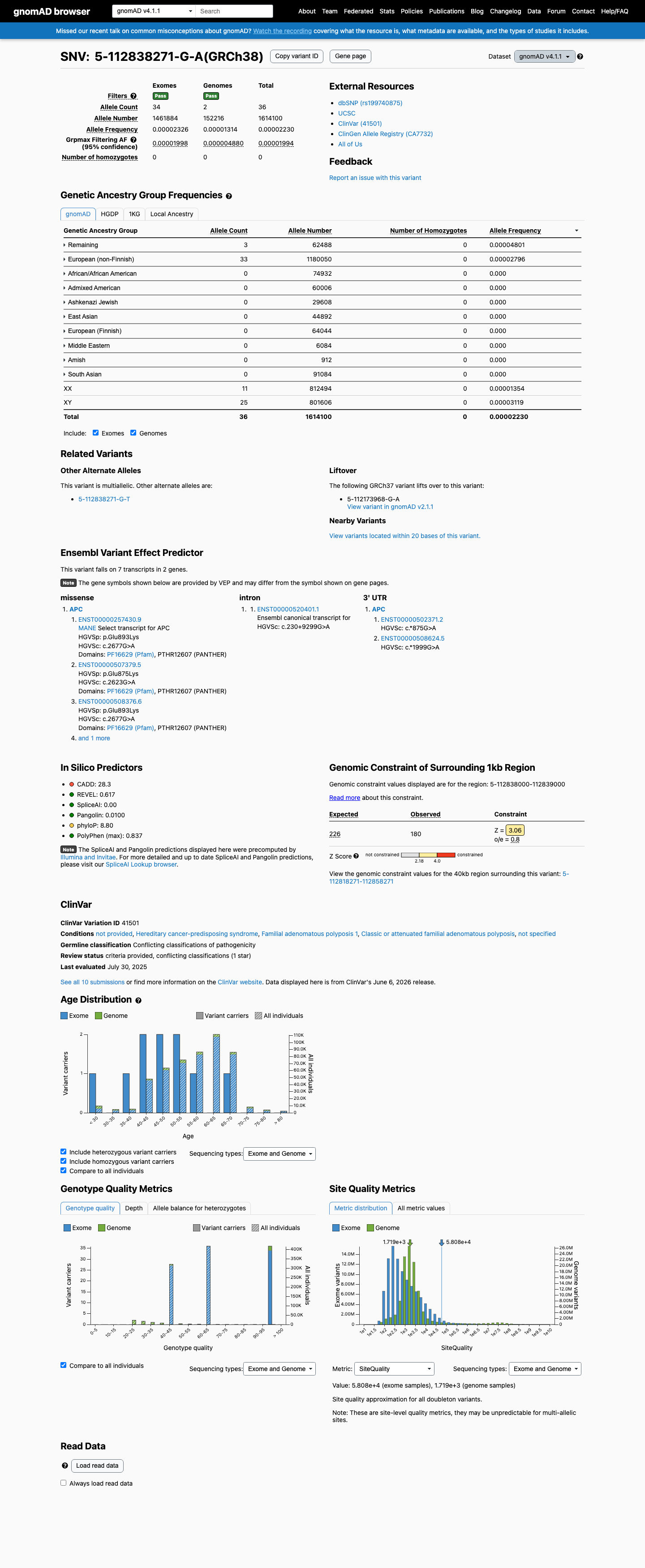
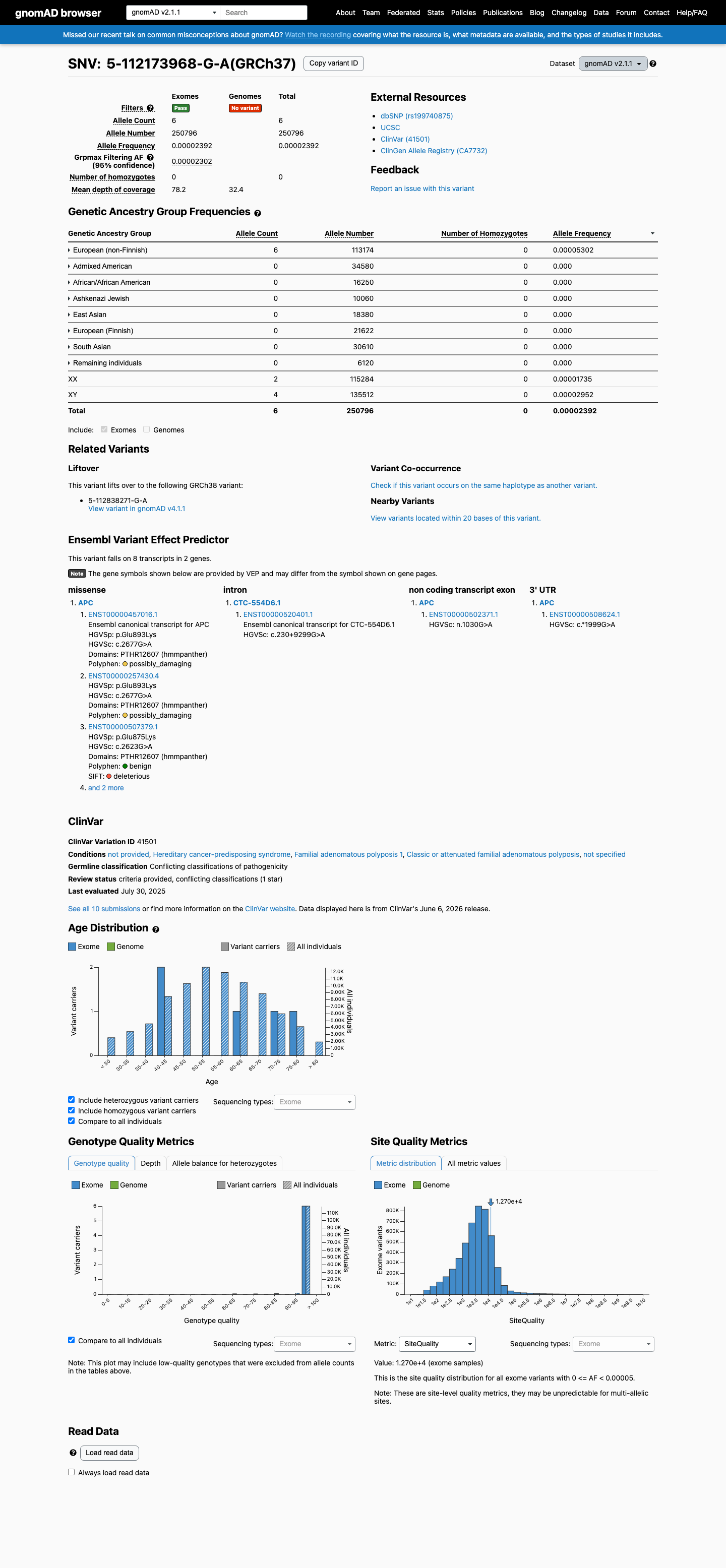
Not assessed: the VCEP requires non-cancer AF, while only combined values of 2.39238e-05 and 2.23035e-05 are available.
PM5
Not assessed: zero same-residue candidates were found, but the comparator search recorded an HTTP 429 error and cannot exclude a qualifying p.Glu893 variant.
PM6
Not assessed: no assumed-de-novo observation, phenotype point, parental testing status, or APC VCEP de novo score is documented.
PP1
Not assessed: no affected relatives, variant-positive family members, family count, or segregating meiosis count is documented.
PP3
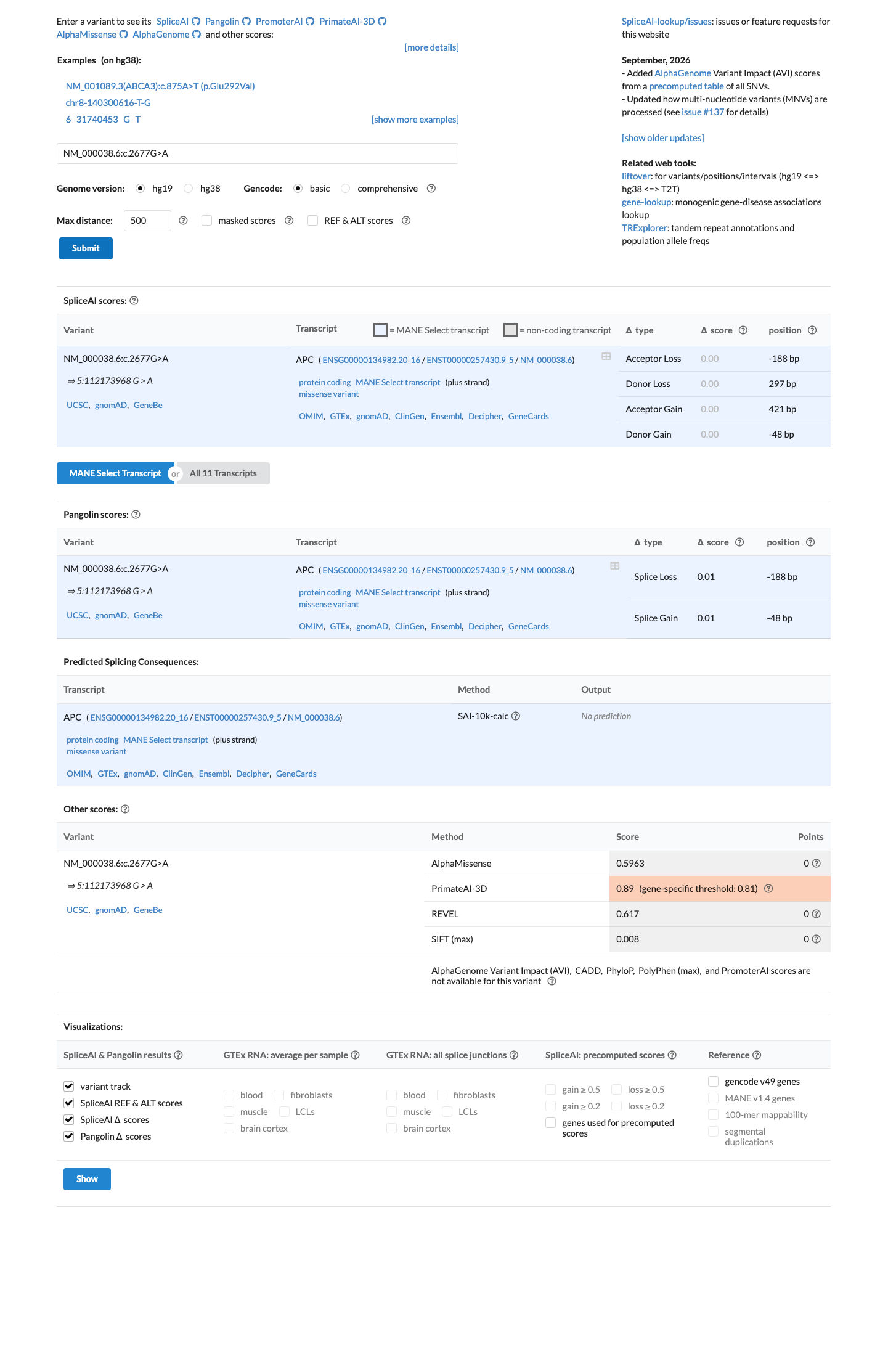
Not met: missense REVEL 0.617 is below the >=0.644 supporting PP3 threshold, and the SpliceAI score cannot substitute for the applicable REVEL path.