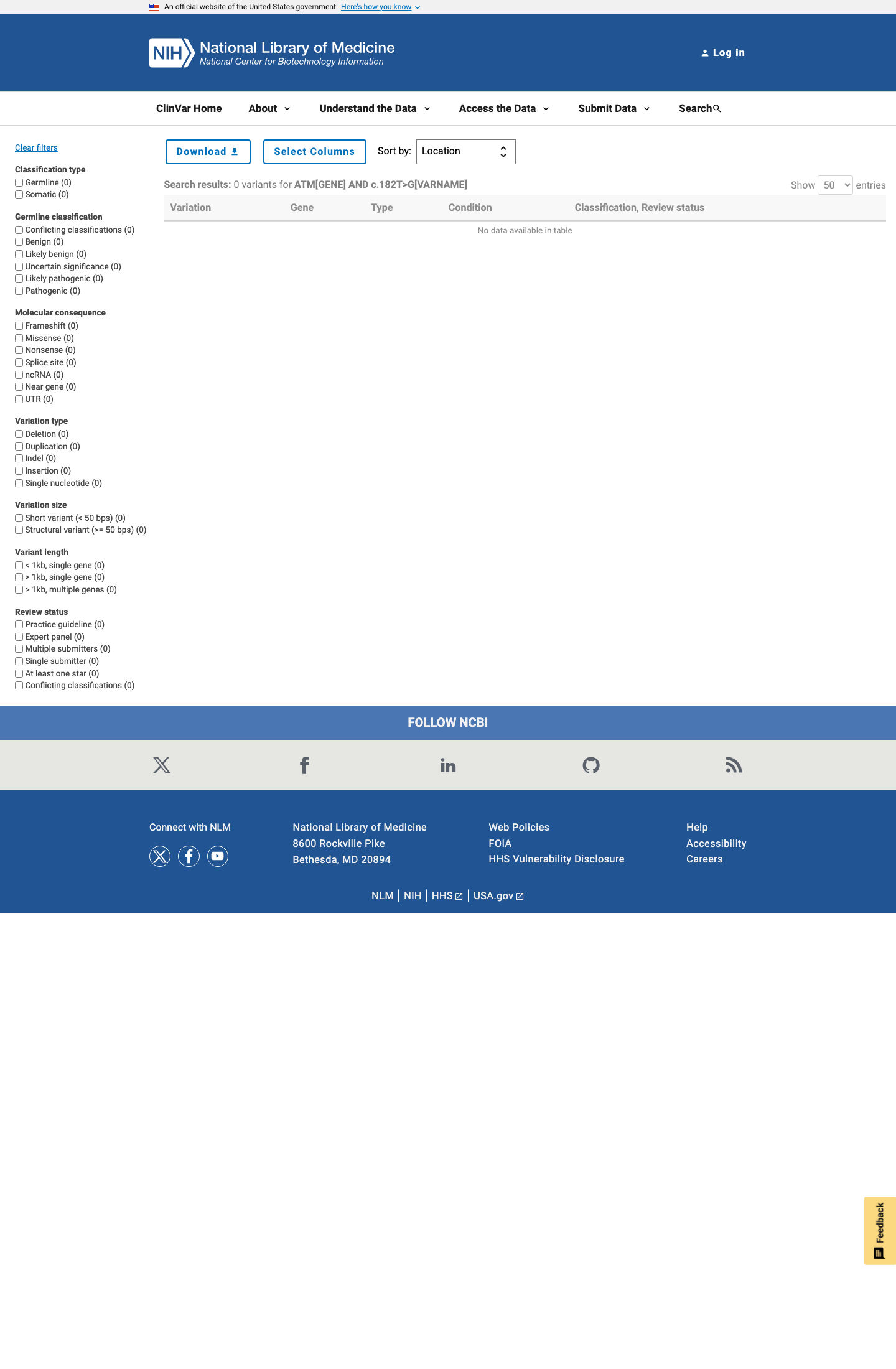
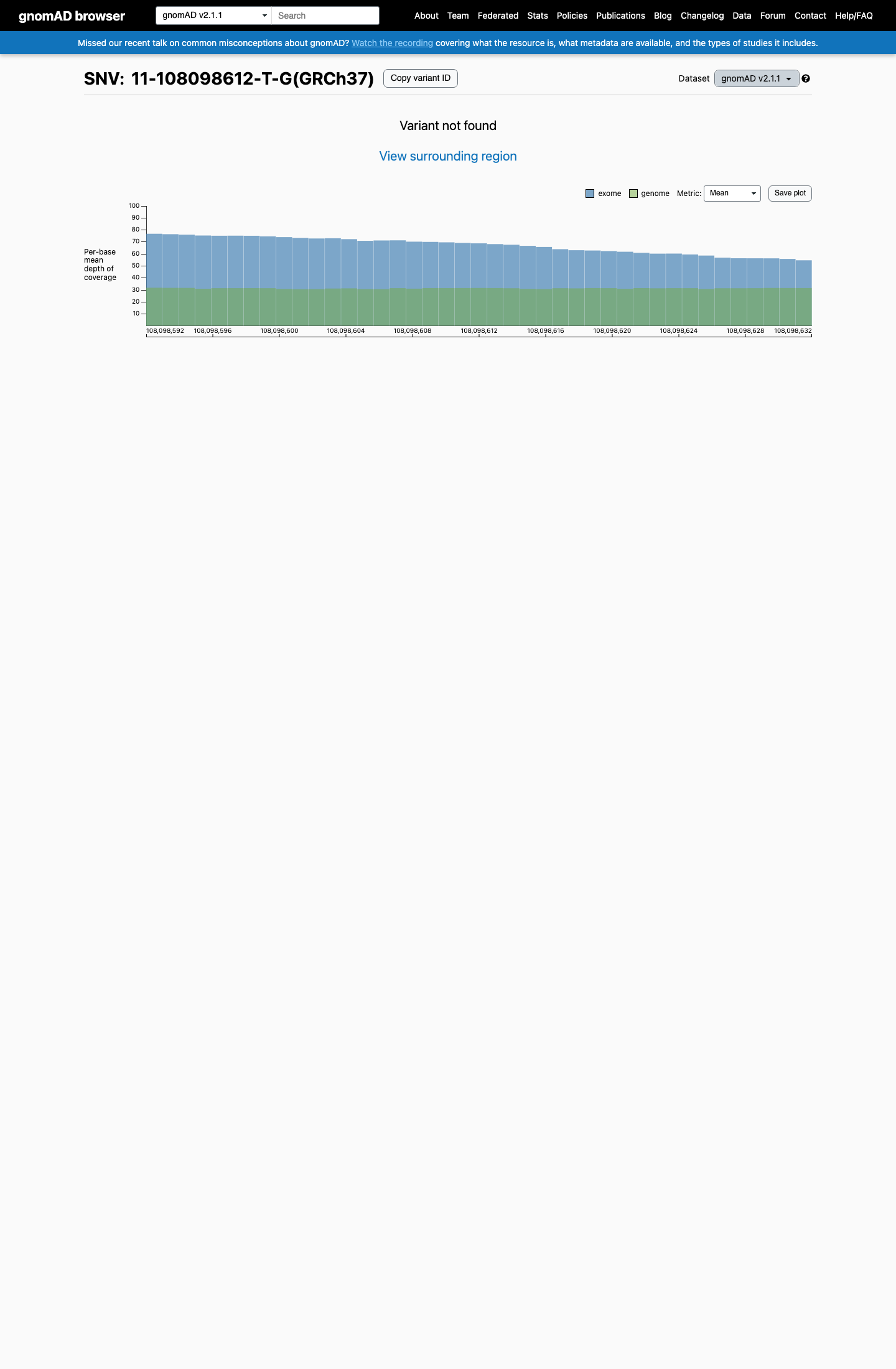
For ATM, the governing Version 1.6 framework excludes PS2, PM6, and BS4; PP1 is potentially applicable but requires documented affected-relative segregation that is absent from the available case evidence. The exact Table S1 entry is direct functional measurement (DeepATM_predicted=No) and is classified Functional with Medium-high confidence, supporting benign functional evidence rather than pathogenic functional loss. The ATM VCEP-approved calibration file was searched under c.182T>G, p.Phe61Cys, and p.F61C; it contains no variant-specific entry and only calibrates three approved kinase assays and the approved Mitui radiosensitivity assay. BS3 Supporting is recorded provisionally with needs_human_review=true because the direct prime-editing assay is outside the current approved assay set; PS3 is not met because the result is Functional rather than non-functional. The ClinGen HBOP ATM VCEP version 1.6 governs this assessment. PS4 remains not assessed because variant-specific case-control enrichment statistics are absent. PP4, PP5, BP5, and BP6 are excluded or not applicable under the ATM VCEP; no expert-panel ClinVar assertion is present. The variant is missense, so PP3 and BP4 use REVEL only; REVEL 0.62 meets neither the ATM VCEP PP3 threshold (>0.7333) nor the BP4 threshold (<=0.249). BP7 is not applicable because the variant is not synonymous or qualifying deep-intronic. Population evidence supports PM2 at supporting strength because the variant is absent from gnomAD v2.1 and v4.1. BA1 and BS1 are not met because the variant is not observed at their ATM VCEP frequency thresholds. BS2 is not applicable under the ATM VCEP because ATM-related cancer predisposition has incomplete penetrance.
ATM encodes a kinase that acts as a master controller of the cellular DNA damage response: it detects double-strand breaks and coordinates DNA repair, cell cycle arrest, or apoptosis through downstream targets including p53, BRCA1, and CHK2. Loss-of-function mutations in both copies of ATM cause ataxia telangiectasia, an autosomal recessive disorder characterized by neurological problems, immune deficiency, and cancer predisposition. ATM functions as a tumor suppressor: individuals with ataxia telangiectasia are prone to childhood lymphomas, leukemias, and breast cancer, while carriers of a single altered copy have increased risk of breast, pancreatic, prostate, and other cancers. Somatic ATM mutations also occur in lymphoid malignancies and solid tumors, and ATM-deficient cancers are often especially sensitive to DNA-damaging treatments.
For ATM, the governing Version 1.6 framework excludes PS2, PM6, and BS4; PP1 is potentially applicable but requires documented affected-relative segregation that is absent from the available case evidence.

0 hom
0 hom
0 hom