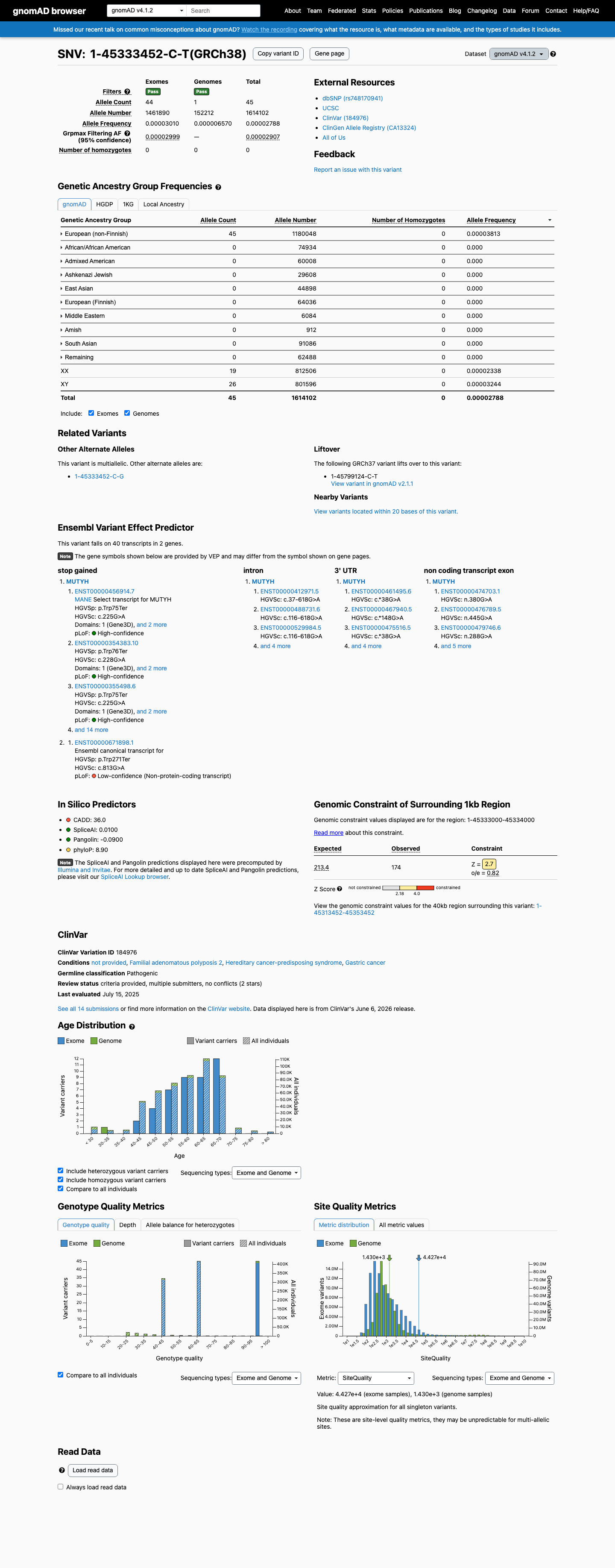
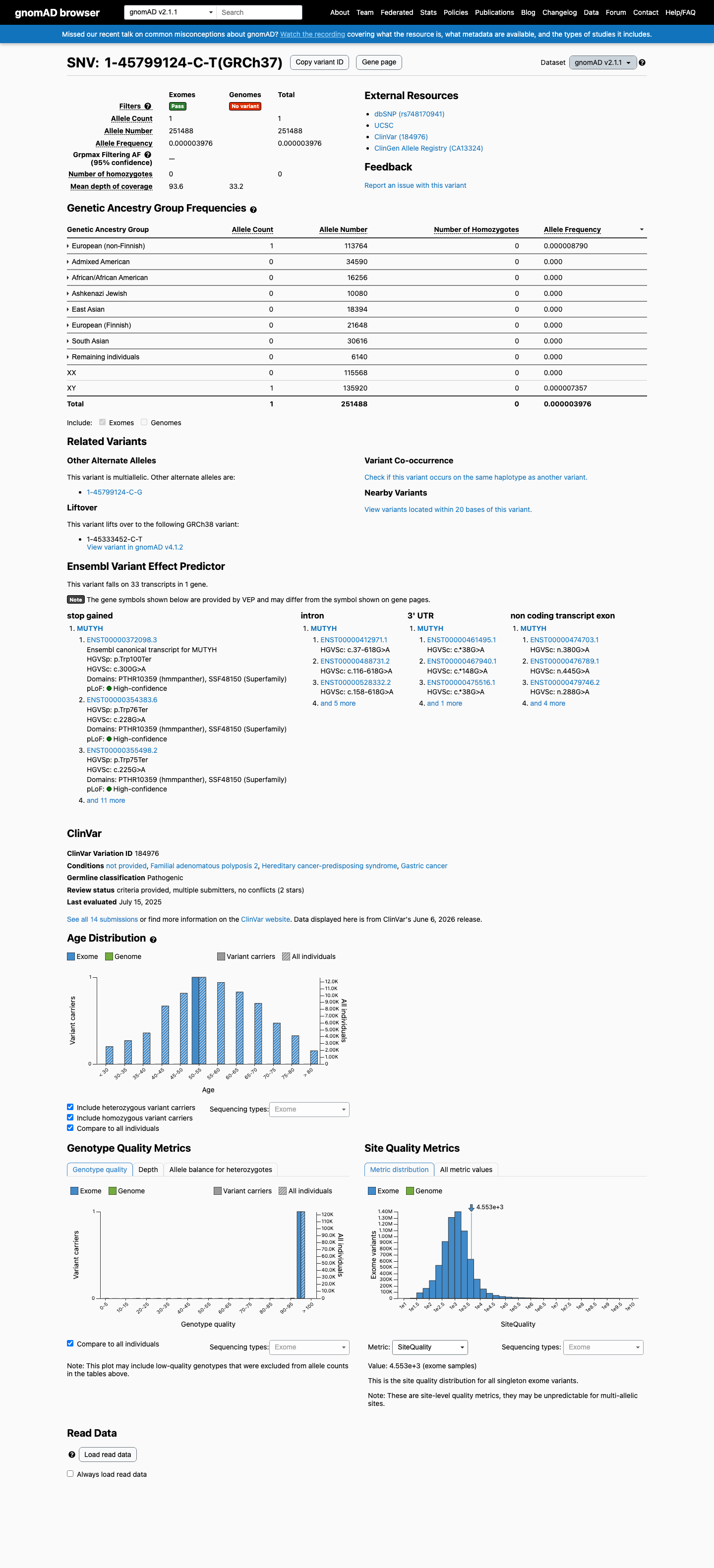
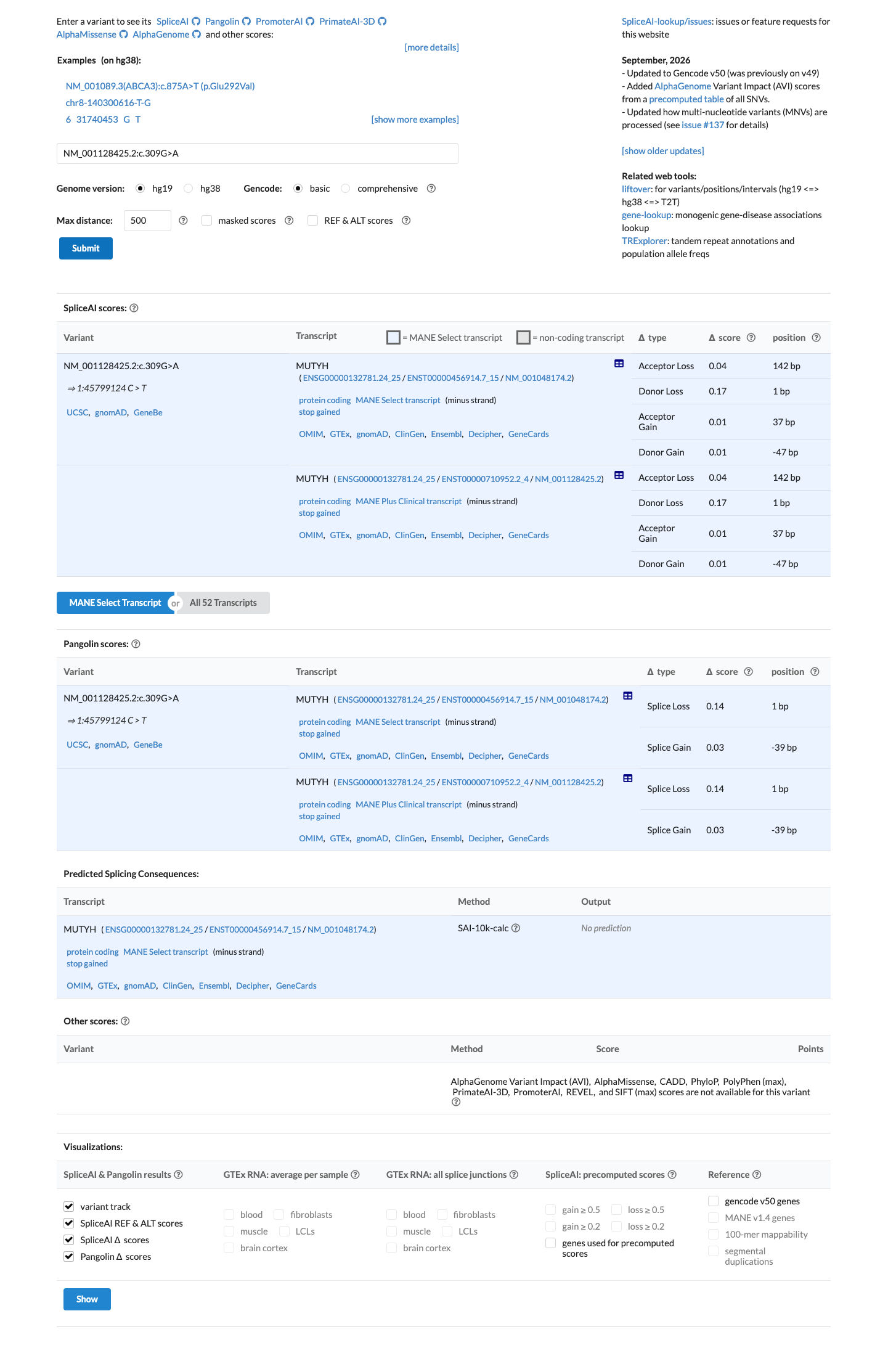
Likely Pathogenic: PVS1 (very strong) supports a loss-of-function effect from the early p.Trp103Ter truncation. Likely Pathogenic: PM2 (supporting) is met because the maximum gnomAD population frequency is below 0.0001.
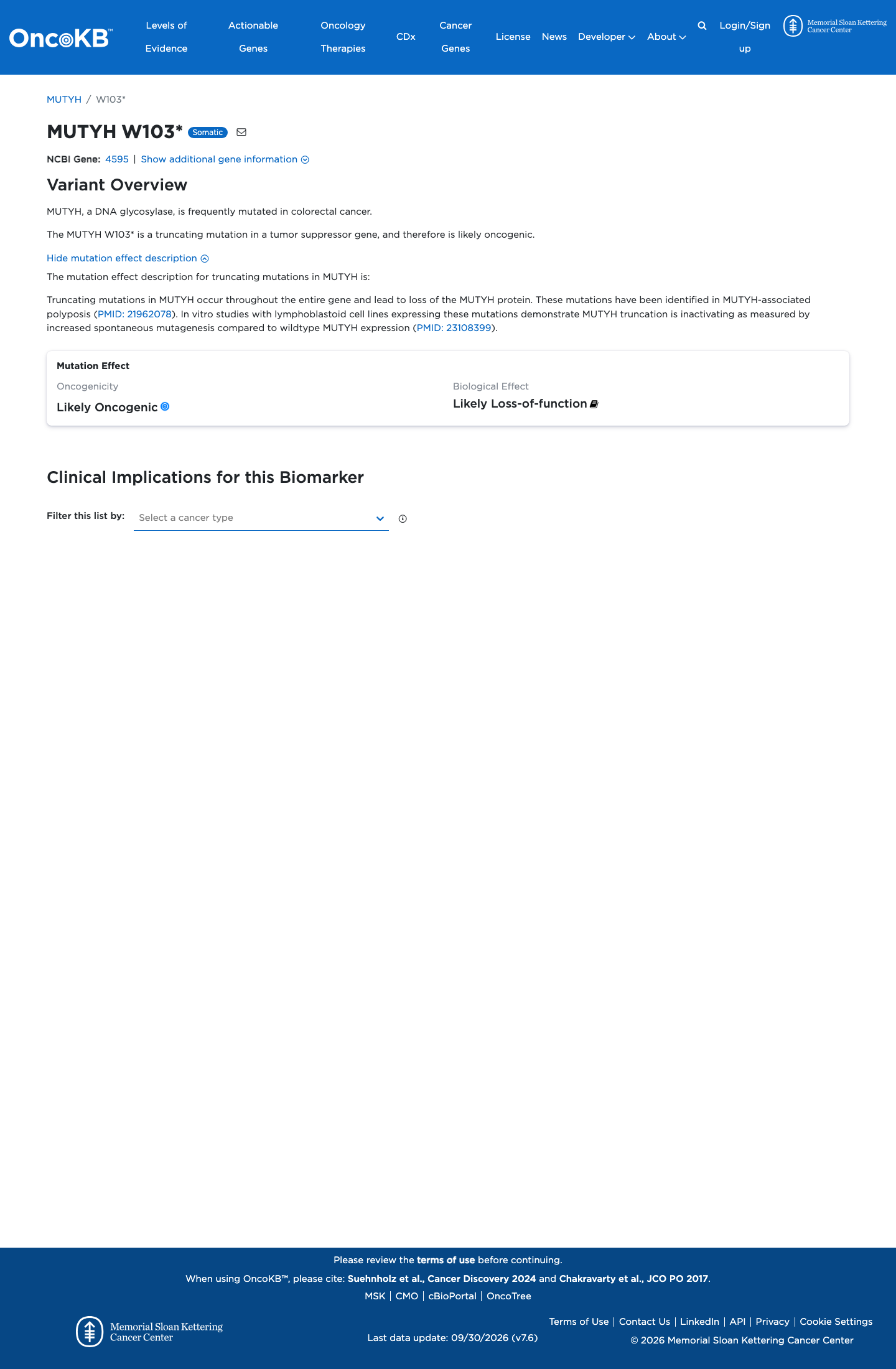
MUTYH encodes a DNA repair enzyme (a glycosylase) that fixes oxidative DNA damage by removing adenine bases that have been mistakenly paired with guanine or with oxidized guanine lesions. Inherited mutations in both copies of the gene cause MUTYH-associated polyposis (MAP), a recessive condition that strongly predisposes people to multiple colorectal polyps and colorectal cancer. The gene acts as a tumor suppressor whose loss of function allows DNA damage to accumulate, and somatic changes in it have also been reported in colon cancer, though whether they drive cancer on their own is not fully established.
MUTYH encodes a DNA repair glycosylase, and loss of function in both gene copies causes the recessive cancer-predisposition syndrome MUTYH-associated polyposis.
Likely Pathogenic: PVS1 (very strong) supports a loss-of-function effect from the early p.Trp103Ter truncation. Likely Pathogenic: PM2 (supporting) is met because the maximum gnomAD population frequency is below 0.0001.
European (non-Finnish) 45 / 1,180,048 |
0.0038% |
European (non-Finnish) 1 / 113,764 |
0.00088% |