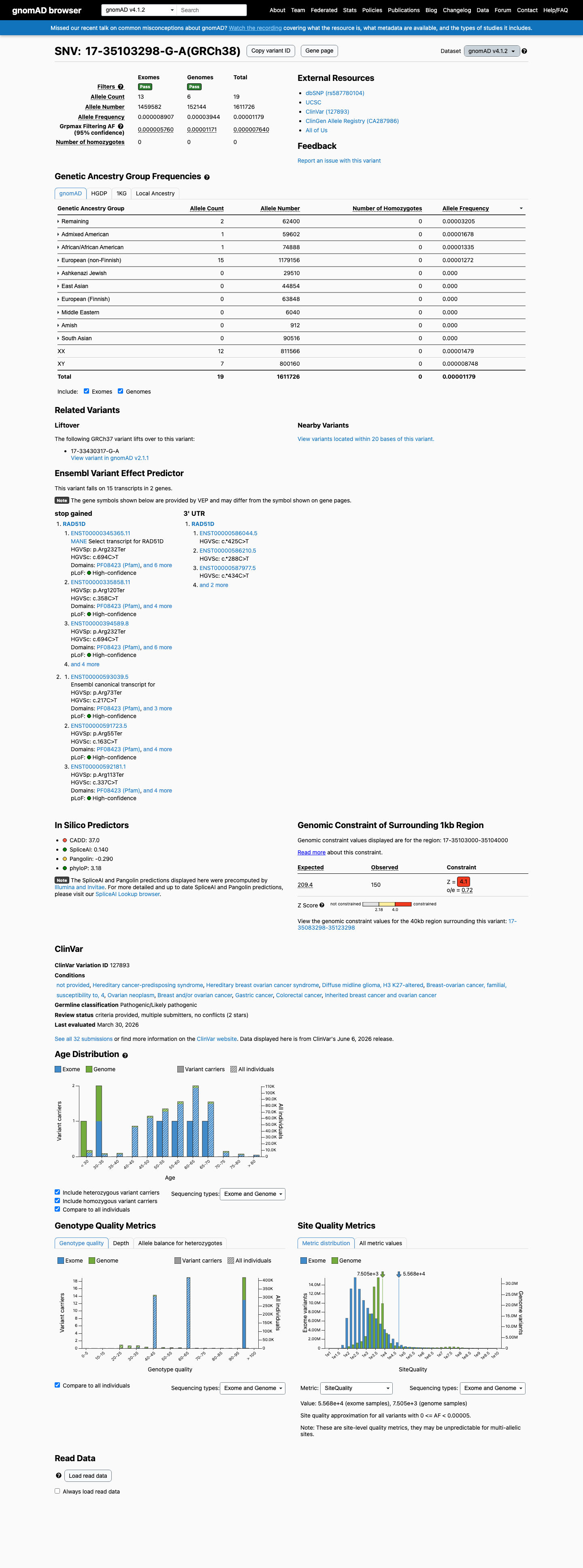
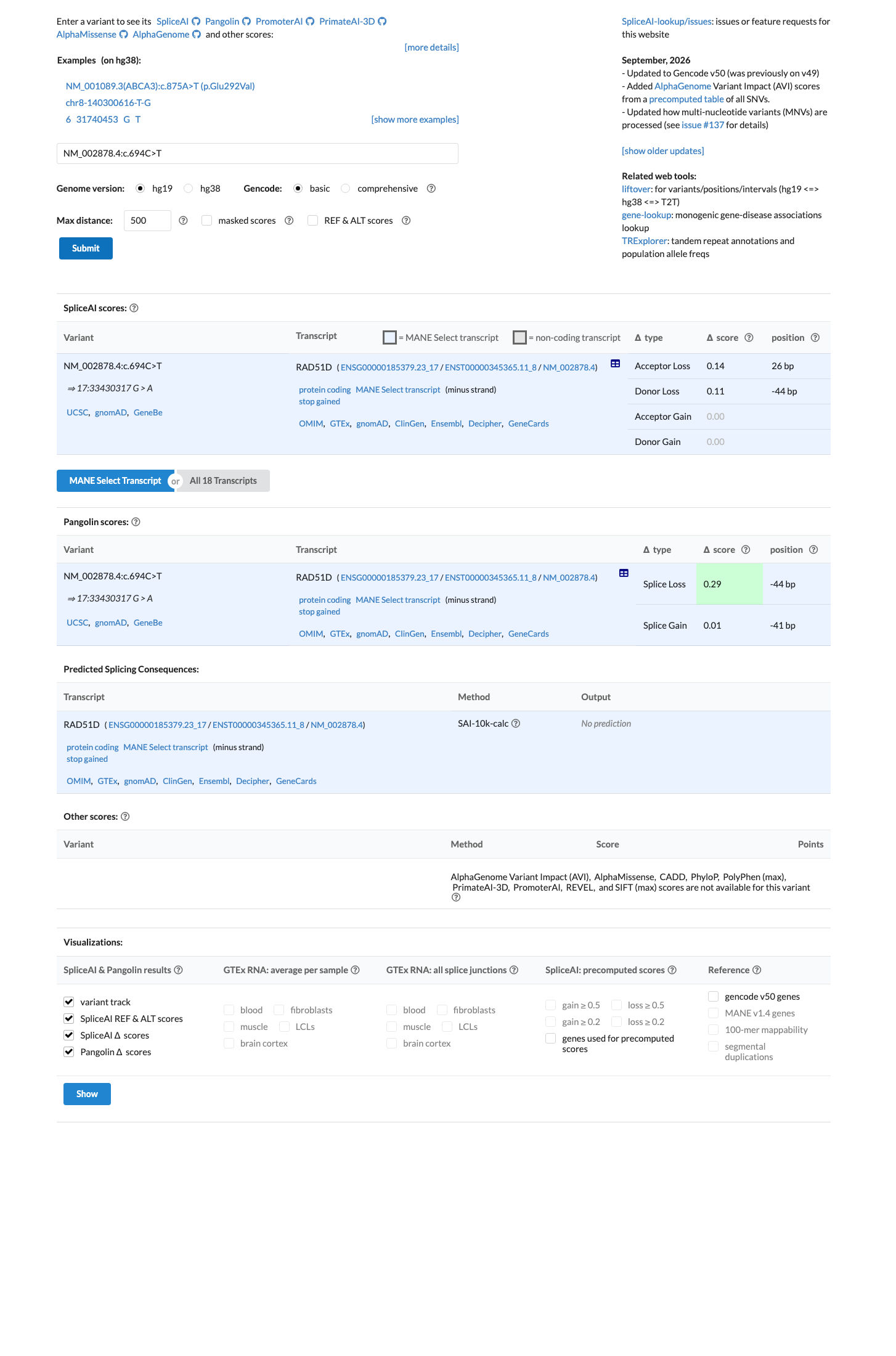
Likely Pathogenic: PVS1 very strong supports a truncating RAD51D loss-of-function allele with predicted nonsense-mediated decay. Likely Pathogenic: PM2 supporting shows a maximum gnomAD allele frequency of 3.21e-05 and zero homozygotes.
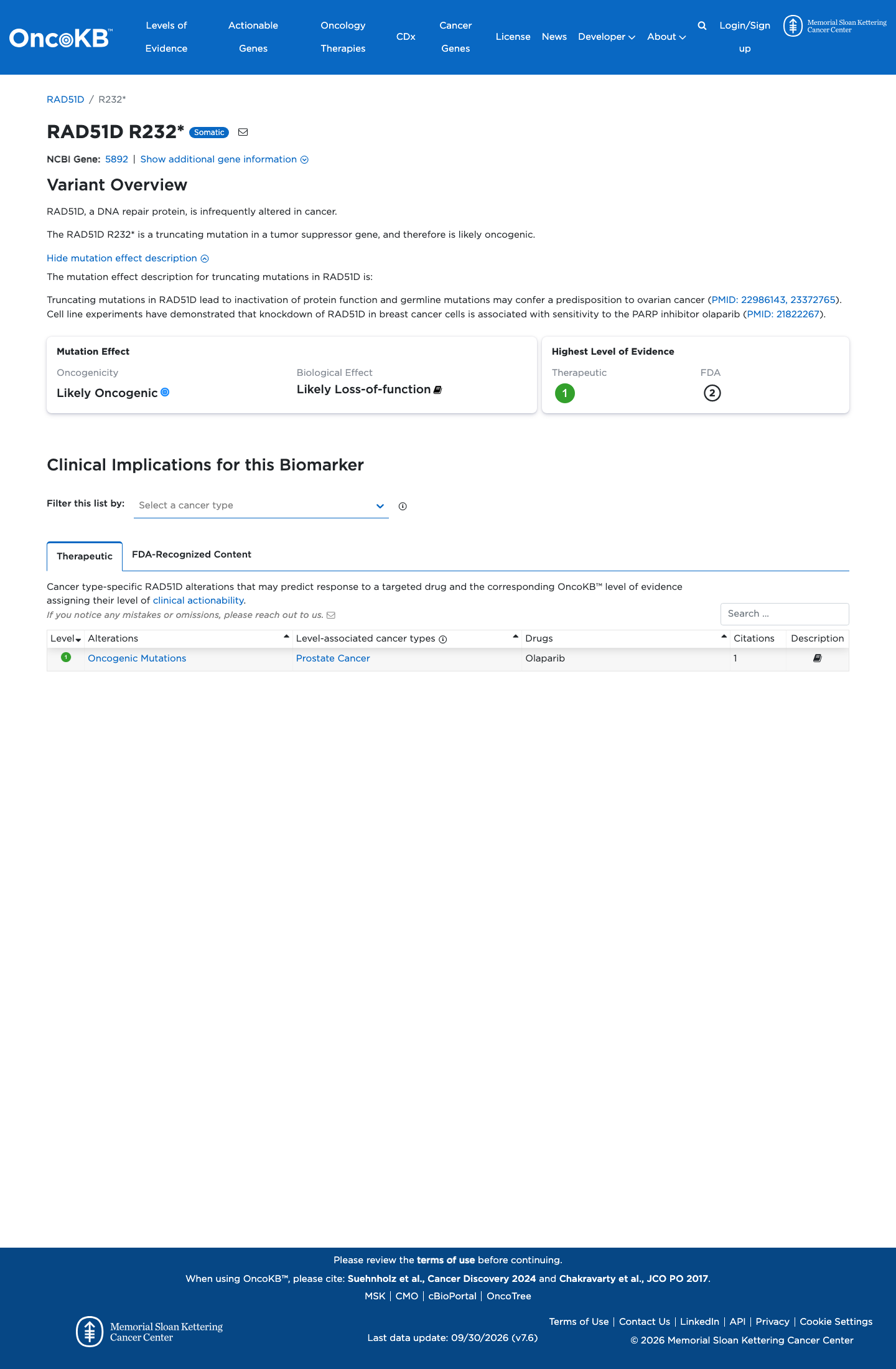
RAD51D encodes a protein that works with other DNA-repair proteins to help accurately repair broken DNA through homologous recombination. Inherited changes in RAD51D increase the risk of ovarian cancer and may also increase breast cancer risk. RAD51D acts as a tumor-suppressor gene, and changes in it can contribute to chromosome instability and, rarely, resistance to chemotherapy in cancer cells.
RAD51D encodes a homologous-recombination DNA-repair protein, and inherited loss-of-function changes increase ovarian cancer risk and may increase breast cancer risk.
Likely Pathogenic: PVS1 very strong supports a truncating RAD51D loss-of-function allele with predicted nonsense-mediated decay. Likely Pathogenic: PM2 supporting shows a maximum gnomAD allele frequency of 3.21e-05 and zero homozygotes.
Remaining individuals 2 / 62,400 |
0.0032% |
Admixed American 1 / 59,602 |
0.0017% |
African/African American 1 / 74,888 |
0.0013% |
European (non-Finnish) 15 / 1,179,156 |
0.0013% |
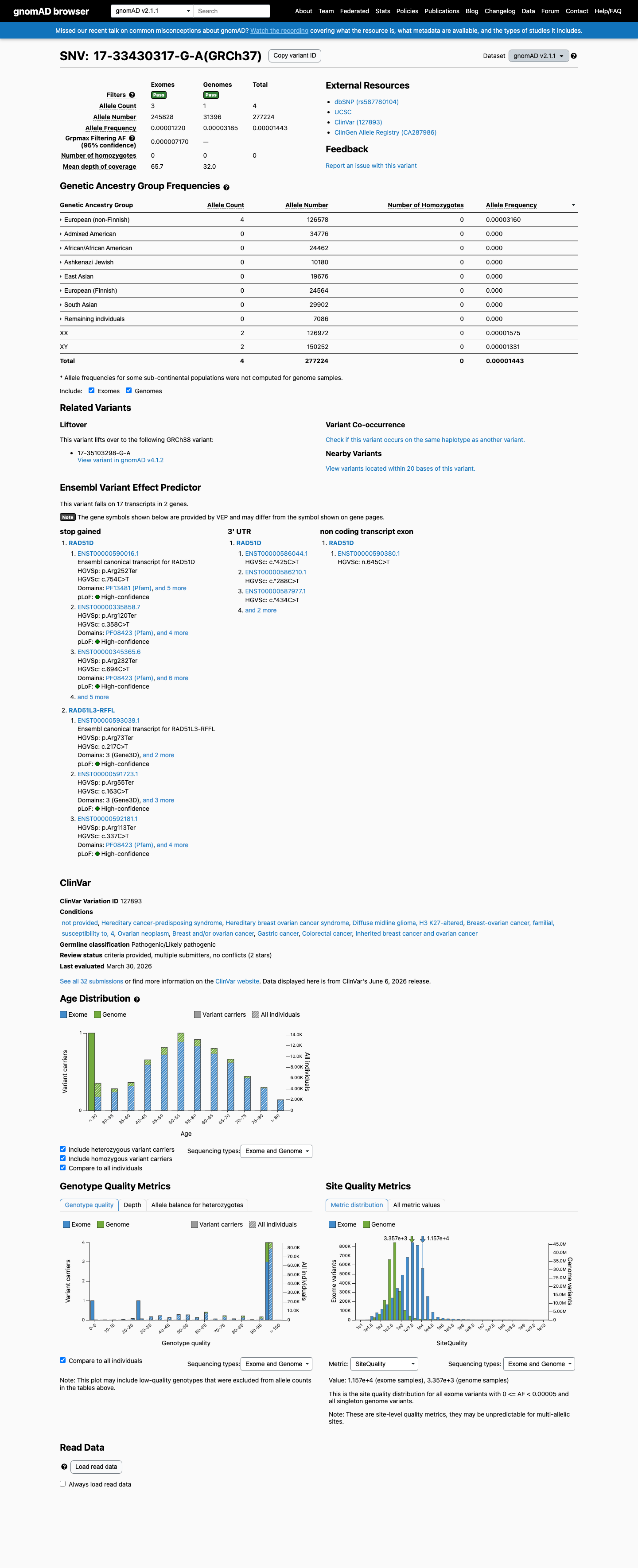
European (non-Finnish) 4 / 126,578 |
0.0032% |