ATM encodes a kinase that acts as a master controller of the cellular DNA damage response: it detects double-strand breaks and coordinates DNA repair, cell cycle arrest, or apoptosis through downstream targets including p53, BRCA1, and CHK2. Loss-of-function mutations in both copies of ATM cause ataxia telangiectasia, an autosomal recessive disorder characterized by neurological problems, immune deficiency, and cancer predisposition. ATM functions as a tumor suppressor: individuals with ataxia telangiectasia are prone to childhood lymphomas, leukemias, and breast cancer, while carriers of a single altered copy have increased risk of breast, pancreatic, prostate, and other cancers. Somatic ATM mutations also occur in lymphoid malignancies and solid tumors, and ATM-deficient cancers are often especially sensitive to DNA-damaging treatments.
This variant
ATM encodes a tumor-suppressor kinase that coordinates DNA-damage responses, and altered ATM dosage is relevant to cancer predisposition and autosomal-recessive ataxia-telangiectasia.
Transcript
NM_000051.4
HGVS · transcript:coding
NM_000051.4:c.6897C>T
GRCh38
chr11:108326147 C>T
GRCh37
chr11:108196874 C>T
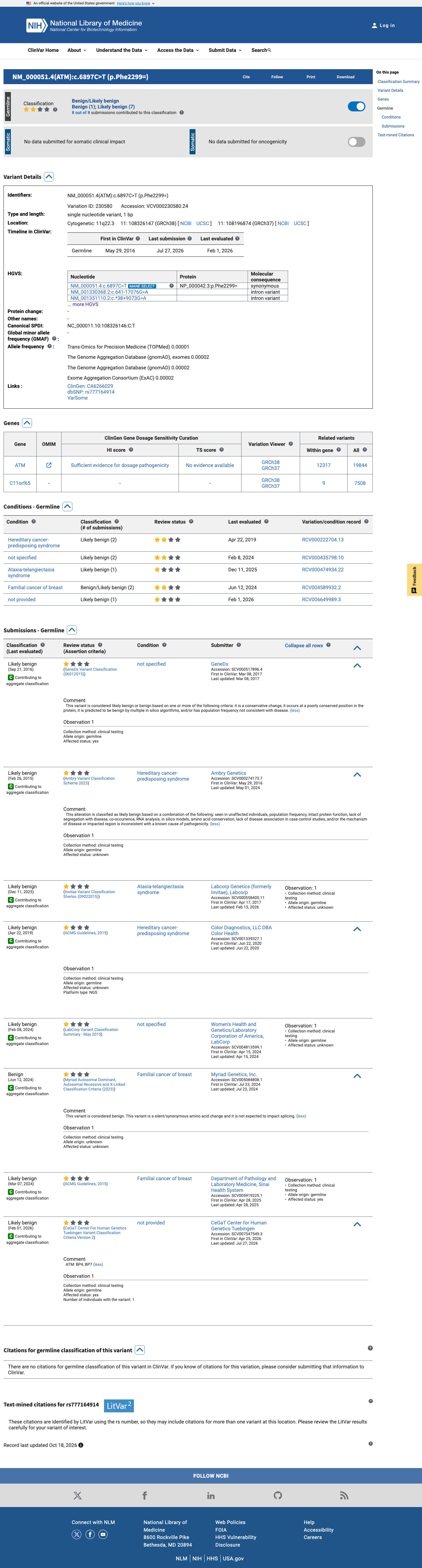
Likely Benign: BS3, BP4, and BP7, each at supporting strength, satisfy the ATM VCEP Rule19 requirement of at least two benign supporting criteria.
Classification rationale
BS3BP4BP7Likely Benign
ATM c.6897C>Tsynonymous · exon 47
Benign evidence: high-confidence direct prime-editing classified the exact variant as Functional, satisfying BS3 Supporting. Benign evidence: SpliceAI maximum delta score 0.009 is below the VCEP BP4 threshold of 0.1, satisfying BP4 Supporting. Benign evidence: the synonymous c.6897C>T consequence satisfies the VCEP's BP7 Supporting scope.
BS3 + BP4 + BP7→Likely Benign
LYFE Sciences is an AI system, and it can make mistakes. Criteria
may be applied incorrectly, sources may be misread, and a confident-looking
classification can still be wrong. Double-check every criterion and
its underlying evidence before relying on any call.
Gene diagram
· NM_000051.4 · variants mapped to exon structure
ATMNM_000051.4
Fetching transcript structure from UCSC…
Exons
—
Transcript span
—
Strand
—
Variants mapped
—
Source
UCSC ncbiRefSeqCurated
All variants in ATM—click a row to locate it on the plot · use the link column to open its page
Protein
Location
Classification
Link
Applied criteria · 3 applied · 9 assessed
MetEvidence satisfies this criterion.
Not metEvaluated against available evidence; threshold not reached.
Not assessedApplies in principle, but no evidence was found to evaluate it.
N/ADoesn't apply to this variant type.
Applied · 3
Strength Supporting Moderate Strong Very strong
✓
BS3supportingBenign
Met at Supporting: direct prime-editing classified c.6897C>T as Functional with High confidence and DeepATM_predicted=No.
Sun et al. 2025 Supplementary Table S1, exact row c.6897C>T / F2299F / exon_47: Classification=Functional; Confidence=High; DeepATM_predicted=No; Combined_score=0.571099742195023.The VCEP-specific rule for this table treats DeepATM_predicted=No with High, Medium-high, or Medium confidence as direct prime-editing measurement and assigns BS3_Supporting when Classification=Functional.The VCEP CSPEC entry states: use BS3 Supporting when a variant rescues either an ATM-specific feature or radiosensitivity.
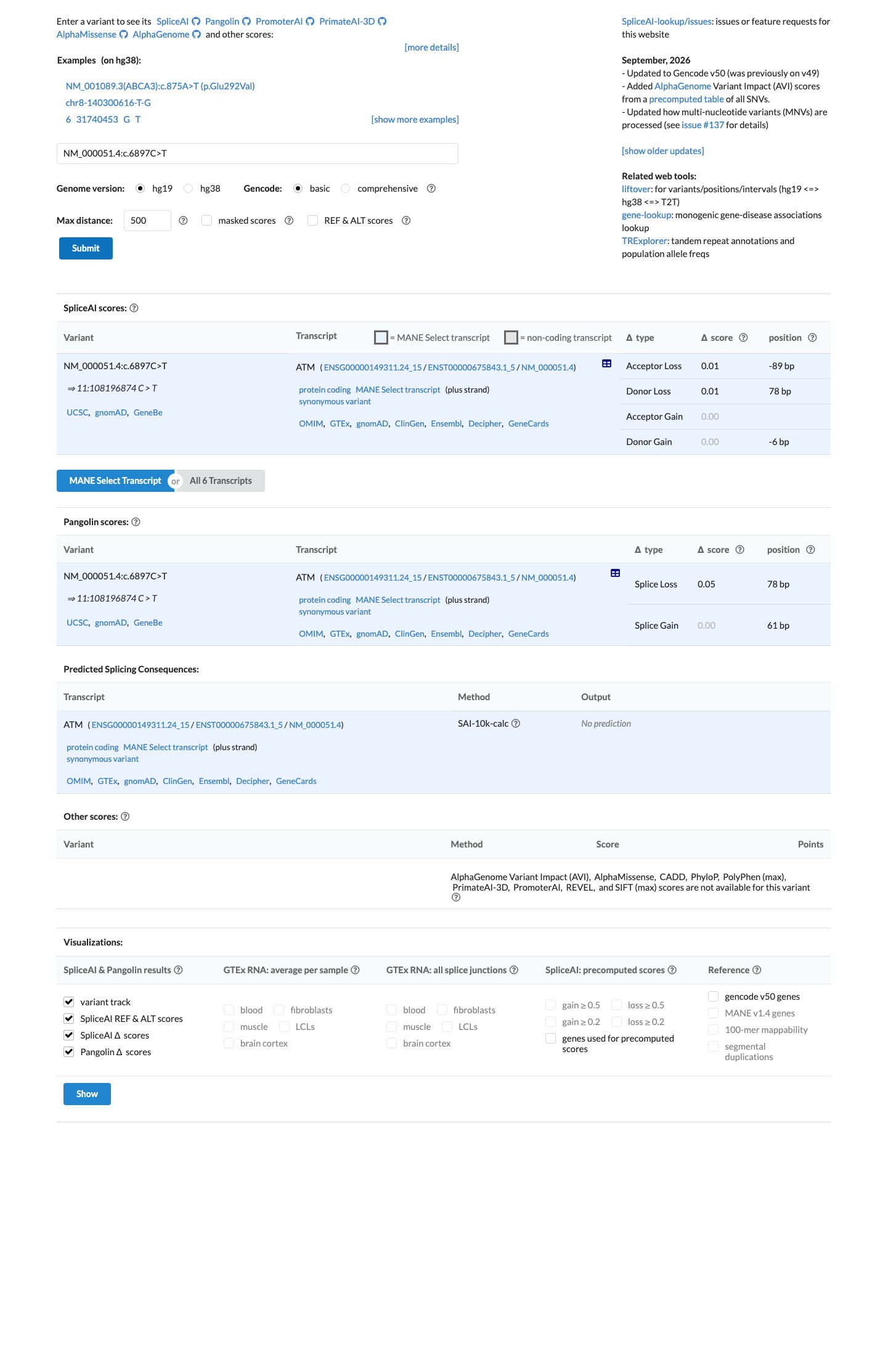
Met: SpliceAI maximum delta score 0.009 is at or below the VCEP BP4 threshold of 0.1.
VCEP ATM v1.6 BP4 rule: splicing evidence requires no predicted impact via SpliceAI ≤0.1.SpliceAI Lookup for NM_000051.4:c.6897C>T: DS_AG=0.000, DS_AL=0.009, DS_DG=0.001, DS_DL=0.007; maximum delta score=0.009.Suppl_TableS1_PMID 40580951.xlsx exact row c.6897C>T / F2299F: Classification=Functional, Confidence=High, DeepATM_predicted=No; this functional result is not used for BP4.
Met: The variant is synonymous (p.Phe2299=), which is explicitly within the VCEP BP7 supporting scope.
VCEP ATM v1.6 BP7 supporting rule: use for synonymous and deep intronic variants defined as further than (but not including) +7 and -21 at donor and acceptor sites, respectively.Case variant facts: NM_000051.4:c.6897C>T, NP_000042.3:p.(Phe2299=), synonymous consequence, exon 47.
Assessed · not applied
· 5 not met · 4 not assessed
Pathogenic
PS3Not met: direct prime-editing classified c.6897C>T as Functional with High confidence, not a variant failing to rescue an ATM-specific feature.
PS4Not assessed: no variant-specific case-control p-value, odds ratio, relative risk, hazard ratio, or lower 95% confidence interval is available for the PS4 thresholds.
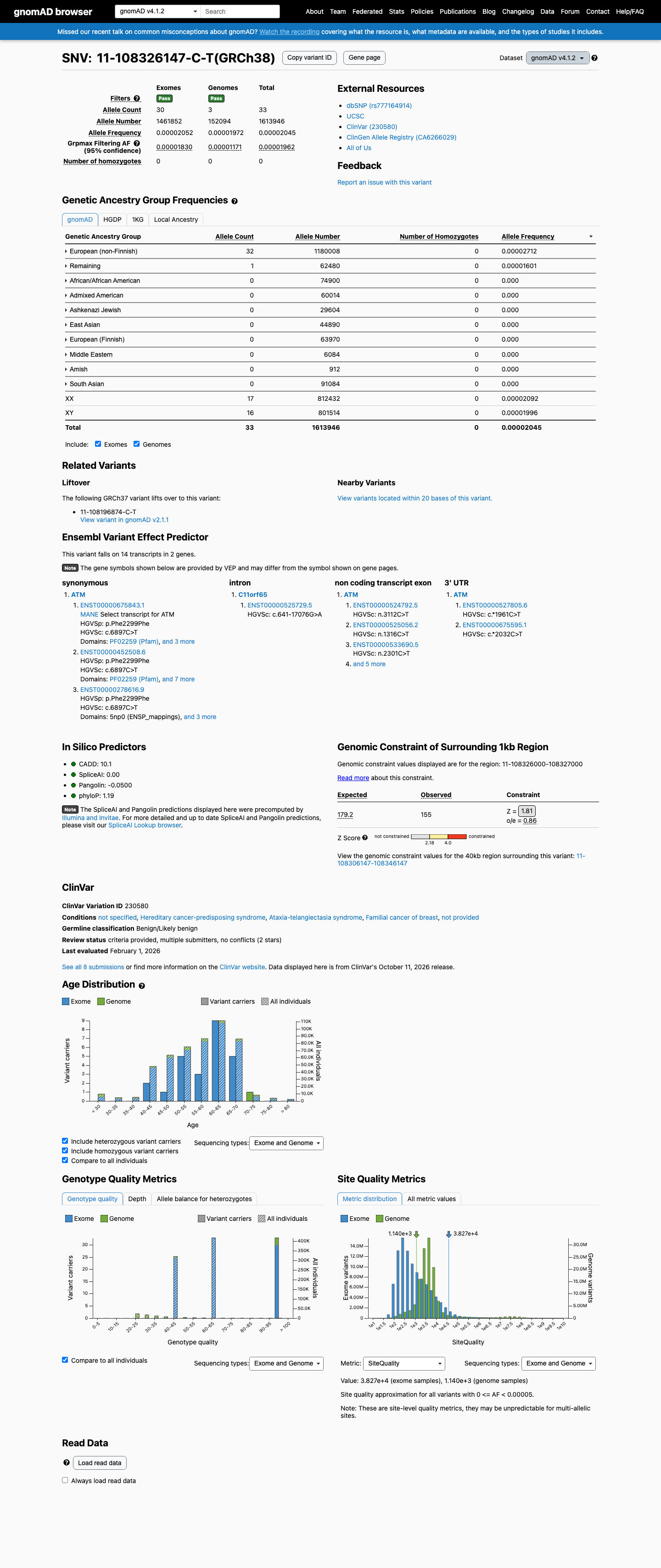
PM2Not met: the highest gnomAD subpopulation AF is 0.00271185% in v4.1, exceeding the VCEP's ≤0.001% PM2 threshold.
PM3Not assessed: no governing-table entry or affected A-T proband phase evidence is available to assign PM3 points.
PP1Not assessed: no affected relatives, parental testing, phase information, or segregation count is documented to meet the VCEP's AR PP1 requirements.
PP3Not met: SpliceAI maximum delta score 0.009 is below the VCEP PP3 threshold of 0.2.
Benign
BA1Not met: gnomAD grpmax filtering AF is 0.001962% in v4.1, below the VCEP's >0.5% BA1 threshold.
BS1Not met: gnomAD grpmax filtering AF is 0.001962% in v4.1, below the VCEP's >0.05% BS1 threshold.
BP2Not assessed: no governing-table entry or qualifying unaffected adult cis/trans observation is available to assign BP2 points.
This variant is present in gnomAD v4.1 (AF= 2.04468e-05; MAF= 0.00204%, 33/1613946 alleles, homozygotes = 0) and has highest observed frequency in the European (non-Finnish) population (AF= 2.71185e-05; MAF= 0.00271%, 32/1180008 alleles, homozygotes = 0); grpmax FAF= 1.962e-05.
v2.1
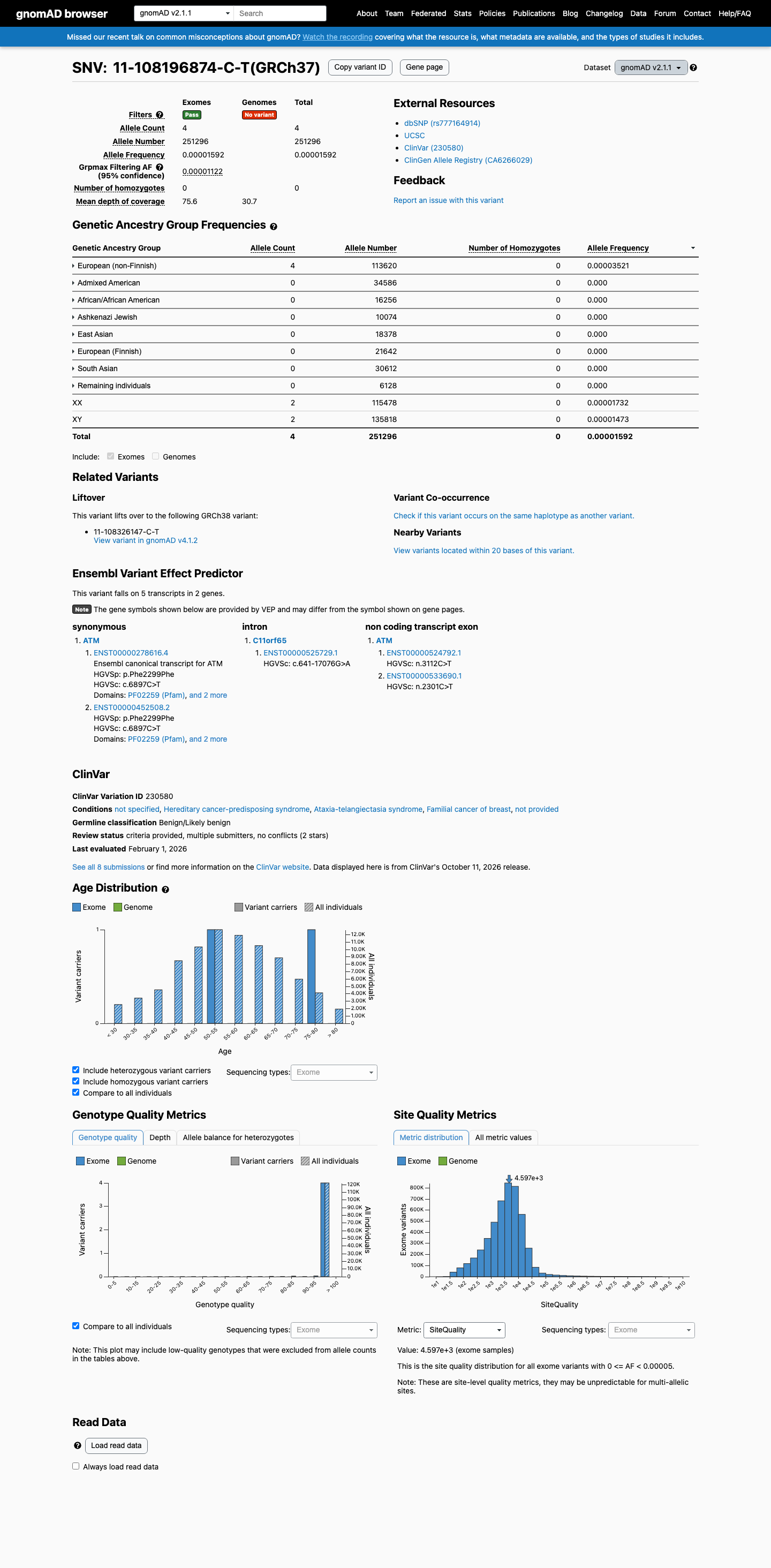
This variant is present in gnomAD v2.1 (AF= 1.59175e-05; MAF= 0.00159%, 4/251296 alleles, homozygotes = 0) and has highest observed frequency in the European (non-Finnish) population (AF= 3.52051e-05; MAF= 0.00352%, 4/113620 alleles, homozygotes = 0); grpmax FAF= 1.122e-05.
🇨🇦 CA
Absent from gnomAD-Canada v1.0.
Allele frequency by ancestry
three datasets · side by side
gnomAD v4.1
0.002%
· 33 / 1,613,946
0 hom · FAF 0.002%
European (non-Finnish)
32 / 1,180,008
0.0027%
Remaining individuals
1 / 62,480
0.0016%
+ 8 not observed (Admixed American, European (Finnish), Amish, East Asian, Middle Eastern, South Asian, Ashkenazi Jewish, African/African American)
gnomAD v2.1
0.0016%
· 4 / 251,296
0 hom · FAF 0.0011%
European (non-Finnish)
4 / 113,620
0.0035%
+ 7 not observed (African/African American, Admixed American, Ashkenazi Jewish, East Asian, European (Finnish), Remaining individuals, South Asian)
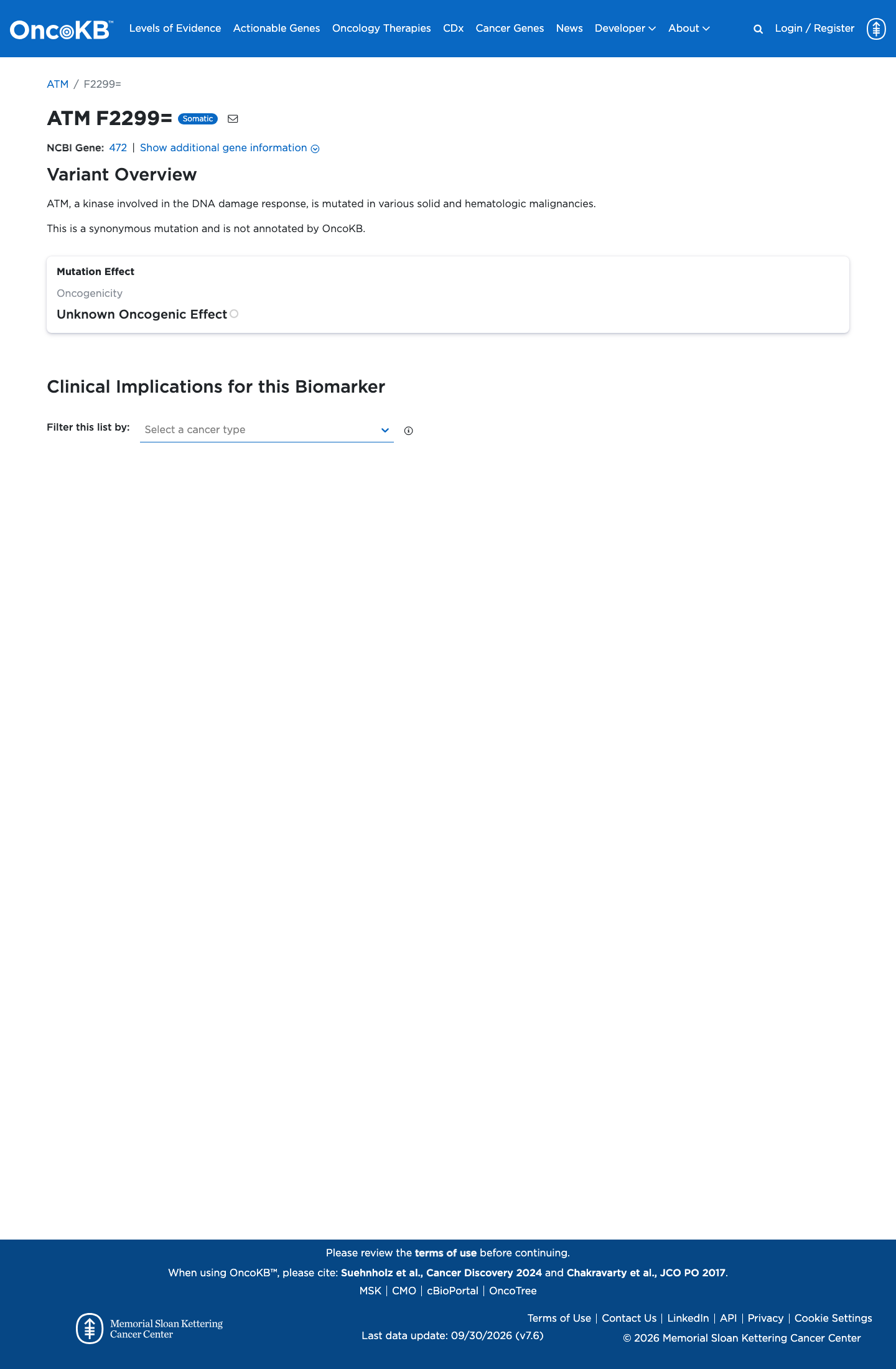
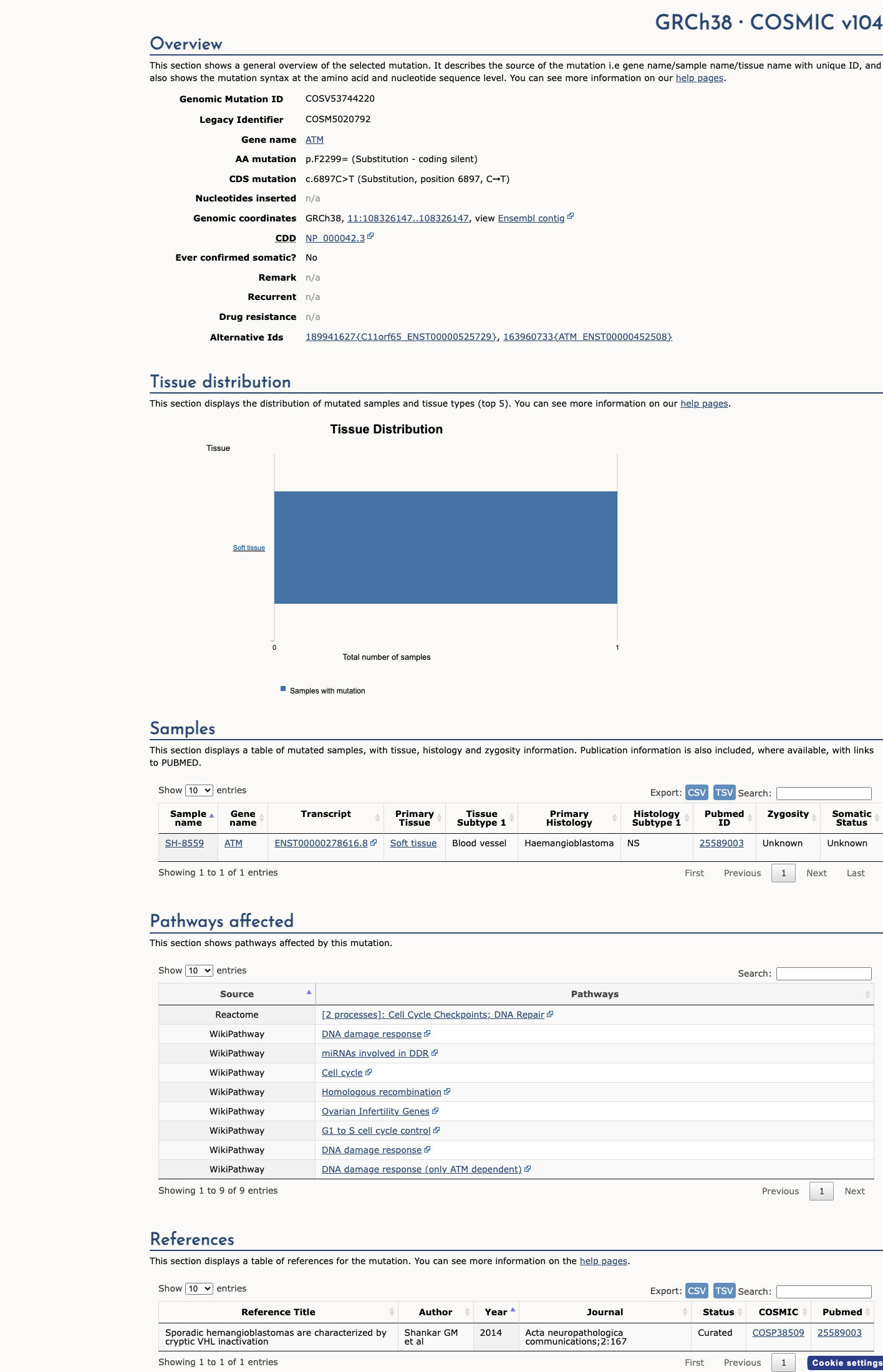
This variant does not lie in a statistically significant hotspot. This variant has previously been reported in somatic cancers (COSMIC; COSV53744220, n = 1 times).
Hotspots
This variant does not lie in a statistically significant hotspot.
Each card is an audit: what was searched, what was found, whether it names the variant, which criteria it fed, and why. 7 further PMIDs triaged but not cited — see Sources & references.
Sun et al. 2025 Supplementary Table S1 contains the exact ATM synonymous variant c.6897C>T (F2299F) row. The row reports Combined_score 0.571099742195023, Classification Functional, Confidence High, and DeepATM_predicted No; under the VCEP file-specific rule this is a direct prime-editing measurement supporting BS3 at Supporting strength and not PS3.
Variant
✓ Names this variant — characterised directly
Applied to
→BS3
supporting
Exact row is a high-confidence direct prime-editing measurement classified Functional, supporting BS3_Supporting under the VCEP file-specific rule.
108326147 C T c.6897C>T F2299F exon_47 11 Synonymous 2299 NA NA NA NA NA 2.044678074731e-05 Likely benign 0.571099742195023 Functional High No
Location Table S1 converted full text, row 22059 · Context Sun et al. 2025 functional assessment of ATM SNVs using prime editing and deep learning; the exact row is marked DeepATM_predicted=No and Confidence=High, which the VCEP table policy treats as direct prime-editing measurement. · full text
Sources & reference links
9Sources
CSpec VCEP
ClinVar
gnomAD v2.1
gnomAD v4.1
gnomAD-Canada
SpliceAI
OncoKB
COSMIC
Cancer hotspots
Triaged references · 7 PMIDs not cited in assessment
25741868 ↗Standards and guidelines for the interpretation of sequence variants: a joint consensus recommendation of the American College of Medical Genetics and Genomics and the Association for Molecular Pathology.CLINVAR
18163131 ↗The emerging landscape of breast cancer susceptibility.CLINVAR