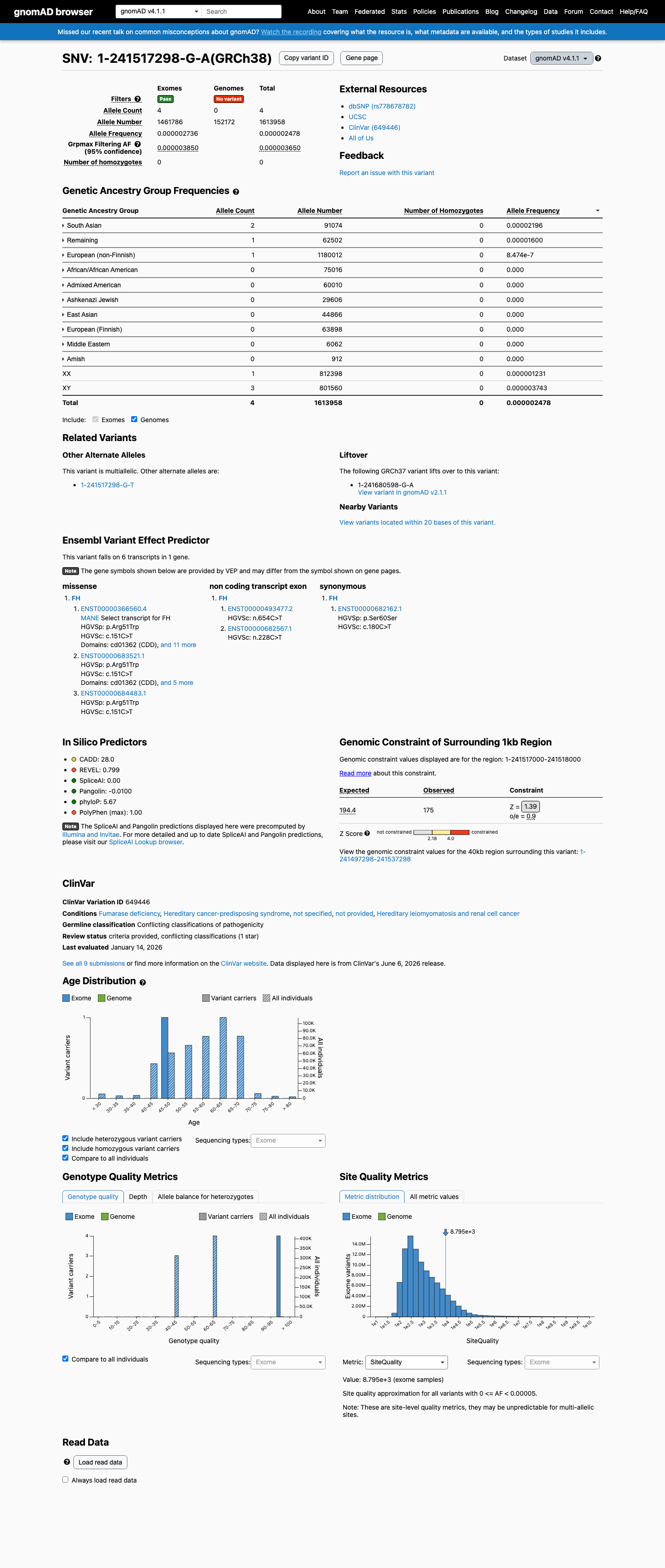
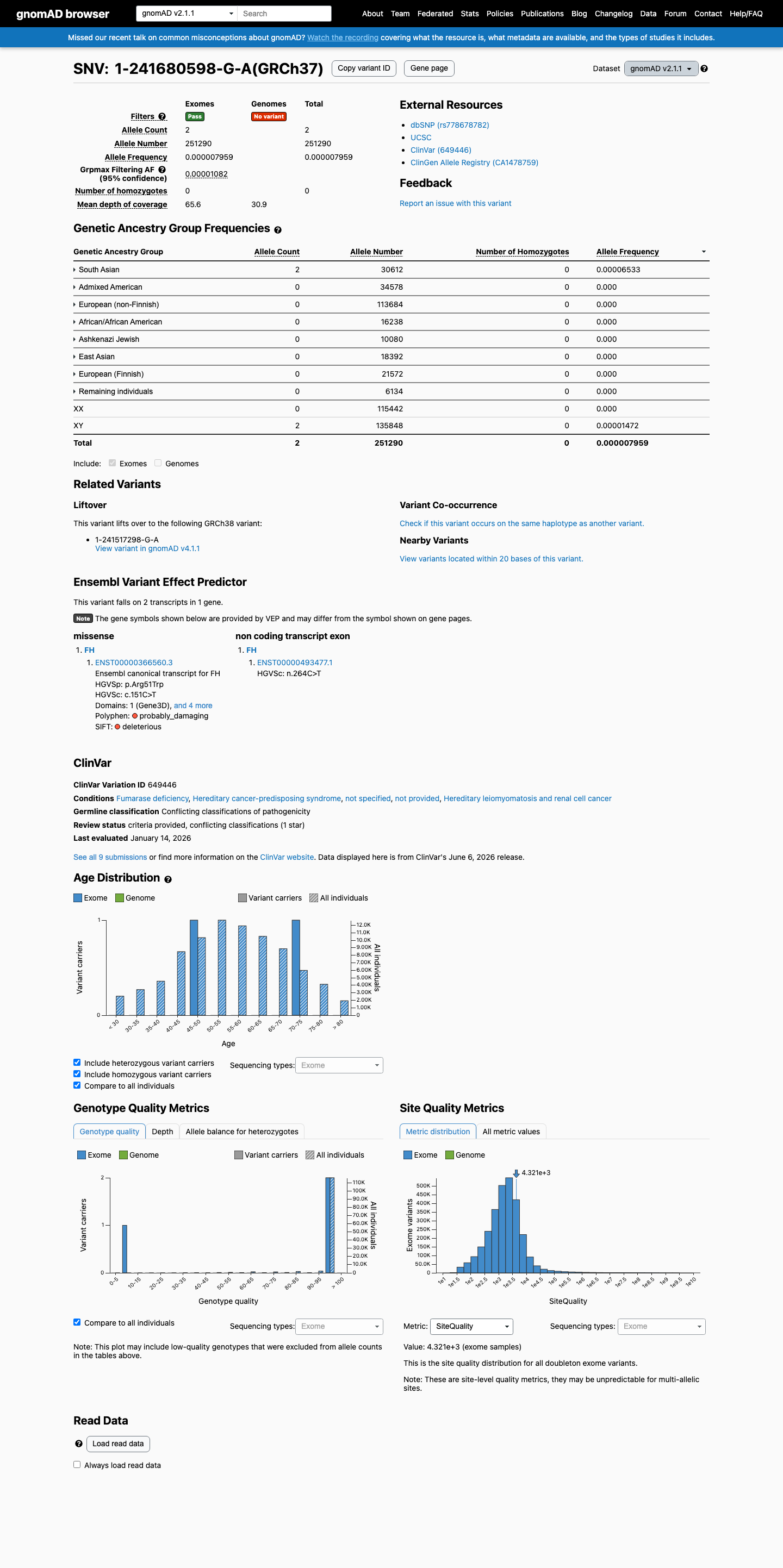
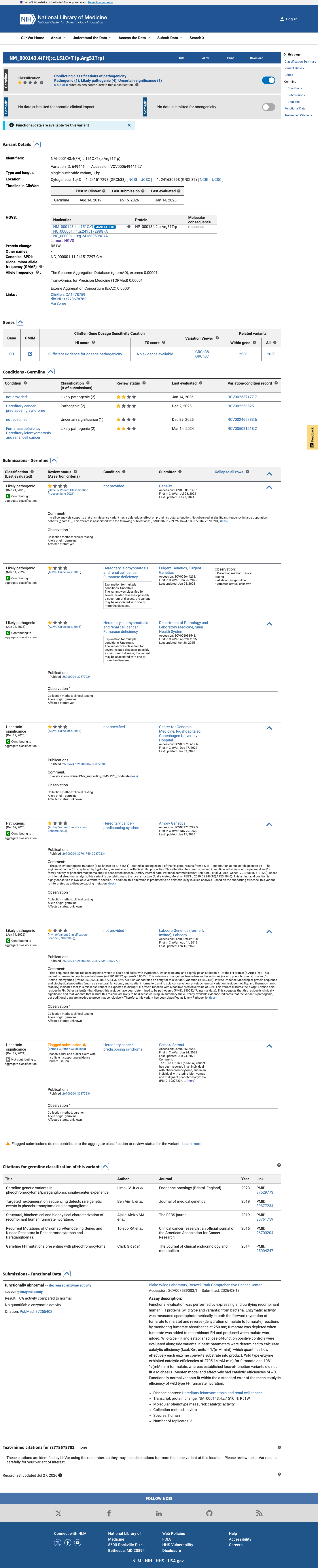
This missense variant (c.151C>T, p.Arg51Trp) is extremely rare in population databases (gnomAD v2.1 allele frequency 0.00080%, v4.1 allele frequency 0.00025%), meeting PM2 at moderate strength.1 In one patient with pheochromocytoma, tumor tissue analysis revealed loss of heterozygosity at the FH locus and positive 2-SC immunostaining confirming FH deficiency, providing functional evidence at supporting strength (PS3_supporting).2 Multiple in silico tools predict a deleterious effect (REVEL score 0.799), supporting a pathogenic role at the protein level (PP3_supporting).3 The variant has been reported in ClinVar (VariationID 649446) as Likely pathogenic by multiple clinical laboratories (4 LP, 1 P, 1 VUS), but no expert panel review is available; PP5 is not met.4 PVS1 is not applicable as this is a missense variant. PS4 is not met due to insufficient published case numbers. Remaining pathogenic and benign criteria are not met.5
Final classification
VUS
PS3PM2PP3
FH
c.151C>T
p.Arg51Trp
missense
This variant
This missense variant (c.151C>T, p.Arg51Trp) is extremely rare in population databases (gnomAD v2.1 allele frequency 0.00080%, v4.1 allele frequency 0.00025%), meeting PM2 at moderate strength.
gene-specific framework lacked a usable explicit final combination framework, so generic ACMG/AMP 2015 final-combination rules were applied as fallback; applied criteria: PS3 supporting, PM2 moderate, PP3 supporting; combination = 1 moderate + 2 supporting, which maps to VUS.
Classification rationale
PS3PM2PP3
VUS
FH c.151C>T
missense
PS3 + PM2 + PP3
→
VUS
LYFE Sciences is an AI system, and it can make mistakes. Criteria
may be applied incorrectly, sources may be misread, and a confident-looking
classification can still be wrong. Double-check every criterion and
its underlying evidence before relying on any call.
Gene diagram
· NM_000143.4 · variants mapped to exon structure
FH
NM_000143.4
Fetching transcript structure from UCSC…
Applied criteria · 3 applied · 21 assessed
MetEvidence satisfies this criterion.
Not metEvaluated against available evidence; threshold not reached.
Not assessedApplies in principle, but no evidence was found to evaluate it.
N/ADoesn't apply to this variant type.
Applied · 3
Strength
Supporting
Moderate
Strong
Very strong
PS3
supporting
Pathogenic
In one patient with pheochromocytoma, PCC tissue analysis of this variant revealed loss of heterozygosity at the FH locus and positive 2-SC (S-(2-succinyl)cysteine) immunostaining, confirming FH deficiency in the tumor and supporting a deleterious functional effect.
LOH at FH locus in PCC tissue from a patient carrying c.151C>TPositive 2-SC immunostaining confirming FH enzymatic deficiency in tumor tissue
PM2
moderate
Pathogenic
This variant is extremely rare in population databases: gnomAD v2.1 allele frequency is 7.96e-06 (0.00080%, 2/251,290 alleles, 0 homozygotes) and gnomAD v4.1 allele frequency is 2.48e-06 (0.00025%, 4/1,613,958 alleles, 0 homozygotes). Both are well below the 0.1% PM2 threshold for a rare disease gene.
gnomAD v2.1: AF = 0.00080%2/251290 alleles
PP3
supporting
Pathogenic
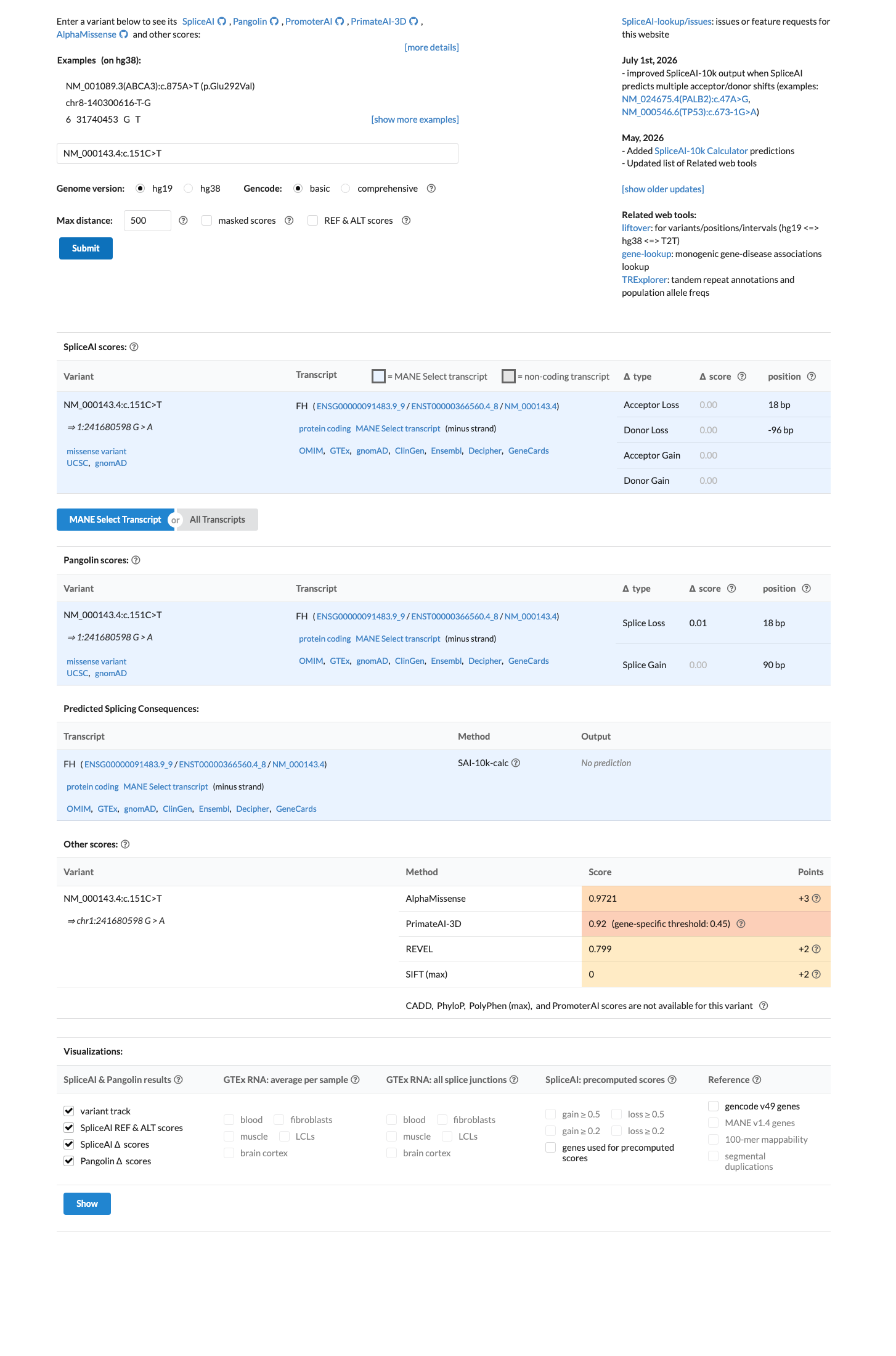
Multiple in silico tools predict a deleterious effect: REVEL score of 0.799 is in the pathogenic range. SpliceAI predicts no splice impact (max delta = 0.00), so the predicted effect is at the protein level.
REVEL score: 0.799 (pathogenic range)BayesDel score: 0.446SpliceAI max delta: 0.00 (no splicing impact predicted)
Assessed · not applied
· 21 not met · 0 not assessed
Pathogenic
PS1
No evidence of a different nucleotide change at c.151 predicted to produce the same amino acid substitution (p.Arg51Trp).
PS2
No de novo report for NM_000143.4:c.151C>T was identified in the available literature or ClinVar submissions.
PS4
Only one published case with variant-specific clinical detail (PCC at age 55, PMID 30877234).
PM1
Residue 51 is located in the N-terminal Domain 1 of FH (residues 49-188), which is a structural domain without a characterized independent functional role.
PM5
No same-residue comparator variant with a different pathogenic amino acid change was identified.
PM6
No de novo report for this variant was identified in the available literature or ClinVar submissions.
PP1
No co-segregation data available.
PP2
Although missense variants are the most common mutation type in FH (55%), there is insufficient evidence that the rate of benign missense variants in FH is low enough to satisfy PP2 under generic ACMG.
PP4
Pheochromocytoma alone is not a highly specific phenotype for FH-related disease; it is associated with multiple other genes (SDHx, VHL, RET, NF1, etc.).
PP5
ClinVar review status for this variant (VariationID 649446) is 'criteria provided, single submitter' with 0 expert panel submissions.
Benign
BA1
gnomAD allele frequency (0.00080% v2.1, 0.00025% v4.1) is far below the 1% BA1 threshold for standing as a benign variant.
BS1
gnomAD allele frequency (0.00080%) is below the 0.3% BS1 threshold for a variant too common to cause a rare disease.
BS2
No homozygous observations in gnomAD.
BS3
No well-established in vitro or in vivo functional studies demonstrate no deleterious effect for this variant.
BS4
No evidence of non-segregation with disease in affected families.
BP1
BP1 applies to missense variants in genes where only truncating variants cause disease.
BP2
No observation of this variant in trans with a known pathogenic FH variant.
BP4
Multiple in silico tools predict a deleterious effect (REVEL 0.799).
BP5
No strong evidence from other sources suggesting a benign role.
BP6
ClinVar review status for this variant is 'criteria provided, single submitter' with 0 expert panel submissions.
BP7
This is a missense variant (c.151C>T, p.Arg51Trp), not a synonymous variant.
N/A · 4
PVS1 · PM3 · PM4 · BP3
Research & evidence
Population frequency
gnomAD v4.1
gnomAD v2.1
v4.1
This variant is present in gnomAD v4.1 (AF= 2.47838e-06; MAF= 0.00025%, 4/1613958 alleles, homozygotes = 0) and has highest observed frequency in the South Asian population (AF= 2.19602e-05; MAF= 0.00220%, 2/91074 alleles, homozygotes = 0); grpmax FAF= 3.65e-06.
v2.1
This variant is present in gnomAD v2.1 (AF= 7.95893e-06; MAF= 0.00080%, 2/251290 alleles, homozygotes = 0) and has highest observed frequency in the South Asian population (AF= 6.53339e-05; MAF= 0.00653%, 2/30612 alleles, homozygotes = 0); grpmax FAF= 1.082e-05.
🇨🇦 CA
Absent from gnomAD-Canada v1.0.
Allele frequency by ancestry
three datasets · side by side
gnomAD v4.1
0.00025%
· 4 / 1,613,958
0 hom · FAF 0.00037%
0 hom · FAF 0.00037%
South Asian 2 / 91,074 |
0.0022% |
Remaining individuals 1 / 62,502 |
0.0016% |
European (non-Finnish) 1 / 1,180,012 |
8.5e-05% |
+ 7 not observed (Admixed American, European (Finnish), Amish, East Asian, Middle Eastern, Ashkenazi Jewish, African/African American)
gnomAD v2.1
0.0008%
· 2 / 251,290
0 hom · FAF 0.0011%
0 hom · FAF 0.0011%
South Asian 2 / 30,612 |
0.0065% |
+ 7 not observed (African/African American, Admixed American, Ashkenazi Jewish, East Asian, European (Finnish), European (non-Finnish), Remaining individuals)
gnomAD Canada 🇨🇦
Absent
· 0 / ?
0 hom
0 hom
Not observed in any ancestry group.
ClinVar
This variant has been reported in ClinVar as Likely pathogenic (4 clinical laboratories) and as Uncertain significance (1 clinical laboratory) and as Pathogenic (1 clinical laboratory). (ClinVarID = 649446)
In silico
SpliceAI predicts no significant splice impact for this variant (max delta score = 0.00). REVEL score = 0.799. BayesDel score = 0.446505.
Functional
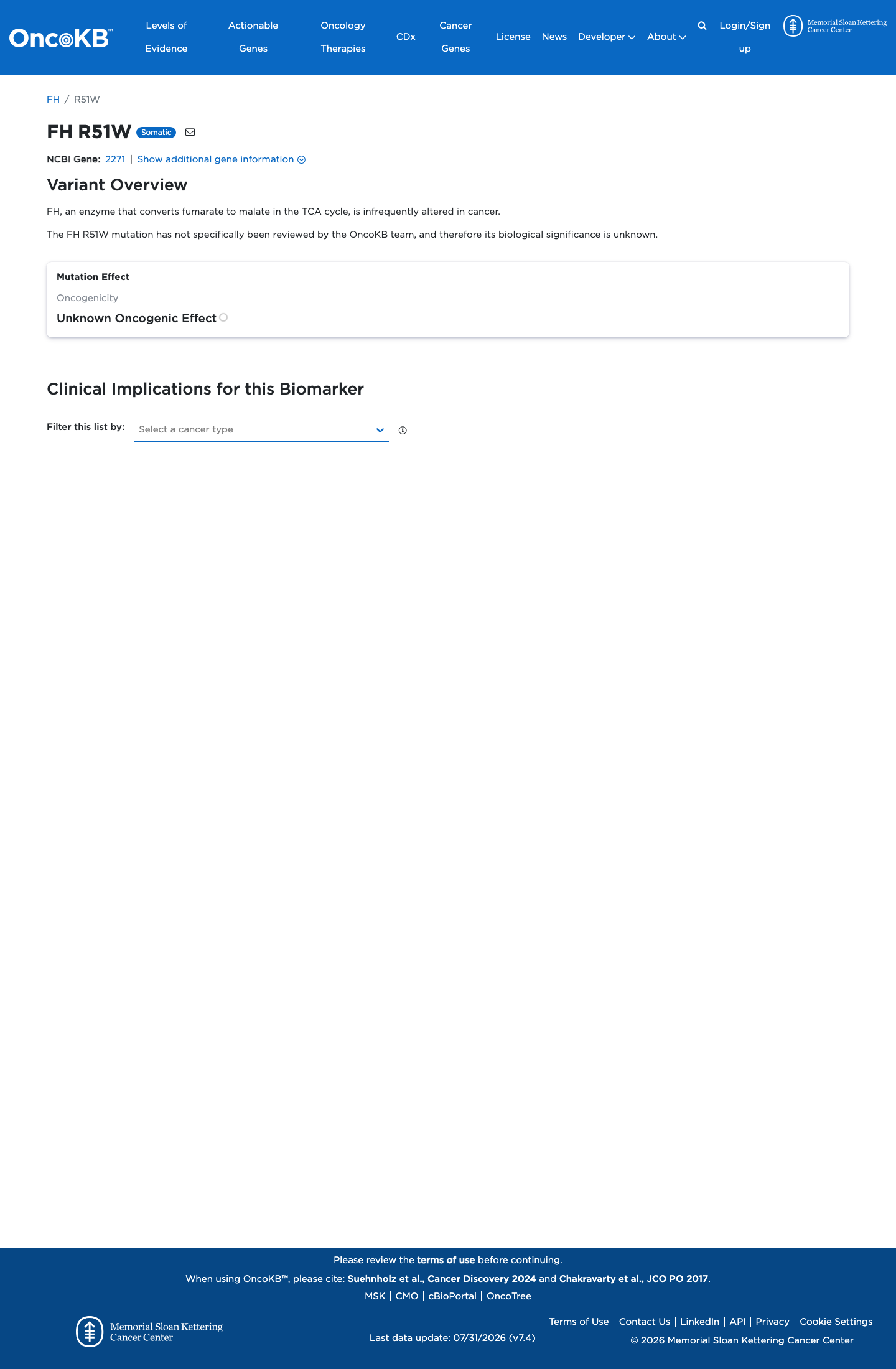
Unknown Oncogenic Effect
OncoKB did not identify variant-specific reviewed functional evidence for this variant; gene-level curated context is available for reviewer follow-up. FH, an enzyme that converts fumarate to malate in the TCA cycle, is infrequently altered in cancer.
COSMIC

Cancer hotspots
Somatic evidence
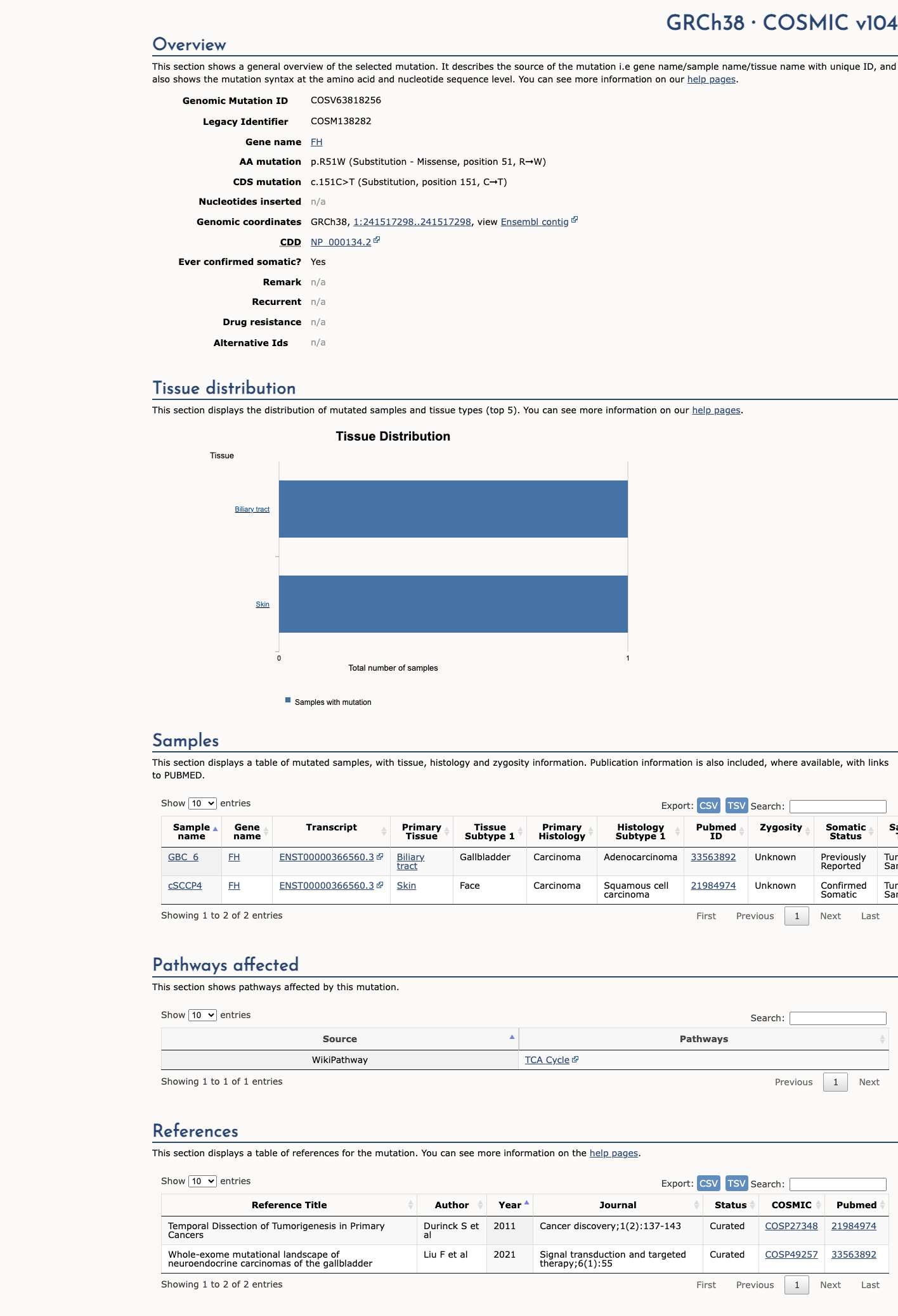
Not in COSMIC / hotspots
COSMIC
This variant does not lie in a statistically significant hotspot. This variant has previously been reported in somatic cancers (COSMIC; COSV63818256, n = 2 times).
Hotspots
This variant does not lie in a statistically significant hotspot.
Literature · how each cited paper was used
1papers cited
Each card is an audit: what was searched, what was found, whether it names the variant, which criteria it fed, and why. 7 further PMIDs triaged but not cited — see Sources & references.
Targeted next-generation sequencing detects rare genetic events in pheochromocytoma and paraganglioma.
Searched
c.151C>Tp.Arg51TrpArg51R51W
Found
NM_000143.4:c.151C>T (p.Arg51Trp) detected in a patient with pheochromocytoma diagnosed at 55 years. Tumor analysis revealed loss of heterozygosity at the FH locus and positive 2-SC immunostaining, confirming FH deficiency and supporting classification of the variant as pathogenic.
Variant
✓ Names this variant — characterised directly
Applied to
→PS3
met
Why
Variant-specific functional evidence from tumor tissue biomarker confirmed; referenced in PS3 assessment at supporting strength and PS4 assessment.
the PCC tissue analysis revealed a LOH at the FH locus and positive 2-SC immunostaining, which are both in favour of the FH, p.Arg51Trp pathogenicity that can be, then, classified as pathogenic.
Location Results, paragraph on patients with two germline VOI; Discussion, paragraph on co-occurring variants · Context Tumor tissue immunohistochemistry (2-SC staining), LOH analysis in pheochromocytoma tissue from a 55-year-old patient · full text
Sources & reference links
Triaged references · 7 PMIDs not cited in assessment
25741868 ↗
Standards and guidelines for the interpretation of sequence variants: a joint consensus recommendation of the American College of Medical Genetics and Genomics and the Association for Molecular Pathology.
CLINVAR
26700204 ↗
Recurrent Mutations of Chromatin-Remodeling Genes and Kinase Receptors in Pheochromocytomas and Paragangliomas.
CLINVAR
30761759 ↗
Structural, biochemical and biophysical characterization of recombinant human fumarate hydratase.
CLINVAR
25394175 ↗
A practice guideline from the American College of Medical Genetics and Genomics and the National Society of Genetic Counselors: referral indications for cancer predisposition assessment.
CLINVAR