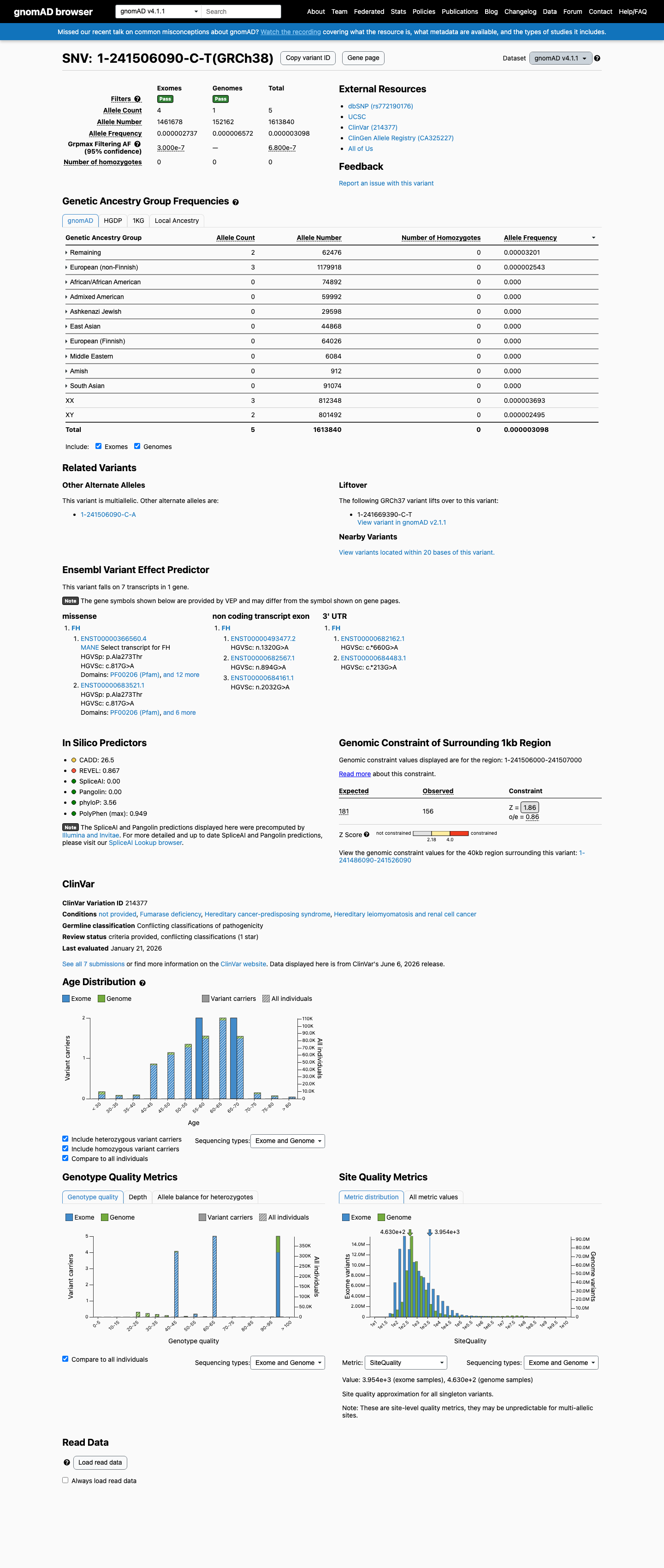
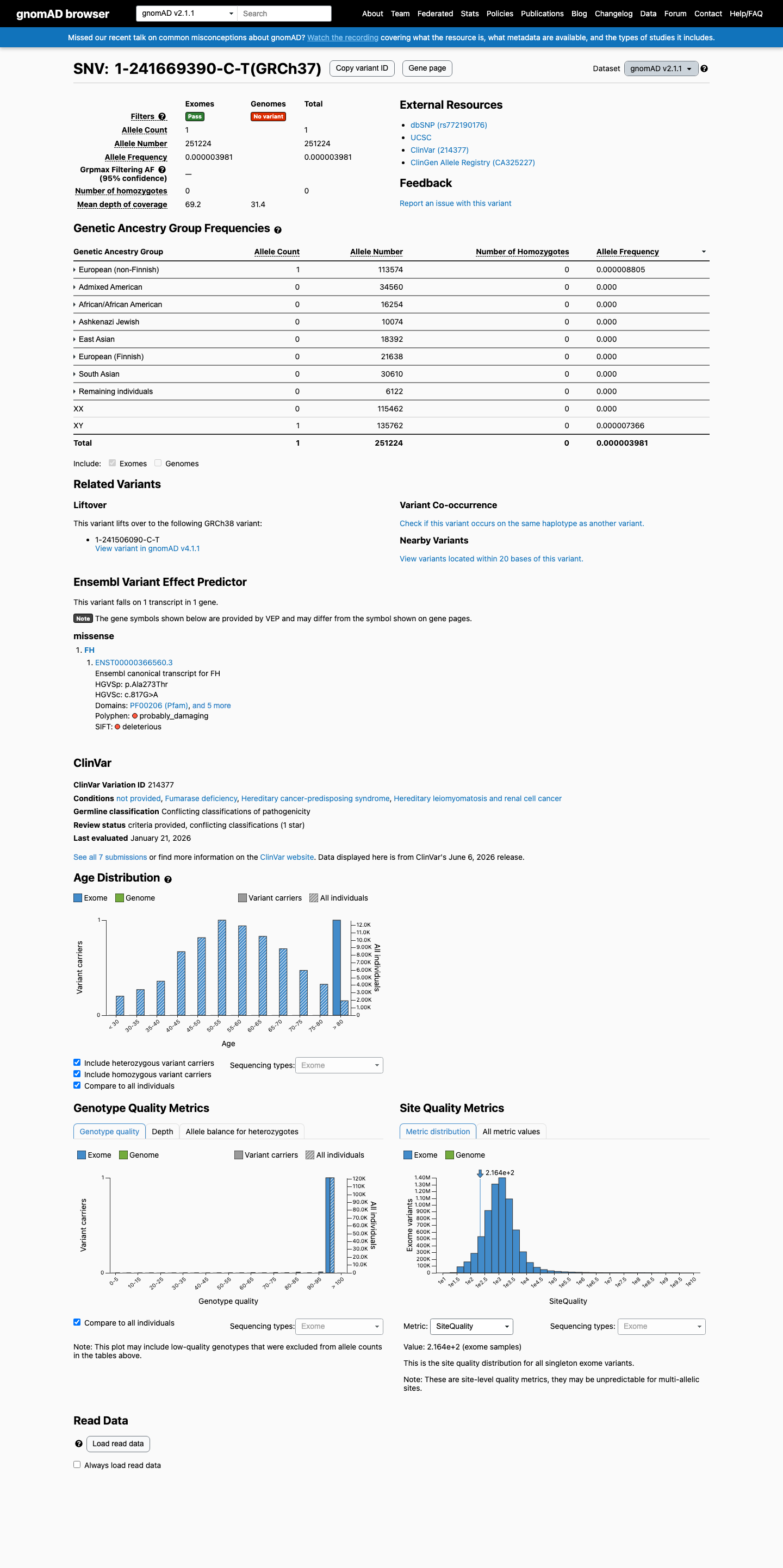
FH c.817G>A (p.Ala273Thr) is a missense variant in exon 6 of the fumarate hydratase gene, located within the fumarate lyase catalytic domain.1 The variant is extremely rare in population databases: gnomAD v2.1 allele frequency 0.00040% (1/251,224 alleles) and v4.1 allele frequency 0.00031% (5/1,613,840 alleles), with no homozygotes observed (PM2).2 Functional studies from patient tumor tissue demonstrate loss of fumarate hydratase function: immunohistochemistry showed diffuse/strong positive 2SC staining, negative FH protein staining, and decreased 5-hmC, with loss of heterozygosity confirmed in tumor tissue (PS3_Moderate).3 The variant resides in the fumarate lyase domain, the critical catalytic domain of FH, and has been observed in 2 of 13 FH-mutated PPGL cases across the literature suggesting recurrence at this site (PM1).4 Co-segregation was observed in two affected family members: the proband with bladder paraganglioma and the proband's aunt who carried the same variant and developed bladder paraganglioma in her 20s (PP1).5 Multiple lines of in silico evidence support a deleterious effect: REVEL score 0.867 strongly predicts damaging impact (PP3).6 The patient's phenotype of bladder paraganglioma with a positive family history is highly specific for hereditary PPGL syndromes including FH-related disease (PP4).7 FH is a well-established disease gene where missense variants are a known pathogenic mechanism in HLRCC and PPGL (PP2).8 This variant has been reported in ClinVar as Pathogenic (Variation ID: 214377), supported by multiple independent clinical laboratory submissions (PP5).9
Final classification
Likely Pathogenic
PS3PM1PM2PP1PP2PP3PP4PP5
FH
c.817G>A
p.Ala273Thr
missense
This variant
FH c.817G>A (p.Ala273Thr) is a missense variant in exon 6 of the fumarate hydratase gene, located within the fumarate lyase catalytic domain.
gene-specific framework lacked a usable explicit final combination framework, so generic ACMG/AMP 2015 final-combination rules were applied as fallback; applied criteria: PS3 moderate, PM1 moderate, PM2 moderate, PP1 supporting, PP2 supporting, PP3 supporting, PP4 supporting, PP5 supporting; combination = 3 moderate + 5 supporting, which maps to Likely Pathogenic.
Classification rationale
PS3PM1PM2PP1PP2PP3PP4PP5
Likely Pathogenic
FH c.817G>A
missense
PS3 + PM1 + PM2 + PP1 + PP2 + PP3 + PP4 + PP5
→
Likely Pathogenic
6
revel
LYFE Sciences is an AI system, and it can make mistakes. Criteria
may be applied incorrectly, sources may be misread, and a confident-looking
classification can still be wrong. Double-check every criterion and
its underlying evidence before relying on any call.
Gene diagram
· NM_000143.4 · variants mapped to exon structure
FH
NM_000143.4
Fetching transcript structure from UCSC…
Applied criteria · 8 applied · 14 assessed
MetEvidence satisfies this criterion.
Not metEvaluated against available evidence; threshold not reached.
Not assessedApplies in principle, but no evidence was found to evaluate it.
N/ADoesn't apply to this variant type.
Applied · 8
Strength
Supporting
Moderate
Strong
Very strong
PS3
moderate
Pathogenic
Variant-specific functional evidence from one publication (Ma et al. 2022, PMID:35821608) demonstrates loss of fumarate hydratase function: immunohistochemistry of the patient's tumor tissue showed diffuse/strong positive staining for 2-succinocysteine (2SC) and negative staining for FH protein, with decreased 5-hydroxymethylcytosine (5-hmC), confirming loss of enzymatic activity and a hypermethylation phenotype. Loss of heterozygosity was also demonstrated in tumor tissue. A single study with direct variant-specific functional characterization supports moderate-strength PS3.
IHC: diffuse/strong 2SC positiveFH protein negative5-hmC decreased in patient tumor tissue (PMID:35821608)
PM1
moderate
Pathogenic
The variant is located at codon 273 within the fumarate lyase domain of FH, the catalytic domain responsible for enzymatic conversion of fumarate to malate. This is a well-characterized critical functional domain. The variant causes a missense change (Ala273Thr) within this domain, and functional data confirm loss of enzyme activity. Although the residue is not a statistically significant hotspot in cancerhotspots.org, the well-established functional domain supports PM1 at moderate strength.
Missense change (Ala273Thr) in the fumarate lyase catalytic domain of FHFunctional confirmation of loss of enzymatic activity via IHC (2SC+/FH−) (PMID:35821608)c.817G>A noted as recurrent in PPGL (2/13 FH-mutated PPGL cases
PM2
moderate
Pathogenic
The variant is extremely rare in population databases: gnomAD v2.1 allele frequency = 0.00040% (1/251,224 alleles, 0 homozygotes), gnomAD v4.1 allele frequency = 0.00031% (5/1,613,840 alleles, 0 homozygotes), and absent from gnomAD-Canada. The highest subpopulation frequency is 0.0032% (gnomAD v4.1, Remaining individuals), which is well below the 0.1% PM2 threshold for non-VCEP application. The variant is absent or extremely rare in all populations surveyed.
gnomAD v2.1: AF=0.00040%1/251224 alleles
PP1
supporting
Pathogenic
Co-segregation observed in one affected family member: the proband's aunt carried the same c.817G>A variant and developed bladder paraganglioma in her 20s (PMID:35821608). This represents co-segregation in two affected relatives, supporting PP1 at supporting strength.
Proband (patient #1) with bladder PGL and c.817G>A (PMID:35821608)Proband's aunt with same variant and bladder PGL diagnosed in her 20s (PMID:35821608)
PP2
supporting
Pathogenic
FH is a tumor suppressor gene where missense variants are a well-established mechanism of disease. Both truncating and missense pathogenic variants in FH cause hereditary leiomyomatosis and renal cell cancer (HLRCC) as well as pheochromocytoma/paraganglioma. The gene has a low rate of benign missense variation relative to pathogenic missense changes, as evidenced by the extreme rarity of this variant in gnomAD and the known disease association of FH missense variants.
FH is a well-established disease gene where missense variants are known to be pathogenicMultiple missense FH variants reported as pathogenic in PPGL and HLRCC (PMID:35821608 Table 2)
PP3
supporting
Pathogenic
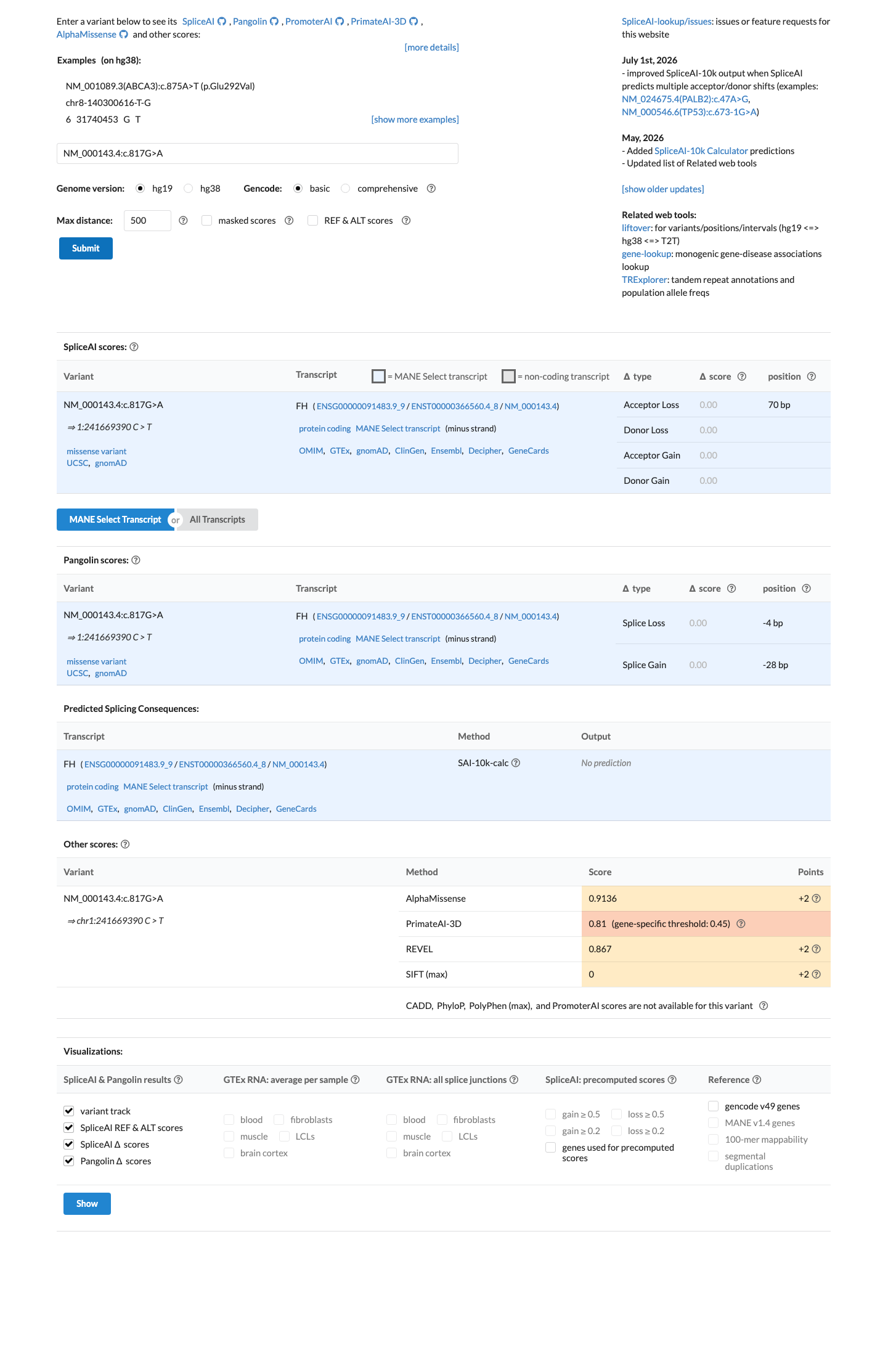
Multiple lines of in silico evidence support a deleterious effect: REVEL score of 0.867 (strongly predicted damaging), and BayesDel score of 0.503 (borderline). SpliceAI predicts no splicing impact (max delta = 0.00). The high REVEL score is the primary computational support. The missense change from alanine to threonine at a position within the catalytic fumarate lyase domain is predicted to disrupt protein function.
REVEL: 0.867 (strongly damaging prediction)BayesDel: 0.503 (borderline damaging)SpliceAI: max delta = 0.00 (no splicing impact)
PP4
supporting
Pathogenic
The patient presented with bladder paraganglioma, a phenotype highly specific for hereditary PPGL syndromes including FH-related disease. The presence of a positive family history of PPGL (affected aunt) further supports a hereditary etiology. The clinical phenotype is consistent with FH-associated disease.
Patient presented with bladder paraganglioma (PMID:35821608)Positive family history of PPGL in a first-degree relative (PMID:35821608)Phenotype is specific for hereditary PPGL syndromes including FH-related disease
PP5
supporting
Pathogenic
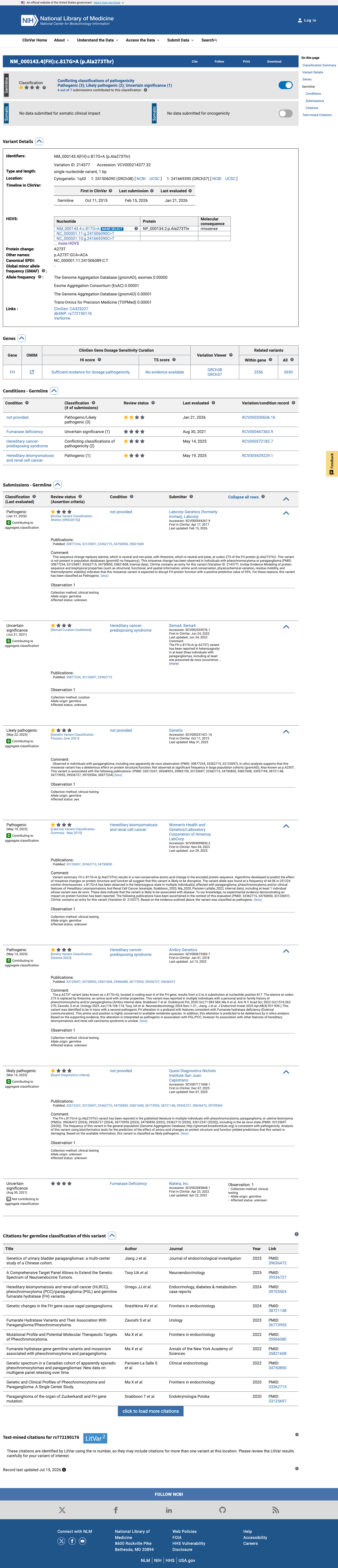
The variant is classified as Pathogenic in ClinVar (Variation ID: 214377), supported by multiple independent clinical laboratory submissions (3 labs report Pathogenic, 2 labs report Likely pathogenic/likely pathogenic, 1 lab reports Uncertain significance). Multiple reputable clinical testing laboratories have independently classified this variant as pathogenic or likely pathogenic. Although the ClinVar aggregate review status is 'criteria provided, single submitter' (not 3-star expert panel), the multiple independent clinical classifications constitute reputable source evidence for PP5 at supporting strength under generic ACMG/AMP 2015.
ClinVar Variation ID 214377: overall classification Pathogenic3 clinical laboratories: Pathogenic2 clinical laboratories: Likely pathogenic / likely pathogenic
Assessed · not applied
· 14 not met · 0 not assessed
Pathogenic
PS2
No de novo evidence with confirmed maternity and paternity was identified for this variant in the available literature or ClinVar submissions.
PS4
The variant was observed in 1 of 319 PPGL patients (PMID:35821608), which does not provide statistically significant enrichment over the extremely low population frequency.
PM5
No pathogenic missense variant at the same codon (Ala273) with a different amino acid change was identified in the PM5 candidate search.
PM6
No evidence of assumed or confirmed de novo occurrence was identified for this variant.
Benign
BA1
The maximum population allele frequency (gnomAD v4.1, Remaining individuals: 0.0032%) is far below the 1% BA1 threshold for non-VCEP application.
BS1
The maximum population allele frequency (gnomAD v4.1: 0.0032%) is far below the 0.3% BS1 threshold for non-VCEP application.
BS2
No evidence of this variant being observed in a healthy adult individual with full penetrance expected at an early age.
BS3
Functional evidence from PMID:35821608 demonstrates a damaging effect: IHC shows loss of FH protein expression with positive 2SC staining and decreased 5-hmC, confirming loss of fumarate hydratase function.
BS4
No evidence of lack of segregation in affected family members.
BP1
FH is a gene where both missense and truncating variants are established causes of disease (HLRCC and PPGL).
BP2
No evidence of this variant being observed in trans with a known pathogenic FH variant.
BP4
Computational evidence does not suggest a benign impact.
BP5
No evidence that this variant was found in a case with an alternate molecular basis for disease.
BP6
ClinVar overall classification for this variant is Pathogenic (Variation ID: 214377).
N/A · 3
PVS1 · PS1 · BP7
Research & evidence
Population frequency · supports pathogenic
gnomAD v4.1
gnomAD v2.1
v4.1
This variant is present in gnomAD v4.1 (AF= 3.0982e-06; MAF= 0.00031%, 5/1613840 alleles, homozygotes = 0) and has highest observed frequency in the Remaining individuals population (AF= 3.20123e-05; MAF= 0.00320%, 2/62476 alleles, homozygotes = 0); grpmax FAF= 6.8e-07.
v2.1
This variant is present in gnomAD v2.1 (AF= 3.98051e-06; MAF= 0.00040%, 1/251224 alleles, homozygotes = 0) and has highest observed frequency in the European (non-Finnish) population (AF= 8.80483e-06; MAF= 0.00088%, 1/113574 alleles, homozygotes = 0).
🇨🇦 CA
This variant is present in gnomAD-Canada v1.0 (AF= 0.0001085894233901618, 2/18418 alleles, homozygotes = 0).
Allele frequency by ancestry
three datasets · side by side
gnomAD v4.1
0.00031%
· 5 / 1,613,840
0 hom · FAF 6.8e-05%
0 hom · FAF 6.8e-05%
Remaining individuals 2 / 62,476 |
0.0032% |
European (non-Finnish) 3 / 1,179,918 |
0.00025% |
+ 8 not observed (Admixed American, European (Finnish), Amish, East Asian, Middle Eastern, South Asian, Ashkenazi Jewish, African/African American)
gnomAD v2.1
0.0004%
· 1 / 251,224
0 hom
0 hom
European (non-Finnish) 1 / 113,574 |
0.00088% |
+ 7 not observed (African/African American, Admixed American, Ashkenazi Jewish, East Asian, European (Finnish), Remaining individuals, South Asian)
gnomAD Canada 🇨🇦
0.011%
· 2 / 18,418
0 hom · FAF 0.003%
0 hom · FAF 0.003%
European (non-Finnish) 2 / 11,740 |
0.017% |
+ 8 not observed (African/African American, Latino/Admixed American, Ashkenazi Jewish, East Asian, European (Finnish), Middle Eastern, Remaining individuals, South Asian)
ClinVar
This variant has been reported in ClinVar as Pathogenic (3 clinical laboratories) and as Uncertain significance (1 clinical laboratory) and as Likely pathogenic (1 clinical laboratory) and as likely pathogenic (1 clinical laboratory). (ClinVarID = 214377)
In silico
SpliceAI predicts no significant splice impact for this variant (max delta score = 0.00). REVEL score = 0.867. BayesDel score = 0.502532.
Functional
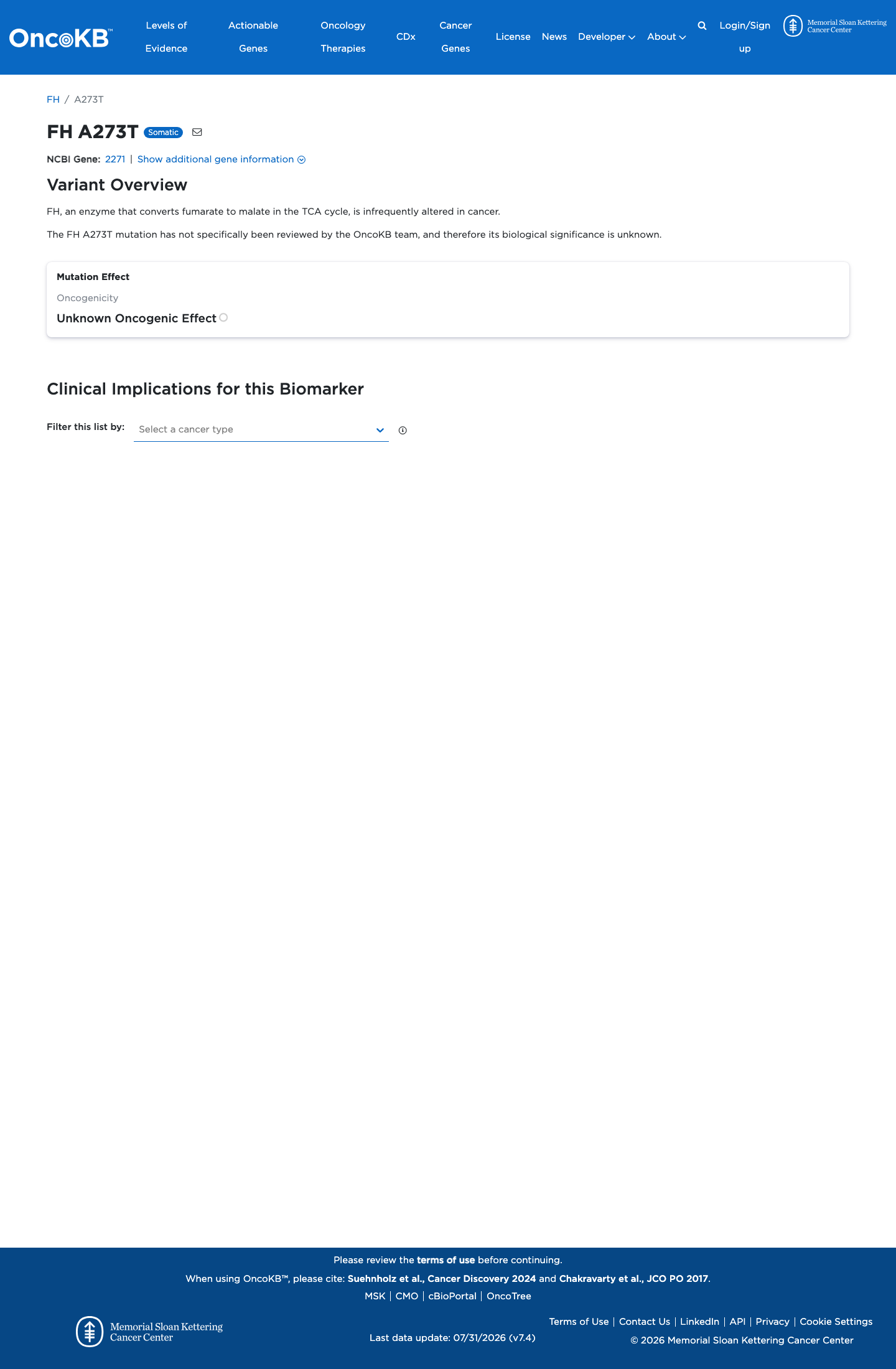
Unknown Oncogenic Effect
OncoKB did not identify variant-specific reviewed functional evidence for this variant; gene-level curated context is available for reviewer follow-up. FH, an enzyme that converts fumarate to malate in the TCA cycle, is infrequently altered in cancer.
COSMIC

Cancer hotspots
Somatic evidence
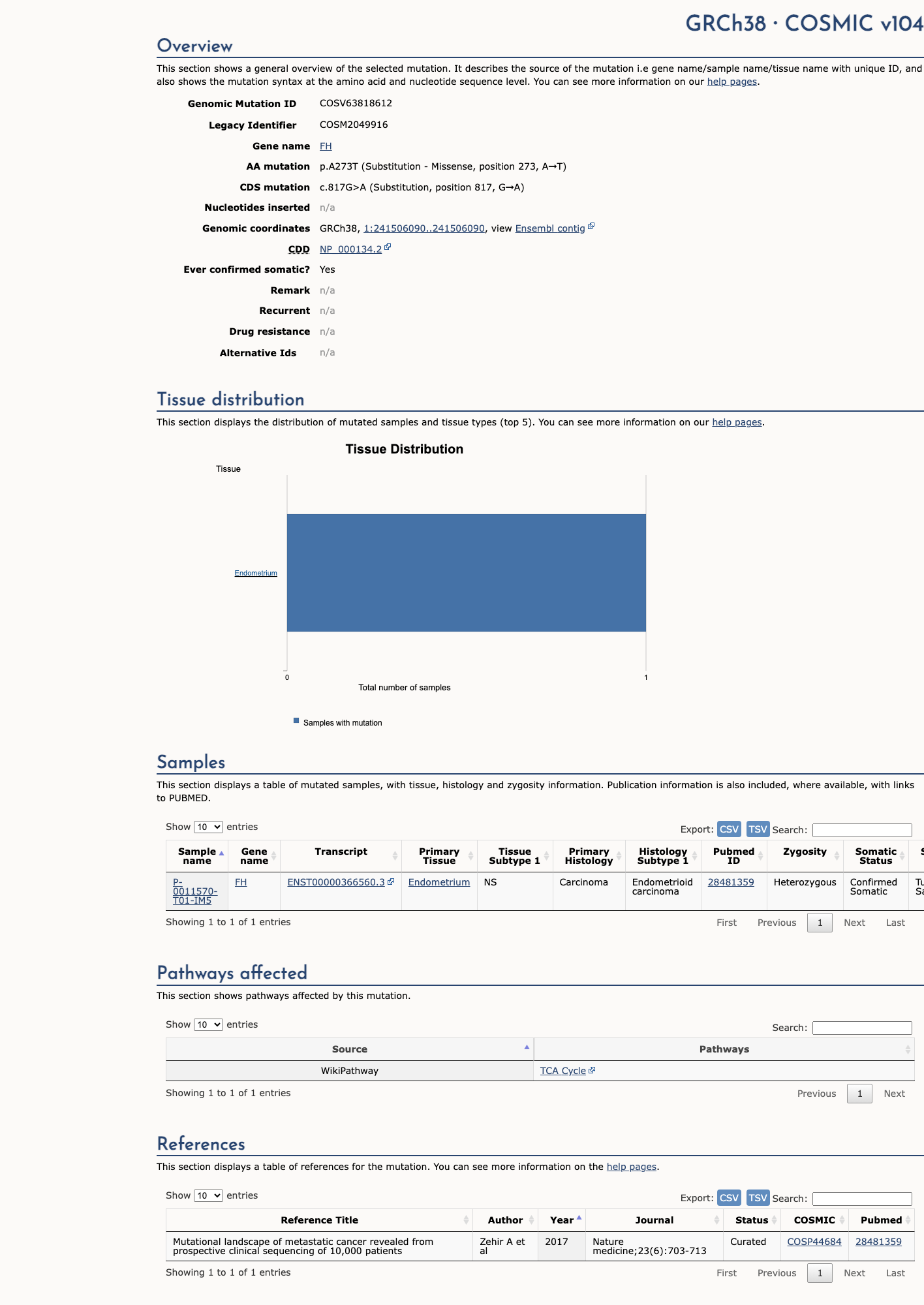
Not in COSMIC / hotspots
COSMIC
This variant does not lie in a statistically significant hotspot. This variant has previously been reported in somatic cancers (COSMIC; COSV63818612, n = 1 times).
Hotspots
This variant does not lie in a statistically significant hotspot.
Literature · how each cited paper was used
1papers cited
Each card is an audit: what was searched, what was found, whether it names the variant, which criteria it fed, and why. 8 further PMIDs triaged but not cited — see Sources & references.
Fumarate hydratase gene germline variants and mosaicism associated with pheochromocytoma and paraganglioma.
Searched
c.817G>Ap.Ala273ThrA273T
Found
FH c.817G>A (p.Ala273Thr) was identified as a germline variant in a 30-year-old female with bladder paraganglioma and a positive family history. Immunohistochemistry of tumor tissue demonstrated diffuse/strong positive 2SC staining and negative FH protein staining with decreased 5-hmC, confirming loss of fumarate hydratase function. Loss of heterozygosity was demonstrated by Sanger sequencing showing a homozygous variant in tumor tissue. The proband's aunt carried the same variant and developed bladder paraganglioma in her 20s. The authors classified this variant as pathogenic and noted it appeared recurrent in PPGL (2/13 FH-mutated cases, 15%).
Variant
✓ Names this variant — characterised directly
Applied to
→PS3
met
→PM1
met
→PP1
met
→PP4
met
Why
Primary publication providing variant-specific functional and segregation evidence. Referenced in PS3 (moderate), PM1 (moderate), PP1 (supporting), and PP4 (supporting) assessments.
A germline variant (c.817G>A, p.Ala273Thr) was found in a patient with a PPGL family history.
Location Abstract; Results (Genetic features of FH-associated PPGL); Table 2; Discussion para 6 · Context Immunohistochemistry for 2SC, FH, 5-hmC, and SDHB on formalin-fixed paraffin-embedded PPGL tumor tissue; Sanger sequencing for LOH analysis · full text
Sources & reference links
Triaged references · 8 PMIDs not cited in assessment
26467025 ↗
A Standardized DNA Variant Scoring System for Pathogenicity Assessments in Mendelian Disorders.
CLINVAR
30877234 ↗
Targeted next-generation sequencing detects rare genetic events in pheochromocytoma and paraganglioma.
CLINVAR
39705504 ↗
Hereditary leiomyomatosis and renal cell cancer (HLRCC), pheochromocytoma (PCC)/paraganglioma (PGL) and germline fumarate hydratase (FH) variants.
CLINVAR
25394175 ↗
A practice guideline from the American College of Medical Genetics and Genomics and the National Society of Genetic Counselors: referral indications for cancer predisposition assessment.
CLINVAR
28492532 ↗
Sherloc: a comprehensive refinement of the ACMG-AMP variant classification criteria.
CLINVAR