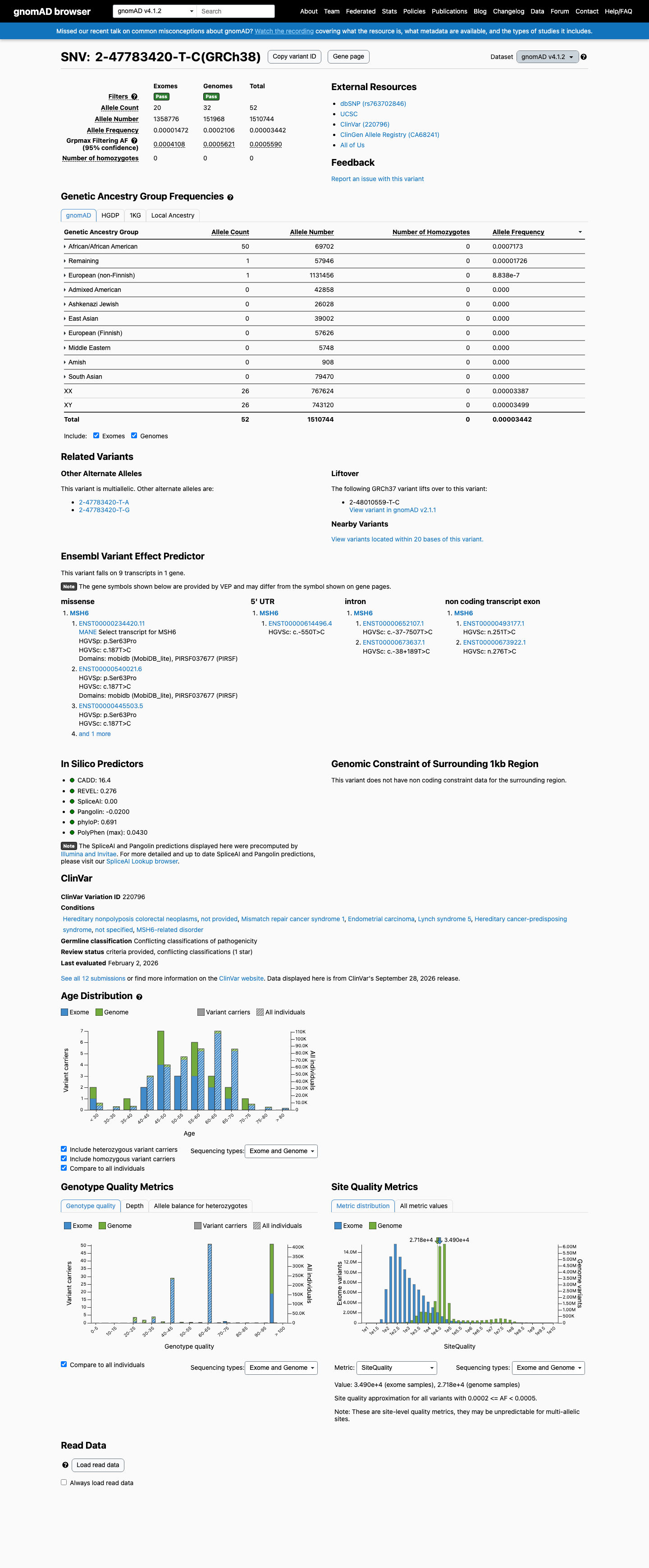
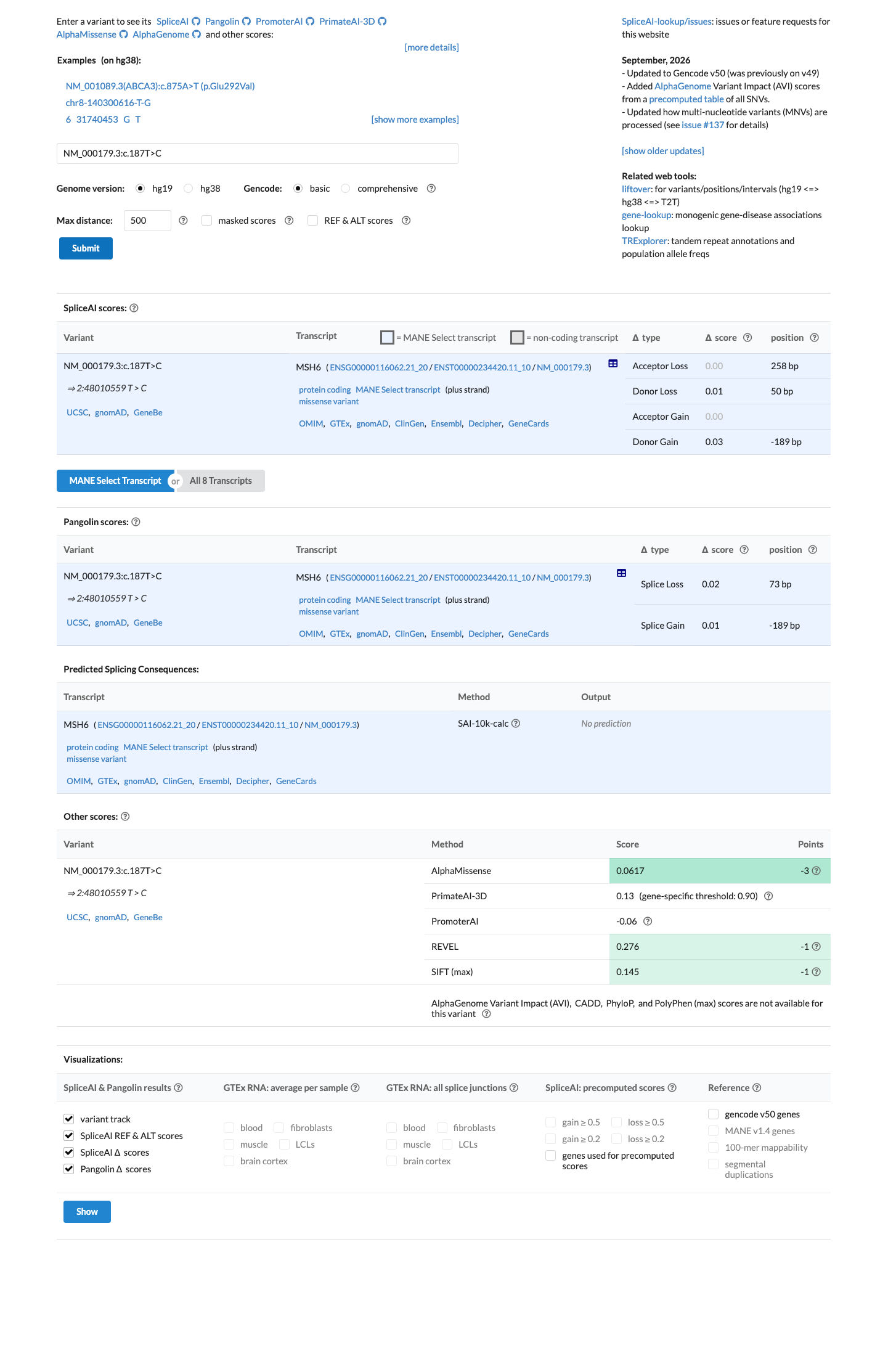
BS1 Strong: gnomAD v4.1 grpmax allele frequency of 0.00055895 meets the MSH6 frequency interval. BP4 Supporting: MSH6 HCI prior probability of pathogenicity is 0.0027, below the <0.11 threshold.
MSH6 encodes a protein in the DNA mismatch repair system, which fixes errors made during DNA replication. Partnering with MSH2, it forms a complex that recognizes and helps correct mismatched DNA bases, keeping the genetic code stable. Inherited mutations in MSH6 cause Lynch syndrome (hereditary nonpolyposis colorectal cancer), raising the risk of colorectal, endometrial, ovarian, and other cancers, while mutations in both copies lead to constitutional mismatch repair deficiency. Because faulty mismatch repair drives tumor development and produces microsatellite instability, MSH6 acts as a tumor suppressor, and cancers with such repair defects often respond well to immune checkpoint inhibitor therapy.
MSH6 encodes a DNA mismatch-repair protein whose inherited disruption causes Lynch syndrome and, when biallelic, constitutional mismatch repair deficiency.
BS1 Strong: gnomAD v4.1 grpmax allele frequency of 0.00055895 meets the MSH6 frequency interval. BP4 Supporting: MSH6 HCI prior probability of pathogenicity is 0.0027, below the <0.11 threshold.
African/African American 50 / 69,702 |
0.072% |
Remaining individuals 1 / 57,946 |
0.0017% |
European (non-Finnish) 1 / 1,131,456 |
8.8e-05% |
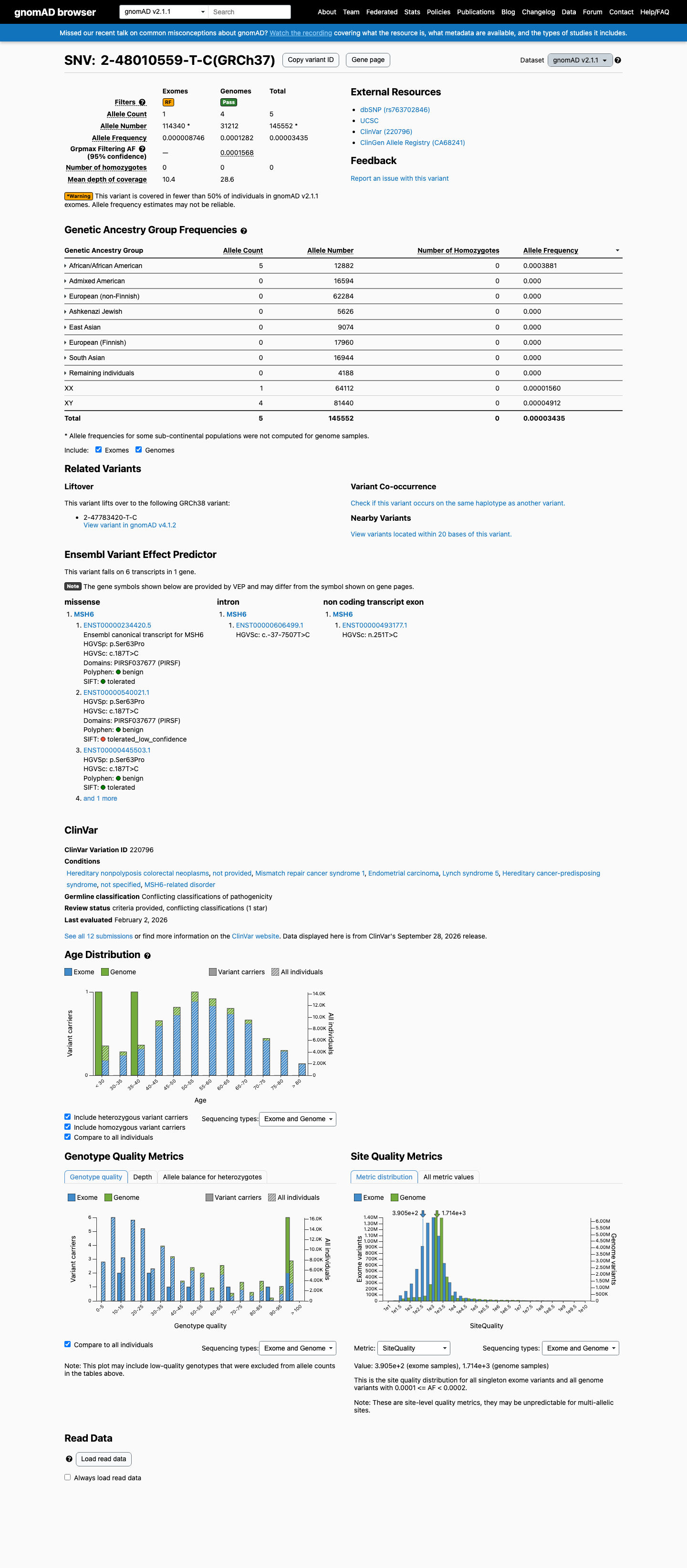
African/African American 5 / 12,882 |
0.039% |