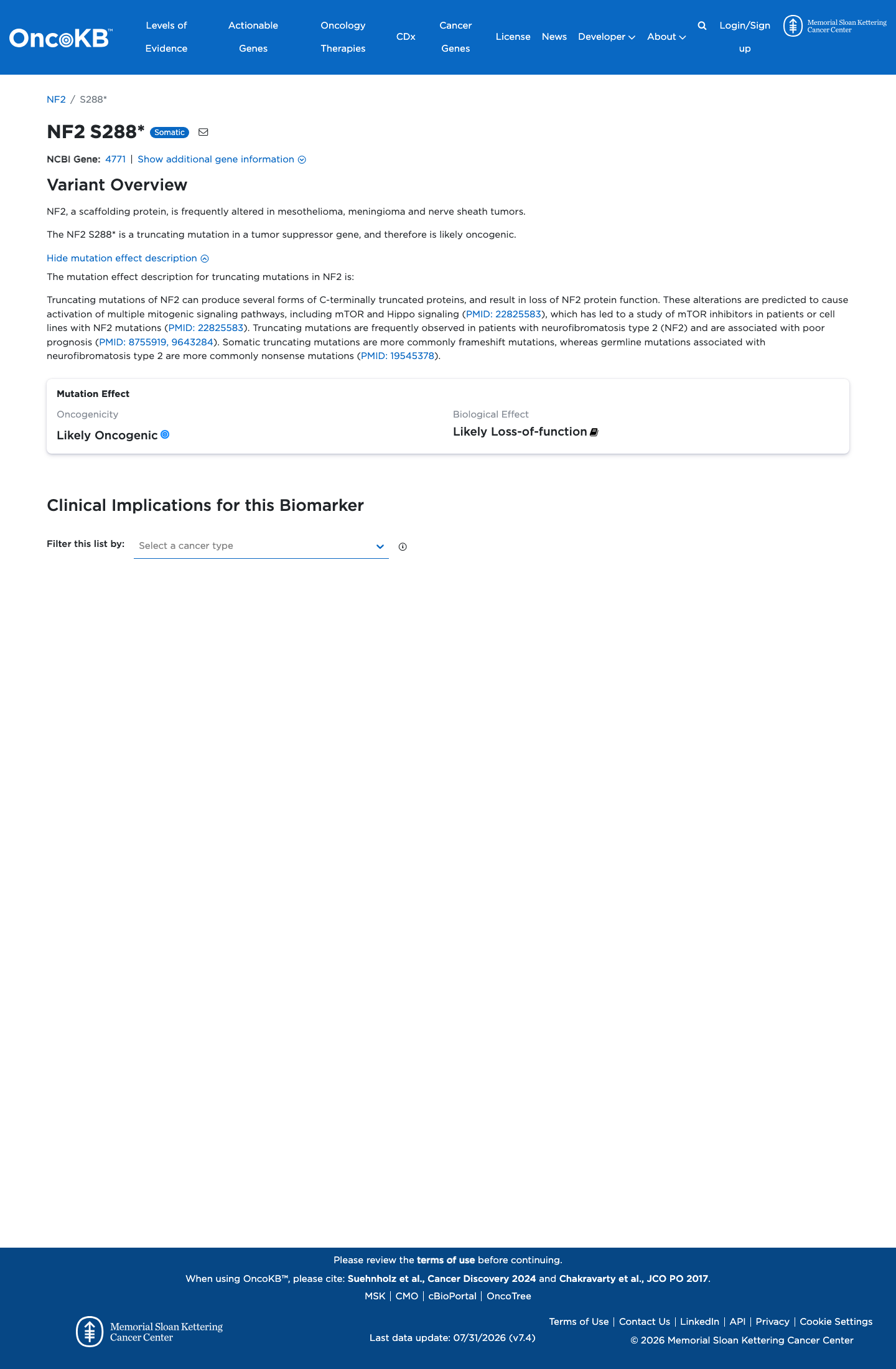
This variant was interpreted by pipeline
7.1.0.
The current version is
8.0.0.
Re-running queues a fresh interpretation; the result replaces this page when complete.
Re-runs are not free. Blank = draws on today's public interpretation allowance.
With a code = uses 1 of that code's uses.
NF2 encodes Merlin, a scaffolding protein that links the cell's internal skeleton to the cell membrane and helps regulate cell growth, adhesion, and signaling. Loss of its function promotes tumor formation and spread. Germline mutations in this gene cause neurofibromatosis type 2, an inherited condition marked by tumors of the nervous system and skin, along with eye abnormalities. It acts as a tumor suppressor, and the gene is also found mutated in other types of cancer.
This variant
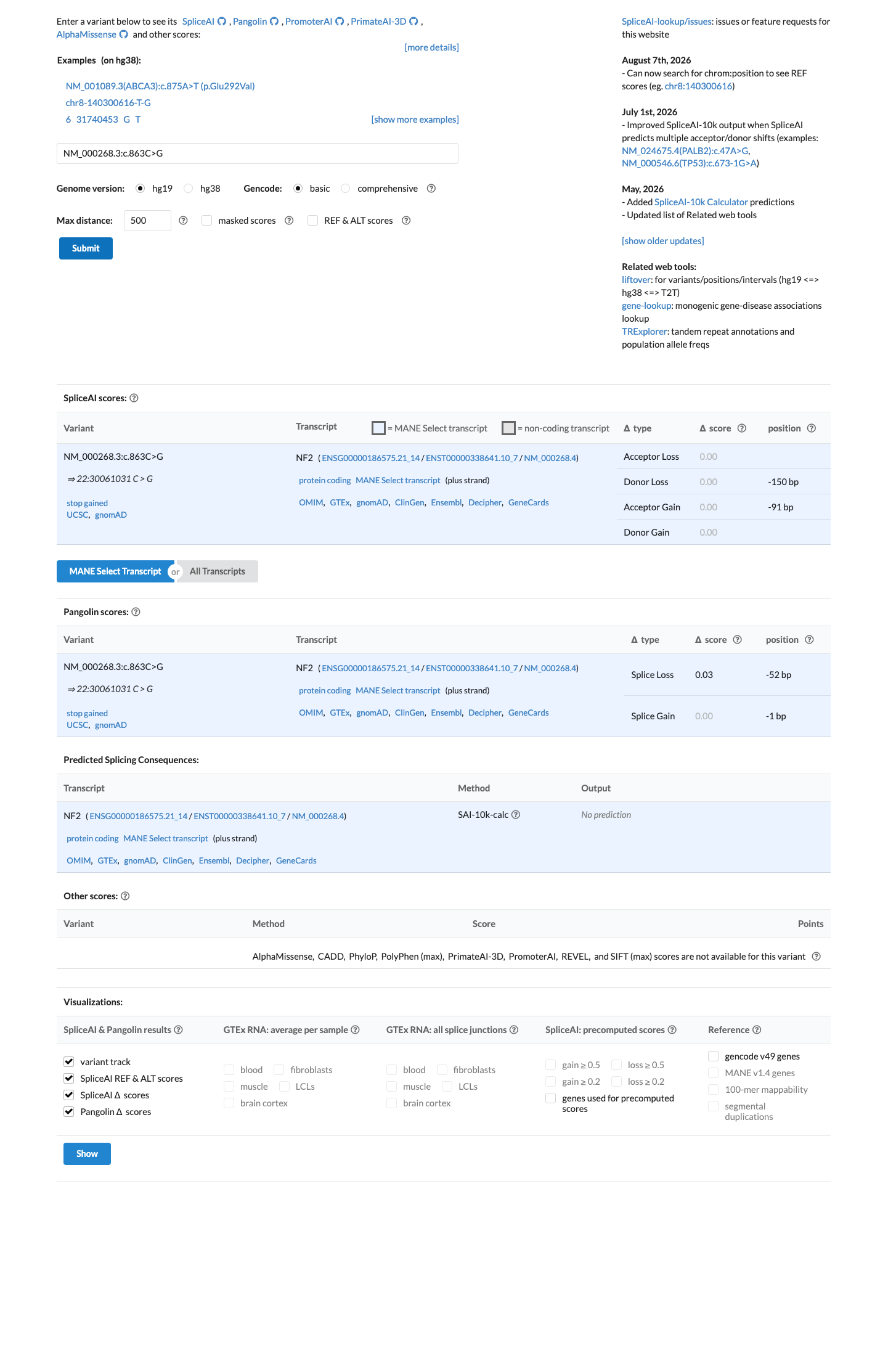
NF2 encodes Merlin, a tumor suppressor whose loss promotes tumor formation; germline mutations cause neurofibromatosis type 2. This nonsense variant is predicted to trigger nonsense-mediated decay, eliminating Merlin and producing the loss of tumor-suppressor function that underlies NF2-related schwannomatosis.
Transcript
NM_000268.3
HGVS · transcript:coding
NM_000268.3:c.863C>G
GRCh38
chr22:29665042 C>G
GRCh37
chr22:30061031 C>G
Likely Pathogenic: PVS1 very strong (nonsense p.Ser288Ter) plus PM2 supporting (absent from gnomAD) yields Likely Pathogenic under generic ACMG/AMP 2015 (ClinGen SVI 2020, posterior 0.988), with no conflicting evidence.
Classification rationale
PVS1PM2Likely Pathogenic
NF2 c.863C>Gstop gained
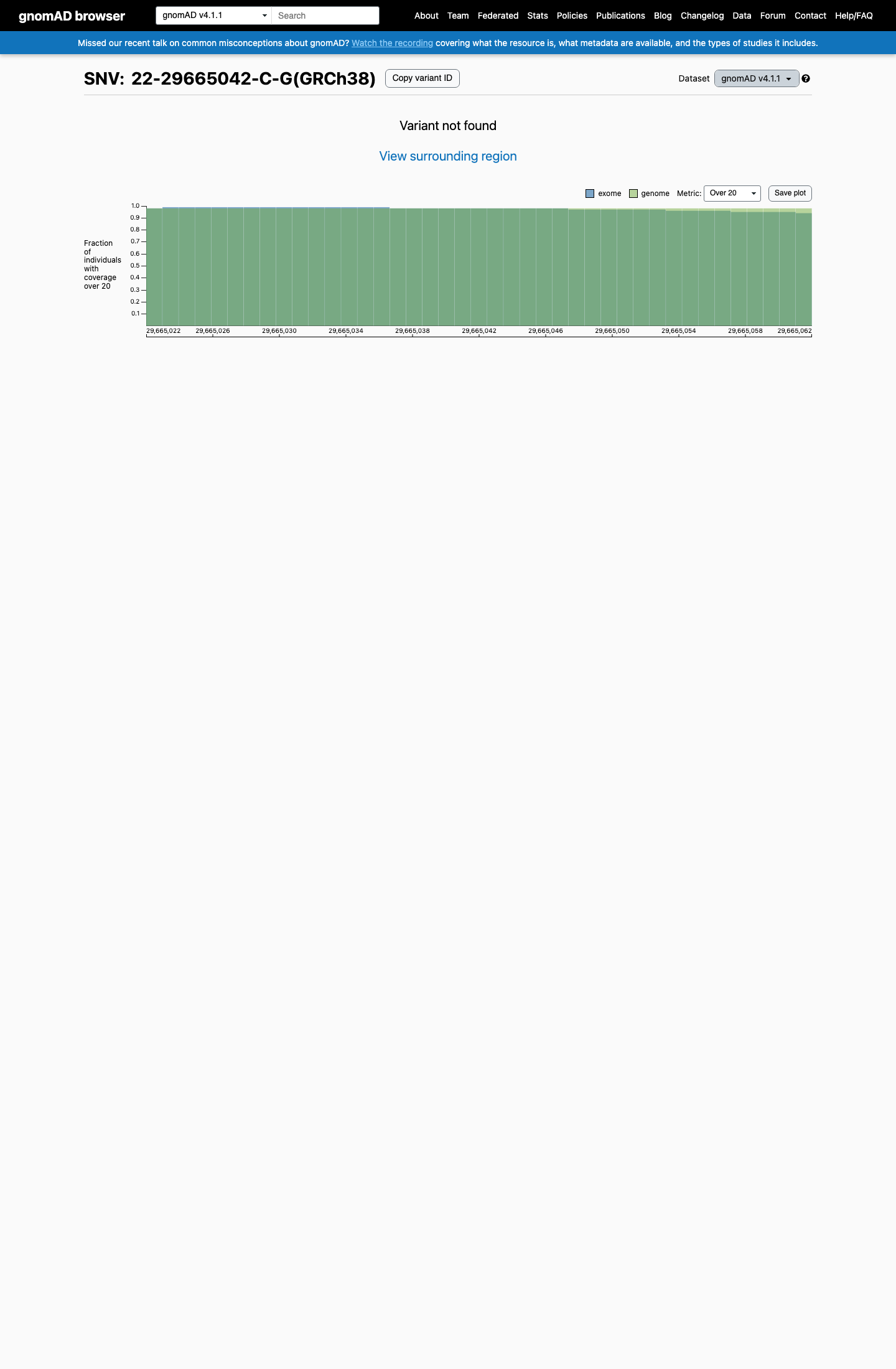
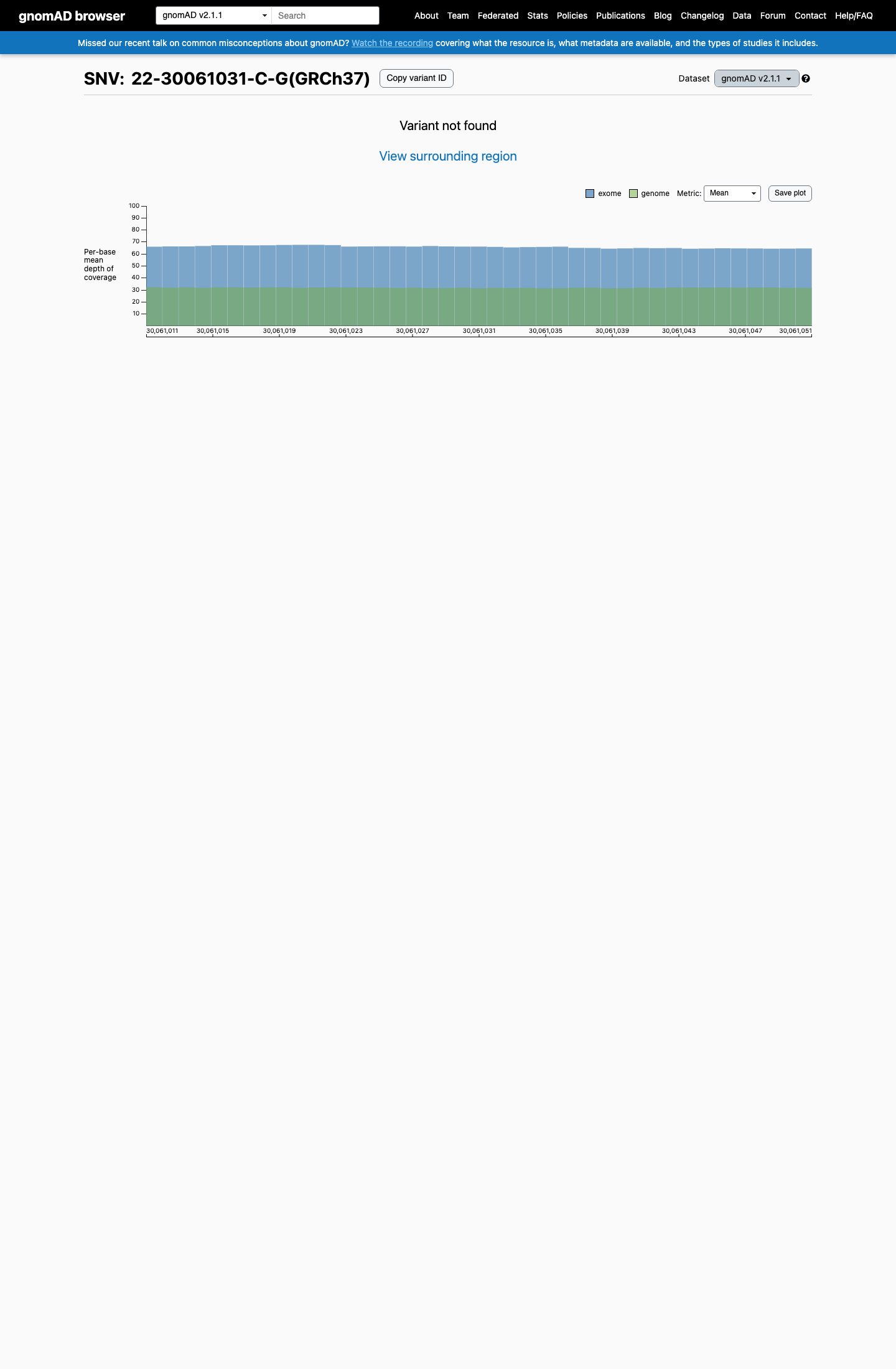
PVS1 (Very Strong): Nonsense p.Ser288Ter truncates merlin at 288 of 595 amino acids and is predicted to trigger nonsense-mediated decay. PM2 (Supporting): The variant is absent from gnomAD v2.1, v4.1, and gnomAD-Canada, three large population cohorts. Together, PVS1 (very strong) plus PM2 (supporting) yields Likely Pathogenic under the ClinGen SVI 2020 combination rule (posterior probability 0.988).
PVS1 + PM2→Likely Pathogenic
LYFE Sciences is an AI system, and it can make mistakes. Criteria
may be applied incorrectly, sources may be misread, and a confident-looking
classification can still be wrong. Double-check every criterion and
its underlying evidence before relying on any call.
Gene diagram
· NM_000268.3 · variants mapped to exon structure
NF2NM_000268.3
Fetching transcript structure from UCSC…
Exons
—
Transcript span
—
Strand
—
Variants mapped
—
Source
UCSC ncbiRefSeqCurated
All variants in NF2—click a row to locate it on the plot · use the link column to open its page
Protein
Location
Classification
Link
Applied criteria · 2 applied · 15 assessed
MetEvidence satisfies this criterion.
Not metEvaluated against available evidence; threshold not reached.
Not assessedApplies in principle, but no evidence was found to evaluate it.
N/ADoesn't apply to this variant type.
Applied · 2
Strength Supporting Moderate Strong Very strong
✓
PVS1very strongPathogenic
Met (very strong): Nonsense change p.Ser288Ter truncates merlin at 288 of 595 amino acids and is predicted to trigger nonsense-mediated decay.
Met (supporting): absent from gnomAD v2.1, v4.1, and gnomAD-Canada, three large population cohorts, in a gene with an established loss-of-function disease mechanism.
Assessed · not applied
· 8 not met · 7 not assessed
Pathogenic
PS2Not assessed: no de novo occurrence report or parental genotype data were available for this variant.
PS3Not assessed: no validated functional assay specific to this variant was available to demonstrate a damaging effect.
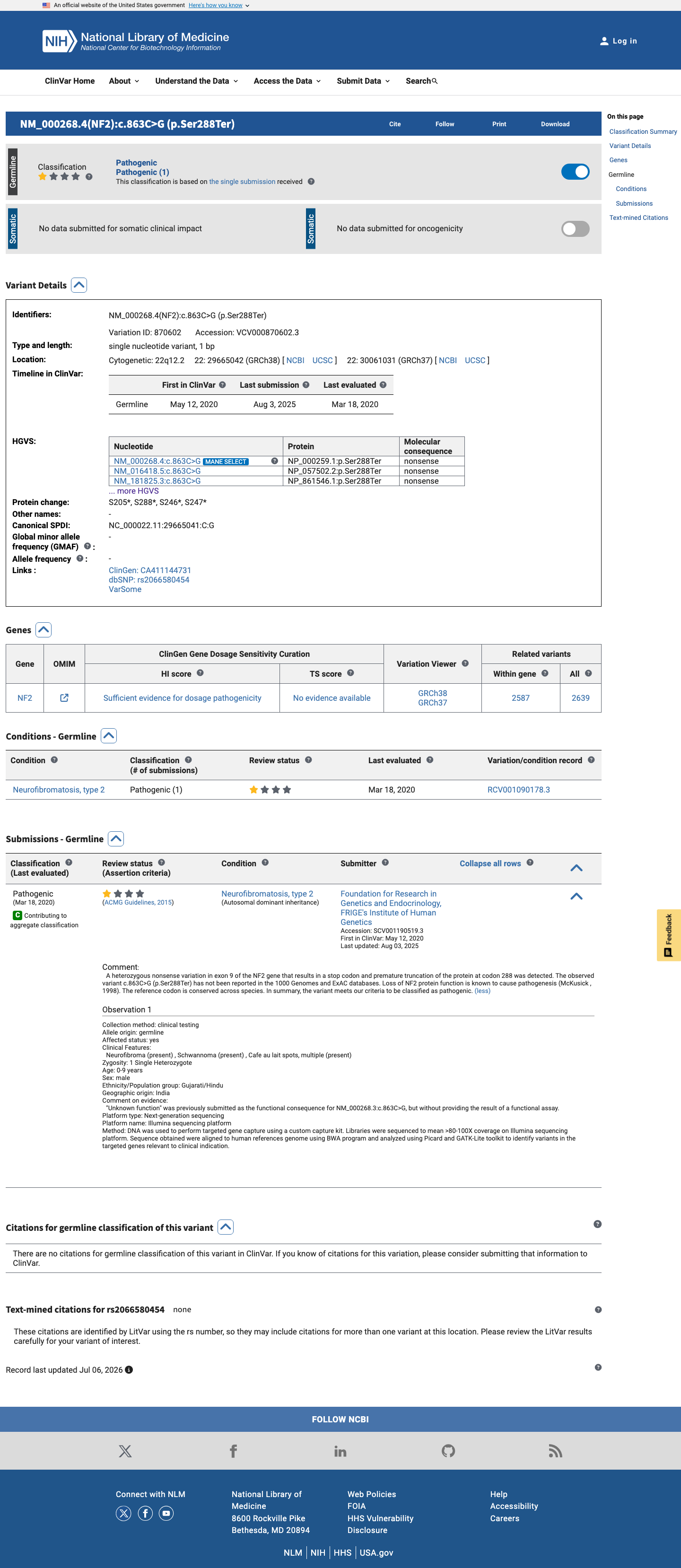
PS4Not met: no case-control or cohort prevalence study exists; the only observation is a single laboratory submission, short of the multiple-unrelated-patients requirement.
PM6Not assessed: no unconfirmed de novo report or parental testing data were available for this variant.
PP1Not assessed: no co-segregation data in affected family members were available for this variant.
PP4Not met: no proband phenotype or family-history documentation was available to establish a highly specific phenotype.
PP5Not met: the only ClinVar submission is a single 1-star laboratory classification, not an expert-panel classification as this criterion requires.
Benign
BA1Not met: allele frequency is zero (absent from gnomAD v2.1, v4.1, and gnomAD-Canada), far below the 5% BA1 threshold.
BS1Not met: allele frequency zero (absent from all three gnomAD cohorts) is far below the 0.3% BS1 threshold.
BS2Not met: no heterozygous or homozygous observations exist in population cohorts, so no healthy-adult carrier evidence is available.
BS3Not assessed: no functional study demonstrating preserved protein function or splicing was available for this variant.
BS4Not assessed: no family genotype data were available to evaluate whether segregation is contradicted in affected relatives.
BP2Not assessed: no parental or family data were available to determine whether the variant lies in cis or trans with a pathogenic variant.
BP5Not met: no alternate genetic cause of disease was documented for this variant.
BP6Not met: no benign or likely-benign ClinVar assertion exists for this variant, and only expert-panel classifications qualify for this criterion.
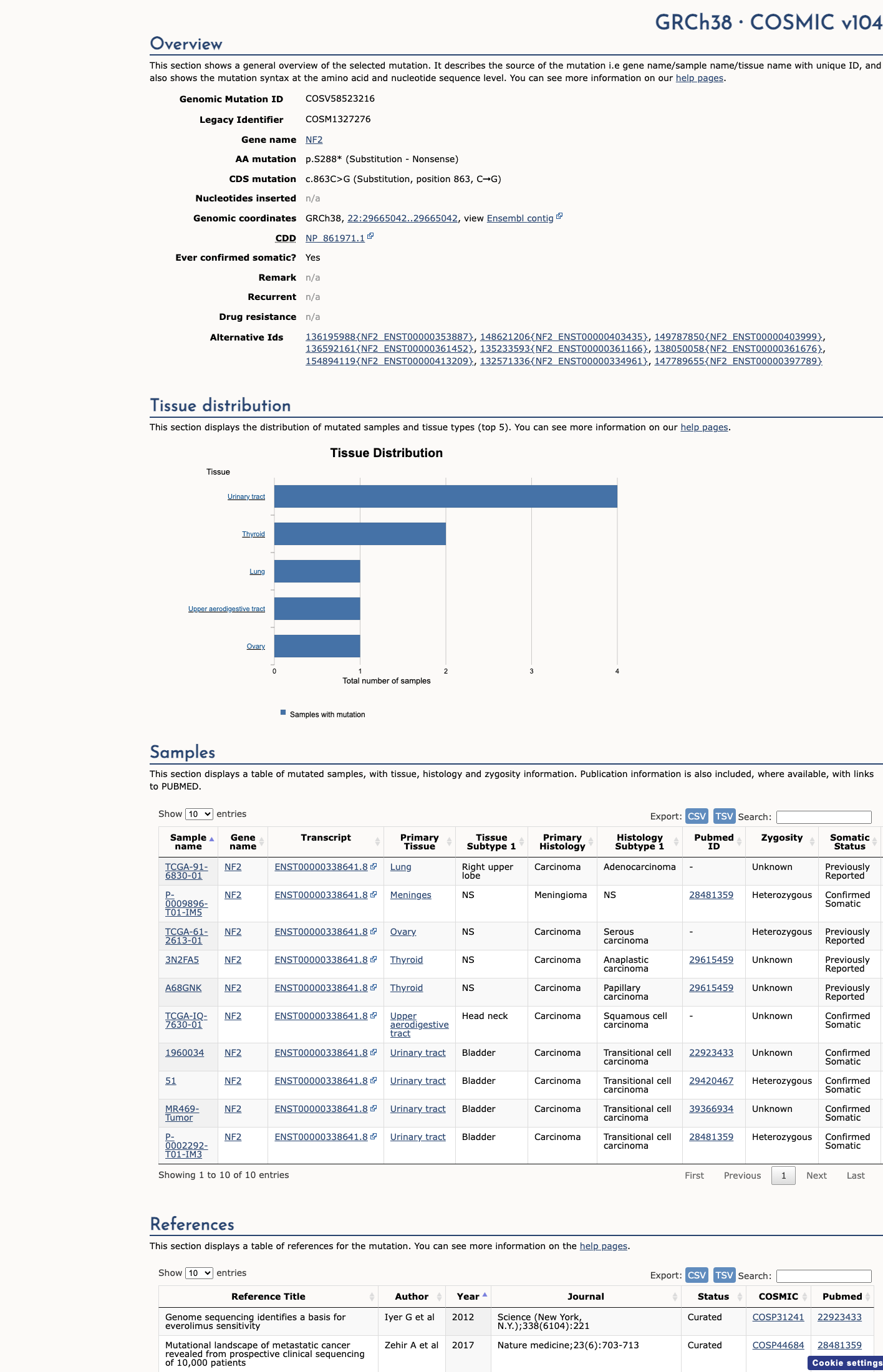
This variant does not lie in a statistically significant hotspot. This variant has previously been reported in somatic cancers (COSMIC; COSV58523216, n = 10 times).
Hotspots
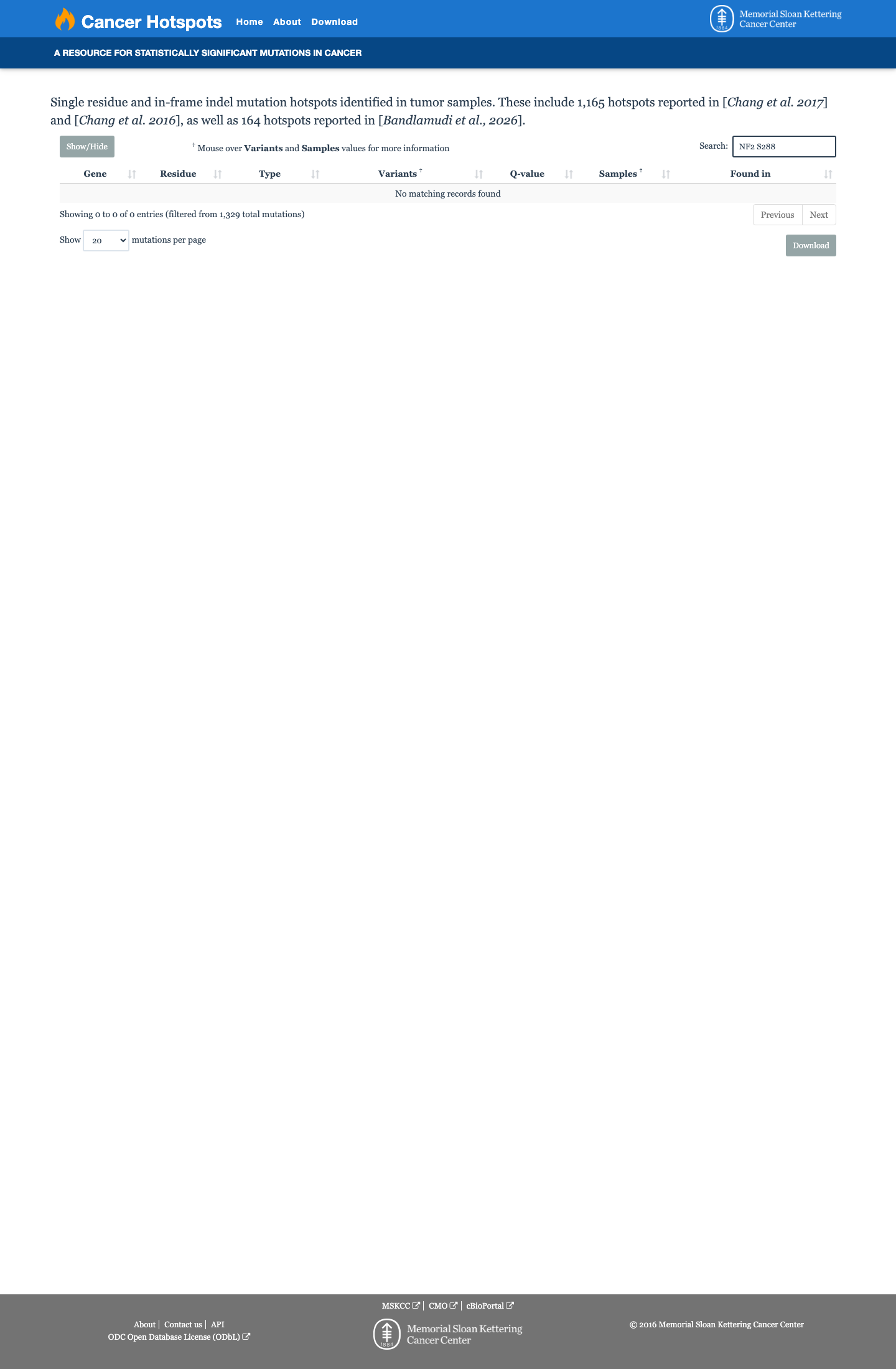
This variant does not lie in a statistically significant hotspot.
Each card is an audit: what was searched, what was found, whether it names the variant, which criteria it fed, and why. 5 further PMIDs triaged but not cited — see Sources & references.
Rule & framework references · cited for criterion definitions, not variant evidence
19545378 ↗Neurofibromatosis type 2 (NF2): a clinical and molecular review.
25741868 ↗Standards and guidelines for the interpretation of sequence variants: a joint consensus recommendation of the American College of Medical Genetics and Genomics and the Association for Molecular Pathology.
9643284 ↗Genotype/phenotype correlations in type 2 neurofibromatosis (NF2): evidence for more severe disease associated with truncating mutations.
Sources & reference links
8Sources
ClinVar
gnomAD v2.1
gnomAD v4.1
gnomAD-Canada
SpliceAI
OncoKB
COSMIC
Cancer hotspots
Triaged references · 5 PMIDs not cited in assessment
22825583 ↗New strategies in pleural mesothelioma: BAP1 and NF2 as novel targets for therapeutic development and risk assessment.ONCOKB
8755919 ↗Type of mutation in the neurofibromatosis type 2 gene (NF2) frequently determines severity of disease.ONCOKB
25356965 ↗ACMG policy statement: updated recommendations regarding analysis and reporting of secondary findings in clinical genome-scale sequencing.CLINVAR
32602153 ↗Genetic Counseling for Neurofibromatosis 1, Neurofibromatosis 2, and Schwannomatosis-Practice Resource of the National Society of Genetic Counselors.CLINVAR