Analysis in progress
Initialising…
0%
complete
This report is still being assembled — sections appear as each stage finishes. It isn't final yet.
NF2
Final classification
Likely Pathogenic
NF2 c.863C>G · p.Ser288Ter
NF2

PVS1 (Very Strong): Nonsense p.Ser288Ter truncates merlin at 288 of 595 amino acids and is predicted to trigger nonsense-mediated decay.

Gene
NF2
Transcript
NM_000268.3
HGVS · transcript:coding
NM_000268.3:c.863C>G
Consequence
N/A
GRCh38
chr22:29665042 C>G
GRCh37
chr22:30061031 C>G
Basis Likely Pathogenic: PVS1 very strong (nonsense p.Ser288Ter) plus PM2 supporting (absent from gnomAD) yields Likely Pathogenic under generic ACMG/AMP 2015 (ClinGen SVI 2020, posterior 0.988), with no conflicting evidence.
Likely Pathogenic: PVS1 very strong (nonsense p.Ser288Ter) plus PM2 supporting (absent from gnomAD) yields Likely Pathogenic under generic ACMG/AMP 2015 (ClinGen SVI 2020, posterior 0.988), with no conflicting evidence.
Classification rationale
PVS1PM2 Likely Pathogenic
NF2 c.863C>G

PVS1 (Very Strong): Nonsense p.Ser288Ter truncates merlin at 288 of 595 amino acids and is predicted to trigger nonsense-mediated decay. PM2 (Supporting): The variant is absent from gnomAD v2.1, v4.1, and gnomAD-Canada, three large population cohorts. Together, PVS1 (very strong) plus PM2 (supporting) yields Likely Pathogenic under the ClinGen SVI 2020 combination rule (posterior probability 0.988).

PVS1 + PM2 Likely Pathogenic
Gene diagram · NM_000268.3 · variants mapped to exon structure
NF2 NM_000268.3
Fetching transcript structure from UCSC…
Applied criteria · 2 applied · 15 assessed
Applied · 2
Strength Supporting Moderate Strong Very strong
PVS1 very strong Pathogenic
Met (very strong): Nonsense change p.Ser288Ter truncates merlin at 288 of 595 amino acids and is predicted to trigger nonsense-mediated decay.
pvs1_variant_assessment: consequence_class=nonsense, variant_bucket=nonsense, suggested_default_strength=PVS1, framework=PMC6185798pvs1_gene_context: lof_mechanism_supported=true, pvs1_gene_gate=eligible (germline LoF mechanism for NF2 established)VariantValidator/prefetch: p.(Ser288Ter), exon 9 (start_exon=end_exon=9), 16-exon transcript, NP_000259.1 length 595-596 aa
PM2 supporting Pathogenic
Met (supporting): absent from gnomAD v2.1, v4.1, and gnomAD-Canada, three large population cohorts, in a gene with an established loss-of-function disease mechanism.
gnomad_v2gnomad_v4gnomad_canada
Assessed · not applied
Pathogenic
PS2 Not assessed: no de novo occurrence report or parental genotype data were available for this variant.
PS3 Not assessed: no validated functional assay specific to this variant was available to demonstrate a damaging effect.
PS4 Not met: no case-control or cohort prevalence study exists; the only observation is a single laboratory submission, short of the multiple-unrelated-patients requirement.
PM6 Not assessed: no unconfirmed de novo report or parental testing data were available for this variant.
PP1 Not assessed: no co-segregation data in affected family members were available for this variant.
PP4 Not met: no proband phenotype or family-history documentation was available to establish a highly specific phenotype.
PP5 Not met: the only ClinVar submission is a single 1-star laboratory classification, not an expert-panel classification as this criterion requires.
Benign
BA1 Not met: allele frequency is zero (absent from gnomAD v2.1, v4.1, and gnomAD-Canada), far below the 5% BA1 threshold.
BS1 Not met: allele frequency zero (absent from all three gnomAD cohorts) is far below the 0.3% BS1 threshold.
BS2 Not met: no heterozygous or homozygous observations exist in population cohorts, so no healthy-adult carrier evidence is available.
BS3 Not assessed: no functional study demonstrating preserved protein function or splicing was available for this variant.
BS4 Not assessed: no family genotype data were available to evaluate whether segregation is contradicted in affected relatives.
BP2 Not assessed: no parental or family data were available to determine whether the variant lies in cis or trans with a pathogenic variant.
BP5 Not met: no alternate genetic cause of disease was documented for this variant.
BP6 Not met: no benign or likely-benign ClinVar assertion exists for this variant, and only expert-panel classifications qualify for this criterion.
N/A · 11 PS1 · PM1 · PM3 · PM4 · PM5 · PP2 · PP3 · BP1 · BP3 · BP4 · BP7
Research & evidence
Population frequency · supports pathogenic
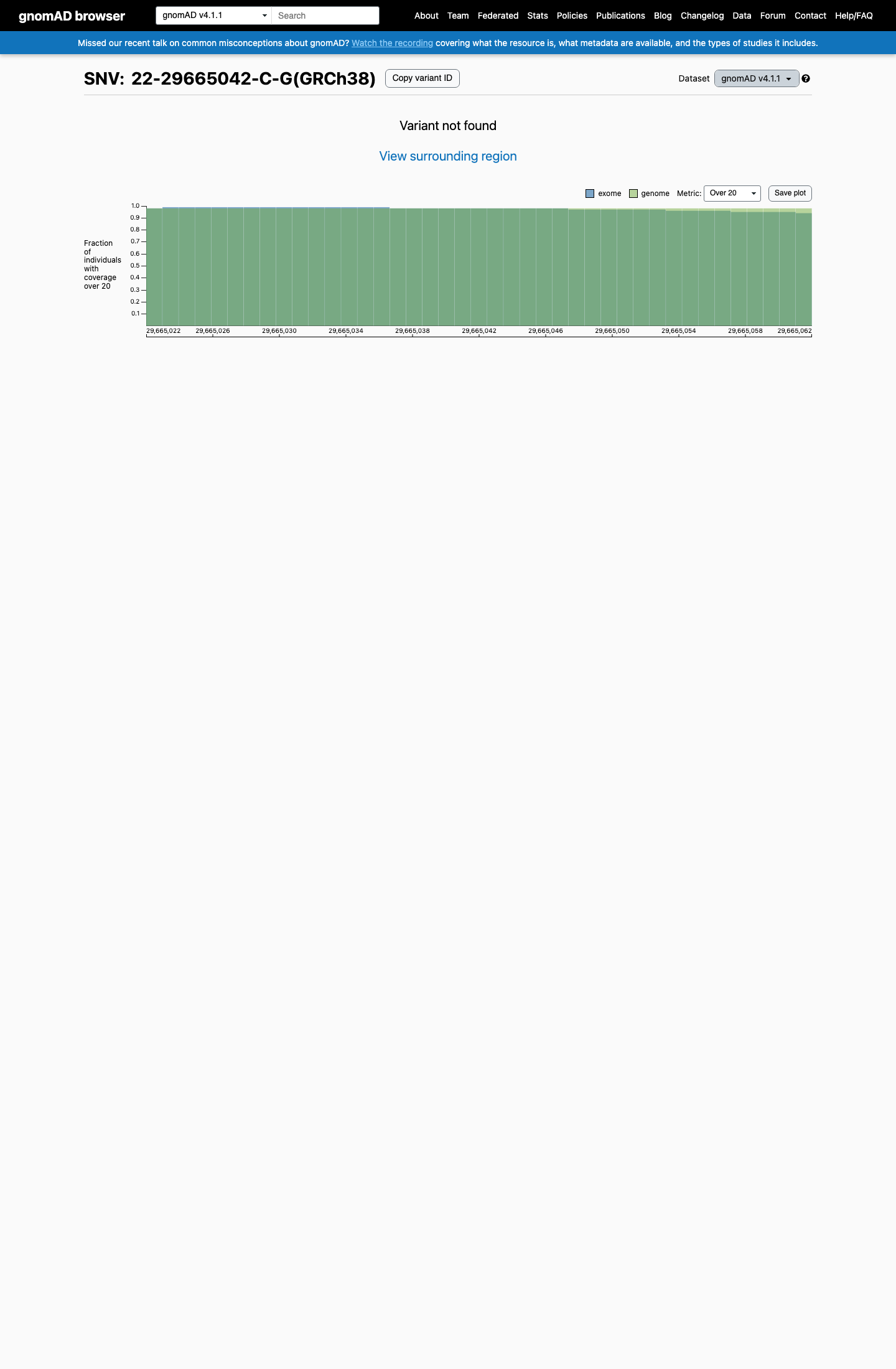
gnomAD v4.1 screenshot
gnomAD v4.1
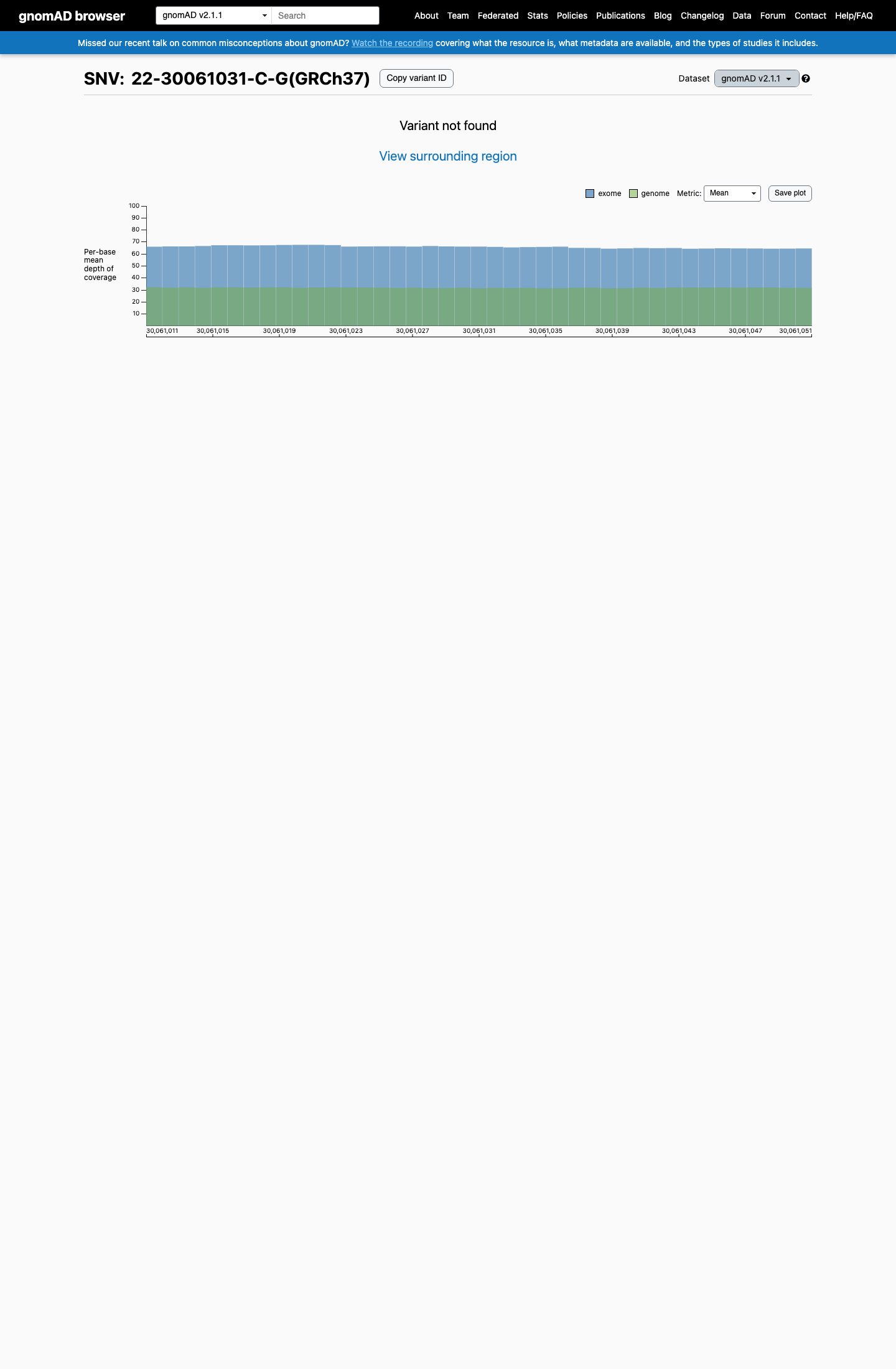
gnomAD v2.1 screenshot
gnomAD v2.1
v4.1
Absent from gnomAD v4.1.
v2.1
Absent from gnomAD v2.1.
🇨🇦 CA
Absent from gnomAD-Canada v1.0.
Allele frequency by ancestry
three datasets · side by side
gnomAD v4.1
Absent · 0 / ?
0 hom
Not observed in any ancestry group.
gnomAD v2.1
Absent · 0 / ?
0 hom
Not observed in any ancestry group.
gnomAD Canada 🇨🇦
Absent · 0 / ?
0 hom
Not observed in any ancestry group.
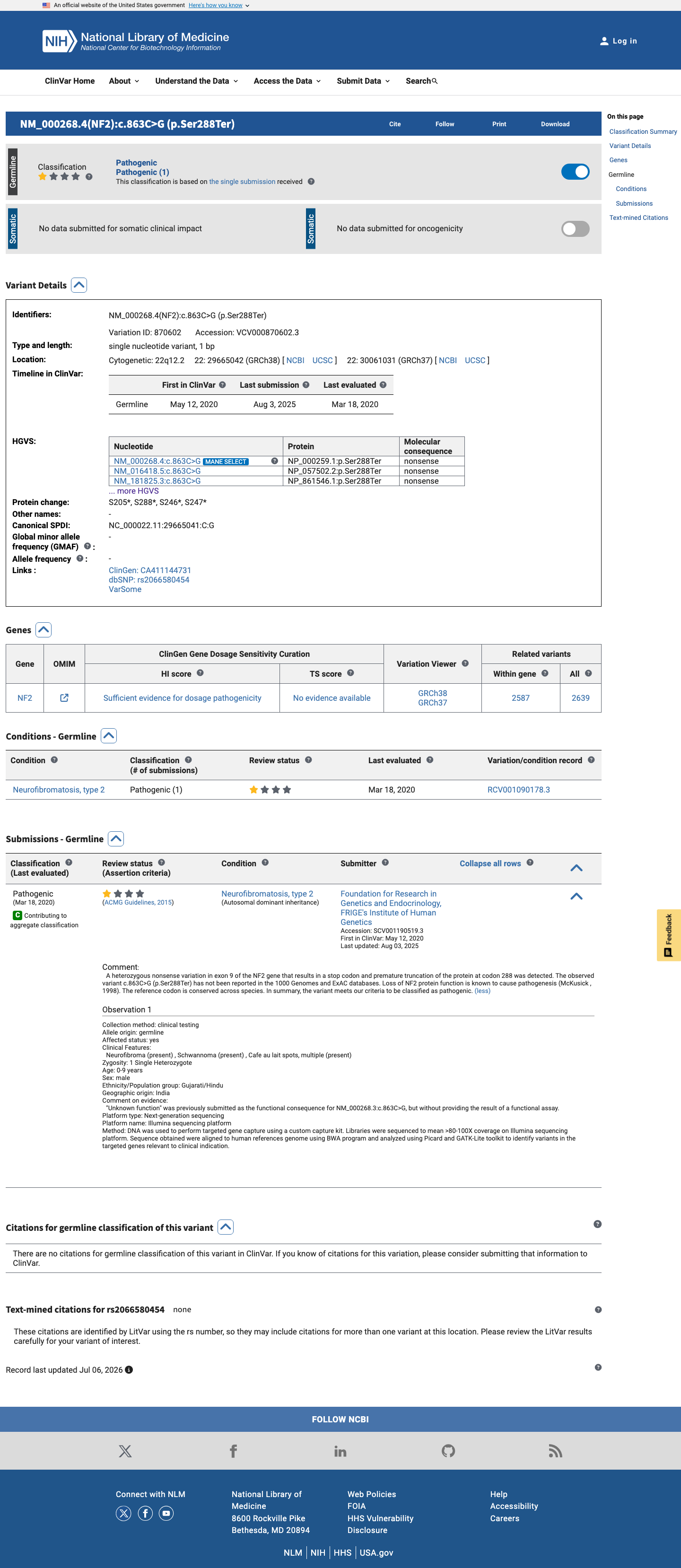
ClinVar screenshot
ClinVar
This variant has been reported in ClinVar as Pathogenic (1 clinical laboratory). (ClinVarID = 870602)
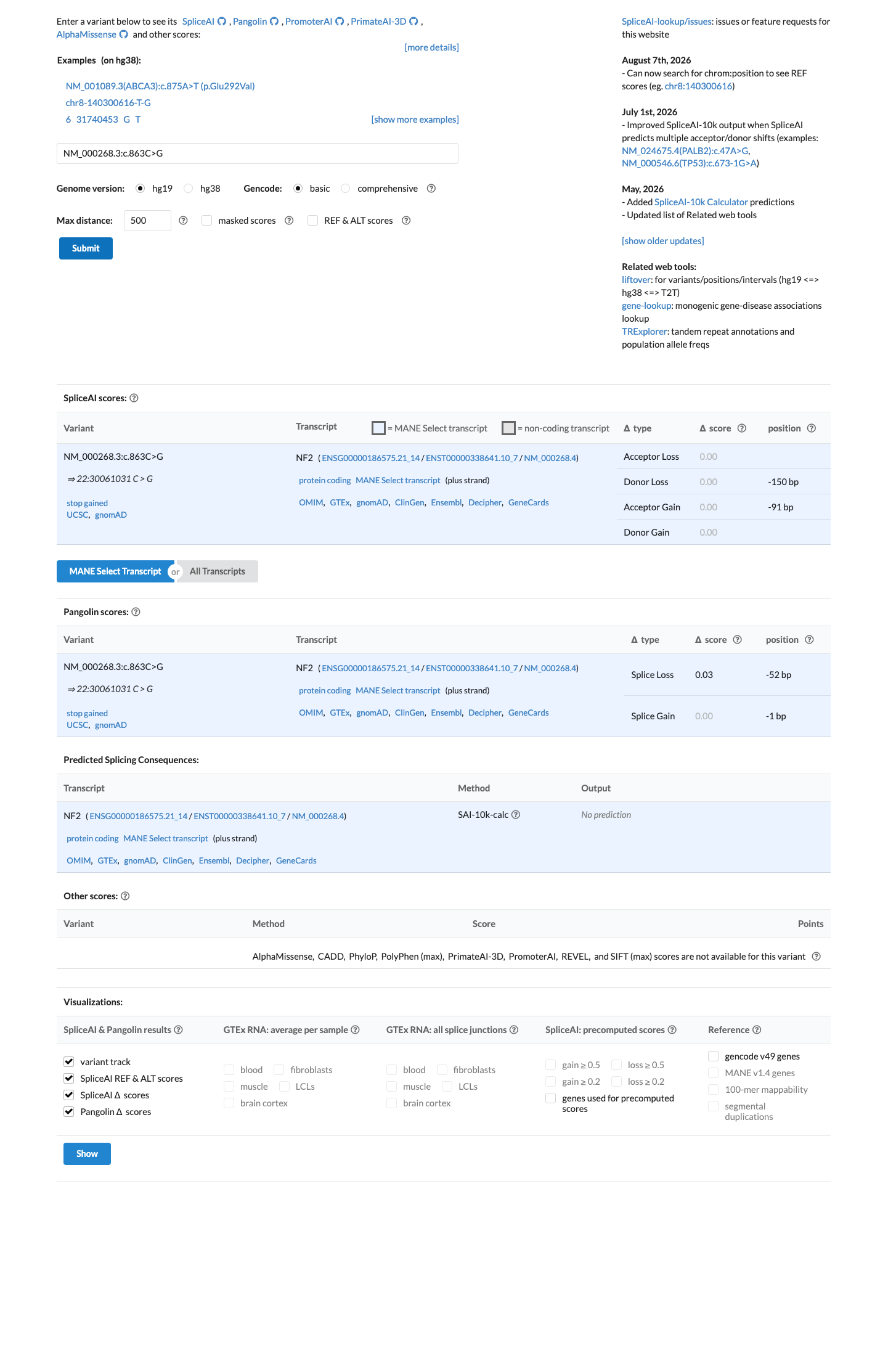
SpliceAI screenshot
In silico
SpliceAI predicts no significant splice impact for this variant (max delta score = 0.00). BayesDel score = 0.66.
Functional / OncoKB screenshot
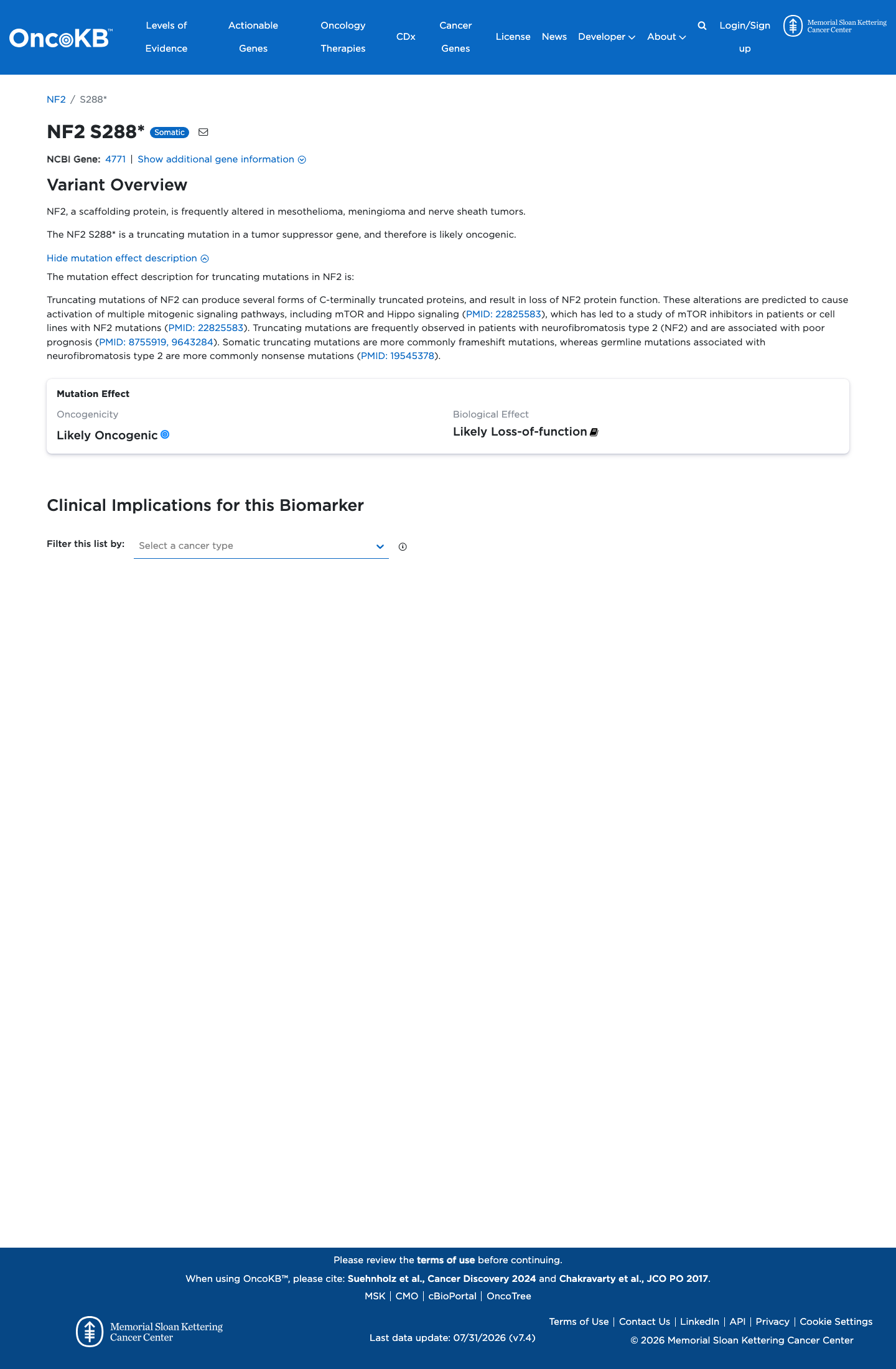
Functional Likely Oncogenic
OncoKB identified variant-specific curated literature and context relevant to functional review; biological-effect context: Likely Loss-of-function; curated oncogenicity label: Likely Oncogenic.
OncoKB ↗
COSMIC screenshot
COSMIC
Cancer hotspots screenshot
Cancer hotspots
Somatic evidence Not in COSMIC / hotspots
COSMIC
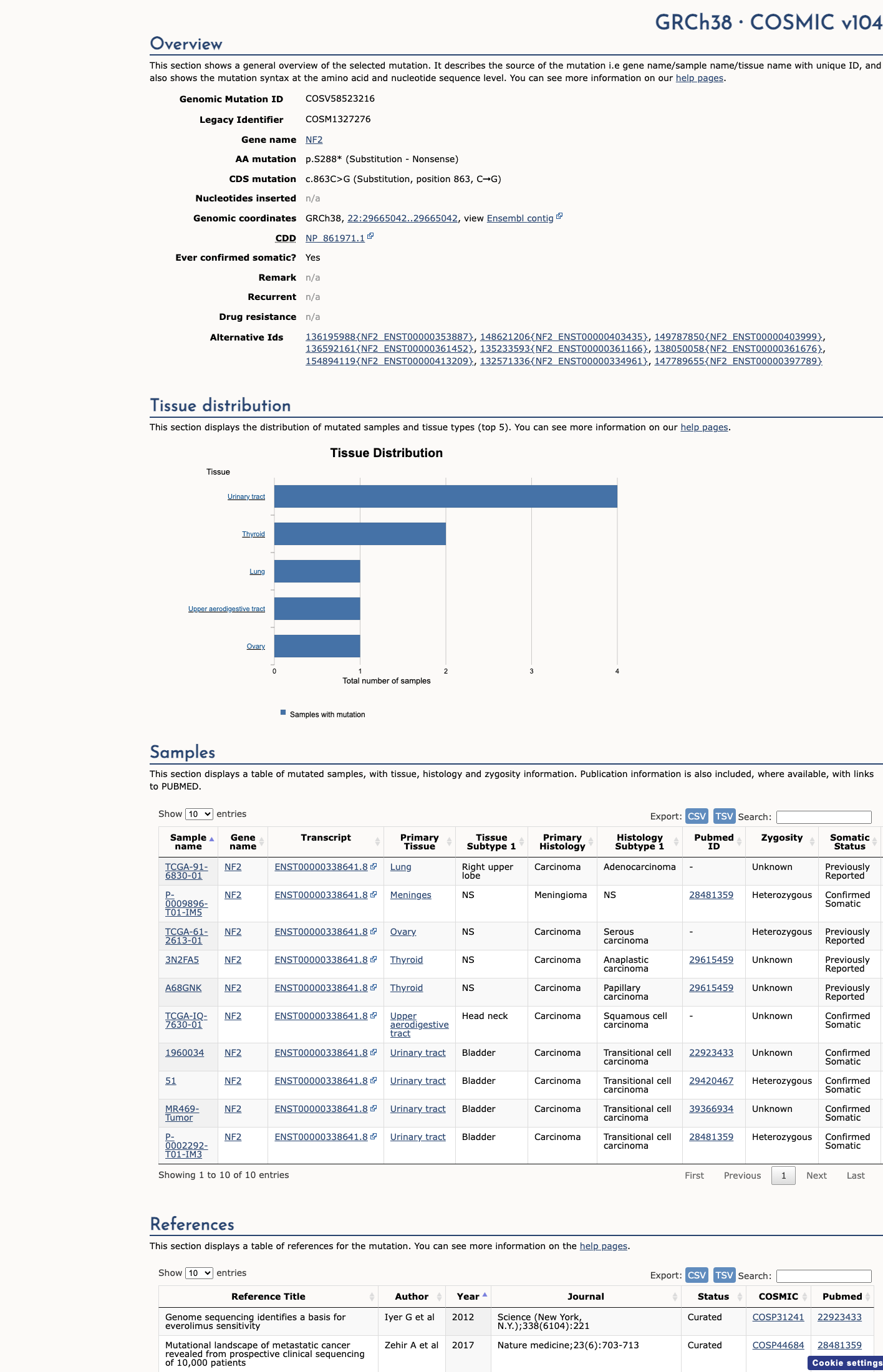
This variant does not lie in a statistically significant hotspot. This variant has previously been reported in somatic cancers (COSMIC; COSV58523216, n = 10 times).
Hotspots
This variant does not lie in a statistically significant hotspot.
Literature · how each cited paper was used
3papers cited
Each card is an audit: what was searched, what was found, whether it names the variant, which criteria it fed, and why. 5 further PMIDs triaged but not cited — see Sources & References.
Rule & framework references · cited for criterion definitions, not variant evidence
19545378 ↗ Neurofibromatosis type 2 (NF2): a clinical and molecular review.
25741868 ↗ Standards and guidelines for the interpretation of sequence variants: a joint consensus recommendation of the American College of Medical Genetics and Genomics and the Association for Molecular Pathology.
9643284 ↗ Genotype/phenotype correlations in type 2 neurofibromatosis (NF2): evidence for more severe disease associated with truncating mutations.
Sources & reference links
8Sources
ClinVar
gnomAD v2.1
gnomAD v4.1
gnomAD-Canada
SpliceAI
OncoKB
COSMIC
Cancer hotspots
Triaged references · 5 PMIDs not cited in assessment
22825583 ↗ New strategies in pleural mesothelioma: BAP1 and NF2 as novel targets for therapeutic development and risk assessment. ONCOKB
8755919 ↗ Type of mutation in the neurofibromatosis type 2 gene (NF2) frequently determines severity of disease. ONCOKB
20301380 ↗ NF2-Related Schwannomatosis. CLINVAR
25356965 ↗ ACMG policy statement: updated recommendations regarding analysis and reporting of secondary findings in clinical genome-scale sequencing. CLINVAR
32602153 ↗ Genetic Counseling for Neurofibromatosis 1, Neurofibromatosis 2, and Schwannomatosis-Practice Resource of the National Society of Genetic Counselors. CLINVAR