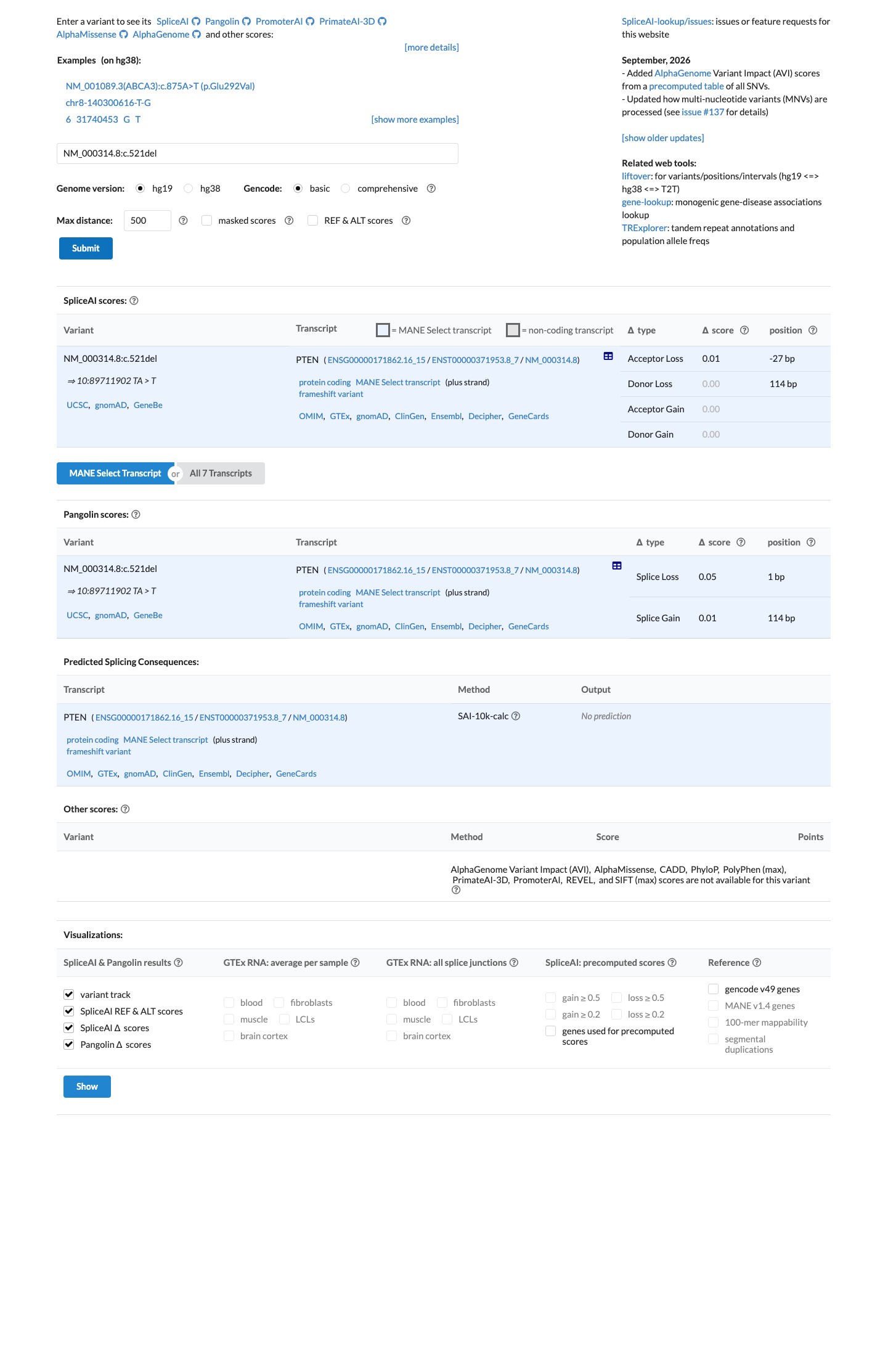
PVS1 very strong: the frameshift is 5′ of PTEN p.D375/c.1121 and meets the Expert Panel's nonsense-mediated-decay rule. PM2 supporting: the variant is absent from gnomAD v2.1 and v4.1, below the PTEN population-frequency threshold.
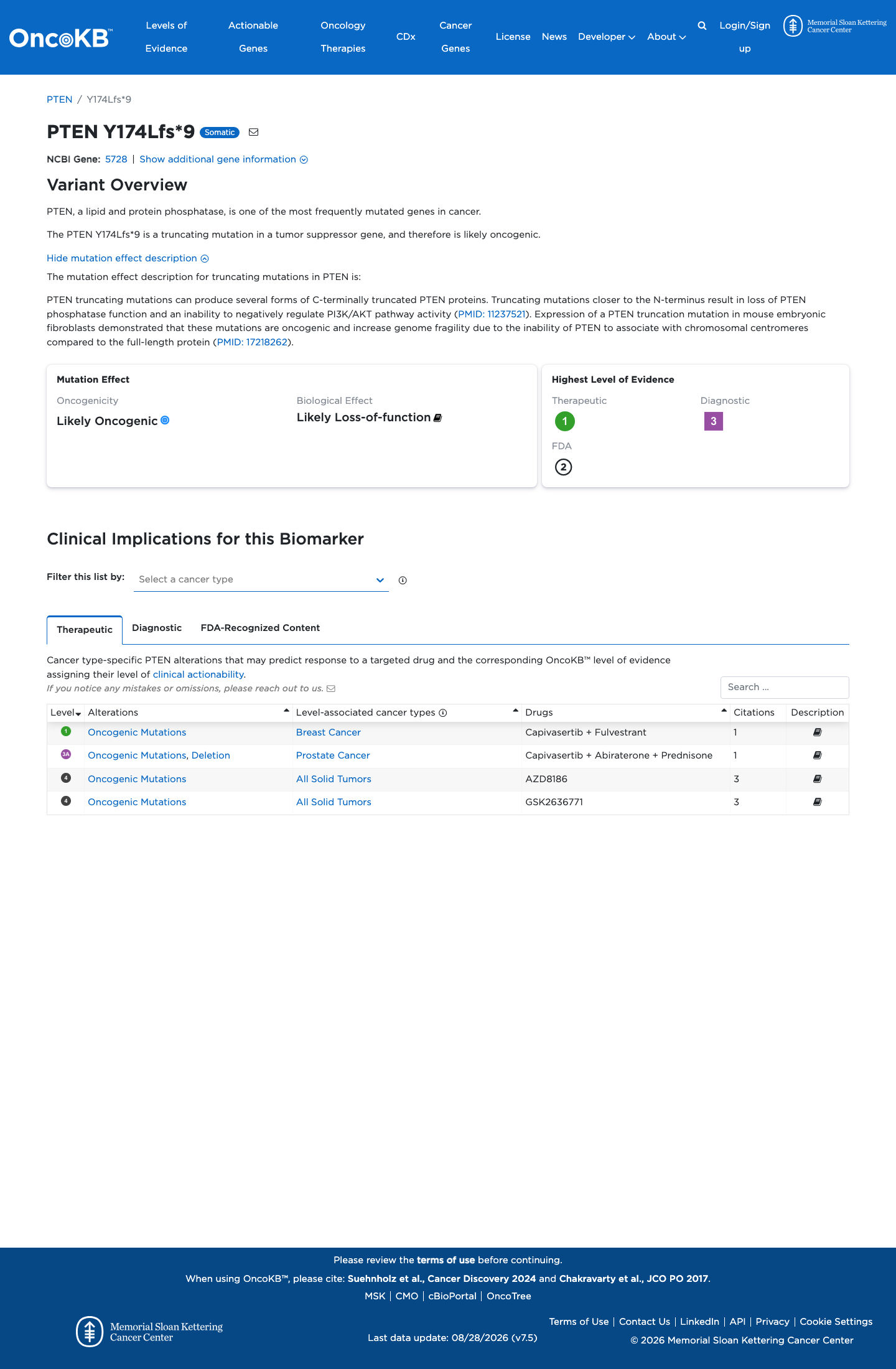
PTEN is a tumor suppressor gene that encodes a phosphatase converting the lipid messenger PIP3 back to PIP2 at the cell membrane, thereby restraining the AKT/mTOR signaling pathway that drives cell growth, proliferation, and survival. It is one of the most frequently mutated genes across many types of human cancer, and its loss promotes unchecked cell growth, survival, and genomic instability, partly through impaired DNA repair. Germline loss-of-function variants in PTEN cause Cowden syndrome, an inherited cancer predisposition disorder associated with elevated risk of breast and thyroid cancer.
As a germline loss-of-function change in the PTEN tumor suppressor, this variant is relevant to Cowden syndrome and the associated inherited breast and thyroid cancer predisposition.
PVS1 very strong: the frameshift is 5′ of PTEN p.D375/c.1121 and meets the Expert Panel's nonsense-mediated-decay rule. PM2 supporting: the variant is absent from gnomAD v2.1 and v4.1, below the PTEN population-frequency threshold.