Analysis in progress
Initialising…
0%
complete
This report is still being assembled — sections appear as each stage finishes. It isn't final yet.
TSC1
Final classification
Likely Pathogenic
PVS1PM2
TSC1
c.163C>T
p.Gln55Ter
nonsense · exon 4

TSC1 encodes hamartin, a tumor suppressor protein that partners with tuberin (TSC2) to form a complex that restrains mTORC1 signaling, a key pathway driving cell growth and protein production. Germline mutations in TSC1 cause tuberous sclerosis, a condition marked by benign growths that occasionally turn malignant, and are also linked to lymphangioleiomyomatosis. In cancer, inactivating mutations in TSC1 are found in several tumor types, including hepatocellular carcinoma, where they overactivate mTORC1 signaling.

This variant

TSC1 encodes hamartin, a tumor suppressor that restrains mTORC1 signaling, and germline loss-of-function variants cause tuberous sclerosis. This nonsense variant is predicted to eliminate hamartin through nonsense-mediated decay, precisely matching that established mechanism and supporting the Likely Pathogenic classification.

Transcript
NM_000368.5
HGVS · transcript:coding
NM_000368.5:c.163C>T
GRCh38
chr9:132927248 G>A
GRCh37
chr9:135802635 G>A
Basis Likely Pathogenic: PVS1 (Very Strong, NMD-predicted truncation) plus PM2 (Moderate, absent from gnomAD v2.1, v4.1, gnomAD-Canada v1.0) under the generic ACMG/AMP combination table.
Likely Pathogenic: PVS1 (Very Strong, NMD-predicted truncation) plus PM2 (Moderate, absent from gnomAD v2.1, v4.1, gnomAD-Canada v1.0) under the generic ACMG/AMP combination table.
Classification rationale
PVS1PM2 Likely Pathogenic
TSC1 c.163C>T nonsense · exon 4

PVS1 (Very Strong): nonsense variant p.(Gln55Ter) in exon 4 of 23 is predicted to trigger nonsense-mediated decay, removing about 95% of the 1164-amino-acid protein; germline loss-of-function is an established TSC1 disease mechanism. PM2 (Moderate): the variant is absent from gnomAD v2.1, gnomAD v4.1, and gnomAD-Canada v1.0. Synthesis: PVS1 (Very Strong) + PM2 (Moderate) maps to Likely Pathogenic under the generic ACMG/AMP 2015 combination rules.

PVS1 + PM2 Likely Pathogenic
Gene diagram · NM_000368.5 · variants mapped to exon structure
TSC1 NM_000368.5
Fetching transcript structure from UCSC…
Applied criteria · 2 applied · 15 assessed
MetEvidence satisfies this criterion.
Not metEvaluated against available evidence; threshold not reached.
Not assessedApplies in principle, but no evidence was found to evaluate it.
N/ADoesn't apply to this variant type.
Applied · 2
Strength Supporting Moderate Strong Very strong
PVS1 very strong Pathogenic
Met (Very Strong): nonsense change p.(Gln55Ter) in exon 4 of 23 is predicted to trigger nonsense-mediated decay, removing about 95% of the protein.
pvs1_variant_assessment.json: transcript_hgvs NM_000368.5:c.163C>T, protein_1l NP_000359.1:p.(Q55*), consequence_class 'nonsense', variant_bucket 'nonsense', framework_source PMC6185798, suggested_default_strength 'PVS1'.VariantValidator predicted protein alignment: position_first 54, position_last_predicted 55, position_last_original 1165 (i.e. wild-type protein length 1164 aa), confirming the truncation eliminates the vast majority of the protein.VariantValidator exonic position mapping places c.163C>T within exon 4 (start_exon/end_exon = '4') for both GRCh37 and GRCh38 coordinates.
PM2 moderate Pathogenic
Met (Moderate): the variant is absent from gnomAD v2.1, gnomAD v4.1, and gnomAD-Canada v1.0.
No TSC1-specific ClinGen VCEP specification or local gene-specific framework was retrieved; generic ACMG/AMP assessment was used.The normalized exact variant is NC_000009.11:g.135802635G>A (GRCh37) / NC_000009.12:g.132927248G>A (GRCh38), corresponding to NM_000368.5:c.163C>T, p.(Gln55Ter).The variant was reported absent from gnomAD v2.1, gnomAD v4.1, and gnomAD-Canada v1.0, with no overall or ancestry-specific allele count or frequency reported.
Assessed · not applied · 2 not met · 13 not assessed
Pathogenic
PS2 Not assessed: no documented de novo occurrence with both parents tested and biological parentage confirmed.
PS3 Not assessed: no validated functional assay data testing this exact variant was available.
PS4 Not assessed: no case-control or enrichment dataset for this exact variant was available.
PM6 Not assessed: the de novo claim lacks parental test results, phenotype, and parentage documentation.
PP1 Not assessed: no family segregation or pedigree data was available for this variant.
PP4 Not assessed: no proband phenotype documenting features specific to a TSC1-related disorder was provided.
PP5 Not assessed: ClinVar contains laboratory pathogenic submissions but no expert-panel assertion for this variant.
Benign
BA1 Not met: the variant is absent from population databases, so no allele frequency approaches the stand-alone benign threshold.
BS1 Not met: absent from all three population datasets, so no allele frequency exceeds the expected benign threshold.
BS2 Not assessed: no observation of the variant in a healthy adult, including no homozygote, was available.
BS3 Not assessed: no functional assay showing normal protein function for this exact variant was available.
BS4 Not assessed: no non-segregation observation, such as an affected relative lacking the variant, was available.
BP2 Not assessed: no phase data with a second pathogenic variant was available.
BP5 Not assessed: no alternative molecular diagnosis explaining the phenotype was provided.
BP6 Not assessed: no ClinVar expert-panel benign assertion exists for this variant.
N/A · 11 PS1 · PM1 · PM3 · PM4 · PM5 · PP2 · PP3 · BP1 · BP3 · BP4 · BP7
Research & evidence
Population frequency · supports pathogenic
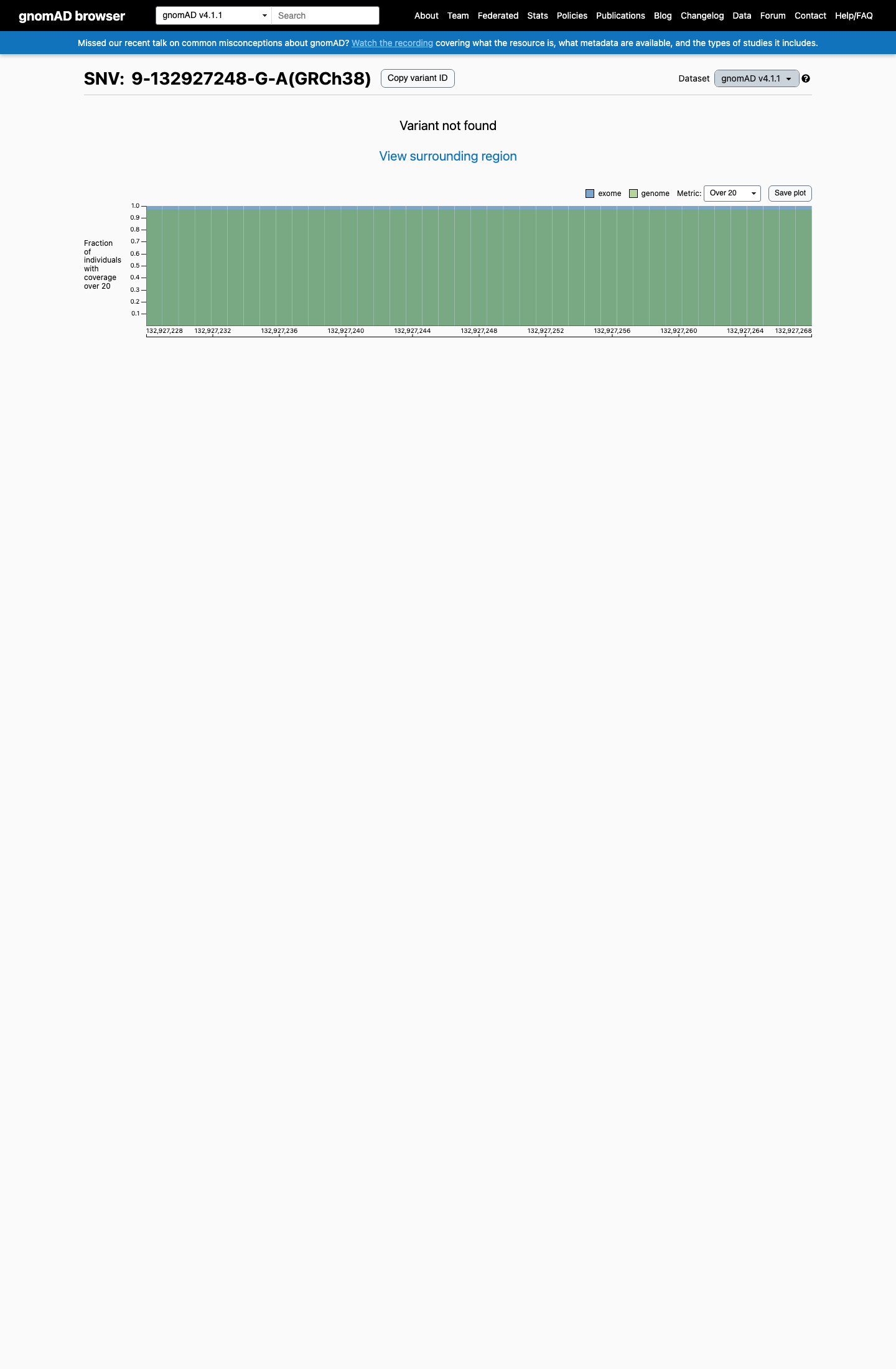
gnomAD v4.1 screenshot
gnomAD v4.1
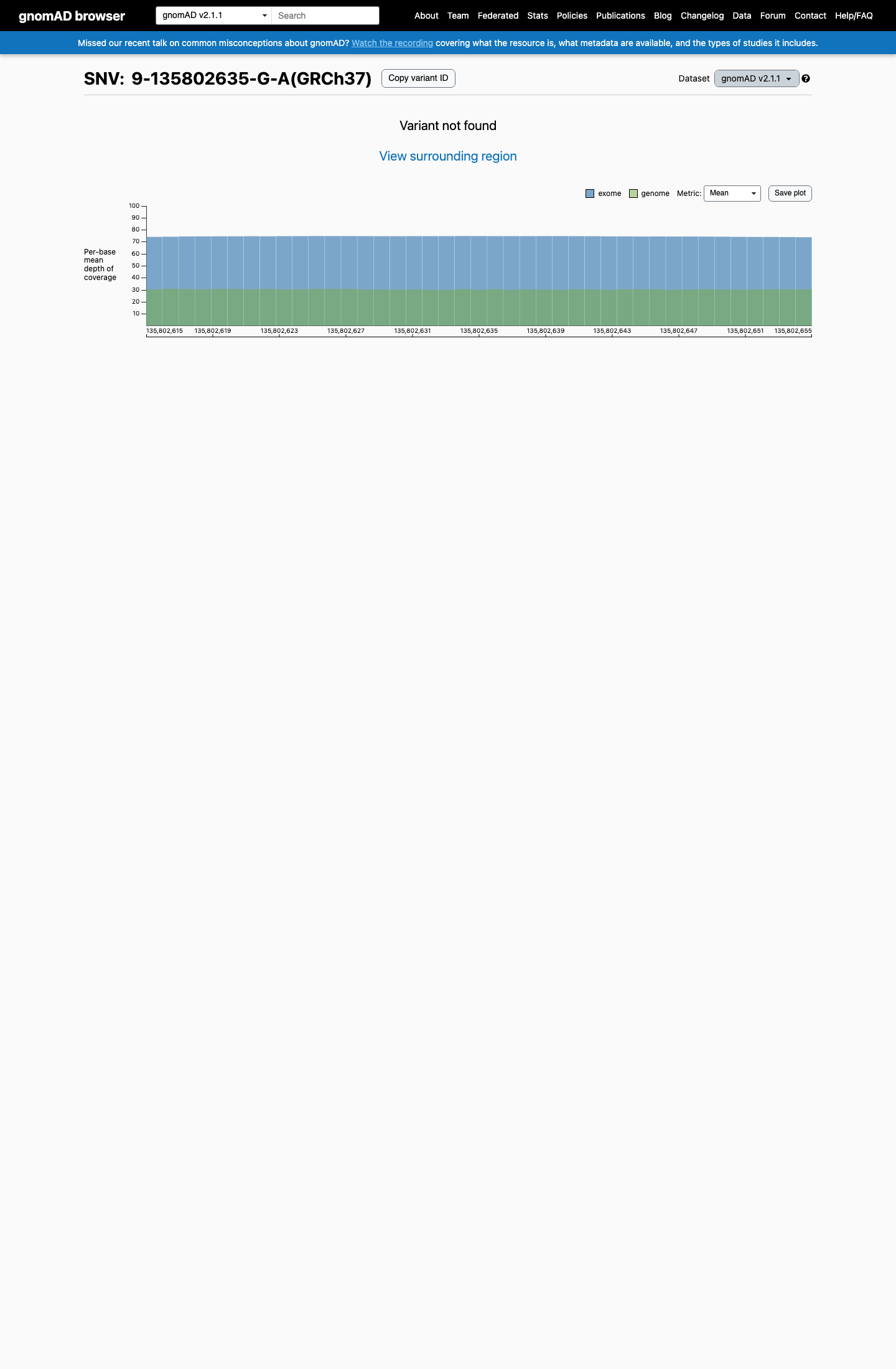
gnomAD v2.1 screenshot
gnomAD v2.1
v4.1
Absent from gnomAD v4.1.
v2.1
Absent from gnomAD v2.1.
🇨🇦 CA
Absent from gnomAD-Canada v1.0.
Allele frequency by ancestry
three datasets · side by side
gnomAD v4.1
Absent · 0 / ?
0 hom
Not observed in any ancestry group.
gnomAD v2.1
Absent · 0 / ?
0 hom
Not observed in any ancestry group.
gnomAD Canada 🇨🇦
Absent · 0 / ?
0 hom
Not observed in any ancestry group.
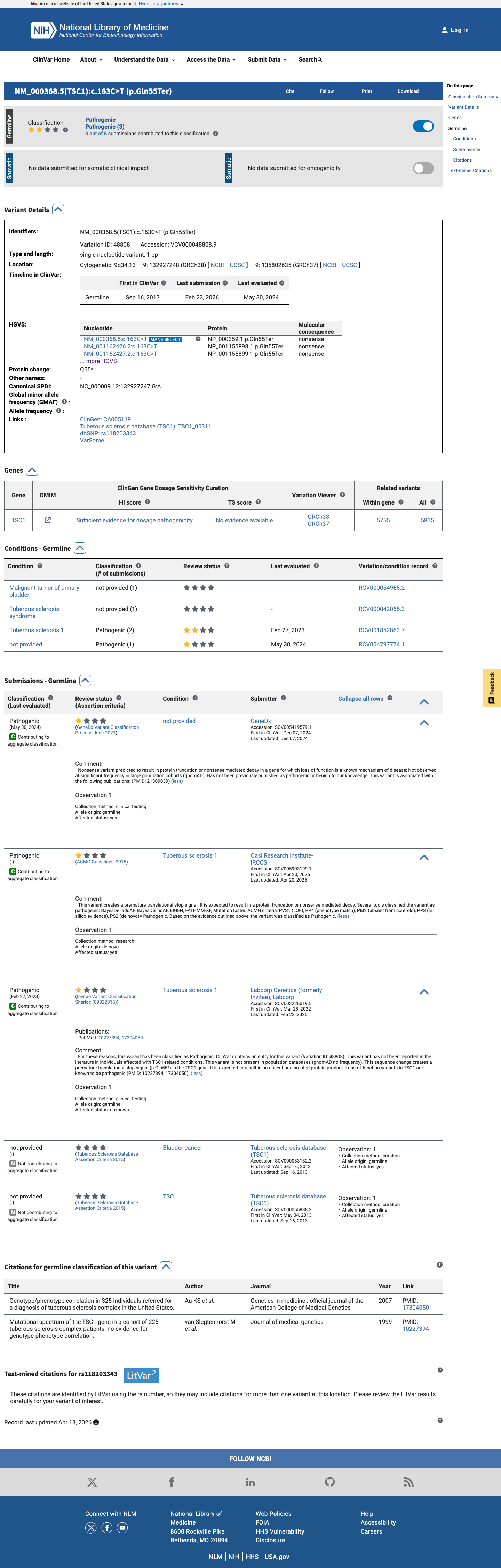
ClinVar screenshot
ClinVar
This variant has been reported in ClinVar as Pathogenic (2 clinical laboratories). (ClinVarID = 48808)
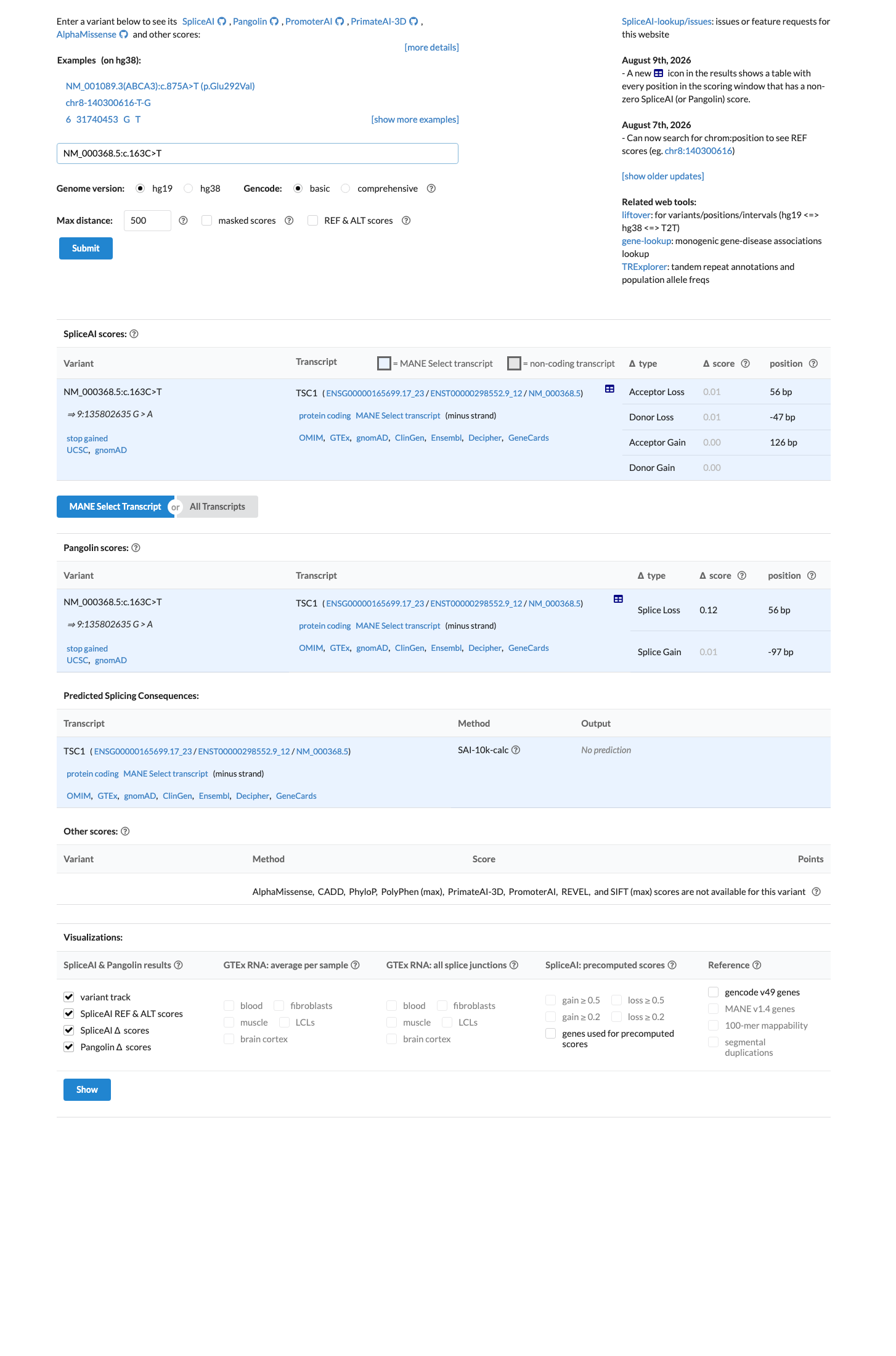
SpliceAI screenshot
In silico
SpliceAI predicts no significant splice impact for this variant (max delta score = 0.01). BayesDel score = 0.60222.
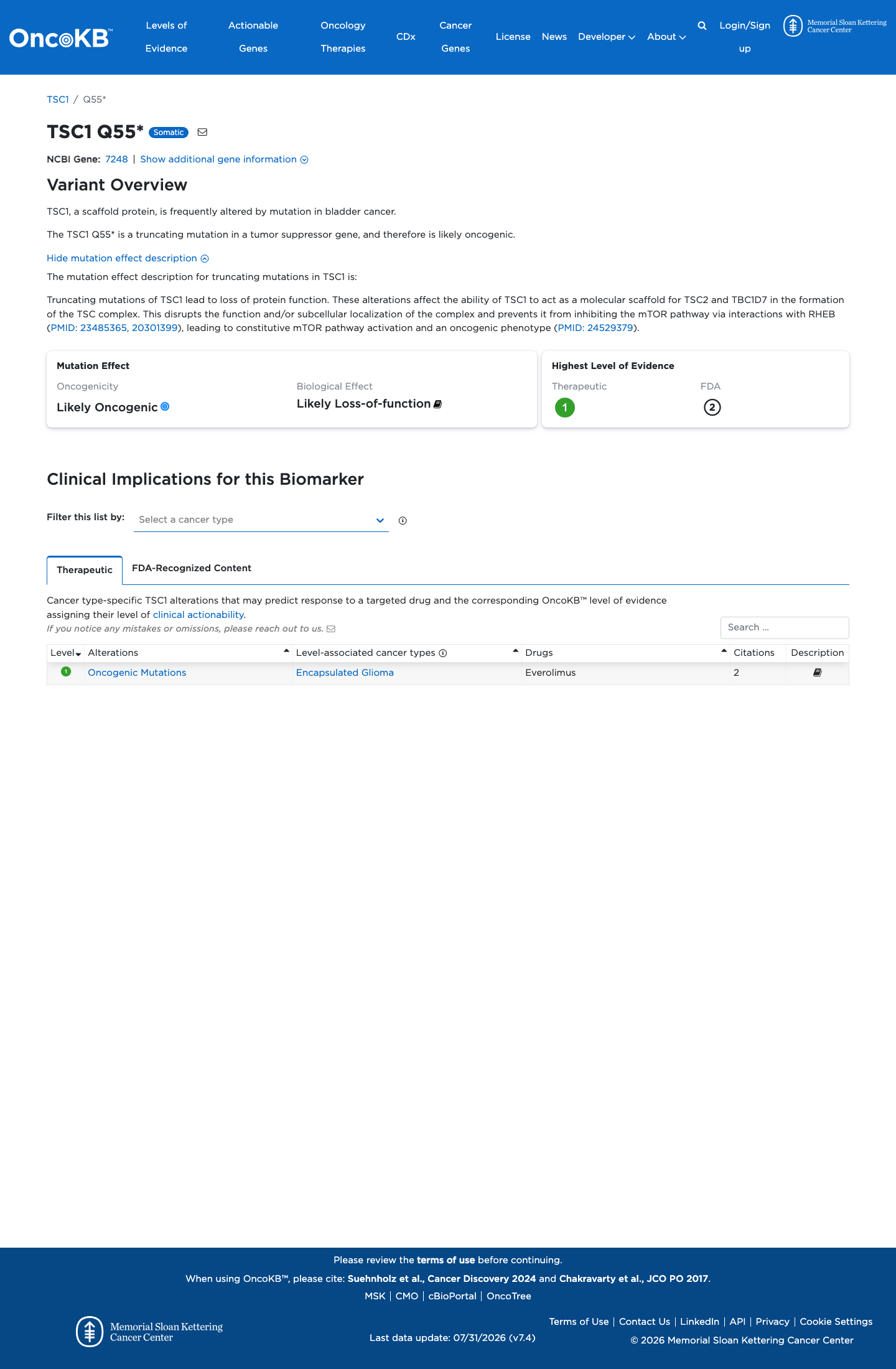
Functional / OncoKB screenshot
Functional Likely Oncogenic
OncoKB identified variant-specific curated literature and context relevant to functional review; biological-effect context: Likely Loss-of-function; curated oncogenicity label: Likely Oncogenic.
OncoKB ↗
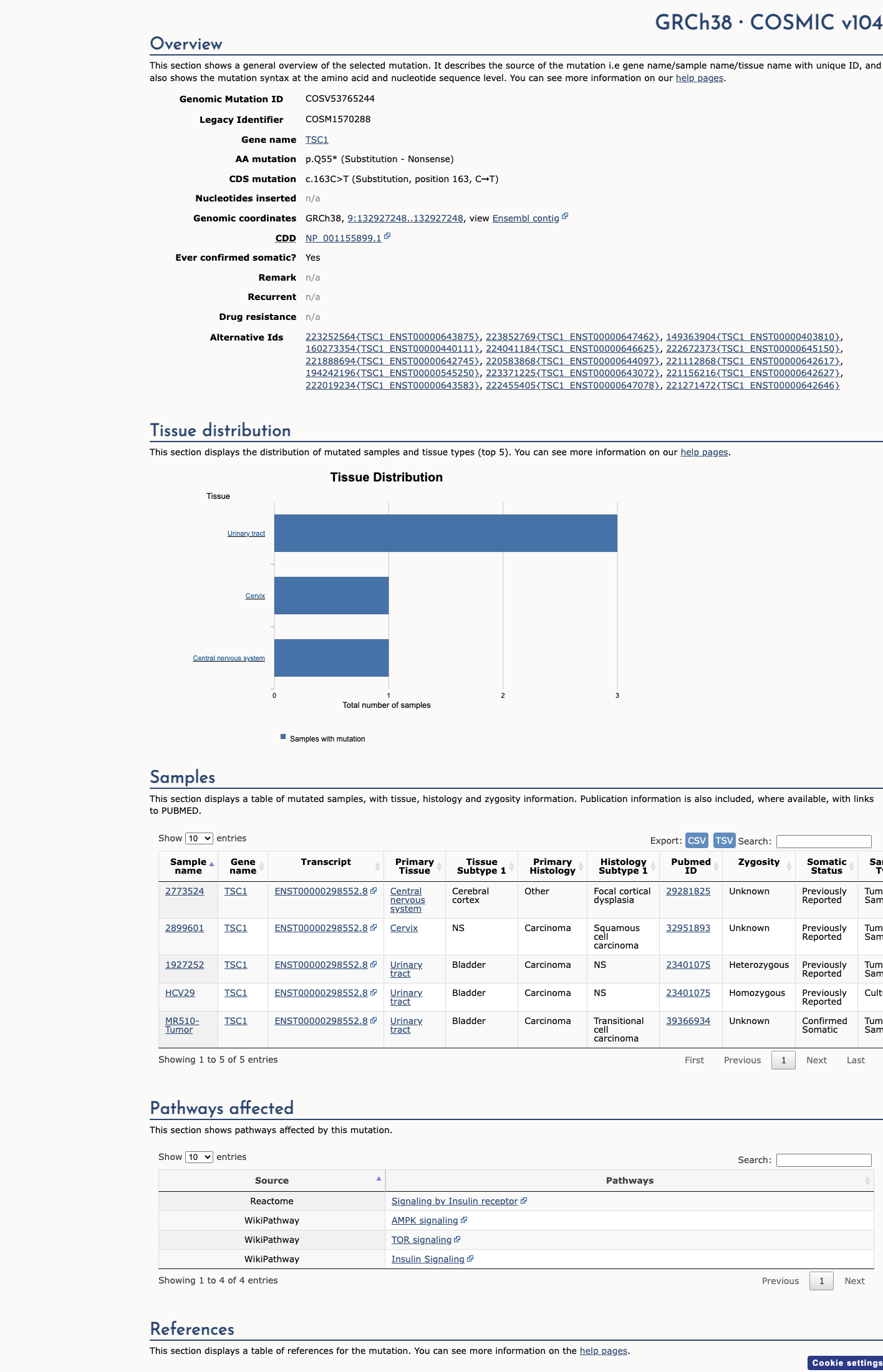
COSMIC screenshot
COSMIC
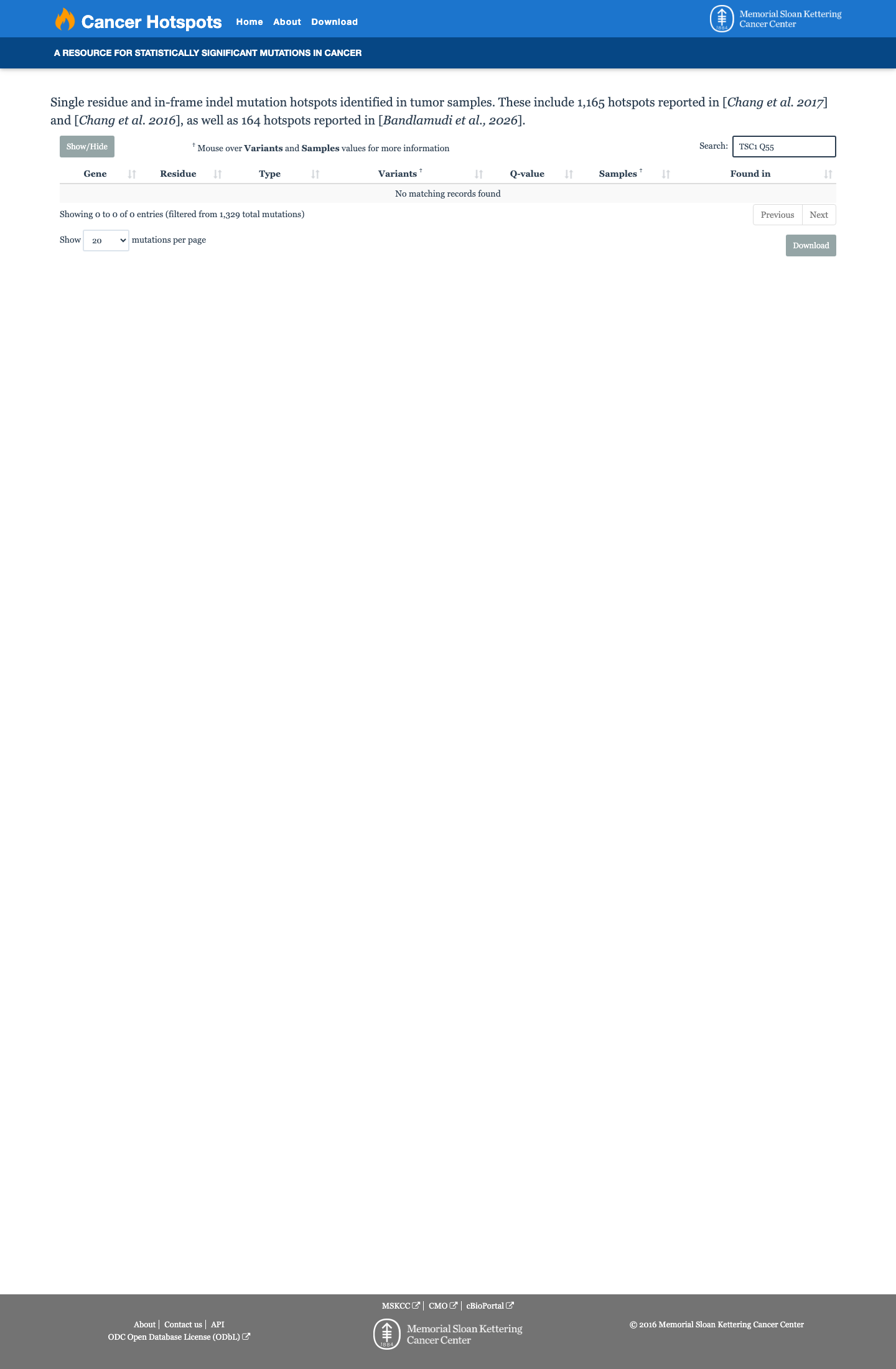
Cancer hotspots screenshot
Cancer hotspots
Somatic evidence Not in COSMIC / hotspots
COSMIC
This variant does not lie in a statistically significant hotspot. This variant has previously been reported in somatic cancers (COSMIC; COSV53765244, n = 5 times).
Hotspots
This variant does not lie in a statistically significant hotspot.
Literature · how each cited paper was used
1papers cited
Each card is an audit: what was searched, what was found, whether it names the variant, which criteria it fed, and why. 7 further PMIDs triaged but not cited — see Sources & references.
Rule & framework references · cited for criterion definitions, not variant evidence
10227394 ↗ Mutational spectrum of the TSC1 gene in a cohort of 225 tuberous sclerosis complex patients: no evidence for genotype-phenotype correlation.
Sources & reference links
8Sources
ClinVar
gnomAD v2.1
gnomAD v4.1
gnomAD-Canada
SpliceAI
OncoKB
COSMIC
Cancer hotspots
Triaged references · 7 PMIDs not cited in assessment
20301399 ↗ Tuberous Sclerosis Complex. ONCOKB
23485365 ↗ A circuitry and biochemical basis for tuberous sclerosis symptoms: from epilepsy to neurocognitive deficits. ONCOKB
24529379 ↗ Spatial control of the TSC complex integrates insulin and nutrient regulation of mTORC1 at the lysosome. ONCOKB
12773163 ↗ Tuberous sclerosis complex (TSC) gene involvement in sporadic tumours. CLINVAR
17304050 ↗ Genotype/phenotype correlation in 325 individuals referred for a diagnosis of tuberous sclerosis complex in the United States. CLINVAR
22923433 ↗ Genome sequencing identifies a basis for everolimus sensitivity. CLINVAR
23401075 ↗ TSC1 involvement in bladder cancer: diverse effects and therapeutic implications. CLINVAR