Analysis in progress
Initialising…
0%
complete
This report is still being assembled — sections appear as each stage finishes. It isn't final yet.
NOTCH3
Final classification
VUS
PM2BP4
NOTCH3
c.3192A>T
p.Glu1064Asp
missense · exon 20

NOTCH3 encodes a transmembrane receptor that relays signals between neighboring cells, helping regulate cell differentiation, growth, and survival. Mutations in NOTCH3 cause CADASIL, an inherited disorder of the small blood vessels in the brain that can lead to strokes, migraines, and progressive cognitive decline. The gene also contributes to cancer: activating mutations or amplifications are found in some leukemias and breast cancers, while inactivating mutations occur in certain solid tumors such as squamous cell carcinomas.

This variant

NOTCH3 mutations cause CADASIL, an autosomal-dominant small-vessel disease of the brain, and the gene is also implicated in certain cancers. This variant (p.Glu1064Asp) is classified as a variant of uncertain significance: its absence from population databases and benign computational predictions neither establish nor exclude a pathogenic role, and no functional or clinical data for this specific change were available to resolve it.

Transcript
NM_000435.2
HGVS · transcript:coding
NM_000435.2:c.3192A>T
GRCh38
chr19:15180207 T>A
GRCh37
chr19:15291018 T>A
Basis Only PM2 (moderate) and BP4 (supporting) were met, which satisfies no ACMG/AMP 2015 Pathogenic or Benign combination rule; the variant is classified as VUS.
Only PM2 (moderate) and BP4 (supporting) were met, which satisfies no ACMG/AMP 2015 Pathogenic or Benign combination rule; the variant is classified as VUS.
Classification rationale
PM2 BP4 VUS
NOTCH3 c.3192A>T missense · exon 20

PM2 (Moderate): the variant is absent from gnomAD v2.1, v4.1, and gnomAD-Canada population databases. BP4 (Supporting): REVEL score 0.106 falls in the benign-supporting range (<=0.290), and SpliceAI predicts no splice disruption. Synthesis: one moderate pathogenic and one supporting benign criterion satisfy no Pathogenic or Benign combination rule, so the overall classification is VUS.

PM2 + BP4 VUS
Gene diagram · NM_000435.2 · variants mapped to exon structure
NOTCH3 NM_000435.2
Fetching transcript structure from UCSC…
Applied criteria · 2 applied · 21 assessed
MetEvidence satisfies this criterion.
Not metEvaluated against available evidence; threshold not reached.
Not assessedApplies in principle, but no evidence was found to evaluate it.
N/ADoesn't apply to this variant type.
Applied · 2
Strength Supporting Moderate Strong Very strong
PM2 moderate Pathogenic
Met (Moderate): the variant is absent from the gnomAD v2.1, v4.1, and gnomAD-Canada population datasets.
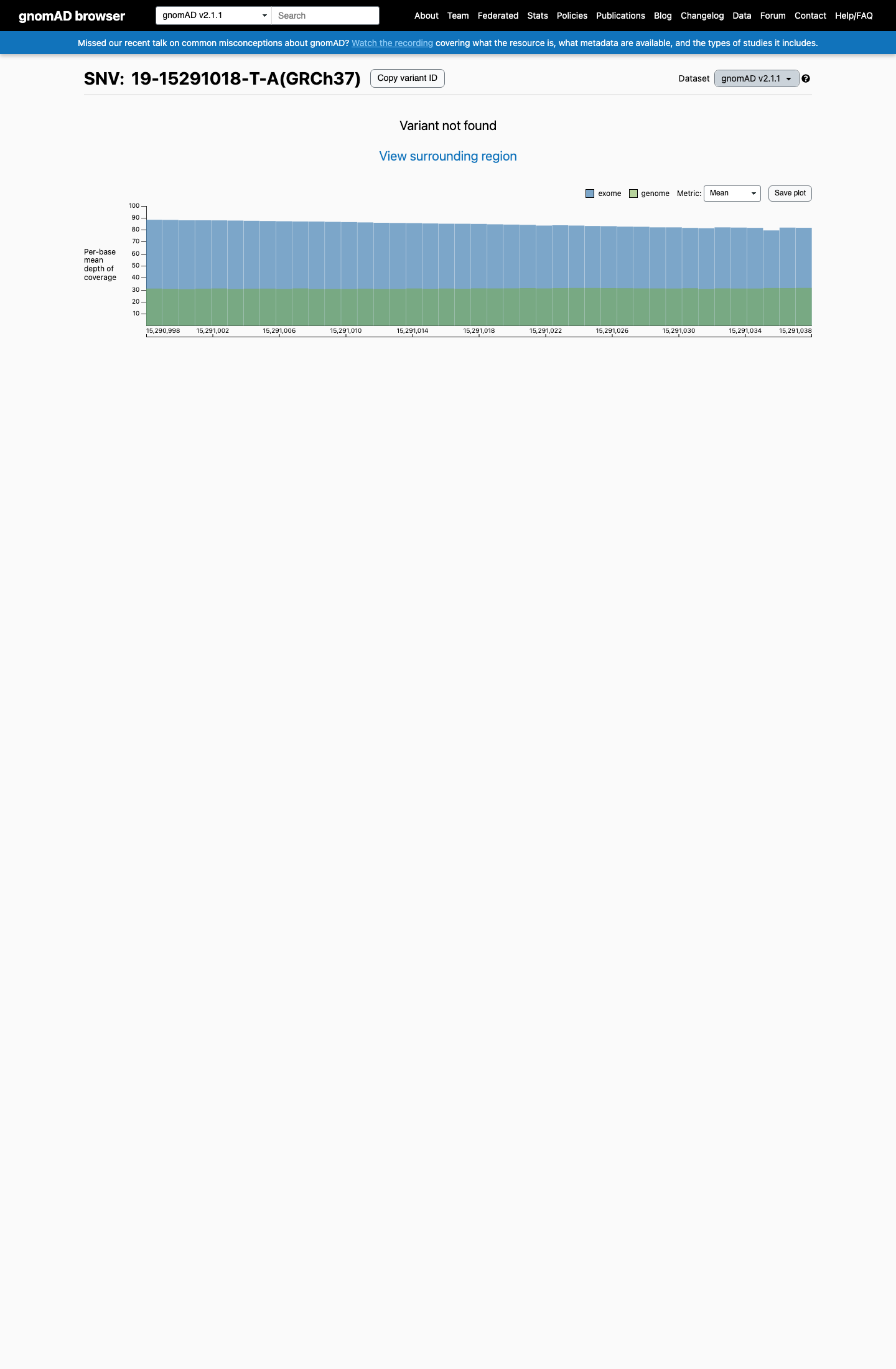
The normalized GRCh37 representation is 19-15291018-T-A and the GRCh38 representation is 19-15180207-T-A.gnomAD v2.1 (GRCh37), gnomAD v4.1 (GRCh38), and gnomAD-Canada v1.0 (GRCh38) each reported the variant as absent.No applicable NOTCH3 VCEP/CSPEC or local gene-specific framework was retrieved, so generic ACMG/AMP 2015 criterion strength is used.
BP4 supporting Benign
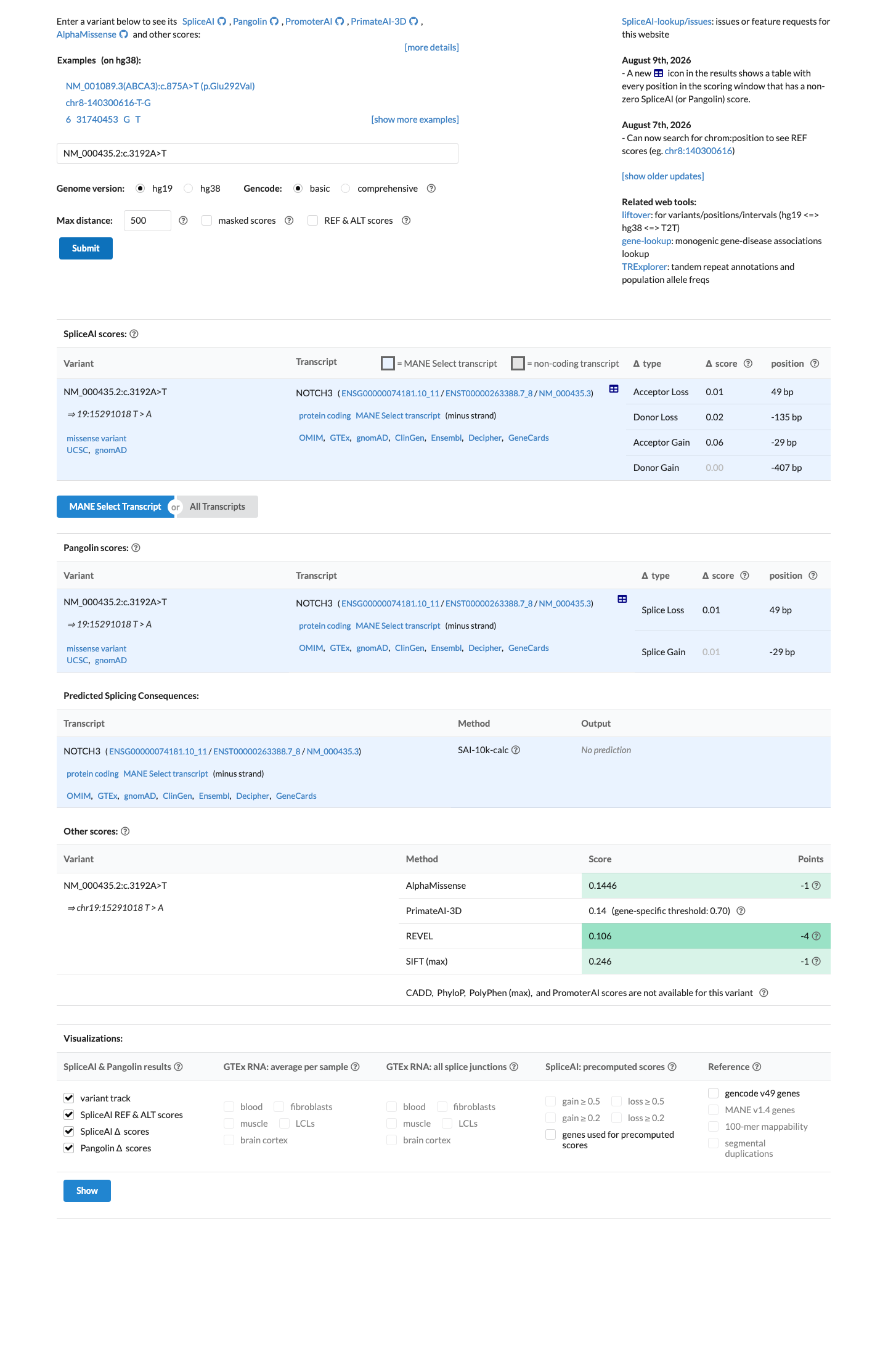
Met (Supporting): REVEL score 0.106 is within the benign-supporting range (<=0.290), and SpliceAI max delta 0.055 predicts no splice disruption.
REVEL score 0.106 for this variant falls within the ClinGen SVI benign-supporting REVEL range (<=0.290), per the REVEL calibration publication (PMID 36413997), supporting a non-damaging missense in-silico prediction for BP4.SpliceAI predicts no significant splice impact for this variant (max delta score = 0.055; DS_AG=0.055, DS_AL=0.014, DS_DG=0.001, DS_DL=0.023), consistent with no splice-altering effect and providing corroborating supporting-strength evidence for BP4.No ClinGen VCEP/CSPEC was found for NOTCH3 in this case (cspec.found=false, framework_mode=generic_acmg), so BP4 is applied at generic ACMG/AMP default supporting strength rather than any gene-specific moderate/strong tier.
Assessed · not applied · 5 not met · 16 not assessed
Pathogenic
PS1 Not assessed: insufficient evidence was available to establish this amino acid change as a previously reported pathogenic variant.
PS2 Not assessed: no parental genotyping, parentage confirmation, or inheritance data were available to confirm a de novo occurrence.
PS3 Not assessed: no functional assay data for this specific variant (p.Glu1064Asp) were identified in the literature.
PS4 Not assessed: no case-control or statistical enrichment data for this variant were available.
PM1 Not assessed: insufficient evidence was available to evaluate location in a mutational hotspot or critical functional domain.
PM5 Not assessed: insufficient evidence was available to determine whether this exact amino acid change has been reported pathogenic at this position.
PM6 Not assessed: no parental testing or proband phenotype data were available to establish a presumed de novo occurrence.
PP1 Not assessed: no pedigree, genotype, or segregation data from informative relatives were available.
PP2 Not assessed: insufficient evidence was available to evaluate how often benign missense variants occur in this gene.
PP3 Not met: REVEL score 0.106 is far below the >=0.644 pathogenic threshold, and SpliceAI max delta 0.055 predicts no splice disruption.
PP4 Not assessed: no phenotype or clinical indication was provided, so a highly specific phenotype could not be established.
PP5 Not met: no ClinVar record for this exact variant was found, so no expert-panel pathogenic assertion exists.
Benign
BA1 Not met: the variant is absent from all queried population databases, so no allele frequency reaches the stand-alone benign threshold.
BS1 Not met: the variant is absent from all population datasets, so no allele frequency exceeds that expected for a NOTCH3-related disorder.
BS2 Not assessed: the variant is absent from population databases, so no healthy adult carrier or homozygote was observed to assess penetrance.
BS3 Not assessed: no functional assay data demonstrating normal protein function for this variant were identified.
BS4 Not assessed: no segregation data from informative unaffected relatives were available.
BP1 Not assessed: insufficient evidence was available to evaluate the variant's frequency in unaffected controls.
BP2 Not assessed: no co-occurrence data with a pathogenic variant, or phase or phenotype information, were available.
BP5 Not assessed: no phenotype or molecular findings identifying an alternate cause were provided.
BP6 Not met: no ClinVar record for this exact variant was found, so no expert-panel benign assertion exists.
N/A · 5 PVS1 · PM3 · PM4 · BP3 · BP7
Research & evidence
Population frequency
gnomAD v4.1 screenshot
gnomAD v4.1
gnomAD v2.1 screenshot
gnomAD v2.1
v4.1
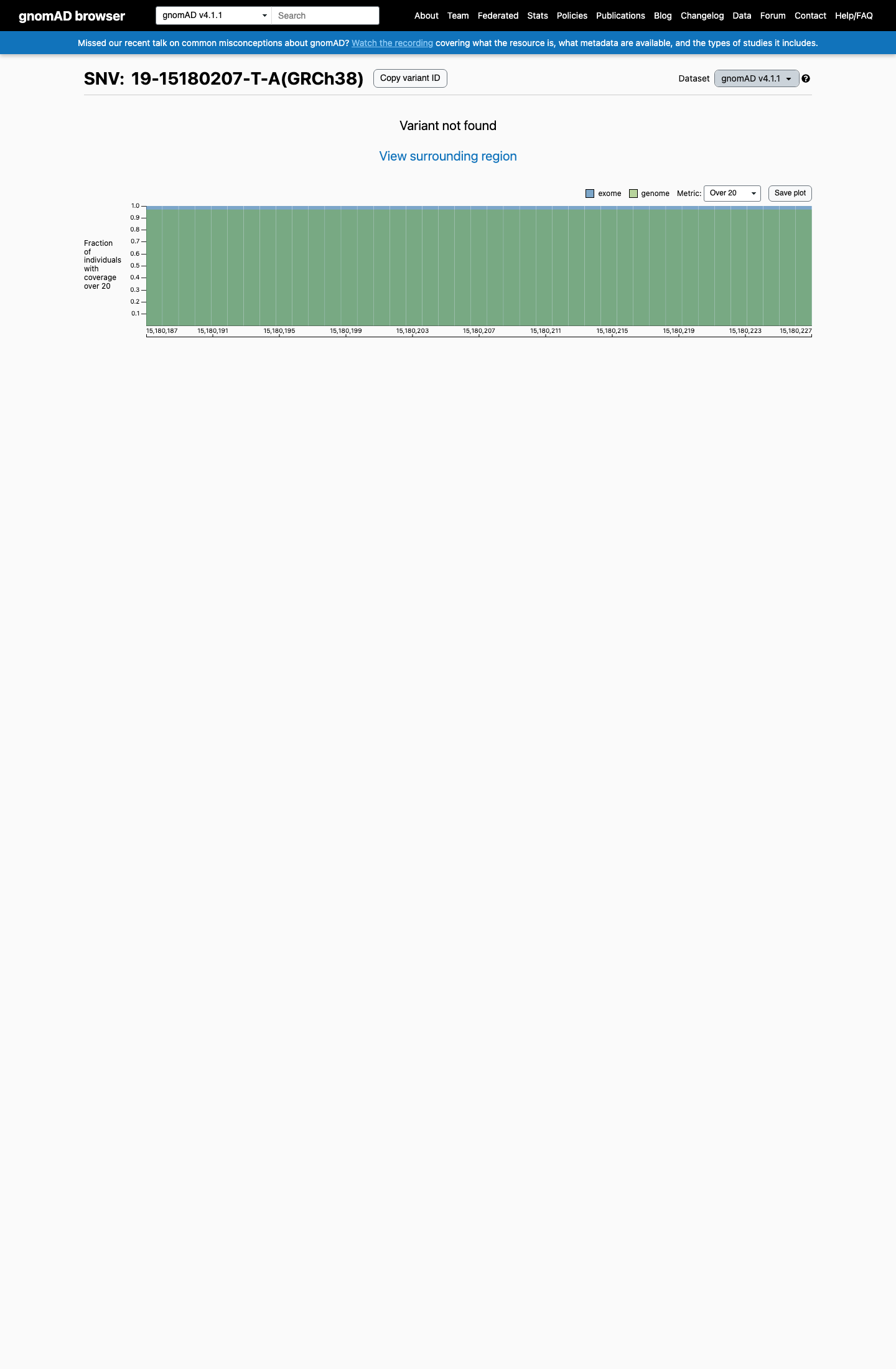
Absent from gnomAD v4.1.
v2.1
Absent from gnomAD v2.1.
🇨🇦 CA
Absent from gnomAD-Canada v1.0.
Allele frequency by ancestry
three datasets · side by side
gnomAD v4.1
Absent · 0 / ?
0 hom
Not observed in any ancestry group.
gnomAD v2.1
Absent · 0 / ?
0 hom
Not observed in any ancestry group.
gnomAD Canada 🇨🇦
Absent · 0 / ?
0 hom
Not observed in any ancestry group.
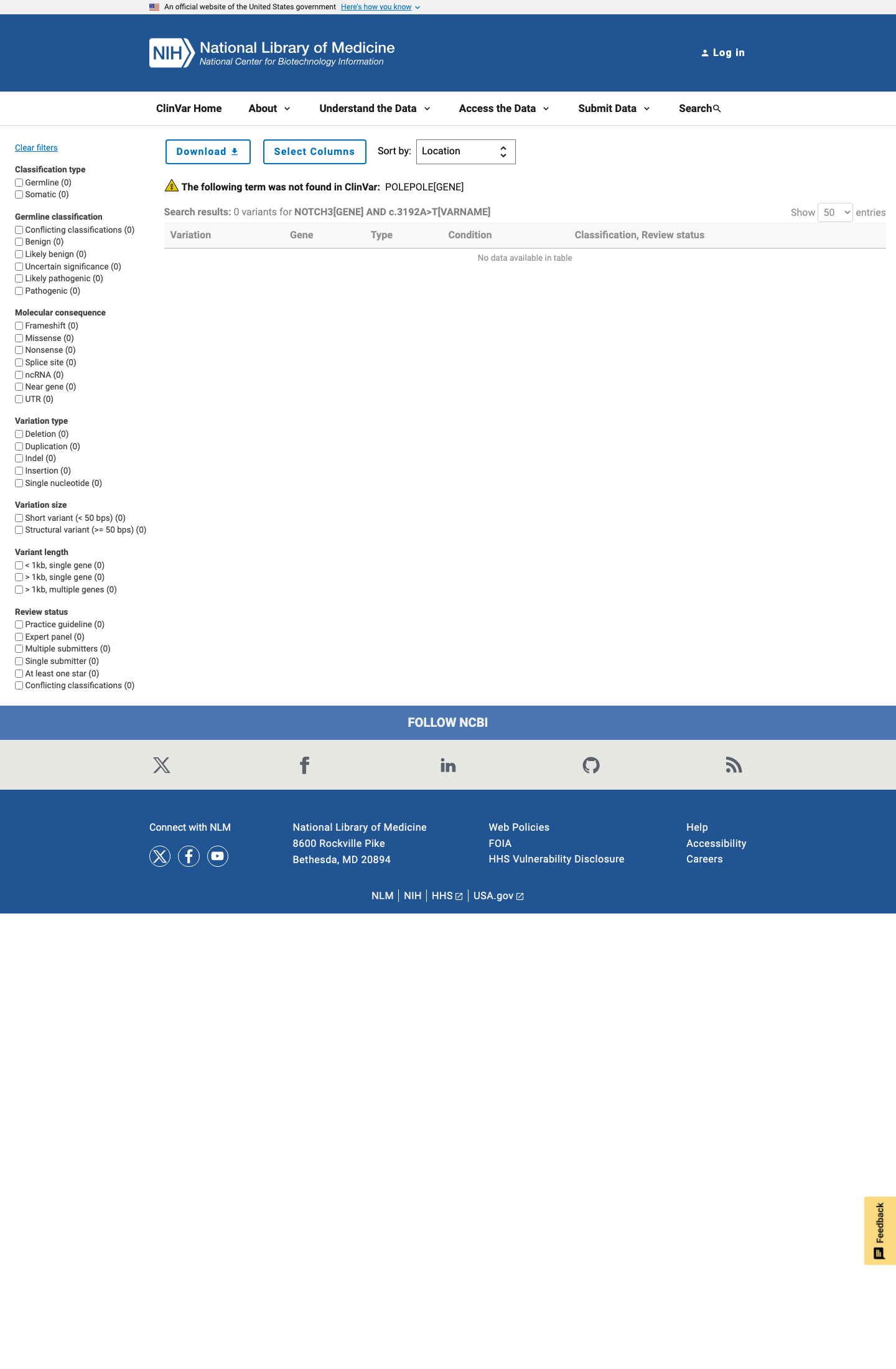
ClinVar screenshot
ClinVar
This variant is absent from ClinVar.
SpliceAI screenshot
In silico
SpliceAI predicts no significant splice impact for this variant (max delta score = 0.06). REVEL score = 0.106. BayesDel score = -0.429345.
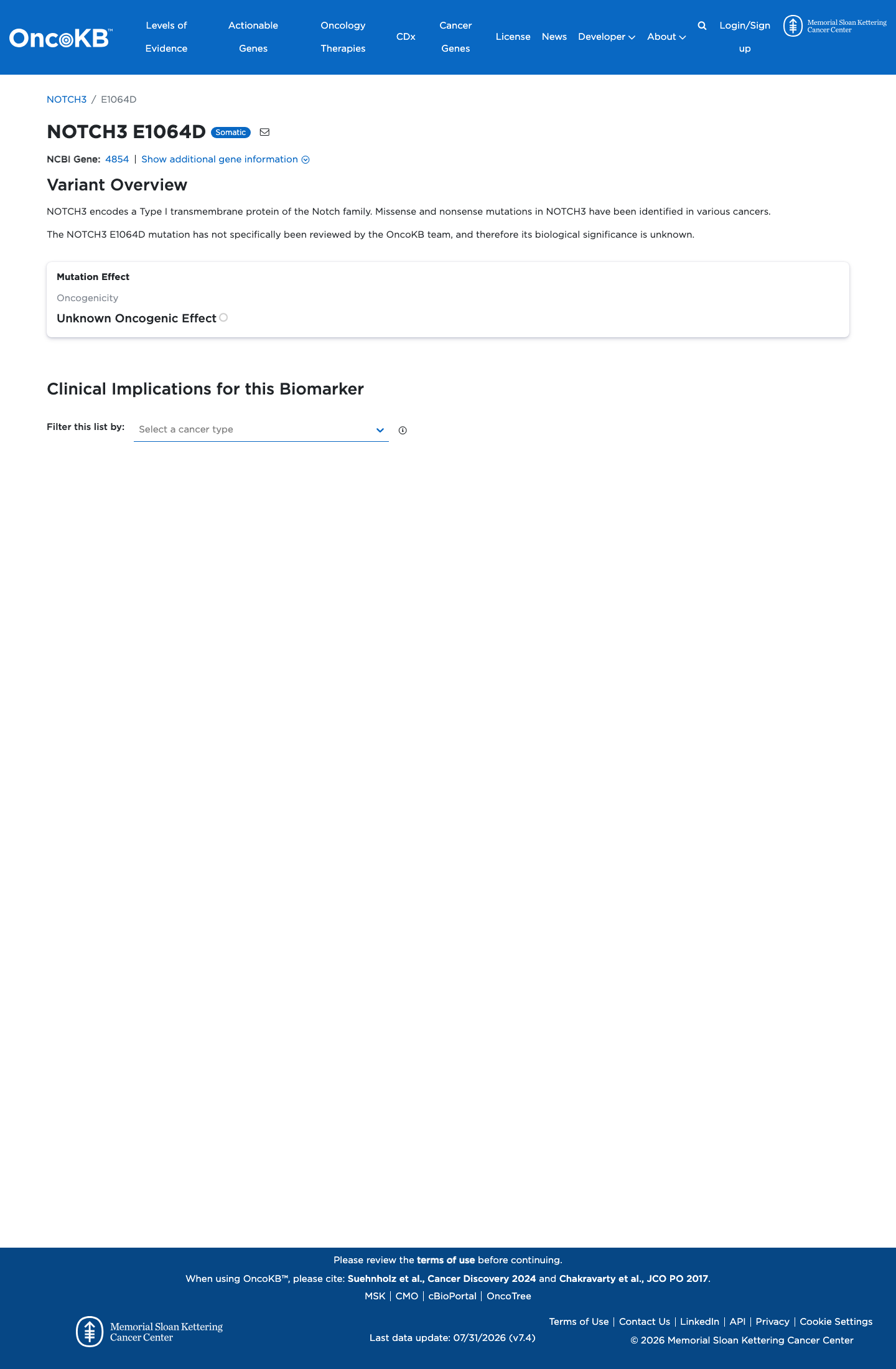
Functional / OncoKB screenshot
Functional Unknown Oncogenic Effect
OncoKB did not identify variant-specific reviewed functional evidence for this variant; gene-level curated context is available for reviewer follow-up. NOTCH3 encodes a Type I transmembrane protein of the Notch family. Missense and nonsense mutations in NOTCH3 have been identified in various cancers.
OncoKB ↗
COSMIC screenshot
COSMIC
Cancer hotspots screenshot
Cancer hotspots
Somatic evidence Not in COSMIC / hotspots
COSMIC
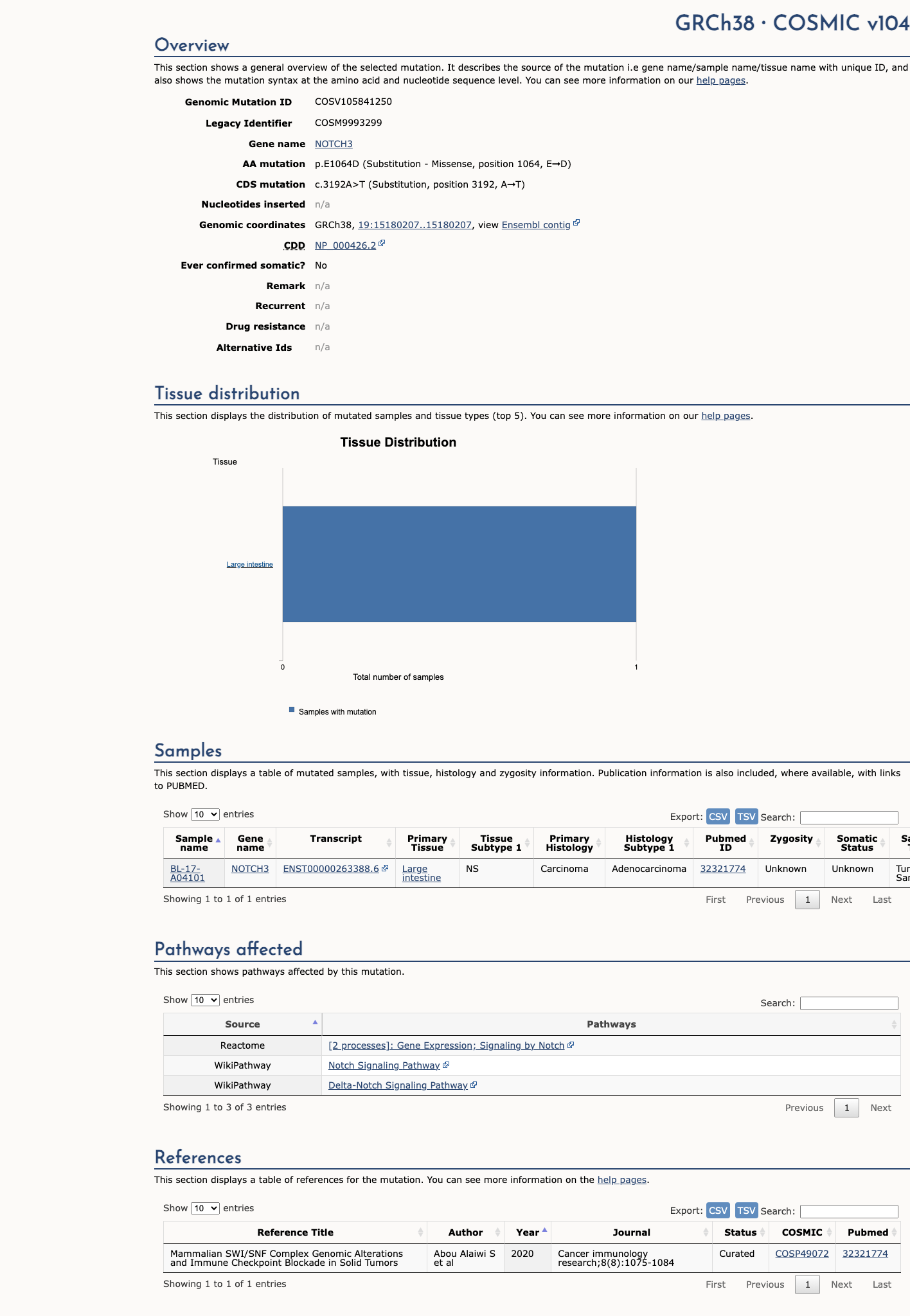
This variant does not lie in a statistically significant hotspot. This variant has previously been reported in somatic cancers (COSMIC; COSV105841250, n = 1 times).
Hotspots
This variant does not lie in a statistically significant hotspot.
Sources & reference links
8Sources
ClinVar
gnomAD v2.1
gnomAD v4.1
gnomAD-Canada
SpliceAI
OncoKB
COSMIC
Cancer hotspots