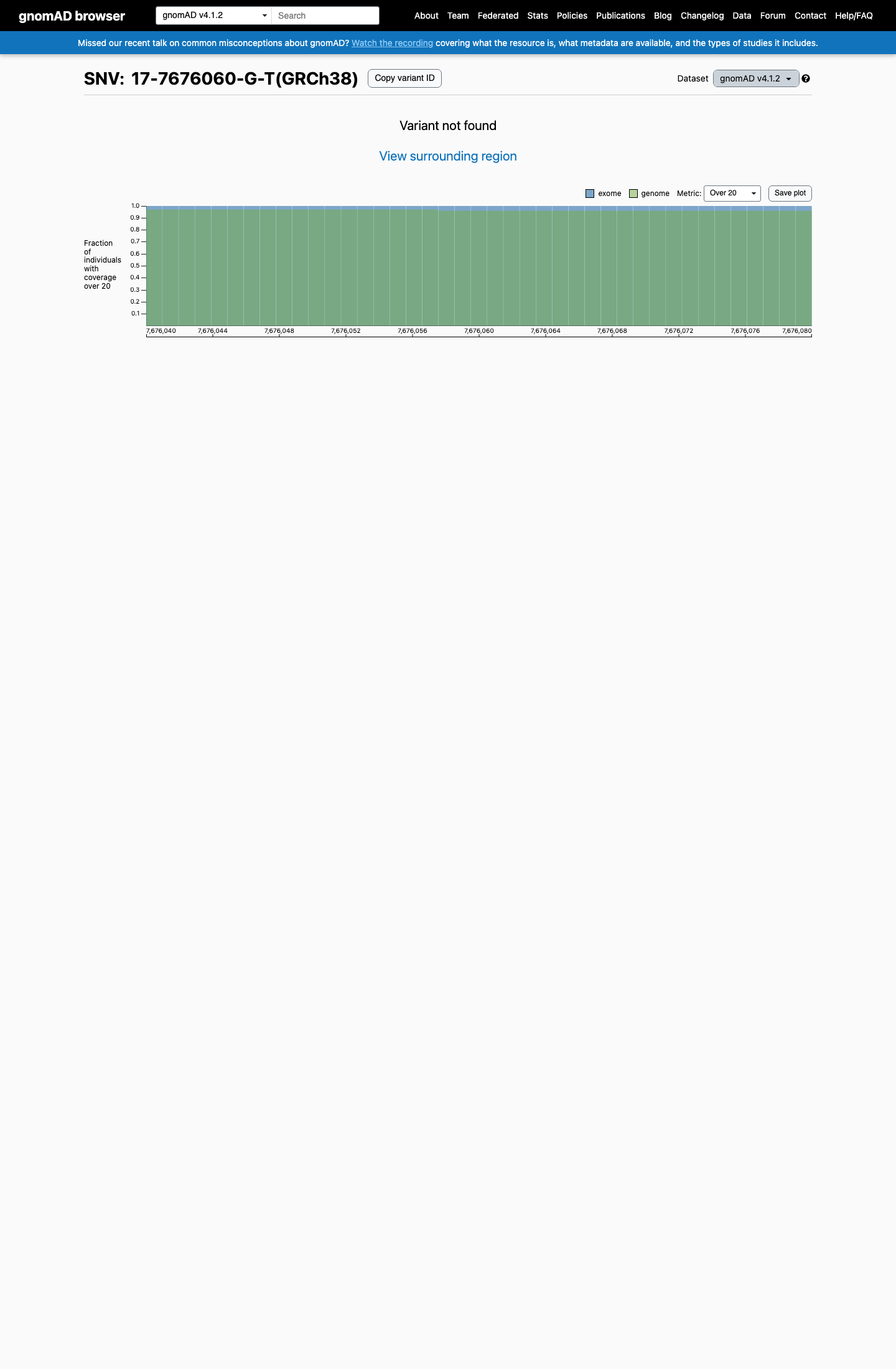
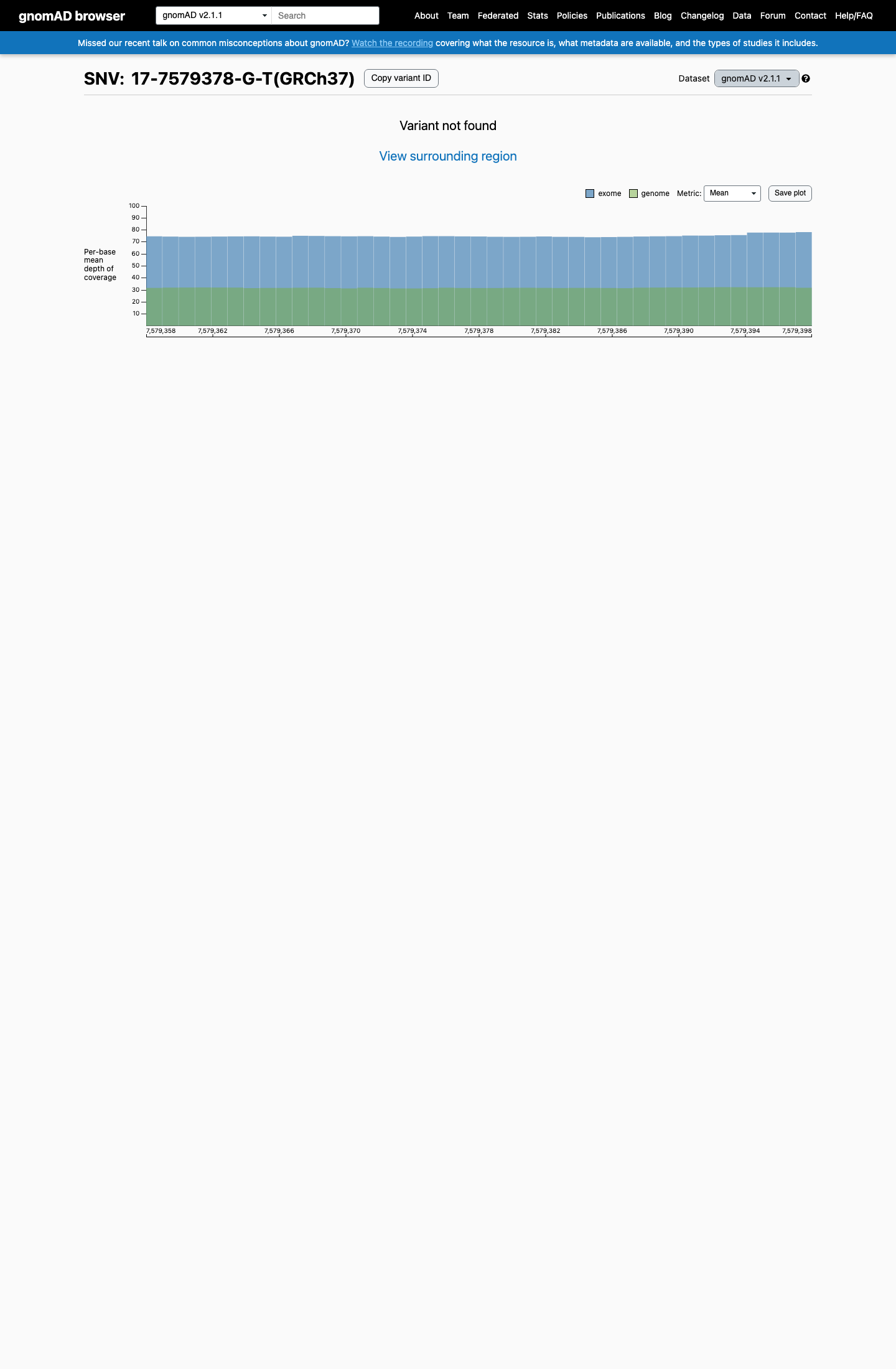
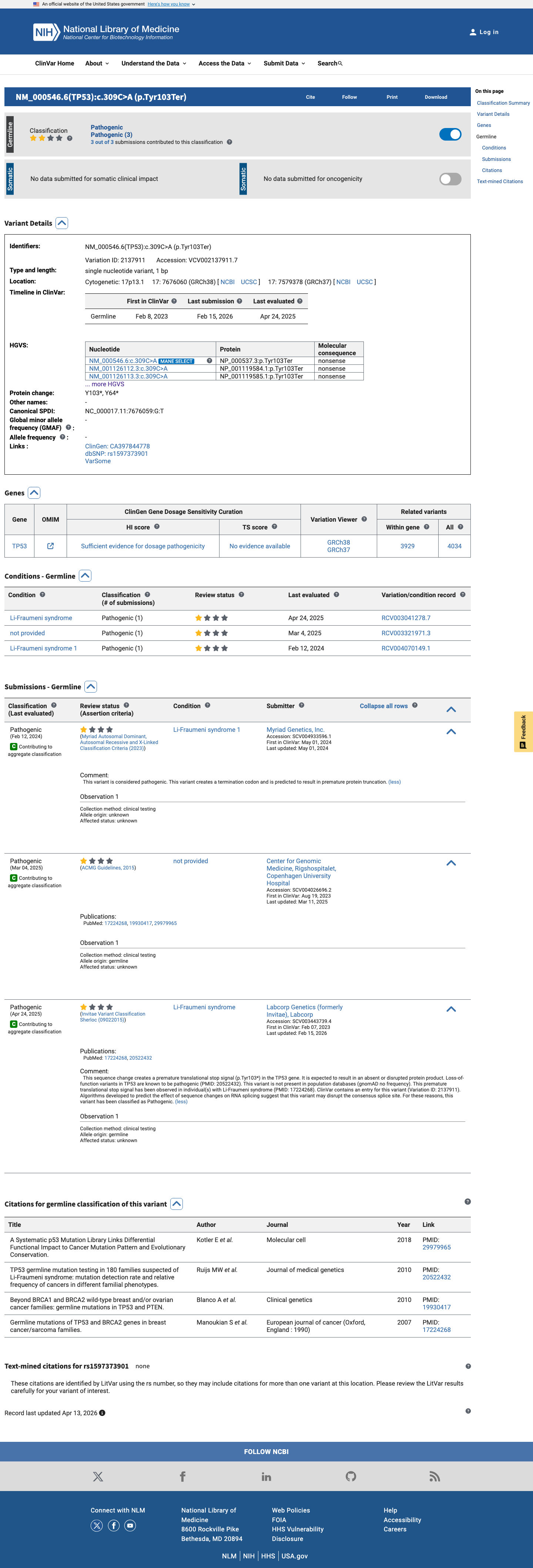
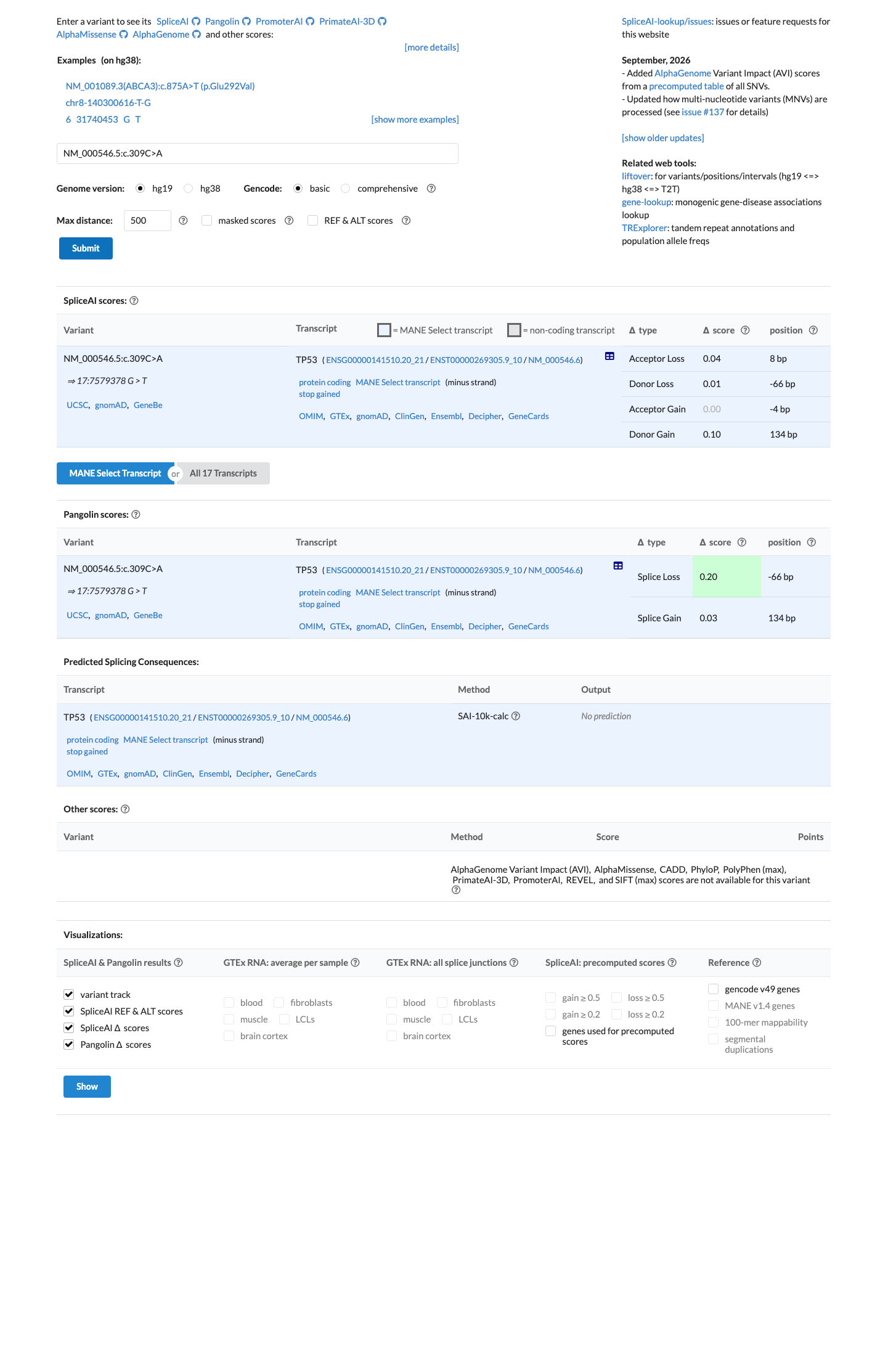
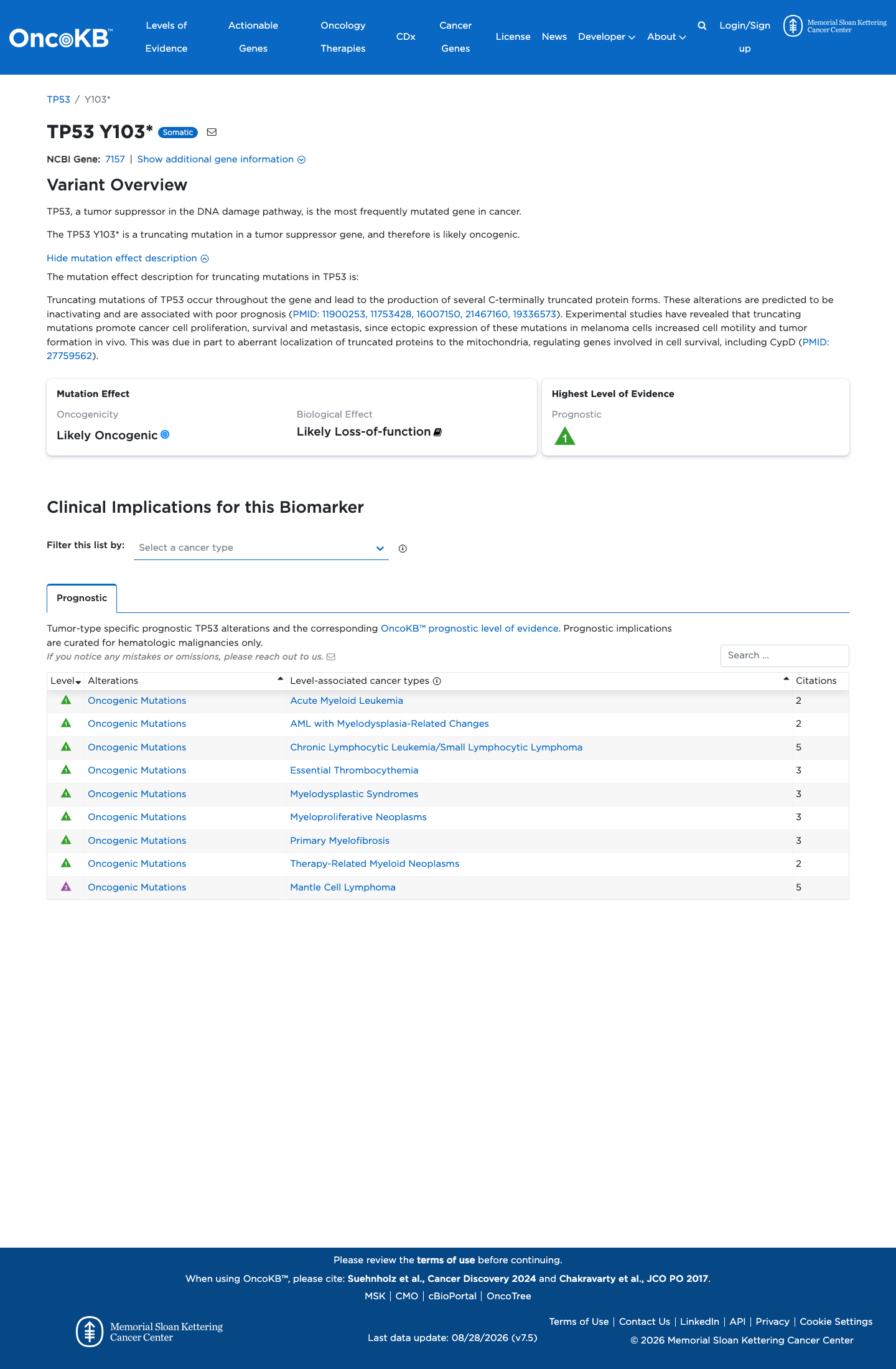
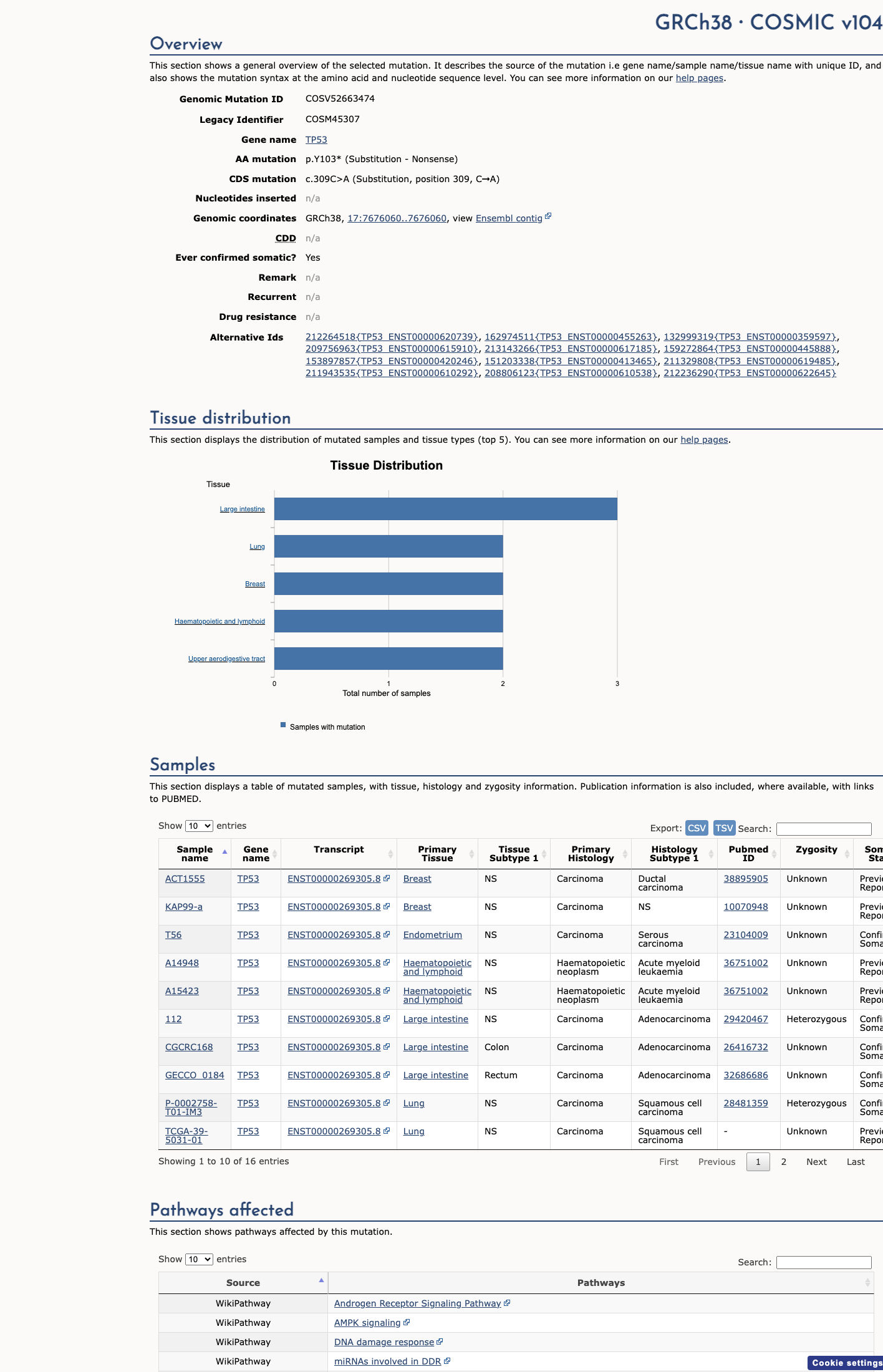
PVS1 very strong: p.Tyr103Ter is an upstream nonsense variant predicted to undergo nonsense-mediated decay. PM2 supporting: the variant is absent from the reported gnomAD population datasets.
TP53 encodes the p53 tumor suppressor protein, a transcription factor that responds to cellular stress such as DNA damage by switching on genes that trigger cell cycle arrest, DNA repair, senescence, or programmed cell death. In healthy cells, p53 is kept at low levels by constant degradation, but stress signals stabilize and activate it to protect against damaged cells surviving and dividing. Inherited mutations in TP53 cause Li-Fraumeni syndrome, a condition marked by a high risk of developing multiple cancers at a young age. TP53 is the most commonly mutated gene across human cancers, and loss of its normal function promotes tumor growth, spread, drug resistance, and genomic instability.
This TP53 variant disrupts the tumor-suppressor gene that normally coordinates DNA-damage responses, cell-cycle arrest, DNA repair, senescence, and apoptosis, a mechanism relevant to Li-Fraumeni syndrome.
PVS1 very strong: p.Tyr103Ter is an upstream nonsense variant predicted to undergo nonsense-mediated decay. PM2 supporting: the variant is absent from the reported gnomAD population datasets.