TP53 encodes the p53 protein, a critical tumor suppressor that acts as a transcription factor to protect cells from damage. When activated by cellular stress such as DNA damage, p53 triggers responses including DNA repair, cell cycle arrest, and programmed cell death (apoptosis) to prevent the propagation of damaged cells. TP53 is the most frequently mutated gene in human cancers, and loss of its function contributes to tumor development, invasion, drug resistance, and genomic instability. Inherited mutations in TP53 cause Li-Fraumeni syndrome, a rare hereditary condition that greatly increases the risk of developing multiple types of cancer at a young age.
This variant
TP53 is a critical tumor suppressor, and inherited variants cause Li-Fraumeni syndrome, a hereditary condition of greatly elevated, early-onset cancer risk. This missense change at codon 334 shows partial loss of function in laboratory assays, yet evidence is still insufficient to confirm or exclude pathogenicity, so it remains a variant of uncertain significance pending further clinical and family data.
Transcript
NM_000546.6
HGVS · transcript:coding
NM_000546.6:c.1001G>T
GRCh38
chr17:7670708 C>A
GRCh37
chr17:7574026 C>A
BasisVUS: 3 total points (PS3 moderate +2, PM2 supporting +1) fall within the Rule3 range of -1 to 5, yielding uncertain significance.▾
VUS: 3 total points (PS3 moderate +2, PM2 supporting +1) fall within the Rule3 range of -1 to 5, yielding uncertain significance.
Classification rationale
PS3PM2VUS
TP53 c.1001G>Tmissense · exon 10
PS3 (Moderate): p.Gly334Val is partially functional in Kato transactivation but shows loss of function in two other assays (Giacomelli growth suppression, Kawaguchi oligomerization). PM2 (Supporting): the variant is absent from gnomAD v4.1, gnomAD v2.1, and gnomAD-Canada. VUS: the TP53 VCEP Tavtigian framework totals 3 points (PS3 +2, PM2 +1), within the Rule3 range of -1 to 5, so the variant is classified as a variant of uncertain significance.
PS3 + PM2→VUS
Gene diagram
· NM_000546.6 · variants mapped to exon structure
TP53NM_000546.6
Fetching transcript structure from UCSC…
Exons
—
Transcript span
—
Strand
—
Variants mapped
—
Source
UCSC ncbiRefSeqCurated
All variants in TP53—click a row to locate it on the plot · use the link column to open its page
Variant ↕
Protein
Location
Classification
Link
Applied criteria · 2 applied · 14 assessed
MetEvidence satisfies this criterion.
Not metEvaluated against available evidence; threshold not reached.
Not assessedApplies in principle, but no evidence was found to evaluate it.
N/ADoesn't apply to this variant type.
Applied · 2
Strength Supporting Moderate Strong Very strong
✓
PS3moderatePathogenic
Met (Moderate): p.Gly334Val is partially functional in Kato transactivation but shows loss of function in two other assays (Giacomelli, Kawaguchi).
Functional-worksheet.xlsx (Supplementary Table S3) row for G334V: Kato class = Partially functional; Funk class = NA; Giacomelli class = LOF; Kotler class = NA; Kawaguchi class = Monomer; Preliminary functional code = PS3_Moderate.TP53 VCEP cspec PS3 rule (v2.4): 'Partially functional on Kato et al. data AND loss of function (LOF) by the majority of other available assays' = PS3_Moderate.TP53 VCEP instructionsToUse for PS3 defines assay classification thresholds: Kato non-functional <=20% activity, partially-functional >20-75%, functional >75%; Giacomelli LOF = Etoposide Z-score <= -0.21; Kawaguchi abnormal = Monomer/dimer, normal = Tetramer.
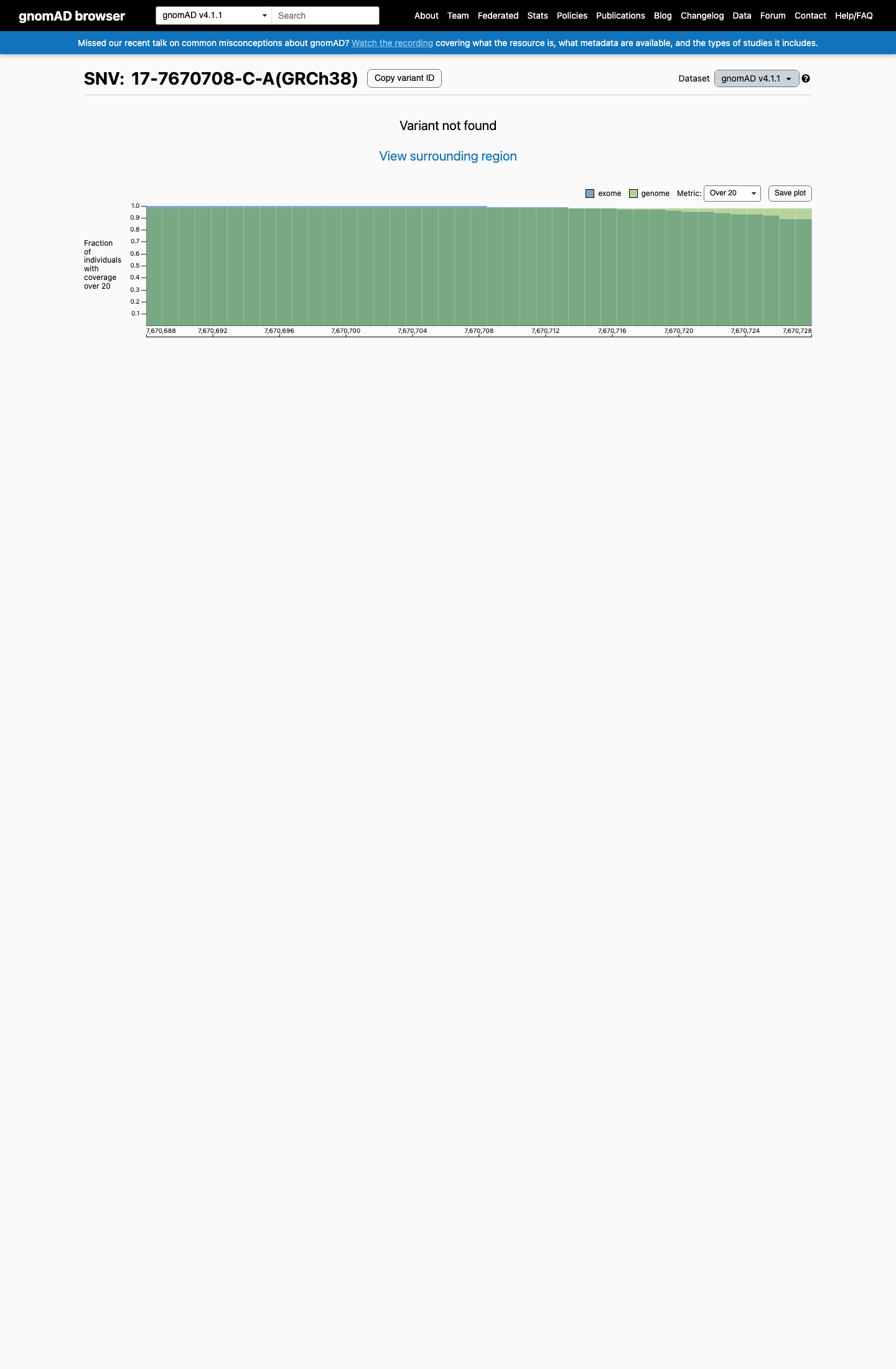
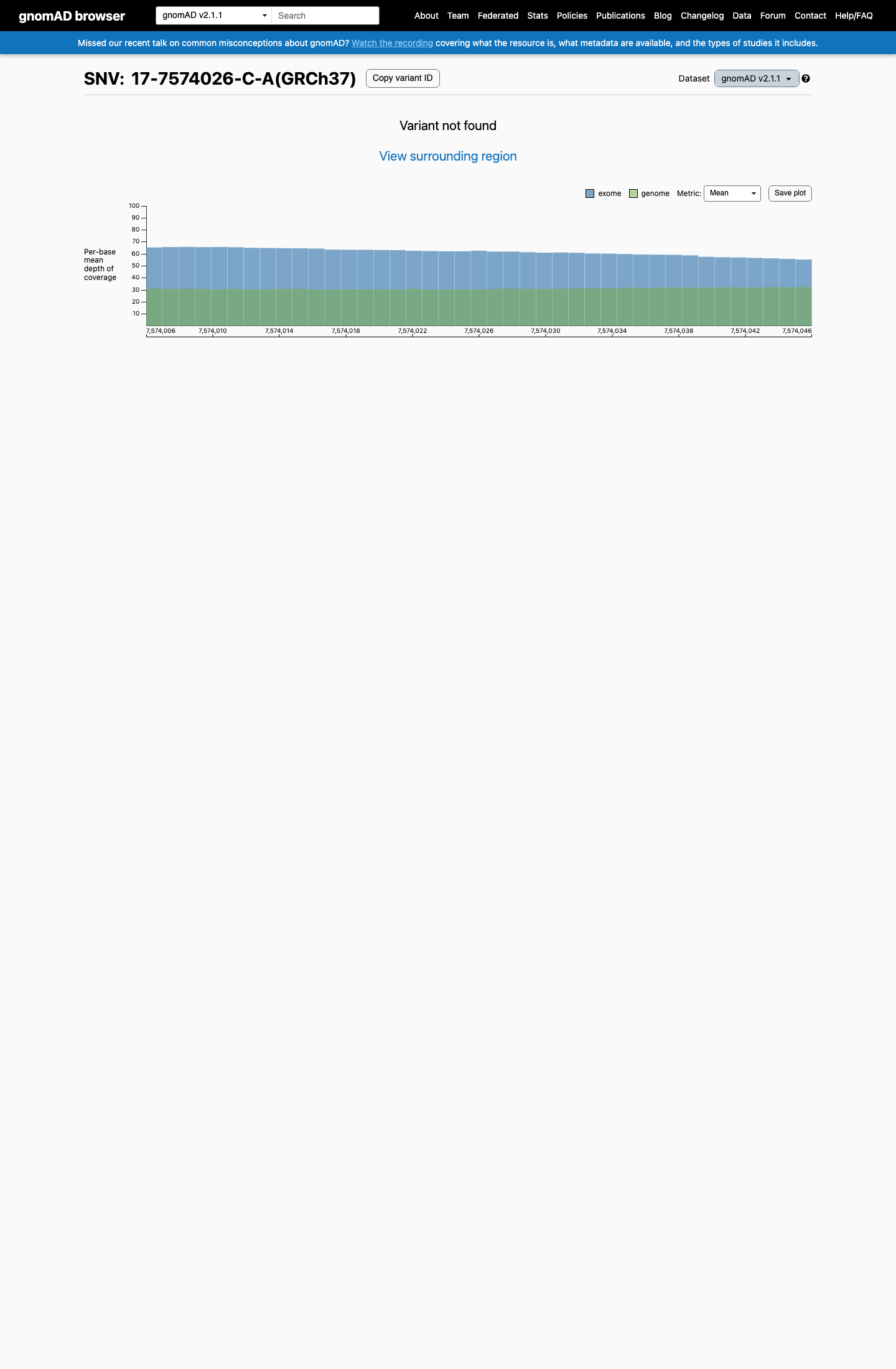
Met (Supporting): the variant is absent from gnomAD v4.1, gnomAD v2.1, and gnomAD-Canada population databases.
The TP53 VCEP version 2.4 requires PM2 to be applied at supporting strength when allele frequency is <0.00003 in gnomAD or another large sequenced population; if multiple alleles occur in an ancestry group, that group's frequency must be <0.00004, and founder-effect groups are ignored.The variant NM_000546.6:c.1001G>T (p.Gly334Val) is absent from gnomAD v4.1, gnomAD v2.1, and gnomAD-Canada v1.0, providing population evidence compatible with PM2 supporting.
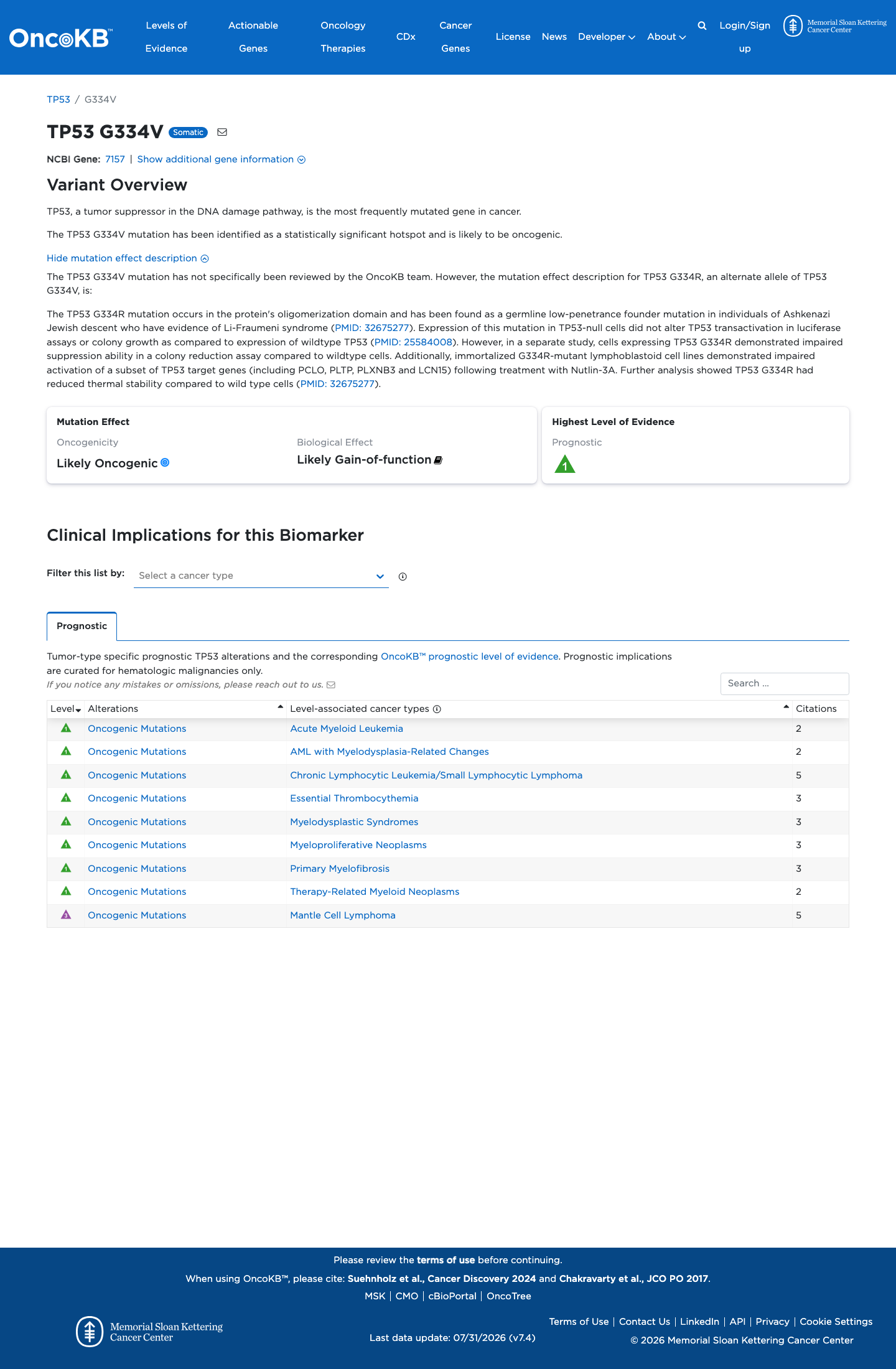
OncoKB did not identify variant-specific reviewed functional evidence for this variant; gene-level curated context is available for reviewer follow-up. TP53, a tumor suppressor in the DNA damage pathway, is the most frequently mutated gene in cancer.
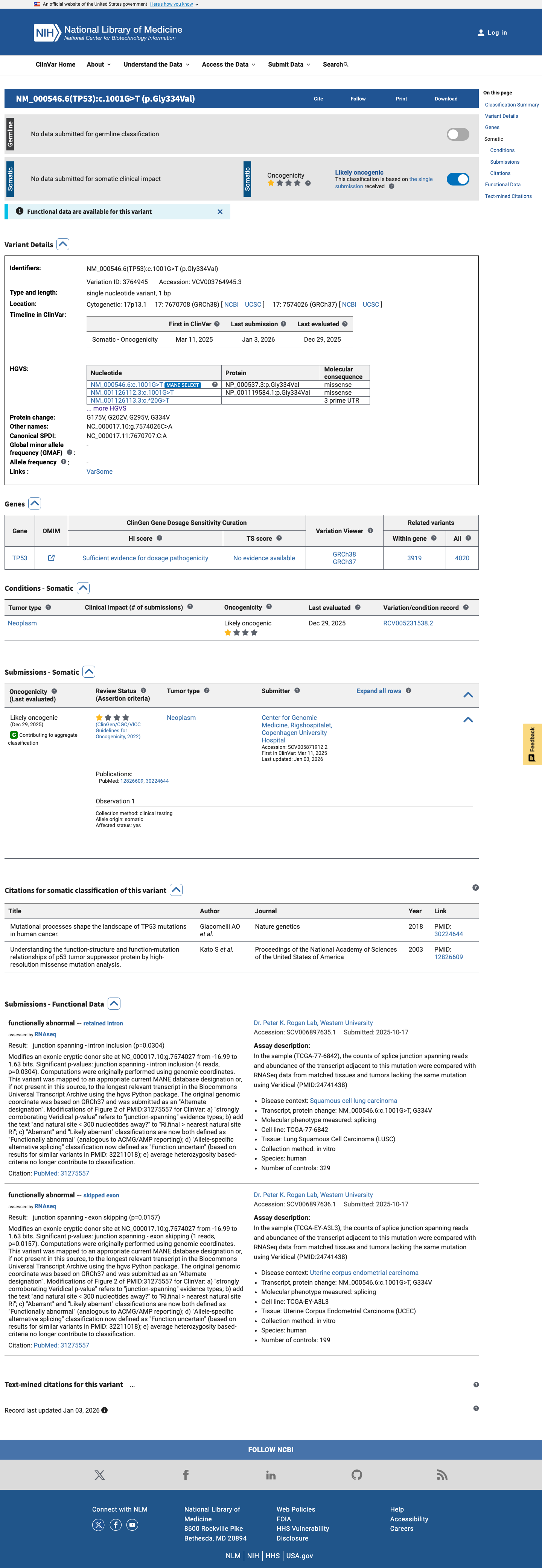
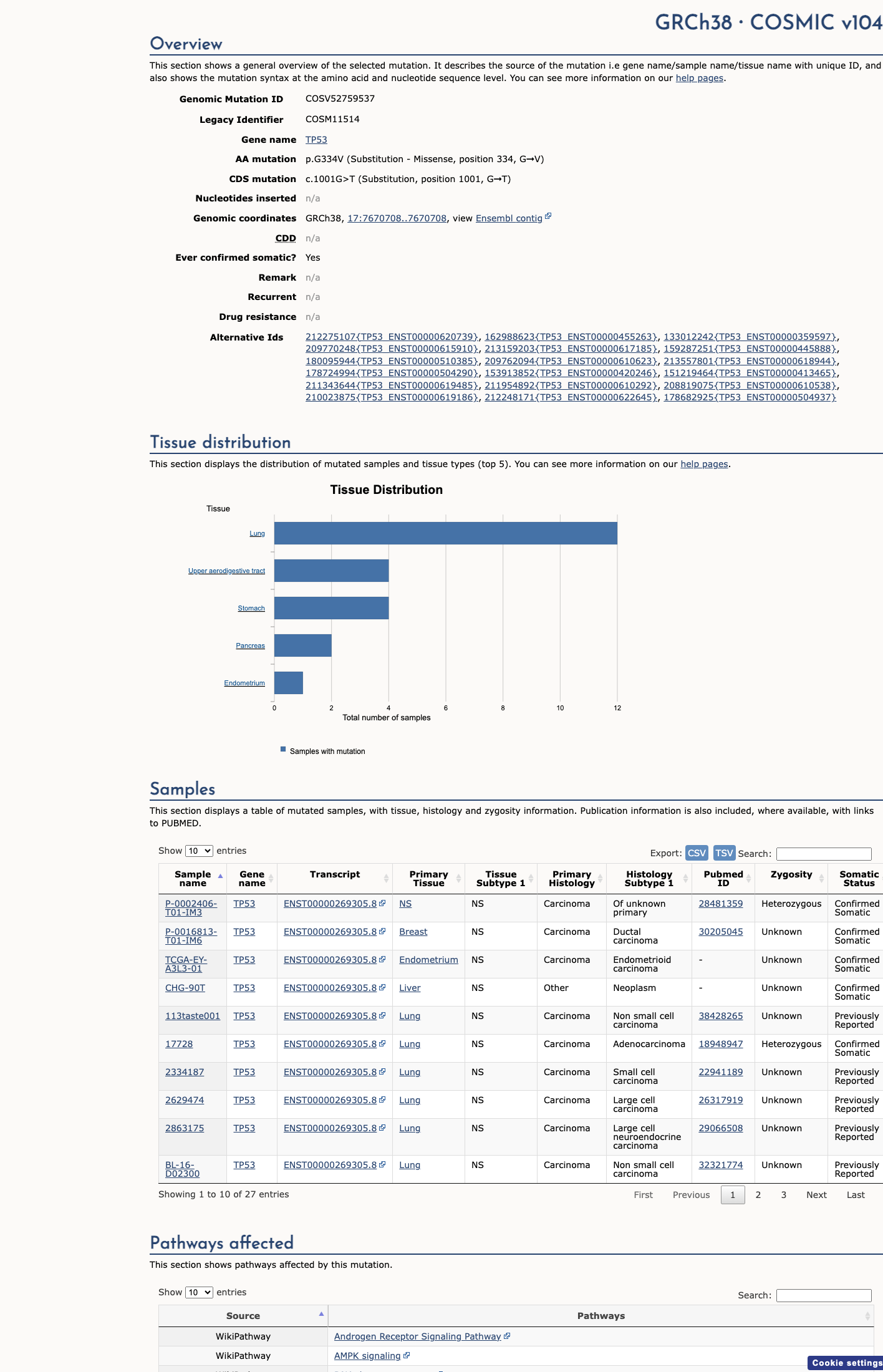
This variant lies in a statistically significant hotspot. This variant has previously been reported in somatic cancers (COSMIC; COSV52759537, n = 27 times).
Hotspots
This variant lies in a statistically significant hotspot.
Each card is an audit: what was searched, what was found, whether it names the variant, which criteria it fed, and why. 5 further PMIDs triaged but not cited — see Sources & references.
Rule & framework references · cited for criterion definitions, not variant evidence
12826609 ↗Understanding the function-structure and function-mutation relationships of p53 tumor suppressor protein by high-resolution missense mutation analysis.
30224644 ↗Mutational processes shape the landscape of TP53 mutations in human cancer.
Sources & reference links
9Sources
CSpec VCEP
ClinVar
gnomAD v2.1
gnomAD v4.1
gnomAD-Canada
SpliceAI
OncoKB
COSMIC
Cancer hotspots
Triaged references · 5 PMIDs not cited in assessment
25584008 ↗Prevalence and functional consequence of TP53 mutations in pediatric adrenocortiONCOKB
32675277 ↗A Rare TP53 Mutation Predominant in Ashkenazi Jews Confers Risk of Multiple CancONCOKB
22918138 ↗Opportunities and challenges associated with clinical diagnostic genome sequencing: a report of the Association for Molecular Pathology.CLINVAR
23619274 ↗American College of Medical Genetics and Genomics technical standards and guidelines: microarray analysis for chromosome abnormalities in neoplastic disorders.CLINVAR
35101336 ↗Standards for the classification of pathogenicity of somatic variants in cancer (oncogenicity): Joint recommendations of Clinical Genome Resource (ClinGen), Cancer Genomics Consortium (CGC), and Variant Interpretation for Cancer Consortium (VICC).CLINVAR