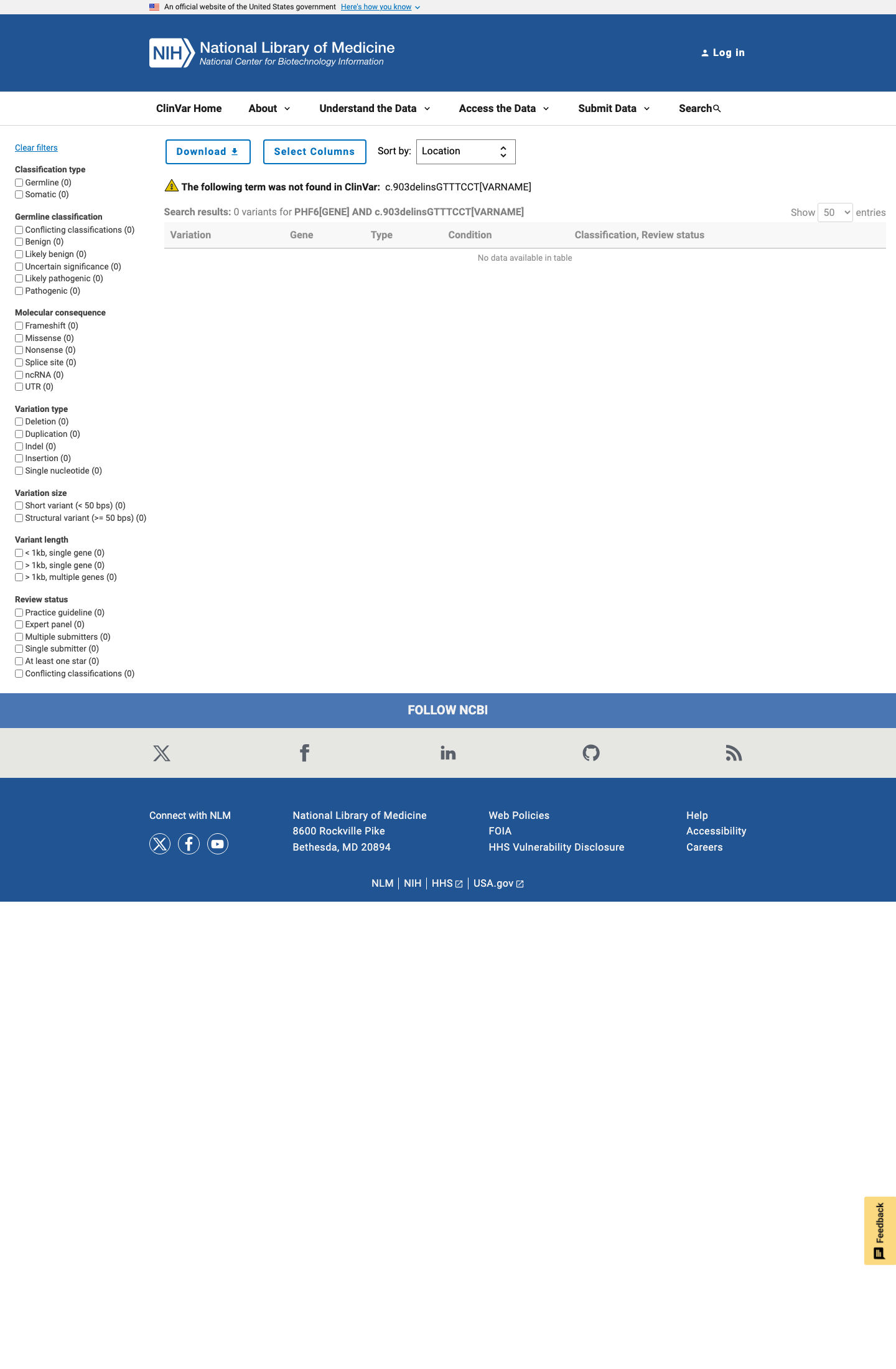
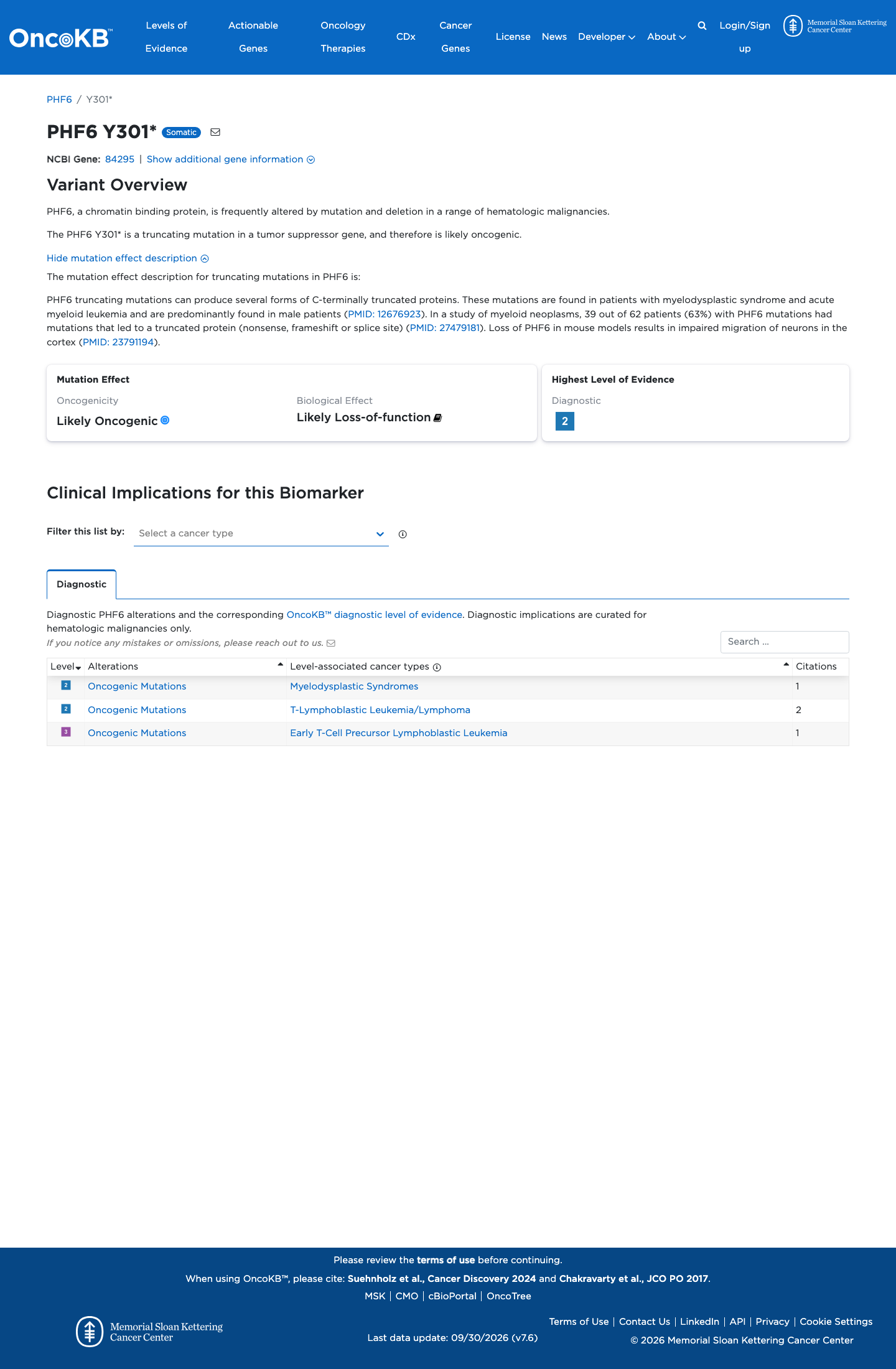
PVS1 very strong: p.(Tyr301Ter) is predicted to undergo nonsense-mediated decay in PHF6. PM2 supporting: the variant is absent from gnomAD v2.1 and v4.1.
PHF6 is a chromatin-binding protein with two PHD-type zinc finger domains that acts as an epigenetic reader, helping regulate gene transcription, including during blood cell development, and is also involved in ribosomal RNA synthesis and cell cycle control. Germline mutations in PHF6 cause Borjeson-Forssman-Lehmann syndrome, a developmental disorder marked by intellectual disability, epilepsy, hypogonadism, obesity, and distinctive facial features. Somatic PHF6 mutations are found in blood cancers such as acute myeloid leukemia and T-cell acute lymphoblastic leukemia, where loss of the protein is associated with poorer outcomes, indicating that PHF6 acts as a tumor suppressor.
This truncating PHF6 variant is relevant to the gene's established loss-of-function mechanism in X-linked Borjeson-Forssman-Lehmann syndrome.
PVS1 very strong: p.(Tyr301Ter) is predicted to undergo nonsense-mediated decay in PHF6. PM2 supporting: the variant is absent from gnomAD v2.1 and v4.1.