PVS1
very strong
review
Pathogenic
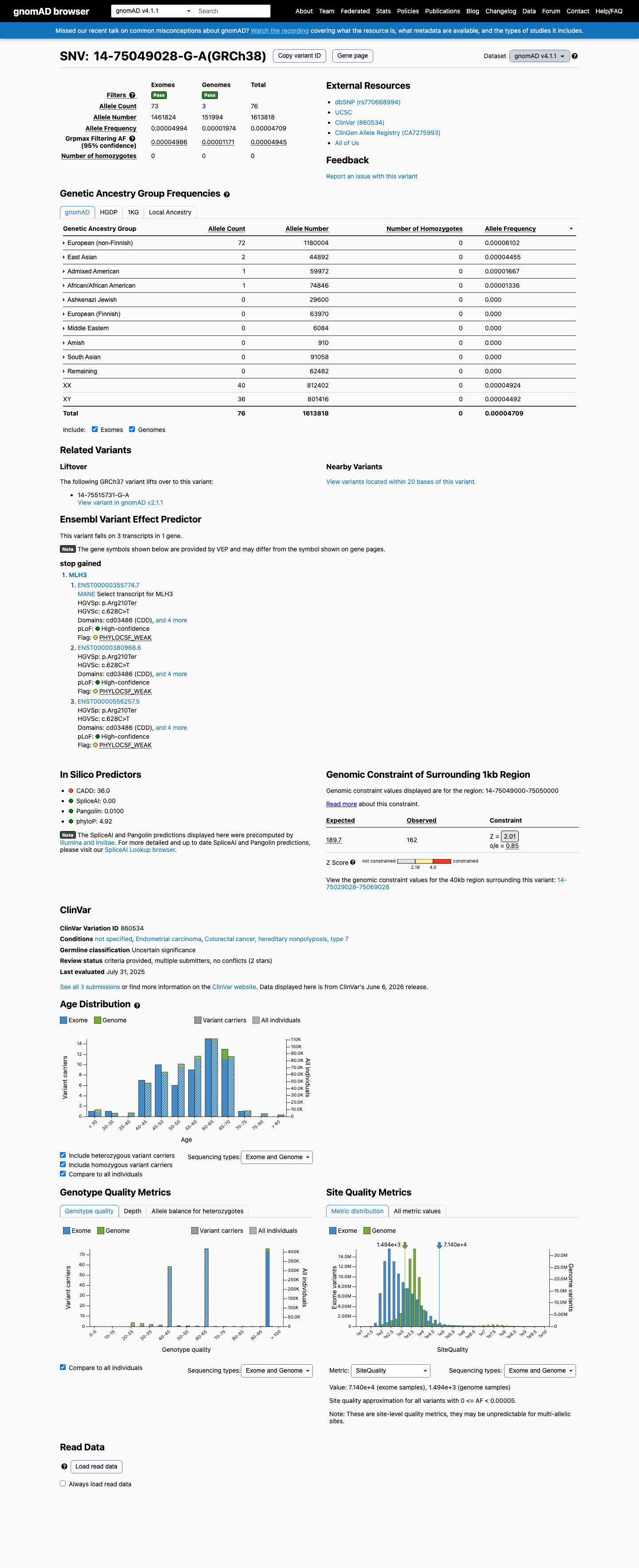
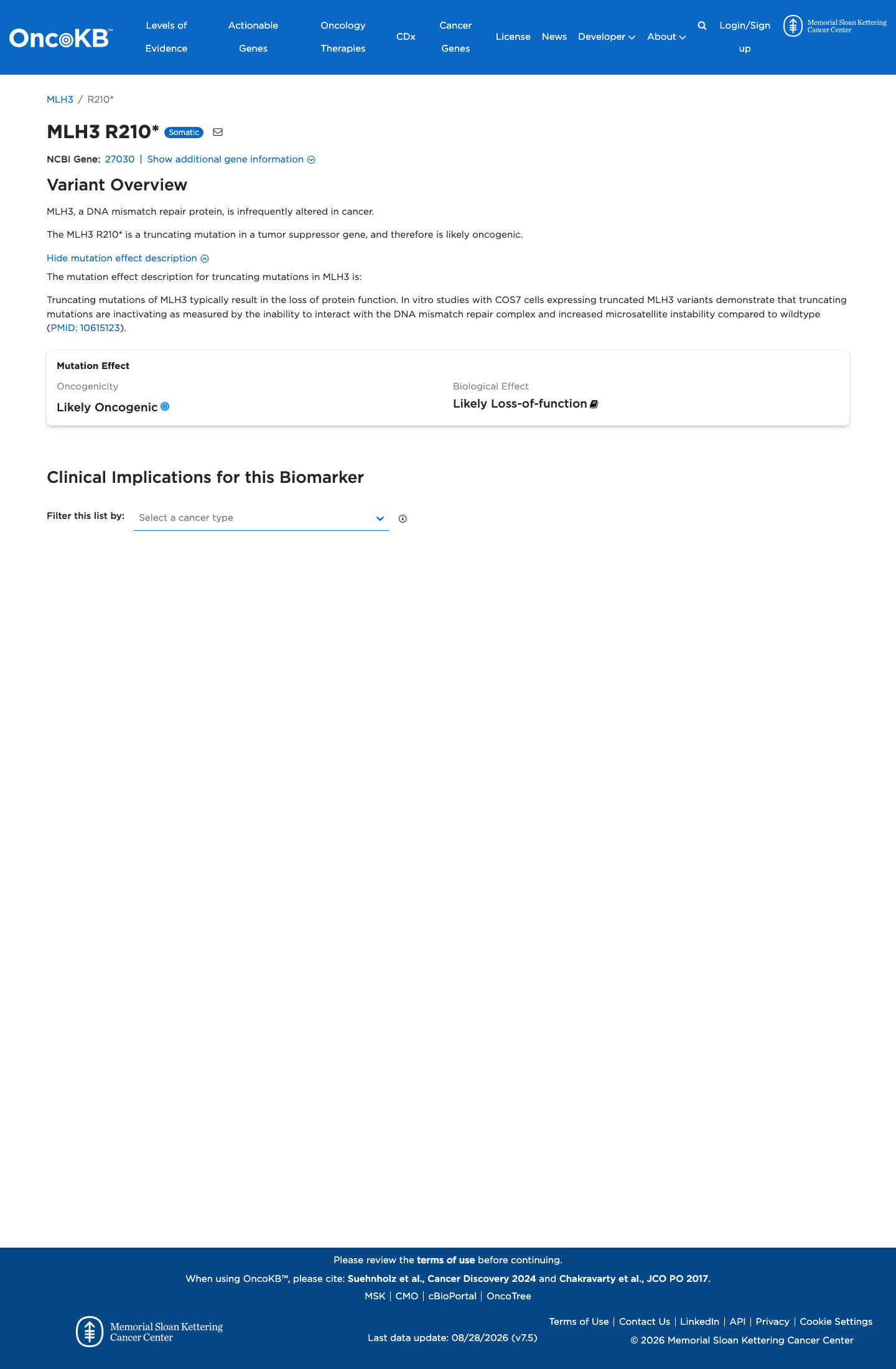
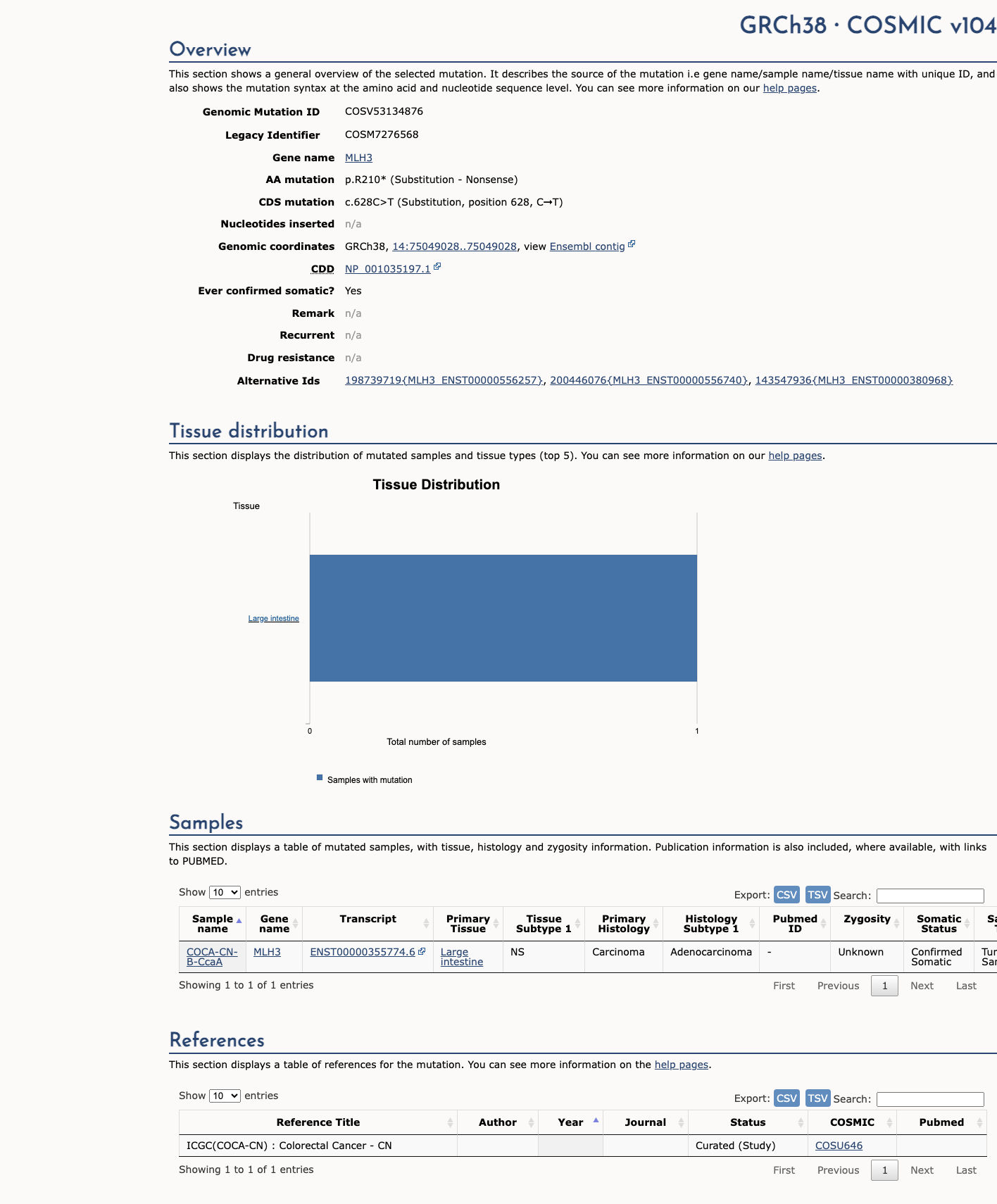
Met at full strength: nonsense p.(Arg210Ter) in exon 2 of 13 removes 85.6% of MLH3 (1453 to 210 aa) with NMD predicted, so PVS1 is very strong.
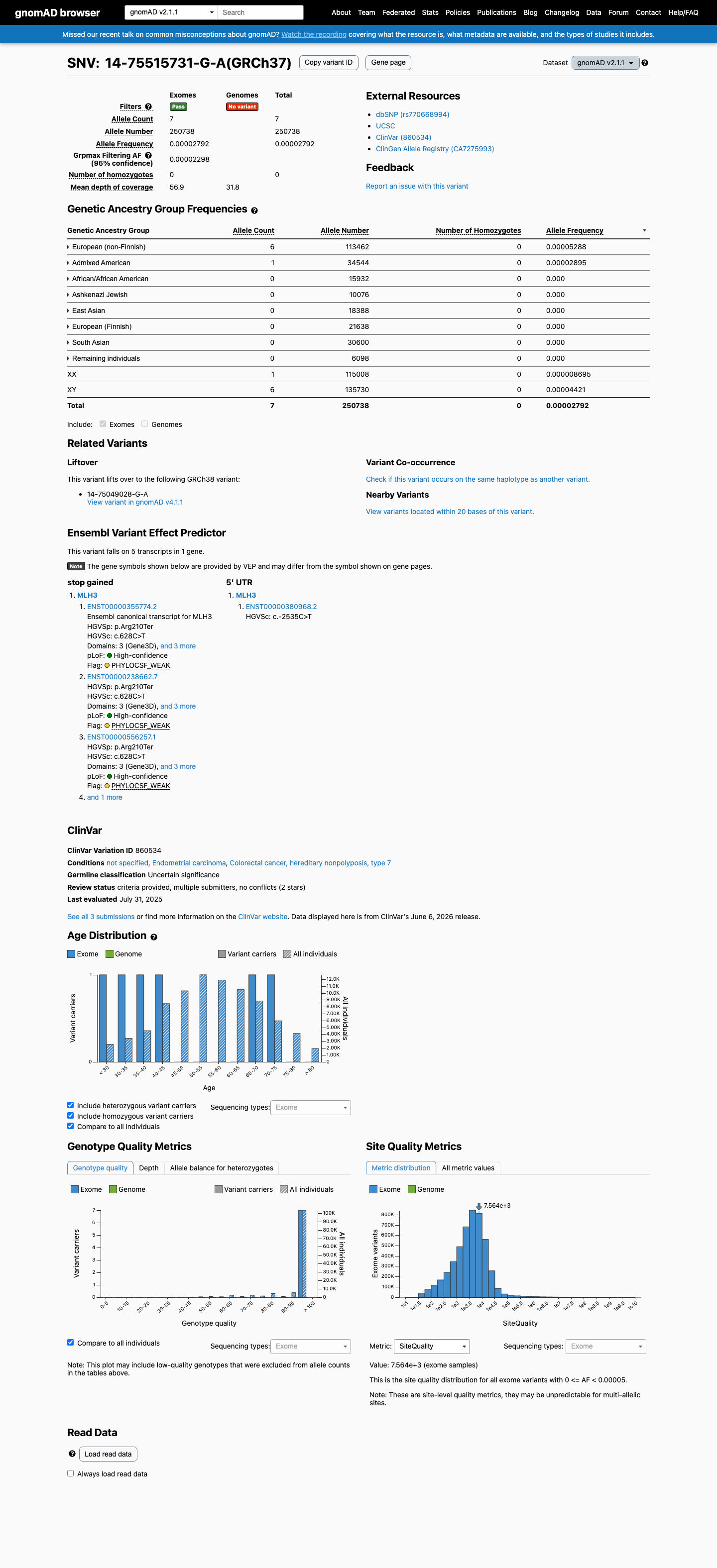
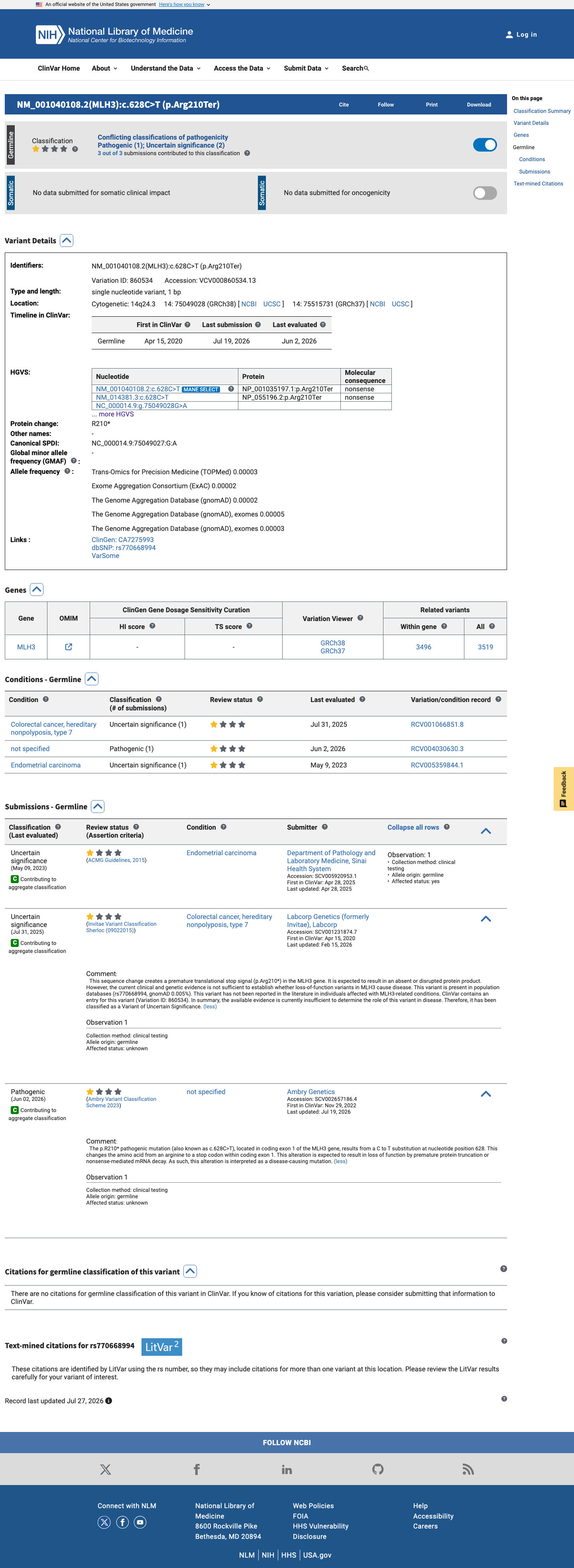
Governing framework: generic ClinGen SVI PVS1 recommendations (registry key pvs1_generic_framework, PMC6185798; Abou Tayoun et al. 2018, PMID:30192042). The rules relied on were: PVS1 applies only where LoF is a disease mechanism for the gene/disease pair; NMD is not predicted only when the premature termination codon is in the 3'-most exon or within the 3'-most 50 bp of the penultimate exon; in the NMD-escape setting strength depends on whether more than 10% of the protein is removed (strong) or less (moderate); PVS1 must not be combined with PP3 splice predictions for the same variant; exonic null variants are downgraded where the affected exon is alternatively spliced from the major transcript, is enriched with high-frequency LoF variants in the general population, or removes a region that is not critical to protein function; and full-strength PVS1 is reserved for gene-disease pairs with definitive/strong validity, LoF variants making up >=10% of reported pathogenic variants and at least three pathogenic LoF variants classified without PVS1 across more than one exon.Variant-level conformation (registry key pvs1_variant_assessment): consequence class 'nonsense', variant bucket 'nonsense', canonical_splice_consensus false, transcript NM_001040108.2, protein NP_001035197.1:p.(Arg210Ter), framework applied = generic ClinGen SVI PVS1 recommendations, default strength for an un-downgraded call = very strong.Transcript geometry from the normalized variant record: NM_001040108.2 has 13 exons with the coding sequence at c.1-4362; the terminal exon spans c.4243 to *3307; VariantValidator reports variant_exonic_positions start_exon 2 and end_exon 2 for both GRCh37 (NC_000014.8) and GRCh38 (NC_000014.9), i.e. c.628C>T sits in exon 2 of 13, several kilobases upstream of the penultimate exon-exon junction. NM_001040108.2 is annotated MANE Select and RefSeq Select (CCDS32123.1, HGNC:7128), so it is the most biologically relevant transcript.