Analysis in progress
Initialising…
0%
complete
This report is still being assembled — sections appear as each stage finishes. It isn't final yet.
NF1
Final classification
Benign
NF1 c.2022C>T · p.Ser674=
NF1 ·synonymous

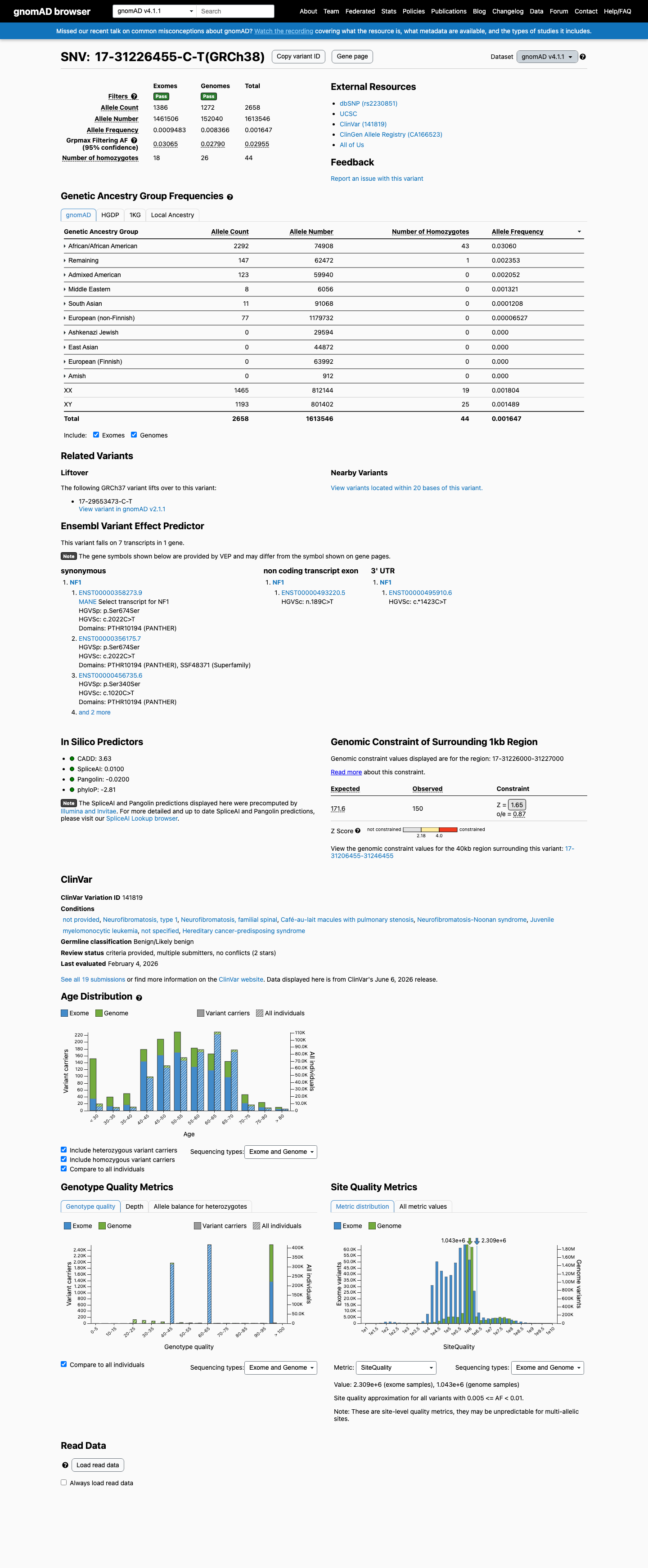
BA1 (stand-alone benign): highest population allele frequency 3.06% (African ancestry, gnomAD v4.1) exceeds the >1% threshold about 3-fold.

Gene
NF1
Transcript
NM_001042492.2
HGVS · transcript:coding
NM_001042492.2:c.2022C>T
Consequence
synonymous
exon 18
GRCh38
chr17:31226455 C>T
GRCh37
chr17:29553473 C>T
Basis Benign: BA1 met at stand-alone strength (max population AF 3.06% vs the >1% threshold), with concordant BS1, BS2, and BP7; no pathogenic criterion was met.
Benign: BA1 met at stand-alone strength (max population AF 3.06% vs the >1% threshold), with concordant BS1, BS2, and BP7; no pathogenic criterion was met.
Classification rationale
BA1BS1BS2BP7 Benign
NF1 c.2022C>T synonymous · exon 18

BA1 (stand-alone benign): highest population allele frequency 3.06% (African ancestry, gnomAD v4.1) exceeds the >1% threshold about 3-fold. BS1 (supporting): observed allele frequency exceeds that expected for a dominant NF1 allele by more than 150-fold. BS2 (supporting): 44 homozygotes in general-population cohorts are incompatible with a near-fully penetrant dominant disease allele. BP7 (supporting): synonymous change with no predicted splice impact (SpliceAI max delta 0.009) at a position with high population frequency. Synthesis: Benign — BA1 at stand-alone strength alone is sufficient under the generic combination rules, with BS1, BS2, and BP7 concordant and no pathogenic criterion met.

BA1 + BS1 + BS2 + BP7 Benign
Gene diagram · NM_001042492.2 · variants mapped to exon structure
NF1 NM_001042492.2
Fetching transcript structure from UCSC…
Applied criteria · 4 applied · 15 assessed
Applied · 4
Strength Supporting Moderate Strong Very strong
BA1 stand-alone Benign
Met (stand-alone benign): highest population allele frequency 3.06% (African ancestry, gnomAD v4.1) exceeds the >1% BA1 threshold about 3-fold.
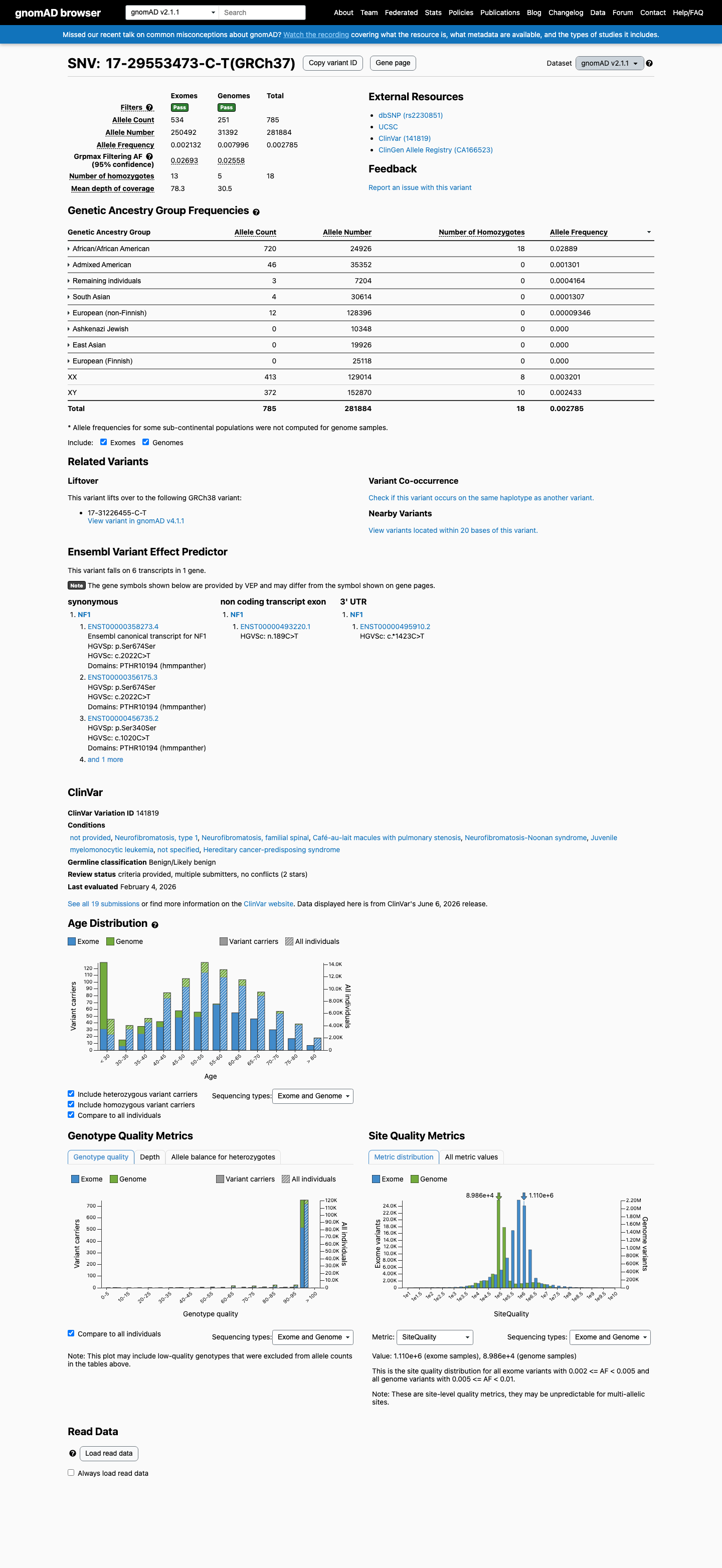
Applied non-VCEP gnomAD thresholds per LYFESCI/HERA v7 policy (BA1 max population AF >1%) because the NF1 CSPEC v1.0 rule payload was not available in this case bundle.gnomAD v4.1 (gnomad_v4): overall AF 0.1647% (2,658/1,613,546 alleles); highest population AF in African/African American at 3.06% (2,292/74,908 alleles); grpmax FAF 0.0296.gnomAD v2.1 (gnomad_v2): overall AF 0.2785% (785/281,884 alleles); highest population AF in African/African American at 2.89% (720/24,926 alleles); grpmax FAF 0.0269.
BS1 supporting Benign
Met (supporting): observed maximum allele frequency 3.06% exceeds the ~0.01–0.02% expected for a dominant NF1 allele by over 150-fold.
Applied non-VCEP gnomAD threshold BS1 >0.3% (max population AF) per LYFESCI/HERA v7 policy; NF1 CSPEC v1.0 rule payload unavailable in this bundle.gnomAD v4.1: AFR AF 3.06%; gnomAD v2.1: AFR AF 2.89% — both >0.3% threshold by ~10-fold.Expected pathogenic-allele frequency for AD NF1 (prevalence ~1/3000, near-complete penetrance) is ~0.01-0.02%; observed overall AF 0.1647% (v4.1) is ~10x higher and observed max AF 3.06% is >150x higher (BS1 'allele frequency greater than expected for disorder', PMID:25741868).
BS2 supporting Benign
Met (supporting): 44 homozygotes in gnomAD v4.1 general-population cohorts are incompatible with a near-fully penetrant dominant NF1 allele.
gnomAD v4.1 (gnomad_v4): 44 homozygotes total, 43 in African/African American (74908 AFR alleles), consistent with Hardy-Weinberg expectation at AFR AF 3% (observed 43/37,454 AFR individuals = 0.115% vs expected q^2 ~0.094%).gnomAD v2.1 (gnomad_v2): 18 homozygotes total (all in African/African American).BS2 (ACMG/AMP 2015, PMID:25741868): observed in a healthy adult individual for an autosomal dominant disorder; for a near-fully-penetrant AD disorder like NF1, homozygous presence in general-population cohorts is strong evidence against pathogenicity.
BP7 supporting Benign
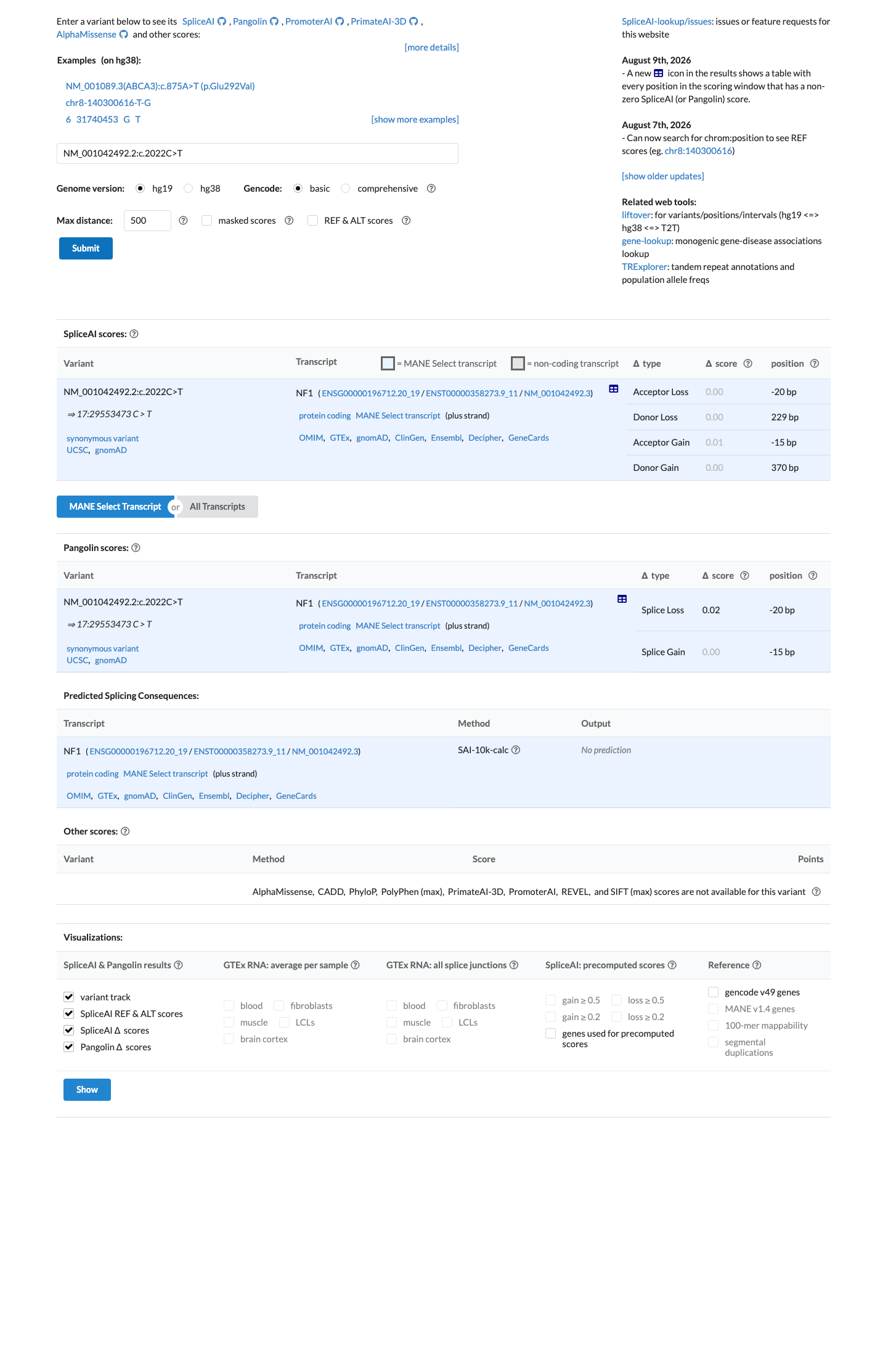
Met (supporting): synonymous change, no predicted splice impact (SpliceAI max delta 0.009), and high population frequency indicating no strong conservation.
Synonymous status: Mutalyzer normalization (prefetch) confirms NM_001042492.2:c.2022C>T is a synonymous variant, NP_001035957.1:p.(Ser674=).SpliceAI (spliceai) max delta score 0.009 - no impact predicted on the splice consensus sequence and no new splice site (DS_AG 0.009 acceptor gain, DS_DG 0.000 donor gain, DS_DL 0.002, DS_AL 0.002); this is below the 0.2 cutoff recommended in the SpliceAI publication (Jaganathan et al. 2019, PMID 30661751) and below the 0.1 threshold of the lab generic calibration (generic_acmg_combination_rules).The variant is in the exon body (transcript-relative g.2406; exon spans c.2001-2250), about 22 nt from the exon's 5' end and not within any canonical splice consensus sequence; SpliceAI predicted splice-gain events are distant (DP_DG 370, DP_DL 229) with negligible delta scores.
Assessed · not applied
Pathogenic
PS2 Not assessed: no confirmed de novo occurrence with verified parentage is reported for this variant.
PS3 Not met: no functional study of this variant exists — no assay of neurofibromin activity, splicing, or RAS pathway function was found.
PS4 Not met: no case-control or NF1 case-cohort study shows enrichment; ClinVar carries only routine laboratory Benign classifications.
PM2 Not met: present at 0.16% overall and 3.06% in African ancestry in gnomAD, far above the <0.1% rarity threshold.
PM6 Not assessed: no assumed de novo occurrence is reported for this variant in any source.
PP1 Not assessed: no segregation data in affected family members were available.
PP3 Not met: SpliceAI max delta 0.009 is far below the 0.2 cutoff for predicted splice impact.
PP4 Not met: no proband with a documented NF1 phenotype carrying this exact variant is reported.
PP5 Not met: no ClinVar expert panel has classified this variant as pathogenic (zero expert-panel submissions).
Benign
BS3 Not met: no well-established functional study demonstrates absence of damaging effect; the SpliceAI prediction is in silico only.
BS4 Not assessed: no family testing data exist to establish lack of segregation in affected relatives.
BP2 Not assessed: no allelic-phase or co-occurrence data with a pathogenic variant are reported.
BP4 Not met: the only computational no-impact line (SpliceAI) is already counted under BP7 and cannot be double-counted here.
BP5 Not met: no proband-level evidence of an alternate genetic cause of disease is reported.
BP6 Not met: no expert panel has classified this variant as benign; routine laboratory consensus does not trigger BP6.
N/A · 9 PVS1 · PS1 · PM1 · PM3 · PM4 · PM5 · PP2 · BP1 · BP3
Research & evidence
Population frequency · supports benign
gnomAD v4.1 screenshot
gnomAD v4.1
gnomAD v2.1 screenshot
gnomAD v2.1
v4.1
This variant is present in gnomAD v4.1 (AF= 0.0016473; MAF= 0.16473%, 2658/1613546 alleles, homozygotes = 44) and has highest observed frequency in the African/African American population (AF= 0.0305975; MAF= 3.05975%, 2292/74908 alleles, homozygotes = 43); grpmax FAF= 0.029553.
v2.1
This variant is present in gnomAD v2.1 (AF= 0.00278483; MAF= 0.27848%, 785/281884 alleles, homozygotes = 18) and has highest observed frequency in the African/African American population (AF= 0.0288855; MAF= 2.88855%, 720/24926 alleles, homozygotes = 18); grpmax FAF= 0.0269323.
🇨🇦 CA
This variant is present in gnomAD-Canada v1.0 (AF= 0.0023894862604540022, 44/18414 alleles, homozygotes = 0).
Allele frequency by ancestry
three datasets · side by side
gnomAD v4.1
0.16% · 2658 / 1,613,546
44 hom · FAF 3%
African/African American
2292 / 74,908
3.1%
43 hom
Remaining individuals
147 / 62,472
0.24%
1 hom
Admixed American
123 / 59,940
0.21%
Middle Eastern
8 / 6,056
0.13%
South Asian
11 / 91,068
0.012%
European (non-Finnish)
77 / 1,179,732
0.0065%
+ 4 not observed (European (Finnish), Amish, East Asian, Ashkenazi Jewish)
gnomAD v2.1
0.28% · 785 / 281,884
18 hom · FAF 2.7%
African/African American
720 / 24,926
2.9%
18 hom
Admixed American
46 / 35,352
0.13%
Remaining individuals
3 / 7,204
0.042%
South Asian
4 / 30,614
0.013%
European (non-Finnish)
12 / 128,396
0.0093%
+ 3 not observed (Ashkenazi Jewish, East Asian, European (Finnish))
gnomAD Canada 🇨🇦
0.24% · 44 / 18,414
0 hom · FAF 3%
African/African American
40 / 1,020
3.9%
Latino/Admixed American
2 / 838
0.24%
Remaining individuals
1 / 1,138
0.088%
European (non-Finnish)
1 / 11,736
0.0085%
+ 5 not observed (Ashkenazi Jewish, East Asian, European (Finnish), Middle Eastern, South Asian)
ClinVar screenshot
ClinVar
This variant has been reported in ClinVar as Benign (16 clinical laboratories) and as benign (1 clinical laboratory) and as Likely benign (1 clinical laboratory). (ClinVarID = 141819)
SpliceAI screenshot
In silico
SpliceAI predicts no significant splice impact for this variant (max delta score = 0.01).
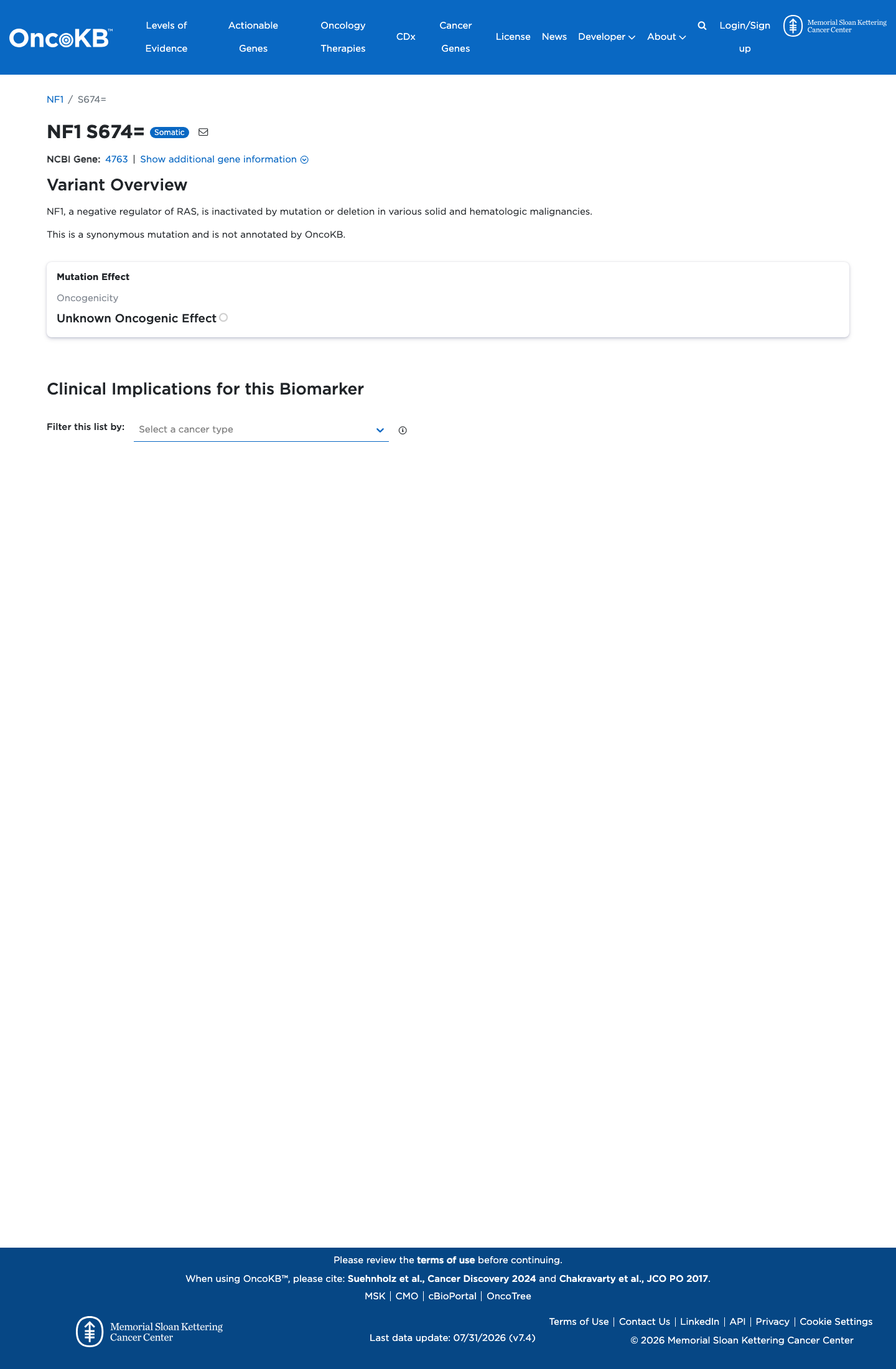
Functional / OncoKB screenshot
Functional Unknown Oncogenic Effect
OncoKB identified curated literature and non-variant-specific oncogenicity context for review; listed oncogenicity label: Unknown Oncogenic Effect.
OncoKB ↗
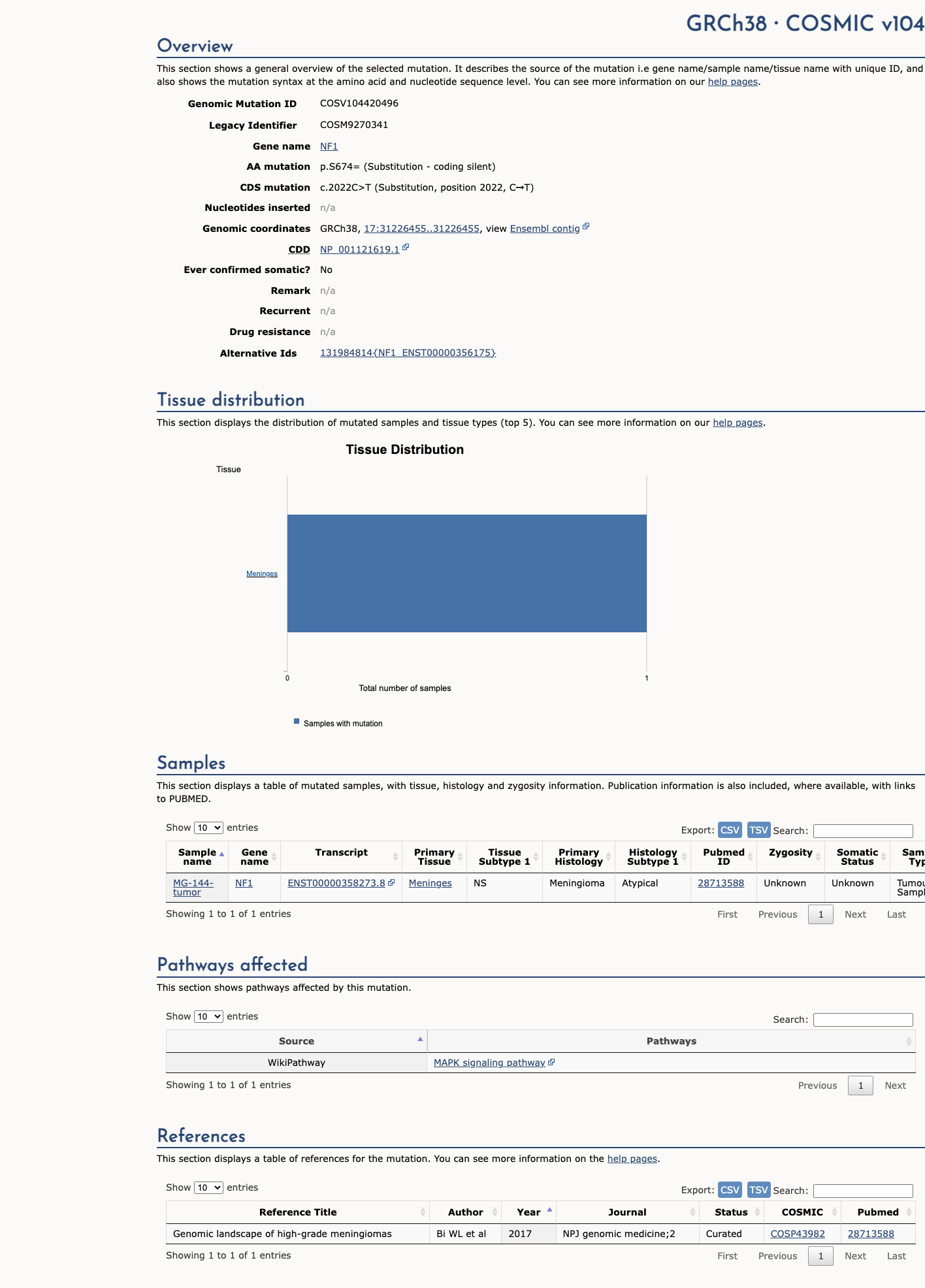
COSMIC screenshot
COSMIC
Cancer hotspots screenshot
Cancer hotspots
Somatic evidence Not in COSMIC / hotspots
COSMIC
This variant does not lie in a statistically significant hotspot. This variant has previously been reported in somatic cancers (COSMIC; COSV104420496, n = 1 times).
Hotspots
This variant does not lie in a statistically significant hotspot.
Literature · how each cited paper was used
1papers cited
Each card is an audit: what was searched, what was found, whether it names the variant, which criteria it fed, and why. 8 further PMIDs triaged but not cited — see Sources & References.
Rule & framework references · cited for criterion definitions, not variant evidence
25741868 ↗ Standards and guidelines for the interpretation of sequence variants: a joint consensus recommendation of the American College of Medical Genetics and Genomics and the Association for Molecular Pathology.
Sources & reference links
9Sources
CSpec VCEP
ClinVar
gnomAD v2.1
gnomAD v4.1
gnomAD-Canada
SpliceAI
OncoKB
COSMIC
Cancer hotspots
Triaged references · 8 PMIDs not cited in assessment
24033266 ↗ A systematic approach to assessing the clinical significance of genetic variants. CLINVAR
26467025 ↗ A Standardized DNA Variant Scoring System for Pathogenicity Assessments in Mendelian Disorders. CLINVAR
17636453 ↗ Neurofibromatosis type 1 in genetic counseling practice: recommendations of the National Society of Genetic Counselors. CLINVAR
25394175 ↗ A practice guideline from the American College of Medical Genetics and Genomics and the National Society of Genetic Counselors: referral indications for cancer predisposition assessment. CLINVAR
32602153 ↗ Genetic Counseling for Neurofibromatosis 1, Neurofibromatosis 2, and Schwannomatosis-Practice Resource of the National Society of Genetic Counselors. CLINVAR
24893135 ↗ Pheochromocytoma and paraganglioma: an endocrine society clinical practice guideline. CLINVAR
28492532 ↗ Sherloc: a comprehensive refinement of the ACMG-AMP variant classification criteria. CLINVAR
33939658 ↗ The North American Neuroendocrine Tumor Society Consensus Guidelines for Surveillance and Management of Metastatic and/or Unresectable Pheochromocytoma and Paraganglioma. CLINVAR