This variant was interpreted by pipeline
7.1.0.
The current version is
8.0.0.
Re-running queues a fresh interpretation; the result replaces this page when complete.
Re-runs are not free. Blank = draws on today's public interpretation allowance.
With a code = uses 1 of that code's uses.
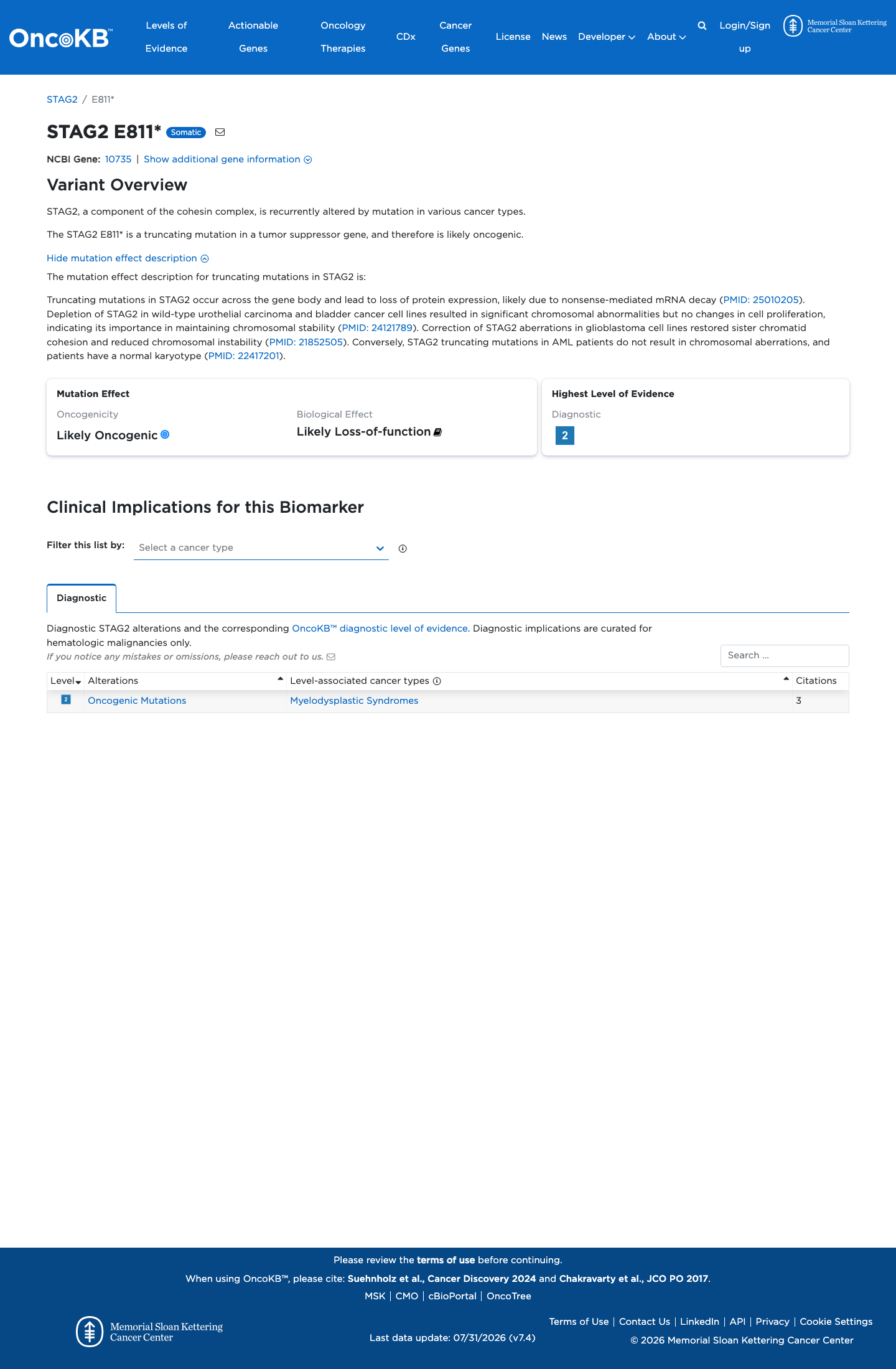
STAG2 encodes a subunit of the cohesin complex, the protein machinery that holds sister chromatids together and ensures their accurate separation during cell division. Disruption of this gene is linked to cohesinopathies, developmental conditions marked by intellectual disability, distinctive facial features, and speech disorders. STAG2 acts as a tumor suppressor in cancer, where inactivating changes cause aneuploidy and chromosomal instability and are found across many tumor types, including melanoma, bladder carcinoma, Ewing sarcoma, glioblastoma, and myeloid cancers such as myelodysplastic syndrome and acute myeloid leukemia. In myeloid malignancies, STAG2 alterations are associated with worse overall survival but better responses to certain treatments.
This variant
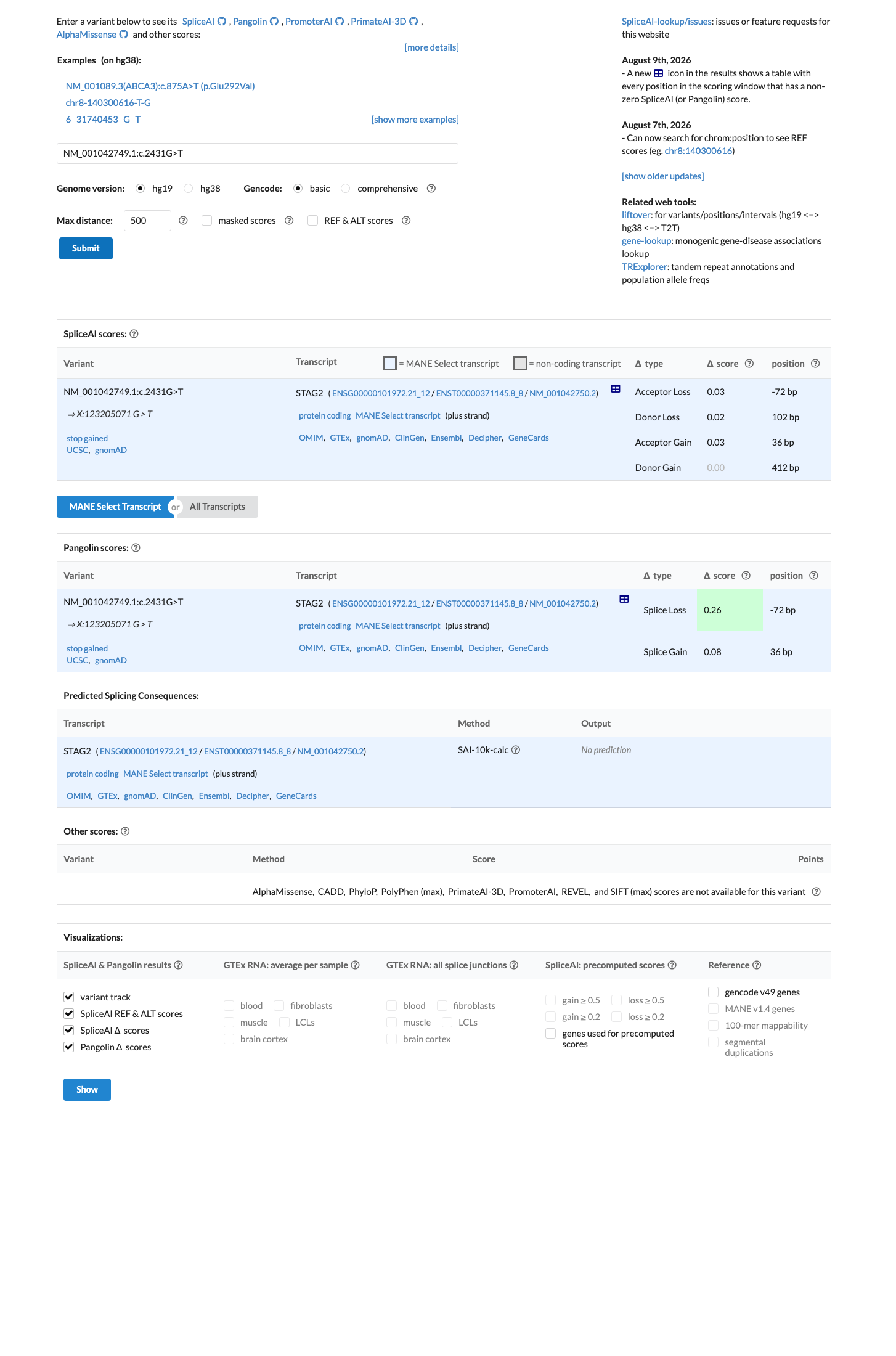
This nonsense change (p.Glu811Ter) would truncate the cohesin subunit STAG2, a mechanism consistent with the gene's established tumor-suppressor role, where inactivating mutations drive aneuploidy and chromosomal instability. However, germline significance remains uncertain: population-absence evidence alone (PM2) does not establish pathogenicity, and no disease-specific observations exist for this exact variant.
Transcript
NM_001042749.1
HGVS · transcript:coding
NM_001042749.1:c.2431G>T
GRCh38
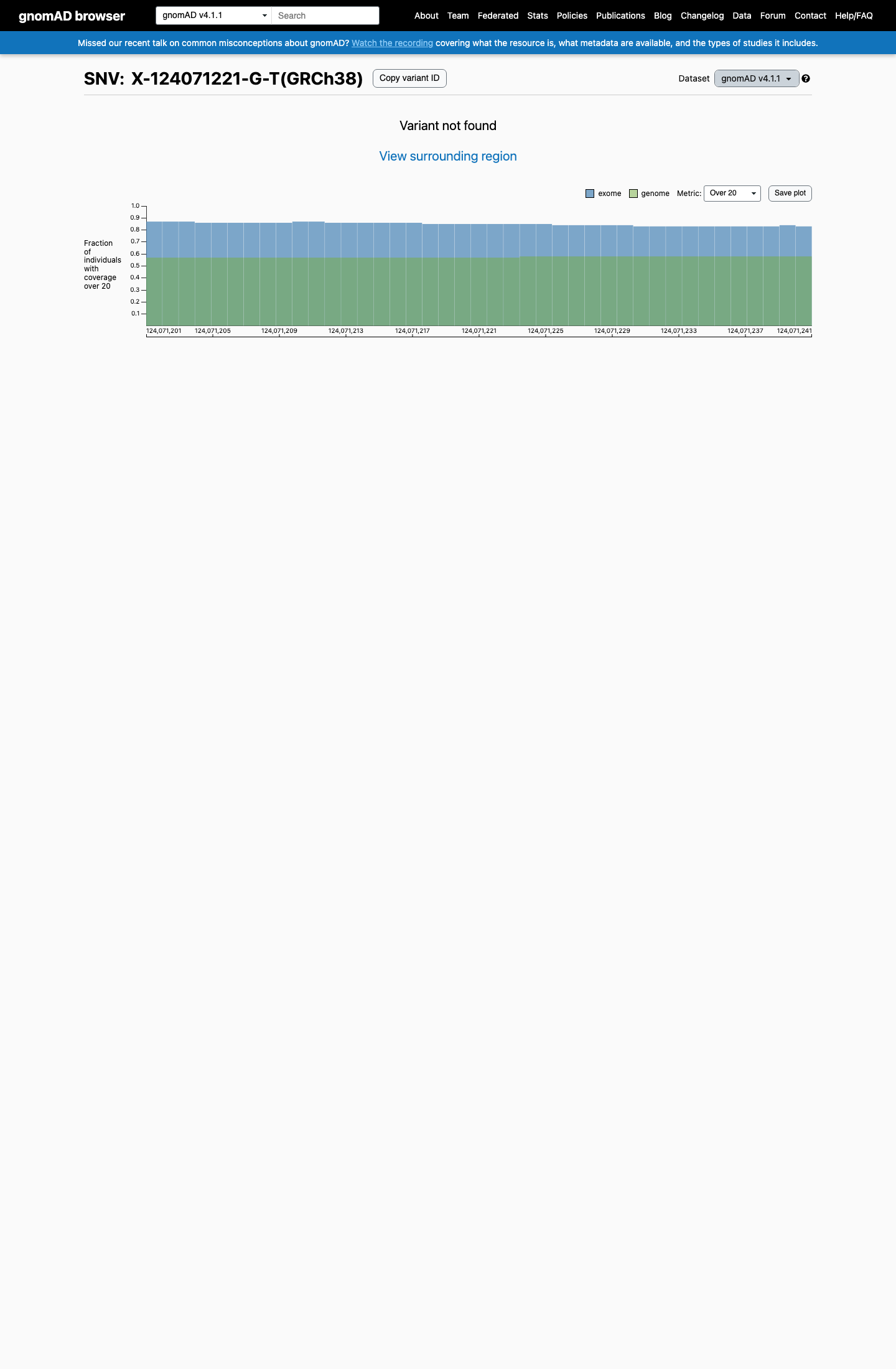
chrX:124071221 G>T
GRCh37
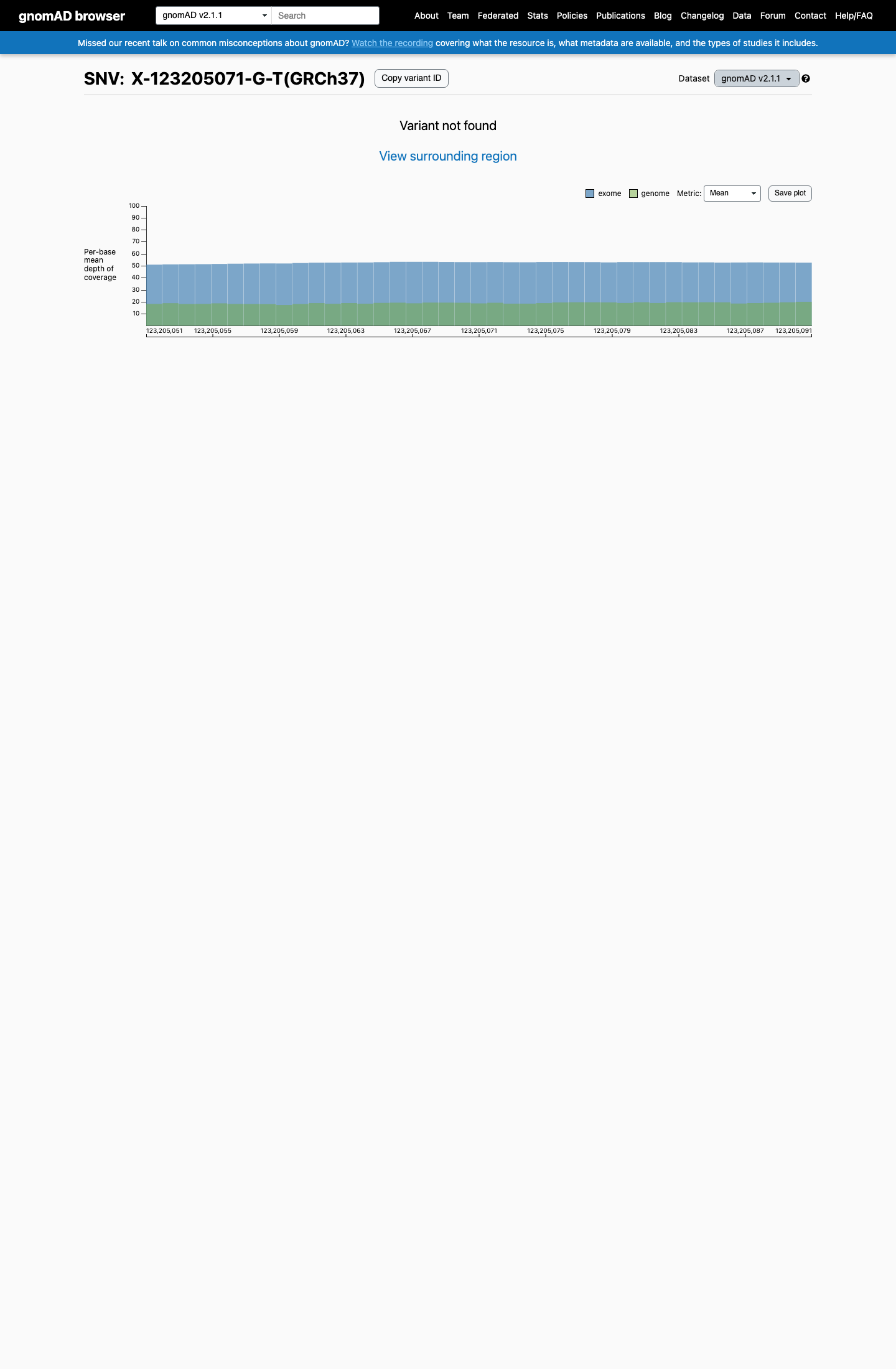
chrX:123205071 G>T
VUS: the only met criterion, PM2 (supporting, absent from ~800K-allele gnomAD v4.1), satisfies no Pathogenic or Benign combination in the generic ACMG/AMP 2015 fallback.
Classification rationale
PM2VUS
STAG2 c.2431G>Tnonsense · exon 25
PM2 (Supporting): variant absent from gnomAD v2.1, v4.1 (~800K alleles), and gnomAD-Canada v1.0 (AF = 0). VUS: the single supporting criterion (PM2) satisfies no combination rule in the generic ACMG/AMP 2015 fallback.
PM2→VUS
LYFE Sciences is an AI system, and it can make mistakes. Criteria
may be applied incorrectly, sources may be misread, and a confident-looking
classification can still be wrong. Double-check every criterion and
its underlying evidence before relying on any call.
Gene diagram
· NM_001042749.1 · variants mapped to exon structure
STAG2NM_001042749.1
Fetching transcript structure from UCSC…
Exons
—
Transcript span
—
Strand
—
Variants mapped
—
Source
UCSC ncbiRefSeqCurated
All variants in STAG2—click a row to locate it on the plot · use the link column to open its page
Protein
Location
Classification
Link
Applied criteria · 1 applied · 19 assessed
MetEvidence satisfies this criterion.
Not metEvaluated against available evidence; threshold not reached.
Not assessedApplies in principle, but no evidence was found to evaluate it.
N/ADoesn't apply to this variant type.
Applied · 1
Strength Supporting Moderate Strong Very strong
✓
PM2supportingPathogenic
Met (supporting): absent from gnomAD v2.1, v4.1 (~800,000 alleles), and gnomAD-Canada v1.0.
Variant is absent from gnomAD v2.1 (X-123205071-G-T), gnomAD v4.1 (chrX-124071221-G-T), and gnomAD-Canada v1.0 (search_status 'absent' in all three), satisfying PM2 'absent in large population cohorts' (Richards et al. 2015, PMID 25741868).Absence across the gnomAD v4.1 cohort (~800K alleles) and gnomAD v2.1 is far below this lab's non-VCEP PM2 operating threshold of AF <0.1%.STAG2 has strong germline loss-of-function disease context (pvs1_gene_context), and extreme rarity in population databases is the expectation for a pathogenic X-linked LoF variant; PM2 is applied at supporting strength only (PM2_supporting) consistent with ClinGen SVI recommendations, rather than the moderate strength listed in the original 2015 framework.