PS1
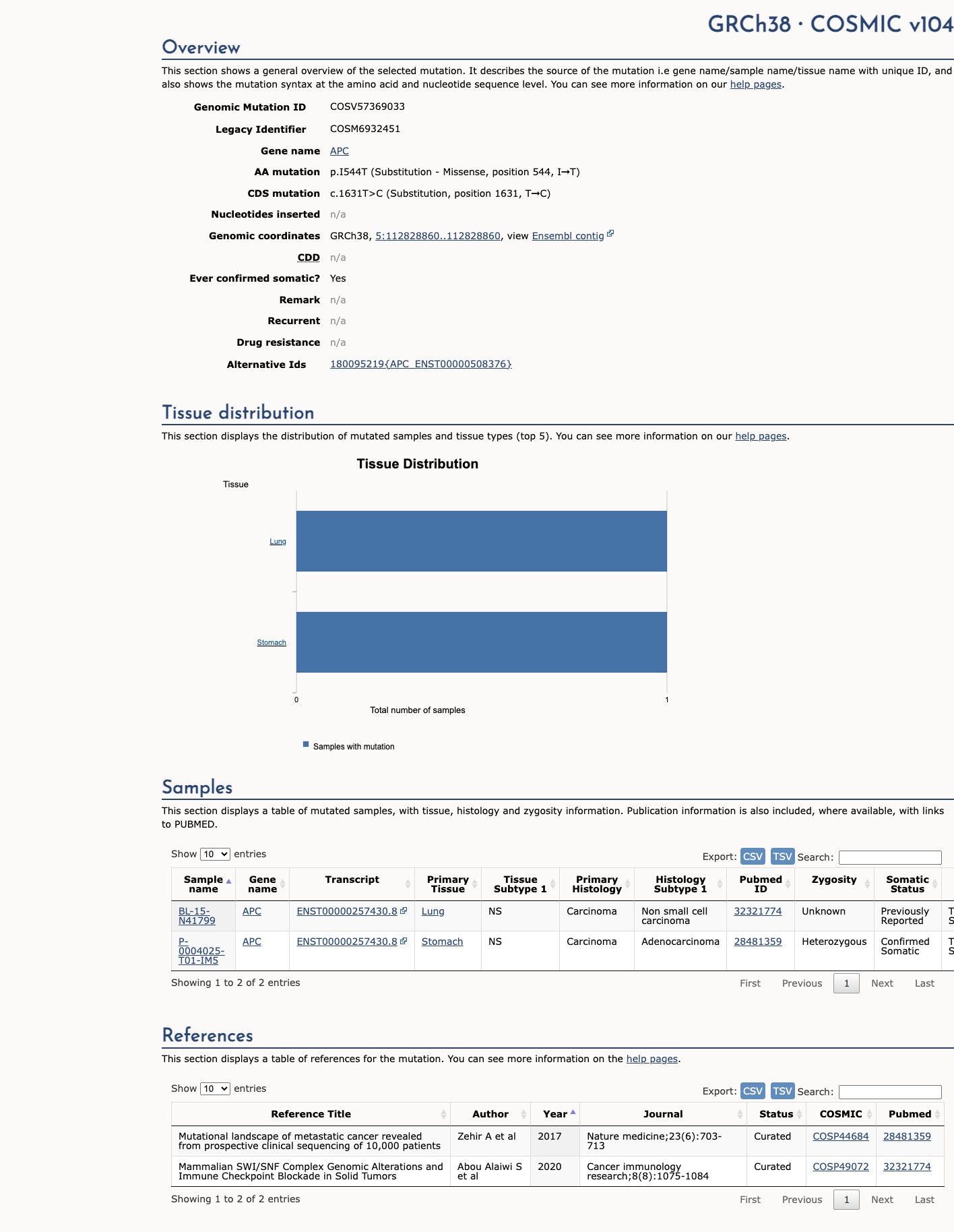
Not met: the APC VCEP's two recognized likely pathogenic missense comparators are p.Asn1026Ser and p.Ser1028Arg, not p.Ile544Thr.
PS2
Not assessed: the variant was reported in one individual, but no parental testing, confirmed maternity or paternity, or phenotype-point data are available to calculate a de novo score.
PS3
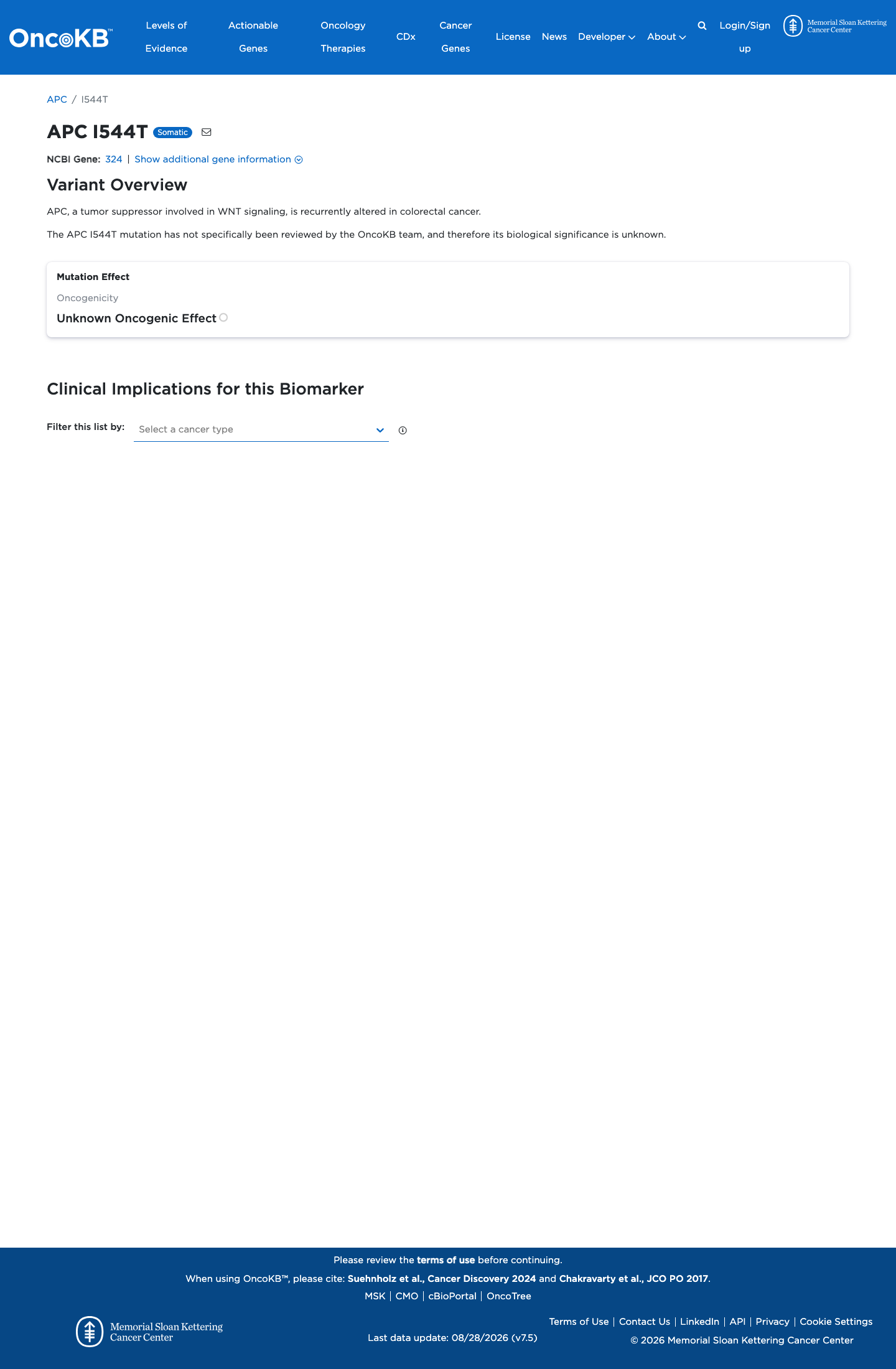
Not assessed: no variant-specific RNA or protein functional assay result is available to meet the APC VCEP PS3 requirements.
PS4
Not assessed: the exact variant was seen once, but no phenotype-point score or case-control enrichment data are available for the APC PS4 thresholds.
PM2
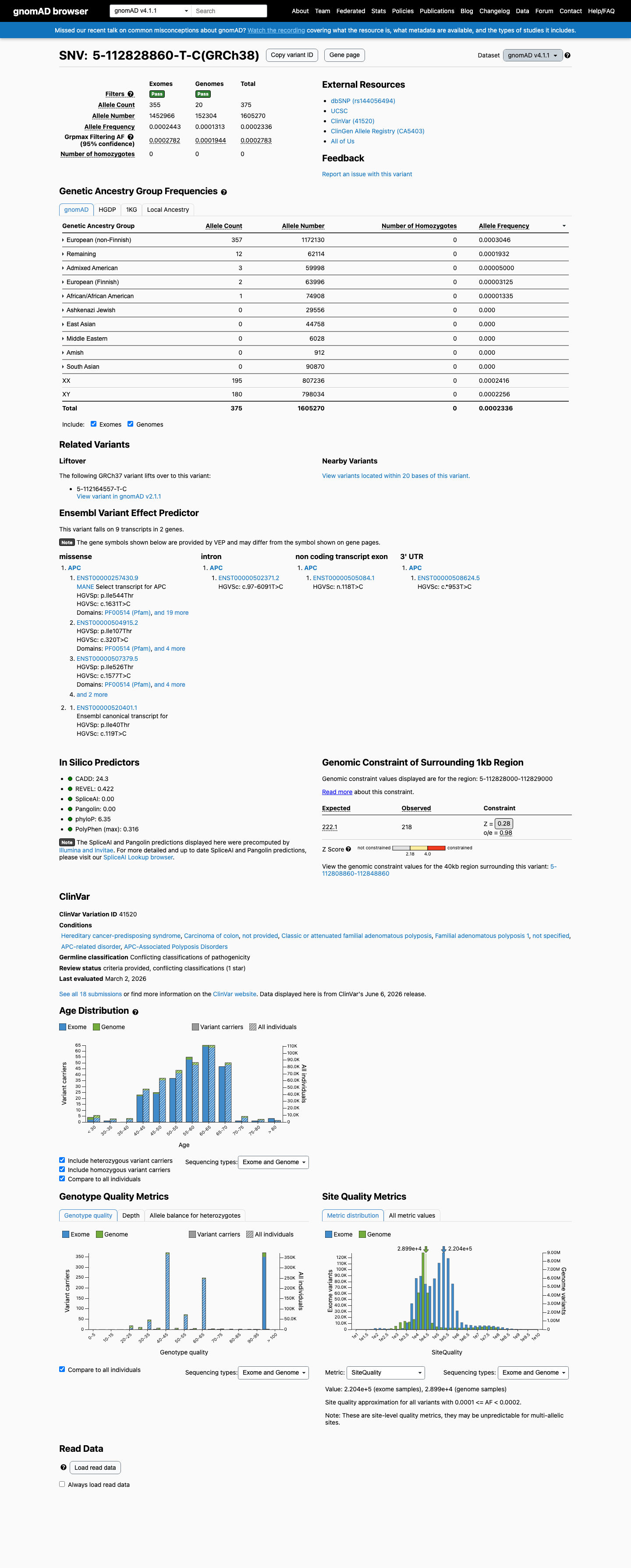
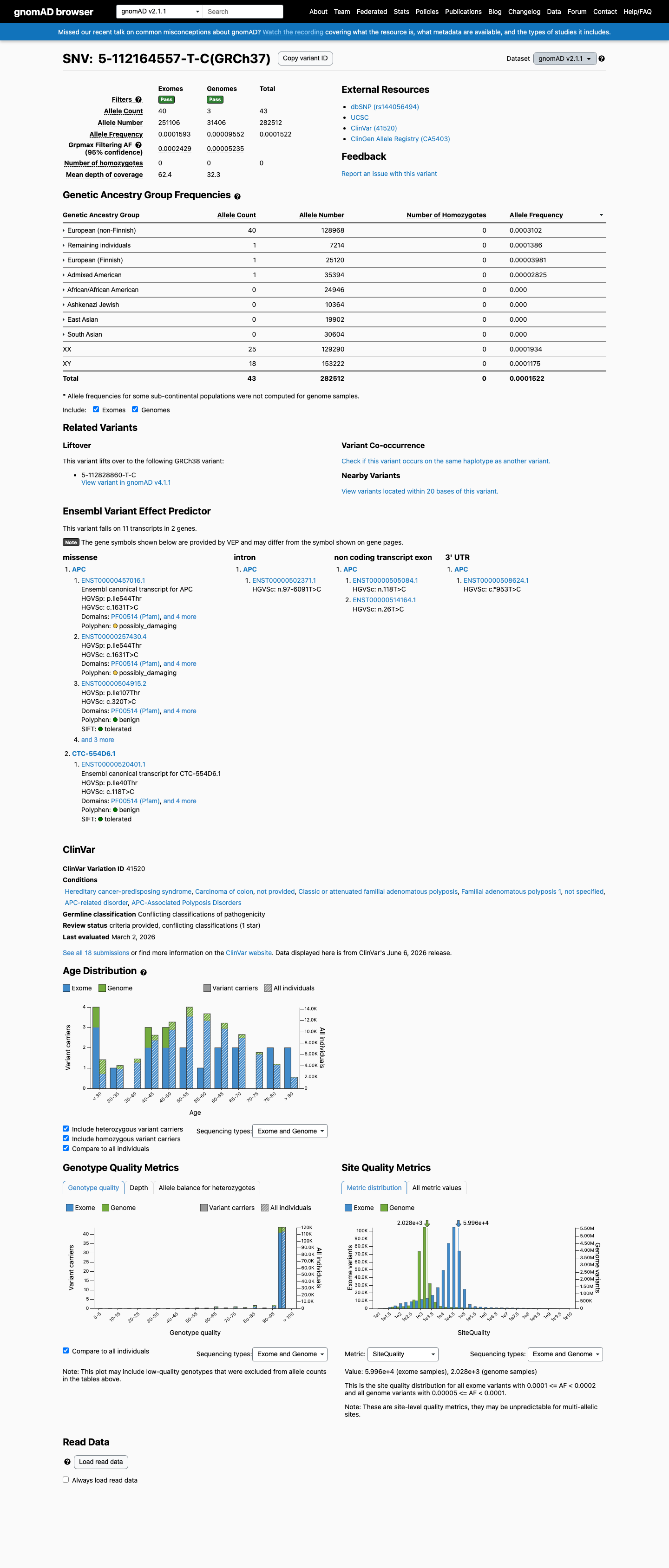
Not met: gnomAD v4.1 AF 0.000233606 with allele count 375 exceeds the APC PM2 threshold of 0.000003.
PM5
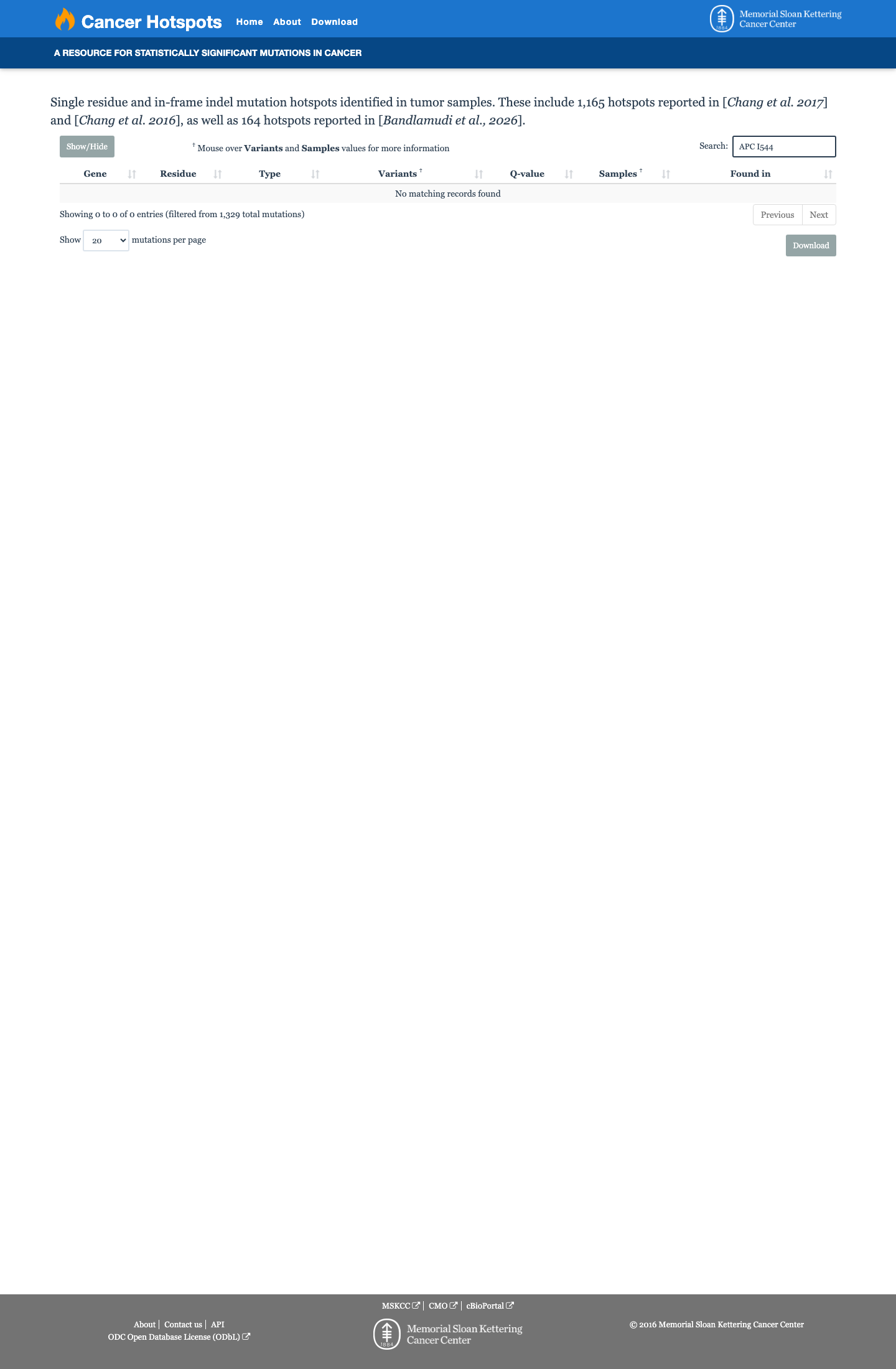
Not assessed: zero codon-544 comparator candidates were collected, but the PM5 search ended with an HTTP 429 rate-limit error, so absence of a qualifying alternate cannot be confirmed.
PM6
Not assessed: one reported individual is insufficient because no assumed-de-novo documentation, parental relationship evidence, or phenotype-point data are provided.
PP1
Not assessed: no affected relatives, informative pedigree, segregation results, or meiosis count are reported for the variant.
PP3
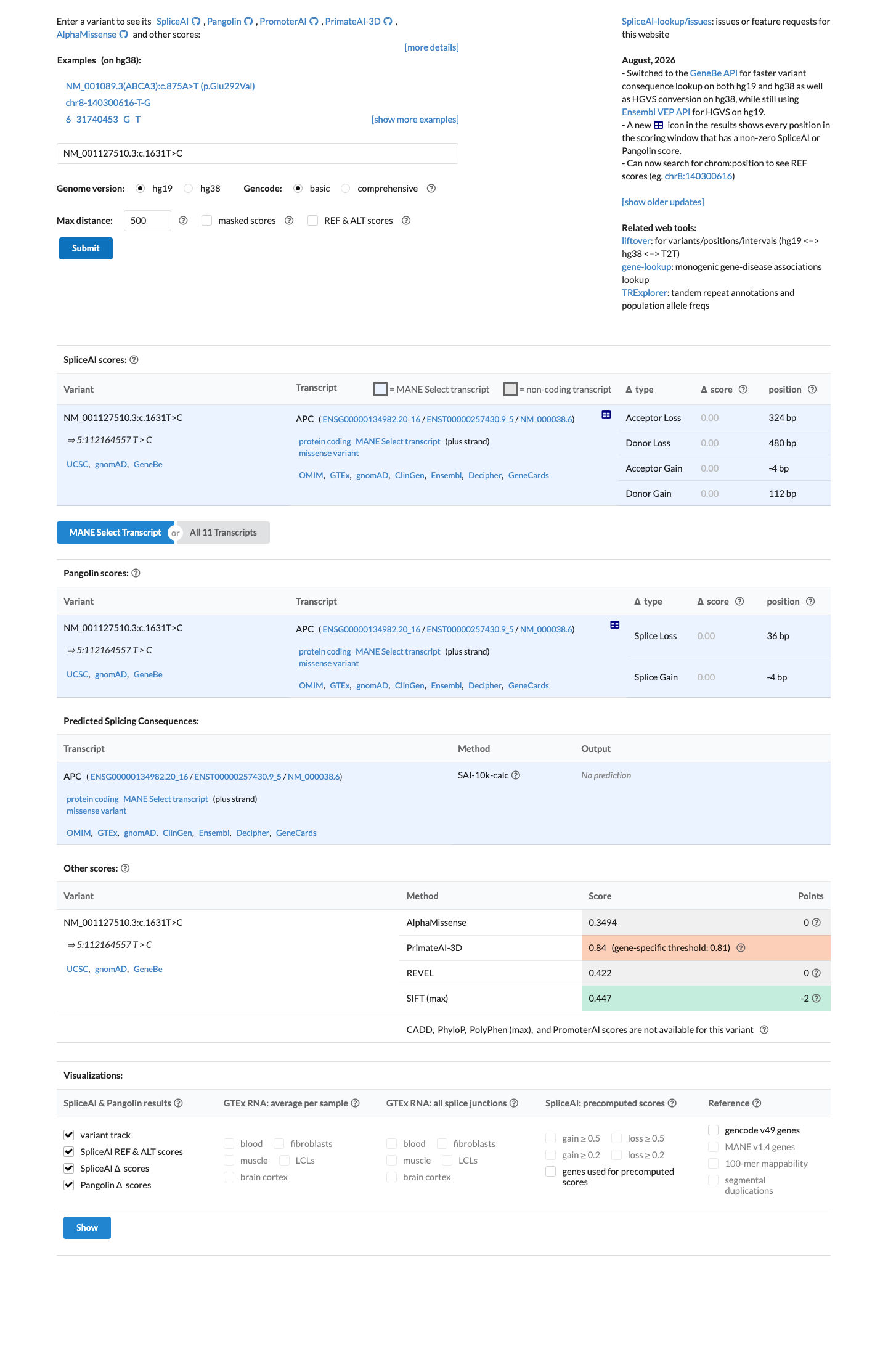
Not met: SpliceAI maximum delta 0.001 is below the 0.2 supporting threshold and does not support a deleterious splice effect.