PVS1
Not met: c.4360A>G is a missense substitution (p.Lys1454Glu), not a null variant, and SpliceAI max delta 0.001 excludes a cryptic splice-null allele.
PS1
Not met: no established P/LP APC variant shares the p.(Lys1454Glu) amino-acid change; the VCEP recognises only p.(Asn1026Ser) and p.(Ser1028Arg).
PS2
Not assessed: no proband de novo occurrence or parental testing exists, and published germline occurrences of c.4360A>G are inherited, including 2/969 healthy controls (PMID:18199528).
PS3
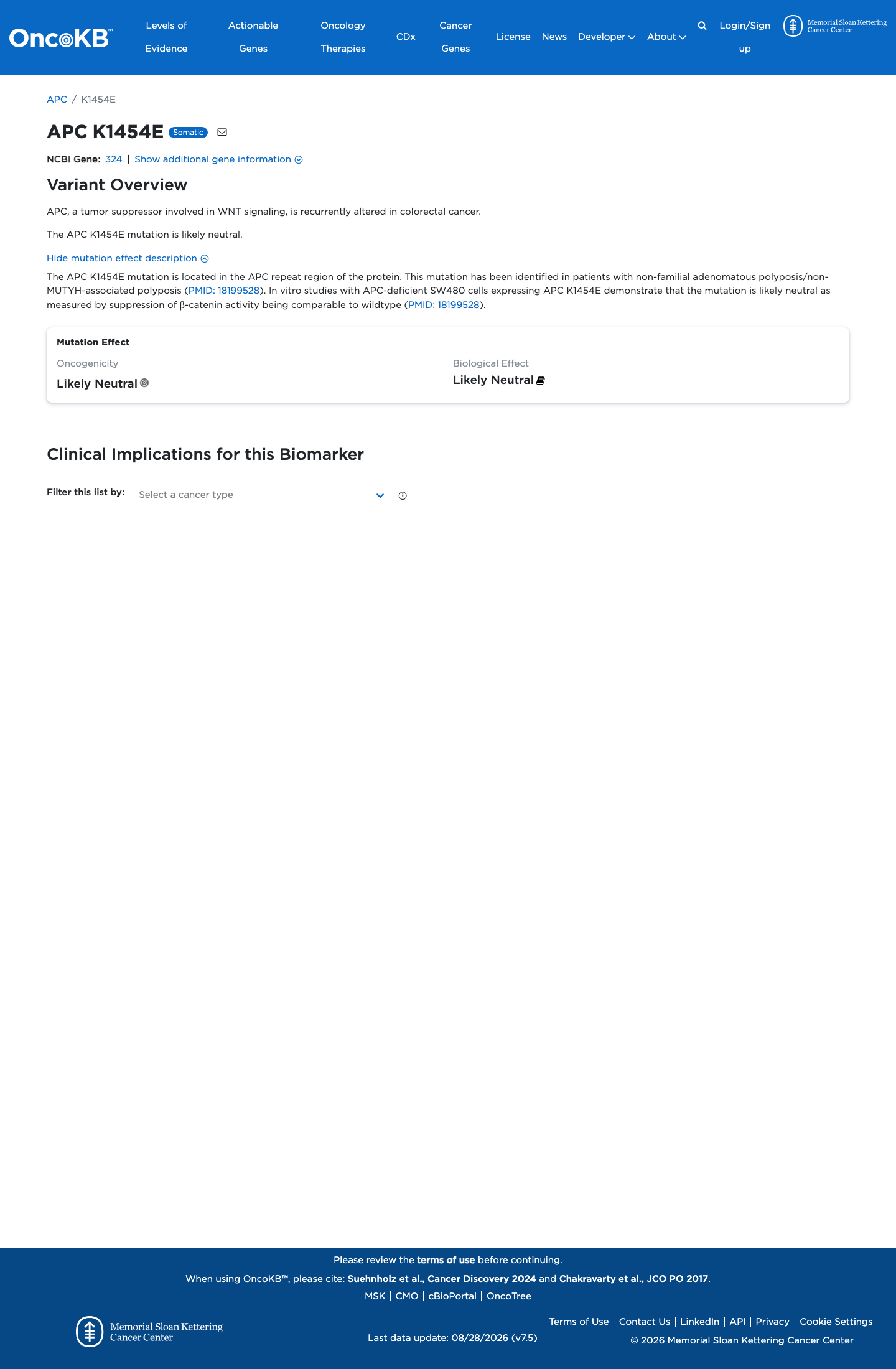
Not met: the only functional assay (CRT, PMID:18199528) shows K1454E at about 1.15x wild-type activity, not significantly increased, so no damaging effect is demonstrated.
PS4
Not met: reported carriers total 0.5 phenotype points, below the PS4_Supporting minimum of 1 phenotype point (0.5 >= 1? no).
PM2
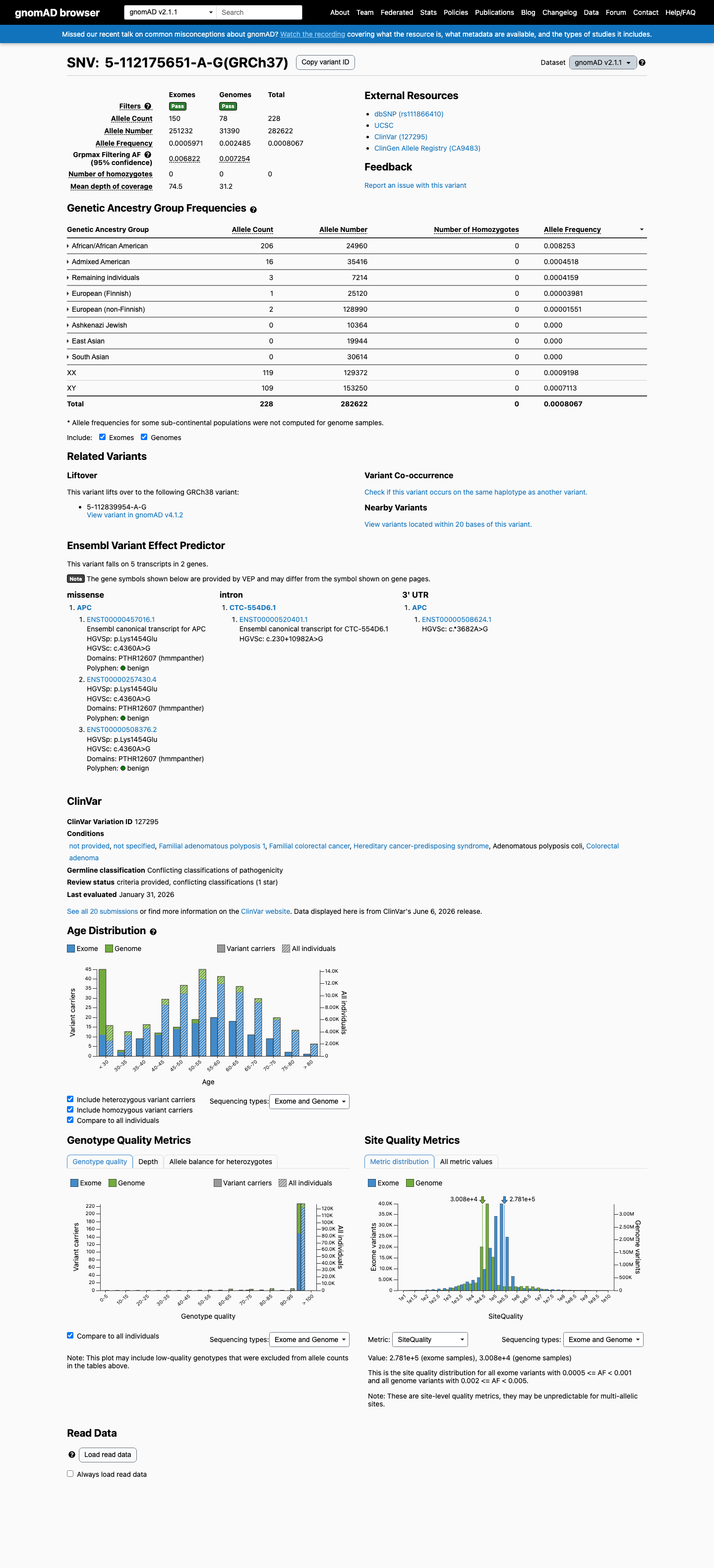
Not met: non-cancer gnomAD v2.1.1 allele frequency 0.0583% (138/236,710, AC > 1) far exceeds the PM2 ceiling of 0.0003%.
PM5
Not met: no different missense at codon 1454 is established Pathogenic/Likely Pathogenic (VCEP lists only p.(Asn1026Ser) and p.(Ser1028Arg)).
PM6
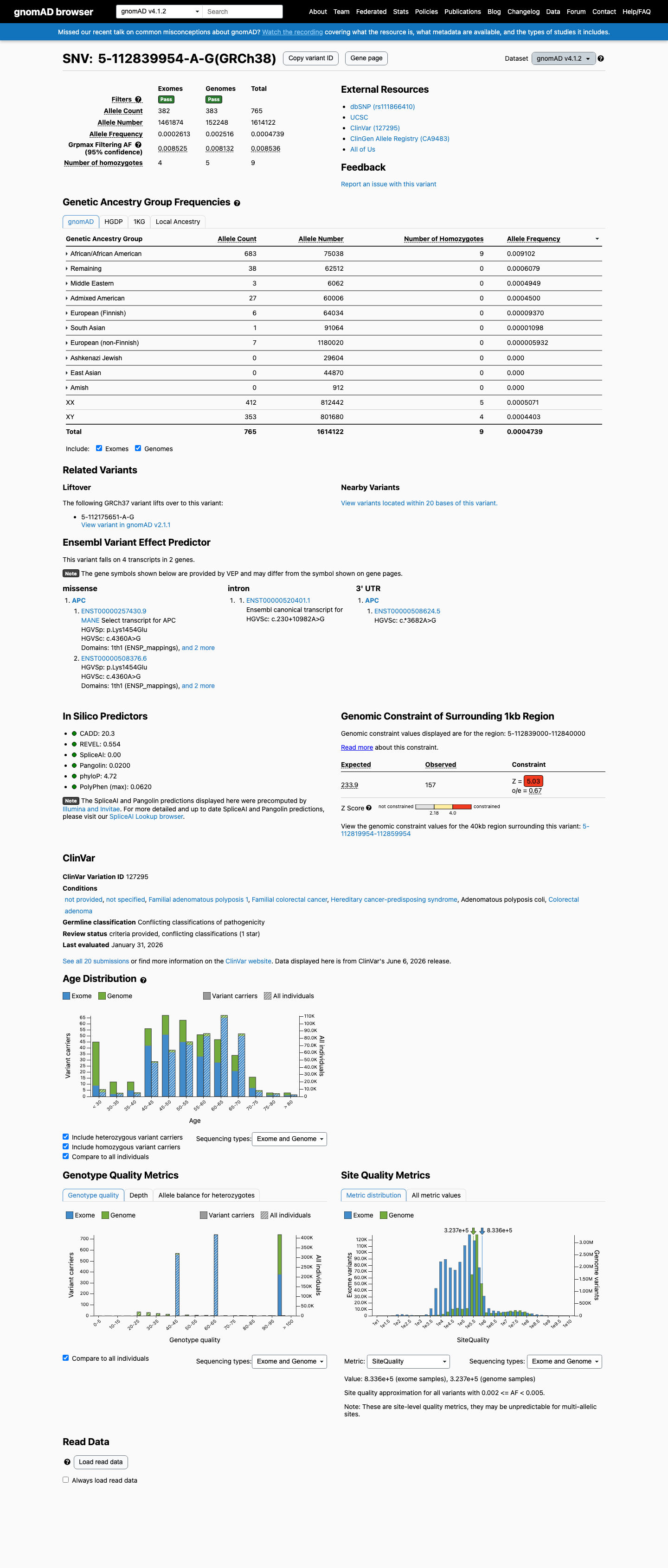
Not assessed: no assumed de novo occurrence is documented; the variant is inherited in published reports (PMID:18199528) and present in gnomAD v4.1 at 765 alleles with 9 homozygotes.
PP1
Not assessed: no pedigree or meioses are available for c.4360A>G, and the APC VCEP requires at least 3 meioses in one family even for supporting PP1.
PP3
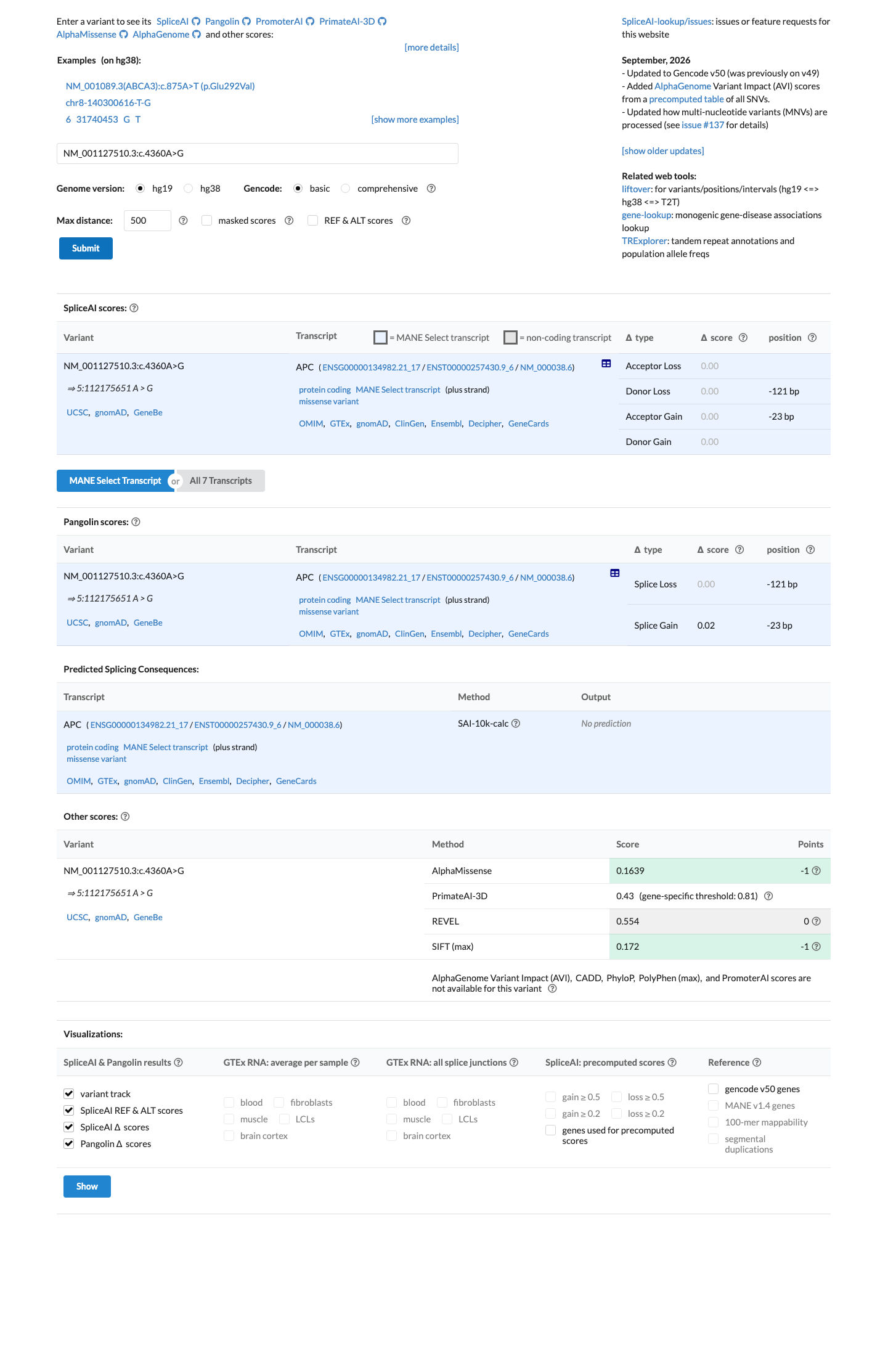
Not met: SpliceAI maximum delta 0.001 is below the 0.2 supporting threshold, giving no deleterious splice evidence.
PP5
Not met: zero ClinVar expert-panel submissions for this variant (aggregate Benign from single submitters), so no expert-panel pathogenic assertion triggers PP5.