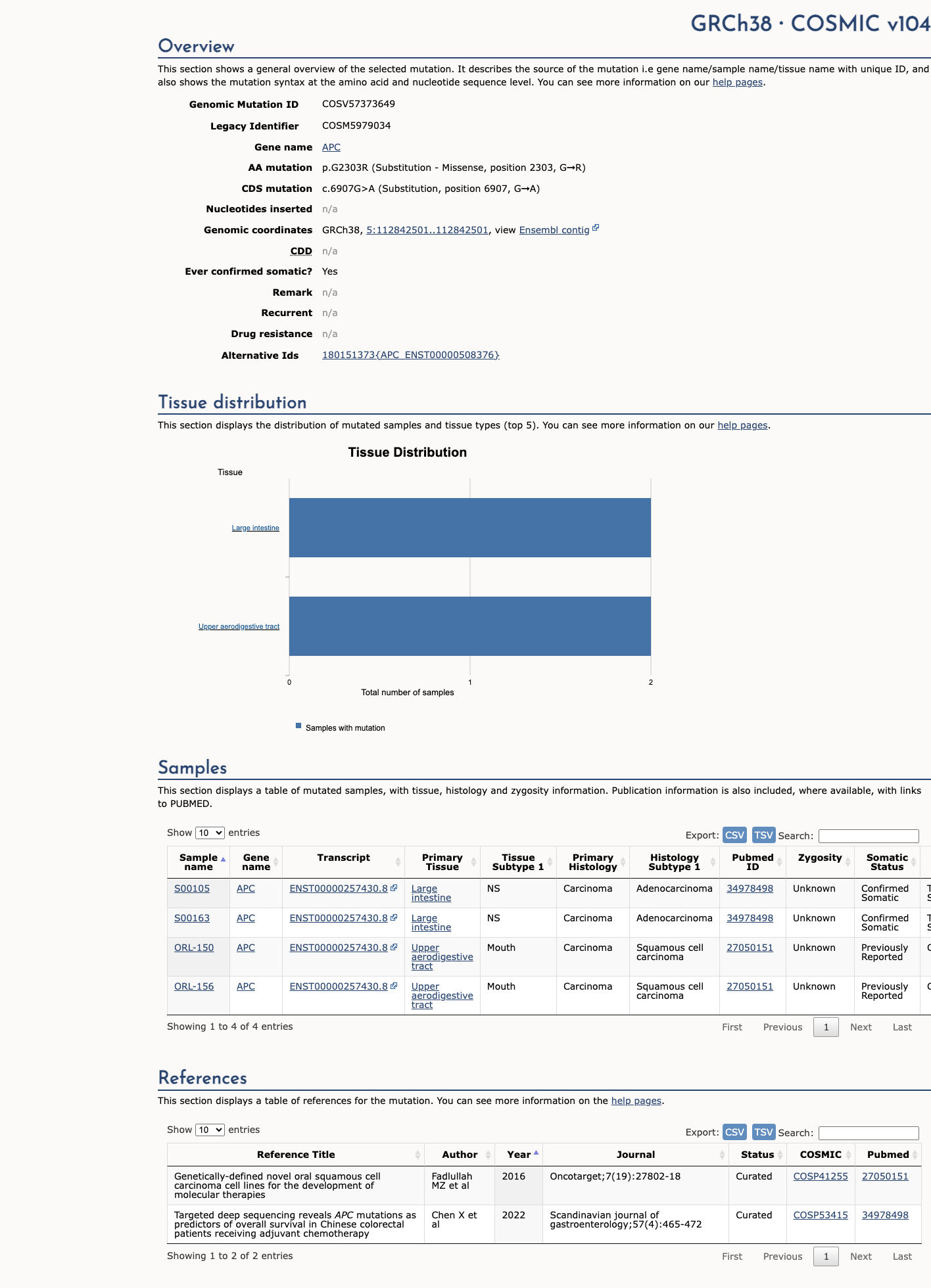
PVS1
Not met: c.6907G>A causes a missense change, p.(Gly2303Arg), not a null variant, so the APC VCEP PVS1 decision tree is never triggered.
PS1
Not met: no established pathogenic or likely pathogenic APC variant produces p.(Gly2303Arg); the VCEP recognises only p.(Asn1026Ser) and p.(Ser1028Arg) as likely pathogenic missense changes.
PS2
Not assessed: with no proband, parental testing, or de novo observation recorded, the APC de novo score of at least 1 required for PS2 cannot be computed.
PS3
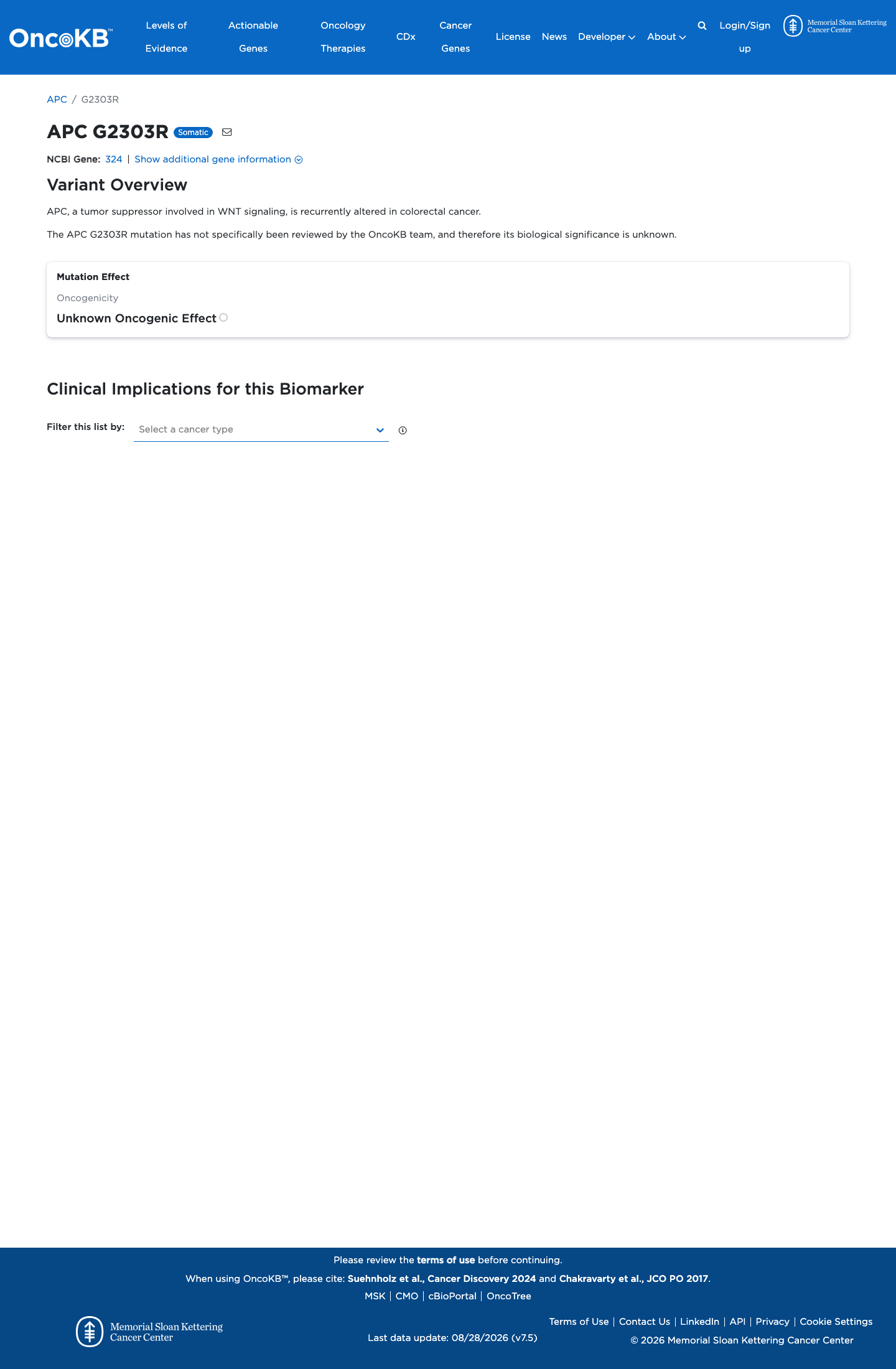
Not met: no functional assay exists for p.(Gly2303Arg), and the APC VCEP protein-assay route excludes codon 2303, outside codons 959-2129.
PS4
Not assessed: no proband carrying this variant has documented phenotype points, versus PS4 thresholds of >=16 (very strong) down to 1 (supporting).
PM2
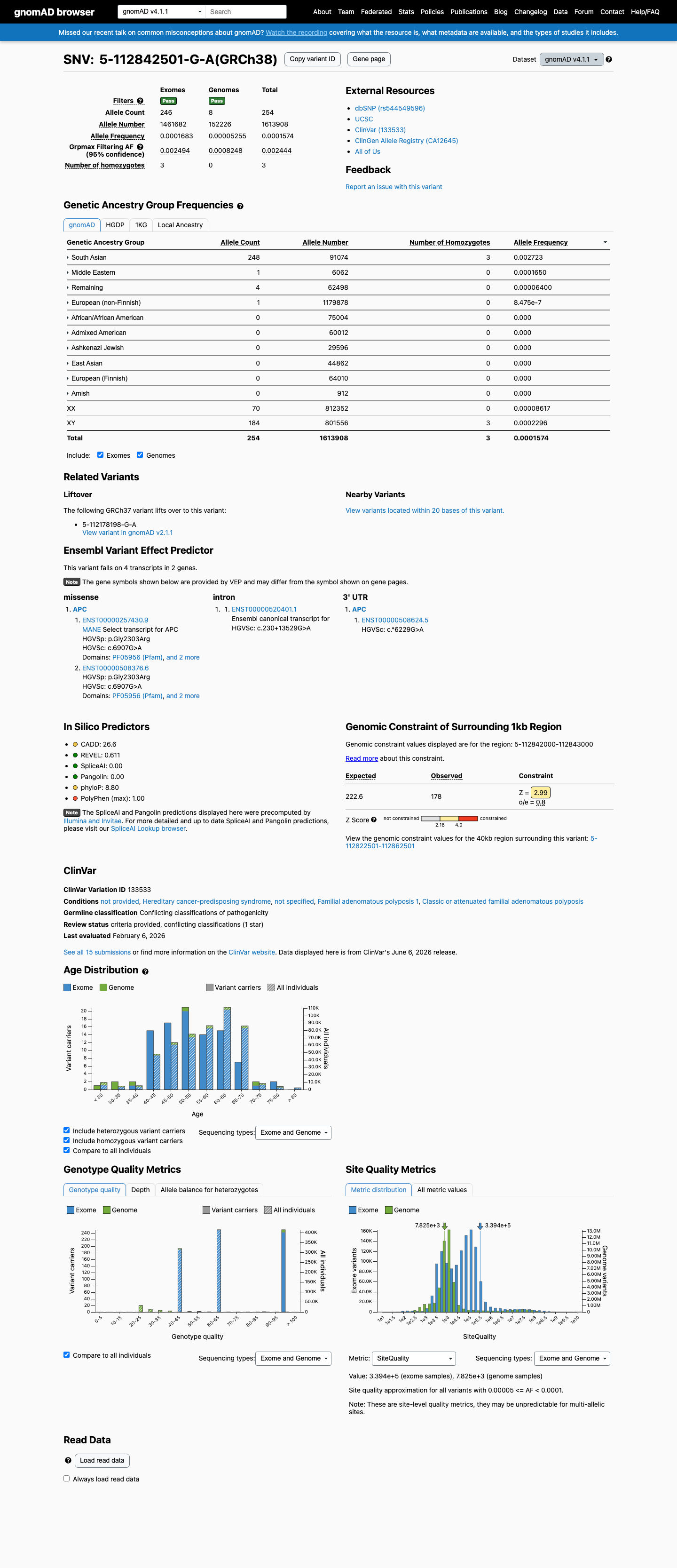
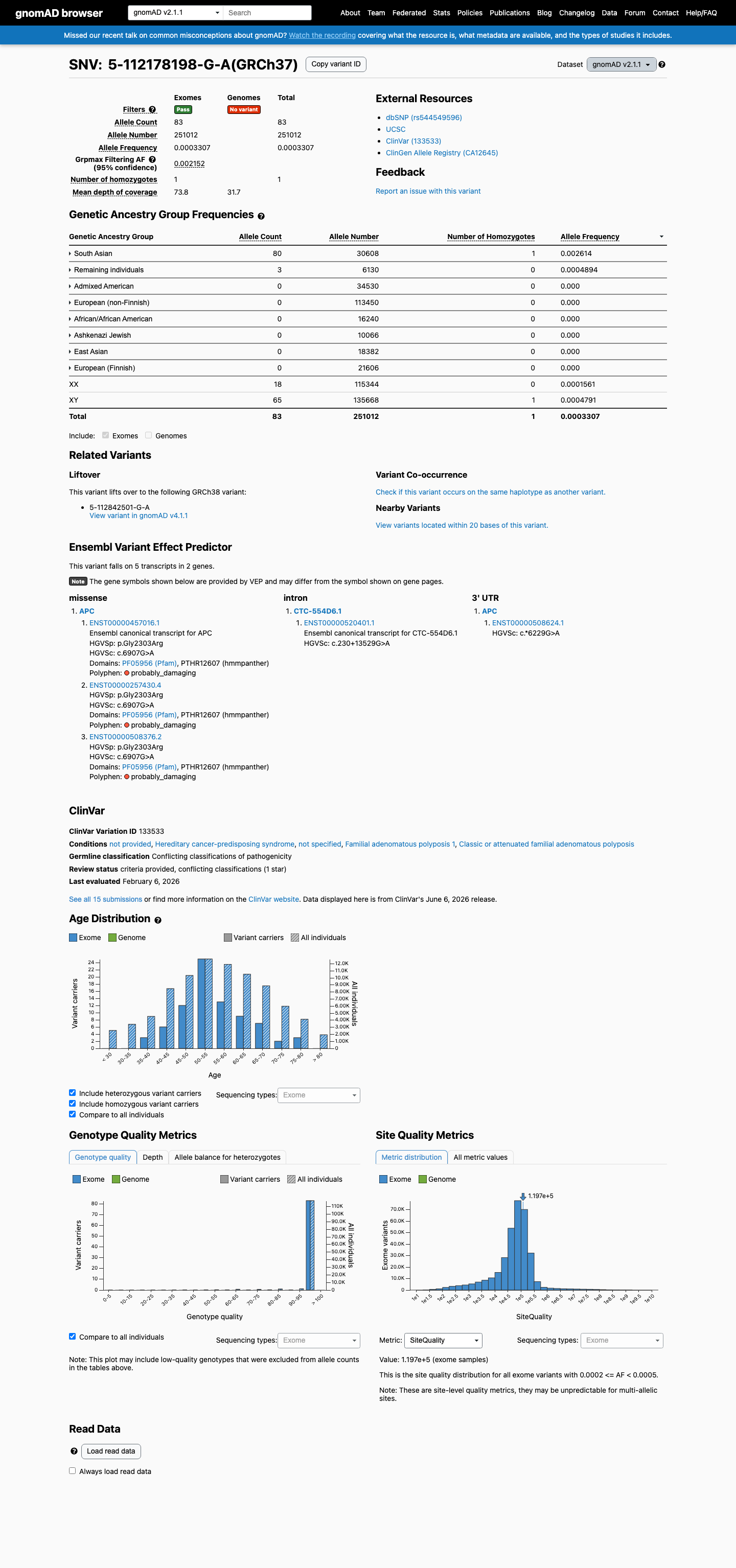
Not met: gnomAD v2.1 non-cancer AF 0.0351% (83/236,496 alleles) exceeds the APC VCEP PM2 threshold of 0.0003% (0.000003) by about 117-fold.
PM5
Not met: no pathogenic or likely pathogenic missense variant exists at residue 2303; the VCEP's only established missense comparators sit at codons 1026 and 1028.
PM6
Not assessed: no assumed-de novo proband observation is recorded, so the minimum de novo score of 0.5 needed for PM6_Supporting cannot be derived.
PP1
Not assessed: no pedigree or meiosis data exists for any family, against the APC PP1_Supporting minimum of 3-4 segregating meioses in one family.
PP3
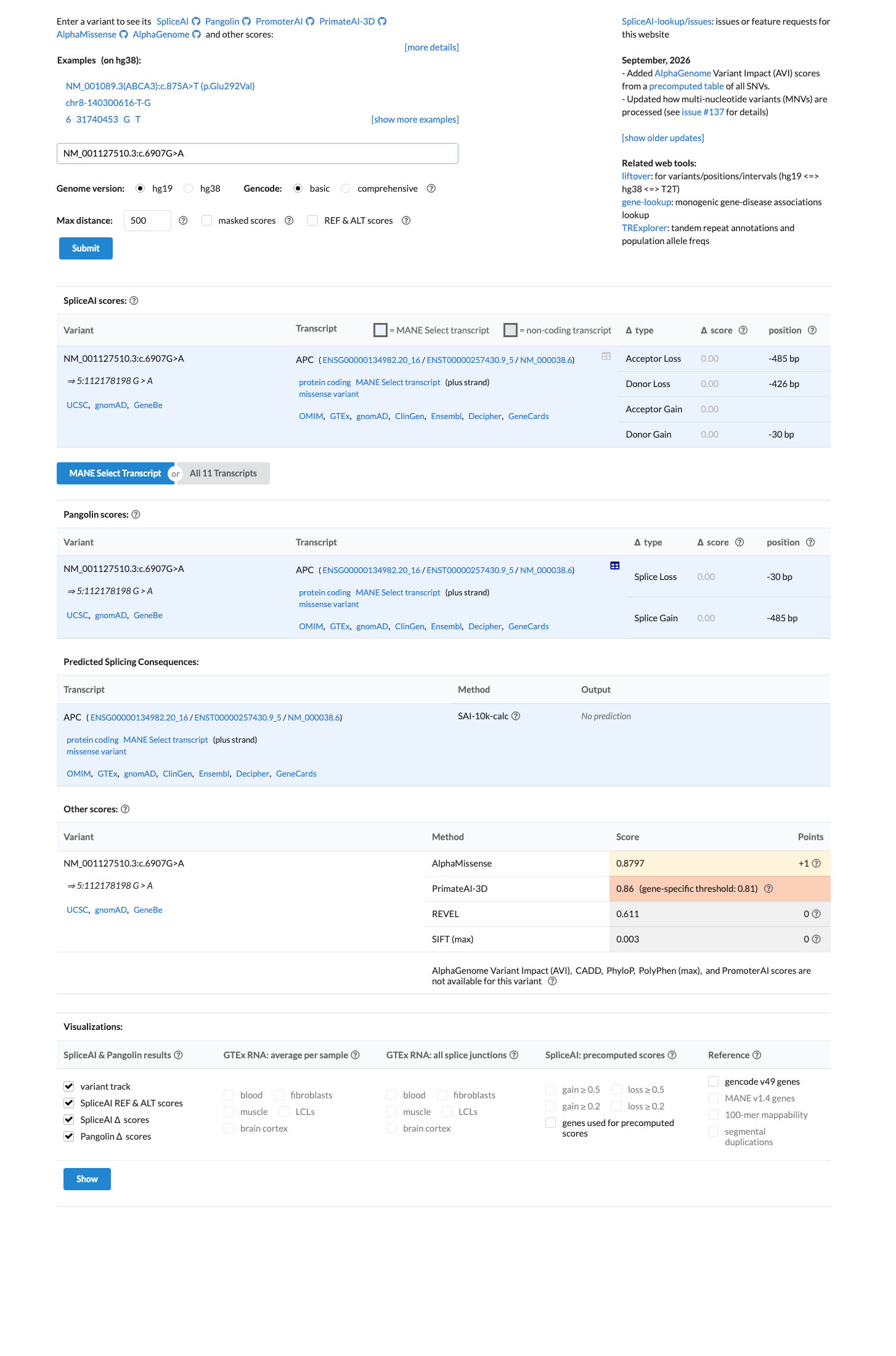
Not met: the missense-applicable REVEL score 0.611 falls below the 0.644 PP3-supporting threshold, and the VCEP-required SpliceAI splice result was unavailable.
PP5
Not met: the exact-variant ClinVar record has zero expert-panel Pathogenic/Likely pathogenic submissions (all 15 are ordinary single-submitter laboratories).