PS1
Not assessed: no alternate nucleotide change producing p.Tyr206Cys with an established pathogenic classification was found.
PS2
Not assessed: no de novo observation, parental genotypes, or phenotype data were available.
PS3
Not assessed: no functional assay data (e.g., cyclin E1-CDK2 activity) for p.Tyr206Cys were identified in any source.
PS4
Not assessed: no case-control or cohort enrichment data for this variant were available.
PM1
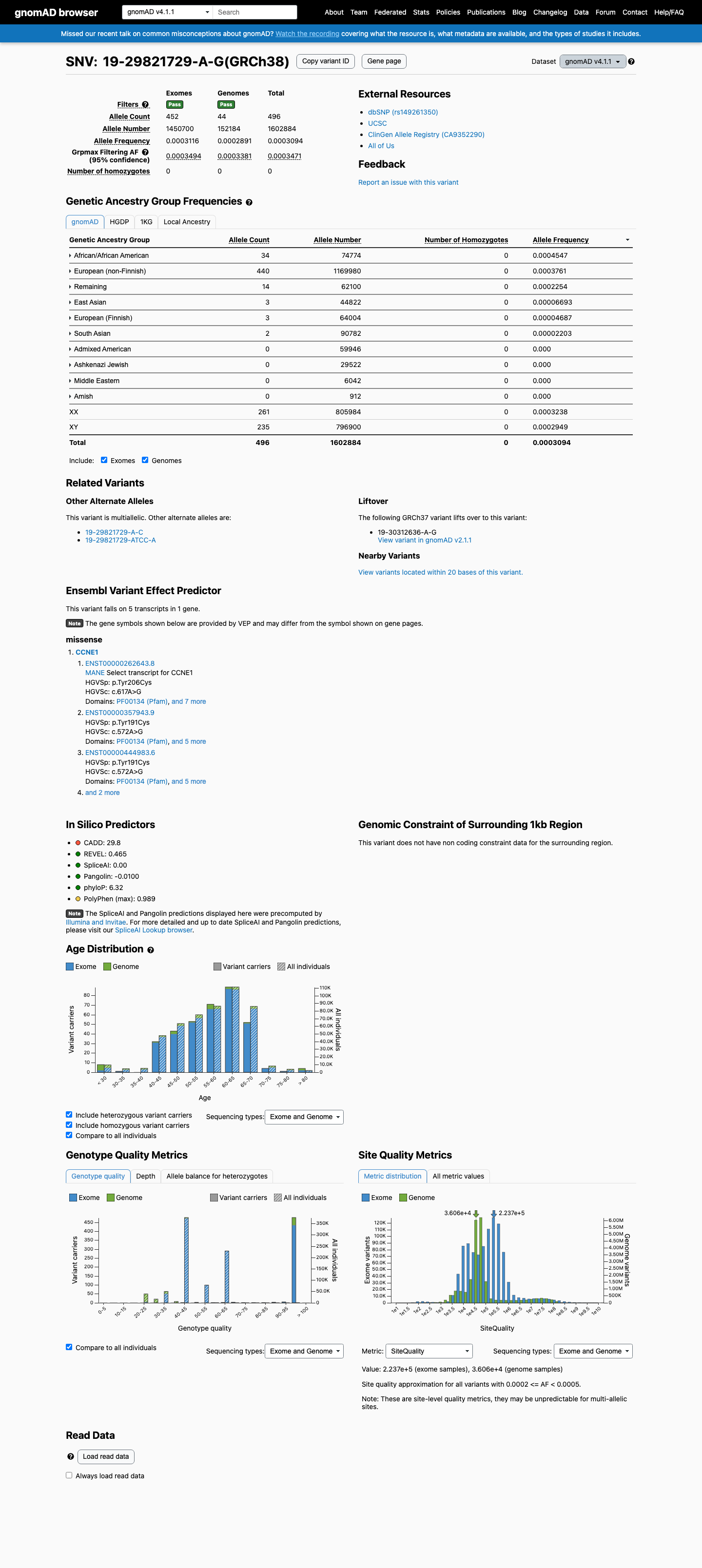
Not met: residue 206 is not a significant hotspot per Cancerhotspots.org, and no evidence places it in a critical functional domain.
PM3
Not assessed: no affected proband with this variant in trans with a pathogenic allele, or phase/segregation data, was documented.
PM5
Not assessed: no alternate missense change at codon 206 with an established pathogenic classification was found.
PM6
Not assessed: no de novo observation with confirmed parentage was documented.
PP1
Not assessed: no pedigree, relative genotypes, or informative meioses were provided.
PP2
Not assessed: no gene-specific evidence that missense variants cause disease; CCNE1 acts mainly through amplification and gain of function.
PP3
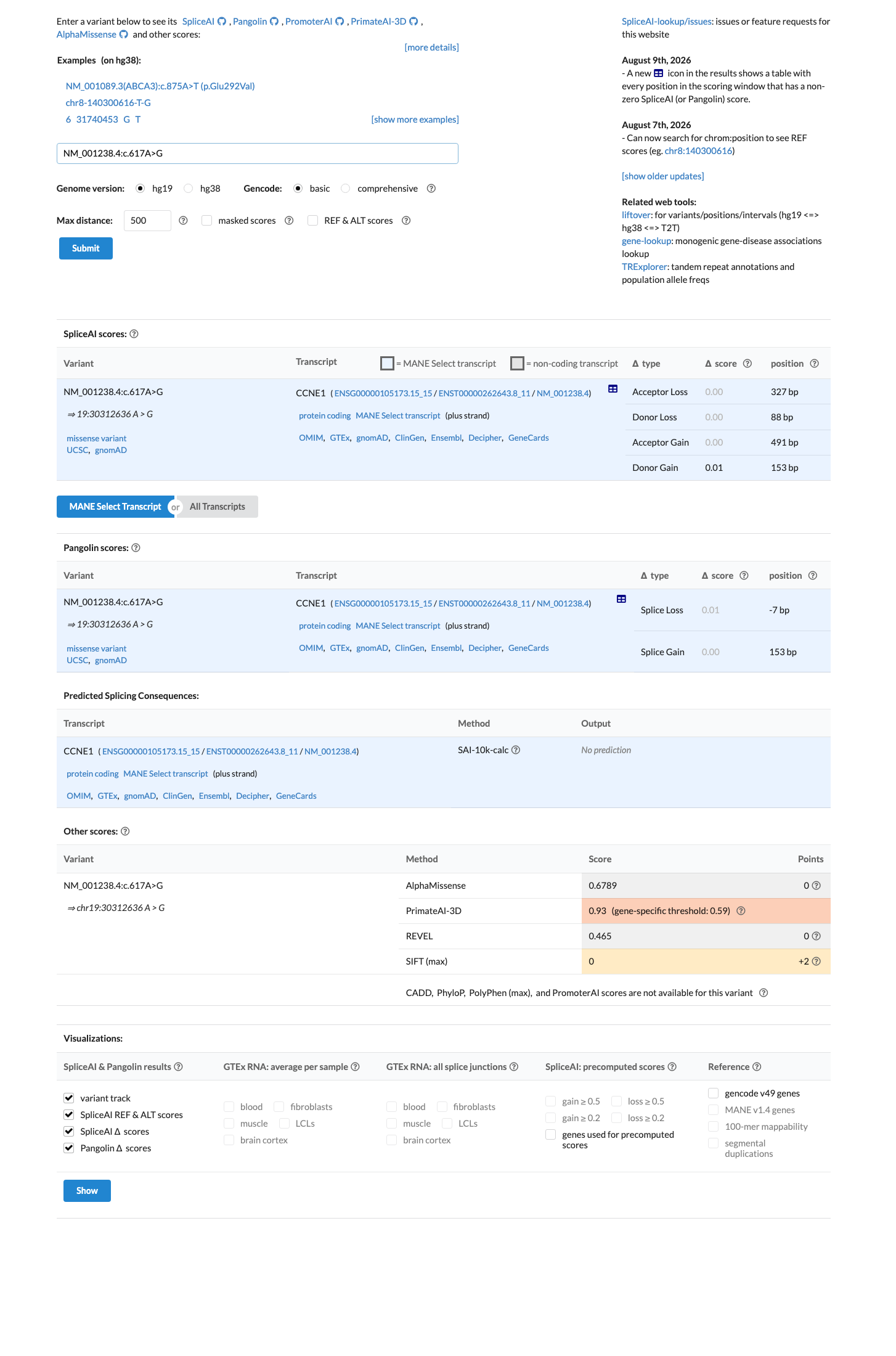
Not met: REVEL score 0.465 lies in the indeterminate zone between the 0.290 benign and 0.644 pathogenic thresholds.
PP4
Not assessed: no proband phenotype or phenotype-to-gene specificity evidence was available.
PP5
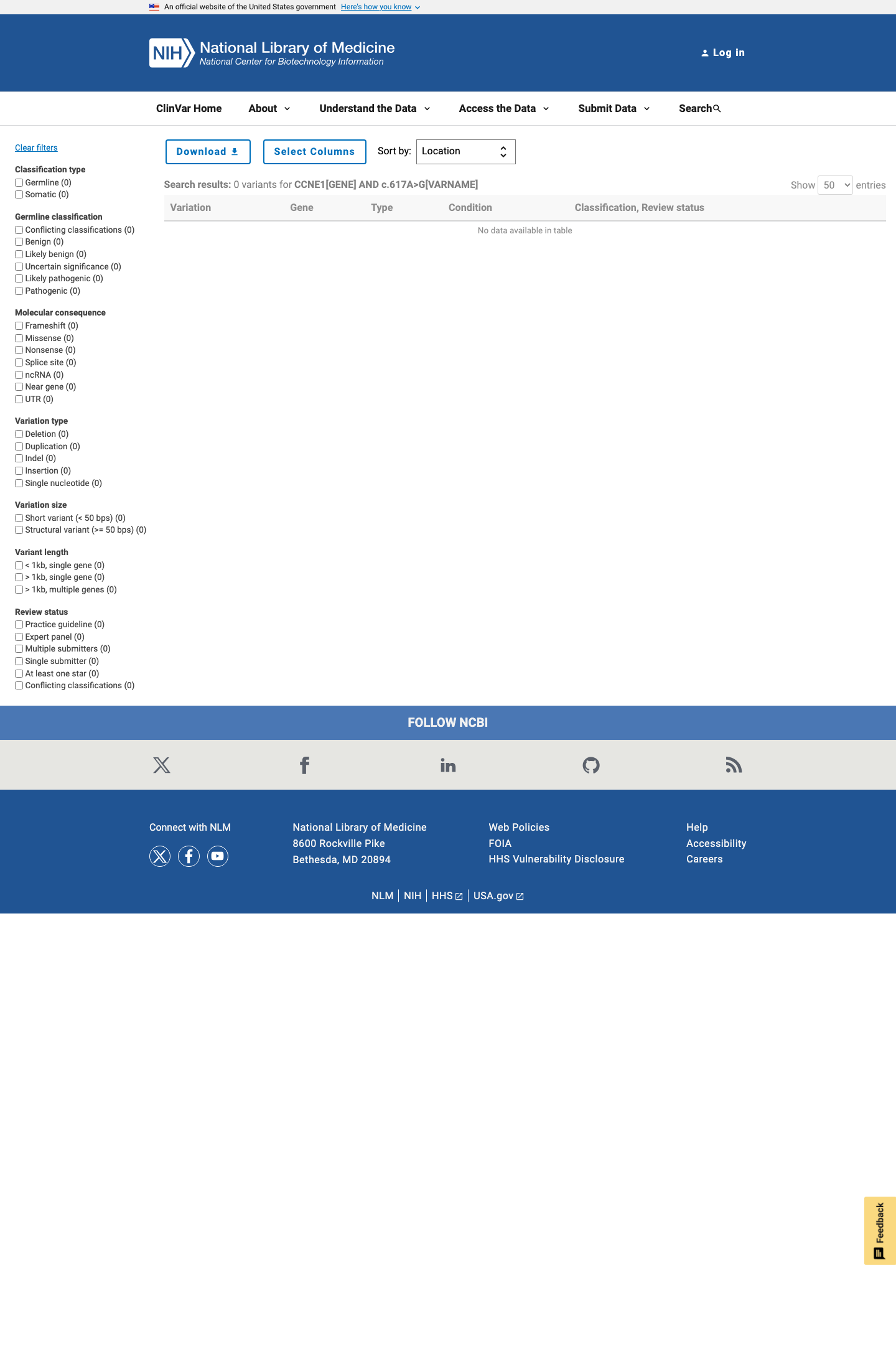
Not assessed: the exact variant is absent from ClinVar, so no expert-panel pathogenic assertion exists.