PS1
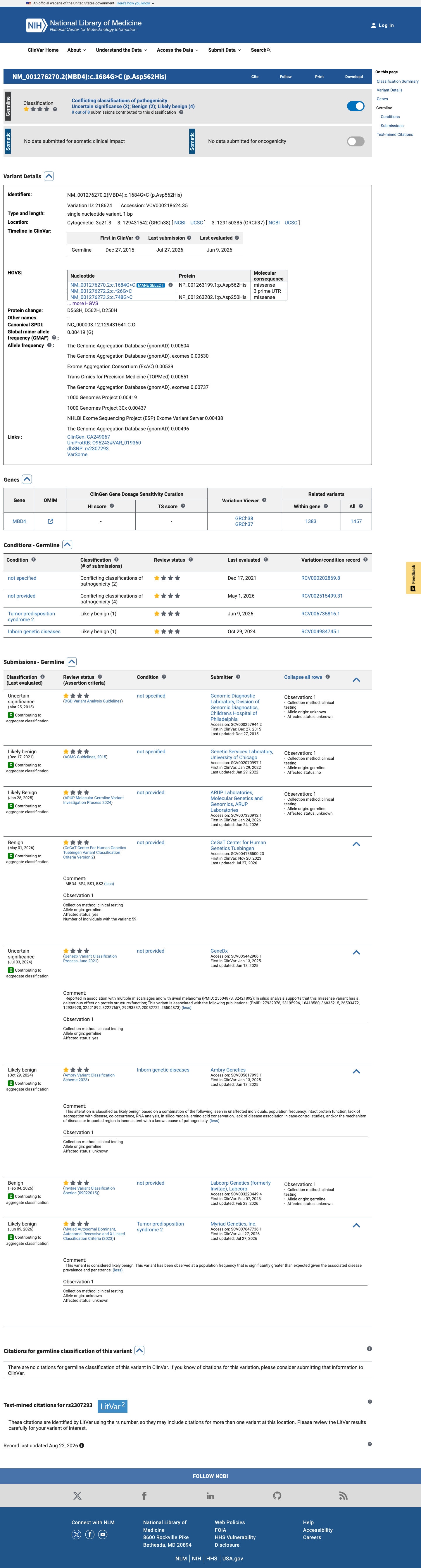
Not met: no MBD4 variant with a different nucleotide change encodes p.(Asp562His), and this amino acid change has no established pathogenic classification in ClinVar.
PS2
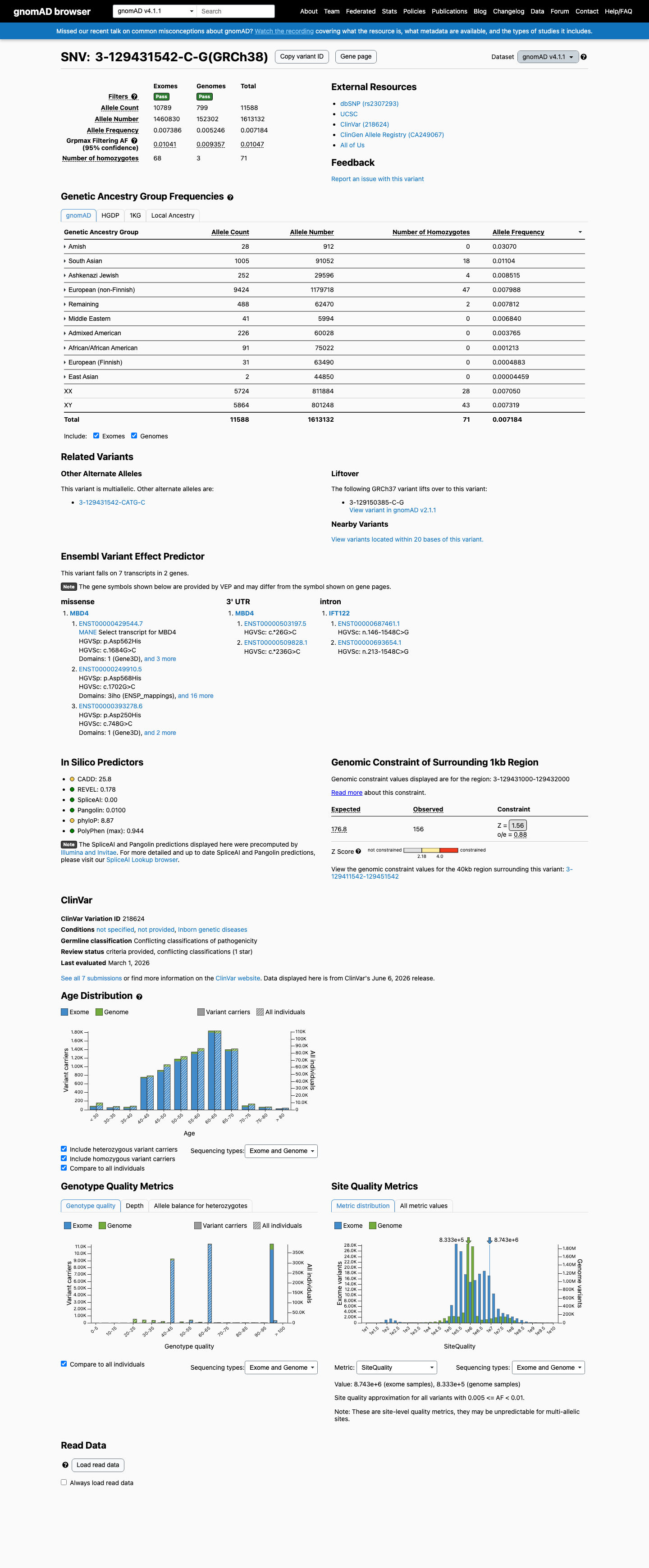
Not assessed: no proband or parental-testing data exist, and the variant is common in gnomAD (v4.1 AF 0.72%, 71 homozygotes), so a confirmed de novo occurrence is unsupported.
PS3
Not assessed: no functional assay for MBD4 p.(Asp562His) was found in ClinVar, OncoKB, COSMIC or the literature, so the PS3 assay requirement is unmet.
PS4
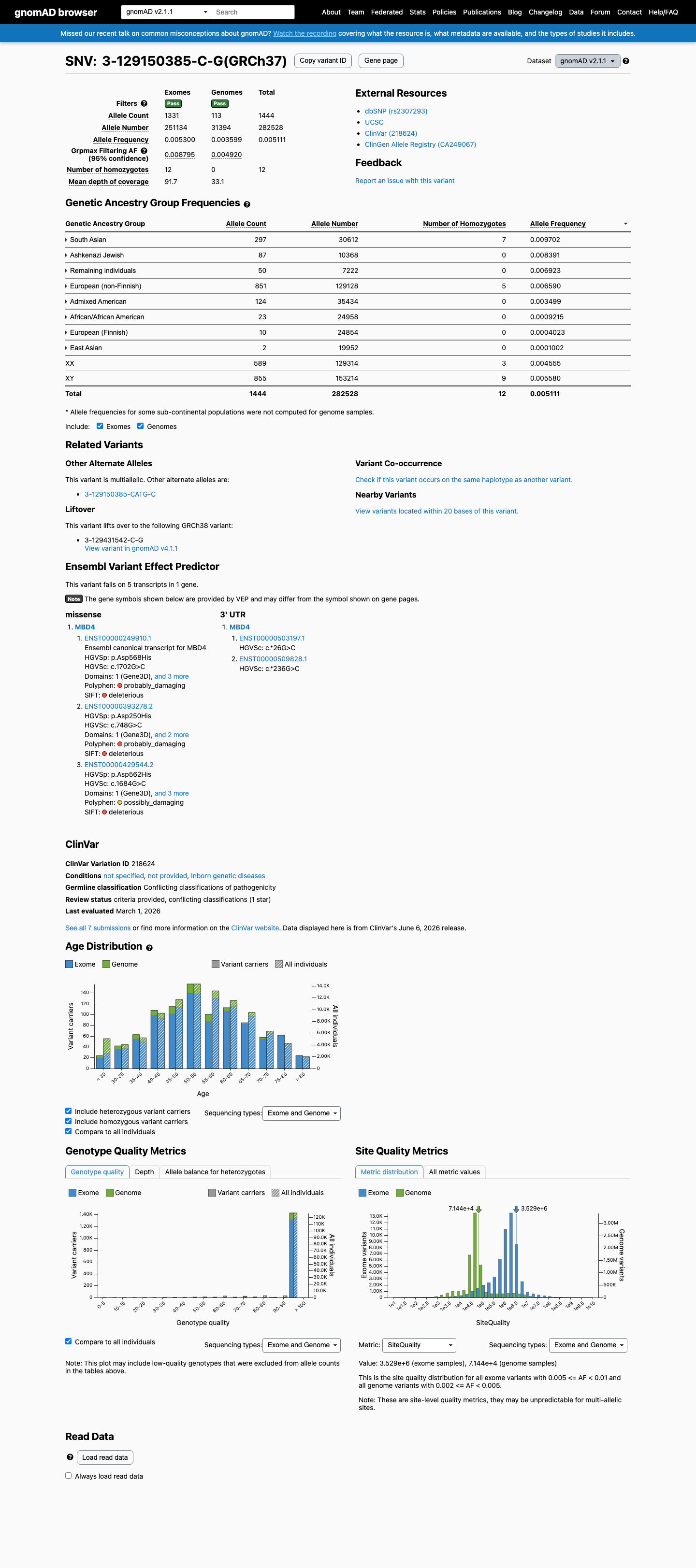
Not met: no case-control enrichment study exists for c.1684G>C, and gnomAD v2.1 AF 0.005111 (1444 alleles, 12 homozygotes) is inconsistent with case enrichment.
PM1
Not met: CancerHotspots reports no significant hotspot at D562 and the codon carries benign variation, including 12 gnomAD v2.1 homozygotes at 0.51% allele frequency.
PM2
Not met: gnomAD v4.1 all-comers AF 0.718% (11,588 alleles) far exceeds the 0.0001 PM2 supporting threshold.
PM3
Not met: no pathogenic MBD4 variant in trans with c.1684G>C, and gnomAD v4.1 shows 71 homozygotes (AF 0.72%) at this allele.
PM5
Not met: no missense variant introducing a different amino acid at codon 562 is established pathogenic - the only other ClinVar codon-562 entry is a benign synonymous change.
PM6
Not assessed: no submission or publication reports this variant as de novo, and gnomAD v4.1 lists 71 homozygotes, arguing against a rare de novo allele.
PP1
Not assessed: no affected family members were genotyped, so co-segregation with disease cannot be evaluated for this variant.
PP2
Not met: MBD4-associated disease is attributable to loss-of-function variants rather than missense, and no gene-level missense-constraint metric is available to satisfy PP2.
PP3
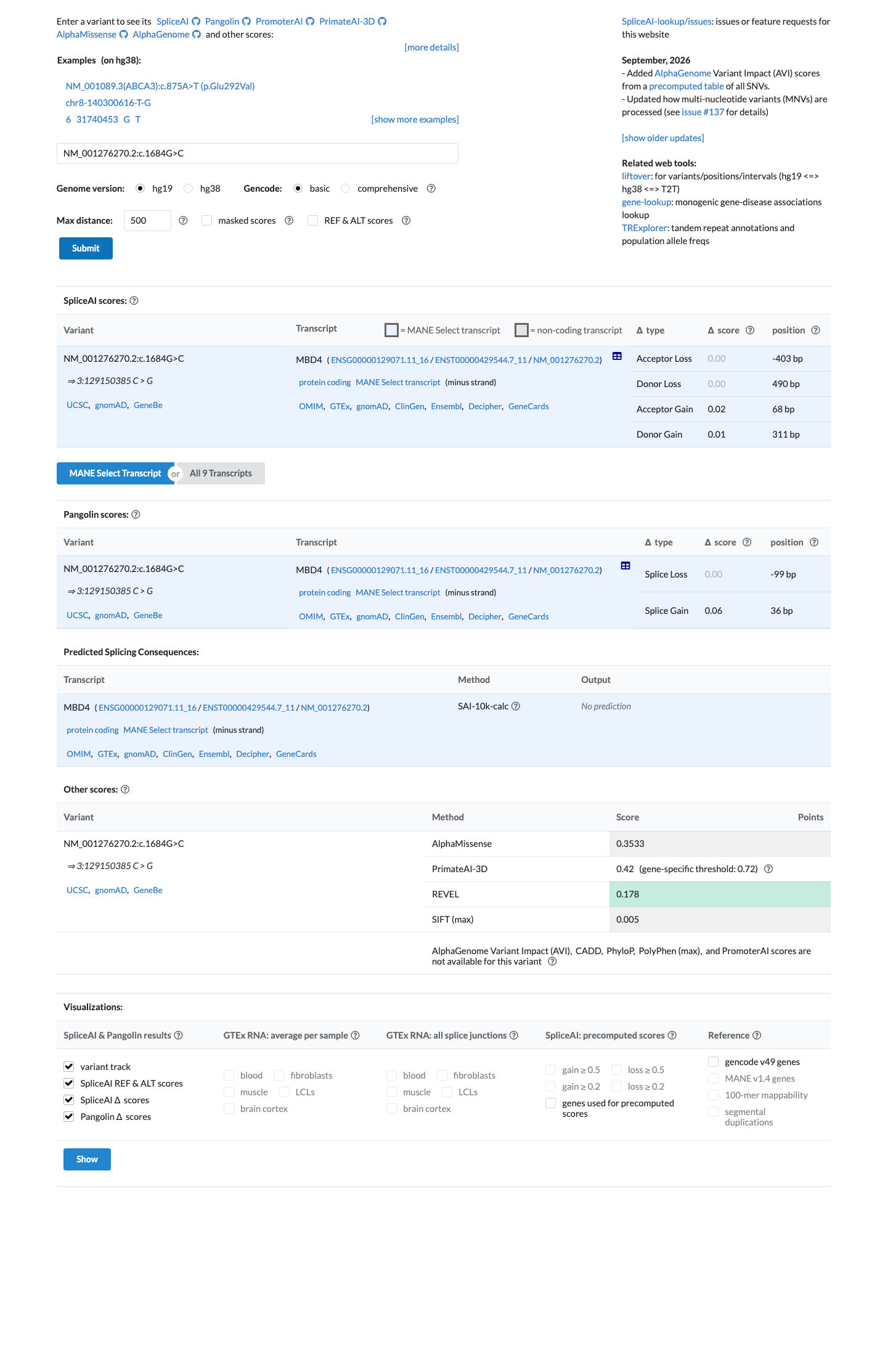
Not met: REVEL 0.178 is below the 0.644 supporting threshold for PP3 in this missense variant.
PP4
Not assessed: no proband phenotype or HPO terms were provided, and the only available labels ('Inborn genetic diseases', 'not specified') carry no specificity.
PP5
Not met: ClinVar variation 218624 has zero expert-panel submissions, all seven being single-submitter clinical laboratories with conflicting classifications (1-star review status).