PS1
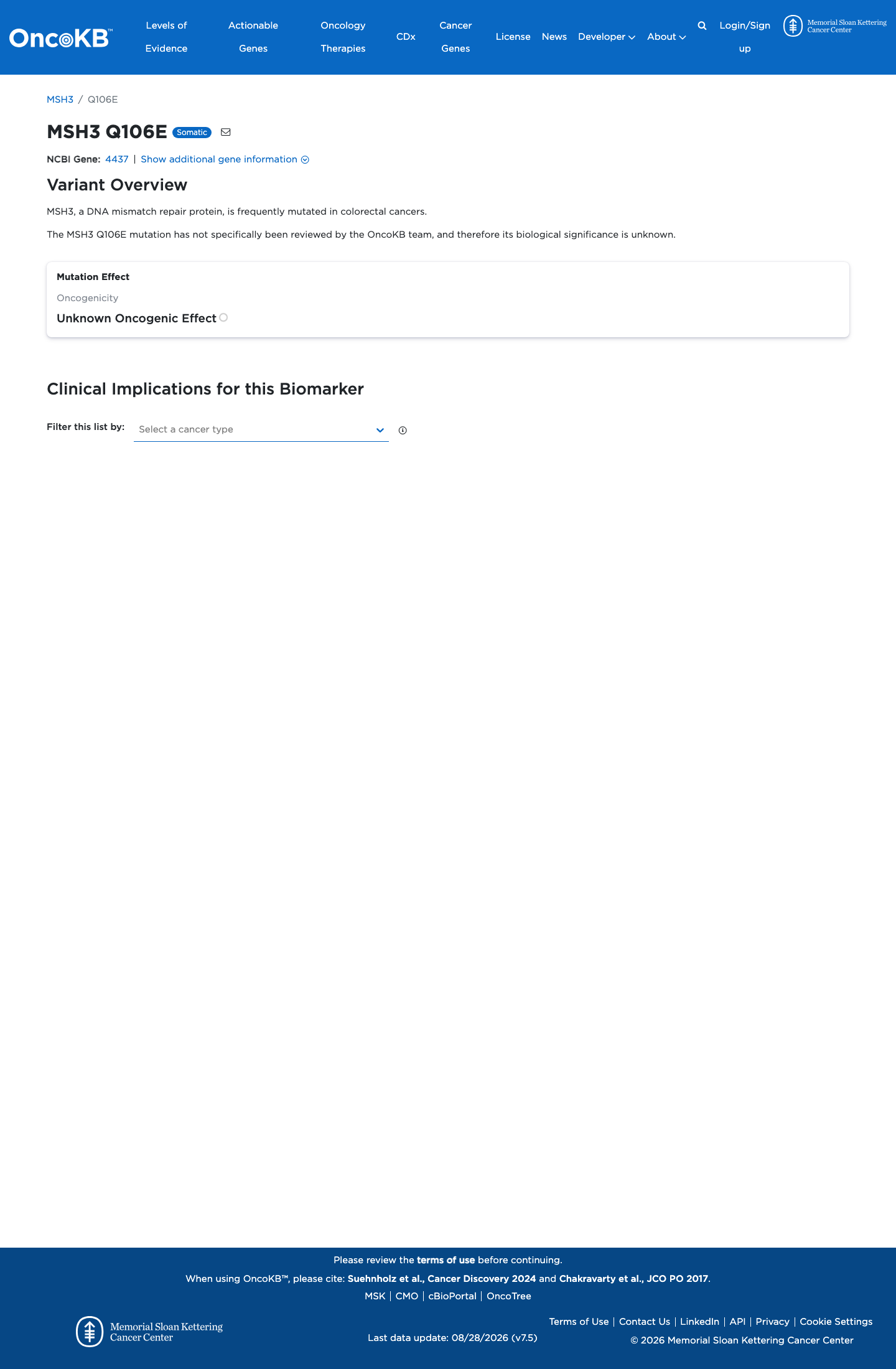
Not met: no pathogenic variant producing the same MSH3 amino-acid change, p.Gln106Glu, was identified in the reviewed evidence.
PS2
Not assessed: no documented parental genotypes or confirmed de novo occurrence is available for the proband's NM_002439.5:c.316C>G variant.
PS3
Not assessed: no validated variant-specific functional assay was reported, and the available record states that functional studies have not been performed.
PS4
Not assessed: no exact-variant case-control counts, odds ratio, or statistically significant enrichment were reported for MSH3 c.316C>G.
PM1
Not met: MSH3 residue 106 is not supported by an approved critical-domain entry or statistically significant hotspot evidence.
PM2
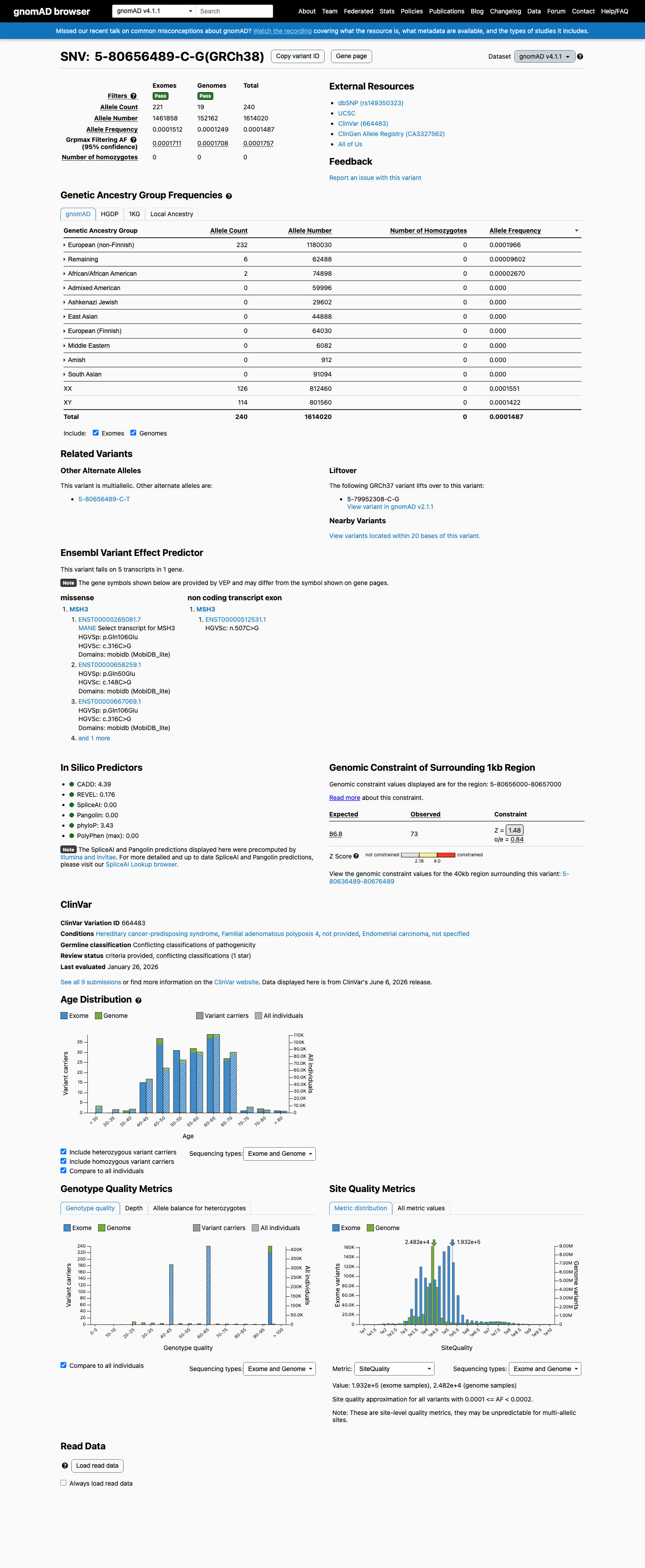
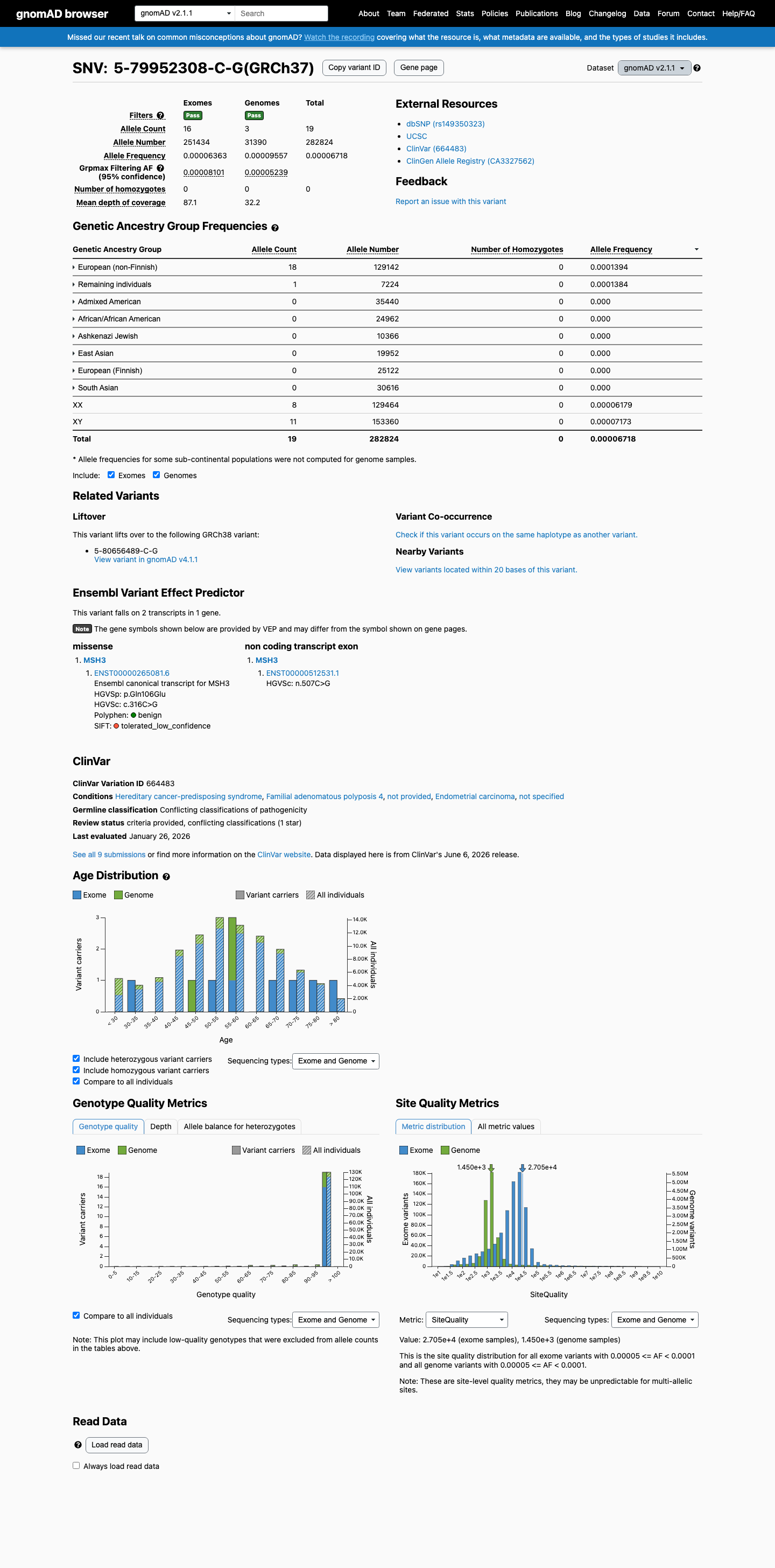
Not met: gnomAD v4.1 total AF 0.000148697 exceeds the generic PM2 threshold of 0.0001.
PM3
Not assessed: no affected-proband observation or confirmed pathogenic MSH3 variant in trans is documented for this autosomal-recessive condition.
PM5
Not assessed: no validated pathogenic comparator substitution at MSH3 residue 106 was available for the required same-residue comparison.
PM6
Not assessed: no presumed de novo occurrence without parental testing is documented for NM_002439.5:c.316C>G.
PP1
Not assessed: no affected-relative co-segregation, unaffected-relative results, or informative meioses are reported for this variant.
PP2
Not met: the reviewed MSH3 cohort included recurrent missense variation, so a low rate of benign missense variation was not established.
PP3
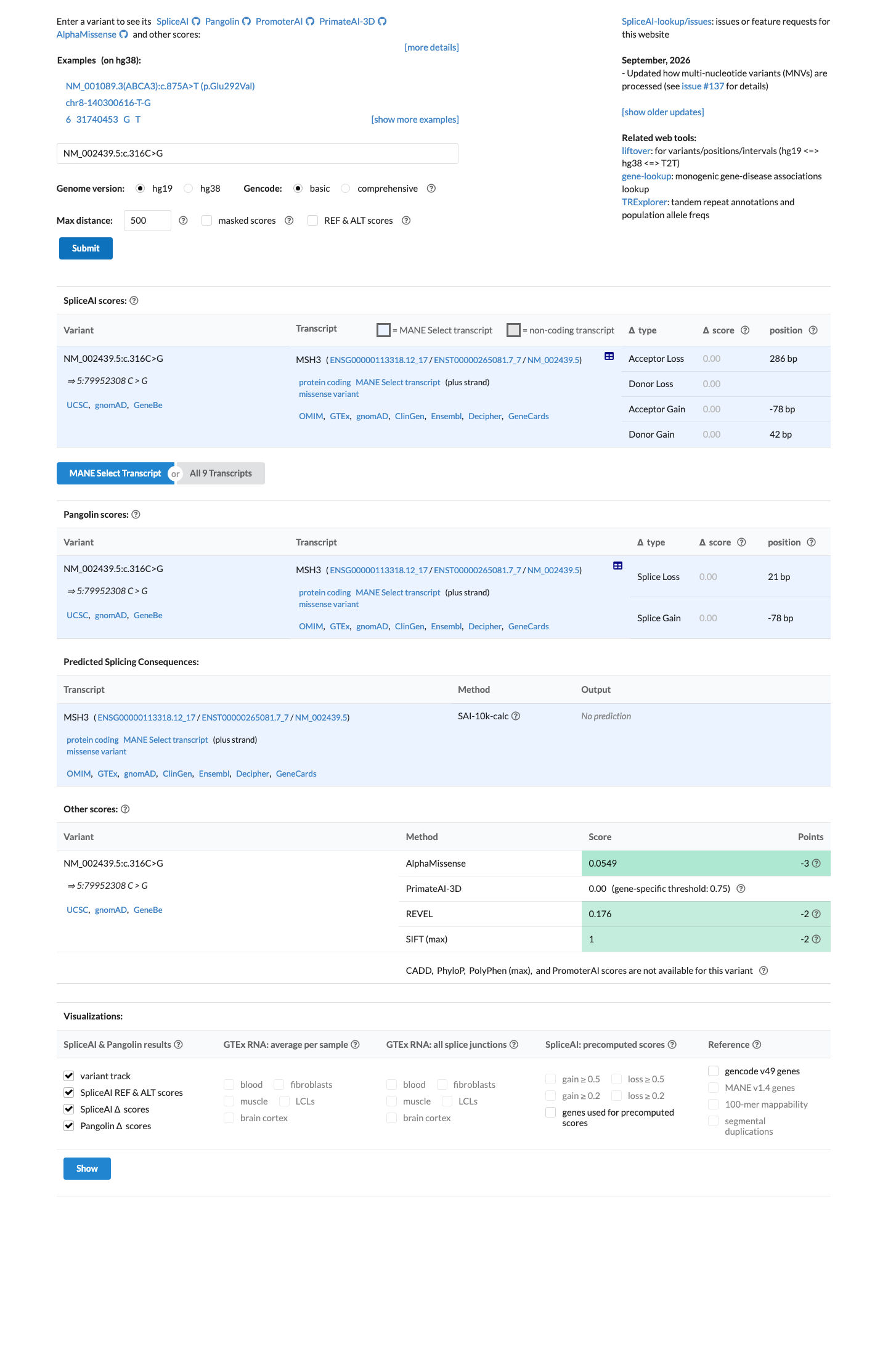
Not met: REVEL 0.176 and SpliceAI max delta 0.001 are below PP3 supporting thresholds of >=0.644 and >=0.2, respectively.
PP4
Not assessed: no independently documented, highly specific MSH3-associated phenotype is available for the exact c.316C>G variant.
PP5
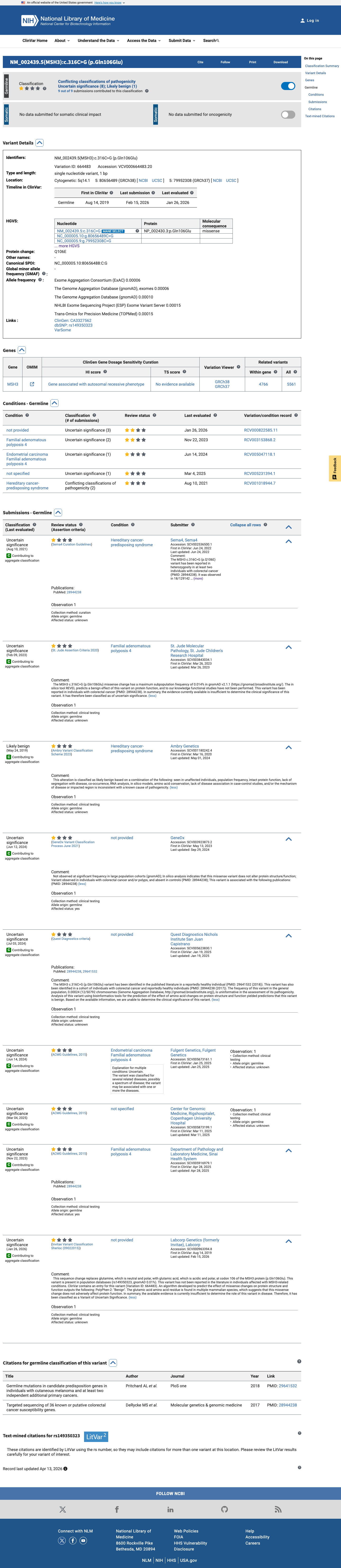
Not met: ClinVar variation 664483 has zero expert-panel submissions and no exact-variant expert-panel Pathogenic or Likely pathogenic classification.