This variant was interpreted by pipeline
7.1.0.
The current version is
8.0.0.
Re-running queues a fresh interpretation; the result replaces this page when complete.
Re-runs are not free. Blank = draws on today's public interpretation allowance.
With a code = uses 1 of that code's uses.
MYC is a proto-oncogene that encodes a transcription factor central to cell cycle progression, apoptosis, and cellular transformation. It carries out its role by pairing with the protein MAX, and this complex regulates the expression of thousands of target genes. MYC is a well-established driver of cancer: the gene is frequently amplified in many human cancers, and its activity promotes tumor growth by driving cell proliferation, preventing cells from exiting the cell cycle, stimulating blood vessel formation, and enhancing genomic instability. Translocations involving MYC are also associated with Burkitt lymphoma and multiple myeloma.
This variant
MYC is a cancer driver typically altered by somatic amplification or translocation; this germline in-frame Leu71dup in the transactivation domain adds one amino acid but is absent from population databases. With no disease, functional, or benign evidence available, the variant cannot yet be assigned a pathogenic or benign role and remains a VUS.
Transcript
NM_002467.5
HGVS · transcript:coding
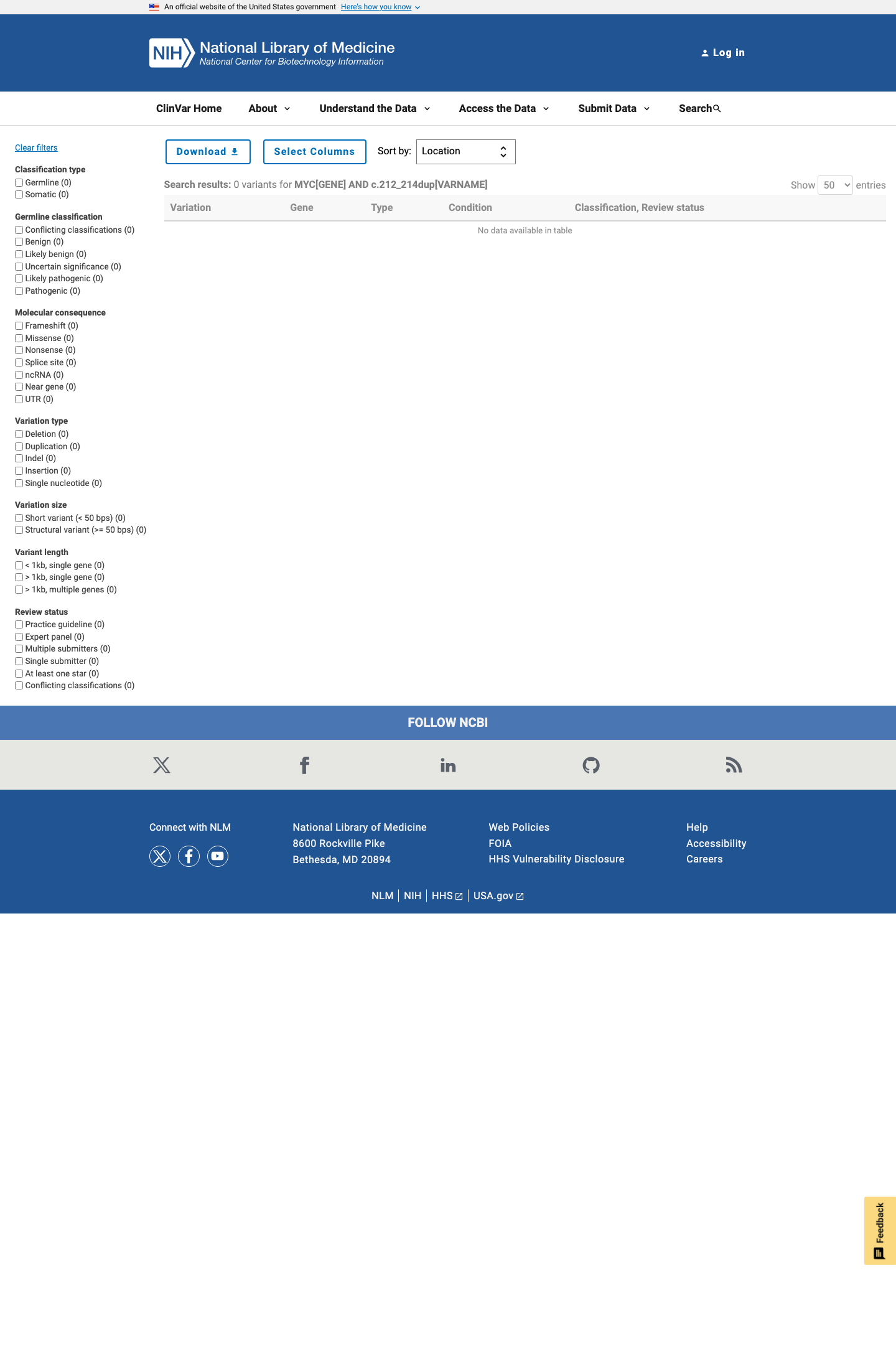
NM_002467.5:c.212_214dup
GRCh38
chr8:127738423 A>AGCT
GRCh37
chr8:128750669 A>AGCT
Generic ACMG/AMP 2015 rules apply (no MYC-specific framework); PM2 (supporting) + PM4 (moderate) = 1 moderate + 1 supporting, below all Pathogenic, Likely Pathogenic, and Benign thresholds, so the variant is VUS.
Classification rationale
PM2PM4VUS
MYC c.212_214dupinframe insertion
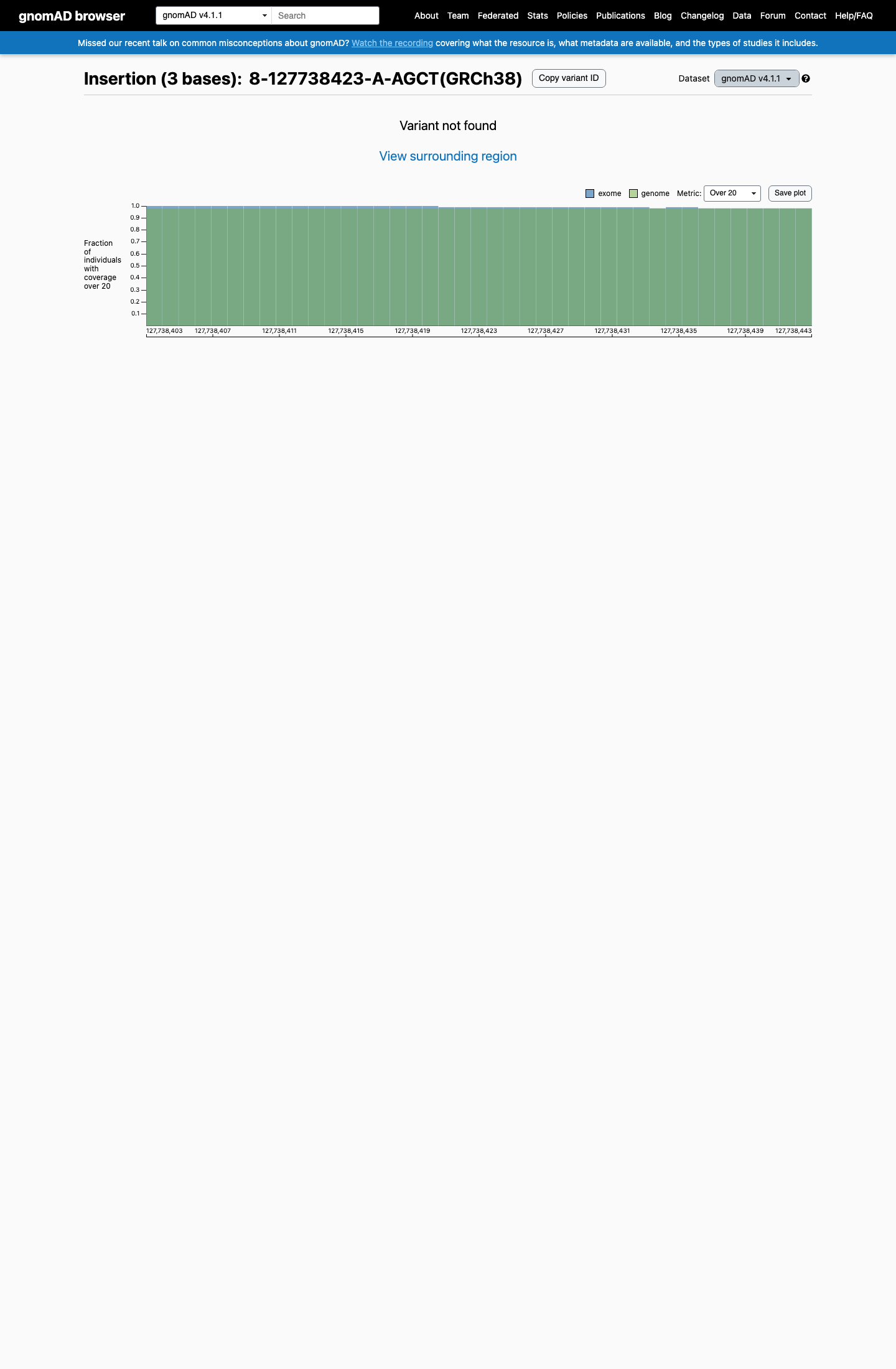
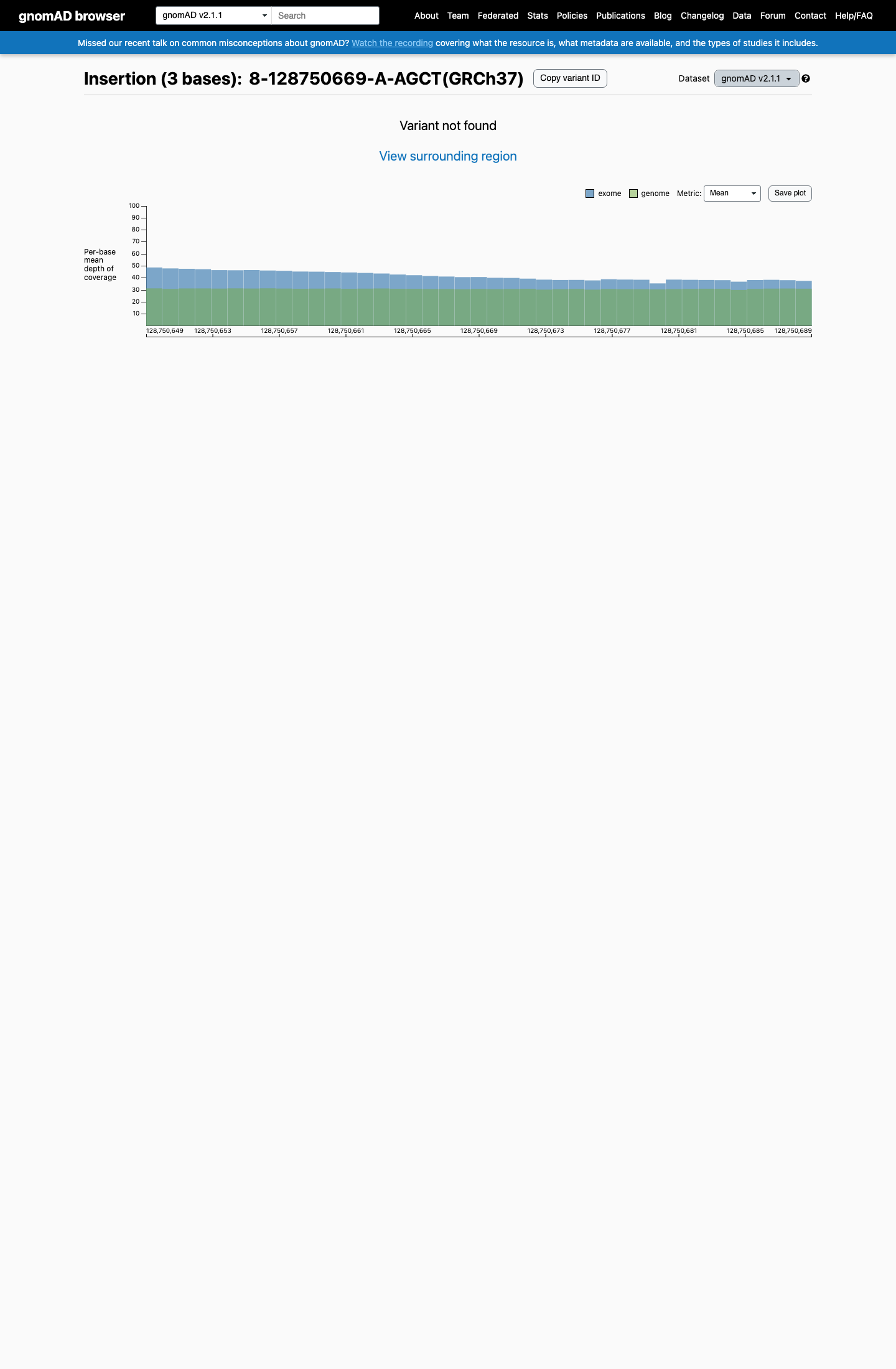
PM2 (Supporting): absent from gnomAD v2.1, v4.1, and gnomAD-Canada (observed allele frequency 0). PM4 (Moderate): in-frame 3-nt duplication adds one amino acid (454 to 455) outside repeat regions. Synthesis: 1 moderate + 1 supporting does not meet any ACMG/AMP 2015 Pathogenic or Benign threshold, yielding Variant of Uncertain Significance.
PM2 + PM4→VUS
LYFE Sciences is an AI system, and it can make mistakes. Criteria
may be applied incorrectly, sources may be misread, and a confident-looking
classification can still be wrong. Double-check every criterion and
its underlying evidence before relying on any call.
Gene diagram
· NM_002467.5 · variants mapped to exon structure
MYCNM_002467.5
Fetching transcript structure from UCSC…
Exons
—
Transcript span
—
Strand
—
Variants mapped
—
Source
UCSC ncbiRefSeqCurated
All variants in MYC—click a row to locate it on the plot · use the link column to open its page
Protein
Location
Classification
Link
Applied criteria · 2 applied · 19 assessed
MetEvidence satisfies this criterion.
Not metEvaluated against available evidence; threshold not reached.
Not assessedApplies in principle, but no evidence was found to evaluate it.
N/ADoesn't apply to this variant type.
Applied · 2
Strength Supporting Moderate Strong Very strong
✓
PM2supportingPathogenic
Met (supporting): absent from gnomAD v2.1, v4.1, and gnomAD-Canada — observed allele frequency 0, below the 0.1% threshold.
Met (moderate): in-frame 3-nt duplication lengthens the protein by one amino acid (454 to 455) outside repeat regions.
Normalized consequence (prefetch.json, Mutalyzer + VariantValidator concordant): NM_002467.5:c.212_214dupTGC -> c.212_214dup -> NP_002458.2:p.(Leu71dup); in-frame single-residue duplication; exon 2 (c.31-802); protein length +1 aa.SpliceAI (evidence.json): max delta score 0.02, DS_AG 0.02 - no predicted splice impact; operative consequence is the in-frame protein change, not altered splicing.UCSC hg19 RepeatMasker and genomicSuperDups (chr8:128,750,500-128,750,900): no repeat element and no segmental duplication overlapping the variant site (g.128750675_128750677dup).
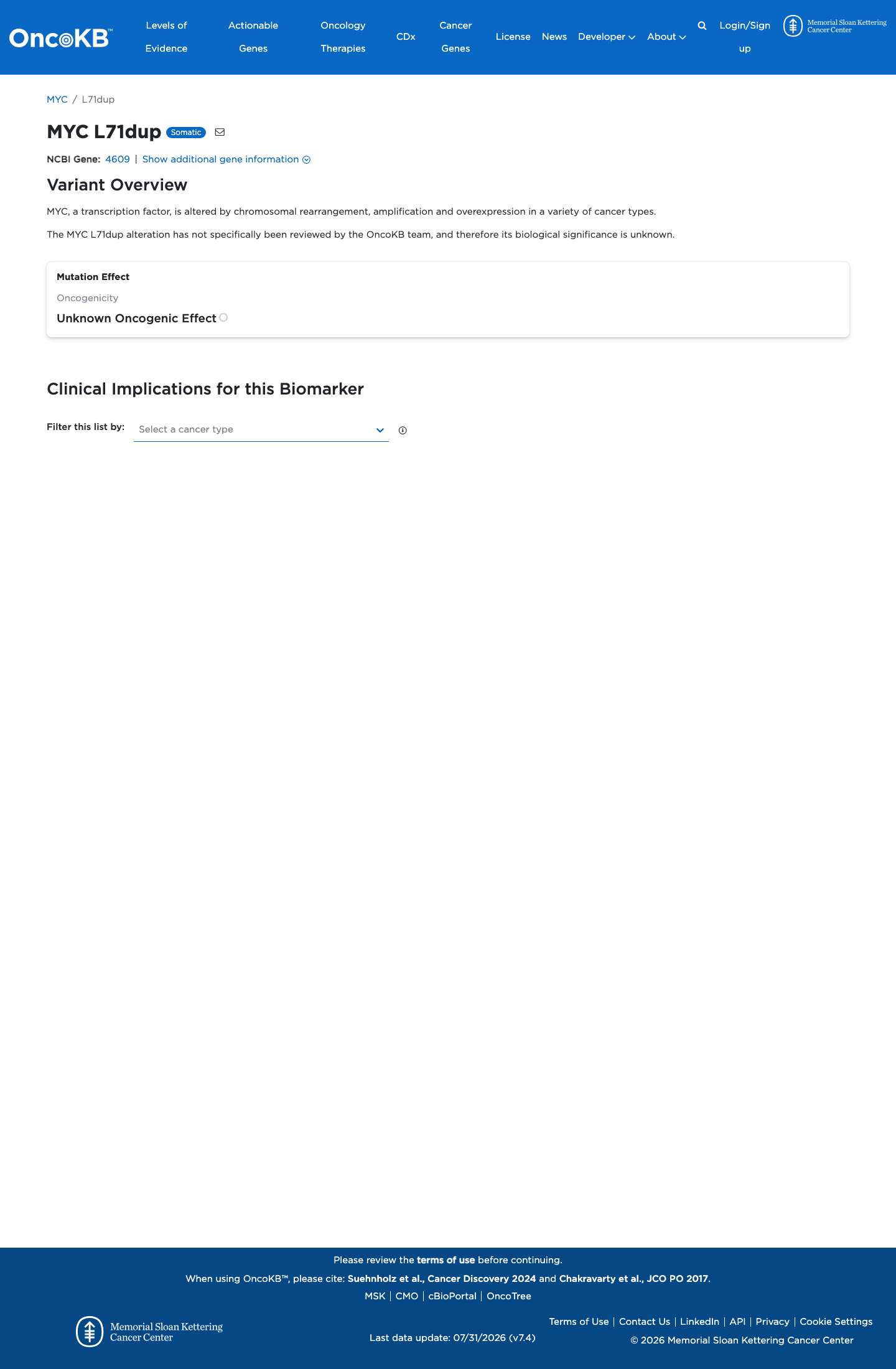
OncoKB did not identify variant-specific reviewed functional evidence for this variant; gene-level curated context is available for reviewer follow-up. MYC, a transcription factor, is altered by chromosomal rearrangement, amplification and overexpression in a variety of cancer types.
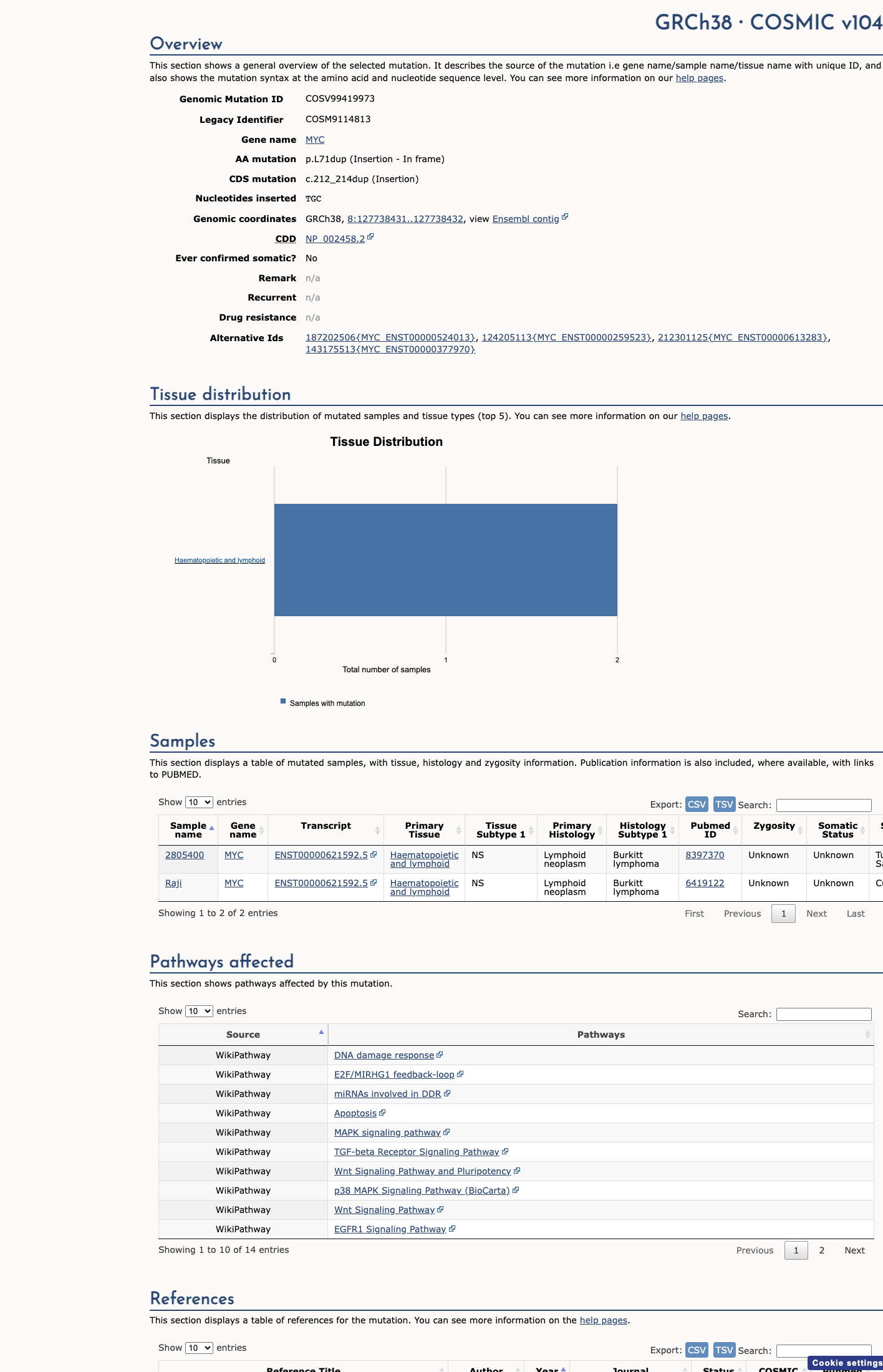
This variant does not lie in a statistically significant hotspot. This variant has previously been reported in somatic cancers (COSMIC; COSV99419973, n = 2 times).
Hotspots
This variant does not lie in a statistically significant hotspot.